23 Years Later: The Oklahoma City Bombing Story You Were Never Told About
Sgt. Terrance Yeakey was an Oklahoma City Police Officer, a first responder to the OKC bombing, and an American hero. Officer Yeakey, known to friends as Terry, saved the lives of eight people from the Alfred P. Murrah building on the morning of April 19, 1995.
Terry was a few blocks away from Timothy McVeigh and the now infamous Ryder truck-which was brimming with explosives-when it detonated and erased the lives of 168 people, including 19 children. Yeakey rushed to the blast site, and without regard for his own life, began pulling people from the rubble one by one.
Instead of being showered with accolades by his government for his heroic efforts, Terrance was silenced for what he witnessed in the direct aftermath of one of largest mass murders that the United States has ever seen.
No one is quite sure what Terry actually observed at the Murrah building that April morning, but according to all indications, whatever it was he witnessed did not sync up with the official narrative released by the United States government.
Officer Yeakey began compiling evidence against the tale put out by federal officials and stored his findings in a storage facility outside of El Reno, Oklahoma. The data he was accumulating was also in direct contradiction to “the facts” being reported by media outlets worldwide. According to friends and family, Terry began being intimidated by federal authorities because of his personal pursuit for truth and the information which he possessed. He was being pressured to put an end to his independent investigation.
Terry’s last known words were, “As soon as I shake these Feds that are following me, I’ll be back and we’ll go to dinner.”
He never came back.
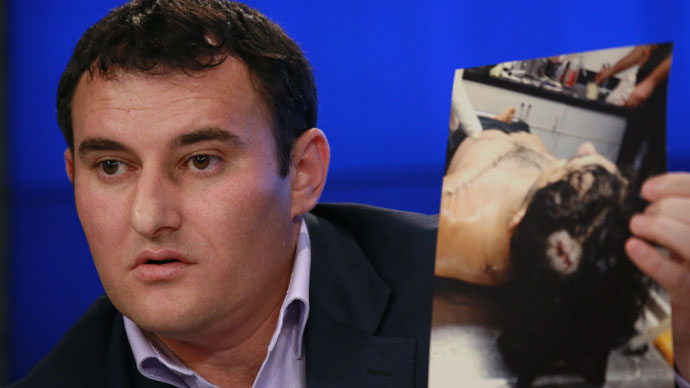
The officer’s body was found the next day in a field one mile from his abandoned vehicle. He had been bound, repeatedly cut, strangulated, brutally tortured and killed execution style with a single bullet that entered his right temple at a 45 degree angle. No gun was found at the scene.
His official cause of death was suicide.
I’m not going to suggest that you believe in an elaborate government conspiracy surrounding the Murrah Building bombing based on this one incident, but with that said, Officer Yeakey’s story deserves to be told. What did he know? What really happened that morning in Oklahoma City? Why was he silenced? If we truly respected the lives of police officers, maybe it’s time we find out the answers to these questions.
If not for Terry and his family, then do it for the future of everything you hold dear.
Please watch the extremely informative and startling video below about Officer Yeakey and learn in more detail about the events that surrounded Terry’s death.
The case of Matt DeHart, a former U.S. drone pilot turned hacktivist, is as strange as it is disturbing. The 29-year-old was recently denied asylum in Canada, having fled there with his family after — he claims — he was drugged and tortured by agents of the FBI, who accused him of espionage and child pornography.
Prosecutors have shown they’re willing to say anything to convict a hacktivist, even if it means lying
Last week the Canadian Border Services Agency said he will be deported to the U.S. to stand trial “in very short order,” after a Canadian Immigration and Refugee Board ruling earlier this month denying his request for refugee status. He is being denied access to two thumb drives that he says contain evidence of illegal acts perpetrated by a U.S. government agency. Now after three unsuccessful attempts to gain political asylum, he fears that he and the files will be delivered to the very government he sought to escape.
“I cannot imagine any life in a country which has already tortured me,” Matt DeHart told reporter Adrian Humphreys, whose astonishing five-part series in Canada’s National Postdocuments the bizarre case. “Am I now to be given into the hands of my torturers?”
It’s tempting to dismiss DeHart’s claims based on their sheer outlandishness and his equally outlandish attempts to defect to Russia and Venezuela, which he now says he regrets. But given President Barack Obama’s administration’s penchant for punishing hacktivists and whistleblowers, a disturbing decades-long trend of prosecutorial misconduct and the now established fact that the U.S. has, as Obama put it, “tortured some folks,” it’s clear that the U.S. government’s claims in this case warrant even more skepticism.
Matt DeHart
According to government documents, Matt DeHart admitted during an interrogation to becoming involved with a spy ring during his time as a drone pilot, agreeing to broker the sale of military secrets for up to $100,000 per month through a Russian agent in Canada. But he claims he was being drugged and tortured and simply made the story up.
“I would have told them anything,” he told The National Post of his encounter with the FBI agents, during which he was denied a lawyer. “Information that is derived from torture — to use it against somebody is ridiculous. It’s garbage. I already said it’s not true.”
He testified that the agents admitted the child porn charges were fabricated — a ruse to enable investigation into his involvement with the nebulous hacktivist collective Anonymous. He says the investigation stems from a file he uploaded twice to a hidden website, hosted on the anonymous Tor network from a server in his parents’ house. DeHart claims it contained evidence of government wrongdoing, “an FBI investigation into the [CIA’s] practices.” Screen shots of the WikiLeaks website found on his computer suggest he intended to send the file to the whistleblowing organization.
After the asylum ruling earlier this month, three courts — two in the U.S. and one in Canada — have expressed strong doubts about the child pornography charges that triggered a search warrant onMatt DeHart’s parents’ home in the U.S. Those accusations date to 2008 and stemmed from his association with two teenagers while playing the online game “World of Warcraft,” one of whom was also involved with Anonymous; the charges were ultimately not proved.
After DeHart was arrested while crossing from Canada to the U.S. in 2010, a judge in Bangor, Maine, found it odd that prosecutors were suddenly citing the two-year-old porn accusations and that police hadn’t analyzed Matt DeHart computers for illicit files seven months after they were seized. A judge in Tennessee, where Matt DeHart ‘s family lived before moving to Canada, admitted that “the weight of the evidence is not as firm as I thought it was.” And most recently, the Canadian Immigration and Refugee Board concluded there was “no credible or trustworthy evidence” that DeHart had solicited child porn.
Prosecutorial misconduct helps the government railroad journalists, whistleblowers, hacktivists and any who dare to speak truth to power.
To be sure, Matt DeHart strange behavior throughout this ordeal doesn’t place him in a particularly flattering light. But it’s worth noting that these kinds of serious accusations are often made in cases against hacktivists and whistleblowers, helping place them in the government’s crosshairs and paint them as nefarious even when the accusations are easily disproved.
Barrett Brown, a journalist who investigated links between the U.S. government and private intelligence contractors, had all manner of ridiculous false accusations thrown at him before being sentenced last month to five and a half years in prison. He was initially charged for the innocuous act of copying and pasting a hyperlink to a public file stolen by Anonymous from one chat room into another. The charge was dropped, but the linking was still used to increase the length of his sentence, despite the fact that prosecutors had no evidence Brown had looked at the file or even known what was in it.
At one point, prosecutors claimed that Brown conspired with members of Anonymous to overthrow the U.S. government. They also accused him of participating in “SWATting,” the practice of making fake 911 calls to harass people in their homes, and even of plotting with another journalist to hack the Bahraini government. Not one of these claims was supported by the voluminous collection of chat logs that the government provided as evidence. Nor did additional logs obtained by The Daily Dot, which the prosecution had withheld under seal.
Brown was not entirely without fault in the case, having obstructed a search warrant and posted a YouTube video threatening an FBI agent in response to the seizure of his laptops. But in retrospect, it seems clear the impetus for the case was that the government saw Brown’s investigations as a threat and would say anything to guarantee his conviction, even if that meant knowingly making false statements. As Brown put it during his allocution, “This is not the rule of law … It is the rule of law enforcement.”
Close scrutiny
What can we expect from the Matt DeHart case if this is the prosecutorial legacy it follows?
As The New York Times editorial board recently noted, defendants have no recourse when police and prosecutors lie, cheat and conceal evidence in the courtroom, leading to what one federal judge has described (PDF) as a national epidemic of prosecutorial misconduct. Sometimes it leads to wrongful convictions. Other times, as in Brown’s case, it helps the government railroad journalists, whistleblowers, hacktivists and any who dare to speak truth to power.
Remember Aaron Swartz, an information activist who prosecutors pursued vigorously for the act of downloading too many academic articles from an MIT library? Much like in Brown’s case, prosecutors were accused of withholding evidence and coercing Swartz into taking a guilty plea. Swartz committed suicide in 2013 amid mounting legal costs and the possibility of up to 35 years in prison, triggering the DeHarts’ decision to flee the country.
“Aaron Swartz had very similar psychological makeup, similar age, same circumstances as Matt DeHart,” DeHart’s father, Paul DeHart, a retired U.S. Air Force major, told The National Post. “I do not want to wake up one day and find my son hanging from a rope in the garage of our house. And I have noplace to go to bring this to anyone’s attention.”
With Matt DeHart’s attempted defections and other erratic behavior, it’s admittedly difficult to determine where his true intentions lie. But the government’s actions against him have been just as sketchy, if not more so. His claims must be taken seriously, and his case should be closely scrutinized, lest another potential whistleblower fall prey to the state’s merciless war on leaks.
by Joshua Kopstein, a cyberculture journalist and researcher from New York City. His work focuses on Internet law and disorder, surveillance and government secrecy.
AMERICAN AND BRITISH Leaked: NSA Spies hacked into the internal computer network of the largest manufacturer of SIM cards in the world, stealing encryption keys used to protect the privacy of cellphone communications across the globe, according to top-secret documents provided to The Intercept by National Security Agency whistleblower Edward Snowden.
The hack was perpetrated by a joint unit consisting of operatives from the NSA and its British counterpart Government Communications Headquarters, or GCHQ. The breach, detailed in a secret 2010 GCHQ document, gave the surveillance agencies the potential to secretly monitor a large portion of the world’s cellular communications, including both voice and data.
The company targeted by the intelligence agencies, Gemalto, is a multinational firm incorporated in the Netherlands that makes the chips used in mobile phones and next-generation credit cards. Among its clients are AT&T, T-Mobile, Verizon, Sprint and some 450 wireless network providers around the world. The company operates in 85 countries and has more than 40 manufacturing facilities. One of its three global headquarters is in Austin, Texas and it has a large factory in Pennsylvania.
In all, Gemalto produces some 2 billion SIM cards a year. Its motto is “Security to be Free.”
With these stolen encryption keys, intelligence agencies can monitor mobile communications without seeking or receiving approval from telecom companies and foreign governments. Possessing the keys also sidesteps the need to get a warrant or a wiretap, while leaving no trace on the wireless provider’s network that the communications were intercepted. Bulk key theft additionally enables the intelligence agencies to unlock any previously encrypted communications they had already intercepted, but did not yet have the ability to decrypt.
As part of the covert operations against Gemalto, spies from GCHQ — with support from the NSA — mined the private communications of unwitting engineers and other company employees in multiple countries.
Gemalto was totally oblivious to the penetration of its systems — and the spying on its employees. “I’m disturbed, quite concerned that this has happened,” Paul Beverly, a Gemalto executive vice president, told The Intercept. “The most important thing for me is to understand exactly how this was done, so we can take every measure to ensure that it doesn’t happen again, and also to make sure that there’s no impact on the telecom operators that we have served in a very trusted manner for many years. What I want to understand is what sort of ramifications it has, or could have, on any of our customers.” He added that “the most important thing for us now is to understand the degree” of the breach.
Leading privacy advocates and security experts say that the theft of encryption keys from major wireless network providers is tantamount to a thief obtaining the master ring of a building superintendent who holds the keys to every apartment. “Once you have the keys, decrypting traffic is trivial,” says Christopher Soghoian, the principal technologist for the American Civil Liberties Union. “The news of this key theft will send a shock wave through the security community.”
THE MASSIVE KEY THEFT IS “BAD NEWS FOR PHONE SECURITY. REALLY BAD NEWS.”
Beverly said that after being contacted by The Intercept, Gemalto’s internal security team began on Wednesday to investigate how their system was penetrated and could find no trace of the hacks. When asked if the NSA or GCHQ had ever requested access to Gemalto-manufactured encryption keys, Beverly said, “I am totally unaware. To the best of my knowledge, no.”
According to one secret GCHQ slide, the British intelligence agency penetrated Gemalto’s internal networks, planting malware on several computers, giving GCHQ secret access. We “believe we have their entire network,” the slide’s author boasted about the operation against Gemalto.
Additionally, the spy agency targeted unnamed cellular companies’ core networks, giving it access to “sales staff machines for customer information and network engineers machines for network maps.” GCHQ also claimed the ability to manipulate the billing servers of cell companies to “suppress” charges in an effort to conceal the spy agency’s secret actions against an individual’s phone. Most significantly, GCHQ also penetrated “authentication servers,” allowing it to decrypt data and voice communications between a targeted individual’s phone and his or her telecom provider’s network. A note accompanying the slide asserted that the spy agency was “very happy with the data so far and [was] working through the vast quantity of product.”
The Mobile Handset Exploitation Team (MHET), whose existence has never before been disclosed, was formed in April 2010 to target vulnerabilities in cellphones. One of its main missions was to covertly penetrate computer networks of corporations that manufacture SIM cards, as well as those of wireless network providers. The team included operatives from both GCHQ and the NSA.
While the FBI and other U.S. agencies can obtain court orders compelling U.S.-based telecom companies to allow them to wiretap or intercept the communications of their customers, on the international front this type of data collection is much more challenging. Unless a foreign telecom or foreign government grants access to their citizens’ data to a U.S. intelligence agency, the NSA or CIA would have to hack into the network or specifically target the user’s device for a more risky “active” form of surveillance that could be detected by sophisticated targets. Moreover, foreign intelligence agencies would not allow U.S. or U.K. spy agencies access to the mobile communications of their heads of state or other government officials.
“It’s unbelievable. Unbelievable,” said Gerard Schouw, a member of the Dutch Parliament, when told of the spy agencies’ actions. Schouw, the intelligence spokesperson for D66, the largest opposition party in the Netherlands, told The Intercept, “We don’t want to have the secret services from other countries doing things like this.” Schouw added that he and other lawmakers will ask the Dutch government to provide an official explanation and to clarify whether the country’s intelligence services were aware of the targeting of Gemalto, whose official headquarters is in Amsterdam.
Last November, the Dutch government proposed an amendment to its constitution to include explicit protection for the privacy of digital communications, including those made on mobile devices. “We have, in the Netherlands, a law on the [activities] of secret services. And hacking is not allowed,” Schouw said. Under Dutch law, the interior minister would have to sign off on such operations by foreign governments’ intelligence agencies. “I don’t believe that he has given his permission for these kind of actions.”
The U.S. and British intelligence agencies pulled off the encryption key heist in great stealth, giving them the ability to intercept and decrypt communications without alerting the wireless network provider, the foreign government or the individual user that they have been targeted. “Gaining access to a database of keys is pretty much game over for cellular encryption,” says Matthew Green, a cryptography specialist at the Johns Hopkins Information Security Institute. The massive key theft is “bad news for phone security. Really bad news.”
Huey Percy Newton was an African-American political and urban activist who, along with Bobby Seale, co-founded the Black Panther Party in 1966. Many well educated activists would argue this group was ultimately undermined by FBI tactics and COINTELPRO, to destroy their image decrease effectiveness within the community.
Newton earned a Ph.D. in history of consciousness at the University of California at Santa Cruz in 1980. His doctoral dissertation was entitled War Against the Panthers: A Study of Repression in America.
Later, Newton’s widow, Frederika Newton, would discuss her husband’s often-ignored academic leanings on C-SPAN‘s “American Perspectives” program on February 18, 2006.
On August 22, 1989, Newton was fatally shot on Center Street in the Lower Bottoms neighborhood of West Oakland by 24-year-old BGF member and drug dealer Tyrone Robinson, in what some say was a ‘setup’ involving the FBI.
Newton’s last words, as he stood facing his killer, were, “You can kill my body, and you can take my life but you can never kill my soul. My soul will live forever!”
Huey Percy Newton was an African-American political and urban activist who, along with Bobby Seale, co-founded the Black Panther Party in 1966. Many well educated activists would argue this group was ultimately undermined by FBI tactics and COINTELPRO, to destroy their image decrease effectiveness within the community.
Newton earned a Ph.D. in history of consciousness at the University of California at Santa Cruz in 1980. His doctoral dissertation was entitled War Against the Panthers: A Study of Repression in America.
Later, Newton’s widow, Frederika Newton, would discuss her husband’s often-ignored academic leanings on C-SPAN‘s “American Perspectives” program on February 18, 2006.
On August 22, 1989, Newton was fatally shot on Center Street in the Lower Bottoms neighborhood of West Oakland by 24-year-old BGF member and drug dealer Tyrone Robinson, in what some say was a ‘setup’ involving the FBI.
Newton’s last words, as he stood facing his killer, were, “You can kill my body, and you can take my life but you can never kill my soul. My soul will live forever!”
Huey Percy Newton was an African-American political and urban activist who, along with Bobby Seale, co-founded the Black Panther Party in 1966. Many well educated activists would argue this group was ultimately undermined by FBI tactics and COINTELPRO, to destroy their image decrease effectiveness within the community.
Newton earned a Ph.D. in history of consciousness at the University of California at Santa Cruz in 1980. His doctoral dissertation was entitled War Against the Panthers: A Study of Repression in America.
Later, Newton’s widow, Frederika Newton, would discuss her husband’s often-ignored academic leanings on C-SPAN‘s “American Perspectives” program on February 18, 2006.
On August 22, 1989, Newton was fatally shot on Center Street in the Lower Bottoms neighborhood of West Oakland by 24-year-old BGF member and drug dealer Tyrone Robinson, in what some say was a ‘setup’ involving the FBI.
Newton’s last words, as he stood facing his killer, were, “You can kill my body, and you can take my life but you can never kill my soul. My soul will live forever!”
Jake Davis Topiary, real name Jake Leslie Davis, born October 27, 1992, is a former hacker. He has worked with Anonymous, LulzSec, and similar hacktivist groups.Topiary, real name Jake Leslie Davis, born October 27, 1992, is a former hacker. He has worked with Anonymous, LulzSec, and similar hacktivist groups.Topiary, real name Jake Leslie Davis, born October 27, 1992, is a former hacker. Jake Davis He has worked with AnonyJake Davis Topiary, real name Jake Leslie Davis, born October 27, 1992, is a former hacker. He has worked with Anonymous, LulzSec, and similar hacktivist groups.Topiary, real name Jake Leslie Davis, born October 27, 1992, is a former hacker. He has worked with Anonymous, LulzSec, and similar hacktivist groups.Topiary, real name Jake Leslie Davis, born October 27, 1992, is a former hacker. He has worked with Anonymous, LulzSec, and similar hacktivist groups.Topiary, real name Jake Leslie Davis, born October 27, 1992, is a former hacker. He has worked with Anonymous, LulzSec, and similar hacktivist groups. Jake DavisJake Davis Topiary, real name Jake Leslie Davis, born October 27, 1992, is a former hacker. He has worked with Anonymous, LulzSec, and similar hacktivist groups.Topiary, real name Jake Leslie Davis, born October 27, 1992, is a former hacker. He has worked with Anonymous, LulzSec, and similar hacktivist groups.Topiary, real name Jake Leslie Davis, born October 27, 1992, is a former hacker. He has worked with Anonymous, LulzSec, and similar hacktivist groups.Topiary, real name Jake Leslie Davis, born October 27, 1992, is a former hacker. He has worked with Anonymous, LulzSec, and similar hacktivist groups. Jake DavisJake Davis Topiary, real name Jake Leslie Davis, born October 27, 1992, is a former hacker. He has worked with Anonymous, LulzSec, and similar hacktivist groups.Topiary, real name Jake Leslie Davis, born October 27, 1992, is a former hacker. He has worked with Anonymous, LulzSec, and similar hacktivist groups.Topiary, real name Jake Leslie Davis, born October 27, 1992, is a former hacker. He has worked with Anonymous, LulzSec, and similar hacktivist groups.Topiary, real name Jake Leslie Davis, born October 27, 1992, is a former hacker. He has worked with Anonymous, LulzSec, and similar hacktivist groups. Jake Davis
Jesselyn Radack (born December 12, 1970) is a former ethics adviser to the United States Department of Justice who came to prominence as a whistleblower after she disclosed that the Federal Bureau of Investigation (FBI) committed what she believed to be an ethics violation in their interrogation of John Walker Lindh (the “American Taliban” captured during the 2001 invasion of Afghanistan) without an attorney present, and alleged that the Department of Justice attempted to suppress that information.former ethics adviser to the United States Department of Justice who came to prominence as a whistleblower after she disclosed that the Federal Bureau of Investigation (FBI) committed what she believed to be an ethics violation in their interrogation of John Walker Lindh (the “American Taliban” captured during the 2001 invasion of Afghanistan) without an attorney present, and alleged that the Department of Justice attempted to suppress that information.former ethics adviser to the United States Department of Justice who came to prominence as a whistleblower after she disclosed that the Federal Bureau of Investigation (FBI) committed what she believed to be an ethics violation in their interrogation of John Walker Lindh (the “American Taliban” captured during the 2001 invasion of Afghanistan) without an attorney present, and alleged that the Department of Justice attempted to suppress that information.
The FBI began COINTELPRO—short for Counterintelligence Program—in 1956 to disrupt the activities of the Communist Party of the United States. In the 1960s, it was expanded to include a number of other domestic groups, such as the Ku Klux Klan, the Socialist Workers Party, and the Black Panther Party. All COINTELPRO operations were ended in 1971. Although limited in scope (about two-tenths of one percent of the FBI’s workload over a 15-year period), COINTELPRO was later rightfully criticized by Congress and the American people for abridging first amendment rights and for other reasons.
Encryption has gained the attention of actors on both sides of the mass surveillance debate. For example in a speech at the Brookings Institution FBI Director James Comey complained that strong encryption was causing U.S. security services to “go dark.” Comey described encrypted data as follows:
“It’s the equivalent of a closet that can’t be opened, a safe deposit box that can’t be opened, a safe that can’t ever be cracked.”
Got that? Comey essentially says that encryption is a sure bet. Likewise during an interview with James Bamford whistleblower Ed Snowden confidently announced that:
“We have the means and we have the technology to end mass surveillance without any legislative action at all, without any policy changes… By basically adopting changes like making encryption a universal standard—where all communications are encrypted bydefault—we can end mass surveillance not just in the United States but around the world.”
If you glanced over the above excerpts and took them at face value you’d probably come away thinking that all you needed to protect your civil liberties is the latest encryption widget. Right? Wow, let me get my check book out! PagingMr. Omidyar…
Not so fast bucko. There’s an important caveat, some fine print that Ed himself spelled out when he initially contacted film director Laura Poitras. In particular Snowden qualified that:
“If the device you store the private key and enter your passphrase on has been hacked, it is trivial to decrypt our communications.”
This corollary underscores the reality that, despite the high profile sales pitchthat’s being repeated endlessly, strong encryption alone isn’t enough. Hi-techsubversion is a trump card as the Heartbleed bug graphically illustrated. In light of the NSA’s mass subversion programsit would be naïve to think that there aren’t other critical bugs like Heartbleed, subtle intentional flaws, out in the wild being leveraged by spies.
The FBI’s Tell
James Comey’s performance at Brookings was an impressive public relations stunt. Yet recent history is chock full of instances where the FBI employed malware like Magic Lantern and CIPAV to foil encryption and identify people usingencryption-based anonymity software like Tor. If it’s expedient the FBI will go so far as to impersonate a media outletto fool suspects into infecting their own machines. It would seem that crooks aren’t the only attackers who wield social engineering techniques.
In fact the FBI has gotten so adept at hacking computers, utilizing what are referred to internally as Network Investigative Techniques, that the FBI wants to change the law to reflect this. The Guardian reportson how the FBI is asking the U.S. Advisory Committee on Rules and Criminal Procedure to move the legal goal posts, so to speak:
“The amendment [proposed by the FBI] inserts a clause that would allow a judge to issue warrants to gain ‘remote access’ to computers ‘located within or outside that district’ (emphasis added) in cases in which the ‘district where the media or information is located has been concealed through technological means’. The expanded powers to stray across district boundaries would apply to any criminal investigation, not just to terrorist cases as at present.”
In other words the FBI wants to be able to hack into a computer when its exact location is shrouded by anonymity software. Once they compromise the targeted machine it’s pretty straightforward to install a software implant (i.e. malware) and exfiltrate whatever user data they want, including encryption passwords.
If encryption is really the impediment that director Comey makes it out to be then why is the FBI so keen to amend the rules in a manner which implies that they can sidestep it? In the parlance of poker this is a “tell.”
Denouncement
As a developer who has built malicious softwaredesigned to undermine security tools I can attest that there is a whole burgeoning industrywhich prays on naïve illusions of security. Companies like Hacking Teamhave found a lucrative niche offering products to the highest bidder that compromise security and… a drumroll please… defeat encryption.
There’s a moral to this story. Cryptome’s own curmudgeon, John Young, prudently observes:
“Protections of promises of encryption, proxy use, Tor-likeanonymity and ‘military- grade’ comsec technology are magic acts –ELINT, SIGINT and COMINT always prevail over comsec. The most widely trusted and promoted systems are the most likely to be penetrated, exploited, spied upon, successfully attacked, covertly compromised with faults hidden by promoters, operators, competitors, compromisers and attackers all of whom warn against the others while mutually benefiting from continuous alarms about security and privacy.”
When someone promises you turnkey anonymity and failsafe protection from spies, make like that guy on The Walking Dead and reach for your crossbow. Mass surveillance is a vivid expression of raw power and control. Hence what ails society is fundamentally a political problemwith economic and technical facets, such that safeguarding civil liberties on the Internet will take a lot more than just the right app.
Bill Blunden is an independent investigator whose current areas of inquiry include information security, anti-forensics, and institutional analysis. He is the author of several books, including The Rootkit Arsenal and Behold a Pale Farce: Cyberwar, Threat Inflation, and the Malware-Industrial Complex. Bill is the lead investigator at Below Gotham Labs.
Just a few years ago he was doing well; as a trained Intelligence Analyst in the US Air National Guard he looked forward to a stable and glamorous career at the center of action, living inside a virtual videogame and fighting America’s enemies via drones. It was a heady combination of gamer geek dreams and the aspirations of a good boy who’d grown up in a military family, following his parents’ path to public service.
Now he sits in a cell in a foreign country, far from his Indiana roots, suffering from PTSD and recovering from two apparent suicide attempts. The last one by diving headfirst onto a concrete floor from a top bunk bed. He’s struggling hard to stay in that cell, too; or at least, never to return to the land of his birth, the land he once served so proudly.
In a series of clipped, yet eloquent, emails Major Paul DeHart, Matt’s father, talked to us about the struggles his family have been through in the days since. “No prison is a good prison. Depriving any human being much less one who has grown up under western law which in theory at least values human dignity and freedom above most things is punishment enough. I will say compared to the way human beings in general and prisoners specifically are treated in any US prison system, state or federal, Canadian prisoners seem to be treated as human beings with at least the potential for rehabilitation.”
“But, the US approach to warehousing prisoners and exploiting them as resources for labour and prison-industrial-complex businesses is no different than the way the US approaches old people in nursing homes or labour in general. From a corporatist standpoint, a human resource which is no longer productive is no longer of any value. The concept of intrinsic human value seems to have been forgotten.”
On his son’s complex situation and appeal for sanctuary: “It’s simple in our book. He was tortured by the US. That is a violation of international law. Does anyone doubt any more that the US tortures people? If they have done it overseas to supposed enemies – why not to their own citizens? Why is the US Senate report in CIA torture still not released. You figure it out. Along those lines – I reference what happened to Canadian citizen [Maher] Arar.”
As Matt himself explained to the National Post, “It’s not that I’m not patriotic — I am. I voted for Bush. My family is military, pretty gung ho. But everything has changed.”
The DeHart case (as explained in the masterful five-part National Post chronicle) is neither straightforward nor at first glance tremendously sympathetic. Of his own volition he walked into the Russian Embassy in Washington, DC. What happened there depends on which version of the stories he’s told you believe. Either he was there to look for work and a new start, having lost faith in the US, or he was there to mislead them about drone technology, deliberately handing them misinformation to protect the country he loved. But what does this have to do with the child pornography charges against him, the only charges which have been filed? And if he’s wanted on child pornography charges, why did the FBI interrogate him as part of an espionage investigation, as the documentation shows?
And what does this have to do with Anonymous?
It all started with Chanology. According to statements DeHart gave Adrian Humphreys of the National Post, he participated in Project Chanology, the original “moralfag” action which pitted Anonymous against the Church of Scientology. There were many aspects to the operation, but the most famous was the adoption of the Guy Fawkes mask, since become inextricably associated with the hacktivist collective. The statements DeHart gave were corroborated by operation founder Gregg Housh, although he could not specifically identify participants, having known them only via pseudonyms.
Chanology was DeHart’s first taste of activism, and he liked it. Getting deeper into the hacktivist scene, he eventually ran a server on which some files which may or may not have been destined for WikiLeaks resided.
His American lawer Tor Ekeland told us via email, “This whole matter revolves around a file that appeared in the fall of 2009 on a TOR server Matt was a co-sys admin. People speculate that it was enroute to Wikileaks, although I have not seen any confirmation of this fact. The file was unencrypted for the first two days on the server. According to published reports, it’s an FBI investigative file of domestic criminal activity by the CIA.”
Then came the raid.
That was 2010. No malware and no such mystery file was found on DeHart’s computer equipment; he’d long since deleted the file, which had been uploaded to the server by someone else.
“I opened the door and it was the police task force. Your stomach drops and your heart beats like crazy. It takes you by surprise, even though I had nothing to hide once the server was destroyed…
I was shook up,” Matt said. “I don’t know everything they took, but I know they took everything. After they had left I looked at the search warrant which was left on the couch. It was a generic warrant from the Memphis FBI field office and it said they were searching for child pornography.”
That was when he started to lose faith. Not too long after that he visited the Russian and Venezuelan embassies, looking for the future he could no longer see himself having in the USA. He didn’t find it there and decided to take the same route once taken by escaped slaves, the Underground Railway to the free environs of Canada.
Part of the reasoning, as his father told Humphreys, was that if there was any hold-up with the passport, they’d know the child porn incident wasn’t over. There was no problem with the passport. He left, signed up for a French Immersion course which to his chagrin didn’t take, then enrolled in technical college in scenic Prince Edward Island, intending to study welding. “I figured I’d try something that had nothing to do with computers. I felt good going to Canada,” he explained to the National Post.
All was going well, but in order to start school he needed a student visa, which he had to obtain from his home country.
You see this coming, don’t you?
He bussed across the St Croix river to the American side, where he spent the night at a hotel and took care of the paperwork. Then he headed back to Canada. Presenting his passport at the border, he anticipated no issues. The guard scanned it, checked the computer, scanned it again, went into an office to check something, and suddenly all hell broke loose.
While two guards threw themselves in front of the exit, blocking it, DeHart was cuffed and plopped in a chair. Soon he was tumbled into the back of a Border Patrol vehicle which was driven by an FBI agent and taken to an ICE detention center, where he was refused a lawyer and detained.
DeHart says he was strapped into a lab chair and drugged with an IV drip, before being aggressively questioned for hours. He was shown a new criminal complaint, charging him with soliciting child pornography; it was written that very day.
His father explained some anomalies. “We have repeatedly asked in court in the US for actual transcripts of his interrogations and have been told there are no audio or video records. Yeah right. Two agents are flown out from the national security section in DC to interrogate Matt and there are no records. Hmmm.”
He was transferred from the ICE detention center to another holding facility, where he collapsed and was taken to hospital, where the doctors determined him to be in a paranoid state, claiming persecution by the FBI. His symptoms were consistent with “drug induced psychosis” according to medical personnel.
Department of Justice documents show that DeHart was not actually detained on child porn charges; he was detained relating to an issue of national security/espionage. And he remained detained for months, until a judge added up the inconsistencies in the case, found DeHart a credible witness and not a flight risk, and ordered that he be released with a monitoring bracelet and curfew.
On November 5, Guy Fawkes Day, Million Mask March day, Matt DeHart filed a motion to dismiss the charges against him.
On April 2 of the next year, he and his family fled, driving north almost a full day and night to a border station in Fort Francis, Ontario, where they claimed refugee status and requested asylum from the Canadian government. Ekeland explained, “He and his family are seeking refugee status in Canada based on the fact that Matt was tortured by the FBI and that he cannot get a fair trial in the U.S.”
Paul DeHart said, “We came to Canada to seek protection from the US under international law. We know the tremendous courage it would take any Canadian official to stand up to Canada’s closest ally and biggest trading partner. However, it has been done before. In my generation Canada welcomed war protesters who disobeyed draft laws in the US and came to Canada where tens of thousands of them were granted immigrant status and protected.” In more recent, more Conservative times, however, the Canadian government has been rounding up and repatriating (ie returning to the US) AWOL American soldiers.
The next day the Canadian government from whom they were seeking aid charged Matt with espionage against Canada.
“There are Americans who try to sneak across the Canadian border to flee US law enforcement all the time,’” said Paul DeHart. CBSA [Canada Border Services Agency] I’m sure keeps stats. We did not sneak anywhere. We reported to a CBSA office and declared ourselves as asylum seekers under the UN Convention Against Torture (CAT). Matt was not detained by Canadian officials until the following day when a US Judge issued an arrest warrant for failing to appear at a schedule court hearing.”
And this, along with the still-unresolved child pornography charges, is why Matt DeHart has spent the last year in Canadian jail cells. At one point he won limited release, and was reunited with his family, but when the family moved to a different apartment Matt notified his corrections officer of the move in an incorrect manner: by notifying the company in charge of his electronic monitor, who then notified the officer. His father explained, “Someone in the CBSA made a decision to have him rearrested on a
reporting technicality which had nothing to do with flight risk or danger to the community and forfeit the $10,000 bond we put up. Money by the way we could not afford to lose.” He remains in custody. Rallies for his release have been unsuccessful, if high-profile.
Paul DeHart told us, “You should thank God as Canadians you seem to still have a mature and unbiased judiciary. The judge who reviewed Matt’s bond release in Sept 2013, after CBSA challenged it in court, wrote a very well-supported opinion which basically said in paraphrase – in Canada someone is innocent until proven guilty. If her 13-page opinion is indicative of the quality of
Canadian judges, then I’d say at least judicially, Canadians are in good hands.”
“We are awaiting two decisions by the Immigration and Refugee Board. First, we await the admissibility decision for Matt. He is opposed by the govt for the charges in TN. The final submissions were sent in middle of August. A negative decision will start a time clock on a shortened process to have Matt sent back to the US. Actually, it’s my understanding that he would just have to be deported from Canada. Theoretically it doesn’t have to be back to the US, but where else would he be sent?”
“The other decision is whether as a family we qualify under for protection from the Canadian government. Final submission for that hearing are due this month. No telling how long either decision will take. Considering the unusual nature of our claim, we suspect the Canadian government will be sure to make a very thorough examination of each and have detailed rationale for the decisions.” This is going to involve a lot of lawyers, though, and they are not inexpensive, particularly for a couple of new immigrants who left behind established careers. “The [child porn] case in Tennessee is suspended until/unless Matt returns to the US as we understand it.”
The governments in question don’t appear to be in any rush. Major DeHart raises an interesting question: extradition. “After being in Canada since April 2013, a year and a half, there has been no extradition request from the US. Since these are relatively routine it raises the question – why not?”
We asked DeHart about the extent to which the Canadian and US governments were cooperating on the case. “Who knows?” he replied. “Clearly the questions Matt was asked by both CSIS [Canadian Security Intelligence Service, the “Canadian FBI”] and the War Crimes unit of CBSA were focused on events in the US which had nothing to do with child pornography. Questions Leann and I were asked at the admissibility hearing by CBSA hearings officers seemed to have come directly from the US. And, that makes sense since US border personnel are on Canadian soil and work closely with CBSA.”
Their old government seems content to leave the entire family in the hands of the Canadians, despite maintaining an apparent interest in watching events unfold. “We have not been contacted by anyone from the US government since we came to Canada,” Paul DeHart told us. “I will say that the day after we crossed the border in Ft. Frances we noticed at least a dozen US Homeland Security vehicles parked in that relatively small town. I do know we did not feel safe from the US there.” As a former NSA employee, DeHart is well-equipped to identify HS vehicles.
On September 12 DeHart’s US attorney Tor Ekeland created an online fundraiser to cover his legal expenses. He chose the site GoFundMe, which often works with Anonymous fundraisers.
That same day, the fundraiser was shut down.
“We got an email from GoFundMe saying we’d violated their Terms of Service, and that our account was being terminated,” Ekelund told me via email. “When we asked for explanation we got none. By the time we’d received the email the account had already been deleted.”
Paul DeHart said, “Well, you can draw your own conclusions. Supposedly the site was taken down for a violation of terms of service. But, since it was started and run by a law firm, that makes little sense.”
Not wasting any time, Ekeland immediately rebuilt the fundraiser on Canadian site Fundrazr, which also hosts Julian Assange’s personal fundraiser. “We had the Fundrazr up in an hour or two, most of the time which was spent on looking at alternatives sites. It took about 15 minutes to actually get it up and running again. It stands at $550 of a $10,000 goal.
“No money was lost. Gofundme sent us everything. I really don’t focus on fundraising, and I usually go thousands of dollars out of pocket on the cases I have that are like this. I never make money of these types of cases, and I’m certainly not doing it for the money.”
The future is uncertain, obscured in a blizzard of paperwork, allegations, missing files, and, most recently, very specific publication bans (which we are probably breaking by reporting this). There are two powerful, often collusive, governments
Ekeland explained, “As of this writing, the U.S. government has not taken any action to extradite Matt. They will not try him in absentia.”
Paul DeHart sums it up. “Unless you have spent a large part of your adult life serving in the S military you would have a hard time understanding what an absolutely gut-wrenching, traumatic experience it is to have to fill out a basis of claim form for asylum against the country you love and served. But there is no excuse for what was done to our son, and no one in the US seemed to care about that.”
“It is our intention to remain in Canada and live out the rest of our lives in peace. If we are granted status we would never be allowed to return to the country of our birth. My own mother passed away in May 2013 after we came here. I was unable to attend her funeral.”
“If we are permitted to remain in Canada and Matt is allowed free to pursue life again, then our lives will resume. We will work, live, and make a new life in Canada. We have no ambitions beyond this: to live free from the fear of the US government. Imagine knowing that your head is in the sights of a sniper some 2 miles away. You know that at any moment a trigger can be pulled sending a 50 calibre bullet into your skull and exploding it. I know that’s graphic and perhaps hyperbole, but that is what it
feels like to know that our lives are in the sights of the most powerful government on earth.”
“You wonder if this is the day someone pulls the trigger.”
NOTE: Matt’s job description has been corrected. He was originally reported to be a drone pilot, but was actually an Intelligence Analyst. His father writes, “His job in the Air National Guard was equivalent to PFC Manning’s in the Army.”
The telling sentence in NPR’s report that US attorney general Eric Holder plans to step down once a successor is confirmed came near the end of the story.
“Friends and former colleagues say Holder has made no decisions about his next professional perch,” NPR writes, “but they say it would be no surprise if he returned to the law firm Covington & Burling, where he spent years representing corporate clients.”
A large chunk of Covington & Burling’s corporate clients are mega-banks like JP Morgan Chase, Wells Fargo, Citigroup and Bank of America. Lanny Breuer, who ran the criminal division for Holder’s Justice Department, already returned to work there.
In March, Covington highlighted in marketing materials their award from the trade publication American Lawyer as “Litigation Department of the Year,” touting the law firm’s work in getting clients accused of financial fraud off with slap-on-the-wrist fines.
Covington, American Lawyer says, helps clients “get the best deal they can.”
Holder has a mixed legacy: excellent on civil and voting rights, bad on press freedom and transparency.
But if you want to understand what he did for the perpetrators of a cascade of financial fraud that blew up the nation’s economy in 2008, you only have to read that line from his former employer: he helped them “get the best deal they can.”
As for homeowners, they received a raw deal, in the form of little or no compensation for some of the greatest consumer abuses in American history.
Before Holder became Attorney General, banks fueled the housing bubble with predatory and at times, allegedly fraudulent practices.
As far back as 2004, the FBI warned of an “epidemic” of mortgage fraud, which they said would have “as much impact as the Savings & Loan crisis.”
They were wrong; it was worse.
Brian T Moynihan, chief executive officer of Bank of America Corp, one of the banks accused of extensive mortgage abuses. Very little of the money from its settlements has gone to help homeowners.Photograph: Bloomberg via Getty Images
And banks and lenders carried through that fraud to every level of the mortgage process. They committed origination fraud through faulty appraisals and undisclosed trickery.
They committed servicing fraud through illegal fees and unnecessary foreclosures.
They committed securities fraud by failing to inform investors of the poor underwriting on loans they packaged into securities.
They committed mass document fraud when they failed to follow the steps to create mortgage-backed securities, covering up with fabrications and forgeries to prove the standing to foreclose.
By the time the bubble collapsed, the recession hit and Holder took over the Justice Department, Wall Street was a target-rich environment for any federal prosecutor. Physical evidence to an untold number of crimes was available in court filings and county recording offices.
Financial audits revealed large lapses in underwriting standards as early as 2005. Provisions in the Sarbanes-Oxley Act, passed during the last set of financial scandals in 2002, could hold chief executives criminally responsible for misrepresenting their risk management controls to regulators.
Any prosecutor worth his salt could have gone up the chain of command and implicated top banking executives.
In 2009, Congress passed the Fraud Enforcement and Recovery Act, giving $165m to the Justice Department to staff the investigations necessary to bring those accountable for the financial crisis to justice.
Yet, despite the Justice Department’s claims to the contrary, not one major executive has been sent to jail for their role in the crisis.
The department has put real housewives in jail for mortgage fraud, but not real bankers, saving their firepower for people who manage to defraud banks, not for banks who manage to defraud people.
Most of the “investigations” of financial institutions over the past six years have swiftly moved to cash settlements, often without holding anyone responsible for admitting wrongdoing or providing a detailed description of what they did wrong.
The headline prices of these settlements usually bore no resemblance to the reality of what they cost the banks.
The National Mortgage Settlement, for example, was touted by Holder’s Justice Department as a $25bn deal. In reality, banks were able to pay one-quarter of that penalty with other people’s money, lowering principal balances on loans they didn’t even own.
Other penalties featured similarly inflated numbers that didn’t reflect the true cost. Banks could satisfy their obligations under the settlements through routine business practices (including some, like making loans to low-income homeowners, that make them money).
A recent series of securities fraud settlements with JP Morgan, Bank of America and Citigroup, which DoJ said cost the banks $36.65bn, actually cost them about $11.5bn. And shareholders, not executives, truly bear that cost.
Incidentally, the Wall Street Journal found last week that the Justice Department only collects around 25% of the fines they impose. So the banks may have gotten off even easier.
The Justice Department has reportedly collected only 25% of the fines it has imposed on banks.Photograph: Petros Giannakouris/AP
These settlements have actually perverted the notion of justice, turning accountability into a public relations vehicle. And Holder’s Justice Department has been guilty of cooking the books: they admitted last August to overstating the number of criminal financial fraud charges by over 80%.
The DoJ’s Inspector General criticized this in a March report, and also found that DoJ de-prioritized mortgage fraud, making it the“lowest-ranked criminal threat” from 2009-2011.
As for homeowners, the biggest victims of Wall Street misconduct, they received little relief. Victims who already lost their homes got checks in the National Mortgage Settlement for between $1,500-$2,000, compensating people wrongly foreclosed upon with barely enough money for two month’s rent.
Despite claims that 1m borrowers still in their homes would get principal reductions under the settlement, when the final numbers came in this March, just 83,000 families received such a benefit, an under-delivery of over 90%.
Considering that over five million families experienced foreclosures since the end of the crisis, that relief is a drop in the bucket.
For those still eligible for relief, thanks to the expiration of a law called the Mortgage Forgiveness Debt Relief Act, any principal forgiveness will count as earned income for tax purposes, meaning that homeowners struggling to avoid foreclosure will subsequently get hit with a tax bill they cannot afford.
The Justice Department only recognized this belatedly, creating a fund in a recent Bank of America settlement to “partially” defray tax costs.
For others without that benefit, the help the Justice Department provided will look more like harm.
More important, the settlements didn’t end the misconduct.
Homeowners today continue to lose their homes based on false documents. Because the Justice Department just put a band-aid over the fraud, and didn’t convict any of the ringleaders, the problems went unaddressed, and the root causes never got fixed.
In fact, the entire banking sector’s get-out-of-jail free card gives them confidence that they could commit the same crimes again, with little if any legal implications.
The decision to protect banks instead of homeowners should be laid at the feet of the president and his administration, not one man in the Justice Department. But Holder certainly carried out the policy, even if he didn’t devise it.
We’ll soon find out if Holder merely presided over DoJ in a pause between helping corporate clients at Covington & Burling. But the failure to prosecute during his time in office certainly makes it look like Holder’s sympathies were with those clients even while serving as attorney general.
With a rash of “beheadings” sweeping the world, a horrified public is asked to see this depraved barbarity as The New Normal.
First we had the August “murder” on video of U.S. journalist James Foley, shown kneeling before a black-robed, masked figure brandishing a knife. Yes, even a rather small knife can do it (just as box-cutters can enable the hijacking of commercial airplanes). The perpetrator is identified as a member of the terrorist group ISIS (or IS or ISIL), which supposedly wants to install a new Islamic caliphate based in the region.
However, the video did not actually show the beheading, but faded to black at the appropriate moment. A subsequent frame purports to show Foley’s head propped up on his headless body. This video was staged, however, as proved by numerous researchers, and even admitted in the British press.[1] According to a report in The Telegraph:
…a study of the four-minute 40-second clip, carried out by an international forensic science company which has worked for police forces across Britain, suggested camera trickery and slick post-production techniques appear to have been used…no blood can be seen, even though the knife is drawn across the neck area at least six times.[2]
Nonetheless, the U.S. media continue to report this “beheading” as a real occurrence, over and over again, followed by another “beheading” of an American journalist, Steven J. Sotloff, in a video released in early September. This was supposedly a “second message to America” from ISIS: “Just as your missiles continue to strike our people, our knife will continue to strike the necks of your people.”[3] This video too is problematic, with no blood in evidence before the scene fades to black.[4]
Both Foley and Sotloff have intelligence connections, as does SITE, the media dissemination service behind the release of the videos. SITE [Search for International Terrorist Entities] is an offshoot of Intel Center, both of which have an uncanny ability to produce such material at the most opportune times in support of U.S. foreign policy.[5] A visit to the SITE website is instructive.[6]
The SITE Intelligence Group, founded in 2001 by Rita Katz, is an intelligence gathering operation that monitors jihadists online, often finding terrorist statements and videos as uploads “before they are published,” according to Katz. These are transmitted to U.S. intelligence services, which are curiously beholden to SITE for these sensitive materials, and they are then released to the U.S. media.[7]
All such information obtained by SITE and then broadcast is therefore suspect. Nonetheless, the Foley and Sotloff videos have reportedly gotten the U.S. public on board with the bombing of northern Iraq and Syria in an R-2-P operation (Responsibility To Protect), the real goal being to take out Bashar al-Assad in Syria.
As for the U.K., David Haines was shown in a third “beheading” video released by SITE in mid-September.[8] And the black-robed “killer” has a British accent, which surely indicates that British citizens have gone to Iraq-Syria to join ISIS – and that they could return to wreak havoc in the homeland.
Not to neglect France, which now has its own beheading – of Hervé Gourdel, a mountaineering guide from Nice who was kidnapped in Algeria, shown in a video released by SITE in late September.[9] And certainly Australia should have one as well, but a dastardly ISIS plot in Sydney was reportedly thwarted by the government.[10]
These western countries are instrumental to the U.S.-led coalition to protect the world against ISIS, since the coalition initially included only Middle Eastern client states such as Saudi Arabia, Qatar, Bahrain, United Arab Emirates, and Jordan. As of this writing, France, Australia, Belgium, Denmark, and England have now signed on, with Turkey lining up as well.[11]
Just to drive the point home (as it were) for any “war weary” Americans out there, we now have a home-grown beheading of an employee at a food processing plant in Moore, Oklahoma. The perpetrator, a black man named Alton Nolen, is said to have been fired from his job at Vaughan Foods. Nolen “recently started trying to convert some of his co-workers to the Muslim religion,” according to a police spokesperson.[12]
On “a Facebook page that appears to be his,” Nolen posted the following: “This is the last days… AMERICA AND ISRAEL ARE WICKED. WAKE UP MUSLIMS!!!” The FBI is assisting with the investigation after putting out “an alert to local law enforcement officials across the country to be on the watch for so-called lone wolves who might respond violently” in the wake of U.S. bombing in Syria. Now ask yourself: is this scenario credible?[13]
Nonetheless, the “beheadings”are getting major traction in the U.S. press. Magazines feature articles and editorials, television anchors report with great gravity, and radio hosts banter with listeners about these fake events. WAKE UP AMERICANS!!! As this war propaganda multiplies, with gullible members of the public accepting these psy-ops as fact, at stake are the destruction of the Middle East, continued massive “collateral damage” in Iraq and Syria – and the degrading of our own collective mentality.[14]
Remember that time the Supreme Court ruled that our DNA is basically just like our fingerprints, and cops can snatch it from us subsequent to arrest? Remember the giant biometrics project the FBI has been spending at least a billion dollars of our money building (with many of the details kept secret), called ‘Next Generation Identification’? With those powers and monies combined, the FBI this week announced its plans “to accelerate the collection of DNA profiles for the government’s massive new biometric identification database.” Like with other biometrics collection schemes, the FBI aims to get local police to do the groundwork.
Various FBI divisions “are collaborating to develop and implement foundational efforts to streamline and automate law enforcement’s DNA collection processes” including at arrest, booking and conviction, according to an Aug. 19 notice about the industry briefing. The ongoing groundwork is expected to facilitate the “integration of Rapid DNA Analysis into the FBI’s Combined DNA Index (CODIS) and Next Generation Identification (NGI) systems from the booking environment.”
CODIS is the government’s central DNA database.
Rapid DNA analysis can be performed by cops in less than two hours, rather than by technicians at a scientific lab over several days. The benefit for law enforcement is that an officer can run a cheek swab on the spot or while an arrestee is in temporary custody. If there is a database match, they can then move to lock up the suspect immediately.
While current law requires DNA sent to CODIS to be examined in an accredited lab, FBI officials are looking for a “legislative tweak” to enable local law enforcement to skip that step, and send arrestees’ DNA straight to the FBI’s national database. In 2011, one out of every 25 Americans was arrested.
EFF’s Jennifer Lynch, one of the nation’s foremost experts on FBI biometrics programs, explains why the bureau’s DNA plans pose a serious threat to civil liberties.
“If you leave something behind, let’s say your trash on the sidewalk out in front of your house, then you’ve abandoned any kind of privacy interest in the trash,” she explained. “And so the cops can search through that trash without a warrant. That reasoning has been extended to DNA — if you leave your DNA behind, then the cops could get it without a warrant and test it.”
“If you consider DNA to be a form of ID, and the Supreme Court has already upheld state laws that allow officers to stop someone and ask for their ID, then this is the logical next step,” she added.
Everyone in the United States knows who gets stopped by police the most: young black and brown people. It’s therefore not hard to imagine whose DNA is going to disproportionately fill up this national database, says Lynch.
“If the cops are stopping more African Americans or Latinos and they have the ability to collect their DNA just at a stop, then it means that the DNA database is going to be even more heavily weighted with DNA from immigrant communities and different ethnic minorities,” Lynch told NextGov.
Concerned about your local police department obtaining a rapid DNA device, or sending your DNA to the FBI just because you were arrested at a protest, or for a bench warrant? Take up the matter at the local level. Tell your city government you don’t want your city or town participating in this dragnet DNA sweep.
Shortly after the Snowden leaks began exposing the NSA’s massive collection efforts, the New York Times uncovered the DEA’s direct access to AT&T telecom switches (via non-government employee “analysts” working for AT&T), from which it and other law enforcement agencies were able to gather phone call and location data.
Unlike the NSA’s bulk records programs (which are limited to holding five years worth of data), the Hemisphere database stretches back to 1987 and advertises instant access to “10 years of records.” And unlike the NSA’s program, there’s not even the slightest bit of oversight. All law enforcement needs to run a search of the Hemisphere database is an administrative subpoena — a piece of paper roughly equivalent to calling up Hemisphere analysts and asking them to run a few numbers. Administrative subpoenas are only subject to the oversight of the agency issuing them.
Unlike the documents obtained by the New York Times (possibly inadvertently), these do contain a few redactions, including some apparent success stories compiled at the end of the presentation. But like the earlier documents, the documents show that the DEA and law enforcement have unchecked access to a database that agents and officers are never allowed to talk about — not even inside a courtroom.
It is expected that all Hemisphere requests will be paralleled with a subpoena for CDRs from the official carrier for evidentiary purposes.
It’s spelled out more explicitly on a later slide, listed under “Official Reporting.”
DO NOT mention Hemisphere in any official reports or court documents.
Judging from the request date, it would appear that this version of the Hemisphere presentation possibly precedes the New York Times’ version. However, this one does not name the cooperating telco, although that appears to be a deliberate choice of the person writing the presentation, rather than due to redaction. At one point the document declares Hemisphere can access records “regardless of carrier,” but later clarifies that it will only gather info that crosses certain telecom switches — most likely AT&T’s. Additional subpoenas will be needed to gather info from other carriers, as well as to obtain subscriber information linked to searched numbers. This small limitation plays right into the DEA’s insistence that Hemisphere be “walled off” from defendants, court systems and the public.
If exigent circumstances make parallel construction difficult, Hemisphere analysts (non-government liaisons within the telco) will “continue to work with the investigator throughout the entire prosecution process in order to ensure the integrity of
Hemisphere and the case at hand.” Analysts are allowed to advise investigators on report writing, presentations to prosecutors and issues occurring during the trial phase. The word “integrity” seems out of place when it describes non-government employees assisting government agencies in hiding the origin of evidence from other government agencies.
Cross-referencing what’s been redacted in this one with the unredacted document published earlier, it appears as though the DEA is trying to (belatedly) hide the fact that its Hemisphere can also search IMSI and IMEI data (for wireless connections). Although this document states (after a long redaction) that Hemisphere does not collect subscriber information, that’s only partially true. As of July 2012, subscriber information for AT&T customers can be obtained from the database. This information may have been redacted or it may be that this presentation pre-dates this added ability.
What this shows is that the DEA has access to loads of information and a policy of “parallel construction in all things.” Tons of other government agencies, including the NSA, FBI and CIA are funneling information to the DEA and instructing it to hide the origin. The DEA then demands law enforcement agencies around the nation to do the same thing. This stacks the deck against defendants, who are “walled off” from the chain of evidence, preventing them from challenging sources, methods or the integrity of the evidence itself.
NSA says it has no idea how much US info it collects, but FBI searches for it so much it can’t count how many times.
The blowback against the National Security Agency has long focused on the unpopular Patriot Act surveillance program that allows the NSA to vacuum up billions of US phone records each year. But after a rush of attention this week, some much deserved focus is back on the surveillance state’s other seemingly limitless program: the warrantless searches made possible by Section 702 of the Fisa Amendments Act, which allows the NSA to do all sorts of spying on Americans and people around the world – all for reasons that, in most cases, have nothing to do with terrorism.
The long awaited draft report from the independent Privacy and Civil Liberties Board (PCLOB) on this subject was finally released Tuesday night, and it gives Americans a fairly detailed look unclassified at how the NSA spies through its notorious Prism program – and how it snoops “upstream” (a euphemism for the agency’s direct access to entire internet streams at telecoms like AT&T). The board issued a scathing report on the Patriot Act surveillance months ago, but oddly they went the opposite route this time around.
While many of the details are interesting, the board’s new report recommends no systematic changes to the several disturbing privacy issues covered therein. The Electronic Frontier Foundation (my former employer) issued a scathing PCLOB review late Tuesday night, calling the report “legally flawed and factually incomplete” and saying it ignored the “essential privacy problem … that the government has access to or is acquiring nearly all communications that travel over the Internet.”
As usual, it’s the Edward Snowden revelations that give context to all the snooping – and provide the impetus to keep pushing for real reform. Some 36 hours before the latest PCLOB report was made public, the Washington Post’s Ellen Nakashima and Barton Gellman disclosed previously unreleased Snowden documents showing that true scope of “702”-style information sweeps:
Virtually no foreign government is off-limits for the National Security Agency, which has been authorized to intercept information from individuals ‘concerning’ all but four countries on Earth.
As the Post reports, the Foreign Intelligence Surveillance Court’s interpretation of the the Fisa Amendments Act is so broad, it “could allow for surveillance of academics, journalists and human-rights researchers.”
Fisa Amendments Act surveillance also includes scanning the emails of Americans never even accused of a crime. It’s the Snowden revelations that originally led the New York Times to report last year any conversation you’ve ever had with someone outside the country may be fair game under the act, as the NSA “is searching the contents of vast amounts of Americans’ e-mail and text communications into and out of the country who mention information about foreigners under surveillance.”
Perhaps in an attempt to pre-empt the PCLOB report, Director of National Intelligence James Clapper finally just released what he promised Sen Ron Wyden months ago: the number of warrantless searches by the US government on American communications in its vast databases of information collected under the Fisa Amendments Act. This is the second giant problem with 702 surveillance. Wyden refers to these as “backdoor” searches since they’re performed using data supposedly collected for “foreign intelligence” purposes – even though they still suck up huge amounts of purely US information. And it’s exactly the type of search the House overwhelmingly voted to ban in its surprise vote two weeks ago.
The NSA conducted “backdoor” searches 198 times in 2013 (and another 9,500 for internet metadata on Americans). Curiously, the CIA conducts far more warrantless searches of American information in the NSA databases than the NSA itself – almost 10 times more. But the FBI was the worst culprit, querying data on Americans so many times it couldn’t even count. The DNI left it at this: “the FBI believes the number of queries is substantial.”
The FBI has always been the NSA’s silent partner in all its surveillance and has long been suspected of doing the dirty work on Americans’ data after it’s been collected by NSA.
Wyden, who has for years repeatedly pushed for this information to be released to the public, responded:
When the FBI says it conducts a substantial number of searches and it has no idea of what the number is, it shows how flawed this system is and the consequences of inadequate oversight. This huge gap in oversight is a problem now, and will only grow as global communications systems become more interconnected.
The PCLOB also went on to reveal in its report that the FBI can search the vast Prism database for crimes that have nothing to do with terrorism, or even national security. Oh, and how many US persons have had their data collected through Prism and other 702 programs? That government has no idea.
Unfortunately, the PCLOB chickened out of making any real reform proposals, leading Politico’s Josh Gerstein to point out that the Republican-controlled House already endorsed more aggressive reforms than the civil liberties board. More bizarrely, one of the holdouts on the panel for calling for real reform is supposed to be a civil liberties advocate. The Center for Democracy and Technology’s vice president, James Dempsey, had the chance to side with two other, more liberal members on the five-person panel to recommend the FBI get court approval before rummaging through the NSA’s vast databases, but shamefully he didn’t.
Now, as the Senate takes up a weakened House bill along with the House’s strengthened backdoor-proof amendment, it’s time to put focus back on sweeping reform. And while the PCLOB may not have said much in the way of recommendations, now Congress will have to. To help, a coalition of groups (including my current employer, Freedom of the Press Foundation) have graded each and every representative in Washington on the NSA issue. The debate certainly isn’t going away – it’s just a question of whether the public will put enough pressure on Congress to change.
History was made today in a NYC courtroom with the extra-leniant sentencing of notorious Anonymous hacker turned FBI Informant ‘Sabu’ otherwise known as Hector Xavier Monsegur. But, what if things are not what they appear to be?
When considering history in hindsight, things were rarely what they seemed at the time. Cybersecurity drama and events should be held in similar regard, as the game of smoke and mirrors has never been more applicable than within the globally distributed Internet and its ‘security mechanisms’. Lets take a moment to consider the recent developments with this case and look at the sentencing from a different perspective.
Federal agents and LEAs accross the globe have been known to bend the rules, outright lie, or falsify evidence to suit their best interest. Not in pursuit of truth nor justice, but instead in pursuit of ‘winning’ at whatever cost. Another subject entirely, but it remains a fundamental pillar to this overall hypothesis.. What if Sabu never flipped, and [for reasons still unclear] they are only providing the illusion that he has?
Virtually everything known about how these ‘hacks’ unfolded has been described only by Court Documents and MSM/Fox News opinion of those documents. When considering that the messaging is one sided, it becomes even more interesting when observing how hard the MSM and FBI have pushed this message, which is that ‘Sabu turned informant on a dime’.
Judge Preska, being the wife of a hacked stratfor client, was arguably conflicted from start in Jeremy Hammond’s case, the individual who allegedly hacked Stratfor at behest of Sabu & the FBI. Today, this same judge not only provided a lenient sentence on Hector, but offered a public and glowing praise of the effectiveness of his efforts in subsequent critical takedowns. This is highly suspicious, as a ‘real’ thank you from a judge should be a sealed case, and witness protection. What the message actually sounded like was a backhanded compliment meaning ‘thanks for nothing, and good luck with the death threats’.
Love him or hate him, Sabu isn’t stupid. Certainly not, if he’s capable of doing all of these things the government claims he can do. In that assumption, one would allso assume he would outright demand protection, and probably future employment. What’s the point of flipping on multiple high value targets, if the end result is a publicly announced ‘time served’ with release back into a furious community, hated & minimum-wage forever? Finding a highly intelligent hacker that would agree to this, is incredibly unrealistic.
Taking an objective look at all the evidence, without bias, another theory can emerge. While it’s not much, there are historical Tweets and leaked IRC conversations to keep in mind, that may tell another side of the story. In a final Twitter posting, Sabu calls out the FBI for ‘being cowards, and not to give in’. Another post on the day before going dark, reminiscent of a yet-to-leak Snowden, Sabu describes invasive & illegal government spying, and hints that ‘informants & corporate compliance’ as the government’s only real tools. Some would just say he’s only playing the part. Others could say those tweets were a deliberate slap in the face, and evidence of non-compliance.
In those leaked IRC conversations, if believed are legitimate, outline some additional possibilities and variations to the actual events as we understand them.
You’ll find that m45t3rs4d0w8 (aka Sanguinarious) brings up the false flag possibility, and they discuss the lies of FoxNews and how ‘anons believe anything’ and ‘dont ask the right questions’. Later in the leaked record, its discussed how the MSM lied about how he was caught. It should be noted that alledged LulSec accomplice, JoePie91 also believes there are inconsitencies with the Sabu story, and how he was nabbed, as documented on his blog March 10, 2012 shortly after Sabu’s public arrest.
In what could be most telling, m45t3rs4d0w8 not Sabu that then explains “regarding those things they ‘said’ you did” he noticed some court documentation doesnt make sense, has missing dates, and possibly falsified Witness and Defendant signatures. Sabu replies, “Good things to question, sadly no one is questioning like you are”.
Other final bits to mention would be Sabu’s talk of return. “I cant wait until i’m sentenced so i can finally get the truth out”, and his disgust of LEA/FBI manipulations, “they will go through your entire life… they will find a way to blackmail your a**. I’m not even ****ing exaggerating.”
Journalism requires critical thinking in order to truly get the message across. Proposed are critical unanswered questions:
Q. If Sabu is cooperating with such efficiency, why is gov’t hanging him out to dry?
No Witness Protection Offered nor Demanded? No Sealed Case (to Protect the Informant)?
Anyone else in Sabu’s shoes would likely have said “OK, you got me, i’ll cooperate. But you’re going to seal this case, and give me witness protection. Otherwise the public will crucify me”.
Q. Is there a chance that Sabu was apprehended, but the FBI simply used his alias to entrap Hammond / Davis / Ackroyd/ etc by themselves?
What proof do we really have that Hector himself is responsible?
Q. Could the FBI have decided that publicly promoting Sabu as a crucial Anonymous Informant was a most effective way to ‘make the FBI look good’, whether true or not?
If Sabu had not flipped, do we believe the FBI would admit this failure? Does the FBI have the will & means to falsify this into reality?
In conclusion, opinion should still be out on whether Hector Xavier Monesgur deserves the landslide of lambasting. It would be wise to dig deeper, withhold some bias (towards the incarcerated) and keep in mind…
“All warfare, is based on deception..” Sun Tzu
Who will be the first to interview Xavier, and ask these and likely more very important questions?
I am a former Google employee and I am writing this to leak information to the public of what I
witnessed and took part in while being an employee. My position was to deal with AdSense accounts,
more specifically the accounts of publishers (not advertisers). I was employed at Google for a period of
several years in this capacity.
Having signed many documents such as NDA’s and non-competes, there are many repercussions for me,
especially in the form of legal retribution from Google. I have carefully planned this leak to coincide with
certain factors in Google such as waiting for the appropriate employee turn around so that my identity
could not be discovered.
To sum it up for everyone, I took part in what I (and many others) would consider theft of money from
the publishers by Google, and from direct orders of management. There were many AdSense employees
involved, and it spanned many years, and I hear it still is happening today except on a much wider scale.
No one on the outside knows it, if they did, the FBI and possibly IRS would immediately launch an
investigation, because what they are doing is so inherently illegal and they are flying completely under
the radar.
It began in 2009. Everything was perfectly fine prior to 2009, and in fact it couldn’t be more perfect from
an AdSense employees perspective, but something changed.
Google Bans and Ban Criteria
Before December 2012:
In the first quarter of 2009 there was a “sit-down” from the AdSense division higher ups to talk about
new emerging issues and the role we (the employees in the AdSense division needed to play. It was a
very long meeting, and it was very detailed and intense. What it boiled down to was that Google had
suffered some very serious losses in the financial department several months earlier. They kept saying
how we “needed to tighten the belts” and they didn’t want it to come from Google employees pockets.
So they were going to (in their words) “carry out extreme quality control on AdSense publishers”. When
one of my fellow co-workers asked what they meant by that. Their response was that AdSense itself
hands out too many checks each month to publishers, and that the checks were too large and that
needed to end right away. Many of the employees were not pleased about this (like myself). But they
were successful in scaring the rest into thinking it would be their jobs and their money that would be on
the line if they didn’t participate. The meeting left many confused as to how this was going to happen.
What did they mean by extreme quality control? A few other smaller meetings occur with certain key
people in the AdSense division that furthered the idea and procedure they planned on implementing.
There were lots of rumors and quiet talking amongst the employees, there was lots of speculations,
some came true and some didn’t. But the word was that they were planning to cut off a large portion of
publisher’s payments.
After that point there was a running gag amongst fellow co-workers where we would walk by each other
and whisper “Don’t be evil, pft!” and roll our eyes.
What happened afterwards became much worse. Their “quality control” came into full effect. Managers
pushed for wide scale account bans, and the first big batch of bans happened in March of 2009. The
main reason, the publishers made too much money. But something quite devious happened. We were
told to begin banning accounts that were close to their payout period (which is why account bans never
occur immediately after a payout). The purpose was to get that money owed to publishers back to
Google AdSense, while having already served up the ads to the public.
This way the advertiser’s couldn’t claim we did not do our part in delivering their ads and ask for money
back. So in a sense, we had thousands upon thousands of publishers deliver ads we knew they were
never going to get paid for.
Google reaped both sides of the coin, got money from the advertisers, used the publishers, and didn’t
have to pay them a single penny. We were told to go and look into the publishers accounts, and if any
publisher had accumulated earnings exceeding $5000 and was near a payout or in the process of a
payout, we were to ban the account right away and reverse the earnings back. They kept saying it was
needed for the company, and that most of these publishers were ripping Google off anyways, and that
their gravy train needed to end. Many employees were not happy about this. A few resigned over it.
I did not. I stayed because I had a family to support, and secondly I wanted to see how far they would
go.
From 2009 to 2012 there were many more big batches of bans. The biggest of all the banning sessions
occurred in April of 2012. The AdSense division had enormous pressure from the company to make up
for financial losses, and for Google’s lack of reaching certain internal financial goals for the quarter prior.
So the push was on. The employees felt really uneasy about the whole thing, but we were threatened
with job losses if we didn’t enforce the company’s wishes. Those who voiced concerned or issue were
basically ridiculed with “not having the company’s best interest in mind” and not being “team players”.
Morale in the division was at an all-time low. The mood of the whole place changed quite rapidly. It no
longer was a fun place to work.
The bans of April 2012 came fast and furious. Absolutely none of them were investigated, nor were they
justified in any way. We were told to get rid of as many of the accounts with the largest
checks/payouts/earnings waiting to happen. No reason, just do it, and don’t question it. It was heart
wrenching seeing all that money people had earned all get stolen from them. And that’s what I saw it as,
it was a robbery of the AdSense publishers. Many launched appeals, complaints, but it was futile
because absolutely no one actually took the time to review the appeals or complaints. Most were simply
erased without even being opened, the rest were deposited into the database, never to be touched
again.
Several publishers launched legal actions which were settled, but Google had come up with a new policy
to deal with situations such as that because it was perceived as a serious problem to be avoided.
So they came up with a new policy.
After December 2012: The New Policy
The new policy; “shelter the possible problem makers, and fuck the rest” (those words were actually
said by a Google AdSense exec) when he spoke about the new procedure and policy for “Account
Quality Control”.
The new policy was officially called AdSense Quality Control Color Codes (commonly called AQ3C by
employees). What it basically was a categorization of publisher accounts. Those publisher’s that could
do the most damage by having their account banned were placed in a VIP group that was to be left
alone. The rest of the publishers would be placed into other groupings accordingly.
The new AQ3C also implemented “quality control” quotas for the account auditors, so if you didn’t meet
the “quality control” target (aka account bans) you would be called in for a performance review.
There were four “groups” publishers could fall into if they reached certain milestones.
They were:
Red Group: Urgent Attention Required
Any AdSense account that reaches the $10,000/month mark is immediately flagged (unless they are part
of the Green Group).
– In the beginning there were many in this category, and most were seen as problematic and were seen
as abusing the system by Google. So every effort was taken to bring their numbers down.
– They are placed in what employees termed “The Eagle Eye”, where the “AdSense Eagle Eye Team”
would actively and constantly audit their accounts and look for any absolute reason for a ban. Even if
the reason was far-fetched, or unsubstantiated, and unprovable, the ban would occur. The “Eagle Eye
Team” referred to a group of internal account auditors whose main role was to constantly monitor
publisher’s accounts and sites.
– A reason has to be internally attached to the account ban. The problem was that notifying the
publisher for the reason is not a requirement, even if the publisher asks. The exception: The exact
reason must be provided if a legal representative contacts Google on behalf of the account holder.
– But again, if a ban is to occur, it must occur as close to a payout period as possible with the most
amount of money accrued/earned. Yellow Group: Serious Attention Required
Any AdSense account that reaches the $5,000/month mark is flagged for review (unless they are part of
the Green Group).
– All of the publisher’s site(s)/account will be placed in queue for an audit.
– Most of the time the queue is quite full so most are delayed their audit in a timely fashion.
– The second highest amount of bans occur at this level.
– A reason has to be internally attached to the account ban. Notifiying the publisher for the reason is not
a requirement, even if the publisher asks. The exception: The exact reason must be provided if a legal
representative contacts Google on behalf of the account holder.
– But again, if a ban is to occur, it must occur as close to a payout period as possible with the most
amount of money accrued/earned. Blue Group: Moderate Attention Required
Any AdSense account that reaches the $1,000/month mark is flagged for possible review (unless they
are part of the Green Group).
– Only the main site and account will be place in queue for what is called a quick audit.
– Most bans that occur happen at this level. Main reason is that a reason doesn’t have to be attached to
the ban, so the employees use these bans to fill their monthly quotas. So many are simply a random pick
and click.
– A reason does not have to be internally attached to the account ban. Notifying the publisher for the
reason is not a requirement, even if the publisher asks.
– But again, if a ban is to occur, it must occur as close to a payout period as possible with the most
amount of money accrued. Green Group: VIP Status (what employees refer to as the “untouchables”)
Any AdSense account associated with an incorporated entity or individual that can inflict serious
damage onto Google by negative media information, rallying large amounts of anti-AdSense support, or
cause mass loss of AdSense publisher support.
– Google employees wanting to use AdSense on their websites were automatically placed in the Green
group. So the database contained many Google insiders and their family members. If you work or
worked for Google and were placed in the category, you stayed in it, even if you left Google. So it
included many former employees. Employees simply had to submit a form with site specific details and
their account info.
– Sites in the Green Group were basically given “carte blanche” to do anything they wanted, even if they
flagrantly went against the AdSense TOS and Policies. That is why you will encounter sites with AdSense,
but yet have and do things completely against AdSense rules.
– Extra care is taken not to interrupt or disrupt these accounts.
– If an employee makes a mistake with a Green Level account they can lose their job. Since it seen as
very grievous mistake. New Policy 2012 Part 2:
Internal changes to the policy were constant. They wanted to make it more efficient and streamlined.
They saw its current process as having too much human involvement and oversight. They wanted it
more automated and less involved.
So the other part of the new policy change was to incorporate other Google services into assisting the
“quality control” program. What they came up with will anger many users when they find out. It
involved skewing data in Google Analytics. They decided it was a good idea to alter the statistical data
shown for websites. It first began with just altering data reports for Analytics account holders that also
had an AdSense account, but they ran into too many issues and decided it would be simpler just to skew
the report data across the board to remain consistent and implement features globally.
So what this means is that the statistical data for a website using Google Analytics is not even close to
being accurate. The numbers are incredibly deflated. The reasoning behind their decision is that if an
individual links their AdSense account and their Analytics account, the Analytics account can be used to
deflate the earnings automatically without any human intervention. They discovered that if an individual
had an AdSense account then they were also likely to use Google Analytics. So Google used it to their
advantage.
This led to many publishers to actively display ads, without earning any money at all (even to this day).
Even if their actual website traffic was high, and had high click-throughs the data would be automatically
skewed in favor of Google, and at a total loss of publishers. This successfully made it almost impossible
for anyone to earn amounts even remotely close what individuals with similar sites were earning prior
to 2012, and most definitely nowhere near pre-2009 earnings.
Other policy changes also included how to deal with appeals, which still to this day, the large majority
are completely ignored, and why you will rarely get an actual answer as to why your account was
banned and absolutely no way to resolve it.
—- The BIG Problem (which Google is aware of)
There is an enormous problem that existed for a long time in Google’s AdSense accounts. Many of the
upper management are aware of this problem but do not want to acknowledge or attempt to come up
with a solution to the problem.
It is regarding false clicks on ads. Many accounts get banned for “invalid clicks” on ads. In the past this
was caused by a publisher trying to self inflate click-throughs by clicking on the ads featured on their
website. The servers automatically detect self-clicking with comparison to IP addresses and other such
information, and the persons account would get banned for invalid clicking.
But there was something forming under the surface. A competitor or malicious person would actively go
to their competitor’s website(s) or pick a random website running AdSense and begin multiple-clicking
and overclicking ads, which they would do over and over again. Of course this would trigger an invalid
clicking related ban, mainly because it could not be proven if the publisher was actually behind the
clicking. This was internally referred to as “Click-Bombing”. Many innocent publishers would get caught
up in bans for invalid clicks which they were not involved in and were never told about.
This issue has been in the awareness of Google for a very long time but nothing was done to rectify the
issue and probably never will be. Thus if someone wants to ruin a Google AdSense publishers account,
all you would have to do is go to their website, and start click-bombing their Google Ads over and over
again, it will lead the servers to detect invalid clicks and poof, they get banned. The publisher would be
completely innocent and unaware of the occurrence but be blamed for it anyways.
—-
Their BIG Fear
The biggest fear that Google has about these AdSense procedures and policies is that it will be publicly
discovered by their former publishers who were banned, and that those publishers unite together and
launch an class-action lawsuit.
They also fear those whose primary monthly earnings are from AdSense, because in many countries if a
person claims the monthly amount to their tax agency and they state the monthly amount and that they
are earning money from Google on a monthly basis, in certain nations technically Google can be seen as
an employer. Thus, an employer who withholds payment of earnings, can be heavily fined by
government bodies dealing with labor and employment. And if these government bodies dealing with
labor and employment decide to go after Google, then it would get very ugly, very quickly ….. that is on
top of a class-action lawsuit.
The Florida State’s Attorney for the Orlando region, Jeffrey Ashton, yesterday released his conclusion at the end of a 10-month investigation into the FBI slaying of Ibragim Todashev, a suspected witness in the Boston bombing case, saying that he will not be prosecuting the agent. Ashton ruled that the killing, in which the agent, at the end of a nearly 5-hour May 21 interrogation in Todashev’s Orlando apartment, fired seven bullets into Todashev, killing him justifiably, after being attacked.
However the evidence submitted to Ashton’s office by the FBI, the local coroner’s office and his own investigators, on examination, actually leads to a different conclusion from the one of justifiable homicide which he, and the FBI in its own internal probe, have reached.
For one thing, the two accounts of what happened offered by the FBI agent who shot Todashev, and by a Massachusetts State Trooper who was also in the room at the time of the shooting, are significantly at odds.
Why should we care about the FBI slaying of a Russian Chechen immigrant during an investigation into a Boston murder case? Because, as I wrote recently in Counterpunch magazine, Todashev was actually also a close friend of Tamerlan Tsarnaev, the elder of the two brothers suspected of being the Boston Marathon bombers. The FBI had started investigating Todashev a day after the bombing when it learned he was a friend of the elder brother, but perhaps were more interested in preventing him from talking about what he knew than in learning what he had to say.
First a scene setter: According to all witnesses who came onto the scene after the shooting, Todashev’s body ended up in a foyer leading to the front door from the apartment’s living room, where the interrogation happened, his feet pointing to the front door, and his head and shoulders on the floor in the living room. He was found positioned face down by an investigator from the local Medical Examiner’s office lying there on top of a red broomstick, a point made by every witness to the scene.
The Massachusetts State Trooper, in a May 29 interview with FBI internal investigators of the shooting, explains that stick in his account of the shooting. He says that late in the evening, towards midnight, Todashev had begun to confess to having been involved in a 2011 triple murder in Waltham, Mass., which the a Massachusetts prosecutor was investigating, and had agreed to write a confession, when he suddenly yelled, flipped the table he was writing on at the FBI agent questioning him, and raced towards the front door. He says Todashev, a martial arts expert, ran toward the door, but then “grabbed a rod, approximately five-foot-long pole that was lying against the wall near the door,” and then “raised the pole in his hands kind of with both hans which appeared to me to be a trained fighting position and charged me as if he was going to impale me with the pole.”
At that point the trooper says he heard shots fired from his right as he was standing in the living room facing the charging Todashev, and “saw Todashev make two movements which indicated he had been injured by the shots. “He fell to his hands and knees, and then, almost instantly, he sprang forward, coming up in a fighting stance. I heard more shots and he fell to the ground, this time apparently incapacitated.”
But the FBI agent who shot Todashev has a different story. Interviewed a day earlier in the course of same FBI investigation, he says Todashev was just at the point of writing out a confession and continues:
“I was reading my notepad when I heard a loud noise and suddenly felt a blow to the back of my head. I was knocked partially off my chair but I caught myself. I saw Todashev running past me and I tried to grab him. I removed my weapon from the holster and aimed the gun at Todashev, who had run towards the kitchen (actually a kitchen unit separated from the living room area by a waist-high counter). I shouted ‘Show your hands!’ I saw the trooper to my left, but didn’t know if he had his weapon. I stood in the middle of the room and saw Todashev partially in the kitchen. I constantly yelled for Todashev to show me his hands, but he did not comply. I heard the sound of metal banging together like knives in a very hurried fashion. I believe that Todashev was trying to retrieve a weapon and that he was successful in doing so. Todashev instantly ran at full speed from the kitchen towards me and the trooper. I saw Todashev’s left shoulder drop as he rounded the corner from the kitchen to the living room. It was obvious that Todashev was in an attacking pattern.”
He continues:
“In the split second available to me to assess the threat posed by Todashev’s wholly non-compliant actions I was in fear for my life and the life of the trooper. In order to stop the threat I shot Todashev three to four times. Todashev fell backwards (my emphasis) but did not go to the ground. He then re-established his footing and suddenly rushed toward us. I then shot him three to four more times in order to stop his clearly deadly threat. This time, Todashev fell to the ground face first and I believed the threat had been eliminated.”
These two tales don’t work together of course. Either one taken alone, if true, would certainly justify the shooting of the suspect, but when they diverge so wildly — in one version Todashev remains in the foyer, and grabs the red broomstick, while in the other he rummages through a drawer in the kitchen and evidently finds a weapon, presumably a knife — it’s a red flag that something’s amiss.
And when the only two eye-witnesses to this killing, only a week after the event, cannot get their stories straight, we have to assume that something is badly wrong with the whole scene.
It’s also worth noting that an expert from the Medical Examiner’s Office, who arrived only at about 2 am on May 22 almost two hours after the shooting, was prevented from entering the room until an FBI unit, which had arrived at 12:30 am, shortly after the agent shooting of the suspect, had finished “documenting the room.”
If the FBI’s agent were telling the truth, there would be no broom handle lying under Todashev’s dead body. Perhaps “documenting the room” meant slipping that rod under Todashev’s body?
On the other hand, if the Massachusetts State Trooper was telling the truth, how did Todashev get shot three times in the back and once in the top back of the head — a shot that the Medical Examiner says would have immobilized him instantly?
It is agreed by most witnesses, including those outside the apartment, that the sequence of shots was three and then four. According the Medical Examiner’s report, two shots hit Todashev in the arm. One hit him in the chest near the right nipple, which perforated the left ventricle of the heart and the aorta. And two hit his left upper arm, also from the front — one a bullet that re-entered the chest cavity and also perforated the left ventricle.
The head shot was clearly among the last or the last shot to hit Todashev, as it would have caused his total collapse instantly, according to the Medical Examiner. Yet if Todashev were first shot as he was charging the trooper, running through the foyer from the direction of the door with his arms raised holding a broomstick, the shots hitting him would have had to come from the front. That would necessarily be the one shot to the chest, which perforated not just his heart, but his aorta and esophagus, plus the two shots to the left arm, one bullet of which also ricocheted hitting his left ventricle. That would explain Todashev dropping to his knees, but makes the claim that he rose again and attacked hard to imagine. The aorta, remember, is the main artery out of the heart carrying blood to the body under maximum pressure. Ruptured, it causes an almost instant precipitous and debilitating drop in blood pressure. But even if Todashev somehow managed through sheer will to rise from his hands and knees and charge his antagonists again after those grievous wounds, how did the three subsequent shots end up hitting his back?
We could imagine the head shot if he were charging low down, but not the other three bullets to the back in that scenario.
Meanwhile, back to the agent’s quite different account. He claims Todashev, not armed with a five-foot pole, but with whatever he succeeded in finding in a kitchen drawer, was shot as he ran at the agent and staggered backwards, clearly indicating that he had been hit from the front. Again we had three shots, so it had to be the chest and the left arm. Now he “rights himself” and charges forward again, taking four more shots. But these, remember, are all either into the back, near the centerline of the body, or into the top of the head. The head shot couldn’t have been number one in the second volley, because that would have been the shot that dropped him. So what would have caused his body to turn around exposing his back?
Never mind. The FBI investigators (who have managed to exonerate 150 out of 150 agent shootings of suspects and witnesses over the last 18 years) managed to conflate the two accounts, subtly shifting each, and changing some of the witness statements, to create one smooth “alternative reality” in which the shots all fit together nicely.
Here’s the FBI’s summary of what happened, in a document provided to the Medical Examiner and the State’s Attorney’s Office by the Bureau:
“When Todaschev ran to the kitchen he frantically grabbed at the counter but came out empty handed and instead grabbed a long metal pole, similar to a mop handle next to the kitchen.”
And the shooting itself? From the FBI internal investigation, as provided to the State’s Attorney on a “do not share” basis:
“He flipped the table he was writing on which was believed to have struck BS SA [the Boston Special Agent] in the head and ran to the kitchen. Todaschev was heard frantically grabbing items in the kitchen and reappeared in the doorway wielding a long metal handle of a mop or broom. He took an attack stance with the weapon, [Special Agent BLANK] issued verbal commands, to which Todaschev did not comply, and violently lunged towards SA and MSP Trooper . Having already been wounded and fearing for his safety, [Special Agent] fired 3-4 rounds striking Todaschev. Todaschev went down on his knees momentarily then “sprang” to his feet and launched to attack again. [Special Agent] fired another 3-4 rounds dropping Todaschev to the floor. SA fired seven shots in total, Todaschev was hit seven times with fatal shots to his head and piercing his heart. He was instantly incapacitated and died on the scene.”
There are so many things wrong with this merged and massaged account it is hard to see how Florida State’s Attorney Ashton could have accepted them, but he apparently has. Firstly, Todashev wasn’t just “heard” grabbing items in the kitchen, he wasvisible over the countertop, according to the agent’s initial report of the incident. And in that initial account he never grabbed that broom handle, which the trooper said had been leaned against the front door jamb, not “next to the kitchen.” In any case, the trooper never said anything about Todashev going into the kitchen area, but rather had him running straight to the front door for the stick. He also claimed Todashev had fallen on hands and knees, not just his knees, while the agent had him staggering backwards, not falling forward.
State’s Attorney Ashton’s office declined to take a call asking for a chance to ask questions about his report.
A key witness in this case was never questioned. That is Khusen Taramov, who even the two agents and two state troopers who went to Todashev’s home to interrogate him agree was there for most of the evening, being kept at bay from the interview by a local Orlando FBI agent known to Todashev and his friends as agent “Chris.” Taramov had said on several video interviews including one with a local television station, that he had gone to the apartment at the request of Todashev, who wanted him around when the agents came, as he suspected “something bad” might happen to him.
He reported that Agent “Chris” had kept him in the parking lot from 7:30 to 11:30, talking about meaningless things (a claim the agent supports in his own interview). Then, according to Taramov, “Chris” told him he had to leave, and, as I wrote earlier, accompanied him in his car to a remote restaurant, then calling another car to return to the scene. When Taramov himself, concerned about his friend, drove back, arriving after midnight, he found a crime scene and Todashev dead.
He wasn’t questioned by Ashton because when he went back to Russia to attend Todashev’s funeral he found upon trying to return to Orlando that the FBI had gotten him barred from re-entry to the US, despite his having a valid Green Card and no criminal record. He is only one of many Todashev friends and family members who were driven out or deported from the the US by the FBI and ICE following Todashev’s slaying, rendering them all unavailable for questioning.
Taramov’s unavailability to Ashton, assuming the State’s Attorney really wanted to conduct an independent inquiry, is a critical issue. This is because it gets to the question of why, if the FBI was investigating Todashev, who was a close friend of Tamerlan Tsarnaev, one of the Boston bombing suspects, only one agent was in that apartment doing the questioning, along with a state trooper. The FBI always works interviews and interrogations in pairs because the agency doesn’t tape interviews. It has the interrogating agent fill out a Form 302 report, and the second agent witnesses the interview and signs the first agent’s write-up verifying it as accurate.
Perhaps, as the troopers claim, this was all about their case — a three-year-old unsolved triple murder of three small-time drug dealers in Waltham in which Tsarnaev, and possibly Todashev, was a suspect. But if that was the case, why was the FBI doing the questioning and not a trooper? The FBI had been investigating Todashev as at least a witness in the Boston Marathon bombing. Indeed one document sent to Ashton’s office by the FBI is from the Supervising Agent for the case, who is listed as being the supervisor of the Tampa Joint Terrorism Task Force.
Suspiciously, the troopers too didn’t seem too concerned about documenting their interview of Todashev. They say they brought along a JVC recorder, but its battery ran out of juice well before the confession, and just when they claim Todashev was getting to the good stuff in his alleged “confession” prior to allegedly writing it down, one of the two troopers in the room, who said he had been recording the session on his cell phone as a backup, turned off the recording function and went outside to use his phone to call the Massachusetts Assistant Attorney on the murder case “for instructions.”
So there is no confession, oral or written, except for the word of the trooper and the FBI agent who witnessed and participated in Todashev’s slaying.
As for that fatal head-shot, the FBI claims, in its investigation into its agent’s shooting of Todashev, that everything comports with the official merged story of how the shooting went down. Indeed, they write:
“The Chief ME advised the trajectory of the head and shoulder wounds, the combination of the seven entrance wounds to include the paths of the bullets, were inconsistent with other possible scenarios. First, due to the extreme downward trajectory of the wounds to the head and upper shoulder were inconsistent with the shooter being behind Todashev as if Todashev was running away. Rather, those extreme downward trajectories could have occurred when Todashev had his back to the shooter, only if:
1.) Todashev leaned backwards at a severe angle toward the shooter; or
2.) Todashev was standing below a shooter who was above him; or
3.) Todashev was shot while both he and the shooter were prone on the floor.”
They left out one other possibility, though: namely that Todashev, who fell face forward in the foyer, with his head and shoulders ending up protruding inside the living room, was shot by the FBI agent one more time, with the agent firing that final shot from his position five to 10 feet into the living room, straight into the back of Todashev’s head.
Do you know what FOIA is? No? Don’t be alarmed, most Americans don’t. It is better known as the Freedom of Information Act (introduced by Sen. Edward V. Long in 1965 and signed into law by President Lyndon B. Johnson in 1966), and is most often used by Americans looking for answers into the deep mysteries of government activity. There is something else you should know, however: Freedom of Information Act requests aren’t just for those who are seeking information on black ops activities.
You can use it yourself to discover what organizations like the National Security Agency or the Federal Bureau of Investigation have on your file. Amazingly, FIOA can be used by you to get whatever files that the NSA or FBI or any other three letter agency has on you. And with the latest round of leaks covered by Anthony Gucciardi detailing how the NSA is tracking your activity through just about all of the major social websites, this is big news.
Perhaps you are politically active and have gone to a few protests and were arrested, or maybe you post a lot of political articles on your favorite social networking site.
Grabbing Your File
There are two ways you can get your file. Your first option is to get it straight from the source. For the NSA file, you can go to the FOIA request form. Or for the FBI, you can go to their official request form as well. Or perhaps you don’t feel comfortable going through that process and would rather use another party, in which case you can utilize the website Get My FBI File. This website provides the forms for most agencies, CIA, DIA, FBI, NSA, etc.
Since the conception of FOIA in 1966, it has been amended eleven times. Most notably by President Gerald Ford in 1974. At first, President Ford was for bolstering various privacy-related amendments, however he then performed a complete 180 on the issue (after being persuaded by his Chief of Staff Donald Rumsfield, and Deputy Richard Cheney), signing a Presidential veto that was eventually overturned by Congress. This was only one of twelve vetoes that were overturned by congress in regards to President Ford.

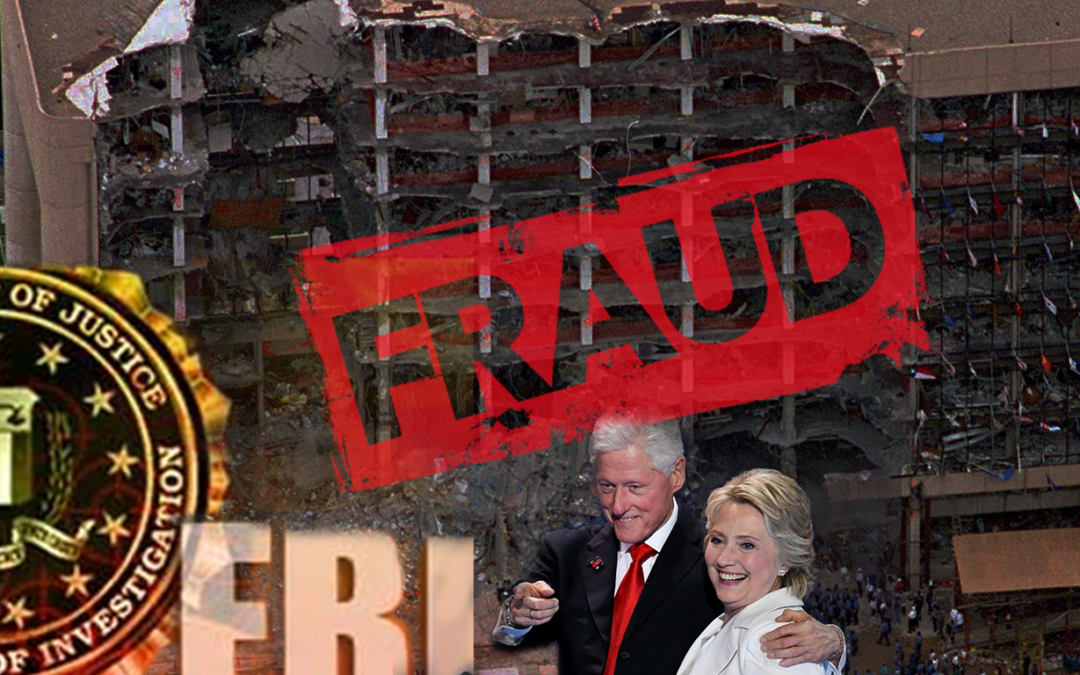


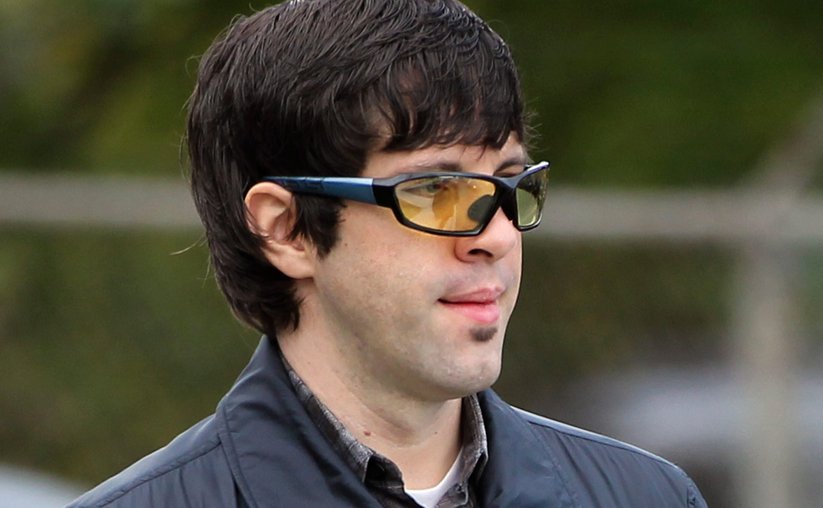
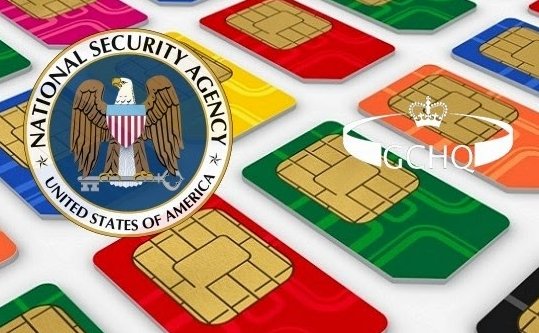
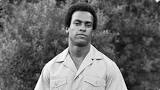









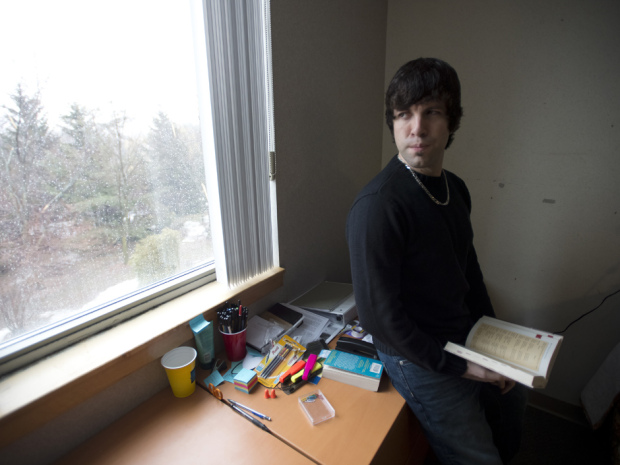

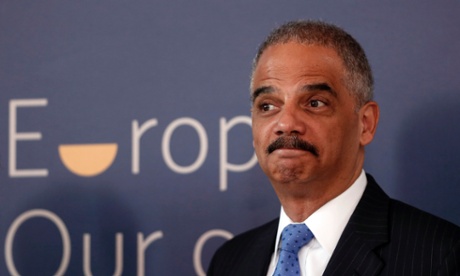


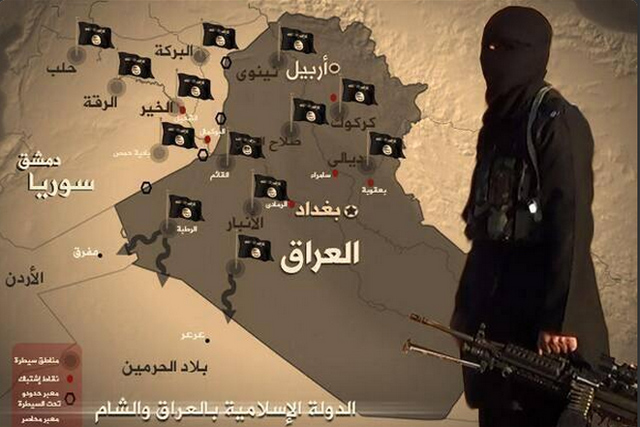

 a food processing plant in Moore, Oklahoma. The perpetrator, a black man named Alton Nolen, is said to have been fired from his job at Vaughan Foods. Nolen “recently started trying to convert some of his co-workers to the Muslim religion,” according to a police spokesperson.[12]


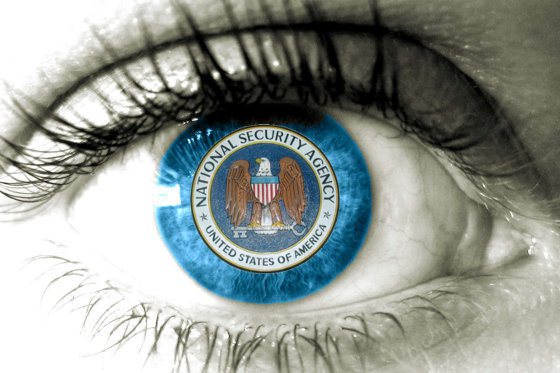

 re be “walled off” from defendants, court systems and the public.