People say if farmers don’t want problems from Monsanto, just don’t buy their GMO seeds.
Not so simple. Where are farmers supposed to get normal seed these days? How are they supposed to avoid contamination of their fields from GM-crops? How are they supposed to stop Monsanto detectives from trespassing or Monsanto from using helicopters to fly over spying on them?
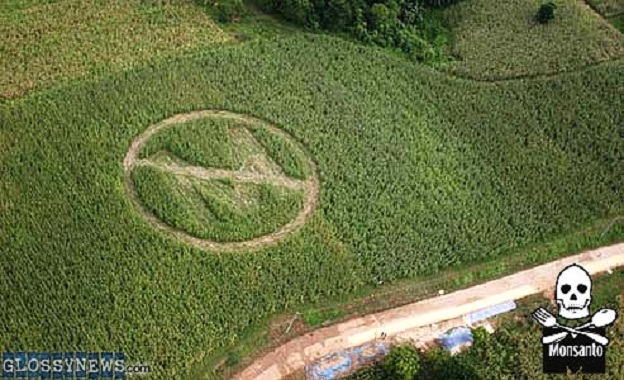
Monsanto contaminates the fields, trespasses onto the land taking samples and if they find any GMO plants growing there (or say they have), they then sue, saying they own the crop. It’s a way to make money since farmers can’t fight back and court and they settle because they have no choice.
And they have done and are doing a bucket load of things to keep farmers and everyone else from having any access at all to buying, collecting, and saving of NORMAL seeds.
1. They’ve bought up the seed companies across the Midwest.
2. They’ve written Monsanto seed laws and gotten legislators to put them through, that make cleaning, collecting and storing of seeds so onerous in terms of fees and paperwork and testing and tracking every variety and being subject to fines, that having normal seed becomes almost impossible (an NAIS approach to wiping out normal seeds). Does your state have such a seed law? Before they existed, farmers just collected the seeds and put them in sacks in the shed and used them the next year, sharing whatever they wished with friends and neighbors, selling some if they wanted. That’s been killed.
In Illinois, which has such a seed law, Madigan, the Speaker of the House, his staff is Monsanto lobbyists.
3. Monsanto is pushing anti-democracy laws (Vilsack’s brainchild, actually) that remove community’ control over their own counties so farmers and citizens can’t block the planting of GMO crops even if they can contaminate other crops. So if you don’t want a GM-crop that grows industrial chemicals or drugs or a rice growing with human DNA in it, in your area and mixing with your crops, tough luck.
Check the map of just where the Monsanto/Vilsack laws are and see if your state is still a democracy or is Monsanto’s. A farmer in Illinois told me he heard that Bush had pushed through some regulation that made this true in every state. People need to check on that.
4. For sure there are Monsanto regulations buried in the FDA right now that make a farmer’s seed cleaning equipment illegal (another way to leave nothing but GM-seeds) because it’s now considered a “source of seed contamination.” Farmer can still seed clean but the equipment now has to be certified and a farmer said it would require a million to a million and half dollar building and equipment … for EACH line of seed. Seed storage facilities are also listed (another million?) and harvesting and transport equipment. And manure. Something that can contaminate seed. Notice that chemical fertilizers and pesticides are not mentioned.
You could eat manure and be okay (a little grossed out but okay). Try that with pesticides and fertilizers. Indian farmers have. Their top choice for how to commit suicide to escape the debt they have been left in is to drink Monsanto pesticides.
5. Monsanto is picking off seed cleaners across the Midwest. In Pilot Grove, Missouri, in Indiana (Maurice Parr), and now in southern Illinois (Steve Hixon). And they are using US marshals and state troopers and county police to show up in three cars to serve the poor farmers who had used Hixon as their seed cleaner, telling them that he or their neighbors turned them in, so across that 6 county areas, no one talking to neighbors and people are living in fear and those farming communities are falling apart from the suspicion Monsanto sowed. Hixon’s office got broken into and he thinks someone put a GPS tracking device on his equipment and that’s how Monsanto found between 200-400 customers in very scattered and remote areas, and threatened them all and destroyed his business within 2 days.
So, after demanding that seed cleaners somehow be able to tell one seed from another (or be sued to kingdom come) or corrupting legislatures to put in laws about labeling of seeds that are so onerous no one can cope with them, what is Monsanto’s attitude about labeling their own stuff? You guessed it – they’re out there pushing laws against ANY labeling of their own GM-food and animals and of any exports to other countries. Why?
I just heard that some seed dealers urge farmers to buy the seed under the seed dealer’s name, telling the farmers it helps the dealer get a discount on seed to buy a lot under their own name. Then Monsanto sues the poor farmer for buying their seed without a contract and extorts huge sums from them.
Here’s a youtube video that is worth your time. Vandana Shiva is one of the leading anti-Monsanto people in the world. In this video, she says (and this video is old), Monsanto had sued 1500 farmers whose fields had simply been contaminated by GM-crops. Listen to all the ways Monsanto goes after farmers.
Do you know the story of Gandhi in India and how the British had salt laws that taxed salt? The British claimed it as theirs. Gandhi had what was called a Salt Satyagraha, in which people were asked to break the laws and march to the sea and collect the salt without paying the British. A kind of Boston tea party, I guess.
Thousands of people marched 240 miles to the ocean where the British were waiting. As people moved forward to collect the salt, the British soldiers clubbed them but the people kept coming. The non-violent protest exposed the British behavior, which was so revolting to the world that it helped end British control in India.
Vandana Shiva has started a Seed Satyagraha – nonviolent non-cooperation around seed laws – has gotten millions of farmers to sign a pledge to break those laws.
American farmers and cattlemen might appreciate what Gandhi fought for and what Shiva is bringing back and how much it is about what we are all so angry about – loss of basic freedoms. [The highlighting is mine.]
The Seed Satyagraha is the name for the nonviolent, noncooperative movement that Dr. Shiva has organized to stand against seed monopolies. According to Dr. Shiva, the name was inspired by Gandhi’s famous walk to the Dandi Beach, where he picked up salt and said, “You can’t monopolize this which we need for life.” But it’s not just the noncooperation aspect of the movement that is influenced by Gandhi. The creative side saving seeds, trading seeds, farming without corporate dependence–without their chemicals, without their seed.
” All this is talked about in the language that Gandhi left us as a legacy. We work with three key concepts.”
” (One) Swadeshi…which means the capacity to do your own thing–produce your own food, produce your own goods….”
“(Two) Swaraj–to govern yourself. And we fight on three fronts–water, food, and seed. JalSwaraj is water independence–water freedom and water sovereignty. Anna Swaraj is food freedom, food sovereignty. And Bija Swaraj is seed freedom and seed sovereignty. Swa means self–that which rises from the self and is very, very much a deep notion of freedom.
“I believe that these concepts, which are deep, deep, deep in Indian civilization, Gandhi resurrected them to fight for freedom. They are very important for today’s world because so far what we’ve had is centralized state rule, giving way now to centralized corporate control, and we need a third alternate. That third alternate is, in part, citizens being able to tell their state, ‘This is what your function is. This is what your obligations are,’ and being able to have their states act on corporations to say, ‘This is something you cannot do.’”
” (Three) Satyagraha, non-cooperation, basically saying, ‘We will do our thing and any law that tries to say that (our freedom) is illegal… we will have to not cooperate with it. We will defend our freedoms to have access to water, access to seed, access to food, access to medicine.’”
* Of all insecticides used globally each year, the amount used on cotton: 25%.
* Number of pesticides presently on the market that were registered before being tested to determine if they caused cancer, birth defects or wildlife toxicity: 400.
* Amount of time it takes to ban a pesticide in the U.S. using present procedures: 10 years.
* Number of active ingredients in pesticides found to cause cancer in animals or humans: 107.
* Of those active ingredients, the number still in use today: 83.
* Number of pesticides that are reproductive toxins according to the California E.P.A.: 15.
* Number of pesticides found to cause reproductive problems in animals: 14.
* Most serious cause of groundwater pollution confirmed in California: agricultural chemicals.
* Number of pesticides found in drinking wells of California since 1982: 68.
* Number of California wells affected: 957.
* Number of farming communities affected: 36.
* % of the total U.S. population supplied with drinking water from groundwater: 50%. * Number of different pesticides documented by the E.P.A. to be present in groundwater in 1988: 74. * Number of states affected: 32.
* Most acutely toxic pesticide registered by the E.P.A.: aldicarb (used frequently on cotton).
* In California between 1970 and 1994 amount of total aldicarb used on cotton: 85 to 95%.
* Number of states in which aldicarb has been detected in the groundwater: 16.
* Percentage of all U.S. counties containing groundwater susceptible to contamination from agricultural pesticides and fertilizers: 46%. * Number of people in the U.S. routinely drinking water contaminated with carcinogenic herbicides: 14 million. * Percentage of municipal water treatment facilities lacking equipment to remove these chemicals from the drinking water: 90%.
* Estimated total costs for U.S. groundwater monitoring: US$900 million to 2.2 billion.
* Estimated costs for U.S. groundwater carbon filtration cleanup: up to $25 million per site.
* Percentage of all food samples tested by the FDA in 1980 which contained pesticide residues: 38%.
* Of the 496 pesticides identified as likely to leave residues in food, the percentage which FDA tests can routinely detect: 40%.
* Average number of serious pesticide-related accidents between World War II and 1980: 1 every 5 years.
* Average number of serious pesticide-related accidents between 1980 and the present: 2 every year. * Increase in cancer rates between 1950 and 1986: 37%.
* Number of Americans who will learn they have cancer this year: 1 million.
* Number who will die from it: 500,000.
* Cost to U.S. of cancer in terms of lost production, income, medical expenses and research resources: US$ 39 billion each year. * Highest rate of chemical-related illness of any occupational group in the U.S.A.: farm workers.
* Pesticide-related illnesses among monsanto farm workers in U.S.A. each year: Approximately 300,000.
* Number of people in the U.S. who die each year from cancer related to pesticides: 10,400.
The US government has for the first time signed off on a large-scale experiment involving genetically modified crops, which will lead to biotech big shot Monsanto introducing an engineered corn seed across America from South Dakota to Texas.
The Monsanto Corporation has been given the go-ahead to test out a man-made corn variant that they claim can thrive in dry, unfavorable conditions. With much of the American south and southwest experiencing abnormally arid conditions, the freak-seed could revitalize a chunk of the nation’s agriculture.
More likely, however, is that a success will mean revitalization in terms of Monsanto’s profits and not much more.
The government has agreed to let Monsanto test out the biotech crop on farms owned by the company from the state of South Dakota down through Texas to see if the seed stands to be commercially viable; if so, it is expected to be made available for purchase in 2013. With America’s small-time agriculturists in danger — and already largely threatened by industry giant Monsanto — a success for the seed could see yet more farmers finding themselves unable to compete and forced to throw in the towel.
Monsanto has in recent years attracted criticism for questionable legal practices after it has introduced lawsuits against small-time farmers for the unauthorized use of genetically-modified crops patented by the corporation. In many instances, it is believed that the smaller farms in question only ended up with Monsanto seeds due to wind, rodents and other forces of nature bringing the crops across corporate farms and onto their own terrain. Unable to compete against Monsanto in court, however, the company has time-and-time-again bought out its competition and, as a result, made great strides as of late in terms of monopolizing the seed biz.
Last month Jim Gerritsen, president of the Organic Seed Growers and Trade Association, issued a statement saying he and others were serious about saving farms from being forced to close due to corporate muscling. “Monsanto’s threats and abuse of family farmers stops here,” said Gerritsen. “Monsanto’s genetic contamination of organic seed and organic crops ends now. Americans have the right to choice in the marketplace — to decide what kind of food they will feed their families — and we are taking this action on their behalf to protect that right to choose.”
Around 300,000 organic farmers are currently awaiting a court decision to see if a US District Court will hear a lawsuit against Monsanto that, if successful, will keep the company from continuing to sue small-time agriculturists. Between 1997 and 2010, Monsanto tackled 144 organic farms with lawsuits and investigated roughly 500 plantations annually during that span with their so-called “seed police.” Gerritsen and others want to see to it that Monsanto can’t do that anymore, but if they are denied a day in court and the new corn crop prevails, it could soon be the final curtain call for many of America’s independent farmers.
Governmental approval of the modified crop marks the first time that the US Department of Agriculture’s Animal and Plant Health Inspection Service has okayed a product that has been genetically engineered to resist a weather condition such as a drought, rather than a pest or herbicide. Acting on concerns that Washington has been overly encouraging to Monsanto as they force farms into foreclosure, US-based non-profit group Public Employees for Environmental Responsibility went after the White House recently for ignoring Freedom of Information Act requests. Members of PEER suspect that if they can come into possession of certain correspondence, they can link the Obama administration to key lobbyists for Monsanto.
Protesters with the Occupy Wall Street movement in the region Monsanto plans to test its new seed are holding a conference this weekend in St. Louis, dubbed Occupy Midwest. Members of the group say they intend on waging a demonstration against Monsanto, which has offices in the area.
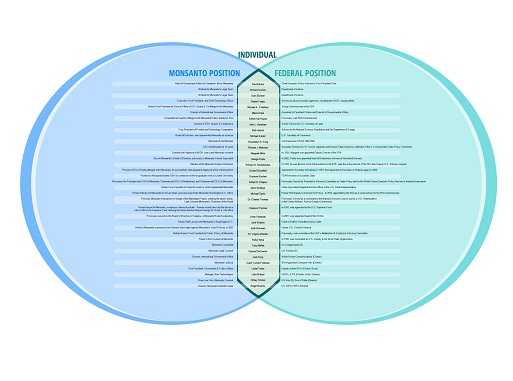
(NaturalNews) There is a conspiracy of selling out happening in America. Politics and personal interest it would seem determine government policies over and above health and safety issues. When President Obama appointed Michael Taylor in 2009 as senior adviser for the FDA, a fierce protest ensued from consumer groups and environmentalists. Why? Taylor used to be vice president for Monsanto, a multinational interested in marketing genetically modified (GM) food. It was during his term that GMO’s were approved in the US without undergoing tests to determine if they were safe for human consumption.
The danger of GMO’s
The question of whether or not genetically modified foods (GMO’s) are safe for human consumption is an ongoing debate that does not seem to see any resolution except in the arena of public opinion. Due to lack of labeling, Americans are still left at a loss as to whether or not what is on the table is genetically modified. This lack of information makes the avoiding and tracking of GM foods an exercise in futility. Below are just some of the food products popularly identified to be genetically modified:
1. Corn – Corn has been modified to create its own insecticide. The U.S. Food and Drug Administration (FDA) has declared that tons of genetically modified corn has been introduced for human consumption. Monsanto has revealed that half of the US’s sweet corn farms are planted with genetically modified seed. Mice fed with GM corn were discovered to have smaller offspring and fertility problems.
2. Soy – Soy has also been genetically modified to resist herbicides. Soy products include soy flour, tofu, soy beverages, soybean oil and other products that may include pastries, baked products and edible oil. Hamsters fed with GM soy were unable to have offspring and suffered a high mortality rate.
3. Cotton – Like corn and soy, cotton has been designed to resist pesticides. It is considered food because its oil can be consumed. Its introduction in Chinese agriculture has produced a chemical that kills cotton bollworm, reducing the incidences of pests not only in cotton crops but also in neighboring fields of soybeans and corn. Incidentally, thousands of Indian farmers suffered severe rashes upon exposure to BT cotton.
4. Papaya – The virus-resistant variety of papaya was commercially introduced in Hawaii in 1999. Transgenic papayas comprised three-fourths of the total Hawaiian papaya crop. Monsanto bestowed upon Tamil Nadu Agricultural University in Coimbatore technology for developing papaya resistant to the ringspot virus in India.
5. Rice – This staple food from South East Asia has now been genetically modified to contain a high amount of vitamin A. Allegedly, there are reports of rice varieties containing human genes to be grown in the US. The rice will create human proteins useful for dealing with infant diarrhea in the 3rd world. China Daily, an online journal, reported potential serious public health and environment problems with genetically modified rice considering its tendency to cause allergic reactions with the concurrent possibility of gene transfers.
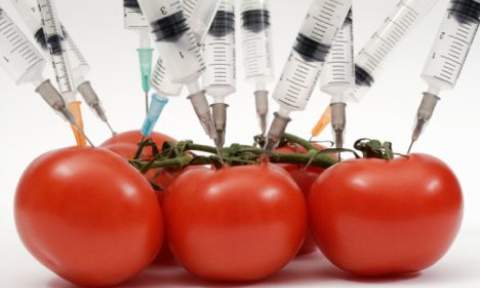
6. Tomatoes – Tomatoes have now been genetically engineered for longer shelf life, preventing them from easily rotting and degrading. In a test conducted to determine the safety of GM tomatoes, some animal subjects died within a few weeks after consuming GM tomatoes.
7. Rapeseed – In Canada, this crop was renamed canola to differentiate it from non-edible rapeseed. Food stuff produced from rapeseed includes rapeseed oi (canola oil) l used to process cooking oil and margarine. Honey can also be produced from GM rapeseed. German food surveillance authorities discovered as much as a third of the total pollen present in Canadian honey may be from GM pollen. In fact, some honey products from Canada were also discovered to have pollen from GM rapeseed.
8. Dairy products – It has been discovered that 22 percent of cows in the U.S. were injected with recombinant (genetically modified) bovine growth hormone (rbGH). This Monsanto created hormone artificially forces cows to increase their milk production by 15 percent. Milk from cows treated with this milk inducing hormone contains increased levels of IGF-1 (insulin growth factors-1). Humans also have IGF-1 in their system. Scientists have expressed concerns that increased levels of IGF-1 in humans have been associated with colon and breast cancer.
9. Potatoes – Mice fed with potatoes engineered with Bacillus thuringiensis var. Kurstaki Cry 1 were found to have toxins in their system. Despite claims to the contrary, this shows that Cry1 toxin was stable in the mouse gut. When the health risks were revealed, it sparked a debate.
10. Peas – Peas that have been genetically modified have been found to cause immune responses in mice and possibly even in humans. A gene from kidney beans was inserted into the peas creating a protein that functions as a pesticide.
The GMO link to strange disease
As early as 2008, NaturalNews.com reported about a condition called Morgellon’s disease. The article went on to report the symptoms of the disease as follows: crawling, stinging, biting and crawling sensations; threads or black speck-like materials on or beneath the skin; granules, lesions. Some patients report fatigue, short term memory loss, mental confusion, joint pain and changes in vision. Furthermore, there have been reports of substantial morbidity and social dysfunction leading to a dip in work productivity, job loss, total disability, divorce, loss of child custody and home abandonment.
Prior to its reporting, the condition was dismissed as a hoax, but upon further investigation, the evidence pointed out that the disease was real and may be related to genetically modified food.
Despite this link being established, the CDC declared Morgellon’s disease of unknown origin. Worse, the medical community could not offer any information to the public regarding a cause for the symptoms.
When a research study was conducted on fiber samples taken from Morgellons patients, it was discovered that the fiber samples of all the patients looked remarkable similar. And yet, it did not seem to match any common environmental fiber. When the fiber was broken down, and it’s DNA extracted, it was discovered to belong to a fungus. Even more surprising was the finding that the fibers contained Agrobacterium, a genus gram-negative bacteria with the capacity of transforming plant, animal and even human cells.
Morgellon’s disease is not the only condition associated with genetically modified foods. A growing body of evidence has shown that it may cause allergies, immune reactions, liver problems, sterility and even death. Moreover, based on the only human feeding experiment conducted on genetically modified food, it was established that genetic material in genetically modified food product can transfer into the DNA of intestinal bacteria and still continue to thrive.
Heeding the warning
Time and again, the American Academy of Environmental Medicine (AAEM) has warned that GMOs pose a serious threat to health, and it is no accident that there can be a correlation between it and adverse health effects. In fact, the AAEM has advised doctors to tell their patients to avoid GMOs as the introduction of GMOs into the current food supply has correlated with an alarming rise in chronic diseases and food allergies.
This should come as no surprise. More than 30 years ago a food supplement called L-trytophan killed 100 people and affected 5,000 to 10,000 more. The cause was narrowed down to the genetic engineering process used in its production. If the symptoms had not had three simultaneous characteristics – namely, they were unique, acute and fast-acting – the disease could never have been identified.
If science could assure us with certainty that serious consequences do not wait for us at the end of the line, it might be to our best interest to let this opportunity pass. Progressive thinking in terms of profit is certainly not wrong. But to brush off precaution on the convenient argument that there is not enough evidence to prove that GM food is indeed harmful is sheer irresponsibility. It certainly is a lame excuse to offer in the event that GM foods are indeed proven to contain health hazards.
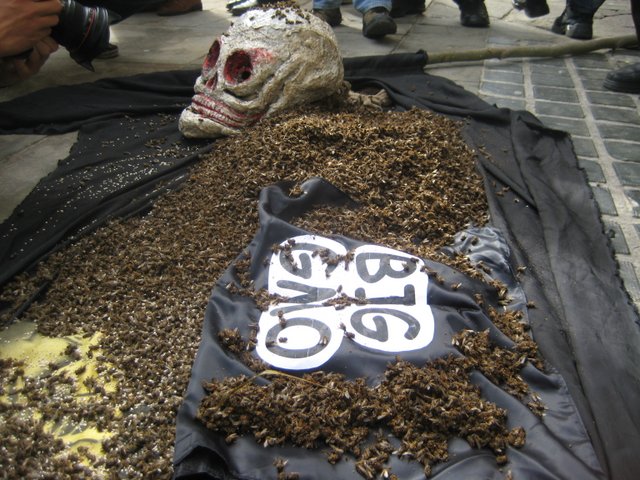
On March 15, over 1,500 beekeepers and anti-GMO protesters marched through the streets of Warsaw, depositing thousands of dead bees on the steps of the Ministry of Agriculture in protest of genetically modified foods and their pesticides which are together largely responsible for the killing off of bees, butterflies, moths and other beneficial pollinators in great numbers.
Later that day the Minister of Agriculture, Marek Sawicki, announced plans to ban MON810, which has already produced millions of hectares of pesticide resistant “superweeds” in the US.
The Polish Beekeepers Association organized the protest, joining forces with International Coalition to Protect the Polish Countryside (ICPPC) and the Coalition for a GMO Free Poland. Targeting Monsanto’s MON810 GM corn in particular, they also called for a complete ban on all genetically engineered crops as well as the pesticides found to be most damaging to the environment (and particularly to bees).
In 2008, the Polish Parliament banned GM feed, including both the planting and importing of GM crops. “Despite this progressive step,” reports Food Travels, “the European Commission has refused to accept regional bans on GMOs, keeping Polish farmers, producers, and activists on the offensive.”
Regardless, says the ICPPC, “None of the nine European Union countries that have already prohibited MON 810 did so by asking the permission of the EU.”
There was a great variety of attire as beekeepers dressed in their work bee suits and masks and ran their hive smoke guns as they marched, many wore yellow jackets with the famous Einstein quote, and many more original signs, props, and costumes. Go here for more photos.
The ICPPC is asking Polish residents to write Minister of Agriculture Marek Sawicki, demanding that he implement an immediate moratorium on GM crops, without waiting for EU approval.
It’s not enough that the biotech industry — led by multinational corporations such as Monsanto, Dow, Syngenta, BAS, and Dupont — is poisoning our food and our planet. It’s also poisoning young minds.
In a blatant attempt at brainwashing, the Council for Biotechnology Information(CBI) has widely circulated what it calls a Biotechnology Basics Activity Bookfor kids, to be used by “Agriculture and Science Teachers.” The book — calledLook Closer at Biotechnology — looks like a science workbook, but reads more like a fairy tale. Available on the council’s Web site, its colorful pages are full of friendly cartoon faces, puzzles, helpful hints for teachers — and a heavy dose of outright lies about the likely effects of genetic engineering on health, the environment, world hunger and the future of farming.
CBI’s lies are designed specifically for children, and intended for use in classrooms.
At a critical time in history when our planet is veering toward a meltdown, when our youth are suffering the health consequences (obesity, diabetes, allergies) of Big Ag and Food Inc.’s over-processed, fat-and sugar-laden, chemical-, and GMO-tainted foods, a time when we should be educating tomorrow’s adults about how to reverse climate change, how to create sustainable farming communities, how to promote better nutrition, the biotech industry’s propagandists are infiltrating classrooms with misinformation in the guise of “educational” materials.
Brainwashing children. It’s a new low, even for Monsanto.
You don’t have to read beyond the first page ofLook Closer at Biotechnology to realize that this is pure propaganda:
Hi Kids! Welcome to the Biotechnology Basics Activity Book. This is an activity book for young people like you about biotechnology — a really neat topic. Why is it such a neat topic? Because biotechnology is helping to improve the health of the Earth and the people who call it home. In this book, you will take a closer look at biotechnology. You will see that biotechnology is being used to figure out how to: 1) grow more food; 2) help the environment; and 3) grow more nutritious food that improves our health. As you work through the puzzles in this book, you will learn more about biotechnology and all of the wonderful ways it can help people live better lives in a healthier world. Have fun!
Before we take a closer look at the lies laid out in Look Closer at Biotechnology — lies that are repeated over and over again, the better to imprint them on young minds — let’s take a closer look at the book’s publisher. The Council for Biotechnology Information describes itself as “a non-profit 501(c)(6) organization that communicates science-based information about the benefits and safety of agricultural biotechnology and its contributions to sustainable development.”
According to the Internal Revenue Service, a 501(c)(6) organization is a “business league” devoted to the improvement of business conditions of one or more lines of business. The mission of a 501(c)(6) organization “must focus on the advancement of the conditions of a particular trade or the interests of the community.”
The bottom line is that CBI exists to advance the interests of the corporations that it was formed to promote — in this case, the biotech industry. While it purports to communicate “science-based information,” in fact, that’s not its mission at all. Its mission is to maximize the profits of Monsanto and the biotech industry.
Not surprisingly, CBI is funded largely by the biotech, chemical, pesticide, and seed industry giants: BASF, Bayer CropScience, Dow Agro Sciences, Dupont, Monsanto, and Syngenta.
There’s nothing new about corporations lying to the public. Corporations routinely lie to their employees. They lie in advertising. They lie in the lopsided so-called studies and research projects that they self-fund in order to guarantee the outcomes that support their often false, but self-serving premises. They buy off politicians, regulatory officials, scientists, and the media.
Although here we’re focusing on the biotech industry trying to brainwash our kids, CBI certainly does not limit its propaganda to just children. CBI recently contributed $375,000 to the Coalition Against the Costly Labeling Law — a Sacramento-based industry front group working to defeat the California Right to Know Genetically Engineered Food Act of 2012. If passed in November, this citizens’ ballot Initiative will require food manufacturers and retailers to label foods containing genetically engineered ingredients, as well as ban the routine industry practice of labeling or advertising GE-tainted foods as “natural” or “all natural.” CBI, the Farm Bureau, and the Grocery Manufacturers Association are campaigning furiously to preserve their “right” to keep consumers in the dark about whether their food has been genetically engineered or not, and to preserve their “right” to mislabel gene-altered foods as “natural.”
Clearly, the Council for Biotechnology Information has little or no regard for “science-based” information. But lies aimed directly at kids — under the guise of science education? In our schools?
Let’s take a closer look at the claims made in Look Closer at Biotechnology.
Lie #1: “Biotechnology is one method being used to help farmers grow more food.” (page 7)
This statement is patently false.
In 2009, in the wake of similar studies, the Union of Concerned Scientists examined the data on genetically engineered crops, including USDA statistics. Their report — Failure to Yield — was the first major effort to evaluate in detail the overall yields of GE crops after more than 20 years of research and 13 years of commercialization in the United States. According to the definitive UCS study, “GE has done little to increase overall crop yields.” A number of studies indicate in fact that GE soybeans, for example, actually produce lower yields than non-genetically engineered varieties.
Research conducted by the India research group, Navdanya, and reported in The GMO Emperor Has No Clothes turns up the same results:
Contrary to the claim of feeding the world, genetic engineering has not increased the yield of a single crop. Navdanya’s research in India has shown that contrary to Monsanto’s claim of Bt cotton yield of 1500 kg per acre, the reality is that the yield is an average of 400-500 kg per acre. Although Monsanto’s Indian advertising campaign reports a 50-percent increase in yields for its Bollgard cotton, a survey conducted by the Research Foundation for Science, Technology and Ecology found that the yields in all trial plots were lower than what the company promised. (Page 11).
The claim that GE crops increase agricultural yields is a blatant lie. Equally untrue is the industry’s claim that it is motivated by the desire to feed the hungry of the world. As the Union of Concerned Scientists points out: “For the most part, genetic engineering techniques are being applied to crops important to the industrialized world, not crops on which the world’s hungry depend.” Where does all the genetically engineered soy and corn — two of the largest GE crops — end up? In animal feed, processed junk foods — and school lunchrooms. Precious little goes to feed the hungry in impoverished regions.
One of the sub-arguments related to increasing yields is the biotech industry’s claim that GMO crops are more resistant to pests — hence more of the crops survive. In Look Closer at Biotechnology kids are told that agricultural biotechnology is a “precise way to make seeds with special qualities. These seeds will allow farmers to grow plants that are . . . more resistant to pests . . .” In fact widespread commercialization of herbicide-resistant and Bt-spliced GE crops has engendered a growing army of superweeds and superpests, oblivious to all but the most powerful and toxic pesticides.
What we should be teaching kids in science class is what scientists have been warning for years — that any attempt to increase resistance to pests through genetic engineering will ultimately fail. Insects — and diseases — will build up a tolerance over time, and evolve into stronger and stronger strains. That’s how nature works — and even Monsanto can’t fool Mother Nature. Organic agriculture, on the other hand, utilizing crop rotation, biodiversity, natural fertilizers, and beneficial insects, reduces crop loss from pests and weeds, without the collateral damage of toxic pesticides and fertilizers.
Recently, 22 leading scientists told the US Environmental Protection Agency that it should act with “a sense of urgency” to urge farmers to stop planting Monsanto’s genetically engineered Bt corn because it will no longer protect them from the corn rootworm. Bt corn is genetically engineered with bacterial DNA that produces an insecticide in every cell of the plant, aimed at preventing corn rootworm. Except that corn rootworms have now developed resistance to these GE mutants.
Just as scientists had predicted years ago, a new generation of insect larvae has evolved, and is eating away at the roots of Monsanto’s Bt corn — a crop farmers paid a high price for on Monsanto’s promise that they would never have to worry about corn rootworm again. Scientists are now warning of massive yield loss and surging corn costs if the EPA doesn’t act quickly to drastically reduce Bt crops’ acreage and ensure that Monsanto makes non-GMO varieties of corn available to farmers.
“Massive yield loss” doesn’t sound like “more food” — whether you’re 12 years old or 112.
What we should be telling kids is what responsible scientists and farmers — experts at the United Nations — have been saying all along: Eco-farming candouble food output. According to a UN study:
Eco-farming projects in 57 nations showed average crop yield gains of 80 percent by tapping natural methods for enhancing soil and protecting against pests.
Projects in 20 African countries resulted in a doubling of crop yields within three to 10 years.
Sound ecological farming can significantly boost production and in the long term be more effective than conventional farming.
Lie #2: “Biotechnology can help farmers and the environment in many ways.” (page 8)
Two lies for the price of one.
Biotechnology — specifically genetic engineering — helps neither farmers nor the environment, according to the majority of legitimate scientists and economists. In fact, the opposite is true. Genetic engineering of seeds has wreaked havoc on the environment and brought misery to hundreds of thousands of small farmers all over the world.
The majority of farmers in developing countries struggle to afford even the most basic requirements of seeds and fertilizers. Their survival depends on the age-old practice of selecting, saving and sharing seeds from one year to the next. When multinational corporations move into areas previously dominated by small farmers, they force those farmers to buy their patented seeds and fertilizers — under pretense of higher yields, and under threats of lawsuits if they save or share the seeds. Every year, they’re forced to buy more seeds and more chemicals from corporations — and when the promises of higher yields and higher incomes prove empty, farmers go bankrupt.
Compounding their corporate crimes, when Monsanto’s patented seeds contaminate the non-GMO crops of small farmers (because the seeds drift across property lines) Monsanto routinely sues farmers for growing their patented seeds illegally, even though the seeds were actually unwanted trespassers. Further, the company has ruined the livelihoods of small farmers by harassing them for illegally growing patented seeds, even in cases where no patented seeds have been grown, either knowingly or by accident.
As Monsanto and others have expanded worldwide, into India, China, Pakistan, and other countries, the effect on small farmers has been devastating. In India, for instance, after World Trade Organization policies forced the country in 1998 to open its seed sector to companies like Cargill, Monsanto and Syngenta, farmers quickly found themselves in debt to the biotech companies that forced them to buy corporate seeds and fertilizers and pesticides, destroying local economies. Hundreds of thousands of India’s cotton farmers have committed suicide.
And according to a Greenpeace report, poorer farmers in the Philippines were sold Monsanto’s Bt corn as a “practical and ecologically sustainable solution for poor corn farmers everywhere to increase their yields” only to find the opposite was true: Bt corn did not control pests and was “not ecologically sustainable.”
Which brings us to one more of the Council for Biotechnology Information’s lies to kids: That agricultural biotechnology is good for the environment.
Study after study, over more than a decade, has warned us of just the opposite. Even the pro-biotech USDA has admitted that GE crops use more pesticides, not less than non-GE varieties. Genetic engineering results in evermore pesticides being dumped into the environment, destroying soil and water, human and animal health, and threatening the biodiversity of the planet.
How about telling kids instead that numerous reports, including one from theGerman Beekeepers Association, have linked genetically engineered Bt corn to the widespread disappearance of bees, or what is now referred to as Colony Collapse Disorder? And while we’re at it, maybe we should remind kids of the Albert Einstein’s quote: “If the bee disappeared off the surface of the globe then man would only have four years of life left. No more bees, no more pollination, no more plants, no more animals, no more man.”
Maybe we should also tell them that glyphosate, the active ingredient in Monsanto’s herbicide, Roundup, the most widely used herbicide in the world, kills Monarch butterflies, fish, and frogs, destroys soil fertility, and pollutes our waterways and drinking water.
The fact is, widespread use of Monsanto’s Roundup in all agricultural and urban areas of the United States is destroying the environment, pure and simple. US Geological Survey studies released this month show that Roundup is now commonly found in rain and rivers in agricultural areas in the Mississippi River watershed, where most applications are for weed control on GE corn, soybeans and cotton. Here’s the real truth, from an article published this past week: Monsanto’s Roundup is actually threatening the crop-yielding potential of the entire biosphere. According to the article, new research published in the journalCurrent Microbiology highlights the extent to which “glyphosate is altering, and in some cases destroying, the very microorganisms upon which the health of the soil, and — amazingly — the benefits of raw and fermented foods as a whole, depend.”
Lie #3: “Scientists are using biotechnology to grow foods that could help make people healthier.” (page 11)
This is the perhaps the most outrageous lie of all. Telling kids that GE foods are more nutritious is tantamount to telling them Hostess cupcakes and Coca-Cola are health foods.
Genetic engineering — of human food and food for animals that humans eat — has been linked to a host of diseases and health issues, including auto-immune disorders, liver and kidney damage, nutritional deficiencies, allergies, accelerated aging, infertility, and birth defects.
There’s a growing and alarming body of research indicating that GMO foods are unsafe, and absolutely no research whatsoever proving that they are safe. And yet the USDA and FDA continue to approve, and just this past month even agreed tospeed up approval of these crops that scientists and physicians increasingly link to poor health.
Instead of force-feeding kids lies in bogus activity books, how about having them read some truthful articles?
The studyBt Toxin Kills Human Kidney Cells says Bt toxins are not “inert” on human cells, and may indeed be toxic, causing kidney damage and allergies observed in farmers and factory workers handling Bt crops. The article supportsprevious studies done on rats, showing that animals fed on three strains of GE corn made by Monsanto suffered signs of organ damage after only three months.
It is abundantly clear that both GMOs made to be resistant to herbicides (aka “Roundup Ready”) and those made to produce insecticides have damaging impacts on the health of mammals who consume them, particularly in the liver and kidneys. We already know that from the trials of 90 days and less. In looking a little deeper into the info, we found a number of issues that point to a probable increased level of toxicity when these foods are consumed over the long term, including likely multi-generational effects.
Multi-generational effects. Eating GMO foods harms not only our health, and our kids’ health — but quite possibly their kids, too — even if we stop eating them today.
In a recent report to the United Nations General Assembly Human Rights Council by Special Rapporteur on the right to food, Olivier De Schutter, Schutter outlines the case for sustainable agricultural practices (the antithesis of industrial agribusiness, with its GE crops and heavy reliance on chemical fertilizers and pesticides). He also addresses the links between health and malnutrition. In the report, Schutter shows why undernutrition, micronutrient deficiency and overnutrition are different dimensions of malnutrition that must be addressed together through a life-course approach. From the report’s summary:
Existing food systems have failed to address hunger, and at the same time encourage diets that are a source of overweight and obesity that cause even more deaths worldwide than does underweight. A transition towards sustainable diets will succeed only by supporting diverse farming systems that ensure that adequate diets are accessible to all, that simultaneously support the livelihoods of poor farmers and that are ecologically sustainable.
Corporate greed plus a complicit government have allowed for the rampant poisoning of our food and environment, and the demise of sustainable agriculture practices — practices sorely needed if we are going to feed the world’s population, and avoid a world health crisis. And we’ve exported the same misery and destruction to foreign countries far and wide.
Propaganda like the CBI’s Look Closer at Biotechnology has brainwashed many of our kids into thinking that the biotech industry has people — not profits — in its best interests. The book’s claims are laughable. But framing blatant lies as “science” for children in schools borders on criminal.
For parents and teachers out there, here’s an alternate lesson plan. Because world hunger is a concern, because saving our planet does matter, and because better health is a worthy and achievable goal, let’s ask our kids to think critically, instead of accepting at face value “information” attractively packaged by multinational corporations.
Don M. Huber, emeritus soil scientist of Purdue University puts it in terms everyone, kids included, can understand. Huber talks about a range of key factors involved in plant growth, including sunlight, water, temperature, genetics, and nutrients taken up from the soil. “Any change in any of these factors impacts all the factors,” he said. “No one element acts alone, but all are part of a system.” “When you change one thing,” he said, “everything else in the web of life changes in relationship.”
This is what we should be teaching the future stewards of our planet.
“Farmers worldwide are resisting for food sovereignty, but the rest of the world must join us.”
– Common Dreams staff
A report released today shows that worldwide opposition to the biotechnology giant Monsanto and “the agro-industrial model that it represents” is growing.
(photo: Alexis Baden-Mayer / Millions Against Monsanto)
La Via Campesina, Friends of the Earth International, and Combat Monsanto, the groups who issued the report, show that small farmers, groups and communities in every continent are rising up to resist Monsanto’s products and environmental harm. While Monsanto’s — and other giant agribusinesses’ — approach, including genetically modified crops, has been shown to hurt biodiversity, local food knowledge and the environment, the report shows that “food sovereignty is a real and feasible alternative.”
“This new report documents the intense opposition to this powerful transnational company, which peddles its genetically modified products seemingly without regard for the associated social, economic and environmental costs,” said Martin Drago, Friends of the Earth International’s Food Sovereignty programme coordinator.
“This report demonstrates that the increasingly vocal objections from social movements and civil society organisations are having an impact on the introduction of GM crops.” said Josie Riffaud from La Via Campesina.
The report notes that an “unprecedented agribusiness offensive underway, under the banner of the new ‘green economy’” positioning giant agribusiness companies like Monsanto to have even greater control. The report’s highlighting the “offensive” echoes a report issued last month on global water security from the Defense Intelligence Agency that also pushed biotechnology and agricultural exports rather than agroecology and food sovereignty.
“Who will hold Monsanto responsible for the global depletion of biodiversity, soil erosion, and violations of peasant rights wrought by the application of petroleum-based inputs required by industrial agriculture?” asked Dena Hoff of the National Family Farm Coalition / La Via Campesina North America. “Farmers worldwide are resisting for food sovereignty, but the rest of the world must join us,” she added.
* * *
Selections from the report:
France
‘Les Faucheurs Volontaires’: tactical non-violent resistance against GM
The Voluntary Reapers or ‘Faucheurs Volontaires’ are a group of self-organised non-violent French activists that have led several direct actions to ‘neutralise’ field tests set up by GM corporations and, to a lesser extent, unauthorised fields cultivated by pro-GM farmers. Jose Bové has been an important actor in the movement and a spokesman for the anti-GM activists, although this organisation does not recognise any leadership as such.
The Voluntary Reapers act openly and unmasked, and they claim responsibility for all their actions, sometimes turning themselves in to the police. They argue that civil disobedience is necessary in order to strengthen democracy and defend the common good against private interests backed by public authorities. They personally assume the civil and penal consequences of their actions in court, and use these trials to deliver their views against Monsanto and GMOs to the public.
In August 2010, 60 faucheurs volontaires and 15 farmers were sentenced to two months suspended prison sentences, after they tore up 70 GM grapevines, which were being cultivated as part of a GM trial in Colmar in Alsace, in north-eastern France.
In August 2011, energised by the success in achieving a temporary ban on Bt brinjal, farmers and activists carried out ‘Monsanto, Quit India’ protests across the country to coincide with Independence Day, drawing parallels with the anti-colonial, civil disobedience ‘Quit India’ movement that campaigned against British rule. Just as political sovereignty was demanded previously, farmers and consumers are now calling for food sovereignty. Monsanto is targeted as it is an archetypal, aggressive foreign corporation that hurts farmers and small-scale, safe domestic food producers.
The Tamil Nadu Farmers’ Association, for example, organised a day of action in Coimbatore, mobilising in solidarity with other farmers opposing the monopolisation of the Indian seed industry by corporations like Monsanto.
In Uttar Pradesh, the Bhartiya Kissan Union led a five-day long protest against GM crop trials, celebrating the agro-ecological approaches that have successfully produced high rice yields in the region. Other protests have taken place in the states of Orissa, Andhra Pradesh, Bihar, Karnataka, Maharashtra, Punjab, Madhya Pradesh and Gujarat.68
* * *
Haiti
Haitians oppose seed aid
In June 2010, more than 10,000 Haitians took to the streets under the initiative of Papaye Peasant Movement (MPP), a member of La Via Campesina, to oppose Monsanto and demand food sovereignty, including local control over native seeds. This popular opposition to Monsanto stems from its announcement, in May 2010, that it had made a shipment of over 60 tons of hybrid maize and vegetable seeds to Haiti and anticipated sending another 400 tons over the next year, with the support of USAID. But these hybrid seeds cannot be replanted from one season to another and require massive amounts of pesticides, making farmers dependent on corporate seed and chemicals producers. Monsanto stated that this decision was made at the World Economic Forum in Davos, Switzerland, and it seems that Haitian officials were not involved in the discussions.
Haitian peasant leader Chavannes Jean-Baptiste from the Peasant Movement of Papaye (MPP), part of La Via Campesina, has described Monsanto’s seed aid as the “next earthquake.” This donation sparked suspicion and anger as the local seed heritage is vanishing because of the increasing domination of multinational seed and agrochemical corporations. Globally, FAO estimates that in the last century around 75% of genetic diversity of agricultural crops has been lost. InHaiti, around 65% of the population is made up of subsistence farmers living in rural areas.
* * *
(Related video: Haitian farmers burning Monsanto’s “gift” of seeds:)
* * *
U.S.
Stopping the spread of GM crops into national wildlife refuges
According to the non-profit alliance of Public Employees for Environmental Responsibility (PEER), the US government has been collaborating with Monsanto to secure agricultural export markets, removing barriers to the spread of GM crops, including into national wildlife refuges.
However, most of these crops are modified to be resistant to Monsanto’s Roundup herbicide, which is causing an over-reliance on these toxic agricultural chemicals that have spawned an epidemic of herbicide-resistant ‘superweeds’. The spread of these superweeds within national wildlife refuges could have a devastating impact on biodiversity.
Nevertheless, in recent years farming on these refuges has been opened up to GMOs, primarily Monsanto’s Roundup resistant crops. However, legal battles led by PEER and the Centre for Food Safety (CFS) forced the US Fish & Wildlife Service (FWS) to end the planting of GM crops in 12 states.
* * *
South Africa
South African farmers reject GM maize
A solid body of scientific evidence shows that organic matter is the most important trait in making soils more resilient to drought and erratic rainfall. No such evidence exists for GM crops. Biotechnology has proved unable to develop drought-resistant seeds, which would require major changes to the plant’s metabolism; and no GM crops have yet been developed that are yield enhancing.
In October 2011, however, South African authorities approved imports of Bayer CropScience’s GM rice, LL62, which is engineered to be resistant to glufosinate ammonium. Famers and civil society organisations strongly opposed this decision on the grounds that it may contaminate non-GM rice varieties. Moreover, the herbicide glufosinate is toxic, can be harmful for reproductive health, and is therefore slated for an EU ban in the near future.
In the same month, the Lutzville Emerging Farmers Forum and the Food Sovereignty Campaign protested alongside residents of this West Coast region, to reject the GM maize experiments for drought resistance being conducted by Monsanto in collaboration with South Africa’s Agricultural Research Council (ARC). Monsanto’s engineered traits are present in an estimated 75% of all GM maize cultivated in South Africa.
* * *
Conclusions
As shown in this report, Monsanto and agribusiness in general are increasingly unwelcome wherever they operate. They ruin local agriculture and harm communities with their attempts to dominate food production systems.
As a result of Monsanto’s presence, local seeds are becoming illegal, biodiversity is disappearing, land is being contaminated, and farmers and agricultural workers are being poisoned, criminalised and displaced from their land. Local food producers aiming to feed communities have to compete with huge corporations whose sole objective is to make profits. […]
We are calling for collective action from all of those who share our vision of a sustainable world. There has never been a more important time to globalise our struggles, and globalise hope.
Energy-intensive industrial farming practices that rely on toxic chemicals and genetically engineered crops are not just undermining public health–they’re destroying the planet. Here’s how:
#1 Generating Massive Greenhouse Gas Pollution (CO2, Methane, Nitrous Oxide) and Global Warming; While Promoting False Solutions Such as Industrial Biofuels, So-Called Drought-Resistant Crops, and Genetically Engineered Trees
Evaluations of corn grown for ethanol show that whatever reduction in emissions you get from burning corn instead of oil in the gas tank is more than offset by the fact that producing biofuel from corn requires as much fuel as it could replace.
Corn production, like the production of all of the crops (corn, cotton, canola, soy, and now, sugar beets and alfalfa) that Monsanto has so successfully industrialized through its business model of selling patented GMO seeds to increase the use of its pesticides, is very fossil fuel intensive.
But that’s just the beginning of Monsanto’s contribution to agriculture’s green house gas emissions. With ever-increasing acreage, where are all those GMO crops going? They’re being fed to animals, and when you look at emissions from factory farms, you’ll wish we burned them in the gas tank instead!
Added to the greenhouse gas emissions from crop production and factory farms is the pollution related to heavily processed food and the fact that food in the U.S. travels anywhere from 1500 to 3000 miles to reach your plate and must be either cooled or frozen in transit or storage. That’s fossil fuel intensive, too.
Before we total the life cycle contribution of Monsanto’s crops to greenhouse gas emissions, we have to take several steps back and acknowledge that clearing land to grow GMO crops for animal feed is the biggest driver of forest and wetland destruction, which generates 20% of all climate-destabilizing greenhouse gases.
All told, the production and processing of Monsanto’s GMO crops, from deforestation to fossil-fuel-based pesticides and fertilizers, polluting factory farms, and fuel-intensive food processing and distribution, is estimated to produce up to 51% of global greenhouse gas emissions.
#2 Polluting the Environment and the Soil-Food Web with Pesticides, Chemical Fertilizers, and Persistent Toxins, Including Dioxin
Industrial agriculture’s heavy reliance on pesticides and fertilizers is responsible for the release of many dangerous toxins into our environment, but since Monsanto first commercialized genetically engineered crops in the 1990s, we’ve been exposed to one more than any other. It’s common name is glyphosate, but Monsanto markets it as RoundUp and has created “RoundUp Ready” crops to promote it. RoundUp Ready crops are genetically engineered to withstand endless amounts of RoundUp. The success of Monsanto’s business model has made RoundUp the most-used pesticide in the history of the world.
The trouble is, RoundUp is very toxic. It’s known to cause cancer, birth defects and infertility. In fact, some scientists are now saying it’s more dangerous than DDT.
It only took about 15 years for the RoundUp Ready technology to begin to fail, with RoundUp-tolerant super-weeds springing up across the country and farmers having to resort to more and more toxic pesticides for weed control. The biotech industry says it has a solution: replace RoundUp Ready crops with a new type of GMO, “2,4-D Ready” crops.
As dangerous as RoundUp is turning out to be, the only thing worse would be 2,4-D replacing RoundUp’s as the most popular pesticide in the world. The use of 2,4-D releases dioxin. Dioxin is what has made Agent Orange, which contained 2,4-D, a source of horrific birth defects in Vietnam to this day. Genetically engineered 2,4-D-tolerant crops would be a disaster of untold proportions.
#3 Turning Farmland into Desert, Draining Aquifers and Wetlands
In the U.S., the soil’s capability to sequester carbon has been severely deteriorated due to the enormous increase in the use of nitrogen fertilizers, mostly to raise Monsanto’s genetically engineered crops for animal feed. The soil should be a sink for excess carbon but has lost about 50% of its organic matter, making it is less than half as effective as it used to be. Many of our most productive agricultural lands have been degraded or desertified because of industrial production.
Recent studies on the University of Illinois Morrow plots (the oldest continuously farmed experimental plots in the U.S.) have shown that since 1955, when synthetic nitrogen was first used, 40-190% too much nitrogen was applied, yet yields dropped and organic matter declined dramatically. These problems on the Morrow plots are writ large on millions of acres of agricultural soils that have been degraded by synthetic fertilizer all over this country.
Synthetic nitrogen fertilizer kills soil life, including earthworms and microorganisms. In addition to reduced yields, degraded and deadened soils produce less nutritious food.
Contrary to Monsanto’s marketing claims that their business is about “squeezing more out of a drop of water,” their genetically engineered crops are notoriously thirsty. It takes twice as much water to produce a pound of a RoundupReady crop soybean plant treated with RoundUp herbicide, as it does with a soybean plant that’s not treated with RoundUp.
#4 Poisoning Drinking Water, Acidifying the Oceans
Synthetic nitrogen fertilizer is also responsible for the nitrate poisoning of two-thirds of the U.S. drinking water supply. Synthetic nitrogen fertilizer is the major cause of the 405 oceanic dead zones around the world (including the Gulf of Mexico, the Chesapeake Bay, and the coasts of California and Oregon). Monsanto’s genetically engineered corn uses more fertilizer than any other crop.
#5 Chopping Down the Rainforests for Monoculture GMO Crops, Biofuels and Cattle Grazing
Clearing land to grow GMO crops for animal feed is the biggest driver of forest and wetland destruction, which generate 20% of all climate-destabilizing greenhouse gases. In Argentina and Brazil, Monsanto’s genetically engineered soy is the main cause of deforestation.
Argentina has one of the highest rates of deforestation in the world with an average of 0.8% of the forest cut down each year, against a global rate of 0.23%. During the period 2002-2006, 1,108,669 hectares of forest were lost. That is 277,000 hectares per year, equivalent to 760 hectares per day or 32 hectares per hour. The speed with which Córdoba’s forests are disappearing is unmatched worldwide, it even surpasses that of tropical forests in poor countries. This is a ecological tragedy for the primitive forests which shelter a biodiversity found nowhere else on the planet.
In Brazil, the soy output increased 7.2 percent in 2011, causing deforestation in the Brazilian Amazon to jump sixfold.
#6 Increasing the Cost of Food, While Reducing Nutrition and Biodiversity
The business press unabashedly links Monsanto’s profits to record-high global food prices and increases in the costs of farm inputs, especially Monsanto’s patented genetically engineered seeds. Monsanto’s profits go up as hunger increases and families lose their farms to insurmountable debt.
Nowhere has the connection between Monsanto’s fortunes and farmers’ misfortunes been so clear as in India where 200,000 farmers have committed suicide since 1997. For many Indian farmers growing Monsanto’s genetically engineered Bt cotton, suicide is their only means of escaping the debt they’ve accrued to obtain the seeds and pesticides.
Monsanto has made food and farming more expensive, while reducing the nutrition and variety of food available to the average consumer. The world’s farmers are increasingly growing more of fewer number of crops (especially Monsanto’s genetically engineered corn, cotton, soy, canola, sugar beets and alfalfa). The result is that we’re eating a lot more of these few genetically engineered crops, mostly in the form of animal products, oils & fats, and sugars. The most notorious genetically engineered ingredients are high-fructose corn syrup, hydrogenated vegetable oils, and processed meats.
The concentration of power in the hands of a few chemical companies like Monsanto and the industrial producers who can most easily afford their products, has resulted in a global food system dominated by two extremes: on one hand, a plenitude of industrially produced junk foods, on the other, regular food shortages and drastic price hikes. This leaves a billion people saddled with obesity and diet-related disease, even as more than a billion don’t know where their next meal is coming from.
#7 Spawning Pesticide-Resistant “Super” Bugs and Weeds, and Antibiotic-Resistant Bacteria
Genetically engineered crops designed to produce insecticides or tolerate herbicides have proven a failure. Herbicide-resistant “superweeds” have increased farmers’ weed-control costs to $50/acre, as they battle weeds that can stand up to the most toxic chemicals ever invented, including RoundUp (glyphosate), 2,4-D, dicamba, atrazine, ALS inhibitors, PPO inhibitors, HPPD inhibitors and synthetic auxins. Monsanto’s Bt corn and cotton are being mowed down by resistant insectsfrom Iowa to India.
On farms raising animals for food, the non-therapeutic use of antibiotics has created a serious threat to the longevity and effectiveness of certain classes of antibiotics used to treat a host of human illnesses. Doctors concede that antimicrobial drug resistance due to use in animal feed has already cost thousands of lives. In 2006, the EU banned the use of antibiotics in water and feed, proving that raising livestock without drugs is possible.
Ban Monsanto’s RoundUp! Experts Say It’s Worse than DDT! Tell the EPA to Ban Glyphosate
Can You Imagine a World without Antibiotics? Tell the FDA to Protect Human Health and Regulate Antibiotics in Animal Feed
#8 Generating New and More Virulent Plant, Animal and Human Diseases
The following is a summary of a must-watch interview (Part 1, Part 2) that Dr. Joseph Mercola conducted with Dr. Don Huber.
The way Monsanto’s RoundUp herbicide (glyphosate) kills weeds and plants is by compromising their defense mechanisms, making them very susceptible to soil borne organisms. It’s not a direct killer, but it has a debilitating effect on the weed’s immune system, much like the human disease AIDS.
Monsanto’s RoundUp Ready gene, which enables crops to withstand glyphosate, doesn’t solve the problem of a debilitated immune system, all it does is make it possible for the plant to survive and to accumulate more glyphosate. RoundUp Ready crops aren’t killed immediately by the soil diseases RoundUp makes them susceptible to, because they’ve been engineered with genes from a resistant bacteria, but they are still more likely to succumb to disease than plants that aren’t exposed to RoundUp.
Among these disease-causing pathogens are fusaria, which causes sudden death syndrome in soybeans and is a major disease-causing organism for most of our crops. In crops sprayed with RoundUp, we find an increase of up to 500 percent in root colonization by this fungus.
While glyphosate promotes the growth of more virulent pathogens, it also kills off beneficial bacteria that might keep such pathogens in check in the soil and in the guts of animals and humans that ingest the crop.
Scientists have discovered a brand new organism in genetically engineered animal feed, an organism that has since been linked to infertility and miscarriage in cattle, horses, pigs, sheep, and poultry. We can anticipate that, with such a broad spectrum of animal species, which is extremely unusual, that humans will face the same problem, and there has been an increasing frequency of miscarriage and a dramatic increase in infertility in humans in just the last eight to 10 years.
The organism was initially identified by veterinarians around 1998, about two years after the introduction of Roundup Ready soybeans, which is one of the staple feeds. The vets were puzzled by sudden high reproductive failure in animals. While sporadic at first, the phenomenon has continued to increase in severity. Dairies are reporting rates of spontaneous as high as 70 percent.
The cause-effect relationship between high reproductive failure and this new microbial entity has been established, but the research has not yet been published. The reason for the delay is because they really do not know what the organism is. It’s not a fungus. It’s not bacteria. It’s not a mycoplasma or a virus. It’s about the same size of a small virus; you have to magnify it 40,000 times.
When the veterinarians wanted to find the source for this new organism, they went to the feed. The first place where they found high concentrations was in the soybean meal. Since it has been found it in corn and in silage, only where there is a genetically engineered crop that has had glyphosate applied to it. The organism is also found in manure when the animals have been given feeds with high glyphosate residues. When that manure is applied to pastures and cattle graze on it, we also see high infertility rates there.
The organism is found in the placenta, in the fetus, and in the sperm. In the dairy industry, it sometimes takes twice as much semen to get a conception and as many as four to eight inseminations rather than the typical 1.2 to 1.5. One bull breeder had to pull 40 percent of his bulls out of service, because of fertility.
If we continue to douse our crops with ever increasing amounts of glyphosate, we will inevitably see the same effect on human health as we’re seeing in plants and animals.
Glyphosate gets inside the plant; it cannot be washed off. Once you eat it, it ends up in your gut, where 80 percent of your immune system resides. Glyphosate can wreak havoc with your health by upsetting the healthy ratio of good and bad stomach bacteria.
Because organically-farmed fields are not doused with glyphosate, organic fields still contain beneficial soil bacteria that actually hinder pathogens in and on the food from multiplying out of control. This may be yet another reason why organic foods are less prone to be contaminated with disease-causing pathogens than conventionally-grown foods.
Pathogens such as E. coli have a high tolerance for glyphosate compared to their natural biological controls. What this means is that it may not be the presence or absence of pathogens per se that determines the safety of our food supply, but rather the presence or absence of the natural control organisms, which are effectively destroyed by glyphosate. Salmonella, Clostridium, and a lot of these disease organisms are ubiquitous. They’re everywhere. Our health is dependent on keeping them in check. If we’re eliminating that check, we’re going to see an increase in Alzheimer’s, thyroid problems, autism, Parkinson’s — any disease that has a tie with either the endocrine system or nutrient availability.
Genetically engineered crops are supposed to be nutritionally equivalent to conventional foods, but they’re not. On the contrary, they’re nutritionally inferior due to glyphosate’s herbicidal mechanism, which blocks absorption of micronutrients. Genetically engineered crops contain about 50 percent less manganese and up to 70 percent less zinc. They also contain less copper, iron and magnesium, just to name a few. This affects the overall health of the plant, and its reproductive ability, and when you eat this nutritionally inferior food, you’re not getting the micronutrients your body needs for proper function either. Animal products are similarly affected when they’re from animals raised on genetically feed.
Studies of pet rats are exposing behavioral differences in animals given genetically engineered feed, as opposed to normal food. The non-GMO-fed rats are docile. They can be pulled out of their cages and patted just like a cat. But try and reach in to the cage where the rats are being fed the genetically engineered feed. The rats are irritated. They don’t get along together. They always go off into their own little world. They do backflips. They crawl up and run around the cage. They can’t get any peace, can’t settle down. That is very typical of what you’d see with autism.
Doctors working with autistic children are noting many correlations between the rats fed genetically modified feed and autistic children. When you look at the stomachs of the GMO-fed animals, they have all of the severe allergy responses, the inflammation and the reddening. The intestinal lining is deteriorating. The smell of the intestinal contents is very rank. The biology has been drastically changed. Doctors say that’s exactly what they’re seeing with autistic children.
Another effect of the new mystery organism associated with genetically engineered crops is premature aging. Research done in Iowa three years ago showed that prime beef from a two-year old cow had to be downgraded to that from a 10-year old cow.
Glyphosate can also disrupt a number of other biological systems, including liver function, blood function, and hormonal function. Glyphosate is a potent endocrine disruptor that can affect the endocrine system, thyroid function, and pituitary function.
TAKE ACTION
Ban Monsanto’s RoundUp! Experts Say It’s Worse than DDT! Tell the EPA to Ban Glyphosate
#9 Utilizing Wasteful Fossil Fuel-Intensive Practices and Encouraging the Expansion of Natural Gas Fracking and Tar Sands Extraction (Which Destroy Forests, Aquifers, and Farmland)
The industrialized food system is responsible for more than half of greenhouse gas emissions, making Big Ag one of Big Oil’s biggest customers. We could deprive the oil and gas industry of a significant amount of income by making the shift from polluting, fossil-fuel-intensive factory farms to carbon-sequestering organic and local agriculture.
Until we do make the shift, we need to acknowledge that the old adage “you are what you eat” applies to energy and the climate, as well as the body. It isn’t just Hummers that are pushing the expansion of natural gas fracking and tar sands extraction, it’s also Big Macs.
The worst thing about agriculture’s wasteful ways that the more fossil fuels we use to produce our food, the more farmland will be destroyed in the search for new sources of that fuel.
Natural gas fracking pumps many millions of gallons of hydrocarbons and volatile organic compounds, including known carcinogens and endocrine disruptors, into the ground during the drilling process, and into the air from evaporation tanks. Pollution of water, air and food from the gas drilling industry is exempt from federal pollution laws, including the Safe Drinking Water Act, the Clean Water Act, and the Clear Air Act, thanks to Dick Cheney’s 2005 Energy Policy Act and its ‘Halliburton Exemption.’
In upstate New York, the three million acres of superior grasslands which are currently unused are threatened by natural gas fracking. This is enough pasture land to raise local, grass-fed cattle to replace all the factory farmed beef sold in New York City.
The Keystone XL pipeline would carry toxic tar sands oil 1,700 miles from Alberta, Canada to the Gulf of Mexico. The pipeline would cross the massive Ogallala aquifer, which supplies drinking water in 8 US states, and irrigation for millions of acres of farmland. We’ve already seen the damage the thick tar sands oil laden with volatile compounds can do from spills in the Yellowstone River and the Kalamazoo River. The first Keystone pipeline, developed with state-of-the-art technology, has already spilled 12 times in its first year in operation.
#10 Stealing Money From the 99% to Give Huge Subsidies to the 1% Wealthiest, Most Chemical and Energy-Intensive Farms and Food Producers
The following is a summary of Donald Carr’s must-read article, “Why the 2012 Farm Bill is a Climate Bill.”
In the 2012 Farm Bill, Congress is poised to cut 7 million acres from the Conservation Reserve Program (CRP). The CRP is administered through the U.S. Department of Agriculture and pays farmers to keep highly erodible land out of production.
Putting land into conservation programs leads to cleaner water, healthier soil, and robust wildlife habitat, and also plays a major role in fighting climate change. According to the USDA [PDF], one acre of protected land sequesters 1.66 metric tons of carbon every year, carbon that would otherwise end up in the atmosphere. The 7 million acres about to be cut from the CRP have been putting 11.6 million metric tons of carbon into the soil every year.
The Environmental Protection Agency says that this amount of carbon is equivalent to the annual emissions of 2 million passenger vehicles. All that stored carbon will be sent back into the atmosphere if those 7 million acres are plowed under to plant more genetically engineered corn for ethanol and livestock feed.
Meanwhile lavish government payments to highly profitable mega-farms continue, and farm state lawmakers and agribiz lobbyists are working toward newer programs that could increase taxpayers’ burden, along with agriculture’s greenhouse gas emissions.
Save the Planet From Monsanto! It’s not enough to stop eating genetically engineered food. If we want a liveable planet we’ve got to boycott all factory farmed food and make the Great Transition from energy and chemical-intensive agriculture to a re-localized and organic system of food and farming. The World According to Monsanto is a recipe for disaster. Monsanto and Big Ag contaminate every link in the food chain, threatening the very foundation of life: living nutrient-rich soil, clean water, resilient crops, healthy animals, stable climates, and diverse food sources. The good news is that agro-ecological and organic methods can reverse this threat and sustain food production for future generations, but we don’t have much time to turn things around.
Monsanto only cares about bee’s so they can figure out how to make them only pollinate Monsanto GMO crops. Whistle-blower testimony and supporting evidence will confirm that Monsanto seeks ultimate agricultural world domination through most incomprehensible and nefarious means. -Anonymous
Monsanto, the massive biotechnology company being blamed for contributing to the dwindling bee population, has bought up one of the leading bee collapse research organizations. Recently banned from Poland with one of the primary reasons being that the company’s genetically modified corn may be devastating the dying bee population, it is evident that Monsanto is under serious fire for their role in the downfall of the vital insects. It is therefore quite apparent why Monsanto bought one of the largest bee research firms on the planet.
It can be found in public company reports hosted on mainstream media that Monsanto scooped up the Beeologics firm back in September 2011. During this time the correlation between Monsanto’s GM crops and the bee decline was not explored in the mainstream, and in fact it was hardly touched upon until Polish officials addressed the serious concern amid the monumental ban. Owning a major organization that focuses heavily on the bee collapse and is recognized by the USDA for their mission statement of “restoring bee health and protecting the future of insect pollination” could be very advantageous for Monsanto.
In fact, Beelogics’ company information states that the primary goal of the firm is to study the very collapse disorder that is thought to be a result — at least in part — of Monsanto’s own creations. Their website states:
While its primary goal is to control the Colony Collapse Disorder (CCD) and Israeli Acute Paralysis Virus (IAPV) infection crises, Beeologics’ mission is to become the guardian of bee health worldwide.
What’s more, Beelogics is recognized by the USDA, the USDA-ARS, the media, and ‘leading entomologists’ worldwide. The USDA, of course, has a great relationship with Monsanto. The government agency has gone to great lengths to ensure that Monsanto’s financial gains continue to soar, going as far as to give the company special speed approval for their newest genetically engineered seed varieties. It turns out that Monsanto was not getting quick enough approval for their crops, which have been linked to severe organ damage and other significant health concerns.
Steve Censky, chief executive officer of the American Soybean Association, states it quite plainly. It was a move to help Monsanto and other biotechnology giants squash competition and make profits. After all, who cares about public health?
“It is a concern from a competition standpoint,” Censky said in a telephone interview.
It appears that when Monsanto cannot answer for their environmental devastation, they buy up a company that may potentially be their ‘experts’ in denying any such link between their crops and the bee decline.
With food prices hitting record highs, people are rioting and political regimes are crumbling. We can only imagine what it will be like when the global population rises to nine billion in 2050 from just under seven billion now. More riots, more deforestation, more hunger, more revolutions? How are these people going to be fed? The unequivocal answer we so often hear: biotechnology.
Let’s ignore for the moment the cause of rising food prices, which has been attributed to everything from bad weather and poor harvests to higher oil prices that push up the cost of fertilizers, the rise of biofuels, even commodity index funds (which are bidding up futures, though I’m skeptical they are leading the parade). The thing I get hung up on is the “nine billion.” It makes a great sound bite but what’s behind the figure?
So far the vast resources of commercial biotechnology have gone to commodity crops such as corn and soybeans (and soon alfalfa). The majority ends up as animal feed, and thus meat, which is the least efficient way to produce calories. Meat also happens to be available to the richest people, not the poorest. So, we haven’t really used GMOs to “feed the world.” Instead we’ve used them bring down the cost of industrial meat production and incentivize a transition to a meat-centric diet. The loss of calories that result from feeding grains to animals instead of humans represents the annual calorie needs of more than 3.5 billion people, according to the UN Environmental Program. In short, GMOs arguably are making matters worse by fueling the production of more animal feed and food-competing biofuels.
Be that as it may, we’re still stuck with the nine billion problem. Population is like compounding interest, with small changes producing big results down the road. So the growth rate is hugely important and it doesn’t always do what’s expected.National Geographic had an interesting take on this, showing that the argument popular in the 1960s about a “population bomb” largely turned out to be a fiction. By the early 1970s, fertility rates around the world had begun dropping faster than anyone had anticipated. Since then, the population growth rate has fallen by more than 40 percent.
In industrialized countries it took generations for fertility to fall to the replacement level or below. As that same transition takes place in the rest of the world, what has astonished demographers is how much faster it is happening there. …
“The problem has become a bit passé,” Hervé Le Bras (a French demographer) says. Demographers are generally confident that by the second half of this century we will be ending one unique era in history—the population explosion—and entering another, in which population will level out or even fall.
This is why numbers are important. On that score, Andrew Revkin had an interesting exchange on the dot earth blog at the Times that showed a range of opinion on what it would take to “feed the world.” Revkin’s post noted that Douglas Southgate, an agricultural economist at Ohio State University, “argues that a low growth scenario for population, leading to just under 8 billion people by 2050, could see a 26-percent drop in food prices even with substantial rise in consumption.” This is considered the low-range for 2050, but considering how off the mark Malthusians were in the past, it shouldn’t be entirely discounted.
But, let’s say, we do get to nine billion. The impact on resources, it turns out, depends a lot on what we eat. Vaclav Smil, a University of Manitoba analyst,pointed out to Revkin “a menu of possible food lifestyles,” which for a world of nine billion meant either bountiful supplies or scarcity. Here’s the spectrum:
1) eating enough to survive with reduced lifespans (Ethiopia),
2) eating enough to have some sensible though limited choices and to live near-full lifespans when considering other (hygienic, health care) circumstances (as in the better parts of India today),
3) having more than enough of overall food energy but still a limited choice of plant foods and only a healthy minimum of animal foods and live close to or just past 70 (China of the late 1980s and 1990s),
4) not wanting more carbohydrates and shifting more crop production and imports to [livestock] feed, not food, to eat more animals products, having overall some 3,000 kcal/capita a day and living full spans (China now),
5) having gross surpluses of everything, total supply at 3,500-3,700 kcal/day, eating too much animal protein, wasting 35-40% of all food, living record life spans, getting sick (U.S. and E.U. today).
Obviously, we want to avoid option one and two, as much as possible. Option three and four would mean one billion people who lack enough food today would be better off. But Smil says, “The world eating between levels 3-4 would not know what to do with today’s food.” In other words, we have enough already. But, he also adds, “the world at 5 is impossible.” Nor is it desirable, considering the obesity crisis and health risks.
So really, the question isn’t how will we feed nine billion by 2050? The question is how many people will we really have and what will they be eating?
Poverty of course plays a big role in both these issues because, as Juergen Voegele, director, agriculture and rural development, the World Bank, pointed out to Revkin: “We already have close to one billion people who go hungry today, not because there is not enough food in the world but because they cannot afford to buy it.”
Raising incomes, or course, is a difficult nut — one that doesn’t succumb to a solution hatched in a lab. But more income means better-educated families, and even declining population growth. The flip side, though, is that rising incomes are also associated with higher meat consumption, which can get us closer to option five on Smil’s lifestyle if we are not careful. So the best case: to raise incomes and to incentivize less resource-intensive food consumption.
But we don’t need to become vegans to save the world (which would doom us even if we did because so few would go along). In many developing countries, such an approach would amount to culinary imperialism, given the importance of meat for both income generation, the result of having a cow or goat or two, and as a source of much-needed calories for children from milk and scant meat. Never mind the use of manure to grow crops. We’re not talking about factory farms here, but animals that play a central role in cultures and livelihoods.
As the Nat Geo article concluded:
… it will be a hard thing for the planet if … people are eating meat and driving gasoline-powered cars at the same rate as Americans now do. It’s too late to keep the new middle class of 2030 from being born; it’s not too late to change how they and the rest of us will produce and consume food and energy.
Despite overwhelming public support and support from a clear majority of Vermont’s Agriculture Committee, Vermont legislators are dragging their feet on a proposed GMO labeling bill. Why? Because Monsanto has threatened to sue the state if the bill passes.
The popular legislative bill requiring mandatory labels on genetically engineered food (H-722) is languishing in the Vermont House Agriculture Committee, with only four weeks left until the legislature adjourns for the year. Despite thousands of emails and calls from constituents who overwhelmingly support mandatory labeling, despite the fact that a majority (6 to 5) of Agriculture Committee members support passage of the measure, Vermont legislators are holding up the labeling bill and refusing to take a vote.
Instead, they’re calling for more public hearings on April 12, in the apparent hope that they can run out the clock until the legislative session ends in early May.
What happened to the formerly staunch legislative champions of Vermont’s “right to know” bill? They lost their nerve and abandoned their principles after Monsanto representative recently threatened a public official that the biotech giant would sue Vermont if they dared to pass the bill. Several legislators have rather unconvincingly argued that the Vermont public has a “low appetite” for any bills, even very popular bills like this one, that might end up in court. Others expressed concern about Vermont being the first state to pass a mandatory GMO labeling bill and then having to “go it alone” against Monsanto in court.
What it really comes down to this: Elected officials are abandoning the public interest and public will in the face of corporate intimidation.
Monsanto has used lawsuits or threats of lawsuits for 20 years to force unlabeled genetically engineered foods on the public, and to intimidate farmers into buying their genetically engineered seeds and hormones. When Vermont became the first state in the nation in 1994 to require mandatory labels on milk and dairy products derived from cows injected with the controversial genetically engineered Bovine Growth Hormone, Monsanto’s minions sued in Federal Court and won on a judge’s decision that dairy corporations have the first amendment “right” to remain silent on whether or not they are injecting their cows with rBGH – even though rBGH has been linked to severe health damage in cows and increased cancer risk for humans, and is banned in much of the industrialized world, including Europe and Canada.
Monsanto wields tremendous influence in Washington, DC and most state capitals. The company’s stranglehold over politicians and regulatory officials is what has prompted activists in California to bypass the legislature and collect 850,000 signatures to place a citizens’ Initiative on the ballot in November 2012. The 2012 California Right to Know Act will force mandatory labeling of GMOs and to ban the routine practice of labeling GMO-tainted food as “natural.”
All of Monsanto’s fear mongering and intimidation tactics were blatantly on display in the House Agriculture Committee hearings March 15-16.
During the hearings the Vermont legislature was deluged with calls, letters, and e-mails urging passage of a GMO labeling bill – more than on any other bill since the fight over Civil Unions in 1999-2000. The legislature heard from pro-labeling witnesses such as Dr. Michael Hansen, an expert on genetic engineering from the Consumers Union, who shredded industry claims that GMO’s are safe and that consumers don’t need to know if their food is contaminated with them.
The United States is threatening nations who oppose Monsanto’s genetically modified (GM) crops with military-style trade wars, according to information obtained and released by the organization WikiLeaks. Nations like France, which have moved to ban one of Monsanto’s GM corn varieties, were requested to be ‘penalized’ by the United States for opposing Monsanto and genetically modified foods. The information reveals just how deep Monsanto’s roots have penetrated key positions within the United States government, with the cables reporting that many U.S. diplomats work directly for Monsanto.
The WikiLeaks cable reveals that in late 2007, the United States ambassador to France and business partner to George W. Bush, Craig Stapleton, requested that the European Union along with particular nations that did not support GMO crops be penalized. Stapleton, who co-owned the Dallas/Fort Worth-based Texas Rangers baseball team with Bush in the 1990s, stated:
“Country team Paris recommends that we calibrate a target retaliation list that causes some pain across the EU since this is a collective responsibility, but that also focuses in part on the worst culprits. The list should be measured rather than vicious and must be sustainable over the long term, since we should not expect an early victory. Moving to retaliation will make clear that the current path has real costs to EU interests and could help strengthen European pro-biotech voices.”
The Leaked Political Agenda Behind Monsanto’s GMO Crops
The ambassador plainly calls for ‘target retaliation’ against nations who are against using Monsanto’s genetically modified corn, admittedly linked to organ damage and environmental devastation. Amazingly, this is not an isolated case. In similar newly released cables, United States diplomats are found to have pushed GMO crops as a strategic government and commercial imperative. Furthermore, the U.S. specifically targeted advisers to the pope, due to the fact that many Catholic bishops and figureheads have openly denounced GMO crops. In fact, the Vatican has openly declared Monsanto’s GMO crops as a ‘new form of slavery’.
“A Martino deputy told us recently that the cardinal had co-operated with embassy Vatican on biotech over the past two years in part to compensate for his vocal disapproval of the Iraq war and its aftermath – to keep relations with the USG [US government] smooth. According to our source, Martino no longer feels the need to take this approach,” says the cable.
Perhaps the most shocking piece of information exposed by the cables is the fact that these U.S. diplomats are actually working directly for biotech corporations like Monsanto. The cables also highlight the relationship between the U.S. and Spain in their conquest to persuade other nations to allow for the expansion of GMO crops. Not only did the Spanish government secretly correspond with the U.S. government on the subject, but the U.S. government actually knew beforehand how Spain would vote before the Spanish biotech commission reported their decision regarding GMO crops. The cable states:
“In response to recent urgent requests by [Spanish rural affairs ministry] state secretary Josep Puxeu and Monsanto, post requests renewed US government support of Spain’s science-based agricultural biotechnology position through high-level US government intervention.”
Monsanto has undoubtedly infiltrated the United States government in order to push their health-endangering agenda, and this has been known long before the release of these WikiLeaks cables. The U.S. is the only place where Monsanto’s synthetic hormone Posilac is still used in roughly 1/3 of all cows, with 27 nations banning the substance over legitimate health concerns. Despite Monsanto’s best attempts at incognito political corruption, nothing can stop the grassroots anti-Monsanto movement that is taking over cities and nations alike.
Anthony Gucciardi is an accomplished investigative journalist with a passion for natural health. Anthony’s articles have been featured on top alternative news websites such as Infowars, NaturalNews, Rense, and many others. Anthony is the co-founder of Natural Society, a website dedicated to sharing life-saving natural health techniques. Stay in touch with Natural Society via the following sites Facebook – Twitter – Web
On February 24, Judge Naomi Buchwald handed down her ruling on a motion to dismiss in the case of Organic Seed Growers and Trade Assn et al v. Monsanto after hearing oral argument on January 31st in Federal District Court in Manhattan. Her ruling to dismiss the case brought against Monsanto on behalf of organic farmers, seed growers and agricultural organizations representing farmers and citizens was met with great disappointment by the plaintiffs.
Plaintiff lead attorney Daniel Ravicher said, “While I have great respect for Judge Buchwald, her decision to deny farmers the right to seek legal protection from one of the world’s foremost patent bullies is gravely disappointing. Her belief that farmers are acting unreasonable when they stop growing certain crops to avoid being sued by Monsanto for patent infringement should their crops become contaminated maligns the intelligence and integrity of those farmers. Her failure to address the purpose of the Declaratory Judgment Act and her characterization of binding Supreme Court precedent that supports the farmers’ standing as ‘wholly inapposite’ constitute legal error. In sum, her opinion is flawed on both the facts and the law. Thankfully, the plaintiffs have the right to appeal to the Court of Appeals, which will review the matter without deference to her findings.”
Monsanto’s history of aggressive investigations and lawsuits brought against farmers in America have been a source of concern for organic and non-GMO farmers since Monsanto’s first lawsuit brought against a farmer in the mid-90′s. Since then, 144 farmers have had lawsuits brought against them by Monsanto for alleged violations of their patented seed technology. Monsanto has brought charges against more than 700 additional farmers who have settled out-of-court rather than face Monsanto’s belligerent litigious actions. Many of these farmers claim to not have had the intention to grow or save seeds that contain Monsanto’s patented genes. Seed drift and pollen drift from genetically engineered crops often contaminate neighboring fields. If Monsanto’s seed technology is found on a farmer’s land without contract they can be found liable for patent infringement.
“Family farmers need the protection of the court,” said Maine organic seed farmer Jim Gerritsen, President of lead plaintiff OSGATA. ”We reject as naïve and undefendable the judge’s assertion that Monsanto’s vague public relations ‘commitment’ should be ‘a source of comfort’ to plaintiffs. The truth is we are under threat and we do not believe Monsanto. The truth is that American farmers and the American people do not believe Monsanto. Family farmers deserve our day in court and this flawed ruling will not deter us from continuing to seek justice.”
The plaintiffs brought this suit against Monsanto to seek judicial protection from such lawsuits and challenge the validity of Monsanto’s patents on seeds.
“As a citizen and property owner, I find the Order by the Federal Court to be obsequious to Monsanto,” said plaintiff organic farmer Bryce Stephens of Kansas. ”The careless, inattentive, thoughtless and negligent advertisement Monsanto has published on their website to not exercise its patent rights for inadvertent trace contamination belies the fact that their policy is in reality a presumptuous admission of contamination by their vaunted product on my property, plants, seeds and animals.”
“Seeds are the memory of life,” said Isaura Anduluz of plaintiff Cuatro Puertas and the Arid Crop Seed Cache in New Mexico. ”If planted and saved annually, cross pollination ensures the seeds continue to adapt. In the Southwest, selection over many, many generations has resulted in native drought tolerant corn. Now that a patented drought tolerant corn has been released how do we protect our seeds from contamination and our right to farm?”
If you thought Monsanto’s lack of testing on their current GMO crops was bad before, prepare to now be blown away by the latest statement by the USDA. Despite links to organ damage and mutated insects, the USDA says that it is changing the rules so that genetically modified seed companies like Monsanto will get ‘speedier regulatory reviews’. With the faster reviews, there will be even less time spent on evaluating the potential dangers. Why? Because Monsanto is losing sales with longer approval terms.
The changes are expected to take full effect in March when they’re published in the Federal Register. The USDA’s goal is to cut the approval time for GMO crops in half in order to speedily implement them into the global food supply. The current USDA process takes longer than they would like due to ‘public interest, legal challenges, and the challenges associated with the advent of national organic food standards‘ says USDA deputy administrator Michael Gregoire.
According to the United States Department of Agriculture, problems like public interest (activist groups attempting to bring the dangers of GMO crops to light), legal challenges (farmers suing Monsanto over genetic contamination), and national food standards are all getting in the way of their prime goal — to helpMonsanto unleash their latest untested GMO creation. In fact, the concern is that Monsanto may be losing cash flow as nations like Brazil speed genetically modified seeds through laughable approval processes.
Steve Censky, chief executive officer of the American Soybean Association, states it quite plainly. This is a move to help Monsanto and other biotechnology giants squash competition and make profits. After all, who cares about public health?
“It is a concern from a competition standpoint,” Censky said in a telephone interview.
“If you can reduce the approval time, you get sales that much faster,” said Windau
If you can reduce the approval time, as in the time it takes to determine if these food products are safe, then you can get sales much faster. Is the USDA working for the United States consumer, or is it working for Monsanto?
Obama Food Czar Is Former Monsanto Exec, One of the Four Horsemen of the Food Apocalypse
– It’s not enough that former Monsanto executive Michael Taylor is the Food Czar in Obama`s administration. Monsanto recently purchased Xe Intelligence Services. Xe is the new name for Blackwater, the largest private mercenary military outfit in the world. Within that same time frame, Bill Gates purchased $23 million of Monsanto stock. –
He was Monsanto`s chief attorney and lobbyist. He knows his way around the FDA and USDA since he`s influenced both agencies. Monsanto Mike was the one who pushed Monsanto`s rBGH (recombinant Bovine Growth Hormone) to help poison milking cows and consumers` milk. Then he made it illegal for non-cooperating dairy farms to display “no rBGH” on their milk cartons. He made life financially miserable for those dairy farmers who didn`t play ball.
Some suspect a Food Czar link with the current raw milk raids. After all, milk is Monsanto Mike`s familiar turf, and his chief administrative duty is food safety.
Monsanto
In case you`re not sure of Monsanto`s destructive nature, here`s a short list of Monsanto`s toxic products: Agent Orange, PCBs, aspartame, rBGH, and Ready Roundup. Google them.
Monsanto developed terminator seeds, forcing farmers to buy new seeds because they cannot be recycled after first harvest. Monsanto is the world`s leading GMO producer. And they sue farmers for violating patent laws when non-GMO farms` crops are inadvertently infested by neighboring GMO crops.
Monsanto is making sure they own patents on almost all other non-GMO seeds as well. Their stated goal is to own the world`s food production. Think food mafia!
Under the guise of philanthropy, Gates is constantly funding vaccine development and distribution. This includes GM crops containing vaccines and mosquitoes to deliver vaccines. The targets of these developments are usually developing countries.
Vaccines have been exposed as carriers for sterilization agents in developing countries over the past two decades. Perhaps Bill Gates` comment on reducing the population by ten to fifteen percent with vaccines was not a slip of the tongue or taken out of context.
Gates is also funding the Alliance for a Green Revolution in Africa (AGRA). The Gates Foundation hired Robert Horsh in 2006 when he was a director at Monsanto! The AGRA is a front for stripping African farmers of their traditional seed use and force selling them GM seeds. This type of operation has had tragic results for poor cotton farmers in India.
Xe AKA Blackwater
Blackwater has a history of black ops and secret illegal activities. Their services are available to corporate as well as government operations. They changed their name to Xe because of their soiled reputation for exposed dirty deeds in Iraq. As a private mercenary army, Blackwater has been able to terrorize targets under secret contracts, while enabling their employers to claim deniability.
Through different shell company names, Xe has developed secret contracts with several multi-national corporations. Jeremy Scahill, the author of Blackwater: The Rise of the World’s Most Powerful Mercenary Army, has recently exposed Monsanto`s relationship with Xe.
According to Scahill, Cofer Black the director of Total Intelligence, one of Blackwater`s shell companies, started pitching Monsanto in 2008. Black is former CIA director with a nasty reputation. Now Total Intelligence is part of Monsanto. That division`s purpose is to covertly infiltrate anti-GMO activists and resisting farmers. This would enable splintering those groups, or even assassinating some key individuals.
We must resist the evil synergy of this alliance. Jeffrey Smith`s anti-GMO campaign with his Institute for Responsible Technology is a starting point.
Lawsuit Filed To Protect Themselves from Unfair Patent Enforcement on Genetically Modified Seed
Action Would Prohibit Biotechnology Giant from Suing Organic Farmers and Seed Growers If Innocently Contaminated by Roundup Ready Genes
NEW York: On behalf of 60 family farmers, seed businesses and organic agricultural organizations, the Public Patent Foundation (PUBPAT) filed suit today against Monsanto Company challenging the chemical giant’s patents on genetically modified seed. The organic plaintiffs were forced to sue preemptively to protect themselves from being accused of patent infringement should their crops ever become contaminated by Monsanto’s genetically modified seed.
Monsanto has sued farmers in the United States and Canada, in the past, when their patented genetic material has inadvertently contaminated their crops.
The case, Organic Seed Growers & Trade Association, et al. v. Monsanto, was filed in federal district court in Manhattan and assigned to Judge Naomi Buchwald. Plaintiffs in the suit represent a broad array of family farmers, small businesses and organizations from within the organic agriculture community who are increasingly threatened by genetically modified seed contamination despite using their best efforts to avoid it. The plaintiff organizations have over 270,000 members, including thousands of certified organic family farmers.
“This case asks whether Monsanto has the right to sue organic farmers for patent infringement if Monsanto’s transgenic seed or pollen should land on their property,” said Dan Ravicher, PUBPAT’s Executive Director. “It seems quite perverse that an organic farmer contaminated by transgenic seed could be accused of patent infringement, but Monsanto has made such accusations before and is notorious for having sued hundreds of farmers for patent infringement, so we had to act to protect the interests of our clients.”
Once released into the environment, genetically modified seed can contaminate and destroy organic seed for the same crop. For example, soon after Monsanto introduced genetically modified seed for canola, organic canola became virtually impossible to grow as a result of contamination.
Organic corn, soybeans, cotton, sugar beets and alfalfa also face the same fate, as Monsanto has released genetically modified seed for each of those crops as well.
Monsanto is currently developing genetically modified seed for many other crops, thus putting the future of all food, and indeed all agriculture, at stake.
“Monsanto’s threats and abuse of family farmers stops here. Monsanto’s genetic contamination of organic seed and organic crops ends now,” stated Jim Gerritsen, a family farmer in Maine who raises organic seed and is President of lead plaintiff Organic Seed Growers and Trade Association. “Americans have the right to choice in the marketplace – to decide what kind of food they will feed their families.”
“Family-scale farmers desperately need the judiciary branch of our government to balance the power Monsanto is able to wield in the marketplace and in the courts,” said Mark A. Kastel, Senior Farm Policy Analyst for The Cornucopia Institute, one of the plaintiffs. “Monsanto, and the biotechnology industry, have made great investments in our executive and legislative branches through campaign contributions and powerful lobbyists in Washington.”
In the case, PUBPAT is asking Judge Buchwald to declare that if organic farmers are ever contaminated by Monsanto’s genetically modified seed, they need not fear also being accused of patent infringement. One reason justifying this result is that Monsanto’s patents on genetically modified seed are invalid because they don’t meet the “usefulness” requirement of patent law, according to PUBPAT’s Ravicher, the plaintiffs’ lead attorney in the case.
“Evidence cited by PUBPAT in its opening filing today proves that genetically modified seed has negative economic and health effects, while the promised benefits of genetically modified seed – increased production and decreased herbicide use – are false,” added Ravicher who is also a Lecturer of Law at Benjamin N. Cardozo School of Law in New York.
Ravicher continued, “Some say transgenic seed can coexist with organic seed, but history tells us that’s not possible, and it’s actually in Monsanto’s financial interest to eliminate organic seed so that they can have a total monopoly over our food supply,” said Ravicher. “Monsanto is the same chemical company that previously brought us Agent Orange, DDT, PCB’s and other toxins, which they said were safe, but we know are not. Now Monsanto says transgenic seed is safe, but evidence clearly shows it is not.”
The plaintiffs in the suit represented by PUBPAT are: Organic Seed Growers and Trade Association; Organic Crop Improvement Association International, Inc.; OCIA Research and Education Inc.; The Cornucopia Institute; Demeter Association, Inc.; Navdanya International; Maine Organic Farmers and Gardeners Association; Northeast Organic Farming Association/Massachusetts Chapter, Inc.; Northeast Organic Farming Association of Vermont; Rural Vermont; Ohio Ecological Food & Farm Association; Southeast Iowa Organic Association; Northern Plains Sustainable Agriculture Society; Mendocino Organic Network; Northeast Organic Dairy Producers Alliance; Canadian Organic Growers; Family Farmer Seed Cooperative; Sustainable Living Systems; Global Organic Alliance; Food Democracy Now!; Family Farm Defenders Inc.; Farm-to-Consumer Legal Defense Fund; FEDCO Seeds Inc.; Adaptive Seeds, LLC; Sow True Seed; Southern Exposure Seed Exchange; Mumm’s Sprouting Seeds; Baker Creek Heirloom Seed Co., LLC; Comstock, Ferre & Co., LLC; Seedkeepers, LLC; Siskiyou Seeds; Countryside Organics; Cuatro Puertas; Interlake Forage Seeds Ltd.; Alba Ranch; Wild Plum Farm; Gratitude Gardens; Richard Everett Farm, LLC; Philadelphia Community Farm, Inc; Genesis Farm; Chispas Farms LLC; Kirschenmann Family Farms Inc.; Midheaven Farms; Koskan Farms; California Cloverleaf Farms; North Outback Farm; Taylor Farms, Inc.; Jardin del Alma; Ron Gargasz Organic Farms; Abundant Acres; T & D Willey Farms; Quinella Ranch; Nature’s Way Farm Ltd.; Levke and Peter Eggers Farm; Frey Vineyards, Ltd.; Bryce Stephens; Chuck Noble; LaRhea Pepper; Paul Romero; and, Donald Wright Patterson, Jr.
MORE:
Dr. Carol Goland, Ph.D., Executive Director of plaintiff Ohio Ecological Food & Farm Association (OEFFA) said, “Consumers indicate, overwhelmingly, that they prefer foods made without genetically modified organisms. Organic farms, by regulation, may not use GMOs, while other farmers forego using them for other reasons. Yet the truth is that we are rapidly approaching the tipping point when we will be unable to avoid GMOs in our fields and on our plates. That is the inevitable consequence of releasing genetically engineered materials into the environment. To add injury to injury, Monsanto has a history of suing farmers whose fields have been contaminated by Monsanto’s GMOs. On behalf of farmers who must live under this cloud of uncertainty and risk, we are compelled to ask the Court to put an end to this unconscionable business practice.”
Rose Marie Burroughs of plaintiff California Cloverleaf Farms said, “The devastation caused by GMO contamination is an ecological catastrophe to our world equal to the fall out of nuclear radiation. Nature, farming and health are all being affected by GMO contamination. We must protect our world by protecting our most precious, sacred resource of seed sovereignty. People must have the right to the resources of the earth for our sustenance. We must have the freedom to farm that causes no harm to the environment or to other people. We must protect the environment, farmers’ livelihood, public health and people’s right to non GMO food contamination.”
Jim Gerritsen, a family farmer in Maine who raises organic seed and is President of lead plaintiff Organic Seed Growers and Trade Association based in Montrose, Colorado, said, “Today is Independence Day for America. Today we are seeking protection from the Court and putting Monsanto on notice. Monsanto’s threats and abuse of family farmers stops here. Monsanto’s genetic contamination of organic seed and organic crops ends now. Americans have the right to choice in the marketplace – to decide what kind of food they will feed their families
– and we are taking this action on their behalf to protect that right to choose. Organic farmers have the right to raise our organic crops for our families and our customers on our farms without the threat of invasion by Monsanto’s genetic contamination and without harassment by a reckless polluter. Beginning today, America asserts her right to justice and pure food.”
Ed Maltby, Executive Director of plaintiff Northeast Organic Dairy Producers Alliance (NODPA) said, “It’s outrageous that we find ourselves in a situation where the financial burden of GE contamination will fall on family farmers who have not asked for or contributed to the growth of GE crops. Family farmers will face contamination of their crops by GE seed which will threaten their ability to sell crops as organically certified or into the rapidly growing ‘Buy Local’ market where consumers have overwhelmingly declared they do not want any GE crops, and then family farmers may be faced by a lawsuit by Monsanto for patent infringement. We take this action to protect family farms who once again have to bear the consequences of irresponsible actions by Monsanto.”
David L. Rogers, Policy Advisor for plaintiff NOFA Vermont said, “Vermont’s farmers have worked hard to meet consumers’ growing demand for certified organic and non-GE food. It is of great concern to them that Monsanto’s continuing and irresponsible marketing of GE crops that contaminate non-GE plantings will increasingly place their local and regional markets at risk and threaten their livelihoods.”
Dewane Morgan of plaintiff Midheaven Farms in Park Rapids, Minnesota, said, “For organic certification, farmers are required to have a buffer zone around their perimeter fields. Crops harvested from this buffer zone are not eligible for certification due to potential drift from herbicide and fungicide drift. Buffer zones are useless against pollen drift. Organic, biodynamic, and conventional farmers who grow identity-preserved soybeans, wheat and open-pollinated corn often save seed for replanting the next year. It is illogical that these farmers are liable for cross-pollination contamination.”
Jill Davies, Director of plaintiff Sustainable Living Systems in Victor, Montana, said, “The building blocks of life are sacred and should be in the public domain. If scientists want to study and manipulate them for some supposed common good, fine. Then we must remove the profit motive. The private profit motive corrupts pure science and increasingly precludes democratic participation.”
David Murphy, founder and Executive Director of plaintiff Food Democracy Now! said, “None of Monsanto’s original promises regarding genetically modified seeds have come true after 15 years of wide adoption by commodity farmers. Rather than increased yields or less chemical usage, farmers are facing more crop diseases, an onslaught of herbicide-resistant superweeds, and increased costs from additional herbicide application. Even more appalling is the fact that Monsanto’s patented genes can blow onto another farmer’s fields and that farmer not only loses significant revenue in the market but is frequently exposed to legal action against them by Monsanto’s team of belligerent lawyers. Crop biotechnology has been a miserable failure economically and biologically and now threatens to undermine the basic freedoms that farmers and consumers have enjoyed in our constitutional democracy.”
Mark Kastel, Senior Farm Policy Analyst for plaintiff The Cornucopia Institute said, “We need the court system to offset this power and protect individual farmers from corporate tyranny. Farmers have saved seeds since the beginning of agriculture by our species. It is outrageous that one corporate entity, through the trespass of what they refer to as their ‘technology,’ can intimidate and run roughshod over family farmers in this country. It should be the responsibility of Monsanto, and farmers licensing their technology, to ensure that genetically engineered DNA does not trespass onto neighboring farmland. It is outrageous, that through no fault of their own, farmers are being intimidated into not saving seed for fear that they will be doggedly pursued through the court system and potentially bankrupted.”
A report by Jeremy Scahill in The Nation (Blackwater’s Black Ops, 9/15/2010) revealed that the largest mercenary army in the world, Blackwater (now called Xe Services) clandestine intelligence services was sold to the multinational Monsanto. Blackwater was renamed in 2009 after becoming famous in the world with numerous reports of abuses in Iraq, including massacres of civilians. It remains the largest private contractor of the U.S. Department of State “security services,” that practices state terrorism by giving the government the opportunity to deny it.
Many military and former CIA officers work for Blackwater or related companies created to divert attention from their bad reputation and make more profit selling their nefarious services-ranging from information and intelligence to infiltration, political lobbying and paramilitary training – for other governments, banks and multinational corporations. According to Scahill, business with multinationals, like Monsanto, Chevron, and financial giants such as Barclays and Deutsche Bank, are channeled through two companies owned by Erik Prince, owner of Blackwater: Total Intelligence Solutions and Terrorism Research Center. These officers and directors share Blackwater.
One of them, Cofer Black, known for his brutality as one of the directors of the CIA, was the one who made contact with Monsanto in 2008 as director of Total Intelligence, entering into the contract with the company to spy on and infiltrate organizations of animal rights activists, anti-GM and other dirty activities of the biotech giant.
Contacted by Scahill, the Monsanto executive Kevin Wilson declined to comment, but later confirmed to The Nation that they had hired Total Intelligence in 2008 and 2009, according to Monsanto only to keep track of “public disclosure” of its opponents. He also said that Total Intelligence was a “totally separate entity from Blackwater.”
However, Scahill has copies of emails from Cofer Black after the meeting with Wilson for Monsanto, where he explains to other former CIA agents, using their Blackwater e-mails, that the discussion with Wilson was that Total Intelligence had become “Monsanto’s intelligence arm,” spying on activists and other actions, including “our people to legally integrate these groups.” Total Intelligence Monsanto paid $ 127,000 in 2008 and $ 105,000 in 2009.
No wonder that a company engaged in the “science of death” as Monsanto, which has been dedicated from the outset to produce toxic poisons spilling from Agent Orange to PCBs (polychlorinated biphenyls), pesticides, hormones and genetically modified seeds, is associated with another company of thugs.
Almost simultaneously with the publication of this article in The Nation, the Via Campesina reported the purchase of 500,000 shares of Monsanto, for more than $23 million by the Bill and Melinda Gates Foundation, which with this action completed the outing of the mask of “philanthropy.” Another association that is not surprising.
It is a marriage between the two most brutal monopolies in the history of industrialism: Bill Gates controls more than 90 percent of the market share of proprietary computing and Monsanto about 90 percent of the global transgenic seed market and most global commercial seed. There does not exist in any other industrial sector monopolies so vast, whose very existence is a negation of the vaunted principle of “market competition” of capitalism. Both Gates and Monsanto are very aggressive in defending their ill-gotten monopolies.
Although Bill Gates might try to say that the Foundation is not linked to his business, all it proves is the opposite: most of their donations end up favoring the commercial investments of the tycoon, not really “donating” anything, but instead of paying taxes to the state coffers, he invests his profits in where it is favorable to him economically, including propaganda from their supposed good intentions. On the contrary, their “donations” finance projects as destructive as geoengineering or replacement of natural community medicines for high-tech patented medicines in the poorest areas of the world. What a coincidence, former Secretary of Health Julio Frenk and Ernesto Zedillo are advisers of the Foundation.
Like Monsanto, Gates is also engaged in trying to destroy rural farming worldwide, mainly through the “Alliance for a Green Revolution in Africa” (AGRA). It works as a Trojan horse to deprive poor African farmers of their traditional seeds, replacing them with the seeds of their companies first, finally by genetically modified (GM). To this end, the Foundation hired Robert Horsch in 2006, the director of Monsanto. Now Gates, airing major profits, went straight to the source.
Blackwater, Monsanto and Gates are three sides of the same figure: the war machine on the planet and most people who inhabit it, are peasants, indigenous communities, people who want to share information and knowledge or any other who does not want to be in the aegis of profit and the destructiveness of capitalism.
In the year 2022, earth’s face has completely changed. New York’s population, has grown to 40 million hungry mouths. The greenhouse effect has risen the temperature into nearly unbearable regions, and the people are kept in the cities by law. The rich live in separated luxury apartments (with women as part of the rented furniture) but also experience the lack of natural food. Strawberries are valued at $150 per glass. Police Detective Thorn investigates a strange murder case of an official from the Soylent corporation, which feeds the masses with a palette of their creations: Soylent red, yellow, or, even more nutritious, green.

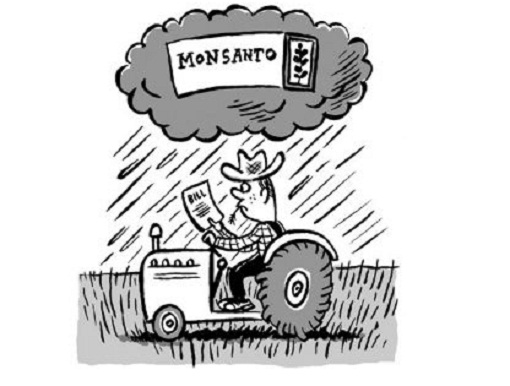
 People say if farmers don’t want problems from Monsanto, just don’t buy their GMO seeds.