Ever wondered why your cell phone reception suddenly becomes terrible at protests? Ever worried that police could use electronic spoofing devices to suck up your mobile data because you are in the streets exercising your rights?
You might have been onto something.
Mobile “IMSI catchers”, currently on the market and being pushed to police and intelligence agencies worldwide, enable these creepy, stealth spying tactics. And if they build it and hawk it, history tells us police will buy it and deploy it.
On Tuesday, July 3, 2012, electronic privacy advocate and technology researcher Chris Soghoian tweeted a link to a photograph of a talk he gave at TED in Scotland in late June. Behind him in the photograph is another image, this one taken by privacy researcher Eric King at a surveillance trade show. (King’s Twitter bio contains a quote from a representative of the notorious ISS World — a global surveillance trade firm that often hosts such trade shows: the rep called him an “Anti-lawful interception zealot blogger.” High praise.)
Look at the slide behind Soghoian; that’s the photo in question. It shows an IMSI catcher strapped onto a model, under the model’s shirt.
IMSI stands for “International Mobile Subscriber Identity”. The technology is essentially a mobile phone tower with “a malicious operator”. It mimics the behavior of a cell tower and tricks mobile phones into sending data to it, instead of to the tower.
As such it is considered a Man In the Middle (MITM) attack. It is used as an eavesdropping device used for interception and tracking of cellular phones and usually is undetectable for the users of mobile phones.
Once it has made a connection with the phone and tricked it into thinking it is a mobile tower, the IMSI catcher forces the phone to drop its encryption, enabling easy access to the contents of the device. The tool then lets the attacker listen in on mobile conversations and intercept all data sent from a mobile phone, remaining undetected. In some cases the tool also allows the operator to manipulate messages.
Here’s a creepy video that a purveyor of IMSI catchers made to advertise its product:
Please note that by playing this clip YouTube and Google will place a long term cookie on your computer.
Police in the United States claim they do not need a warrant to use an IMSI catcher or other spoofing device to track your location. A case to determine whether or not the courts agree is working itself through the system.
Privacy International’s Eric King took the photo on the slide behind Soghoian at a surveillance trade show, where he says the tool was “pitched to me as being perfect for covert operations in public order situations.” In other words, at protests.
The FBI uses IMSI catchers and claims it does so legally, even though it says it doesn’t need a warrant to deploy them. The Electronic Privacy Information Center is currently pursuing FOIA litigation to find out exactly how the bureau uses the “Stingray” (a brand name IMSI catcher); unsurprisingly, the FBI wasn’t forthcoming with documents to reveal its legal standard or other information about how it uses the tool. Stay tuned for more information as that case makes its way through the courts.
Meanwhile, how can you protect yourself against IMSI catchers? Unfortunately, you probably can’t. And the threats are not just from government. As Soghoian and others warned in a friend of the court brief,
Finally, the communications privacy of millions of law-abiding Americans is already threatened by the use of this and similar interception technologies by non-US government entities, such as stalkers, criminals, and foreign governments engaged in espionage. As such, the public interest is best served by greater public discussion regarding these tracking technologies and the security flaws in the mobile phone networks that they exploit, not less.
Yet again, we are faced with a situation in which our technology has outpaced our law reform. It’s time for Congress to change that.
To get a more detailed sense of how the technology actually works, watch this excellent talk from DefCon 2011, with Chris Paget: “Practical Cellphone Spying”. He spoofs the phones of the people in the audience during the talk; it’s well worth watching if you have some time.
For more on IMSI catchers and the state of the law, click here.
Scanner uses ‘terahertz’ spectrum – between infrared and microwaves
Can see through walls, wood and plastics
Doctors could use small, cheap devices to see tumours inside body
Comic-book superpowers could become reality as scientists have designed a phone that works as ‘X-Ray spex’.
A hi-tech chip allows a phone to ‘see through’ walls, wood and plastics – and (although the researchers are coy about this) through fabrics such as clothing.
Doctors could also use the imagers to look inside the body for cancer tumours without damaging X-Rays or large, expensive MRI scanners.
A hi-tech chip allows a phone to 'see through' walls, wood and plastics - and (although the researchers are coy about this) through fabrics such as clothing)
Close up of a CMOS chip - a new version of the commonly used chips would allow users to capture images 'through' walls and even inside the human body
The researchers claim it could allow DIYers to detect studs within walls, or allow businesses to detect counterfeit money.
At present, it’s designed to work over a short range – and works with a normal-sized microchip that could fit into phones or other handheld electronics.
The team’s research involves tapping into an unused range in the electromagnetic spectrum.
But the terahertz band of the electromagnetic spectrum, one of the wavelength ranges that falls between microwave and infrared, has not been accessible for most consumer devices.
‘We’ve created approaches that open a previously untapped portion of the electromagnetic spectrum for consumer use and life-saving medical applications,’ said Dr. Kenneth O, professor of electrical engineering at UT Dallas.
‘The terahertz range is full of unlimited potential that could benefit us all.’
X-ray spex? At present, it's designed to work over a short range - and works with a normal-sized microchip that could fit into phones or other handheld electronics
Using the new approach, images can be created with signals operating in the terahertz (THz) range without having to use several lenses inside a device. This could reduce overall size and cost.
The second advance that makes the findings applicable for consumer devices is the technology used to create the microchip.
Chips manufactured using CMOS (Complementary Metal-Oxide Semiconductor) technology form the basis of many consumer electronic devices used in daily life such as personal computers, smart phones, high definition TV and game consoles.
‘CMOS is affordable and can be used to make lots of chips,’ Dr. O said. ‘The combination of CMOS and terahertz means you could put this chip and receiver on the back of a cellphone, turning it into a device carried in your pocket that can see through objects.’
Due to privacy concerns, Dr. O and his team are focused on uses in the distance range of less than four inches.
Consumer applications of such technology could range from finding studs in walls to authentication of important documents. Businesses could use it to detect counterfeit money.
Manufacturing companies could apply it to process control.
There are also more communication channels available in terahertz than the range currently used for wireless communication, so information could be more rapidly shared at this frequency.
Terahertz can also be used for imaging to detect cancer tumors, diagnosing disease through breath analysis, and monitoring air toxicity.
‘There are all kinds of things you could be able to do that we just haven’t yet thought about,’ said Dr. O, holder of the Texas Instruments Distinguished Chair. The research was presented at the most recent International Solid-State Circuits Conference (ISSCC). The team will work next to build an entire working imaging system based on the CMOS terahertz system.
By Rob Waugh
PUBLISHED: 02:50 EST, 19 April 2012 | UPDATED: 03:03 EST, 19 April 2012
This is a guide with which even a total noob can get high class security for his system and complete anonymity online. But its not only for noobs, it contains a lot of tips most people will find pretty helpfull. It is explained so detailed even the biggest noobs can do it^^ :
=== The Ultimate Guide for Anonymous and Secure Internet Usage v1.0.1 ===
By the time you are finished reading and implementing this guide, you will be able to securely and anonymously browse any website and to do so anonymously. No one not even your ISP or a government agent will be able to see what you are doing online. If privacy and anonymity is important to you, then you owe it to yourself to follow the instructions that are presented here.
In order to prepare this guide for you, I have used a computer that is running Windows Vista. This guide will work equally well for other versions of Windows. If you use a different operating system, you may need to have someone fluent in that operating system guide you through this process. However, most parts of the process are easily duplicated in other operating systems.
I have written this guide to be as newbie friendly as possible. Every step is fully detailed and explained. I have tried to keep instructions explicit as possible. This way, so long as you patiently follow each step, you will be just fine.
In this guide from time to time you will be instructed to go to certain URLs to download files. You do NOT need TOR to get these files, and using TOR (while possible) will make these downloads very slow.
This guide may appear overwhelming. Every single step is explained thoroughly and it is just a matter of following along until you are done. Once you are finished, you will have a very secure setup and it will be well worth the effort. Even though the guide appears huge, this whole process should take at the most a few hours. You can finish it in phases over the course of several days.
It is highly recommended that you close *ALL* applications running on your computer before starting.
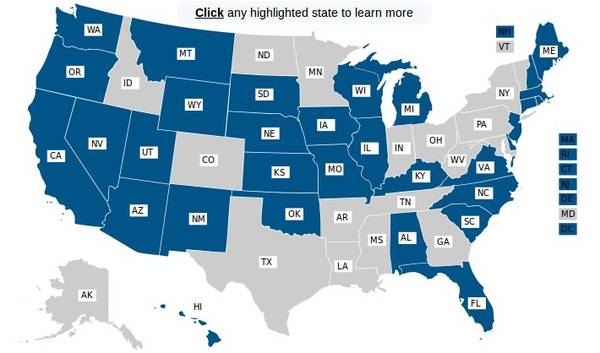
ACLU affiliates across America requested information on local law enforcement’s use of cell-phone tracking, and received a wealth of disturbing information about the extent of wireless tracking. They produced a map showing which police departments were discovered to be tracking people’s phones without a warrant, either by getting gutless phone companies to fink out their own customers for warrantless fishing expeditions, or by buying some kind of “cell phone tracking equipment.”
Many law enforcement agencies track cell phones quite frequently. For example, based on invoices from cell phone companies, it appears that Raleigh, N.C. tracks hundreds of cell phones a year. The practice is so common that cell phone companies have manuals for police explaining what data the companies store, how much they charge police to access that data, and what officers need to do to get it.
Most law enforcement agencies do not obtain a warrant to track cell phones, but some do, and the legal standards used vary widely. Some police departments protect privacy by obtaining a warrant based upon probable cause when tracking cell phones. For example, police in the County of Hawaii, Wichita, and Lexington, Ky. demonstrate probable cause and obtain a warrant when tracking cell phones. If these police departments can protect both public safety and privacy by meeting the warrant and probable cause requirements, then surely other agencies can as well.
Unfortunately, other departments do not always demonstrate probable cause and obtain a warrant when tracking cell phones. For example, police in Lincoln, Neb. obtain even GPS location data, which is more precise than cell tower location information, on telephones without demonstrating probable cause. Police in Wilson County, N.C. obtain historical cell tracking data where it is “relevant and material” to an ongoing investigation, a standard lower than probable cause.
Police use various methods to track cell phones. Most commonly, law enforcement agencies obtain cell phone records about one person from a cell phone carrier. However, some police departments, like in Gilbert, Ariz., have purchased their own cell tracking technology.
A few months back, I reposted here an article that I wrote 10 years ago, before the invasion of Iraq: a fictional scenario of how the Terror War would play out on the ground of the target nations — and in the minds of those sent to wage these campaigns. I was reminded of that piece by a story in the latest Rolling Stone.
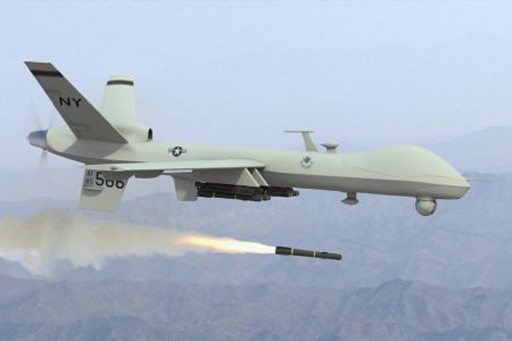
The RS story, by Michael Hastings, depicts the drone mentality now consuming the US military-security apparatus, a process which makes the endless slaughter of the endless Terror War cheaper, easier, quieter. I didn’t anticipate the development in my proleptic piece; the first reported “kill” by American drones, in Yemen, had taken place just a few weeks before my article appeared in the Moscow Times.
(One of the victims of this historic first drawing of blood was an American citizen, by the way. Thus from the very beginning, the drone war — presented as noble shield to defend American citizens from harm — has been killing American citizens, along with the hundreds and hundreds and hundreds and hundreds of innocent men and women around the world being murdered without warning — and without any chance to defend themselves or take shelter — by cowards sitting in padded seats behind computer consoles thousands of miles away, following orders from the even greater cowards who strut around the Pentagon, CIA headquarters and the White House.)
But what brought my earlier piece to mind was a brief mention of the “military slang” now being used to designate the victims of the drones. Below are a few snippets from my 2002 post, a fictional email by an occupation soldier to a friend:
Yo, Ed! I’m looking out the window of Watchtower 19 in Force Zone Seven. They’re loading up the dead wagon. Three friendlies, two uncardeds, the usual collateral – and one bug. We zapped the market before the bug got his hard-on – another one of those Czech AK-47 knock-offs that our friendly neighborhood warlord keeps bringing in. He says he doesn’t know how the bugs get hold of them – they drop down from heaven, I guess …
… I’d just come off night patrol in Deep-City Zone, hardcore bugland, backing up some Special Ops doing a Guantanamo run on terrorperp suspects. Banging down doors, barrel in the face of some shrieking bug-woman in her black bag, children scuttling in the dark like rats, the perp calling down an airstrike from Allah on our heads. You know the drill. You know the jangle. Not even the new meds can keep you blanked out completely. So there’s always the overstep somewhere. Woman’s cheekbone cracking from a backhand, some kid stomped or booted out of the way. Some perp putting his hand in one of those damned dresses they wear, going for who knows what – Koran? Mosquito bite? Scimitar? Czech special? – and you open up. More shrieking, more screaming – and then the splatter on the wall.
In the new Rolling Stone story, Hastings tells us how America’s brave drone warriors view their victims:
For a new generation of young guns, the experience of piloting a drone is not unlike the video games they grew up on. Unlike traditional pilots, who physically fly their payloads to a target, drone operators kill at the touch of a button, without ever leaving their base – a remove that only serves to further desensitize the taking of human life. (The military slang for a man killed by a drone strike is “bug splat,” since viewing the body through a grainy-green video image gives the sense of an insect being crushed.)
“Bugs” being “splattered.” This is what Barack Obama — who has expanded the drone death squads beyond the imaginings of George W. Bush — and all of his brave button pushers and joystick riders think of the defenseless human beings they are killing (including 174 children by last count).
This has been the attitude underlying the Terror War since its beginnings. When I wrote my piece with its “bug” imagery, I was only reflecting what was already obvious and pervasive, both in the military-security war machine and in much of the general public. Anyone designated by those in power as an “enemy” — for any reason, known or unknown, or for no reason at all — is considered a subhuman, an insect, whose destruction is meaningless, without moral content, like swatting a fly on the wall. (As, for example, in this 2008 piece about a figure much lauded by progressives at the time: “Crushing the Ants.”)
There is not only a tolerance for this official program of state murder; there is an absolute enthusiasm for it. Our rulers heartily enjoy ordering people to be killed. (And to be tortured, as we noted here last week.) It makes them feel good. It makes them feel “hard,” in every sense of the word. As Hastings notes:
From the moment Obama took office, according to Washington insiders, the new commander in chief evinced a “love” of drones. “The drone program is something the executive branch is paying a lot of attention to,” says Ken Gude, vice president of the Center for American Progress. “These weapons systems have become central to Obama.” In the early days of the administration, then-chief of staff Rahm Emanuel would routinely arrive at the White House and demand, “Who did we get today?”
Here are some examples of what Rahm and his then-boss, the Nobel Peace Prize Laureate, were “getting” with their flying deaths squads:
But for every “high-value” target killed by drones, there’s a civilian or other innocent victim who has paid the price. The first major success of drones – the 2002 strike that took out the leader of Al Qaeda in Yemen – also resulted in the death of a U.S. citizen. More recently, a drone strike by U.S. forces in Afghanistan in 2010 targeted the wrong individual – killing a well-known human rights advocate named Zabet Amanullah who actually supported the U.S.-backed government. The U.S. military, it turned out, had tracked the wrong cellphone for months, mistaking Amanullah for a senior Taliban leader. A year earlier, a drone strike killed Baitullah Mehsud, the head of the Pakistani Taliban, while he was visiting his father-in-law; his wife was vaporized along with him. But the U.S. had already tried four times to assassinate Mehsud with drones, killing dozens of civilians in the failed attempts. One of the missed strikes, according to a human rights group, killed 35 people, including nine civilians, with reports that flying shrapnel killed an eight-year-old boy while he was sleeping. Another blown strike, in June 2009, took out 45 civilians, according to credible press reports.
And of course there is this, the follow-up to the “extrajudicial killing” of U.S. citizen Anwar al-Awlaki. After killing al-Awlaki — without ever charging him with a single crime — the Obama administration then murdered his 16-year-old son (as we noted here last year). Hastings writes:
In the days following the killing, Nasser and his wife received a call from Anwar’s 16-year-old son, Abdulrahman al-Awlaki, who had run away from home a few weeks earlier to try to find his now-deceased father in Yemen. “He called us and gave us his condolences,” Nasser recalls. “We told him to come back, and he promised he would. We really pressed him, me and his grandmother.”
The teenage boy never made it home. Two weeks after that final conversation, his grandparents got another phone call from a relative. Abdulrahman had been killed in a drone strike in the southern part of Yemen, his family’s tribal homeland. The boy, who had no known role in Al Qaeda or any other terrorist operation, appears to have been another victim of Obama’s drone war: Abdulrahman had been accompanying a cousin when a drone obliterated him and seven others. The suspected target of the killing – a member of Al Qaeda in the Arabian Peninsula – is reportedly still alive; it’s unclear whether he was even there when the strike took place.
The news devastated the family. “My wife weeps every day and every morning for her grandson,” says Nasser, a former high-ranking member of the Yemenite government. “He was a nice, gentle boy who liked to swim a lot. This is a boy who did nothing against America or against anything else. A boy. He is a citizen of the United States, and there are no reasons to kill him except that he is Anwar’s son.”
The boy was probably killed in a “signature strike,” where bold and brave CIA analysts sit back in their chairs and observe people going about their business in a foreign country far away. If their activities look “suspicious” according to some arbitrary, secret criteria, then they can be slaughtered instantly by a drone missile — even if the attackers have no idea whatsoever who the targets are or what they are actually doing. Plotting terrorism, or praying? Organizing jihad, or holding a wedding? Building bombs, or having lunch? The attackers don’t know — and can’t know. They simply put down their Cheetohs and fire the missile. Who cares? It’s just “bug splatter.”
And the fact is, no one does care. As Hastings notes, this hideous program of murder and terror has been fully embraced by the political elite and by society at large. And our rulers are now bringing it back home with a vengeance, putting more and more Americans under the unsleeping eye of government drones watching their every move, looking for the “signature” of “suspicious” behaviour. Hastings notes:
In the end, it appears, the administration has little reason to worry about any backlash from its decision to kill an American citizen – one who had not even been charged with a crime. A recent poll shows that most Democrats overwhelmingly support the drone program, and Congress passed a law in February that calls for the Federal Aviation Administration to “accelerate the integration of unmanned aerial systems” in the skies over America. Drones, which are already used to fight wildfires out West and keep an eye on the Mexican border, may soon be used to spy on U.S. citizens at home: Police in Miami and Houston have reportedly tested them for domestic use, and their counterparts in New York are also eager to deploy them.
History affords few if any examples of a free people — in such a powerful country, under no existential threat, undergoing no invasion, no armed insurrection, no natural disaster or epidemic or societal collapse — giving up their own freedoms so meekly, so mutely. Most Americans like to boast of their love of freedom, their rock-ribbed independence and their fiercely-held moral principles: yet they are happy to see the government claim — and use — the power to murder innocent people whenever it pleases while imposing an ever-spreading police state regimen on their lives and liberties. Sheep doped with Rohypnol would put up a stronger fight than these doughty patriots.
Hasting’s story should be read in full. In its straightforward marshalling of facts and refusal to simply parrot the spin of the powerful (something we used to call “journalism,” kids; ask your grandparents about it, they might remember), it lays out the hideous reality of our times. I am tempted to call it an important story — but I know that it will sink with scarcely a ripple into the abyss of our toxic self-regard. A few will read it and be horrified; the rest will stay riveted on the oh-so-exciting and oh-so-important race to see who will get to perpetuate this vile and murderous system for the next four years.
WRITTEN BY CHRIS FLOYD
WEDNESDAY, 18 APRIL 2012 08:37
In his first television interview since he resigned from the National Security Agency over its domestic surveillance program, William Binney discusses the NSA’s massive power to spy on Americans and why the FBI raided his home after he became a whistleblower. Binney was a key source for investigative journalist James Bamford’s recent exposé in Wired Magazine about how the NSA is quietly building the largest spy center in the country in Bluffdale, Utah. The Utah spy center will contain near-bottomless databases to store all forms of communication collected by the agency, including private emails, cell phone calls, Google searches and other personal data.
Binney served in the NSA for over 30 years, including a time as technical director of the NSA’s World Geopolitical and Military Analysis Reporting Group. Since retiring from the NSA in 2001, he has warned that the NSA’s data-mining program has become so vast that it could “create an Orwellian state.” Today marks the first time Binney has spoken on national television about NSA surveillance. This interview is part of a 5-part special on state surveillance. Click here to see segment 2, 3, 4 and 5. [includes rush transcript]
The tiny town of Lakota, N.D., is quickly becoming a key testing ground for the legality of the use of unmanned drones by law enforcement after one of its residents became the first American citizen to be arrested with the help of a Predator surveillance drone.
The bizarre case started when six cows wandered onto Rodney Brossart’s 3,000 acre farm. Brossart, an alleged anti-government “sovereignist,” believed he should have been able to keep the cows, so he and two family members chased police off his land with high powered rifles.
After a 16-hour standoff, the Grand Forks police department SWAT team, armed with a search warrant, used an agreement they’ve had with Homeland Security for about three years, and called in an unmanned aerial vehicle to pinpoint Brossart’s location on the ranch. The SWAT team stormed in and arrested Brossart on charges of terrorizing a sheriff, theft, criminal mischief, and other charges, according to documents.
Brossart says he “had no clue” they used a drone during the standoff until months after his arrest.
“We’re not laying over here playing dead on it,” says Brossart, who is scheduled to appear in court on April 30. He believes what the SWAT team did was “definitely” illegal.
“We’re dealing with it, we’ve got a couple different motions happening in court fighting [the drone use].”
Repeated calls to Brossart’s attorney were not returned. Douglas Manbeck, who is representing the state of North Dakota in the case, says the drone was used after warrants were already issued.
“The alleged crimes were already committed long before a drone was even thought of being used,” he says. “It was only used to help assure there weren’t weapons and to make [the arrest] safer for both the Brossarts and law enforcement.”
“I know it’s a touchy subject for anyone to feel that drones are in the air watching them, but I don’t think there was any misuse in this case,” he added.
While there’s no precedent for the use of unmanned drones by law enforcement, John Villasenor, an expert on information gathering and drone use with the Washington, D.C.-based Brookings Institution, says he’d be “floored” if the court throws the case out. Using a drone is no different than using a helicopter, he says.
“It may have been the first time a drone was used to make an arrest, but it’s certainly not going to be the last,” Villasenor says. “I would be very surprised if someone were able to successfully launch a legal challenge [in Brossart’s case].”
Villasenor points to two Supreme Court cases—California v. Ciraolo in 1986 and Florida v. Riley in 1989— that allow law enforcement to use “public navigable airspace, in a physically nonintrusive manner” to gather evidence to make an arrest.
By summertime, there may be many more cases like Brossart’s—on May 14, the government must begin issuing permits for drone use by law enforcement.
Currently, about 300 law enforcement agencies and research institutions—including the Grand Forks SWAT team—have “temporary licenses” from the FAA to use drones. Currently, drones are most commonly used by Homeland Security along America’s borders.
Bill Macki, head of the Grand Forks SWAT team, says Brossart’s case was the first and only time they’ve used a drone to help make an arrest—they tried one other time (to search for an armed, suicidal individual), but gusty weather conditions made navigation impossible.
With a population of less than 70,000, it doesn’t make sense for the Grand Forks police department to own a helicopter, but the ability to call in a drone when necessary can provide a similar purpose.
If police officers were to file a subpoena for your Facebook information, they would receive a printout of the data from the social network. This printout would be so detailed, complete and creepy that you should strive to be a good law-abiding citizen, just to prevent it from ever existing.
We have just learned about the true nature of Facebook’s responses to subpoenas thanks to documents uncovered by the Boston Phoenix, an alternative weekly.
The data — which really did come in the form of an old-fashioned paper printout rather than as a digital file of some sort — included all of the suspect’s wall posts, photos he’d uploaded, photos he’d been tagged in, a list of his Facebook friends, and “a long table of login and IP data.” Based on a look at the actual documents, it appears the login and IP data actually lists which parts of Facebook the individual accessed — down to the photos, groups and profiles he viewed.
We work with law enforcement where appropriate and to the extent required by law to ensure the safety of the people who use Facebook. We may disclose information pursuant to subpoenas, court orders, or other requests (including criminal and civil matters) if we have a good faith belief that the response is required by law. This may include respecting requests from jurisdictions outside of the United States where we have a good faith belief that the response is required by law under the local laws in that jurisdiction, apply to users from that jurisdiction, and are consistent with generally accepted international standards.
We may also share information when we have a good faith belief it is necessary to prevent fraud or other illegal activity, to prevent imminent bodily harm, or to protect ourselves and you from people violating our Statement of Rights and Responsibilities. This may include sharing information with other companies, lawyers, courts or other government entities.
If you’d like to see how the information looks, the printout of the “Craigslist Killer” suspect, who committed suicide before the trial could reach a resolution, has been posted online by the Boston Phoenix. Both the Boston Police as well as the Boston Phoenix have redacted parts of the documents. From what we can tell, Facebook doesn’t censor any data before responding to a subpoena, but we have asked the social network for confirmation.
Want more tech news, silly puns, or amusing links? You’ll get plenty of all three if you keep up with Rosa Golijan, the writer of this post, by following her on Twitter, subscribing to her Facebook posts, or circling her on Google+.
The Cyber Intelligence Sharing and Protection Act (H.R. 3523) is a bill introduced in the United States House of Representatives by Reps. Mike Rogers (D-MI) and C.A. “Dutch” Ruppersberger (D-MD) in late 2011. It amends the National Security Act of 1947 to allow private companies and US government intelligence agencies to share information regarding perceived cyber threats.
WHAT IS WRONG WITH CISPA?
1. CISPA’s language, particularly in reference to how it defines “cyber threat,” is far too broad.
The bill’s definition of a “cyber threat” is so vague that it may potentially allow CISPA to encompass a far broader range of targets and data than initially contemplated by its authors. “Cyber threat” is a critical term in the bill, and is defined therein as:
…information directly pertaining to a vulnerability of, or threat to a system of network of a government or private entity, including information pertaining to the protection of a system or network from —
(A) efforts to degrade, disrupt, or destroy such system or network; or
(B) theft or misappropriation of private or government information, intellectual property, or personally identifiable information.
Under this overly broad, vague definition, whistleblowers and leakers such as Wikileaks, tech blogs carrying the latest rumours and gossip from companies, news and media sites publishing investigations, security researchers and whitehat pen testers, torrent sites (including our beloved Pirate Bay), and of course, yours truly, Anonymous, would all be ripe targets.
Additionally, as the Electronic Frontier Foundation (EFF) notes, CISPA’s broad definition of “cybersecurity” is so vague that it leaves open the door “to censor any speech that a company believes would ‘degrade the network.’” Going one step further, the bill’s inclusion of “intellectual property” provides for the strong possibility that both private companies and the federal government will likely be granted “new powers to monitor and censor communications for copyright infringement.” (Full EFF letter here)
2. CISPA demonstrates a complete disregard for reasonable expectations of privacy protection and essential liberties by providing for unaccountable sharing of user data.
As laid out, CISPA allows a large, nearly unchecked quantity of any and all information on a target to be obtained and shared between private companies and government agencies. The bill’s text states, “Notwithstanding any other provision of law, a self-protected entity may, for cybersecurity purposes…share such cyber threat information with any other entity, including the Federal Government.”
Why is this problematic? As it stands, CISPA’s text allows for a slippery slope of information and data that could be shared amongst private companies and the federal government without any regard for a target’s personal privacy protections. Such information could very well include account names and passwords, histories, message content, and other information not currently available to agencies under federal wiretap laws.
In a position letter addressed to Congress on 17 April 2012, CISPA critics point out:
CISPA creates an exception to all privacy laws to permit companies to share our information with each other and with the government in the name of cybersecurity. Although a carefully-‐crafted information sharing program that strictly limits the information to be shared and includes robust privacy safeguards could be an effective approach to cybersecurity, CISPA lacks such protections for individual rights. CISPA’s ‘information sharing’ regime allows the transfer of vast amounts of data, including sensitive information like internet use history or the content of emails, to any agency in the government including military and intelligence agencies like the National Security Agency or the Department of Defense Cyber Command.
3. The broad language in CISPA provides for the uncertain future expansion of federal government powers and a slippery slope of cybersecurity warrantless wiretapping.
Of particular concern is the word “notwithstanding,” which is a dangerously broad word when included in legislation. The use of “notwithstanding” will allow CISPA to apply far beyond the stated intentions of its authors. It is clear that the word was purposefully included (and kept throughout rewrites) by the bill’s authors to allow CISPA to supersede and trump all existing federal and state civil and criminal laws, including laws that safeguard privacy and personal rights.
The fact that the sponsors and authors of CISPA claim that they have no intentions to use the overly broad language of the bill to obtain unprecedented amounts of information on citizens should be of little comfort to a concerned onlooker. As it stands, if CISPA passes in Congress and is signed into law by the President, its broad language WILL be law of the land and WILL be available for use by agencies and companies as desired. Why should our only protection against rampant cyber-spying be us trusting the government or companies NOT to take CISPA over the line of acceptable (if any) data collection?
WOW, CISPA SUCKS! HOW CAN I HELP STOP IT?
Below are some various ways that YOU can get involved in the online and real world struggles against CISPA. It will take all of us to stop this bill, but we did it before with SOPA, PIPA, and [hopefully] ACTA, and we’re confident that it can be done once more with CISPA. The voice of the People WILL be heard loud and clear, and you can help because your voice matters. It’s time to stand up for your rights because, in the end, who else will? Internet, unite!
Educate a Congressman about the Internet and pitfalls of CISPA – here
Email a Congressman directly about the bill – here
Sign and pass around online petitions – here || here || here
Spread awareness. Tweet, blog and post about CISPA. Use the hashtags #StopCISPA and #CISPA so everyone can follow. Change your profile picture to an anti-CISPA image or add a STOP CISPA banner.
Tweet to CISPA’s proponents, @HouseIntelComm and @RepMikeRogers and let them know about the pitfalls of CISPA.
Let CISPA’s sponsor, Rep. MikeRogers, know how much his bill fails – here
Check out Fight For The Future’s #CongressTMI movement in regard to CISPA – here
Join the Twitter Campaign and Contact a Representative about CISPA – here
Protest. Organise in front of Congress and let them know what happens when they try to govern the Internet and strip our liberties in the name of national security. If you organise an IRL protest, please contact us@YourAnonNews so we can facilitate spreading the word on it and helping boost attendance.
I WANT TO LEARN EVEN MORE ABOUT CISPA! TELL ME MORE!
Ok…clearly you like reading and knowing the issues thoroughly. We’re proud of your dedication and passion to better educating yourself and others about this concerning bill. Below are additional helpful resources that you can check out to get an even better understanding of CISPA and how it will affect the world of tomorrow should it pass and become law.
Full text of CISPA, including recent rewrites and Amendments – here
A brilliant series of TechDirt articles on CISPA shed some light on the bill and point out exactly where its flaws are found — CISPA is a Really Bad Bill, and Here’s Why – read
– Did Congress Really Not Pay Attention to What Happened with SOPA? CISPA Ignorance is Astounding –read
– Forget SOPA, You Should Be Worried About This Cybersecurity Bill – read
NOTE: Even Obama seems to dislike CISPA — On 17 April 2012, the White House issued a statement criticising CISPA for lacking strong privacy protections and failing to set forth basic security standards.
The Cyber Intelligence Sharing and Protection Act (CISPA) is quickly becoming the Internet’s new most-hated piece of legislation. But is it really “the new SOPA,” as critics are calling it? Here, a comprehensive rundown of what CISPA is, what it does, and why people think it’s dangerous.
The Internet has a new enemy. The Cyber Intelligence Sharing and Protection Act of 2011 (CISPA), also known as H.R. 3523, is a “cybersecurity” bill in the House of Representatives. CISPA is quickly gaining traction as “the new SOPA,” the infamous anti-piracy bill that was forced to crawl back into its hole after thousands of websites and millions of Web users protested with a massive, high-profile “blackout.” While CISPA does not focus primarily on intellectual property (though that’s in there, too), critics say the problems with the bill run just as deep. But what is CISPA, really, and will its presence on Congress’ agenda cause the same type of online revolt that SOPA and PIPA did?
What is CISPA?
Unveiled to the House by Rep. Mike Rogers (R-MI) and Rep. C.A. “Dutch” Ruppersberger (D-MD) late last year, CISPA is described as a “cybersecurity” bill. It proposes to amend the National Security Act of 1947 to allow for greater sharing of “cyber threat intelligence” between the U.S. government and the private sector, or between private companies. The bill defines “cyber threat intelligence” as any information pertaining to vulnerabilities of, or threats to, networks or systems owned and operated by the U.S. government, or U.S. companies; or efforts to “degrade, disrupt, or destroy” such systems or networks; or the theft or “misappropriation” of any private or government information, including intellectual property.
CISPA also removes any liability from private companies who collect and share qualified information with the federal government, or with each other. Finally, it directs the Privacy and Civil Liberties Oversight Board to conduct annual reviews of the sharing and use of the collected information by the U.S. government.
Read the full text of CISPA here, or the full official summary at the bottom of this page.
Who supports CISPA?
The bill currently has a whopping 106 co-sponsors in the House — more than twice the number SOPA ever had. Also unlike SOPA, CISPA has explicit support from some of the technology industry’s biggest players, including Internet service providers like AT&T and Verizon, Web companies like Facebook, and hardware companies like IBM and Intel.
See the full list of CISPA co-sponsors here. See a complete list of companies and groups that support CISPA here.
What CISPA supporters say it will do
According to Rep. Rogers, CISPA will help U.S. companies defend themselves “from advanced cyber threats, without imposing any new federal regulations or unfunded private sector mandate.” It will also create “new private sector jobs for cybersecurity professionals,” and protect “the thousands of jobs created by the American intellectual property that Chinese hackers are trying to steal every day.”
In a statement, Rep. Ruppersberger pushed his reasons for proposing the legislation, saying, “Without important, immediate changes to American cybersecurity policy, I believe our country will continue to be at risk for a catastrophic attack to our nation’s vital networks — networks that power our homes, provide our clean water or maintain the other critical services we use every day. This small but important piece of legislation is a decisive first step to tackle the cyber threats we face.”
Private companies like the bill because it removes some of the regulations that prevent them from sharing cyber threat information, or make it harder to do so. In short, they believe the bill will do exactly what its supporters in the House say it will do — help better protect them from cyber attacks.
What CISPA opponents are worried about
As with SOPA and PIPA, the first main concern about CISPA is its “broad language,” which critics fear allows the legislation to be interpreted in ways that could infringe on our civil liberties. The Center for Democracy and Technology sums up the problems with CISPA this way:
• The bill has a very broad, almost unlimited definition of the information that can be shared with government agencies notwithstanding privacy and other laws;
• The bill is likely to lead to expansion of the government’s role in the monitoring of private communications as a result of this sharing;
• It is likely to shift control of government cybersecurity efforts from civilian agencies to the military;
• Once the information is shared with the government, it wouldn’t have to be used for cybesecurity, but could instead be used for any purpose that is not specifically prohibited.
The Electronic Frontier Foundation (EFF) adds that CISPA’s definition of “cybersecurity” is so broad that “it leaves the door open to censor any speech that a company believes would ‘degrade the network.’” Moreover, the inclusion of “intellectual property” means that companies and the government would have “new powers to monitor and censor communications for copyright infringement.”
Furthermore, critics warn that CISPA gives private companies the ability to collect and share information about their customers or users with immunity — meaning we cannot sue them for doing so, and they cannot be charged with any crimes.
According to the EFF, CISPA “effectively creates a ‘cybersecurity’ exemption to all existing laws.”
“There are almost no restrictions on what can be collected and how it can be used, provided a company can claim it was motivated by ‘cybersecurity purposes,’” the EFF continues. “That means a company like Google, Facebook, Twitter, or AT&T could intercept your emails and text messages, send copies to one another and to the government, and modify those communications or prevent them from reaching their destination if it fits into their plan to stop cybersecurity threats.”
Is the Internet freaking out like it did over SOPA/PIPA?
Not yet — but it’s starting to. After TechDirt’s Mike Masnick — a widely followed and trusted source on matters of laws regarding technology, intellectual property, and how they might affect our civil rights — posted an article telling readers to “forget SOPA, you should be worried about this cybersecurity bill” earlier this week, concerned Web users have started to take notice. On Reddit, a community that is largely responsible for the push-back against SOPA/PIPA, an increasing number of posts (some accurate, some not) have popped up regarding the potential dangers of CISPA. Anonymous has also started to get in on the action, having released a “dox” on Rep. Rogers, and a video condemning the bill, earlier this week.
Will CISPA pass?
Nobody can say for sure, but at the moment, its passage looks likely. CISPA breezed through the House Intelligence Committee on December 1, 2011, with a bipartisan vote of 17-1. Also, as mentioned, the bill has broad support in the House, with 106 co-sponsors, 10 of whom are committee chairmen.
As with any piece of legislation, however, nothing is certain until the president signs the bill. And if the Internet community rises up in the same way it did against SOPA and PIPA, then you will certainly see support for CISPA crumble in Congress (it is an election year, after all). That said, whether or not the Internet will react with such force remains a big “if.”
Conclusion
Regardless of the value of CISPA, cyber threats are a real and serious problem, one that the U.S. government will address through legislative means. Civil liberty watchdogs are always going to be wary of any bill that could possibly threaten our privacy, or put us at the mercy of corporations and the federal government. However, CISPA does have all the problems critics claim it has, and Web users should be paying critical attention to the bill.
Remember: opposing this particular bill, or others with similar problems, is not the same as a disregard for our cybersecurity, or national security — which is precisely how CISPA supporters in Congress will attempt to frame the opposition, if or when it gathers steam.
The Cyber Intelligence Sharing and Protection Act (CISPA) is quickly becoming the Internet’s new most-hated piece of legislation. But is it really “the new SOPA,” as critics are calling it? Here, a comprehensive rundown of what CISPA is, what it does, and why people think it’s dangerous.
The Internet has a new enemy. The Cyber Intelligence Sharing and Protection Act of 2011 (CISPA), also known as H.R. 3523, is a “cybersecurity” bill in the House of Representatives. CISPA is quickly gaining traction as “the new SOPA,” the infamous anti-piracy bill that was forced to crawl back into its hole after thousands of websites and millions of Web users protested with a massive, high-profile “blackout.” While CISPA does not focus primarily on intellectual property (though that’s in there, too), critics say the problems with the bill run just as deep. But what is CISPA, really, and will its presence on Congress’ agenda cause the same type of online revolt that SOPA and PIPA did?
What is CISPA?
Unveiled to the House by Rep. Mike Rogers (R-MI) and Rep. C.A. “Dutch” Ruppersberger (D-MD) late last year, CISPA is described as a “cybersecurity” bill. It proposes to amend the National Security Act of 1947 to allow for greater sharing of “cyber threat intelligence” between the U.S. government and the private sector, or between private companies. The bill defines “cyber threat intelligence” as any information pertaining to vulnerabilities of, or threats to, networks or systems owned and operated by the U.S. government, or U.S. companies; or efforts to “degrade, disrupt, or destroy” such systems or networks; or the theft or “misappropriation” of any private or government information, including intellectual property.
CISPA also removes any liability from private companies who collect and share qualified information with the federal government, or with each other. Finally, it directs the Privacy and Civil Liberties Oversight Board to conduct annual reviews of the sharing and use of the collected information by the U.S. government.
Read the full text of CISPA here, or the full official summary at the bottom of this page.
Who supports CISPA?
The bill currently has a whopping 106 co-sponsors in the House — more than twice the number SOPA ever had. Also unlike SOPA, CISPA has explicit support from some of the technology industry’s biggest players, including Internet service providers like AT&T and Verizon, Web companies like Facebook, and hardware companies like IBM and Intel.
See the full list of CISPA co-sponsors here. See a complete list of companies and groups that support CISPA here.
What CISPA supporters say it will do
According to Rep. Rogers, CISPA will help U.S. companies defend themselves “from advanced cyber threats, without imposing any new federal regulations or unfunded private sector mandate.” It will also create “new private sector jobs for cybersecurity professionals,” and protect “the thousands of jobs created by the American intellectual property that Chinese hackers are trying to steal every day.”
In a statement, Rep. Ruppersberger pushed his reasons for proposing the legislation, saying, “Without important, immediate changes to American cybersecurity policy, I believe our country will continue to be at risk for a catastrophic attack to our nation’s vital networks — networks that power our homes, provide our clean water or maintain the other critical services we use every day. This small but important piece of legislation is a decisive first step to tackle the cyber threats we face.”
Private companies like the bill because it removes some of the regulations that prevent them from sharing cyber threat information, or make it harder to do so. In short, they believe the bill will do exactly what its supporters in the House say it will do — help better protect them from cyber attacks.
What CISPA opponents are worried about
As with SOPA and PIPA, the first main concern about CISPA is its “broad language,” which critics fear allows the legislation to be interpreted in ways that could infringe on our civil liberties. The Center for Democracy and Technology sums up the problems with CISPA this way:
• The bill has a very broad, almost unlimited definition of the information that can be shared with government agencies notwithstanding privacy and other laws;
• The bill is likely to lead to expansion of the government’s role in the monitoring of private communications as a result of this sharing;
• It is likely to shift control of government cybersecurity efforts from civilian agencies to the military;
• Once the information is shared with the government, it wouldn’t have to be used for cybesecurity, but could instead be used for any purpose that is not specifically prohibited.
The Electronic Frontier Foundation (EFF) adds that CISPA’s definition of “cybersecurity” is so broad that “it leaves the door open to censor any speech that a company believes would ‘degrade the network.’” Moreover, the inclusion of “intellectual property” means that companies and the government would have “new powers to monitor and censor communications for copyright infringement.”
Furthermore, critics warn that CISPA gives private companies the ability to collect and share information about their customers or users with immunity — meaning we cannot sue them for doing so, and they cannot be charged with any crimes.
According to the EFF, CISPA “effectively creates a ‘cybersecurity’ exemption to all existing laws.”
“There are almost no restrictions on what can be collected and how it can be used, provided a company can claim it was motivated by ‘cybersecurity purposes,’” the EFF continues. “That means a company like Google, Facebook, Twitter, or AT&T could intercept your emails and text messages, send copies to one another and to the government, and modify those communications or prevent them from reaching their destination if it fits into their plan to stop cybersecurity threats.”
Is the Internet freaking out like it did over SOPA/PIPA?
Not yet — but it’s starting to. After TechDirt’s Mike Masnick — a widely followed and trusted source on matters of laws regarding technology, intellectual property, and how they might affect our civil rights — posted an article telling readers to “forget SOPA, you should be worried about this cybersecurity bill” earlier this week, concerned Web users have started to take notice. On Reddit, a community that is largely responsible for the push-back against SOPA/PIPA, an increasing number of posts (some accurate, some not) have popped up regarding the potential dangers of CISPA. Anonymous has also started to get in on the action, having released a “dox” on Rep. Rogers, and a video condemning the bill, earlier this week.
Will CISPA pass?
Nobody can say for sure, but at the moment, its passage looks likely. CISPA breezed through the House Intelligence Committee on December 1, 2011, with a bipartisan vote of 17-1. Also, as mentioned, the bill has broad support in the House, with 106 co-sponsors, 10 of whom are committee chairmen.
As with any piece of legislation, however, nothing is certain until the president signs the bill. And if the Internet community rises up in the same way it did against SOPA and PIPA, then you will certainly see support for CISPA crumble in Congress (it is an election year, after all). That said, whether or not the Internet will react with such force remains a big “if.”
Conclusion
Regardless of the value of CISPA, cyber threats are a real and serious problem, one that the U.S. government will address through legislative means. Civil liberty watchdogs are always going to be wary of any bill that could possibly threaten our privacy, or put us at the mercy of corporations and the federal government. However, CISPA does have all the problems critics claim it has, and Web users should be paying critical attention to the bill.
Remember: opposing this particular bill, or others with similar problems, is not the same as a disregard for our cybersecurity, or national security — which is precisely how CISPA supporters in Congress will attempt to frame the opposition, if or when it gathers steam.
This January 28marks International PrivacyDay. Different countriesaroundtheworld are celebrating this day with their own events. This year, we are honoring the day by calling attention to recent international privacy threats and interviewing data protection authorities, government officials, and activists to gain insight into various aspects of privacy rights and related legislation in their own respective countries.
—
Throughout history, there have been a number of reasons why individuals have taken to writing or producing art under a pseudonym. In the 18th century, James Madison, Alexander Hamilton, and John Jay took on the pseudonym Publius to publish The Federalist Papers. In 19th century England, pseudonyms allowed women–like the Brontë sisters, who initially published under Currer, Ellis, and Acton Bell–to be taken seriously as writers.
Today, pseudonyms continue to serve a range of individuals, and for a variety of reasons. At EFF, we view anonymity as both a matter of free speech and privacy, but in light of International Privacy Day, January 28, this piece will focus mainly on the latter, looking at the ways in which the right to anonymity–or pseudonymity–is truly a matter of privacy.
Privacy from employers
Human beings are complex creatures with multiple interests. As such, many professionals use pseudonyms online to keep their employment separate from their personal life. One example of this is the Guardian columnist GrrlScientist who, upon discovering her Google+ account had been deleted for violating their “common name” policy, penned a piece explaining her need for privacy. Another example is prominent Moroccan blogger Hisham Khribchi, who has explained his use of a pseudonym, stating:
When I first started blogging I wanted my identity to remain secret because I didn’t want my online activity to interfere with my professional life. I wanted to keep both as separate as possible. I also wanted to use a fake name because I wrote about politics and I was critical of my own government. A pseudonym would shield me and my family from personal attacks. I wanted to have a comfortable space to express myself freely without having to worry about the police when I visit my family back in Morocco.
Though Khribchi’s reasoning is two-fold, his primary concern–even stronger than his need for protection from his government–was keeping his online life separate from his employment.
Even Wael Ghonim–the now-famous Egyptian who helped launch a revolution–conducted his activism under a pseudonym…not to protect himself from the Egyptian government, but rather because he was an employee of Google and wanted to maintain an air of neutrality.
Privacy from the political scene
In 2008, an Alaskan blogger known as “Alaska Muckraker” (or AKM) rose to fame for her vocal criticism of fellow Alaskan and then-McCain-running-mate Sarah Palin. Later, after inveighing against a rude email sent to constituents by Alaska State Representative Mike Doogan, AKM was outed–by Doogan–who wrote that his “own theory about the public process is you can say what you want, as long as you are willing to stand behind it using your real name.”
AKM, a blogger decidedly committing an act of journalism, could have had any number of reasons to remain anonymous. As she later wrote:
I might be a state employee. I might not want my children to get grief at school. I might be fleeing from an ex-partner who was abusive and would rather he not know where I am. My family might not want to talk to me anymore. I might alienate my best friend. Maybe I don’t feel like having a brick thrown through my window. My spouse might work for the Palin administration. Maybe I’d just rather people not know where I live or where I work. Or none of those things may be true. None of my readers, nor Mike Doogan had any idea what my personal circumstances might be.
Though Doogan claimed that AKM gave up her right to anonymity when her blog began influencing public policy, he’s wrong. In the United States, the right to anonymity is protected by the First Amendment and must remain so, to ensure both the free expression and privacy rights of citizens.
Similarly, in 2009, Ed Whelans, a former official with the Department of Justice, outed anonymous blogger John Blevins–a professor at the South Texas College of Law–in the National Review, calling him “irresponsible”, and a “coward.” Blevins took the fall gracefully, later explaining why he had chosen to blog under a pseudonym. Like Khribchi, Blevins’ reasons were numerous: He feared losing tenure and legal clients, but he also feared putting the jobs of family members in the political space at risk.
Privacy from the public eye
A friend of mine–let’s call him Joe–is the sibling of a famous celebrity. But while he’s very proud of his sibling, Joe learned early on that not everyone has his best interests at heart. Therefore, Joe devised a pseudonym to use online in order to protect the privacy of himself and his family.
In Joe’s case, the threat is very real: celebrities are regularly stalked, their houses broken into. His pseudonym keeps him feeling “normal” in his online interactions, while simultaneously protecting his sibling and the rest of his family from invasions of privacy.
Achieving anonymity online
Anonymity and pseudonymity may seem increasingly difficult to achieve online. Not only do companies like Facebook restrict your right to use a pseudonym, but even when you do think you’re anonymous, you might not be–as blogger Rosemary Port found out in 2009 after Google turned over her name in response to a court order.
While we should continue to fight for our privacy under the law, the best thing we can do as users to who value our right to anonymity is to use tools like Tor. Anonymous bloggers can use Global Voices Advocacy’s online guide to blogging anonymously with WordPress and Tor. And all Internet users should educate themselves about what is–and isn’t–private on their online accounts and profiles.
Occupy Wall Street has called for a global day of action on October 15, and protesters are mobilizing all over the world. In the United States, the Occupy Wall Street movement has already spawned sizeable protests in New York, Washington DC, Boston, Seattle, San Francisco, Oakland, Austin, and other cities. Several of these movements have faced opposition from their local police departments, including mass arrests.
Protesters of all political persuasions are increasingly documenting their protests — and encounters with the police — using electronic devices like cameras and cell phones. The following tips apply to protesters in the United States who are concerned about protecting their electronic devices when questioned, detained, or arrested by police. These are general guidelines; individuals with specific concerns should talk to an attorney.
1. Protect your phone before you protest
Think carefully about what’s on your phone before bringing it to a protest. Your phone contains a wealth of private data, which can include your list of contacts, the people you have recently called, your text messages, photos and video, GPS location data, your web browsing history and passwords, and the contents of your social media accounts. We believe that the police are required to get a warrant to obtain this information, but the government sometimes asserts a right to search a phone incident to arrest — without a warrant. (And in some states, including California, courts have said this is OK.) To protect your rights, you may want to harden your existing phone against searches. You should also consider bringing a throwaway or alternate phone to the protest that does not contain sensitive data and which you would not mind losing or parting with for a while. If you have a lot of sensitive or personal information on your phone, the latter might be a better option.
Password-protect your phone – and consider encryption options. To ensure the password is effective, set the “password required” time to zero, and restart phone before you leave your house. Be aware that merely password-protecting or locking your phone is not an effective barrier to expert forensic analysis. Some phones also have encryption options. Whispercore is a full-disk encryption application for Android, and Blackberry also has encryption tools that might potentially be useful. Note that EFF has not tested these tools and does not endorse them, but they are worth checking into.
Back up the data on your phone. Once the police have your phone, you might not get it back for a while. Also, something could happen, whether intentional or not, to delete information on your phone. While we believe it would be improper for the police to delete your information, it may happen anyway.
2. You’re at the protest – now what?
Maintain control over your phone. That might mean keeping the phone on you at all times, or handing it over to a trusted friend if you are engaging in action that you think might lead to your arrest.
Consider taking pictures and video. Just knowing that there are cameras watching can be enough to discourage police misconduct during a protest. EFF believes that you have the First Amendment right to document public protests, including police action. However, please understand that the police may disagree, citing various local and state laws. If you plan to record audio, you should review the Reporter’s Committee for Freedom of the Press helpful guide Can We Tape?.
3. Help! Help! I’m being arrested
Remember that you have a right to remain silent — about your phone and anything else. If questioned by police, you can politely but firmly ask to speak to your attorney.
If the police ask to see your phone, you can tell them you do not consent to the search of your device. They might still legally be able to search your phone without a warrant when they arrest you, but at least it’s clear that you did not give them permission to do so.
If the police ask for the password to your electronic device, you can politely refuse to provide it and ask to speak to your lawyer. Every arrest situation is different, and you will need an attorney to help you sort through your particular circumstance. Note that just because the police cannot compel you to give up your password, that doesn’t mean that they can’t pressure you. The police may detain you and you may go to jail rather than being immediately released if they think you’re refusing to be cooperative. You will need to decide whether to comply.
4. The police have my phone, how do I get it back?
If your phone or electronic device was illegally seized, and is not promptly returned when you are released, you can file a motion with the court to have your property returned. If the police believe that evidence of a crime was found on your electronic device, including in your photos or videos, the police can keep it as evidence. They may also attempt to make you forfeit your electronic device, but you can challenge that in court.
Cell phone and other electronic devices are an essential component of 21st century protests. Whether at Occupy Wall Street or elsewhere, all Americans can and should exercise their First Amendment right to free speech and assembly, while intelligently managing the risks to their property and privacy.
The act of keeping your identity hidden online by using connection methods and encryption methods, to make yourself untraceable to a person, website, company, school or whatever else you are doing/connecting to.