The US Government Is Running A Massive Spy Campaign On Occupy Wall Street

The US Government Is Running A Massive Spy Campaign On Occupy Wall Street

Remember the Occupy Movement? Since last November, when the NYPD closed the Zuccotti Park encampment in downtown Manhattan –the Movement’s birthplace and symbolic nexus—Occupy’s relevance has seriously dwindled, at least as measured by coverage in the mainstream media. We’re told that this erosion is due to Occupy’s own shortcomings—an inevitable outcome of its disjointed message and decentralized leadership.

While that may be the media’s take, the U.S. Government seems to have a different view.

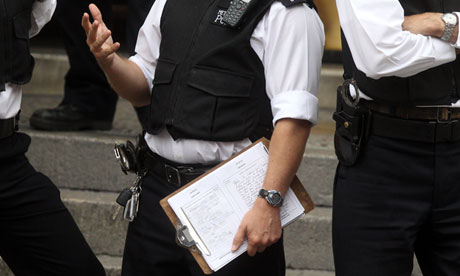
If recent documents obtained by the Partnership for Civil Justice Fund (PCJF) are any indication, the Occupy Movement continues to be monitored and curtailed in a nationwide, federally-orchestrated campaign, spearheaded by the Department of Homeland Security (DHS).

In response to repeated Freedom of Information Act (FOIA) requests by the Fund, made on behalf of filmmaker Michael Moore and the National Lawyers Guild, the DHS released a revealing set of documents in April.  But the latest batch, made public on May 3rd, exposes the scale of the government’s “attention” to Occupy as never before.

The documents, many of which are partially blacked-out emails, demonstrate a surprising degree of coordination between the DHS’s National Operations Center (NOC) and local authorities in the monitoring of the Occupy movement. Cities implicated in this wide-scale snooping operation include New York, Oakland, Atlanta, Washington, D.C., Denver, Boston, Portland, Detroit, El Paso, Houston, Dallas, Seattle, San Diego, and Los Angeles.

Interest in the Occupy protesters was not limited to DHS and local law enforcement authorities.  The most recently released correspondence contains Occupy-related missives between the DHS and agencies at all levels of government, including the Mayor of Portland, regional NOC “fusion centers,” the General Services Administration (GSA), the Pentagon’s USNORTHCOM (Northern Command), and the White House. Mara Verheyden-Hilliard, Executive Director of the PCJF, contends that the variety and reach of the organizations involved point to the existence of a larger, more pervasive domestic surveillance network than previously suspected.

These documents show not only intense government monitoring and coordination in response to the Occupy Movement, but reveal a glimpse into the interior of a vast, tentacled, national intelligence and domestic spying network that the U.S. government operates against its own people. These heavily redacted documents don’t tell the full story. They are likely only a subset of responsive materials and the PCJF continues to fight for a complete release. They scratch the surface of a mass intelligence network including Fusion Centers, saturated with ‘anti-terrorism’ funding, that mobilizes thousands of local and federal officers and agents to investigate and monitor the social justice movement. (justiceonline.org)

As alarmist as Verheyden-Hilliard’s charge may sound, especially given the limited, bowdlerized nature of the source material, the texts made available contain disturbing evidence of insistent federal surveillance. In particular, the role of the “Fusion Centers,” a series of 72 federally-funded information hubs run by the NOC, raises questions about the government’s expansive definition of “Homeland Security.”

Created in the wake of 9/11, the Fusion Centers were founded to expedite the sharing of information among state and local law enforcement and the federal government, to monitor localized terrorist threats, and to sidestep the regulations and legislation preventing the CIA and the military from carrying out domestic surveillance (namely, the CIA ban on domestic spying and the Posse Comitatus Act).

Is nonviolent, albeit obstructive, citizen dissent truly an issue of national security? The DHS, for its part, is aware of the contentiousness of civilian monitoring. That’s why, in a White House-approved statement to CBS News included in the dossier, DHS Press Secretary Matthew Chandler asserts that

Any decisions on how to handle specifics (sic) situations are dealt with by local authorities in that location. . . DHS is not actively coordinating with local law enforcement agencies and/or city governments concerning the evictions of Occupy encampments writ large.

However, as a reading of the documents unmistakably demonstrates, this expedient PR nugget is far from the truth. In example after example, from its seeking of  “public health and safety” grounds from the City of Portland for Occupy’s ejection from Terry Schrunk Plaza, to its facilitation of information sharing between the police departments of Chicago and Boston (following a 1500-person Occupy protest in Chicago), the DHS’s active ”coordinating” with local authorities is readily apparent. Other communiqués are even more explicit in revealing a national focus, such as the DHS’s preemptive coordination with the Pentagon about a port closure in Oakland, and its collection of identity and contact information of Occupy protesters arrested at a Bank of America in Dallas.

Those Pesky Amendments

The right to public assembly is a central component of the First Amendment. The Fourth Amendment is supposed to protect Americans from warrantless searches—with the definition of “search” expanded in 1967 to include electronic surveillance, following the Supreme Court’s ruling in Katz v. United States. Assuming the Occupy protesters refrain from violence—and the vast majority do, in accord with a stated tenet of the Occupy movement—the movement’s existence is constitutionally protected, or should be.

The DHS’s monitoring, documenting, and undermining of protesters may in fact violate the First Amendment. In a recent piece for Dissent Magazine, sociologist James B. Rule explains the fundamental importance of a movement like Occupy in the American political landscape.

This surveillance campaign against Occupy is bad news for American democracy. Occupy represents an authentic, utterly home-grown, grassroots movement. Taken as a whole, it is neither terrorist nor conspiratorial. Indeed, it is hard to think of another movement so cumbersomely public in its deliberations and processes. Occupy is noisy, disorderly, insubordinate, and often inconvenient for all concerned—statements that could equally well apply to democracy in general. But it should never be targeted as a threat to the well-being of the country—quite the contrary.

Accordingly, Rule calls for the White House to rein in the ever-expanding surveillance activity of the DHS—which he contends is motivated by its own funding interests, and which prioritizes security at the expense of civil liberties.

The resource-rich Department of Homeland Security and its allies no doubt see in the rise of the movement another opportunity to justify their own claims for public legitimacy. We can be sure that many in these agencies view any noisy dissent as tantamount to a threat to national security.

[snip]

Nobody who cares about democracy wants to live in a world where simply engaging in vociferous protest qualifies any citizen to have his or her identity and life details archived by state security agencies. Specific, overt threats of civil disobedience or other law-breaking should be dealt with on a piecemeal basis—not by attempting to monitor everyone who might be moved to such actions, all the time. Meanwhile, the White House should issue clear directives that identification and tracking of lawful protesters will play no further role in any government response to this populist moment.

Optimistic as it may be, Rule’s appeal to the White House is a problematic one, given the ubiquitous influence of the DHS revealed by these documents. If the White House-approved press release is any indication, the Oval Office, while not directly authorizing the DHS’s initiatives, is certainly turning a blind eye to the Department’s focus on the Occupy movement as a potential terrorist threat. Federal surveillance of citizens in the Bush years, most visible in NSA warrantless wiretapping controversy, has apparently not ceased with Obama’s inauguration.

Which raises the question: Does Obama, as he claims, “stand with the 99 percent,” or with those who cannot stand them?

# #

WhoWhatWhy plans to continue doing this kind of groundbreaking original reporting. You can count on it. But can we count on you? We cannot do our work without your support.

Please click here to donate; it’s tax deductible. And it packs a punch.

Read more posts on WhoWhatWhy »

Help A True Hero: The Bradley Manning Support Network

Help A True Hero: The Bradley Manning Support Network

To support Bradley Manning visit www.bradleymanning.org

Nobel Peace Prize nominee PFC Bradley Manning, a 24-year-old Army intelligence analyst, is accused of releasing the Collateral Murder video, that shows the killing of unarmed civilians and two Reuters journalists, by a US Apache helicopter crew in Iraq. He is also accused of sharing the Afghan War Diary, the Iraq War Logs, and series of embarrassing US diplomatic cables. These documents were published by the anti-secrecy website WikiLeaks, and they have illuminated such issues as the true number and cause of civilian casualties in Iraq, along with a number of human rights abuses by U.S.-funded contractors and foreign militaries, and the role that spying and bribes play in international diplomacy. Given the war crimes exposed, if PFC Bradley Manning was the source for these documents, he should be given a medal of honor.

Not a single person has been harmed by the release of this information.  Defense Secretary Robert M. Gates has called the effect of WikiLeaks’ releases on U.S. foreign relations “fairly modest.” Yet the Obama administration has chosen to persecute the whistle-blower rather than prosecute the war criminals who were exposed. While the prosecution has declared it does not intend to seek the death penalty, they do seek to lock PFC Bradley Manning away for life, with the most ridiculous charge of ‘aiding the enemy,’ even though chat logs attributed to Bradley by the FBI clearly show intent only to inform the public and promote “discussion, debates, and reforms.”

Soldiers are promised fair treatment and a speedy trial under the Uniform Code of Military Justice (UCMJ). However, the soldiers responsible for PFC Manning’s care took it upon themselves to abuse him by keeping him locked up in solitary confinement for the first 10 months of his incarceration. During this time, Bradley was denied meaningful exercise, social interaction, sunlight, and on a number of occasions he was forced to stay completely naked. These conditions were unique to Bradley and are illegal even under US military law, as they amount to extreme pre-trial punishment. In March 2011, chief US State Department spokesperson PJ Crowley called PFC Manning’s treatment at the Quantico, Virginia, Marine Corps brig “ridiculous and counterproductive and stupid.” He was forced to resign shortly after admitting this. Since resigning, he has stated that the prosecution’s heavy-handed persecution of PFC Manning has undermined the government’s credibility.

Bradley’s treatment sparked a probe by the United Nations special rapporteur on torture, Juan Mendez. Mr. Mendez stated that he has been “frustrated by the prevarication of the US government with regard to my attempts to visit Mr. Manning.” After having his requests to visit Bradley repeatedly blocked, and after completing a fourteen month investigation, Mr. Mendez issued a statement saying that PFC Bradley Manning’s treatment has been “cruel and inhuman.”

It only took one week in April 2011 to have over a half million people sign a petition calling on President Obama to end the isolation and torture of Bradley Manning. The Obama administration’s ongoing persecution of Bradley Manning has served as “a chilling deterrent to other potential whistleblowers committed to public integrity,” and over 300 top legal scholars have declared that Bradley’s treatment was a violation of the Eighth Amendment’s prohibition against cruel and unusual punishment,  as well as a violation of the Fifth Amendment’s guarantee against punishment without trial.  Among the signatories is professor Laurence Tribe, a Harvard professor who taught President Obama. Professor Tribe was, until recently, a senior advisor to the US Justice Department.

Partially in response to public outcry, on April 21, 2011, Bradley was moved from Quantico to Fort Leavenworth, KS, where his conditions greatly improved.  The very day he was moved, President Obama was surprised at a breakfast fundraiser by a group of protesters.  At the end of the fundraiser, a member of the Bradley Manning Support Network, Logan Price, questioned him about Bradley’s situation.  The President stated that “He [Bradley Manning] broke the law.” This pretrial declaration of guilt that has caused concern among legal experts, who argue it is clearly a case of ‘undue command influence’. President Obama is the highest ranking military commander, and soldiers follow his orders and his direction. By declaring PFC Bradley Manning guilty, he set the tone and direction of the subordinate military prosecution. It is now difficult for soldiers to express support for PFC Bradley Manning, who like many soldiers who follow the lead of their commander-in-chief, assume PFC Bradley Manning is guilty. Finally, reinforcing the assumption of Manning’s guilt, no charges were filed against any of the soldiers who took it upon themselves to abuse Bradley while he was under their supervision.

Bradley Manning has a growing list of supporters who want all the charges against him dropped. Among the supporters is the famous whistle-blower, Daniel Ellsberg, who leaked the Pentagon Papers in 1971. Recognizing the valor required to tell the truth, Ellsberg calls PFC Bradley Manning a hero and a patriot. We agree. Drop all the charges, and free PFC Bradley Manning.

We hope that you will join us as well. See what you can do to support justice in this historic time.

Here are some recommended articles with more information:

Read the Wikipedia article on Bradley Manning.
* Download Bradley’s full charge sheet: charge sheet

War Veterans Protest, Throw Their Medals Back, at NATO Summit

War Veterans Protest, Throw Their Medals Back, at NATO Summit

http://youtu.be/0B-CEdMmwJ4

CHICAGO (Reuters) – Nearly 50 U.S. military veterans at an anti-NATO rally in Chicago threw their service medals into the street on Sunday, an action they said symbolized their rejection of the U.S.-led wars in Iraq and Afghanistan.

Some of the veterans, many wearing military uniform shirts over black anti-war t-shirts, choked back tears as they explained their actions. Others folded an American flag while a bugle played “Taps,” which is typically performed at U.S. military funerals.

“The medals are supposed to be for acts of heroism. I don’t feel like a hero. I don’t feel like I deserve them,” said Zach LaPorte, who served in Iraq in 2005 and 2006.

LaPorte, a 28-year-old mechanical engineer from Milwaukee, said he enlisted in the Army at 19 because he felt there were few other options. At the time, he could not afford to stay in college.

“I witnessed civilian casualties and civilians being arrested in what I consider an illegal occupation of a sovereign nation,” LaPorte said.

He said he was glad the United States had withdrawn its combat troops from Iraq, but said he did not believe the NATO military alliance was going to leave Afghanistan.

On Sunday, NATO Secretary-General Anders Fogh Rasmussen opened the two-day summit of the 26-member alliance saying there would be no hasty exit from Afghanistan.

A veteran from New York who only gave his name as Jerry said: “I don’t want any part of this anymore. I chose human life over war, militarism and imperialism.”

The veterans had hoped to present their medals to a NATO representative. The closest they could get was the fence ringing the McCormick Place convention center about a block from where U.S. President Barack Obama and other leaders were meeting. The veterans threw their medals toward the convention center.

Matt Howard, 29, who served in the Marines from 2001 to 2006, said the rate of suicides among veterans returning from the wars is high.

“These medals are not worth the cloth and steel they’re printed on. They’re representative of failed policies,” said Howard, a spokesman for Iraq Veterans Against the War.

Former U.S. Army Sergeant Alejandro Villatoro, 29, of Chicago, served during the Iraq 2003 invasion and in Afghanistan in 2011.

He said he suffers from post-traumatic stress syndrome and depression and gave back three medals – one “War on Terrorism” medal, one for participating in the Iraq war and a NATO medal from the Afghanistan war. He said he wants the war in Afghanistan to end.

“There’s no honor in these wars,” said Villatoro, before he threw away his medals. “There’s just shame.”

(Editing by Greg McCune and Stacey Joyce)

SOURCE: http://mobile.reuters.com/article/idUSBRE84J0D520120520?irpc=932


New ‘Terahertz’ Scanner Lets Mobile Phones See Through Walls

New ‘Terahertz’ Scanner Lets Mobile Phones See Through Walls

  • Scanner uses ‘terahertz’ spectrum – between infrared and microwaves
  • Can see through walls, wood and plastics
  • Doctors could use small, cheap devices to see tumours inside body

Comic-book superpowers could become reality as scientists have designed a phone that works as ‘X-Ray spex’.

A hi-tech chip allows a phone to ‘see through’ walls, wood and plastics – and (although the researchers are coy about this) through fabrics such as clothing.

Doctors could also use the imagers to look inside the body for cancer tumours without damaging X-Rays or large, expensive MRI scanners.

A hi-tech chip allows a phone to 'see through' walls, wood and plastics - and (although the researchers are coy about this) through fabrics such as clothing)


Close up of a CMOS chip - a new version of the commonly used chips would allow users to capture images 'through' walls and even inside the human body

The researchers claim it could allow DIYers to detect studs within walls, or allow businesses to detect counterfeit money.

At present, it’s designed to work over a short range – and works with a normal-sized microchip that could fit into phones or other handheld electronics.

The team’s research involves tapping into an unused range in the electromagnetic spectrum. 

But the terahertz band of the electromagnetic spectrum, one of the wavelength ranges that falls between microwave and infrared, has not been accessible for most consumer devices.

‘We’ve created approaches that open a previously untapped portion of the electromagnetic spectrum for consumer use and life-saving medical applications,’ said Dr. Kenneth O, professor of electrical engineering at UT Dallas.

‘The terahertz range is full of unlimited potential that could benefit us all.’

X-ray spex? At present, it's designed to work over a short range - and works with a normal-sized microchip that could fit into phones or other handheld electronics


Using the new approach, images can be created with signals operating in the terahertz (THz) range without having to use several lenses inside a device. This could reduce overall size and cost.

The second advance that makes the findings applicable for consumer devices is the technology used to create the microchip.

Chips manufactured using CMOS (Complementary Metal-Oxide Semiconductor) technology form the basis of many consumer electronic devices used in daily life such as personal computers, smart phones, high definition TV and game consoles.

‘CMOS is affordable and can be used to make lots of chips,’ Dr. O said. ‘The combination of CMOS and terahertz means you could put this chip and receiver on the back of a cellphone, turning it into a device carried in your pocket that can see through objects.’

Due to privacy concerns, Dr. O and his team are focused on uses in the distance range of less than four inches.

Consumer applications of such technology could range from finding studs in walls to authentication of important documents. Businesses could use it to detect counterfeit money.

Manufacturing companies could apply it to process control.

There are also more communication channels available in terahertz than the range currently used for wireless communication, so information could be more rapidly shared at this frequency.

Terahertz can also be used for imaging to detect cancer tumors, diagnosing disease through breath analysis, and monitoring air toxicity.

‘There are all kinds of things you could be able to do that we just haven’t yet thought about,’ said Dr. O, holder of the Texas Instruments Distinguished Chair.
The research was presented at the most recent International Solid-State Circuits Conference (ISSCC). The team will work next to build an entire working imaging system based on the CMOS terahertz system.

By Rob Waugh

PUBLISHED: 02:50 EST, 19 April 2012 | UPDATED: 03:03 EST, 19 April 2012

Source: http://www.dailymail.co.uk/sciencetech/article-2131932/The-REAL-X-Ray-spex–new-terahertz-scanner-lets-mobile-phones-walls.html

1984 is Here: Congress Proposes to Lift Propaganda Ban

1984 is Here: Congress Proposes to Lift Propaganda Ban

An amendment that would legalize the use of propaganda on American audiences is being inserted into the latest defense authorization bill, BuzzFeed has learned.

The amendment would “strike the current ban on domestic dissemination” of propaganda material produced by the State Department and the Pentagon, according to the summary of the law at the House Rules Committee’s official website.

The tweak to the bill would essentially neutralize two previous acts—the Smith-Mundt Act of 1948 and Foreign Relations Authorization Act in 1987—that had been passed to protect U.S. audiences from our own government’s misinformation campaigns.

The bi-partisan amendment is sponsored by Rep. Mark Thornberry from Texas and Rep. Adam Smith from Washington State.

In a little noticed press release earlier in the week — buried beneath the other high-profile issues in the $642 billion defense bill, including indefinite detention and a prohibition on gay marriage at military installations — Thornberry warned that the current law “ties the hands of America’s diplomatic officials, military, and others by inhibiting our ability to effectively communicate in a credible way.”

The bill’s supporters say the informational material used overseas to influence foreign audiences is too good to not use at home, and that new techniques are needed to help fight Al-Qaeda.

Critics of the bill say there are ways to keep America safe without turning the massive information operations apparatus within the federal government against American citizens.

“Clearly there are ways to modernize for the information age without wiping out the distinction between domestic and foreign audiences,” says Michael Shank, Vice President at the Institute for Economics and Peace in Washington D.C.”That Reps Adam Smith and Mac Thornberry want to roll back protections put in place by previously-serving Senators – who, in their wisdom, ensured limits to taxpayer–funded propaganda promulgated by the US government – is disconcerting and dangerous.”

“I just don’t want to see something this significant – whatever the pros and cons – go through without anyone noticing,”
“ says one source on the Hill, who is disturbed by the law. According to this source, the law would allow “U.S. propaganda intended to influence foreign audiences to be used on the domestic population.”

The new law would give sweeping powers to the State Department and Pentagon to push television, radio, newspaper, and social media onto the U.S. public. “It removes the protection for Americans,” says a Pentagon official who is concerned about the law. “It removes oversight from the people who want to put out this information. There are no checks and balances. No one knows if the information is accurate, partially accurate, or entirely false.”

According to this official, “senior public affairs” officers within the Department of Defense want to “get rid” of Smith-Mundt and other restrictions because it prevents information activities designed to prop up unpopular policies—like the wars in Iraq and Afghanistan.

Critics of the bill point out that there was rigorous debate when Smith Mundt passed, and the fact that this is so “under the radar,” as the Pentagon official puts it, is troubling.

The Pentagon spends some $4 billion a year to sway public opinion already, and it was recently revealed by USA Today the DoD spent $202 million on information operations in Iraq and Afghanistan last year.

In an apparent retaliation to the USA Today investigation, the two reporters working on the story appear to have been targeted by Pentagon contractors, who created fake Facebook pages and Twitter accounts in an attempt to discredit them.

(In fact, a second amendment to the authorization bill — in reaction to the USA Today report — seeks for cuts to the Pentagon’s propaganda budget overseas, while this amendment will make it easier for the propaganda to spread at home.)

The evaporation of Smith-Mundt and other provisions to safeguard U.S. citizens against government propaganda campaigns is part of a larger trend within the diplomatic and military establishment.

In December, the Pentagon used software to monitor the Twitter debate over Bradley Manning’s pre-trial hearing; another program being developed by the Pentagon would design software to create “sock puppets” on social media outlets; and, last year, General William Caldwell, deployed an information operations team under his command that had been trained in psychological operations to influence visiting American politicians to Kabul.

The upshot, at times, is the Department of Defense using the same tools on U.S. citizens as on a hostile, foreign, population.

A U.S. Army whistleblower, Lieutenant Col. Daniel Davis, noted recently in his scathing 84-page unclassified report on Afghanistan that there remains a strong desire within the defense establishment “to enable Public Affairs officers to influence American public opinion when they deem it necessary to “protect a key friendly center of gravity, to wit US national will,” he wrote, quoting a well-regarded general.

The defense bill passed the House Friday afternoon.

SOURCE: https://www.buzzfeed.com/mhastings/congressmen-seek-to-lift-propaganda-ban

US Police Can Copy Your iPhone’s Contents In Under Two Minutes

US Police Can Copy Your iPhone’s Contents In Under Two Minutes

It has emerged that Michigan State Police have been using a high-tech mobile forensics device that can extract information from over 3,000 models of mobile phone, potentially grabbing all media content from your iPhone in under two minutes.

The CelleBrite UFED is a handheld device that Michigan officers have been using since August 2008 to copy information from mobile phones belonging to motorists stopped for minor traffic violations. The device can circumvent password restrictions and extract existing, hidden, and deleted phone data, including call history, text messages, contacts, images, and geotags.


In short, it can copy everything on your smartphone in a matter of minutes.

Learning that the police had been using mobile forensic devices, the American Civil Liberties Union (ACLU) has issued freedom of information requests which demand that state officials open up the data collected, to better assess if penalised motorists warrant having their data copied.

Michigan State Police were more than happy to provide the information – as long as the ACLU paid $544,680. Obviously not pocket change.

“Law enforcement officers are known, on occasion, to encourage citizens to cooperate if they have nothing to hide,” ACLU staff attorney Mark P. Fancher wrote. “No less should be expected of law enforcement, and the Michigan State Police should be willing to assuage concerns that these powerful extraction devices are being used illegally by honoring our requests for cooperation and disclosure.”

Once the data is obtained, the device’s “Physical Analyzer” can map both existing and deleted locations on Google Earth, porting location data and image geotags on Google Maps.

The ACLU’s main worry is that the handheld is quietly being used to bypass Fourth Amendment protections against unreasonable searches:

“With certain exceptions that do not apply here, a search cannot occur without a warrant in which a judicial officer determines that there is probable cause to believe that the search will yield evidence of criminal activity.

A device that allows immediate, surreptitious intrusion into private data creates enormous risks that troopers will ignore these requirements to the detriment of the constitutional rights of persons whose cell phones are searched.”

The next time you are Michigan, be sure drive carefully!

SOURCE:
http://thenextweb.com/us/2011/04/20/us-police-can-copy-your-iphones-contents-in-under-two-minutes/

Homeland Security is Searching Facebook & Twitter For These Words

Homeland Security is Searching Facebook & Twitter For These Words

The Department of Homeland Security monitors your updates on social networks, including Facebook and Twitter, to uncover “Items Of Interest” (IOI), according to an internal DHS document released by the EPIC. That document happens to include a list of the baseline terms for which the DHS–or more specifically, a DHS subcontractor hired to monitor social networks–use to generate real-time IOI reports. (Although the released PDF is generally all reader-selectable text, the list of names was curiously embedded as an image of text, preventing simple indexing. We’ve fixed that below.)

To be fair, the DHS does have an internal privacy policy that attempts to strip your “PII”–Personally Identifiable Information–from the aggregated tweets and status updates, with some broad exceptions:

1) U.S. and foreign individuals in extremis situations involving potential life or death circumstances; (this is no change)
2) Senior U.S. and foreign government officials who make public statements or provide public updates;
3) U.S. and foreign government spokespersons who make public statements or provide public updates;
4) U.S. and foreign private sector officials and spokespersons who make public statements or provide public updates;
5) Names of anchors, newscasters, or on-scene reporters who are known or identified as reporters in their post or article or who use traditional and/or social media in real time to keep their audience situationally aware and informed;
6) Current and former public officials who are victims of incidents or activities related to Homeland Security; and
7) Terrorists, drug cartel leaders or other persons known to have been involved in major crimes of Homeland Security interest, (e.g., mass shooters such as those at Virginia Tech or Ft. Hood) who are killed or found dead.

In addition, the Media Monitoring Capability team can transmit personal information to the DHS National Operations Center over the phone as deemed necessary.

The MMC watch may provide the name, position, or other information considered to be PII to the NOC over the telephone when approved by the appropriate DHS OPS authority. But that information must not be stored in a database that could be searched by an individual’s PII.

In addition to the following list of terms, the DHS can also add additional search terms circumstantially as deemed necessary.

DHS Media Monitoring Terms

2.13 Key Words & Search Terms

This is a current list of terms that will be used by the NOC when monitoring social media sites to provide situational awareness and establish a common operating picture. As natural or manmade disasters occur, new search terms may be added.

The new search terms will not use PII in searching for relevant
mission-related information.

DHS & Other Agencies

  • Department of Homeland Security (DHS)
  • Federal Emergency Management Agency (FEMA)
  • Coast Guard (USCG)
  • Customs and Border Protection (CBP)
  • Border Patrol
  • Secret Service (USSS)
  • National Operations Center (NOC)
  • Homeland Defense
  • Immigration Customs Enforcement (ICE)
  • Agent
  • Task Force
  • Central Intelligence Agency (CIA)
  • Fusion Center
  • Drug Enforcement Agency (DEA)
  • Secure Border Initiative (SBI)
  • Federal Bureau of Investigation (FBI)
  • Alcohol Tobacco and Firearms (ATF)
  • U.S. Citizenship and Immigration Services (CIS)
  • Federal Air Marshal Service (FAMS)
  • Transportation Security Administration (TSA)
  • Air Marshal
  • Federal Aviation Administration (FAA)
  • National Guard
  • Red Cross
  • United Nations (UN)

Domestic Security

  • Assassination
  • Attack
  • Domestic security
  • Drill
  • Exercise
  • Cops
  • Law enforcement
  • Authorities
  • Disaster assistance
  • Disaster management
  • DNDO (Domestic Nuclear Detection Office)
  • National preparedness
  • Mitigation
  • Prevention
  • Response
  • Recovery
  • Dirty Bomb
  • Domestic nuclear detection
  • Emergency management
  • Emergency response
  • First responder
  • Homeland security
  • Maritime domain awareness (MDA)
  • National preparedness initiative
  • Militia
  • Shooting
  • Shots fired
  • Evacuation
  • Deaths
  • Hostage
  • Explosion (explosive)
  • Police
  • Disaster medical assistance team (DMAT)
  • Organized crime
  • Gangs
  • National security
  • State of emergency
  • Security
  • Breach
  • Threat
  • Standoff
  • SWAT
  • Screening
  • Lockdown
  • Bomb (squad or threat)
  • Crash
  • Looting
  • Riot
  • Emergency Landing
  • Pipe bomb
  • Incident
  • Facility

HAZMAT & Nuclear

  • Hazmat
  • Nuclear
  • Chemical Spill
  • Suspicious package/device
  • Toxic
  • National laboratory
  • Nuclear facility
  • Nuclear threat
  • Cloud
  • Plume
  • Radiation
  • Radioactive
  • Leak
  • Biological infection (or event)
  • Chemical
  • Chemical burn
  • Biological
  • Epidemic
  • Hazardous
  • Hazardous material incident
  • Industrial spill
  • Infection
  • Powder (white)
  • Gas
  • Spillover
  • Anthrax
  • Blister agent
  • Exposure
  • Burn
  • Nerve agent
  • Ricin
  • Sarin
  • North Korea

Health Concern + H1N1

  • Outbreak
  • Contamination
  • Exposure
  • Virus
  • Evacuation
  • Bacteria
  • Recall
  • Ebola
  • Food Poisoning
  • Foot and Mouth (FMD)
  • H5N1
  • Avian
  • Flu
  • Salmonella
  • Small Pox
  • Plague
  • Human to human
  • Human to ANIMAL
  • Influenza
  • Center for Disease Control (CDC)
  • Drug Administration (FDA)
  • Public Health
  • Toxic
  • Agro Terror
  • Tuberculosis (TB)
  • Agriculture
  • Listeria
  • Symptoms
  • Mutation
  • Resistant
  • Antiviral
  • Wave
  • Pandemic
  • Infection
  • Water/air borne
  • Sick
  • Swine
  • Pork
  • Strain
  • Quarantine
  • H1N1
  • Vaccine
  • Tamiflu
  • Norvo Virus
  • Epidemic
  • World Health Organization (WHO and components)
  • Viral Hemorrhagic Fever
  • E. Coli

Infrastructure Security

  • Infrastructure security
  • Airport
  • CIKR (Critical Infrastructure & Key Resources)
  • AMTRAK
  • Collapse
  • Computer infrastructure
  • Communications infrastructure
  • Telecommunications
  • Critical infrastructure
  • National infrastructure
  • Metro
  • WMATA
  • Airplane (and derivatives)
  • Chemical fire
  • Subway
  • BART
  • MARTA
  • Port Authority
  • NBIC (National Biosurveillance Integration Center)
  • Transportation security
  • Grid
  • Power
  • Smart
  • Body scanner
  • Electric
  • Failure or outage
  • Black out
  • Brown out
  • Port
  • Dock
  • Bridge
  • Canceled
  • Delays
  • Service disruption
  • Power lines

Southwest Border Violence

  • Drug cartel
  • Violence
  • Gang
  • Drug
  • Narcotics
  • Cocaine
  • Marijuana
  • Heroin
  • Border
  • Mexico
  • Cartel
  • Southwest
  • Juarez
  • Sinaloa
  • Tijuana
  • Torreon
  • Yuma
  • Tucson
  • Decapitated
  • U.S. Consulate
  • Consular
  • El Paso
  • Fort Hancock
  • San Diego
  • Ciudad Juarez
  • Nogales
  • Sonora
  • Colombia
  • Mara salvatrucha
  • MS13 or MS-13
  • Drug war
  • Mexican army
  • Methamphetamine
  • Cartel de Golfo
  • Gulf Cartel
  • La Familia
  • Reynose
  • Nuevo Leon
  • Narcos
  • Narco banners (Spanish equivalents)
  • Los Zetas
  • Shootout
  • Execution
  • Gunfight
  • Trafficking
  • Kidnap
  • Calderon
  • Reyosa
  • Bust
  • Tamaulipas
  • Meth Lab
  • Drug trade
  • Illegal immigrants
  • Smuggling (smugglers)
  • Matamoros
  • Michoacana
  • Guzman
  • Arellano-Felix
  • Beltran-Leyva
  • Barrio Azteca
  • Artistics Assassins
  • Mexicles
  • New Federation

Terrorism

  • Terrorism
  • Al Queda (all spellings)
  • Terror
  • Attack
  • Iraq
  • Afghanistan
  • Iran
  • Pakistan
  • Agro
  • Environmental terrorist
  • Eco terrorism
  • Conventional weapon
  • Target
  • Weapons grade
  • Dirty bomb
  • Enriched
  • Nuclear
  • Chemical weapon
  • Biological weapon
  • Ammonium nitrate
  • Improvised explosive device
  • IED (Improvised Explosive Device)
  • Abu Sayyaf
  • Hamas
  • FARC (Armed Revolutionary Forces Colombia)
  • IRA (Irish Republican Army)
  • ETA (Euskadi ta Askatasuna)
  • Basque Separatists
  • Hezbollah
  • Tamil Tiger
  • PLF (Palestine Liberation Front)
  • PLO (Palestine Libration Organization)
  • Car bomb
  • Jihad
  • Taliban
  • Weapons cache
  • Suicide bomber
  • Suicide attack
  • Suspicious substance
  • AQAP (Al Qaeda Arabian Peninsula)
  • AQIM (Al Qaeda in the Islamic Maghreb)
  • TTP (Tehrik-i-Taliban Pakistan)
  • Yemen
  • Pirates
  • Extremism
  • Somalia
  • Nigeria
  • Radicals
  • Al-Shabaab
  • Home grown
  • Plot
  • Nationalist
  • Recruitment
  • Fundamentalism
  • Islamist

Weather/Disaster/Emergency

  • Emergency
  • Hurricane
  • Tornado
  • Twister
  • Tsunami
  • Earthquake
  • Tremor
  • Flood
  • Storm
  • Crest
  • Temblor
  • Extreme weather
  • Forest fire
  • Brush fire
  • Ice
  • Stranded/Stuck
  • Help
  • Hail
  • Wildfire
  • Tsunami Warning Center
  • Magnitude
  • Avalanche
  • Typhoon
  • Shelter-in-place
  • Disaster
  • Snow
  • Blizzard
  • Sleet
  • Mud slide or Mudslide
  • Erosion
  • Power outage
  • Brown out
  • Warning
  • Watch
  • Lightening
  • Aid
  • Relief
  • Closure
  • Interstate
  • Burst
  • Emergency Broadcast System

Cyber Security

  • Cyber security
  • Botnet
  • DDOS (dedicated denial of service)
  • Denial of service
  • Malware
  • Virus
  • Trojan
  • Keylogger
  • Cyber Command
  • 2600
  • Spammer
  • Phishing
  • Rootkit
  • Phreaking
  • Cain and abel
  • Brute forcing
  • Mysql injection
  • Cyber attack
  • Cyber terror
  • Hacker
  • China
  • Conficker
  • Worm
  • Scammers
  • Social media

Yes, the Department of Homeland Security is searching social media for…”social media”.

SOURCE:
http://animalnewyork.com/2012/02/the-department-of-homeland-security-is-searching-your-facebook-and-twitter-for-these-words/

By: Joel Johnson, February 27, 2012

Report: Worldwide Opposition to Monsanto Growing

Report: Worldwide Opposition to Monsanto Growing

“Farmers worldwide are resisting for food sovereignty, but the rest of the world must join us.”

– Common Dreams staff

A report released today shows that worldwide opposition to the biotechnology giant Monsanto and “the agro-industrial model that it represents” is growing.

(photo: Alexis Baden-Mayer / Millions Against Monsanto)

La Via Campesina, Friends of the Earth International, and Combat Monsanto, the groups who issued the report, show that small farmers, groups and communities in every continent are rising up to resist Monsanto’s products and environmental harm. While Monsanto’s — and other giant agribusinesses’ — approach, including genetically modified crops, has been shown to hurt biodiversity, local food knowledge and the environment, the report shows that “food sovereignty is a real and feasible alternative.”

“This new report documents the intense opposition to this powerful transnational company, which peddles its genetically modified products seemingly without regard for the associated social, economic and environmental costs,” said Martin Drago, Friends of the Earth International’s Food Sovereignty programme coordinator.

“This report demonstrates that the increasingly vocal objections from social movements and civil society organisations are having an impact on the introduction of GM crops.” said Josie Riffaud from La Via Campesina.

The report notes that an “unprecedented agribusiness offensive underway, under the banner of the new ‘green economy’” positioning giant agribusiness companies like Monsanto to have even greater control. The report’s highlighting the “offensive” echoes a report issued last month on global water security from the Defense Intelligence Agency that also pushed biotechnology and agricultural exports rather than agroecology and food sovereignty.

“Who will hold Monsanto responsible for the global depletion of biodiversity, soil erosion, and violations of peasant rights wrought by the application of petroleum-based inputs required by industrial agriculture?” asked Dena Hoff of the National Family Farm Coalition / La Via Campesina North America. “Farmers worldwide are resisting for food sovereignty, but the rest of the world must join us,” she added.

* * *

Selections from the report:

France

‘Les Faucheurs Volontaires’: tactical non-violent resistance against GM

The Voluntary Reapers or ‘Faucheurs Volontaires’ are a group of self-organised non-violent French activists that have led several direct actions to ‘neutralise’ field tests set up by GM corporations and, to a lesser extent, unauthorised fields cultivated by pro-GM farmers. Jose Bové has been an important actor in the movement and a spokesman for the anti-GM activists, although this organisation does not recognise any leadership as such.

The Voluntary Reapers act openly and unmasked, and they claim responsibility for all their actions, sometimes turning themselves in to the police. They argue that civil disobedience is necessary in order to strengthen democracy and defend the common good against private interests backed by public authorities. They personally assume the civil and penal consequences of their actions in court, and use these trials to deliver their views against Monsanto and GMOs to the public.

In August 2010, 60 faucheurs volontaires and 15 farmers were sentenced to two months suspended prison sentences, after they tore up 70 GM grapevines, which were being cultivated as part of a GM trial in Colmar in Alsace, in north-eastern France.

(photo: Ernest Morales)

* * *

India

Nationwide actions

In August 2011, energised by the success in achieving a temporary ban on Bt brinjal, farmers and activists carried out ‘Monsanto, Quit India’ protests across the country to coincide with Independence Day, drawing parallels with the anti-colonial, civil disobedience ‘Quit India’ movement that campaigned against British rule. Just as political sovereignty was demanded previously, farmers and consumers are now calling for food sovereignty. Monsanto is targeted as it is an archetypal, aggressive foreign corporation that hurts farmers and small-scale, safe domestic food producers.

The Tamil Nadu Farmers’ Association, for example, organised a day of action in Coimbatore, mobilising in solidarity with other farmers opposing the monopolisation of the Indian seed industry by corporations like Monsanto.

In Uttar Pradesh, the Bhartiya Kissan Union led a five-day long protest against GM crop trials, celebrating the agro-ecological approaches that have successfully produced high rice yields in the region. Other protests have taken place in the states of Orissa, Andhra Pradesh, Bihar, Karnataka, Maharashtra, Punjab, Madhya Pradesh and Gujarat.68

* * *

Haiti

Haitians oppose seed aid

In June 2010, more than 10,000 Haitians took to the streets under the initiative of Papaye Peasant Movement (MPP), a member of La Via Campesina, to oppose Monsanto and demand food sovereignty, including local control over native seeds. This popular opposition to Monsanto stems from its announcement, in May 2010, that it had made a shipment of over 60 tons of hybrid maize and vegetable seeds to Haiti and anticipated sending another 400 tons over the next year, with the support of USAID. But these hybrid seeds cannot be replanted from one season to another and require massive amounts of pesticides, making farmers dependent on corporate seed and chemicals producers. Monsanto stated that this decision was made at the World Economic Forum in Davos, Switzerland, and it seems that Haitian officials were not involved in the discussions.

Haitian peasant leader Chavannes Jean-Baptiste from the Peasant Movement of Papaye (MPP), part of La Via Campesina, has described Monsanto’s seed aid as the “next earthquake.” This donation sparked suspicion and anger as the local seed heritage is vanishing because of the increasing domination of multinational seed and agrochemical corporations. Globally, FAO estimates that in the last century around 75% of genetic diversity of agricultural crops has been lost.  InHaiti, around 65% of the population is made up of subsistence farmers living in rural areas.

* * *

(Related video: Haitian farmers burning Monsanto’s “gift” of seeds:)

* * *

U.S.

Stopping the spread of GM crops into national wildlife refuges

According to the non-profit alliance of Public Employees for Environmental Responsibility (PEER), the US government has been collaborating with Monsanto to secure agricultural export markets, removing barriers to the spread of GM crops, including into national wildlife refuges.

However, most of these crops are modified to be resistant to Monsanto’s Roundup herbicide, which is causing an over-reliance on these toxic agricultural chemicals that have spawned an epidemic of herbicide-resistant ‘superweeds’. The spread of these superweeds within national wildlife refuges could have a devastating impact on biodiversity.

Nevertheless, in recent years farming on these refuges has been opened up to GMOs, primarily Monsanto’s Roundup resistant crops. However, legal battles led by PEER and the Centre for Food Safety (CFS) forced the US Fish & Wildlife Service (FWS) to end the planting of GM crops in 12 states.

* * *

South Africa

South African farmers reject GM maize

A solid body of scientific evidence shows that organic matter is the most important trait in making soils more resilient to drought and erratic rainfall. No such evidence exists for GM crops. Biotechnology has proved unable to develop drought-resistant seeds, which would require major changes to the plant’s metabolism; and no GM crops have yet been developed that are yield enhancing.

In October 2011, however, South African authorities approved imports of Bayer CropScience’s GM rice, LL62, which is engineered to be resistant to glufosinate ammonium. Famers and civil society organisations strongly opposed this decision on the grounds that it may contaminate non-GM rice varieties. Moreover, the herbicide glufosinate is toxic, can be harmful for reproductive health, and is therefore slated for an EU ban in the near future.

In the same month, the Lutzville Emerging Farmers Forum and the Food Sovereignty Campaign protested alongside residents of this West Coast region, to reject the GM maize experiments for drought resistance being conducted by Monsanto in collaboration with South Africa’s Agricultural Research Council (ARC). Monsanto’s engineered traits are present in an estimated 75% of all GM maize cultivated in South Africa.

* * *

Conclusions

As shown in this report, Monsanto and agribusiness in general are increasingly unwelcome wherever they operate. They ruin local agriculture and harm communities with their attempts to dominate food production systems.

As a result of Monsanto’s presence, local seeds are becoming illegal, biodiversity is disappearing, land is being contaminated, and farmers and agricultural workers are being poisoned, criminalised and displaced from their land. Local food producers aiming to feed communities have to compete with huge corporations whose sole objective is to make profits. […]

We are calling for collective action from all of those who share our vision of a sustainable world. There has never been a more important time to globalise our struggles, and globalise hope.

SOURCE:
http://www.commondreams.org/headline/2012/04/04-5

By: Common Dreams, April 4, 2012

US Mercenary “Took Part” in Gaddafi Killing; Sent to Assist Syrian opposition

US Mercenary “Took Part” in Gaddafi Killing; Sent to Assist Syrian opposition

(Photo:REUTERS – Zohra Bensemra)

US government officials requested that an American private security firm contact Syrian opposition figures in Turkey to see “how they can help in regime change,” the CEO of one of these firms told Stratfor in a company email obtained by WikiLeaks and Al-Akhbar.

James F. Smith, former director of Blackwater, is currently the Chief Executive of SCG International, a private security firm with experience in Afghanistan, Iraq, and Libya. In what appears to be his first email to Stratfor, Smith stated that his “background is CIA” and his company is comprised of “former DOD [Department of Defense], CIA and former law enforcement personnel.”

“We provide services for those same groups in the form of training, security and information collection,” he explained to Stratfor. (doc-id5441475)

In a 13 December 2011 email to Stratfor’s VP for counter-terrorism Fred Burton, which Burton shared with Stratfor’s briefers, Smith claimed that “[he] and Walid Phares were getting air cover from Congresswoman [Sue] Myrick to engage Syrian opposition in Turkey (non-MB and non-Qatari) on a fact finding mission for Congress.”

Walid Phares, named by the source as part of the “fact finding team,” is a Lebanese-American citizen and currently co-chairs Republican presidential candidate Mitt Romney’s Middle East advisory group.

In a profile of Walid Phares published in Salon, As’ad AbuKhalil details Phares’ history with right-wing militias during the Lebanese civil war.

Sue Myrick, who allegedly was providing “air cover” for the “fact finding team”, is a Republican Congresswoman from North Carolina who has a track record of extremist pro-zionist and anti-Islamic views.

These include leading the charge against Dubai Ports World’s attempt to buy major American ports in 2006 – labeling the Islamic Society of North America as a group of “radical jihadists” – and demanding that former President Jimmy Carter’s citizenship be revoked for daring to meet with Hamas leaders in 2008.

Currently, Myrick is a member of the United States House Permanent Select Committee on Intelligence, a congressional committee charged with overseeing the American intelligence community, and is also involved with the Department of Defense and the US military.

In his email, the “true mission” for the “fact finding” team, Smith told Burton, was how “they can help in regime change.”

Furthermore, the email added that Smith intended to offer “his services to help protect the opposition members, like he had underway in Libya.” He also said that Booz Allen Hamilton, an American consulting firm regularly contracted by the US government for civil and defense projects, “is also working [with] the Agency on a similar request.” (doc-id 5331882)

Smith had originally contacted Stratfor through an email to its founder George Friedman on 15 February 2011 in order to thank the private intelligence firm for its “excellent service of intelligence reporting and analysis.”

“Outstanding just doesn’t cut it – professionally competent, salient, germane, concise are all descriptors that describe your organization’s work product,” he added quite lovingly. (doc-id 257534)

This email was forwarded by Friedman to Burton, who gradually built a friendly relationship with Smith.

By September, Smith had become a major source for Stratfor. Codenamed LY700, he provided intelligence to Burton on developments in Libya – where Smith and his company were contracted to protect Libyan National Transitional Council (NTC) members and train Libyan rebel fighters after the implementation of the no-fly zone in March 2011. (doc-id 121087)

Smith’s intelligence impressed Burton, who in praising him to his peers reeled off another one of his signature racist slurs, “Good skinny. This is what is defined as a credible source. Not some windbag Paki academic belching and passing gas.” (doc-id 5280688)

One of Smith’s contacts was Mehdi al-Harati, an Irish-Libyan who was the commander of the Tripoli Revolutionary Brigade and deputy commander of the Tripoli Military Council prior to his resignation on 11 October 2011. (doc-id 966063)

During his involvement with Stratfor, Smith provided intelligence on missing surface-to-air missiles (SAMs) (doc-id 5321612) and allegedly “took part” in the killing of former Libyan dictator Muammar Gaddafi. (doc-id 3980511)

On the same day Burton was informed of Smith’s new assignment to Syria, he requested an overview of the Syrian opposition from the Startfor briefers, Zucha and Aflano.

Zucha in turn contacted Ashley Harrison, a tactical analyst, for more in-depth info about the Syrian opposition. Harrison responded with an attached 14-page document detailing key groups and their leaders. (doc-id 5355211)

The trail of emails ends December 13, days before the Stratfor mail servers were reportedly hacked, with Burton saying that his source “is meeting w/specific people described as key leaders.” (doc-id 5293788)

SOURCE:
http://english.al-akhbar.com/content/blackwater-veteran-took-part-gaddafi-killing-asked-us-help-syrian-opposition

By: Yazan al-Saadi, March 19, 2012

Supreme Court Makes It Even More Impossible for Torture Victims to Win Lawsuits

Supreme Court Makes It Even More Impossible for Torture Victims to Win Lawsuits

The US Supreme Court unanimously decided that foreign political organizations and multinational corporations cannot be sued for the torture or extrajudicial killing of persons abroad under an anti-torture law passed in 1992. The law only gives people the right to sue “an individual,” “who acted under the authority of a foreign nation,” according to the Los Angeles Times.

The decision came in a lawsuit filed by the family of a US citizen, Azzam Rahim, who was tortured and killed in the Palestinian Territory by Palestine Liberation Organization (PLO) intelligence officers. It was Justice Sonia Sotomayor, who President Barack Obama appointed to the Supreme Court, that spoke for the decision. She explained the text of the Torture Victims Protection Act of 1991 “convinces us that Congress did not extend liability to organizations, sovereign or not. There are no doubt valid arguments for such an extension. But Congress has seen fit to proceed in more modest steps in the Act, and it is not the province of this branch to do otherwise.”

This outcome is not just a blow for the family of Rahim but also those concerned with human rights. If one considers the intent of the law, it seems like Rahim’s family should not have been scoffed at as they were for bringing the lawsuit. (Chief Justice John Roberts laughed at the lawyer for the family, Jeffrey Fisher, during arguments in Court.)

President George H.W. Bush, who signed the law, intended this to be legislation that would push Congress to ratify the Convention Against Torture:

I regret that the legislation proposed by the Administration to implement the United Nations Convention Against Torture and Other Cruel, Inhuman or Degrading Treatment or Punishment has not yet been enacted. This proposed implementing legislation would provide a tougher and more effective response to the problem, putting in place for torturers the same international “extradite or prosecute” regime we have for terrorists. The Senate gave its advice and consent to the Torture Convention on October 27, 1990, but the United States cannot proceed to become a party until the necessary implementing legislation is in place. I again call upon the Congress to take prompt action to approve the Torture Convention implementing legislation.

The law was already considered a law that would not apply to the US Armed Forces or law enforcement operations that were carried out under US law.

UN Special Rapporteur on Torture Juan Mendez submitted a brief to the court in support of Rahim that outlined the fact that the Torture Convention is supposed to help “prevent torture” by “persons who act, de jure or de facto, in the name of, in conjunction with, or at the behest of the State Party.” In other words, being a government official doesn’t make one immune to prosecution. Any person who is complicit or participates in torture is to be criminalized. There are to be civil remedies in place to compensate and give justice to victims of torture. What this ruling does then is undercut the United States’ responsibility to uphold the Torture Convention.

Aside from the reality that the US government finds it has no obligation to do what signatories to the Torture Convention are expected to do, the ruling is troublesome on another level because the comments from Supreme Court justices suggest if the family of Rahim knew the names of people that had tortured and killed him then they might not have had a weak case.

Now, against scholarly understanding of international law, the Court has effectively rendered precedents where non-state actors, like corporations, have been held liable for torture moot. As the Yale Law School Center for Global Legal Challenges demonstrates in a brief, they are contradicting the US State Department policy:

The U.S. State Department has routinely acknowledged that non-state groups and organizations have engaged in torture. See, e.g., U.S. Dep’t of State,  Democratic Republic of the Congo: Country Reports on Human Rights Practices (Feb. 23, 2000) (citing credible reports that “Mai Mai groups fighting on the side of the Government committed * * * torture * * * of civilians”); U.S. Dep’t of State, Sri Lanka: Country Reports on Human Rights Practices (Mar. 4, 2002) (“[T]wo former Tamil terrorist organizations aligned with the former PA Government * * * have been implicated in cases involving extrajudicial killing [and] torture.”).

It was already difficult for torture victims to win lawsuits. In December 2011, a federal judge dismissed a lawsuit by a former Guantanamo detainee claiming US military officials had tortured him repeatedly. A federal appeals court dismissed torture cases against Abu Ghraib contractors in September 2011. The Ninth Circuit dismissed a suit against Jeppesen Dataplan that alleged they had “knowingly aided in the rendition and subsequent torture of terror suspects by the CIA,” after the Obama Justice Department invoked a state secrets privilege. A federal appeals court did allow a lawsuit against former Secretary of Defense Donald Rumsfeld for authorizing torture to move forward, but a district court dismissed another lawsuit against him for authorizing the torture of detainees by US military personnel in Iraq and Afghanistan. And, months before that, a lawsuit brought by convicted terrorist Jose Padilla against US Defense Secretary Robert Gates and Rumsfeld for their role in his torture and isolation on a Navy military brig was thrown out and the Obama Justice Department determined that Bush administration lawyers that had crafted legal justification for torture had engaged in no “professional misconduct.”

If torture is illegal, it is only prohibited from being expressly included in policies of agencies or departments. It most certainly is something agents, military personnel and government officials can engage in and avoid prosecution. Given that reality, the narrow interpretation is not necessarily surprising. Using this case to create a precedent that grants cover to corporations that engage in torture is in line with the culture of impunity that has been fostered by US government. Unfortunately, if torture victims want justice, the United States is one of the last countries they should turn to for reparations at this point in history.

By: Kevin Gosztola Wednesday April 18, 2012 6:40 pm

Source: http://dissenter.firedoglake.com/2012/04/18/supreme-court-makes-it-even-more-impossible-for-torture-victims-to-wi-suits/

First Man Arrested With Drone Evidence Vows to Fight Case

First Man Arrested With Drone Evidence Vows to Fight Case

The tiny town of Lakota, N.D., is quickly becoming a key testing ground for the legality of the use of unmanned drones by law enforcement after one of its residents became the first American citizen to be arrested with the help of a Predator surveillance drone.

The bizarre case started when six cows wandered onto Rodney Brossart’s 3,000 acre farm. Brossart, an alleged anti-government “sovereignist,” believed he should have been able to keep the cows, so he and two family members chased police off his land with high powered rifles.

[Photos: North Korea Prepares for Rocket Launch]

After a 16-hour standoff, the Grand Forks police department SWAT team, armed with a search warrant, used an agreement they’ve had with Homeland Security for about three years, and called in an unmanned aerial vehicle to pinpoint Brossart’s location on the ranch. The SWAT team stormed in and arrested Brossart on charges of terrorizing a sheriff, theft, criminal mischief, and other charges, according to documents.

Brossart says he “had no clue” they used a drone during the standoff until months after his arrest.

“We’re not laying over here playing dead on it,” says Brossart, who is scheduled to appear in court on April 30. He believes what the SWAT team did was “definitely” illegal.

“We’re dealing with it, we’ve got a couple different motions happening in court fighting [the drone use].”

Repeated calls to Brossart’s attorney were not returned. Douglas Manbeck, who is representing the state of North Dakota in the case, says the drone was used after warrants were already issued.

“The alleged crimes were already committed long before a drone was even thought of being used,” he says. “It was only used to help assure there weren’t weapons and to make [the arrest] safer for both the Brossarts and law enforcement.”

“I know it’s a touchy subject for anyone to feel that drones are in the air watching them, but I don’t think there was any misuse in this case,” he added.

While there’s no precedent for the use of unmanned drones by law enforcement, John Villasenor, an expert on information gathering and drone use with the Washington, D.C.-based Brookings Institution, says he’d be “floored” if the court throws the case out. Using a drone is no different than using a helicopter, he says.

“It may have been the first time a drone was used to make an arrest, but it’s certainly not going to be the last,” Villasenor says. “I would be very surprised if someone were able to successfully launch a legal challenge [in Brossart’s case].”

[Expert: Ability to Disable Drones Needed Before They Become Terrorist Weapons]

Villasenor points to two Supreme Court cases—California v. Ciraolo in 1986 and Florida v. Riley in 1989— that allow law enforcement to use “public navigable airspace, in a physically nonintrusive manner” to gather evidence to make an arrest.

By summertime, there may be many more cases like Brossart’s—on May 14, the government must begin issuing permits for drone use by law enforcement.

Currently, about 300 law enforcement agencies and research institutions—including the Grand Forks SWAT team—have “temporary licenses” from the FAA to use drones. Currently, drones are most commonly used by Homeland Security along America’s borders.

Bill Macki, head of the Grand Forks SWAT team, says Brossart’s case was the first and only time they’ve used a drone to help make an arrest—they tried one other time (to search for an armed, suicidal individual), but gusty weather conditions made navigation impossible.

[The Coming Drone Revolution: What You Should Know]

With a population of less than 70,000, it doesn’t make sense for the Grand Forks police department to own a helicopter, but the ability to call in a drone when necessary can provide a similar purpose.

SOURCE:
http://www.usnews.com/news/articles/2012/04/09/first-man-arrested-with-drone-evidence-vows-to-fight-case

By: Jason Koebler, April 9, 2012

STOP CISPA: Come Togeter – Take Action

STOP CISPA: Come Togeter – Take Action

COME TOGETHER TO STOP CISPA!

WHAT IS CISPA?

The Cyber Intelligence Sharing and Protection Act (H.R. 3523) is a bill introduced in the United States House of Representatives by Reps. Mike Rogers (D-MI) and C.A. “Dutch” Ruppersberger (D-MD) in late 2011. It amends the National Security Act of 1947 to allow private companies and US government intelligence agencies to share information regarding perceived cyber threats.

WHAT IS WRONG WITH CISPA?

1. CISPA’s language, particularly in reference to how it defines “cyber threat,” is far too broad. 

The bill’s definition of a “cyber threat” is so vague that it may potentially allow CISPA to encompass a far broader range of targets and data than initially contemplated by its authors. “Cyber threat” is a critical term in the bill, and is defined therein as:

…information directly pertaining to a vulnerability of, or threat to a system of network of a government or private entity, including information pertaining to the protection of a system or network from —

(A) efforts to degrade, disrupt, or destroy such system or network; or

(B) theft or misappropriation of private or government information, intellectual property, or personally identifiable information.

Under this overly broad, vague definition, whistleblowers and leakers such as Wikileaks, tech blogs carrying the latest rumours and gossip from companies, news and media sites publishing investigations, security researchers and whitehat pen testers, torrent sites (including our beloved Pirate Bay), and of course, yours truly, Anonymous, would all be ripe targets.

Additionally, as the Electronic Frontier Foundation (EFF) notes, CISPA’s broad definition of “cybersecurity” is so vague that it leaves open the door “to censor any speech that a company believes would ‘degrade the network.’” Going one step further, the bill’s inclusion of “intellectual property” provides for the strong possibility that both private companies and the federal government will likely be granted “new powers to monitor and censor communications for copyright infringement.” (Full EFF letter here)

2. CISPA demonstrates a complete disregard for reasonable expectations of privacy protection and essential liberties by providing for unaccountable sharing of user data.

As laid out, CISPA allows a large, nearly unchecked quantity of any and all information on a target to be obtained and shared between private companies and government agencies. The bill’s text states, “Notwithstanding any other provision of law, a self-protected entity may, for cybersecurity purposes…share such cyber threat information with any other entity, including the Federal Government.”

Why is this problematic? As it stands, CISPA’s text allows for a slippery slope of information and data that could be shared amongst private companies and the federal government without any regard for a target’s personal privacy protections. Such information could very well include account names and passwords, histories, message content, and other information not currently available to agencies under federal wiretap laws.

In a position letter addressed to Congress on 17 April 2012, CISPA critics point out:

CISPA  creates  an  exception  to  all  privacy  laws  to  permit  companies  to  share  our   information  with  each  other  and  with  the  government  in  the  name  of  cybersecurity.   Although  a  carefully-­‐crafted  information  sharing  program  that  strictly  limits  the   information  to  be  shared  and  includes  robust  privacy  safeguards  could  be  an   effective  approach  to  cybersecurity,  CISPA  lacks  such  protections  for  individual   rights.    CISPA’s  ‘information  sharing’  regime  allows  the  transfer  of  vast  amounts  of   data,  including  sensitive  information  like  internet  use  history  or  the  content  of   emails,  to  any  agency  in  the  government  including  military  and  intelligence  agencies   like  the  National  Security  Agency  or  the  Department  of  Defense  Cyber  Command. 

3. The broad language in CISPA provides for the uncertain future expansion of federal government powers and a slippery slope of cybersecurity warrantless wiretapping. 

Of particular concern is the word “notwithstanding,” which is a dangerously broad word when included in legislation. The use of “notwithstanding” will allow CISPA to apply far beyond the stated intentions of its authors. It is clear that the word was purposefully included (and kept throughout rewrites) by the bill’s authors to allow CISPA to supersede and trump all existing federal and state civil and criminal laws, including laws that safeguard privacy and personal rights.

The fact that the sponsors and authors of CISPA claim that they have no intentions to use the overly broad language of the bill to obtain unprecedented amounts of information on citizens should be of little comfort to a concerned onlooker. As it stands, if CISPA passes in Congress and is signed into law by the President, its broad language WILL be law of the land and WILL be available for use by agencies and companies as desired. Why should our only protection against rampant cyber-spying be us trusting the government or companies NOT to take CISPA over the line of acceptable (if any) data collection?

WOW, CISPA SUCKS! HOW CAN I HELP STOP IT?

Below are some various ways that YOU can get involved in the online and real world struggles against CISPA. It will take all of us to stop this bill, but we did it before with SOPA, PIPA, and [hopefully] ACTA, and we’re confident that it can be done once more with CISPA. The voice of the People WILL be heard loud and clear, and you can help because your voice matters. It’s time to stand up for your rights because, in the end, who else will? Internet, unite!

  • Educate a Congressman about the Internet and pitfalls of CISPA – here
  • Call a Congressman directly about the bill – here
  • Email a Congressman directly about the bill – here
  • Sign and pass around online petitions – here || here || here
  • Spread awareness. Tweet, blog and post about CISPA. Use the hashtags #StopCISPA and #CISPA so everyone can follow. Change your profile picture to an anti-CISPA image or add a STOP CISPA banner.
  • Tweet to CISPA’s proponents, @HouseIntelComm and @RepMikeRogers and let them know about the pitfalls of CISPA.
  • Let CISPA’s sponsor, Rep. MikeRogers, know how much his bill fails – here
  • Check out Fight For The Future’s #CongressTMI movement in regard to CISPA – here
  • Join the Twitter Campaign and Contact a Representative about CISPA – here
  • Protest. Organise in front of Congress and let them know what happens when they try to govern the Internet and strip our liberties in the name of national security. If you organise an IRL protest, please contact us@YourAnonNews so we can facilitate spreading the word on it and helping boost attendance.

I WANT TO LEARN EVEN MORE ABOUT CISPA! TELL ME MORE!

Ok…clearly you like reading and knowing the issues thoroughly. We’re proud of your dedication and passion to better educating yourself and others about this concerning bill. Below are additional helpful resources that you can check out to get an even better understanding of CISPA and how it will affect the world of tomorrow should it pass and become law.

  • Full text of CISPA, including recent rewrites and Amendments – here
  • Full list of CISPA co-sponsors – here
  • Full list of companies and groups that explicitly support CISPA – here
  • INFOGRAPHIC on CISPA – here
  • Center for Democracy & Technology’s CISPA Resource Page – here
  • Electronic Frontier Foundation’s Statement on CISPA and its Intellectual Property Implications
  • Video news report from RT, ‘CISPA is a US cyber-security loophole’ – watch
  • CNET In-Depth: Even an attempted rewrite of CISPA failed to safeguard civil liberties and privacy – read
  • CISPA is pushed by a for-profit cyber-spying lobby that stands to profit immensely from the bill becoming law in the US – read
  • Why CISPA Sucks – read
  • A brilliant series of TechDirt articles on CISPA shed some light on the bill and point out exactly where its flaws are found — CISPA is a Really Bad Bill, and Here’s Why – read
    – Did Congress Really Not Pay Attention to What Happened with SOPA? CISPA Ignorance is Astounding –read
    – Forget SOPA, You Should Be Worried About This Cybersecurity Bill – read

NOTE: Even Obama seems to dislike CISPA — On 17 April 2012, the White House issued a statement criticising CISPA for lacking strong privacy protections and failing to set forth basic security standards.

Source: http://youranonnews.tumblr.com/post/21314689010/come-together-to-stop-cispa-what-is-cispa-the

You’ll Feel Differently About George Zimmerman And The Trayvon Martin Shooting After You Read This

You’ll Feel Differently About George Zimmerman And The Trayvon Martin Shooting After You Read This

Reuters’ Chris Francescani has written a detailed article that paints a far more sympathetic portrait of George Zimmerman than most media coverage to date.

Francescani visited the Twin Lakes neighborhood in Sanford, Florida where Zimmerman shot unarmed teenager Trayvon Martin in February.

He talked to many residents of the neighborhood, who provided details about Zimmerman and a recent crime spree that had plagued the neighborhood in the months before the shooting.

The George Zimmerman that Francescani describes is quite different from the “violent racist vigilante” that many have made him out to be.

The background information doesn’t make what happened any less tragic, but it does provide more color about Zimmerman’s behavior.

Here are some of the details that Francescani reports:

  • Zimmerman grew up in a mixed-race household
  • He was an altar boy at his Caltholic church from age 7-17
  • He is bilingual
  • After he finished high school, he studied for and got an insurance license
  • In 2004, Zimmerman and a black friend opened an Allstate insurance office (which soon failed)
  • Zimmerman’s 2005 arrest for “resisting arrest, violence, and battery of an officer” occurred after he shoved an under-cover alcohol control agent at a bar when the agent was trying to arrest an underage friend of his (he was 22 at the time)
  • Zimmerman married his wife, Shellie, in 2007. They rented a house in Twin Lakes. Twin Lakes is about 50% white, 20% Hispanic, and 20% black.
  • In 2009, Zimmerman enrolled in Seminole State College
  • In the fall of 2009, a pit bull broke free twice and once cornered Shellie in the Zimmermans’ yard. George Zimmerman asked a police officer whether he should buy pepper spray. The cop told him pepper spray wasn’t fast enough and recommended that he get a gun.
  • By the summer of 2011, Twin Lakes “was experiencing a rash of burglaries and break-ins.” In several of the cases, witnesses said the robbers were young black men
  • In July 2011, a black teenager stole a bicycle off the Zimmermans’ porch
  • In August of 2011, a neighbor of the Zimmermans, Olivia Bertalan, was home during the day when two young black men entered her house. She hid in a room upstairs and called the police. When the police arrived, the two men, who had been trying to take a TV, fled. One of them ran through the Zimmermans’ yard.
  • After the break-in, George Zimmerman stopped by the Bertalans and gave Olivia a card with his name and number on it. He told her to visit his wife Shellie if she felt unsafe.
  • The police recommended that Bertalan get a dog. She moved away instead. Zimmerman got  a second dog–a Rottweiler.
  • In September, several concerned residents of the neighborhood, including Zimmerman, asked the neighborhood association to create a neighborhood watch. Zimmerman was asked to run it.
  • In the next month, two more houses in the neighborhood were robbed.
  • A community newsletter reminded residents to report any crimes to the police and then call “George Zimmerman, our captain.”
  • On February 2, 2012, Zimmerman spotted a young black man looking into the windows of a neighbor’s empty house. He called the police and said “I don’t know what he’s doing. I don’t want to approach him, personally.” The police sent a car, but by the time they arrived, the man was gone.
  • On February 6th, another house was burglarized. Witnesses said two of the robbers were black teenagers. One, who had prior burglary convictions, was soon caught with a laptop stolen from the house.
  • Two weeks later, Zimmerman spotted Travyon Martin and called the police. The last time he had done this, the suspect got away. This time, he disregarded police instructions and followed. A few minutes later, Martin was dead.

Again, none of this makes Trayvon Martin’s death any less tragic. But doesn’t it make you feel a bit differently about Zimmerman?

Dis-Info Campaign Against Journalists Who Investigate Contracting Firms

Dis-Info Campaign Against Journalists Who Investigate Contracting Firms

(Left) Tom Vanden Brook (on C-Span in 2010), a senior reporter for USA Today apparently targeted by a cyber-attack of misinformation and harassment. Photograph: guardiannews.com

The report by USA Today in which two of the paper’s employees became targets of a widespread and dishonest online disinformation campaign immediately after making inquiring calls to several intelligence contractors with ties to the US military might be very surprising to those of the nation’s journalists who only pay attention to our intelligence and security community and its conduct when some of its members are caught with prostitutes. The other dozen or so will not be surprised at all.

In the case that the guilty party is found, and does indeed turn out to be one of the private firms that the Pentagon has hired to provide “information operations” for use in Afghanistan, what are the consequences likely to be?

To judge from the last known incident in which several government contractors were actually caught planning a far more sophisticated campaign of intimidation against yet another journalist, the consequences will not be so bad as to prevent others from doing the same thing. It’s easy enough, especially for those firms that are encouraged by their government clients to produce new and better ways by which to lie and discredit. And there’s money in it.

Early in 2011, four contracting firms with strong government ties – HBGary Federal, Palantir, Berico and Endgame Systems – decided to combine their capabilities and set up a high-end private info warfare unit called Team Themis. Bank of America asked them to write a proposal for a covert campaign against WikiLeaks. Aside from hacking the group’s European servers, the team raised the possibility of going after Salon contributor Glenn Greenwald, a prominent WikiLeaks supporter. “These are established professionals that have a liberal bent, but ultimately most of them if pushed will choose professional preservation over cause, such is the mentality of most business professionals,” wrote HBGary Federal CEO Aaron Barr. He resigned with a severance package a few weeks after the affair was exposed by Anonymous; soon afterwards, he got a new job with another government contractor.

What of the others? Berico simply broke ties with HBGary Federal, as if it were merely a bad influence. Endgame Systems, whose execs explicitly noted in internal emails that their government clients didn’t want its name appearing in a press release, was barely noted by the press at all – until, a few months later, Business Week discovered that their shyness may stem from the fact that they have the capability to take out West European airports via cyber attacks (if you’ve got a couple of million dollars to pay for that).

Palantir, which received seed money from the CIA’s investment arm, In-Q-Tel, and shares founders with PayPal, made a public apology to the effect that the cyber-plotting did not reflect the company’s values, and put one of the employees involved, Matthew Steckman, on leave. A few months later, when the press had lost interest, Palantir brought him back on. Nothing at all seems to have happened to another employee, Eli Bingham, who was also heavily involved. When Palantir throws its annual convention, it still attracts keynote speakers like former DHS Secretary Michael Chertoff – who happens to be on the board of another huge contractor, BAE Systems, which, in turn, happened to have done some business with HBGary Federal, as well.

To be fair, these sorts of companies provide valuable services to the US and its allies. For instance, when US Central Command (CentCom)needed software that would allow 50 of its information warfare people to pretend to be 500 entirely fake people who don’t exist outside the internet, it had the USAF put out a call for bids. A number of contractors were up for the job – including the ethically challenged HBGary Federal – but only one of them could actually win.

Perhaps the others can provide this sort of “persona management” capability to other, private clients with a need to discredit their enemies in a clandestine fashion. I can think of about a dozen journalists they might want to go after. The rest won’t be a problem.

Source: http://www.guardian.co.uk/commentisfree/cifamerica/2012/apr/20/cyber-misinformation-campaign-against-usa-today

Iran Decodes US Drone Intel

Iran Decodes US Drone Intel

TEHRAN (FNA)- Senior Iranian military officials announced that the country’s experts have decoded the intelligence gathering system and memory hard discs of the United States’ highly advanced RQ-170 Sentinel stealth aircraft that was downed by Iran in December after violating the country’s airspace.

Speaking to FNA, Commander of the Islamic Revolution Guards Corps (IRGC) Aerospace Forces Brigadier General Amir Ali Hajizadeh revealed some data taken from the aircraft’s intelligence system to discourage his counterparts in Pentagon who had alleged that Iranians would not succeed in decoding the spy drone’s memory and intelligence devices.

“This plane is seen as a national capital for us and our words should not disclose all the information that we have very easily.”

“Yet, I provide four cues in here to let the Americans know how deep we could penetrate into (the intelligence systems and devices of) this drone,” he added.

Hajizadeh stated that the drone parts had been transferred to California for technical works in October 2010, adding that the drone was later transferred to Kandahar, Afghanistan in November 2010 and had a flight in there.

The commander said that the drone had experienced some technical flaws in its Kandahar flight in November, but the US experts failed resolve the problems at the time.

Hajizadeh added that the RQ-170 was then sent back to an airfield near Los Angeles in December 2010 for tests on its censors and parts, adding that the drone had a number of test flights in there.

As a forth cue to prove Iran’s access to the drone’s hidden memory, the commander mentioned that the spy drone’s memory device has revealed that it had flown over Al-Qaeda Leader Osama bin Laden’s hideout in Pakistan two weeks before his death.

“Had we not accessed the plane’s soft wares and hard discs, we wouldn’t have been able to achieve these facts,” Hajizadeh said, reiterating that Iran’s military experts are in full command of the drone intel and hold a good knowledge of the drone parts and programs.

The unmanned surveillance plane lost by the United States in Iran was a stealth aircraft being used for secret missions by the CIA.

The aircraft is among the highly sensitive surveillance platform in the CIA’s fleet that was shaped and designed to evade enemy defenses.

The drone is the first such loss by the US.

The RQ-170 has special coatings and a batwing shape designed to help it penetrate other nations’ air defenses undetected. The existence of the aircraft, which is made by Lockheed Martin, has been known since 2009, when a model was photographed at the main US airfield in Kandahar, Afghanistan.

The revelation came after Russia and China asked Tehran to provide them with information on the capture US drone.

Ahmad Karimpour, an adviser to Iran’s defense minister, said on Friday that Tehran has received requests from many countries for information on the RQ-170 Sentinel, but Moscow and Beijing have been most aggressive in their pursuit of details on the drone.

Source: http://english.farsnews.com/newstext.php?nn=8101300601

Bee’s Get GMO Treatment: Monsanto Buys Leading Bee Research Firm For Pollination Control

Bee’s Get GMO Treatment: Monsanto Buys Leading Bee Research Firm For Pollination Control

Monsanto only cares about bee’s so they can figure out how to make them only pollinate Monsanto GMO crops. Whistle-blower testimony and supporting evidence will confirm that Monsanto seeks ultimate agricultural world domination through most incomprehensible and nefarious means.  -Anonymous

Monsanto, the massive biotechnology company being blamed for contributing to the dwindling bee population, has bought up one of the leading bee collapse research organizations. Recently banned from Poland with one of the primary reasons being that the company’s genetically modified corn may be devastating the dying bee population, it is evident that Monsanto is under serious fire for their role in the downfall of the vital insects. It is therefore quite apparent why Monsanto bought one of the largest bee research firms on the planet.

It can be found in public company reports hosted on mainstream media that Monsanto scooped up the Beeologics firm back in September 2011. During this time the correlation between Monsanto’s GM crops and the bee decline was not explored in the mainstream, and in fact it was hardly touched upon until Polish officials addressed the serious concern amid the monumental ban. Owning a major organization that focuses heavily on the bee collapse and is recognized by the USDA for their mission statement of “restoring bee health and protecting the future of insect pollination” could be very advantageous for Monsanto.

In fact, Beelogics’ company information states that the primary goal of the firm is to study the very collapse disorder that is thought to be a result — at least in part — of Monsanto’s own creations. Their website states:

While its primary goal is to control the Colony Collapse Disorder (CCD) and Israeli Acute Paralysis Virus (IAPV) infection crises, Beeologics’ mission is to become the guardian of bee health worldwide.

What’s more, Beelogics is recognized by the USDA, the USDA-ARS, the media, and ‘leading entomologists’ worldwide. The USDA, of course, has a great relationship with Monsanto. The government agency has gone to great lengths to ensure that Monsanto’s financial gains continue to soar, going as far as to give the company special speed approval for their newest genetically engineered seed varieties. It turns out that Monsanto was not getting quick enough approval for their crops, which have been linked to severe organ damage and other significant health concerns.

Steve Censky, chief executive officer of the American Soybean Association, states it quite plainly. It was a move to help Monsanto and other biotechnology giants squash competition and make profits. After all, who cares about public health?

It is a concern from a competition standpoint,” Censky said in a telephone interview.

It appears that when Monsanto cannot answer for their environmental devastation, they buy up a company that may potentially be their ‘experts’ in denying any such link between their crops and the bee decline.

This post first appeared at Natural Society

CISPA: What Is It and How Is It Like SOPA? (infographic)

CISPA: What Is It and How Is It Like SOPA? (infographic)

Check out this infographic on the Cyber Intelligence Sharing & Protection Act (CISPA), a bill making its way through U.S. Congress now. Why are Facebook, AT&T and various other tech companies supporting it? Click here to see why those company reps say they are pro CISPA.

CISPA infographic. Proponents say it’s about national security. Facebook reps say the company openly supports it — and that it isn’t another SOPA. Opponents, including Google, are profoundly against it. Some say it’s SOPA (Stop Online Piracy Act) in disguise. What’s the case opponents are making?

See below. Thanks to +Guy Kawasaki @alltop for turning us on to this CISPA infographic. Graphic credit: Luminconsulting.com 

Source: http://anewdomain.net/2012/04/16/cispa-infographic-what-is-it-and-how-is-it-like-sopa-infographic/

Bill Allows IRS To Revoke Second Amendment Rights By Stealth

Bill Allows IRS To Revoke Second Amendment Rights By Stealth

It looks like the power of the IRS to revoke passports is merely a drop in the tyrannical bucket.

The Senate has voted to approve Bill 1813, which is now on its way to the House.  The insidious bill has so many attacks on freedom that the most serious one has been largely overlooked.

There are two attacks on gun ownership in this bill.  The text of the bill, all 1676 pages of it, can be found HERE.

The first attack on the right to bear arms is found on page 1323.

The Secretary may modify, suspend, or terminate a special permit or approval if the Secretary determines that—(1) the person who was granted the special permit or approval has violated the special permit or approval or the regulations issued under this chapter in a manner that demonstrates that the person is not fit to conduct the activity authorized by the special permit or approval; or (2) the special permit or approval is unsafe.

In the ambiguous language that the Congress so loves to employ in all things unconstitutional, we can translate that to the parental favorite, “Because I said so.”

The second attack on gun ownership is more subtle.

There is a stream of logic that you have to follow.

First, if this bill passes, the IRS will have the authority to take away the passports of those whom they say owe more than $50,000 in taxes.  (The tax debt doesn’t have to be proven, mind you, the IRS simply has to accuse you of owing the money.)  You can find this section on page 1447 of the Bill.

When your passport is revoked by the government, you are suddenly on the “no-fly list”.

Membership in the no-fly club puts you on yet another list, as a potential domestic terrorist.

Domestic terrorists are not allowed to have guns.

Don’t believe me?  Listen to Raul Emanuel gloat of it.  He eloquently states “If you are known as maybe a possible terrorist you cannot buy a handgun in America.” (1:13 of the video)

Emanuel, the Mayor of Chicago and former Obama Chief of Staff, makes the top of my personal treason list for this statement. In his own words, “maybe a possible terrorist” means you shouldn’t be allowed the rights guaranteed to you as an American. No proof necessary.

Bill 1813, ‘‘Moving Ahead for Progress in the 21st Century Act’’, is chock full of new ways to take away our personal freedoms.  The bill would require “stalker boxes” on our vehicles, puts a huge number of restrictions on travel and transportation within the US, allows the government to revoke documents and licenses in ambiguous language and is, in essence, nearly 1700 pages of new restrictions. (You can find a summaryHERE if you don’t want to read all 1676 pages).

A Call to Action

Did your Senator vote for this bill?  There’s a good chance he or she did, as only 22 Senators voted against it.  You can find out how your senator voted HERE.

The bill was sponsored by Barbara Boxer (California) and co-sponsored by Max Baucus (Montana), James N. Inhofe (Oklahoma), and David Vitter (Louisiana). For your convenience, I’ve included links to the contact information for each of these Senators.  Be sure and send an email to let them know how you feel about this new attack on freedom.

Email your Representatives and make it very clear that you consider this Bill an act of treason against the Constitution. This directory contains email addresses and contact information for all members of Congress.

Every bill that goes through Congress right now appears to hold another threat to the Constitution (if not multiple threats).  Every word needs to be carefully analyzed so we can fight these attacks.

Remain vigilant.

Be vocal.

Resist.

Source: http://daisyluther.blogspot.ca/

Owe The IRS? Bill Would Suspend Passport Rights For Delinquent Taxpayers

Owe The IRS? Bill Would Suspend Passport Rights For Delinquent Taxpayers

LOS ANGELES (CBS) — A bill authored by a Southland lawmaker that could potentially allow the federal government to prevent any Americans who owe back taxes from traveling outside the U.S. is one step closer to becoming law.

Senate Bill 1813 was introduced back in November by Senator Barbara Boxer (D-Los Angeles) to “reauthorize Federal-aid highway and highway safety construction programs, and for other purposes” .

After clearing the Senate on a 74 – 22 vote on March 14, SB 1813 is now headed for a vote in the House of Representatives, where it’s expected to encounter stiffer opposition among the GOP majority.

In addition to authorizing appropriations for federal transportation and infrastructure programs, the “Moving Ahead for Progress in the 21st Century Act” or “MAP-21″ includes a provision that would allow for the “revocation or denial” of a passport for anyone with “certain unpaid taxes” or “tax delinquencies”.

Section 40304 of the legislation states that any individual who owes more than $50,000 to the Internal Revenue Service may be subject to “action with respect to denial, revocation, or limitation of a passport”.

The bill does allow for exceptions in the event of emergency or humanitarian situations or limited return travel to the U.S., or in cases when any tax debt is currently being repaid in a “timely manner” or when collection efforts have been suspended.

However, there does not appear to be any specific language requiring a taxpayer to be charged with tax evasion or any other crime in order to have their passport revoked or limited — only that a notice of lien or levy has been filed by the IRS.

Boxer vowed last week to push House Republicans to pass the bipartisan transportation bill that would keep the Highway Trust Fund from going bankrupt.

“Thousands of businesses are at stake, and eventually we are talking about nearly three million jobs at stake,” she said in a statement. “There are many people on both sides of the aisle in the Senate who want to get our bill, MAP-21, passed into law, and I am going to do everything I can to keep the pressure on the Republican House to do just that.”

FBI Continues Targeting Peaceful Activists

FBI Continues Targeting Peaceful Activists

F.B.I. targets peaceful anti-fracking and Rising Tide activists, Washington Post reveals

Rising Tide North Texas subject of intimidation campaign by federal government

In today’s Washington Post, it was revealed that the Federal Bureau of Investigation (FBI) has been investigating peaceful climate and anti-fracking activists as a threat. In response to anonymous complaints Rising Tide North Texas, a part of the Rising Tide North America network, has been the subject of an ongoing FBI investigation. The FBI has visited and called for an interview Rising Tide organizer, University of North Texas (UNT) student and a marine veteran of the Afghan war Ben Kessler, as well as UNT philosophy professor Adam Briggle.

“If all I have done to be investigated as a threat is to peacefully express my opinions, then we are in serious trouble,” said Ben Kessler. “Activism is not terrorism. The only dangerous threat in North Texas is the threat that hydro-fracturing, or “fracking,” has on the health and lives of the residents of our communities.”

The article also revealed cooperation between the F.B.I. and local police in Moscow Idaho around repeated protests organized by Wild Idaho Rising Tide around the tar sands heavy haul truck shipments.

Here is the article:

As eco-terrorism wanes, governments still target activist groups seen as threat

By Juliet Eilperin, Updated: Saturday, March 10, 5:12 PM

Ben Kessler, a student at the University of North Texas and an environmental activist, was more than a little surprised that an FBI agent questioned his philosophy professor and acquaintances about his whereabouts and his sign-waving activities aimed at influencing local gas drilling rules.“It was scary,” said Kessler, who is a national organizer for the nonviolent environmental group Rising Tide North America. He said the agent approached him this past fall and said that the FBI had received an anonymous complaint and were looking into his opposition to hydraulic fracturing, also known as “fracking.” The bureau respected free speech, the agent told him, but was “worried about things being taken to an extreme level.”

Even as environmental and animal rights extremism in the United States is on the wane, officials at the federal, state and local level are continuing to target groups they have labeled a threat to national security, according to interviews with numerous activists, internal FBI documents and a survey of legislative initiatives across the country.

Iowa Gov. Terry Brandstad (R) signed a law this month, backed by the farm lobby, that makes it a crime to pose as an employee or use other methods of misrepresentation to get access to operations in an attempt to expose animal cruelty. Utah passed a similar bill, nicknamed an “ag-gag” law, on Wednesday. Last month, Victor VanOrden, an activist in his mid-20s, received the maximum sentence of five years in prison under a separate Iowa law for attempting to free minksfrom one of the state’s fur farms.

At the same time, though, acts that might be defined as eco-terrorism are down. In recent years, the broad definition has included arson, setting mink free at fur farms, campaigns to financially bankrupt animal testing firms and protests in front of the homes of some of those firms’ executives.

Michael Whelan, executive director of Fur Commission USA, estimated that in the 1990s “there were close to 20 attacks per year on our farmers” and that since 2003 there have been fewer than two attacks a year on American mink farms.

“Overall we’ve seen a decline in activity, in terms of violent criminal activity,” FBI intelligence analyst Erin Weller said in an interview.

FBI officials say two factors contribute to the reduced threat.

One is their successful prosecutions of several activists, in particular the 15 convictions in 2007 for members of the Earth Liberation Front. The national sweep of radical environmentalists was chronicled in the Oscar-nominated 2011 documentary “If a Tree Falls.” Not only did several ELF members get long prison sentences — Stanislas Meyerhoff got 13 years — but also many activists testified against others to get lighter punishments.

“That’s had an impact on the movement as a whole,” Weller said.

The second factor is that environmental and animal rights activists may view a Democratic administration as more sympathetic to their goals and be less inclined to take radical steps.

“Obviously if you think there is going to be support for your position, you’re going to use legal means rather than illegal means,” Weller said.

Despite the decline in activity, the level of scrutiny has continued, say several who track state and federal enforcement.“There’s been very little change under the Obama administration,” said Will Potter, author of the book “Green is the New Red: An Insider’s Account of a Movement Under Siege.” After factoring in several state initiatives on top of federal enforcement, Potter said, “The political climate as a whole has gotten a lot worse.”
Read the rest of the article here

SOURCE:
http://www.risingtidenorthamerica.org/2012/03/f-b-i-targets-peaceful-anti-fracking-and-rising-tide-activists-washington-post-reveals/#

By:  Scott Parkin, March 11, 2012

Monsanto Threatens to Sue Vermont Legislature, over Food Labeling Requirements

Monsanto Threatens to Sue Vermont Legislature, over Food Labeling Requirements

Despite overwhelming public support and support from a clear majority of Vermont’s Agriculture Committee, Vermont legislators are dragging their feet on a proposed GMO labeling bill. Why? Because Monsanto has threatened to sue the state if the bill passes.

The popular legislative bill requiring mandatory labels on genetically engineered food (H-722) is languishing in the Vermont House Agriculture Committee, with only four weeks left until the legislature adjourns for the year. Despite thousands of emails and calls from constituents who overwhelmingly support mandatory labeling, despite the fact that a majority (6 to 5) of Agriculture Committee members support passage of the measure, Vermont legislators are holding up the labeling bill and refusing to take a vote.

Instead, they’re calling for more public hearings on April 12, in the apparent hope that they can run out the clock until the legislative session ends in early May.

What happened to the formerly staunch legislative champions of Vermont’s “right to know” bill? They lost their nerve and abandoned their principles after Monsanto representative recently threatened a public official that the biotech giant would sue Vermont if they dared to pass the bill. Several legislators have rather unconvincingly argued that the Vermont public has a “low appetite” for any bills, even very popular bills like this one, that might end up in court. Others expressed concern about Vermont being the first state to pass a mandatory GMO labeling bill and then having to “go it alone” against Monsanto in court.

What it really comes down to this: Elected officials are abandoning the public interest and public will in the face of corporate intimidation.

Monsanto has used lawsuits or threats of lawsuits for 20 years to force unlabeled genetically engineered foods on the public, and to intimidate farmers into buying their genetically engineered seeds and hormones. When Vermont became the first state in the nation in 1994 to require mandatory labels on milk and dairy products derived from cows injected with the controversial genetically engineered Bovine Growth Hormone, Monsanto’s minions sued in Federal Court and won on a judge’s decision that dairy corporations have the first amendment “right” to remain silent on whether or not they are injecting their cows with rBGH – even though rBGH has been linked to severe health damage in cows and increased cancer risk for humans, and is banned in much of the industrialized world, including Europe and Canada.

Monsanto wields tremendous influence in Washington, DC and most state capitals. The company’s stranglehold over politicians and regulatory officials is what has prompted activists in California to bypass the legislature and collect 850,000 signatures to place a citizens’ Initiative on the ballot in November 2012. The 2012 California Right to Know Act will force mandatory labeling of GMOs and to ban the routine practice of labeling GMO-tainted food as “natural.”

All of Monsanto’s fear mongering and intimidation tactics were blatantly on display in the House Agriculture Committee hearings March 15-16.

During the hearings the Vermont legislature was deluged with calls, letters, and e-mails urging passage of a GMO labeling bill – more than on any other bill since the fight over Civil Unions in 1999-2000. The legislature heard from pro-labeling witnesses such as Dr. Michael Hansen, an expert on genetic engineering from the Consumers Union, who shredded industry claims that GMO’s are safe and that consumers don’t need to know if their food is contaminated with them.

SOURCE:
http://www.alternet.org/story/154855/monsanto_threatens_to_sue_vermont_if_legislators_pass_a_bill_requiring_gmo_food_to_be_labeled

Afghan Massacre: Did Sgt. Bales have Help?

Afghan Massacre: Did Sgt. Bales have Help?

It’s a familiar argument in the annals of American violence: is some specific heinous deed the work of a disturbed individual acting alone? Or is it the work of unidentified conspirators? That’s the question hanging over the case of Sgt. Robert Bales, accused of killing 16 Afghan civilians last weekend. With U.S. officials releasing no information on how many soldiers are under investigation, it is premature to rule out the possibility that Bales had no accomplices.

A group of Afghan parliamentary investigators has concluded that Bales was part of a group of 15-20 soldiers. As Outlook Afghanistan reported Monday, “The team spent two days in the province, interviewing the bereaved families, tribal elders, survivors and collecting evidences at the site in Panjwai district.” One of the parliamentarians told Pajhwok Afghan News that investigators believed 15 to 20 American soldiers carried out the killings.

“I have encountered almost no Afghan who believes it could have been one person acting alone, whether they think it was a group or people back at the base somehow organizing or facilitating it,” Kate Clark of  the Afghanistan Analysts Network told the Guardian. (The AAN is funded by four Scandanavian governments, all of which have troops in Afghanistan).

By contrast, few U.S. news account question that the massacre was the work of one man acting alone. In the U.S. media accounts Bales is described as the proverbial “lone nut,” a man under pressure from former investors and foreclosing banks who may have had too many tours of duties and too many drinks. In testimony to the House Armed Services Committee today, Gen. John Allen, commander of the international forces in Afghanistan, emphasized the singular nature of Bales’ actions. “We are now investigating what appears to be the murder of 16 innocent Afghan civilians at the hands of a U.S. service member,” he said. Allen also announced a separate administrative investigation into “command relationships associated with [Bales’] involvement in that combat outpost,” which suggests the scope of the probe may be broadening.

“He just snapped,” an unnamed senior U.S. official told the New York Times. “When it all comes out, it will be a combination of stress, alcohol and domestic issues.” This official’s comments reportedly drew from “accounts of the sergeant’s state of mind from two other soldiers with whom he illicitly drank alcohol on the night of the shootings, the official said, and those soldiers face disciplinary action.”

Leave aside this official’s willingness to draw sweeping conclusions from limited evidence. The passing admission that two other soldiers face disciplinary action for drinking with Bales on the night of the massacre might cast doubt on the notion that no one else knew what Bales was going to do. Army spokeswoman Lt. Col Amy Hannah said in telephone interview that she could not confirm the Times’ account. “I am not aware of any releases of information” about other soldiers facing disciplinary action, Hannah said. If the U.S. official’s remarks to the Times were accurate, then the Army is refraining from disclosing how many soldiers are under investigation.

Then there is conflicting eyewitness testimony. In this CNN video, one man describes the actions of a group in carrying out the killings. “They took him my uncle out of the room and shot him,” he says. “They came to this room and martyred all the children.” But one boy seen on the tape says there was only a single gunman. Still other witnesses pointed out a place outside the home, where they said they found footprints of more than one U.S. soldier.

Journalists seeking to clarify the question have been thwarted. In Afghanistan, Pajhaowk Afghan News reports that Lewis Boone, the public affairs director for coalition forces, declined to answer questions about the massacre, saying that a joint Afghan-ISAF team was investigating the killings. As the Seattle Times noted yesterday, the Army has been struggling “to regulate information on the Afghanistan suspect.”

Ryan Evans, who worked with ISAF in Afghanistan and is now a research fellow at the Center for National Policy in Washington, said the thought “a cover up is very unlikely.”

“I think the most likely story is that Bales was acting on his own,” he said in an email, “but that either (a) he was using multiple weapons systems and using standard small unit tactics (basically re-positioning and moving around) which gave the illusion of a larger force or (b) the local ODA went out looking for him at some point and people saw them or (c) a mixture of the two.”

That may be, but the military’s silence is only fueling alternative theories. “An attack carried out by a group can worsen Kabul-Washington relations more than it is now,” says Washington-based Afghan journalist, Farzad Lemeh. “Secondly, it would affect all U.S. military for showing mismanagement.”

With the Obama’s Afghan war policy facing another crisis, it is understandable that the White House and the Pentagon want to control the story. But the evidence does not entirely support the narrative they’re pushing.

SOURCE:
http://www.salon.com/2012/03/21/did_sgt_bales_have_help/singleton/

By: Jefferson Morley, March 21, 2012

Facebook Spies on Phone users Text Messages, Emails report says

Facebook Spies on Phone users Text Messages, Emails report says

INTERNET giant Facebook is accessing smartphone users’ personal text messages, an investigation revealed today.

Facebook admitted reading text messages belonging to smartphone users who downloaded the social-networking app and said that it was accessing the data as part of a trial to launch its own messaging service, The (London) Sunday Times reported.

Other well-known companies accessing smartphone users’ personal data – such as text messages – include photo-sharing site Flickr, dating site Badoo and Yahoo Messenger, the paper said.

It claimed that some apps even allow companies to intercept phone calls – while others, such as YouTube, are capable of remotely accessing and operating users’ smartphone cameras to take photographs or videos at any time.

Security app My Remote Lock and the app Tennis Juggling Game were among smaller companies’ apps that may intercept users’ calls, the paper said.

Emma Draper, of the Privacy International campaign group, said, “Your personal information is a precious commodity, and companies will go to great lengths to get their hands on as much of it as possible.”

More than 400,000 apps can be downloaded to Android phones, and more than 500,000 are available for iPhones – with all apps downloaded from Apple’s App Store covered by the same terms and conditions policy.

According to a YouGov poll for the newspaper, 70 per cent of smartphone users rarely or never read the terms and conditions policy when they download an app.

SOURCE:
http://www.news.com.au/breaking-news/facebook-spies-on-phone-users-text-messages-report-says/story-e6frfku0-1226282017490

By: NewsCore, February 26, 2012