Snowden made video to teach reporter how to speak with him securely
It explains how to use Public Key Encryption to scramble online messages
Privacy campaigners call on ordinary people to learn how to use the method
+4
Whistleblower: The tutorial Edward Snowden made for reporters on to avoid NSA email surveillance has been made public for the first time
Ordinary people must learn to scramble their emails, privacy campaigners said today, as an encryption how-to video made by Edward Snowden was made public for the first time.
The former NSA employee who blew the whistle on the agency’s all-pervasive online surveillance made the video to teach reporters how to communicate with him in secret.
The 12-minute clip, in which Mr Snowden has used software to distort his voiceover, explains how to use free software to scramble messages using a technique called Public Key Encryption (PKE).
The video’s description on Vimeo says: ‘By following these instructions, you’ll allow any potential source in the world to send you a powerfully encrypted message that ONLY YOU can read even if the two of you have never met or exchanged contact information.’
Mr Snowden made the video last year for Glenn Greenwald in an effort to get the then-Guardian reporter to communicate securely with him online so he could send over documents he wanted to leak.
Viewers may find the video difficult to follow. Mr Greenwald himself admitted he wasn’t able to finish it. It took him seven weeks and help from experts to finally gather the expertise to get back to Snowden.
The video’s publication comes as more and more internet users are adopting encryption techniques after the alarm caused by Mr Snowden’s revelations about communications surveillance.
He leaked documents which showed the NSA and its UK counterpart GCHQ were able to spy on virtually anybody’s communications and internet usage, monitor social network activity in real time, and track and record the locations of billions of mobile devices.
There was outrage when it emerged that, contrary to promises the NSA made to Congress, these technologies were being used to track U.S. citizens without warrants and to tap the communications of leaders of allied countries.
One answer to the risks to freedom that such surveillance pose is to scramble online communications so that government agencies can no longer eavesdrop at will.
However, the encryption technologies currently available can be difficult to use and privacy activists have called on internet companies to include them in their products at the source.
Meanwhile, the campaign to end blanket surveillance continues as experts warn encryption tools are unlikely to make their way into the mainstream while internet firms continue to make their profits on the back of users’ personal information.
Scroll down for video
+4
How-to guide: The video begins with a basic outline of the theory behind Public Key Encryption. It is voiced over by Mr Snowden, who has disguised his voice to avoid detection by NSA or GCHQ spies
+4
Detailed: The video then explains how to use a free program called GPG4Win to scramble messages using Public Key Encryption then send them over Tor, software that allows people to use the internet anonymously
In Mr Snowden’s video, he explains how traditional emails are sent as plain text – unencrypted by default – across the internet, allowing anyone able to intercept them to easily read their contents.
‘Any router you cross could be monitored by an intelligence agency or other adversary [such as] a random hacker. So could any end points on the way there, a mail server or a service provider such as Gmail.
‘If the journalist uses a web mail service personally or its provisioned by their company, the plain text could always be retrieved later on via a subpoena or some other mechanism, legal or illegal, instead of catching it during transit. So that’s doubly dangerous
‘The solution to that is to actually encrypt the message. Now one of the problems with encryption typically is that it requires a shared secret, a form of key or password that goes between the journalist and the source.
‘But if the source sends an encypted file across the internet to the journalist and says “Hey, here’s an encrypted file. The passwork is cheesecake,” the internet is going to know the password is cheesecake.
‘But public key encryption such as GPG allows the journalist to publish a key that anyone can have based on the design of the algorithm, and it doesn’t provide any advantage to the adversary.’
The video goes on to specifically explain how to use a free program called GPG4Win to scramble messages using Public Key Encryption then send them over Tor, a piece of software that allows people to use the internet anonymously.
It’s lessons, as well as help from experts, allowed Mr Greenwald to communicate securely with Mr Snowden to publish what has since been called the most significant leak in U.S. history. It has been made public to coincide with the release of Mr Greenwald’s book, No Place To Hide, in which he tells the story of the scoop.
Privacy campaigners told MailOnline today that all internet users should be now using encryption technology to preserve their privacy and maintain freedom of speech in the face of government spying.
Javier Ruiz, director of policy at the Open Rights Group, said: ‘Emails are like postcards and encryption is a tamper-proof envelope.
‘It’s probably obvious that journalists, MPs, doctors, lawyers or anyone transmitting confidential information online should always encrypt their emails to keep that information secure.
+4
http://youtu.be/jo0L2m6OjLA
‘But since the Snowden revelations, more and more ordinary citizens are adopting encryption software to help keep their emails private.
‘If encryption is to be used on a mass scale, it will require companies like Google, Apple and Microsoft to embed encryption in their tools.’
But TK Keanini, chief technology officer at internet security firm Lancope, said that it was unlikely that major internet companies would begin including encryption functions in their services as standard.
‘PGP and similar programs are just too complicated for the masses,’ he said. ‘Managing key pairs, understanding revocation and all that stuff is too complicated for most, and thus adoption over the past 20 years has been limited to the highly technical – the uber geeks.
‘Now, if a service like gmail.com had an option in there to perform digital signing and encryption in a way that most people could use it, that would have a huge impact; but it will never happen because Google and other ‘free’ services make their money on the fact that your data is in the clear and they can use it to market services to you.
‘People need to understand that when people offer free services, you and your information are the payment.’
‘While people can use technology to empower themselves, we must also challenge the policies of Government and intelligence agencies to end the unlawful mass surveillance of people around the world’
Mike Rispoli, a spokesman for Privacy International, echoed those sentiments, but added that there needs to be more pressure on government to stop them from snooping on the private lives of ordinary people.
‘It is critical that people use all technology at their disposal to keep their communications private and secure,’ he said.
‘We should all support the creation and widespread use of these tools. Ultimately, however, people should never have to do more or go to extra lengths to protect their rights.
‘This is why we need political, legal, as well as technological, solutions to ensure that our privacy rights are protected.
‘While people can use technology to empower themselves, we must also challenge the policies of Government and intelligence agencies to end the unlawful mass surveillance of people around the world.’
United Nations report calls for Internet surveillance, saying lack of “internationally agreed framework for retention of data” is a problem, as are open Wi-Fi networks in airports, cafes, and libraries.
The United Nations is calling for more surveillance of Internet users, saying it would help to investigate and prosecute terrorists.
A 148-page report (PDF) released today titled “The Use of the Internet for Terrorist Purposes” warns that terrorists are using social networks and other sharing sites including Facebook, Twitter, YouTube, and Dropbox, to spread “propaganda.”
“Potential terrorists use advanced communications technology often involving the Internet to reach a worldwide audience with relative anonymity and at a low cost,” said Yury Fedotov, executive director of the U.N. Office on Drugs and Crime (UNODC).
The report, released at a conference in Vienna convened by UNODC, concludes that “one of the major problems confronting all law enforcement agencies is the lack of an internationally agreed framework for retention of data held by ISPs.” Europe, but not the U.S. or most other nations, has enacted a mandatory data-retention law.
That echoes the U.S. Department of Justice’s lobbying efforts aimed at convincing Congress to require Internet service providers to keep track of their customers — in case police want to review those logs in the future. Privacy groups mounted a campaign earlier this year against the legislation, which has already been approved by a House committee.
The report, however, indicates it would be desirable for certain Web sites — such as instant-messaging services and VoIP providers like Skype — to keep records of “communication over the Internet such as chat room postings.” That goes beyond what the proposed U.S. legislation, which targets only broadband and wireless providers, would cover.
Other excerpts from the UN report address:
Open Wi-Fi networks: “Requiring registration for the use of Wi-Fi networks or cybercafes could provide an important data source for criminal investigations… There is some doubt about the utility of targeting such measures at Internet cafes only when other forms of public Internet access (e.g. airports, libraries and public Wi-Fi hotspots) offer criminals (including terrorists) the same access opportunities and are unregulated.”
Cell phone tracking: “Location data is also important when used by law enforcement to exclude suspects from crime scenes and to verify alibis.”
Terror video games: “Video footage of violent acts of terrorism or video games developed by terrorist organizations that simulate acts of terrorism and encourage the user to engage in role-play, by acting the part of a virtual terrorist.”
Paying companies for surveillance: “It is therefore desirable that Governments provide a clear legal basis for the obligations placed on private sector parties, including… how the cost of providing such capabilities is to be met.”
Today’s U.N. report was produced in collaboration with the United Nations Counter-Terrorism Implementation Task Force, which counts the World Bank, Interpol, the World Health Organization, and the International Monetary Fund as members.
Whonix is an anonymous general purpose operating system based on Virtual Box, Ubuntu GNU/Linux and Tor. By Whonix design, IP and DNS leaks are impossible. Not even malware with root rights can find out the user’s real IP/location.
Whonix consists of two machines, which are connected through an isolated network. One machine acts as the client or Whonix-Workstation, the other as a proxy or Whonix-Gateway, which will route all of the Whonix-Workstation’s traffic through Tor. This setup can be implemented either through virtualization and/or Physical Isolation.
Whonix advantages:
All applications, including those, which do not support proxy settings, will automatically be routed through Tor.
Installation of any software package possible.
Safe hosting of Hidden services possible.
Protection against side channel attacks, no IP or DNS leaks possible^3^ To test for leaks, see LeakTests.
Advantage over Live CD’s: Tor’s data directory is still available after reboot, due to persistent storage. Tor requires persistent storage to save it’s Entry Guards.
Java / JavaScript / flash / Browser Plugins / misconfigured applications cannot leak your real external IP.
Whonix does even protect against root exploits (Malware with root rights) on the Workstation.
Uses only Free Software.
Building Whonix from source is easy.
Tor+Vidalia and Tor Browser are not running inside the same machine. That means that for example an exploit in the browser can’t affect the integrity of the Tor process.
It is possible to use Whonix setup in conjunction with VPNs, ssh and other proxies. But see Tor plus VPN/proxies Warning. Everything possible, as first chain or last chain, or both.
Loads of Optional Configurations (additional features / Add-Ons) available.
Best possible Protocol-Leak-Protection and Fingerprinting-Protection.
The Supreme Court refused to hear a case on Tuesday that holds telecom companies accountable for letting the National Security Agency spy on unknowing Americans without a warrant. Dating back to 2006 when the American Civil Liberties Union and the Electronic Frontier Foundation first filed the class-action lawsuit, the case accuses AT&T of providing the NSA with customers’ personal information — phone calls, emails and web browsing history — without seeking a court order. Verizon and Sprint are also mentioned. The plaintiff, former AT&T technician Mark Klein, even provided internal documentation that showed evidence of the NSA surveilling Americans’ Internet traffic from a secret room in San Francisco. That case, Hepting v. AT&T, has now been thrown out, and the Supreme Court didn’t even comment on why.
This sound very important! After all, doesn’t the Constitution protect American citizens from being spied on by their government without their knowledge or consent? Well, yes and no. Warrantless wiretapping sounds invasive and terrible, sure, but it’s actually technically legal under a 2008 law that retroactively granted immunity to all of the telecom companies that were spying on Americans at the government’s behest. Unsurprisingly, the practice can be traced back to President George W. Bush’s anti-terrorism program following the 2001 World Trade Center attacks. Once things calmed down and people actually started suing the government for eavesdropping on everyday Americans, Congress passed the FISA Amendements Act. (FISA stands for the original law, the Federal Intelligence Surveillance Act.) That law is currently up for renewal in Congress.
As Wired points out, neither the Bush administration nor the Obama administration has confirmed or denied allegations of warrantless wiretapping. They’ve both argued that the surveillance program is a state secret and any sort of disclosure would endanger national security. The EFF doesn’t buy this argument. “The government still claims that this massive program of surveillance of Americans is a state secret, but after eleven years and multiple Congressional reports, public admissions and media coverage, the only place that this program hasn’t been seriously considered is in the courts — to determine whether it’s legal or constitutional,” said Cindy Cohn, the EFF’s legal director. “We look forward to rectifying that.”
Indeed, Heptig v. AT&T is not the civil liberties advocates’ last hope at gaining some clarity on the warrantless wiretapping issue. In a separate case, the EFF sued the government directly, rather than going after the telecom companies. The case was tossed out by a district court judge only to be picked up by the 9th Circuit Court of Appeals, where Judge Margaret McKeown ruled that the EFF’s arguments “are not abstract, generalized grievances and instead meet the constitutional standing requirement of concrete injury.”
That case will be heard in December. Until then, be careful what you say on the phone. You know who is listening.
Find Out If You Are Doing Things Which Might Be Considered Suspicious
There have been so many anti-terrorism laws passed since 9/11 that it is hard to keep up on what kinds of things might get one on a “list” of suspected bad guys.
We’ve prepared this quick checklist so you can see if you might be doing something which might get hassled.
The following actions may get an American citizen living on U.S. soil labeled as a “suspected terrorist” today:
You are looking at an insect spy drone for urban areas, already in production, funded by the US Government. It can be remotely controlled an is equipped with a Camera and Microphone. It can land on you and may have the potential to take a DNA sample, or leave RFID tracking nano-technology on (or in) your skin. It can fly through an open window, or it can attach to your clothing until you take it in your home.
Indefinite detention, targeted killing and warrantless wiretapping are hot issues in the courts this week. Here’s the latest:
INDEFINITE DETENTION // The National Defense Authorization Act (NDAA) of 2012 provision that allows the government to indefinitely detain US citizens without charge or trial is once again in effect, after a Second Circuit Court overturned Judge Katherine Forrest’s permanent injunction against Section 1021 (b)(2). The fight over the widely-despised authority appears to be far from over. Read more.
UPDATE: Chris Hedges, one of the plaintiffs in the NDAA indefinite detention lawsuit, spoke with live stream journalist Tim Pool at Occupy Wall Street on Monday, September 17 about his case and the Obama administration’s appeal. Hedges put forward the thesis that the Obama administration may already be holding US citizens without due process — otherwise they wouldn’t have acted so quickly to overturn Forrest’s permanent injunction. The administration doesn’t want to be held in contempt, Hedges said, and so immediately moved to appeal her verdict. Note: This was filmed before the court overturned Forrest’s injunction, so it’s obsolete in that sense.
Watch:
TARGETED KILLING // Can the federal government talk publicly about its targeted killing drone program on television, in interviews with journalists, and before audiences of hundreds, and then turn around and deny the existence of the program in court to ensure that the public remains in the dark about its legal justifications for pursuing it? The ACLU says ‘no’:
The American Civil Liberties Union will be in federal appeals court Thursday to argue that the CIA cannot deny the existence of the government’s targeted killing program and refuse to respond to Freedom of Information Act requests about the program while officials continue to make public statements about it.
The ACLU’s FOIA request, filed in January 2010, seeks to learn when, where and against whom drone strikes can be authorized, and how the U.S. ensures compliance with international laws relating to extrajudicial killings.
“The notion that the CIA’s targeted killing program is a secret is nothing short of absurd,” said ACLU Deputy Legal Director Jameel Jaffer, who will argue the case before a three-judge panel of the D.C. Circuit Appeals Court. “For more than two years, senior officials have been making claims about the program both on the record and off. They’ve claimed that the program is effective, lawful and closely supervised. If they can make these claims, there is no reason why they should not be required to respond to requests under the Freedom of Information Act.”
WARRANTLESS SPYING // A 2005 class action lawsuit brought by AT&T customers who say the NSA illegally spied on their communications is slowly winding itself through the court system. In 2008, Congress immunized AT&T and other telecoms from lawsuits related to companies turning over customer information to the NSA, but the government still faces a number of challenges to the warrantless spying program, among them the AT&T class action suit. A judge first threw the case out in 2010, claiming that the plaintiffs didn’t have standing to bring the lawsuit because they couldn’t prove they were spied on. Another court reversed that decision a year later, instructing the court to look at whether the state secrets privilege bars the court from considering the case at all — regardless of whether there’s evidence of spying or not. As a result, the main plaintiff in the case, Carolyn Jewel, filed for summary judgment in July, providing the court with testimony from NSA whistleblowers and former AT&T employees to prove the existence of vacuum style, dragnet surveillance. The NSA makes some contradictory and utterly confusing arguments about why the plaintiffs shouldn’t have a right to challenge its spying programs. From Courthouse News:
The government has amply demonstrated in the DNI and NSA public and classified declarations that disclosure of the privileged information reasonably could be expected to cause exceptionally grave damage to national security,” a 48-page memorandum states. “The disclosure of information concerning whether plaintiffs have been subject to alleged NSA intelligence activity would necessarily reveal NSA intelligence sources and methods, including whether certain intelligence collection activities existed and the nature of any such activity. The disclosure of whether specific individuals were targets of alleged NSA activities would also reveal who is subject to investigative interest – helping that person to evade surveillance – or who is not – thereby revealing the scope of intelligence activities as well as the existence of secure channels for communication.
But those statements thoroughly contradict something else the government says:
The DNI explains that, as the government has previously indicated, the NSA’s collection of content of communications under the now inoperative TSP was directed at international communications in which a participant is reasonably believed to be associated with al Qaeda or an affiliate terrorist organization, and thus plaintiffs’ allegation that the NSA has indiscriminately collected the content of millions of communications sent or received by people inside the United States after 9/11 under the TSP is false.
The national security establishment first tells the public that it cannot disclose who is and who is not a target of its surveillance programs because doing so would tip off the bad guys, and then goes on to say that the program “was directed at…al Qaeda[.]” In other words, the government will readily admit that al Qaeda and “affiliate terrorist organization[s]” are targets of its surveillance programs, but it can’t acknowledge whether or not non-terrorist US citizens are also targets of that program because disclosure of whether non-terrorist US citizens are being spied on without constitutional protections would “cause exceptionally grave harm to national security.” As BoingBoing observed: the NSA says it can’t tell us if it is spying on us because “REASONS.”
WARRANTLESS SPYING // The ACLU has its own warrantless wiretapping lawsuit in the works to challenge the constitutionality of the FISA Amendments Act of 2008, and the government has thrown up similar roadblocks to prevent the case from being heard on the merits. Here’s the ACLU answer to the government’s claims that our clients — journalists, human rights workers and academics — don’t have a right to bring the lawsuit:
The government’s insistence that plaintiffs cannot establish standing without proving the certainty of surveillance is at bottom not a standing argument but a bid for a kind of immunity. This is because its proposed standard is one that neither plaintiffs nor anyone else will ever be able to meet—not because the surveillance they fear will never take place but because they will be unaware of it when it does…
The government theory of standing would render real injuries nonjusticiable and insulate the government’s surveillance activities from meaningful judicial review.
…
More than forty years ago, when surveillance technology was comparatively primitive, this Court recognized that “few threats to liberty exist which are greater than that posed by the use of eavesdropping devices” … and it cautioned that the threat to core democratic rights was especially pronounced where surveillance authority was exercised in the service of national security…. To accept the government’s theory of standing would be to accept that the courts are powerless to address the threat presented by surveillance authorities exercised in secret, and powerless to protect Americans’ most fundamental rights against the encroachment of increasingly sophisticated and intrusive forms of government power.
Read more about the ACLU’s challenge, which will go before the Supreme Court in late October to decide the standing issue once and for all. Just last week the House passed a reauthorization of the FISA Amendments Act, which would extend the law through December 31, 2017. Read the brief in the ACLU’s challenge, Clapper v. Amnesty, et al., here.
Smartphones can be a cop’s best friend. They are packed with private information like emails, text messages, photos, and calling history. Unsurprisingly, law enforcement agencies now routinely seize and search phones. This occurs at traffic stops, during raids of a target’s home or office, and during interrogations and stops at the U.S. border. These searches are frequently conducted without any court order.
Several courts around the country have blessed such searches, and so as a practical matter, if the police seize your phone, there isn’t much you can do after the fact to keep your data out of their hands.
However, just because the courts have permitted law enforcement agencies to search seized smartphones, doesn’t mean that you—the person whose data is sitting on that device—have any obligation to make it easy for them.
Screen unlock patterns are not your friend
The Android mobile operating system includes the capability to lock the screen of the device when it isn’t being used. Android supports three unlock authentication methods: a visual pattern, a numeric PIN, and an alphanumeric password.
The pattern-based screen unlock is probably good enough to keep a sibling or inquisitive spouse out of your phone (providing they haven’t seen you enter the pattern, and there isn’t a smudge trail from a previous unlock that has been left behind). However, the pattern-based unlock method is by no means sufficient to stop law enforcement agencies.
After five incorrect attempts to enter the screen unlock pattern, Android will reveal a “forgot pattern?” button, which provides the user with an alternate way method of gaining access: By entering the Google account email address and password that is already associated with the device (for email and the App Market, for example). After the user has incorrectly attempted to unlock the screen unlock pattern 20 times, the device will lock itself until the user enters a correct username/password.
What this means is that if provided a valid username/password pair by Google, law enforcement agencies can gain access to an Android device that is protected with a screen unlock pattern. As I understand it, this assistance takes the form of two password changes: one to a new password that Google shares with law enforcement, followed by another that Google does not share with the police. This second password change takes place sometime after law enforcement agents have bypassed the screen unlock, which prevents the government from having ongoing access to new email messages and other Google account-protected content that would otherwise automatically sync to the device.
Anticipatory warrants
As The Wall Street Journal recently reported, Google was served with a search warrant earlier this year compelling the company to assist agents from the FBI in unlocking an Android phone seized from a pimp. According to the Journal, Google refused to comply with the warrant. The Journal did not reveal why Google refused, merely that the warrant had been filed with the court with a handwritten note by a FBI agent stating, “no property was obtained as Google Legal refused to provide the requested information.”
It is my understanding, based on discussions with individuals who are familiar with Google’s law enforcement procedures, that the company will provide assistance to law enforcement agencies seeking to bypass screen unlock patterns, provided that the cops get the right kind of court order. The company insists on an anticipatory warrant, which the Supreme Court has defined as “a warrant based upon an affidavit showing probable cause that at some future time, but not presently, certain evidence of crime will be located at a specific place.”
Although a regular search warrant might be sufficient to authorize the police to search a laptop or other computer, the always-connected nature of smartphones means that they will continue to receive new email messages and other communications after they have been seized and searched by the police. It is my understanding that Google insists on an anticipatory warrant in order to cover emails or other communications that might sync during the period between when the phone is unlocked by the police and the completion of the imaging process (which is when the police copy all of the data off of the phone onto another storage medium).
Presumably, had the FBI obtained an anticipatory warrant in the case that the Wall Street Journal wrote about, the company would have assisted the government in its attempts to unlock the target’s phone.
Praise for Google
The fact that Google can, in some circumstances, provide the government access to data on a locked Android phone should not be taken as evidence that Google is designing government backdoors into its software. If anything, it is a solid example of the fact that when presented with a choice between usability and security, most large companies offering services to the general public tend to lean towards usability (for example, Apple and Dropbox can provide law enforcement agencies access to users’ data stored with their respective cloud storage services).
The existence of the screen unlock pattern bypass is likely there because a large number of consumers forget their screen unlock patterns. Many of those users are probably glad that Google lets them restore access to their device (and any data on it), rather than forcing them to perform a factory reset whenever they forget their password.
However, as soon as Google provides a feature to consumers to restore access to their locked devices, the company can be forced to provide law enforcement agencies access to that same functionality. As the old saying goes, “If you build it, they will come.”
In spite of the fact that Google has prioritized usability over security, Google’s legal team has clearly put their customers’ privacy first.
First, the company has insisted on a stricter form of court order than a plain-vanilla search warrant, and then refused to provide assistance to law enforcement agencies that seek assistance without the right kind of order.
Second, by providing the government access to the Android device via a (temporary) change to the users’ Gmail password, Google has ensured that the target of the surveillance receives an automatic email notice that their password has been changed. Although the email they receive won’t make it explicit that the government has been granted access to their mobile device, it will still serve as a hint to the target that something fishy has happened.
Third, by changing the user’s password a second time, Google has prevented the government from having ongoing, real-time access to the surveillance target’s emails. There is, I believe, no law requiring Google to take this last step—Google has done it to protect the privacy of the user, and to deny the government what would otherwise be an indefinite email wiretap not approved by the courts.
For real protection you need full-disk encryption
Of the three screen lock methods available on Android (pattern, PIN, password), Google only offers a username/password based bypass for the pattern lock. If you’d rather that the police not be able to gain access to your device this way (and are comfortable with the risk of losing your data if you are locked out of your phone), I recommend not using a pattern-based screen lock, and instead using a PIN or password.
However, it’s important to understand that while locking the screen of your device with a PIN or password is a good first step towards security, it is not sufficient to protect your data. Commercially available forensic analysis tools can be used to directly copy all data off of a device and onto external media. To prevent against such forensic imaging, it is important to encrypt data stored on a device.
Since version 3.0 (Honeycomb) of the OS, Android has included support for full disk encryption, but it is not enabled by default. If you want to keep your data safe, enabling this feature is a must.
Unfortunately, Android currently uses the same PIN or password for both the screen unlock and to decrypt the disk. This design decision makes it extremely likely that users will pick a short PIN or password, since they will probably have to enter their screen unlock dozens of time each day. Entering a 16-character password before making a phone call or obtaining GPS directions is too great of a usability burden to place on most users.
Using a shorter letter/number PIN or password might be good enough for a screen unlock, but disk encryption passwords must be much, much longer to be able to withstand brute force attacks. Case in point: A tool released at the Defcon hacker conference this summer can crack the disk encryption of Android devices that are protected with 4-6 digit numeric PINs in a matter of seconds.
Hopefully, Google’s engineers will at some point add new functionality to Android to let you use a different PIN/password for the screen unlock and full disk encryption. In the meantime, users who have rooted their device can download a third-party app that will allow you to choose a different (and hopefully much longer) password for disk encryption.
What about Apple?
The recent Wall Street Journal story on Google also raises important questions about the phone unlocking assistance Apple can provide to law enforcement agencies. An Apple spokesperson told the Journal that the company “won’t release any personal information without a search warrant, and we never share anyone’s passcode. If a court orders us to retrieve data from an iPhone, we do it ourselves. We never let anyone else unlock a customer’s iPhone.”
The quote from Apple’s spokesperson confirms what others have hinted at for some time: that the company will unlock phones and extract data from them for the police. For example, an anonymous law enforcement source told CNET earlier this year that Apple has for at least three years helped police to bypass the lock code on iPhones seized during criminal investigations.
Unfortunately, we do not know the technical specifics of how Apple retrieves data from locked iPhones. It isn’t clear if they are brute-forcing short numeric lock codes, or if there exists a backdoor in iOS that the company can use to bypass the encryption. Until more is known, the only useful advice I can offer is to disable the “Simple Passcode” feature in iOS and instead use a long, alpha-numeric passcode.
By Chris Soghoian, Principal Technologist and Senior Policy Analyst, ACLU Speech, Privacy and Technology Project at 11:48am
While we in the civil liberties community disagree strongly with private investigator Steven Rambam‘s admonition to “Get Over It,” after listening to him describe electronic surveillance powers it’s hard to disagree with the first part of the title of his talk: “Privacy Is Dead.” (Part two of the talk is below.)
“Where you work, what your salary is, your criminal history, all the lawsuits you’ve been involved in, real property…everything you’ve ever purchased, everywhere you’ve ever been…Your information is worth money. Your privacy today isn’t being invaded by big brother — it’s being invaded by big marketer,” he told an audience of hackers and privacy activists at HOPE 9 in New York during the summer of 2012.
Lots of the talk is about big corporations and their insatiable hunger for data about all of us, but Ramdam also addresses government spying:
One of the biggest changes is the ability to track your physical location. I’m sorry I came in at the end of the previous talk. I heard them talk about surveying cell phones with a drone, in a wide area — this is something that is done routinely now. [Note: Is that what these microwave antennas were used for at Occupy Wall Street in mid September?] I can tell you that everybody that attended an Occupy Wall Street protest, and didn’t turn their cell phone off, or put it — and sometimes even if they did — the identity of that cell phone has been logged, and everybody who was at that demonstration, whether they were arrested, not arrested, whether their photos were ID’d, whether an informant pointed them out, it’s known they were there anyway. This is routine.
I can tell you that if you go into any police station right now, the first thing they do is tell you, “Oh I’m sorry you’re not allowed to bring a cell phone in there. We’ll hold it for you.” Not a joke. And by the way it’s a legitimate investigatory technique. But cell phones are now the little snitch in your pocket. Cell phones tell me where you are, what you do, who you talk to, everbody you associate with. Cell phone tells me [sic] intimate details of your life and character, including: Were you at a demonstration? Did you attend a mosque? Did you demonstrate in front of an abortion clinic? Did you get an abortion?
Watch to hear more on drones and open source intelligence. Part two of Rambam’s talk:
Police State Build Up
Surveillance Technology
Life After Martial Law
Elite Globalist Agenda
Specific Solutions for Humanity
CLICK TO LISTEN LIVE
Bob Tuskin
An eternal student of economics, science and the arts. His radio career began at age 15, then with 911 as the backdrop, his activist side began to emerge. An organic gardener, a radio show host and activist, he seeks a higher form of wisdom and works hard to ensure a better place for his children’s children.
Seeking an end to the current slavery-based system in which we live, his solutions based understanding is an important asset. As an active! activist, and with the skills of grammar, logic and rhetoric, the Trivium, in hand, Tuskin often speaks in front of city commissions, the environmental protection agency and others in the pursuit of 911 justice, to promote awareness of geo-engineering and other topics.
Never pollyannaish and never afraid to speak his mind, with Bob Tuskin the truth shall be told. Bob will also be running for his local sheriffs office.
The Bob Tuskin Show is live Monday through Friday 8 to 10pm est.
The Next Generation Identification programme will include a nationwide database of criminal faces and other biometrics
“FACE recognition is ‘now’,” declared Alessandro Acquisti of Carnegie Mellon University in Pittsburgh in a testimony before the US Senate in July.
It certainly seems that way. As part of an update to the national fingerprint database, the FBI has begun rolling out facial recognition to identify criminals.
It will form part of the bureau’s long-awaited, $1 billion Next Generation Identification (NGI) programme, which will also add biometrics such as iris scans, DNA analysis and voice identification to the toolkit. A handful of states began uploading their photos as part of a pilot programme this February and it is expected to be rolled out nationwide by 2014. In addition to scanning mugshots for a match, FBI officials have indicated that they are keen to track a suspect by picking out their face in a crowd.
Another application would be the reverse: images of a person of interest from security cameras or public photos uploaded onto the internet could be compared against a national repository of images held by the FBI. An algorithm would perform an automatic search and return a list of potential hits for an officer to sort through and use as possible leads for an investigation.
Ideally, such technological advancements will allow law enforcement to identify criminals more accurately and lead to quicker arrests. But privacy advocates are worried by the broad scope of the FBI’s plans. They are concerned that people with no criminal record who are caught on camera alongside a person of interest could end up in a federal database, or be subject to unwarranted surveillance.
The FBI’s Jerome Pender told the Senate in July that the searchable photo database used in the pilot studies only includes mugshots of known criminals. But it’s unclear from the NGI’s privacy statement whether that will remain the case once the entire system is up and running or if civilian photos might be added, says attorney Jennifer Lynch of the Electronic Frontier Foundation. The FBI was unable to answer New Scientist‘s questions before the magazine went to press.
The FBI hasn’t shared details of the algorithms it is using, but its technology could be very accurate if applied to photographs taken in controlled situations such as passport photos or police shots.
Tests in 2010 showed that the best algorithms can pick someone out in a pool of 1.6 million mugshots 92 per cent of the time. It’s possible to match a mugshot to a photo of a person who isn’t looking at the camera too. Algorithms such as one developed by Marios Savvides’s lab at Carnegie Mellon can analyse features of a front and side view set of mugshots, create a 3D model of the face, rotate it as much as 70 degrees to match the angle of the face in the photo, and then match the new 2D image with a fairly high degree of accuracy. The most difficult faces to match are those in low light. Merging photos from visible and infrared spectra can sharpen these images, but infrared cameras are still very expensive.
Of course, it is easier to match up posed images and the FBI has already partnered with issuers of state drivers’ licences for photo comparison. Jay Stanley of the American Civil Liberties Union urges caution: “Once you start plugging this into the FBI database, it becomes tantamount to a national photographic database.”
Security professionals, geeks and hackers around the world are hosting a series of cryptography training sessions for the general public.
The ‘crytoparty’ sessions were born in Australia and kicked off last week in Sydney and Canberra along with two in the US and Germany.
Information security experts and privacy advocates of all political stripes have organised the causal gatherings to teach users how to use cryptography and anonymity tools including Tor, PGP and Cryptocat.
Multiple sessions were proposed in Melbourne, Sydney, Adelaide, Canberra, Perth and two in Queensland. A further 10 were organised across Europe, Asia, Hawaii and North America, while dozens of requests were placed for sessions in other states and countries.
The cryptoparties were born from a Twitter discussion late last month between security researchers and Sydney mum and privacy and online activist known by her handle Asher Wolf.
For Wolf, the sessions were a way to reignite technical discussions on cryptography.
“A lot of us missed out on Cypherpunk (an electronic technical mailing list) in the nineties, and we hope to create a new entry pathway into cryptography,” Wolf said.
“The Berlin party was taught by hardcore hackers while Sydney had a diverse range of people attending. The idea is to teach people who don’t crypto how to use it.”
The concept resonated with the online security and privacy community.
It took only hours for about a dozen sessions to spring up around the world on a dedicated wiki page following what was only a casual Twitter exchange between Wolf and others — now cryptoparty organisers.
“When I woke up in the morning, they were all there,” Wolf said.
There was no formal uniformity between each crytoparty. Some were hands-on, with users practising on laptops and tablets, while others were more theory-based with some organisers.
Each session runs for around five hours.
The free classes could accommodate a maximum of about 30 to 40 attendees. One of the first parties in the Southeastern US state of Tennessee had more than 100 people turn up to its afterparty, an event complete with music, beer and fire-twirling.
In 2008, a Reston, VA based corporation called Oceans’ Edge, Inc. applied for a patent. On March, 2012 the company’s application for an advanced mobile snooping technology suite was approved.
The patent describes a Trojan-like program that can be secretly installed on mobile phones, allowing the attacker to monitor and record all communications incoming and outgoing, as well as manipulate the phone itself. Oceans’ Edge says that the tool is particularly useful because it allows law enforcement and corporations to work around mobile phone providers when they want to surveil someone’s phone and data activity. Instead of asking AT&T for a tap, in other words, the tool embeds itself inside your phone, turning your device against you.
A former employee of Oceans’ Edge notes on his LinkedIn page that the company’s clients included the FBI, Drug Enforcement Agency, and other law enforcement.
Oddly enough, Oceans’ Edge, Inc. describes itself as an information security company on its sparsely populated website. The “About Us” page reads:
Oceans Edge Inc. (OE) is an engineering company founded in 2006 by wireless experts to design, build, deploy, and integrate Wireless Cyber Solutions.
Our team is composed of subject matter experts in the following areas:
Wireless Cyber Security
Mobile Application Development
Wireless Communication Protocols
Wireless Network Implementation
Lawful Intercept Technology
With this expertise, we deliver engineering services and wireless technology solutions in critical mission areas for our government and commercial customers.
But while the company may offer “cyber security” solutions to government and corporations, as the website claims, the firm only has one approved patent on file with the US Patent and Trademark Office.
Remote mobile spying
The patent is for a “Mobile device monitoring and control system.” The applicants summarize the technology thusly:
Methods and apparatus, including computer program products, for surreptitiously installing, monitoring, and operating software on a remote computer controlled wireless communication device are described.
In other words, the technology works to snoop on mobile phones by secretly installing itself on phone hardware. The targeted phone is thus compromised in two ways: first, the attacker can spy on all the contents of the phone; and second, the attacker can operate the phone from afar. That’s to say, it doesn’t just let the attacker read your text messages. It also potentially lets him write them.
The summary goes on:
One aspect includes a control system for communicating programming instructions and exchanging data with the remote computer controlled wireless communication device. The control system is configured to provide at least one element selected from the group consisting of: a computer implemented device controller; a module repository in electronic communication with the device controller; a control service in electronic communication with the device controller; an exfiltration data service in electronic communication with the device controller configured to receive, store, and manage data obtained surreptitiously from the remote computer controlled wireless communication device; a listen-only recording service in electronic communication with the device controller; and a WAP gateway in electronic communication with the remote computer controlled wireless communication device.
The technology therefore also enables automated data storage of all of a phone’s activity in the attacker’s database. So if someone used this technology to spy on your phone, they would be able to use the Oceans’ Edge product to automatically store everything you do on it, to go back to later.
In case you aren’t sure who would want this kind of spook technology or why, Oceans’ Edge explains in the patent application:
A user’s employment of a mobile device, and the data stored within a mobile device, is often of interest to individuals and entities that desire to monitor and/or record the activities of a user or a mobile device. Some examples of such individuals and entities include law enforcement, corporate compliance officers, and security-related organizations. As more and more users use wireless and mobile devices, the need to monitor the usage of these devices grows as well. Monitoring a mobile device includes the collection of performance metrics, recording of keystrokes, data, files, and communications (e.g. voice, SMS (Short Message Service), network), collectively called herein “monitoring results“, in which the mobile device participates.
The application goes on to explain that the tool is beneficial to law enforcement or other customers because it allows them to avoid dealing with pesky mobile phone providers when they want to covertly spy on people’s mobile communications. Instead of the FBI going to AT&T or T-Mobile to get access to your cell data, they can just surreptitiously install this bug on your phone. They’ll get all your data — and your phone company might never know.
Mobile device monitoring can be performed using “over the air” (OTA) at the service provider, either stand-alone or by using a software agent in conjunction with network hardware such a telephone switch. Alternatively, mobile devices can be monitored by using a stand-alone agent on the device that communicates with external servers and applications. In some cases, mobile device monitoring can be performed with the full knowledge and cooperation of one of a plurality of mobile device users, the mobile device owner, and the wireless service provider. In other cases, the mobile device user or service provider may not be aware of the monitoring.In these cases, a monitoring application or software agent that monitors a mobile device can be manually installed on a mobile device to collect information about the operation of the mobile device and make said information available for later use. In some cases, this information is stored on the mobile device until it is manually accessed and retrieved. In other cases, the monitoring application delivers the information to a server or network device. In these cases, the installation, information collection, and retrieval of collected information are not performed covertly (i.e. without the knowledge of the party or parties with respect to whom the monitoring, data collection, or control, or any combination thereof, is desired, such as, but not limited to, the device user, the device owner, or the service provider). The use of “signing certificates” to authenticate software prior to installation can make covert installation of monitoring applications problematic. When software is not signed by a trusted authority, the software may not be installed, or the device user may be prompted for permission to install the software. In either case, the monitoring application is not installed covertly as required. Additionally, inspection of the mobile device can detect such a monitoring application and the monitoring application may be disabled by the device user. Alternatively, OTA message traffic may be captured using network hardware such as the telephone switch provided by a service provider. This requires explicit cooperation by the service provider, and provides covert monitoring that is limited to message information passed over the air. As a result, service provider-based monitoring schemes require expensive monitoring equipment, cooperation from the service provider, and are limited as to the types of information they can monitor.
The applicants describe some of the challenges they had to overcome, which include:
Additional challenges are present when the monitoring results are transmitted from a mobile device. First, many mobile devices are not configured to transmit and receive large amounts of information. In some instances, this is because the mobile device user has not subscribed to an appropriate data service from an information provider. In other instances, the mobile device has limited capabilities.
In other words, make sure you get that unlimited data plan, or else it’ll be really hard for the FBI to spy on your mobile phone! It’ll take up so much of your data usage that you’ll notice and maybe even complain to your mobile provider! That would be awkward.
Second, transmitting information often provides indications of mobile device activity (e.g. in the form of activity lights, battery usage, performance degradation).
Bad battery performance that the geeks at the Apple genius bar can’t explain? Maybe your device has been compromised.
Third, transmitting information wirelessly requires operation in areas of intermittent signal, with automated restart and retransmission of monitoring results if and when a signal becomes available.
The monitoring program has got to be clever enough to stop and restart every time you go out of range of your cell network, or you turn the phone off.
Fourth, many mobile devices are “pay as you go” or have detailed billing enabled at the service provider. The transmission of monitoring results can quickly use all the credit available on a pre-paid wireless plan, or result in detailed service records describing the transmission on a wireless customer’s billing statement.
When the snoops steal your information, you might have to pay for the pleasure of being spied on. That’s because your mobile phone provider might read the spying activity as your activity. After all, it’s coming from your phone.
Lastly, stored monitoring results can take up significant storage on a mobile device and the stored materials and the use of this storage can be observed by the device user.
Is there a large chunk of space on your phone that seems full, but you can’t figure out why? Perhaps a snoop tool like that devised by Oceans’ Edge, Inc. is storing data on your phone that it plans to later capture.
Given all of those potential problems, the technologists had a lot of work cut out for them. Here’s how they addressed those problems:
From the foregoing, it will be appreciated that effective covert monitoring of a mobile device requires the combination of several technologies and techniques that hide, disguise, or otherwise mask at least one aspect of the monitoring processes: the covert identification of the mobile devices to be monitored, the covert installation and control of the monitoring applications, and the covert exfiltration of collected monitoring results. As used herein, “covert exfiltration” refers to a process of moving collected monitoring results from a mobile device while it is under the control of another without their knowledge or awareness. Thus covert exfiltration processes can be those using stealth, surprise, covert, or clandestine means to relay monitoring data. “Collected monitoring results” as used herein includes any or all materials returned from a monitored mobile device to other devices, using either mobile or fixed points-of-presence. Examples of collected monitoring results include one or more of the following: command results, call information and call details, including captured voice, images, message traffic (e.g. text messaging, SMS, email), and related items such as files, documents and materials stored on the monitored mobile device. These materials may include pictures, video clips, PIM information (e.g. calendar, task list, address and telephone book), other application information such as browsing history, and device status information (e.g. device presence, cell towers/wireless transmitters/points-of-presence used, SIM data, device settings, location, profiles, and other device information). Additionally, the capability to covertly utilize a mobile device as a covertly managed camera or microphone provides other unique challenges.
Thus covert monitoring of a mobile device’s operation poses the significant technical challenges of hiding or masking the installation and operation of the monitoring application, its command and control sessions, hiding the collected monitoring results until they are exfiltrated, surreptitiously transmitting the results, and managing the billing for the related wireless services. The exemplary illustrative technology herein addresses these and other important needs.
In short, Oceans’ Edge Inc., a company founded and operating in the heart of CIA country, says it has a technology that can secretly install itself on mobile phones and push all the contents of the devices to an external database, doing so entirely under the radar of both the target and the target’s mobile provider. It even boasts that the tool allows for covertly managing phone cameras and microphones.
What kind of contracts does this company have, and with which government agencies? A cursory internet search didn’t turn up much, except for a couple of bids to work on a military information operations program and a cyber defense project. Neither one of those programs has an obvious link to the mobile snooping device described in the patent application.
Since we don’t know which agencies are using this technology or how, it’s hard to say to what extent this kind of secret monitoring is taking place in the US. We have some evidence suggesting that the FBI and DEA are using this tool (thanks, Chris Soghoian, for the tip). If those agencies really are using this technology, they should get warrants before they compromise anyone’s phone.
Is the government getting warrants to use this tool? We don’t know.
Oceans’ Edge Inc., like many purveyors of surveillance products, claims that its technology is only deployed for “lawful interception,” but it makes no claims about what that actually means. There’s no mention of judicial oversight, warrants, or any kind of due process. As I’ve written elsewhere on this blog, given the state of the law concerning surveillance in the digital age, we shouldn’t let our guard down simply because a company claims its surveillance tools are used lawfully. That’s because we do not know how these tools are being deployed, and yet we know that the state of surveillance law in the US at present grants the government wide latitude to infringe on our privacy in ways that are often improper or even unconstitutional.
In most cases (with a few notable exceptions), lawmakers haven’t worked to address this issue.
As we can see, surveillance technologies are developing rapidly. It’s past time for our laws to catch up.
In January 2012, two controversial pieces of legislation were making their way through the US Congress. SOPA, the Stop Online Piracy Act, and PIPA, the Protect Intellectual Property Act, were meant to crack down on the illegal sharing of digital media. The bills were drafted on request of the content industry, Hollywood studios and major record labels.
The online community rose up against the US government to speak out against SOPA, and the anti-online piracy bill was effectively killed off after the largest online protest in US history. But it was only one win in a long battle between US authorities and online users over internet regulation. SOPA and PIPA were just the latest in a long line of anti-piracy legislation US politicians have passed since the 1990s.
“One of the things we are seeing which is a by-product of the digital age is, frankly, it’s much easier to steal and to profit from the hard work of others,” says Michael O’Leary, the executive vice-president for global policy at the Motion Picture Association of America (MPAA).
The US government says it must be able to fight against piracy and cyber attacks. And that means imposing more restrictions online. But proposed legislation could seriously curb freedom of speech and privacy, threatening the internet as we know it.
Can and should the internet be controlled? Who gets that power? How far will the US government go to gain power over the web? And will this mean the end of a free and global internet?
Fault Lines looks at the fight for control of the web, life in the digital age and the threat to cyber freedom, asking if US authorities are increasingly trying to regulate user freedoms in the name of national and economic security.
For years Anonymous worked hard to protect our world and its peoples.
NOW LISTEN CAREFULLY,
This is an ALERT ABOUT SURVEILLANCE.
Privacy of the people all over the world is suffering more and more outrages. We should not tolerate it. Cameras are everywhere even in our sky, and robots are used to gather and treat information collected through Internet spying.
If Governments and corporations reach their goal to use network surveillance technologies to take control of our world, they will clear Freedom from both the real life and the Internet. That means Anonymous won’t be able to continue helping humanity.
They plan to destroy each form of protest including Anonymous. That means that Anonymous members will be tracked and neutralized if we do not unite against surveillance.
The population is not ready to understand and help us, we need to join the biggest fight ever seen on Anonymous era and use every means necessary to expose truth.
Let the HIVE begins the strongest online and offline worldwide protest ever seen in the history of humanity. They showed they had no limits, we will show our power goes well beyond.
Worldwide governments, evil corporations time of summations is over.
We are Anonymous, we are not numbers, united as one, divided by zero.
Wordwide union will shutdown BigBrother.
That fight will lead us to triumph or to perish.
This is a time trial. WE ACT OR WE FALL.
We are Anonymous,
We are Legion
We do not forgive
We do not forget
Expect us !
=======================================================
Join us on irc.anonops.pro/6697 SSL chan #OpBigBrother
The era of Big Data is upon us. Major corporations in the areas of advertising, social media, defense contracting, and computing are forming partnerships with government agencies to compile virtual dossiers on all humans.
This data integration initiative is taking place across the board in our largest federal agencies and departments as part of an Office of Science and Technology outline (PDF) that includes a $200 million upfront investment, as well as a $250 million annual investment by military departments into human-computer interaction.
The $200 million in the Obama program will be spread among the National Institutes of Health, Department of Defense, National Science Foundation, the Department of Energy, the U.S. Geological survey, and DARPA to see that the information they collect will move quickly “from data to decisions.”
Seeing the vast potential of Big Data management and applications, Oblong Industries – the actual creator of the software that appeared in the movie Minority Report, (known by its propriety name g-speak) – is now offering a commercial version in the marketplace. An AFP article posted at Raw Story is quick to point out that the software has been stripped of its “pre-crime” detection analytics. But should this blanket dismissal by a mainstream news agency be comforting in light of stated U.S. government goals that seek to turn science fiction into science reality?
John P. Holdren, Obama’s science czar, and author of the controversial eugenics tome, Ecoscience, is one of those directing the solution to the data overload problem. This alone should force us to be hyper-vigilant.
We also know that the NSA is constructing a massive new $2 billion data center that aims to expand its spy activities by September, 2013:
A project of immense secrecy, it is the final piece in a complex puzzle assembled over the past decade. Its purpose: to intercept, decipher, analyze, and store vast swaths of the world’s communications as they zap down from satellites and zip through the underground and undersea cables of international, foreign, and domestic networks.
(…)
Flowing through its servers and routers and stored in near-bottomless databases will be all forms of communication, including the complete contents of private emails, cell phone calls, and Google searches, as well as all sorts of personal data trails—parking receipts, travel itineraries, bookstore purchases, and other digital ‘pocket litter. It is, in some measure, the realization of the “total information awareness” program created during the first term of the Bush administration… (Source)
The FBI has recently announced that facial recognition will be coming to a state near you:
While Oblong Industries claims to have disabled the analytics portion of the software that could be used in pre-crime screening taken right from the Minority Report film, they state that private companies and law enforcement agencies could certainly augment their scaled-back version by introducing their own analytics.
Furthermore, the earlier-mentioned AFP article downplays the significance of the software by stating that “Oblong currently has no government customers in the United States or abroad but offers itself as ‘a core technology provider.'”
However, two of Oblong’s current clients are Boeing – the world’s second largest defense contractor and drone specialists; and #12 General Electric – specialists in electronic warfare components and military communication systems. Their combined annual sales are more than $35 billion, which makes it quite likely that new technology will be embraced and proliferated. (Source)
Oblong’s own website states that their company “works with Global Fortune 500 companies, government agencies, and universities to develop custom g‑speak solutions.” Their application areas include:
To reinforce the obvious, Oblong’s Chief Executive, Kwin Kramer, has stated flatly that, “We think law enforcement and intelligence are big data users and we think our technology is the leader.”
It is also worth noting that the g-speak “Minority Report” technology was developed at MIT and has been 30 years in the making. MIT has quite a storied history of connections to intelligence agencies; the CIA having actually started the Massachusetts Institute of Technology Center for International Studies (MIT-CIS) in 1950. (Source)
And Orwell smiles.
Until recently, we might have held out hope that it was the vastness of data collection that was the weakest point for potential tyrants, as it was nearly impossible to sift through, manage, and apply all of it. With the birth of Big Data applications that are literally coming straight from science fiction, however, we might do well to accept the possibility of a truly dystopian reality descending upon us even faster than the speed of thought.
For a glimpse into the cool sales pitch behind Oblong Industries’ Big Data management software, please view the following video. While we should keep an open mind to how advancements in computer tech can be exciting and rewarding, while offering novel ways of human interaction, it is most important to ensure that these technologies are not hoarded by governments and elites who have a clear history of negatively impacting true human development, as well as freedom of movement, expression and self-determination.
Former senior intelligence officials have created a detailed surveillance system more accurate than modern facial recognition technology — and have installed it across the US under the radar of most Americans, according to emails hacked by Anonymous.
Every few seconds, data picked up at surveillance points in major cities and landmarks across the United States are recorded digitally on the spot, then encrypted and instantaneously delivered to a fortified central database center at an undisclosed location to be aggregated with other intelligence. It’s part of a program called TrapWire and it’s the brainchild of the Abraxas, a Northern Virginia company staffed with elite from America’s intelligence community. The employee roster at Arbaxas reads like a who’s who of agents once with the Pentagon, CIA and other government entities according to their public LinkedIn profiles, and the corporation’s ties are assumed to go deeper than even documented.
The details on Abraxas and, to an even greater extent TrapWire, are scarce, however, and not without reason. For a program touted as a tool to thwart terrorism and monitor activity meant to be under wraps, its understandable that Abraxas would want the program’s public presence to be relatively limited. But thanks to last year’s hack of the Strategic Forecasting intelligence agency, or Stratfor, all of that is quickly changing.
Hacktivists aligned with the loose-knit Anonymous collective took credit for hacking Stratfor on Christmas Eve, 2011, in turn collecting what they claimed to be more than five million emails from within the company. WikiLeaks began releasing those emails as the Global Intelligence Files (GIF) earlier this year and, of those, several discussing the implementing of TrapWire in public spaces across the country were circulated on the Web this week after security researcher Justin Ferguson brought attention to the matter. At the same time, however, WikiLeaks was relentlessly assaulted by a barrage of distributed denial-of-service (DDoS) attacks, crippling the whistleblower site and its mirrors, significantly cutting short the number of people who would otherwise have unfettered access to the emails.
On Wednesday, an administrator for the WikiLeaks Twitter account wrote that the site suspected that the motivation for the attacks could be that particularly sensitive Stratfor emails were about to be exposed. A hacker group called AntiLeaks soon after took credit for the assaults on WikiLeaks and mirrors of their content, equating the offensive as a protest against editor Julian Assange, “the head of a new breed of terrorist.” As those Stratfor files on TrapWire make their rounds online, though, talk of terrorism is only just beginning.
Mr. Ferguson and others have mirrored what are believed to be most recently-released Global Intelligence Files on external sites, but the original documents uploaded to WikiLeaks have been at times unavailable this week due to the continuing DDoS attacks. Late Thursday and early Friday this week, the GIF mirrors continues to go offline due to what is presumably more DDoS assaults. Australian activist Asher Wolf wrote on Twitter that the DDoS attacks flooding the WikiLeaks server were reported to be dropping upwards of 40 gigabytes of traffic per second on the site.
According to a press release (pdf) dated June 6, 2012, TrapWire is “designed to provide a simple yet powerful means of collecting and recording suspicious activity reports.” A system of interconnected nodes spot anything considered suspect and then input it into the system to be “analyzed and compared with data entered from other areas within a network for the purpose of identifying patterns of behavior that are indicative of pre-attack planning.”
In a 2009 email included in the Anonymous leak, Stratfor Vice President for Intelligence Fred Burton is alleged to write, “TrapWire is a technology solution predicated upon behavior patterns in red zones to identify surveillance. It helps you connect the dots over time and distance.” Burton formerly served with the US Diplomatic Security Service, and Abraxas’ staff includes other security experts with experience in and out of the Armed Forces.
What is believed to be a partnering agreement included in the Stratfor files from August 13, 2009 indicates that they signed a contract with Abraxas to provide them with analysis and reports of their TrapWire system (pdf).
“Suspicious activity reports from all facilities on the TrapWire network are aggregated in a central database and run through a rules engine that searches for patterns indicative of terrorist surveillance operations and other attack preparations,” Crime and Justice International magazine explains in a 2006 article on the program, one of the few publically circulated on the Abraxas product (pdf). “Any patterns detected – links among individuals, vehicles or activities – will be reported back to each affected facility. This information can also be shared with law enforcement organizations, enabling them to begin investigations into the suspected surveillance cell.”
In a 2005 interview with The Entrepreneur Center, Abraxas founder Richard “Hollis” Helms said his signature product:
“can collect information about people and vehicles that is more accurate than facial recognition, draw patterns, and do threat assessments of areas that may be under observation from terrorists.” He calls it “a proprietary technology designed to protect critical national infrastructure from a terrorist attack by detecting the pre-attack activities of the terrorist and enabling law enforcement to investigate and engage the terrorist long before an attack is executed,” and that, “The beauty of it is that we can protect an infinite number of facilities just as efficiently as we can one and we push information out to local law authorities automatically.”
An internal email from early 2011 included in the Global Intelligence Files has Stratfor’s Burton allegedly saying the program can be used to “[walk] back and track the suspects from the get go w/facial recognition software.”
Since its inception, TrapWire has been implemented in most major American cities at selected high value targets (HVTs) and has appeared abroad as well. The iWatch monitoring system adopted by the Los Angeles Police Department (pdf) works in conjunction with TrapWire, as does the District of Columbia and the “See Something, Say Something” program conducted by law enforcement in New York City, which had 500 surveillance cameras linked to the system in 2010. Private properties including Las Vegas, Nevada casinos have subscribed to the system. The State of Texas reportedly spent half a million dollars with an additional annual licensing fee of $150,000 to employ TrapWire, and the Pentagon and other military facilities have allegedly signed on as well.
In one email from 2010 leaked by Anonymous, Stratfor’s Fred Burton allegedly writes, “God Bless America. Now they have EVERY major HVT in CONUS, the UK, Canada, Vegas, Los Angeles, NYC as clients.” Files on USASpending.gov reveal that the US Department of Homeland Security and Department of Defense together awarded Abraxas and TrapWire more than one million dollars in only the past eleven months.
News of the widespread and largely secretive installation of TrapWire comes amidst a federal witch-hunt to crack down on leaks escaping Washington and at attempt to prosecute whistleblowers. Thomas Drake, a former agent with the NSA, has recently spoken openly about the government’s Trailblazer Project that was used to monitor private communication, and was charged under the Espionage Act for coming forth. Separately, former NSA tech director William Binney and others once with the agency have made claims in recent weeks that the feds have dossiers on every American, an allegation NSA Chief Keith Alexander dismissed during a speech at Def-Con last month in Vegas.
Ok, I relent. Everyone wants to know why I left and answering individually isn’t scaling so here it is, laid out in its long form. Read a little (I get to the punch line in the 3rd paragraph) or read it all. But a warning in advance: there is no drama here, no tell-all, no former colleagues bashed and nothing more than you couldn’t already surmise from what’s happening in the press these days surrounding Google and its attitudes toward user privacy and software developers. This is simply a more personal telling.
It wasn’t an easy decision to leave Google. During my time there I became fairly passionate about the company. I keynoted four Google Developer Day events, two Google Test Automation Conferences and was a prolific contributor to the Google testing blog. Recruiters often asked me to help sell high priority candidates on the company. No one had to ask me twice to promote Google and no one was more surprised than me when I could no longer do so. In fact, my last three months working for Google was a whirlwind of desperation, trying in vain to get my passion back.
The Google I was passionate about was a technology company that empowered its employees to innovate. The Google I left was an advertising company with a single corporate-mandated focus.
Technically I suppose Google has always been an advertising company, but for the better part of the last three years, it didn’t feel like one. Google was an ad company only in the sense that a good TV show is an ad company: having great content attracts advertisers.
Under Eric Schmidt ads were always in the background. Google was run like an innovation factory, empowering employees to be entrepreneurial through founder’s awards, peer bonuses and 20% time. Our advertising revenue gave us the headroom to think, innovate and create. Forums like App Engine, Google Labs and open source served as staging grounds for our inventions. The fact that all this was paid for by a cash machine stuffed full of advertising loot was lost on most of us. Maybe the engineers who actually worked on ads felt it, but the rest of us were convinced that Google was a technology company first and foremost; a company that hired smart people and placed a big bet on their ability to innovate.
From this innovation machine came strategically important products like Gmail and Chrome, products that were the result of entrepreneurship at the lowest levels of the company. Of course, such runaway innovative spirit creates some duds, and Google has had their share of those, but Google has always known how to fail fast and learn from it.
In such an environment you don’t have to be part of some executive’s inner circle to succeed. You don’t have to get lucky and land on a sexy project to have a great career. Anyone with ideas or the skills to contribute could get involved. I had any number of opportunities to leave Google during this period, but it was hard to imagine a better place to work.
But that was then, as the saying goes, and this is now.
It turns out that there was one place where the Google innovation machine faltered and that one place mattered a lot: competing with Facebook. Informal efforts produced a couple of antisocial dogs in Wave and Buzz. Orkut never caught on outside Brazil. Like the proverbial hare confident enough in its lead to risk a brief nap, Google awoke from its social dreaming to find its front runner status in ads threatened.
Google could still put ads in front of more people than Facebook, but Facebook knows so much more about those people. Advertisers and publishers cherish this kind of personal information, so much so that they are willing to put the Facebook brand before their own. Exhibit A: www.facebook.com/nike, a company with the power and clout of Nike putting their own brand after Facebook’s? No company has ever done that for Google and Google took it personally.
Larry Page himself assumed command to right this wrong. Social became state-owned, a corporate mandate called Google+. It was an ominous name invoking the feeling that Google alone wasn’t enough. Search had to be social. Android had to be social. You Tube, once joyous in their independence, had to be … well, you get the point. Even worse was that innovation had to be social. Ideas that failed to put Google+ at the center of the universe were a distraction.
Suddenly, 20% meant half-assed. Google Labs was shut down. App Engine fees were raised. APIs that had been free for years were deprecated or provided for a fee. As the trappings of entrepreneurship were dismantled, derisive talk of the “old Google” and its feeble attempts at competing with Facebook surfaced to justify a “new Google” that promised “more wood behind fewer arrows.”
The days of old Google hiring smart people and empowering them to invent the future was gone. The new Google knew beyond doubt what the future should look like. Employees had gotten it wrong and corporate intervention would set it right again.
Officially, Google declared that “sharing is broken on the web” and nothing but the full force of our collective minds around Google+ could fix it. You have to admire a company willing to sacrifice sacred cows and rally its talent behind a threat to its business. Had Google been right, the effort would have been heroic and clearly many of us wanted to be part of that outcome. I bought into it. I worked on Google+ as a development director and shipped a bunch of code. But the world never changed; sharing never changed. It’s arguable that we made Facebook better, but all I had to show for it was higher review scores.
As it turned out, sharing was not broken. Sharing was working fine and dandy, Google just wasn’t part of it. People were sharing all around us and seemed quite happy. A user exodus from Facebook never materialized. I couldn’t even get my own teenage daughter to look at Google+ twice, “social isn’t a product,” she told me after I gave her a demo, “social is people and the people are on Facebook.” Google was the rich kid who, after having discovered he wasn’t invited to the party, built his own party in retaliation. The fact that no one came to Google’s party became the elephant in the room.
Google+ and me, we were simply never meant to be. Truth is I’ve never been much on advertising. I don’t click on ads. When Gmail displays ads based on things I type into my email message it creeps me out. I don’t want my search results to contain the rants of Google+ posters (or Facebook’s or Twitter’s for that matter). When I search for “London pub walks” I want better than the sponsored suggestion to “Buy a London pub walk at Wal-Mart.”
The old Google made a fortune on ads because they had good content. It was like TV used to be: make the best show and you get the most ad revenue from commercials. The new Google seems more focused on the commercials themselves.
Perhaps Google is right. Perhaps the future lies in learning as much about people’s personal lives as possible. Perhaps Google is a better judge of when I should call my mom and that my life would be better if I shopped that Nordstrom sale. Perhaps if they nag me enough about all that open time on my calendar I’ll work out more often. Perhaps if they offer an ad for a divorce lawyer because I am writing an email about my 14 year old son breaking up with his girlfriend I’ll appreciate that ad enough to end my own marriage. Or perhaps I’ll figure all this stuff out on my own.
The old Google was a great place to work. The new one?
“If you’re concerned about it, maybe there’s a reason we should be flying over you, right?” said Douglas McDonald, the company’s director of special operations and president of a local chapter of the unmanned vehicle trade group.
LAKOTA, N.D. – The use of unmanned aerial drones, whose deadly accuracy helped revolutionize modern warfare high above the battlefields of Iraq and Afghanistan, is now spreading intrigue and worry across the plains of North Dakota.
Amid 3,000 acres of corn and soybeans and miles from the closest town, a Predator drone led to the arrests of farmer Rodney Brossart and five members of his family last year after a dispute over a neighbor’s six lost cows on his property escalated into a 16-hour standoff with police.
It is one of the first reported cases in the nation where an unmanned drone was used to assist in the arrest of a U.S. citizen on his own property; and a controversial sign of how drones, in all shapes, sizes and missions, are beginning to hover over American skies.
Far from just the menacing aircraft bearing Hellfire Missiles and infrared cameras from combat, Unmanned Aerial Systems, the preferred term in the industry, now include products so small they fit in the palm of your hand and can look as innocent as remote-controlled hobby airplanes.
They can quickly scout rural areas for lost children, identify hot spots in forest fires before they get out of control, monitor field crops before they wither or allow paparazzi new ways to target celebrities. The government has predicted that as many as 30,000 drones will be flying over U.S. skies by the end of the decade.
But can drones fly in domestic airspace without crashing into an airplane? Can they be used in a way that doesn’t invade privacy? Who’s watching the drone operators — and how closely?
“All the pieces appear to be lining up for the eventual introduction of routine aerial surveillance in American life — a development that would profoundly change the character of public life in the United States,” the American Civil Liberties Union warned in a policy paper on drones last year titled, “Protecting Privacy From Aerial Surveillance.”
In the North Dakota case, fearing that the Brossarts had armed themselves, local law enforcement asked for the assist from the Predator — unarmed but otherwise identical to the ones used in combat — that’s stationed at Grand Forks Air Force Base as a SWAT team converged on the property.
It put Rodney Brossart front and center in the debate over the burgeoning use of domestic drones, and the threat they may represent when authorities are given the ability to watch everything from above.
“I’m not going to sit back and do nothing,” Brossart said recently, sitting in the shade outside his small house where farm equipment, trailers and the top half of a school bus sit in the yard in various states of disrepair. As drone use expands nationwide, he’s worried. “I don’t know what to expect because of what we’ve seen.”
Groups from the Electronic Privacy Information Center to the American Library Association have joined to raise concerns with the Federal Aviation Administration about the implications of opening up U.S. air space to drones, as have Reps. Edward Markey and Joe Barton, co-chairs of the Congressional Bi-Partisan Privacy Caucus.
But the federal government already has been quietly expanding their use in U.S. air space. Even as the wars abroad wind to an end, the military has been pleading for funding for more pilots. Drones cannot be flown now in the United States without FAA approval. But with little public scrutiny, the FAA already has issued at least 266 active testing permits for domestic drone operations, amid safety concerns. Statistics show unmanned aircraft have an accident rate seven times higher than general aviation and 353 times higher than commercial aviation.
Under political and commercial pressure, the Obama administration has ordered the FAA to develop new rules for expanding the use of small drones domestically. By 2015, drones will have access to U.S. airspace currently reserved for piloted aircraft.
“Think about it; they are inscrutable, flying, intelligent,” said Ryan Calo, the director of privacy and robotics for the Center for Internet and Society at Stanford Law School. “They are really very difficult for the human mind to cleanly characterize.”
While drone use in the rest of the country has been largely theoretical, here in eastern North Dakota it is becoming a way of life.
Drivers on Hwy. 2 near the Grand Forks base say they often see the U.S. Customs Predator B (the B indicates it is unarmed) practicing “touch and go” landings in the morning. A local sheriff’s deputy talked of looking up from writing reports in his patrol car one night to see a drone quietly hovering over him. Don “Bama” Nance, who spent 20 years in the Air Force before retiring to Emerado, now cuts the grass on the base golf course.
“They’re always overhead on the third hole,” he said.
The Grand Forks base has been flying drones sine 2005, when it switched missions from flying tankers to unmanned aerial systems. So, too, have the storied Happy Hooligans of the North Dakota Air National Guard, which has flown drone missions in Iraq and Afghanistan from its base in Fargo.
And use is growing. Predators operated by Customs and Border Patrol completed more than 30 hours of flight in 2009 and more than 55 hours in 2010, mapping the flooded Red River Valley areas of North Dakota and Minnesota. In 2011, the Predator B flew close to 250 hours in disaster relief support along the northern border.
The Grand Forks base, which now has two Predators flying, expects to have as many as 15 Northrop Grumman Global Hawks and six to eight General Atomics Predators/Reapers. That will add an additional 907 Air Force personnel to the base.
For this wide swath of eastern North Dakota, that is part of the appeal: jobs. The University of North Dakota has eagerly partnered with the military and defense contractors, and often operating behind locked doors and secrecy, university officials are working to make the area a hub of unmanned aircraft activity. The state has invested an estimated $12.5 million to make it happen. The local Economic Development Corporation has added a drone coordinator in charge of recruiting more companies to join the 16 drone-related ones that have already set up shop.
“Where aviation was in 1925, that’s where we are today with unmanned aerial vehicles,” said Al Palmer, director of UND’s Center for Unmanned Aircraft Systems Research, Education and Training. “The possibilities are endless.”
A new major
The University of North Dakota operates a fleet of seven different types of unmanned aircraft. In 2009, it became the first college in the country to offer a four-year degree in unmanned aircraft piloting. It now has 23 graduates and 84 students majoring in the program, which is open only to U.S. citizens.
It works with Northland Community College in Thief River Falls, Minn., which developed the first drone maintenance training center in the country and proudly shows off its own full-size Global Hawk.
The university also serves as an incubator for companies that might want to expand the industry. In five days, Unmanned Applications Institute International, which provides training in operating drones, can teach a cop how to use a drone the size of a bathtub toy.
“If you’re concerned about it, maybe there’s a reason we should be flying over you, right?” said Douglas McDonald, the company’s director of special operations and president of a local chapter of the unmanned vehicle trade group. “But as soon as you lose your kid, get your car stolen or have marijuana growing out at your lake place that’s not yours, you’d probably want one of those flying overhead.”
Earlier this year, the Grand Forks Sheriff’s Department was provided its own drone by the university for $1 as part of a project to develop policies and procedures for law enforcement.
“We are not out there to abuse people’s rights, but at the same time we’re out there to protect public safety,” said Grand Forks Sheriff Robert Rost. “The public perception is that Big Brother is going to be snooping on them and that is not the case at all. It will not be misused.”
Still, not everyone is enthusiastic about drones. The Air Force has proposed expanding seven additional nautical miles of restricted air space near Devils Lake to conduct laser training with drones. Of the 43 public comments on the proposal, 42 opposed it, largely out of safety concerns and fears that it would interfere with commercial and general aviation. Nevertheless, the FAA approved the airspace expansion late last month.
Between the base and Grand Forks, Arnie Sevigny flies his own silent drone protest: a raggedy kite shaped like a jet fighter whipping in the wind 100 feet in the air and tied down with a stake on his property a few miles from the base. “No camera. No invasion of privacy,” Sevigny joked. “What do you need a drone for anyhow? They use the satellites they already have to see the head of a dime in your hand.”
And for all the assurances, there is much that isn’t said or revealed. Some of the equipment used by the university can’t be seen by the public because of federal privacy rules. Although legal, anyone photographing outside the base can find themselves being questioned by county, state and Air Force law enforcement. When asked how many times U.S. Border Protection has dispatched drones at the request of local police, a spokeswoman for the agency said it does not keep those figures.
Even Brossart doesn’t know what the drone that led to his family’s arrests saw. Despite demands made in court, the Predator’s footage has not been produced to his attorneys. “They don’t want to show what happened,” he said, “because it will show exactly what they did.”
A judge is expected to rule within days on whether the charges against Brossart, who has had a number of run-ins with authorities over the years, should be dismissed, in part, because the warrantless use of the “spy plane” was part of a pattern of outrageous government conduct that violated Brossart’s Fourth Amendment rights.
With case law murky on the domestic use of drones, Brossart’s attorney, Bruce Quick, said the courts, Congress and state legislatures will likely have to address the issue. “It’s not just criminal defense attorneys. It’s just people concerned about civil liberties in general,” he said. “I don’t think a lot of us like the idea of our privacy being given away.”
A Spanish researcher demos new satellite-hijacking tricks with cybercriminal potential.
Satellites can bring a digital signal to places where the Internet seems like a miracle: off-the-grid desert solar farms, the Arctic or an aircraft carrier at sea. But in beaming data to and from the world’s most remote places, satellite Internet may also offer its signal to a less benign recipient: any digital miscreant within thousands of miles.
In a presentation at the Black Hat security conference in Arlington, Va., Tuesday, Spanish cybersecurity researcher Leonardo Nve presented a variety of tricks for gaining access to and exploiting satellite Internet connections. Using less than $75 in tools, Nve, a researcher with security firm S21Sec, says that he can intercept Digital Video Broadcast (DVB) signals to get free high-speed Internet. And while that’s not a particularly new trick–hackers have long been able to intercept satellite TV or other sky-borne signals–Nve also went a step further, describing how he was able to use satellite signals to anonymize his Internet connection, gain access to private networks and even intercept satellite Internet users’ requests for Web pages and replace them with spoofed sites.
“What’s interesting about this is that it’s very, very easy,” says Nve. “Anyone can do it: phishers or Chinese hackers … it’s like a very big Wi-Fi network that’s easy to access.”
In a penetration test on a client’s network, Nve used a Skystar 2 PCI satellite receiver card, a piece of hardware that can be bought on eBay ( EBAY – news – people ) for $30 or less, along with open source Linux DVB software applications and the network data analysis or “sniffing” tool Wireshark.
Exploiting that signal, Nve says he was able to impersonate any user connecting to the Internet via satellite, effectively creating a high-speed, untraceable anonymous Internet connection that that can be used for nefarious online activities.
Nve also reversed the trick, impersonating Web sites that a satellite user is attempting to visit by intercepting a Domain Name System (DNS) request–a request for an Internet service provider (ISP) to convert a spelled out Web site name into the numerical IP address where it’s stored–and sending back an answer faster than the ISP. That allows him to replace a Web site that a user navigates to directly with a site of his choosing, creating the potential for undetectable cybercrime sites that steal passwords or installs malicious software.
In his tests on the client’s network, Nve says he was also able to hijack signals using GRE or TCP protocols that enterprises use to communicate between PCs and servers or between offices, using the connections to gain access to a corporation or government agency’s local area network.
The Barcelona-based researcher tested his methods on geosynchronous satellites aimed at Europe, Africa and South America. But he says there’s little doubt that the same tricks would work on satellites facing North America or anywhere else.
What makes his attacks possible, Nve says, is that DVB signals are usually left unencrypted. That lack of simple security, he says, stems from the logistical and legal complications of scrambling the signal, which might make it harder to share data among companies or agencies and–given that a satellite signal covers many countries–could run into red tape surrounding international use of cryptography. “Each [country] can have its own law for crypto,” says Nve. “It’s easier not to have encryption at the DVB layer.”
Nve isn’t the first to show the vulnerability of supposedly secure satellite connections. John Walker, a British satellite enthusiast, told the BBC in 2002 that he could watch unencrypted NATO video feeds from surveillance sorties in the Balkans. And the same lack of encryption allowed insurgents to hack into the video feed of unmanned U.S. drone planes scouting Afghanistan, the Wall Street Journal reported in December.
In fact, the techniques that Nve demonstrated are probably known to other satellite hackers but never publicized, says Jim Geovedi, a satellite security researcher and consultant with the firm Bellua in Indonesia. He compares satellite hacking to early phone hacking or “phreaking,” a practice that’s not well protected against but performed by only a small number of people worldwide. “This satellite hacking thing is still considered blackbox knowledge,” he wrote in an e-mail to Forbes. “I believe there are many people out there who conduct similar research. They may have some cool tricks but have kept them secret for ages.”
At last year’s Black Hat D.C. conference, British cybersecurity researcher Adam Laurie demonstrated how he intercepts satellite signals with techniques similar to Nve, using a DreamBox satellite receiver and Wireshark. But Nve argues that his method is far cheaper–Laurie’s DreamBox setup cost around $750–and that he’s the first to demonstrate satellite signal hijacking rather than mere interception.
“I’m not just talking about watching TV,” says Nve. “I’m talking about doing some very scary things.”
Satellite hacking for fun isn’t cheap! One of the sessions I was really looking forward to ahead of the Black Hat DC event this year was Adam Laurie’s session titled – Satellite Hacking for Fun and Profit.
It’s a session that didn’t disappoint, Laurie is always entertaining, but it also revealed how much effort is actually required to try and get at satellite signals.
First off, Laurie prefaced his talk by noting that he wasn’t going to talk about hacking the actual satellite in space itself.
“I’m playing it safe and just looking at what is coming down,” Laurie told the Black Hat audience.
Instead what Laurie focused his talk on was something he called ‘Feed Hunting’ – that is looking for satellite feeds that are not supposed to be found. Laurie claimed that he has been doing satellite feed hunting for years – at least as far back as the untimely demise of the late Princess Diana in 1997. Laurie claimed that he was able to find a non-public feed from a TV broadcaster that had left their transponder on in a Paris hotel room.
Fast forward a dozen years and Laurie commented that the technology to identify satellite feeds has progressed dramatically. Among the reasons why he satellite feed hunting has gotten easier is an open source based satellite received called the dreambox.
Laurie explained that the dreambox has a web interface that makes it easier to find streams and provides information on what the stream includes. Another open source technology also helps to feed hunt satellite content.
A project called dvbsnoop is a DVB (dIgital video broadcasting) and MPEG stream analyzer that lets the user access raw data from DVB card. By sifting through the raw data, Laurie demonstrated that interesting satellite feeds that weren’t intended to be public could be found.
Going a step further, Laurie claimed that he had created his own python based script called dreaMMap that could create a 3d model of satellite frequency transmissions. With the 3D model the user just does a point and click to steer dish to a particular satellite frequency. One memory of the Black Hat audience asked Laurie if what he was doing was legal. Laurie shrugged and commented:
“I’m in the US giving a talk where I’m tunneled to my server in the UK and looking at a satellite in space that is over Africa – so who would get me?”
All told there is a financial cost to Laurie’s satellite feed hunting techniques – and that cost is approximately $785 for the Dreambox hardware, the actual satellite dish and then the motor and the mount for the dish. Well I guess if you’ve got the money to burn…
Most of us don’t think much about it, but the truth is that people are being watched, tracked and monitored more today than at any other time in human history. The explosive growth of technology in recent years has given governments, spy agencies and big corporations monitoring tools that the despots and dictators of the past could only dream of.
Previous generations never had to deal with “pre-crime” surveillance cameras that use body language to spot criminals or unmanned drones watching them from far above. Previous generations would have never even dreamed that street lights and refrigerators might be spying on them. Many of the incredibly creepy surveillance technologies that you are about to read about are likely to absolutely astound you. We are rapidly heading toward a world where there will be no such thing as privacy anymore. Big Brother is becoming all-pervasive, and thousands of new technologies are currently being developed that will make it even easier to spy on you. The world is changing at a breathtaking pace, and a lot of the changes are definitely not for the better.
The following are 14 incredibly creepy surveillance technologies that Big Brother will be using to watch you….
#1 “Pre-Crime” Surveillance Cameras
A company known as BRS Labs has developed “pre-crime” surveillance cameras that can supposedly determine if you are a terrorist or a criminal even before you commit a crime.
Does that sound insane?
Well, authorities are taking this technology quite seriously. In fact, dozens of these cameras are being installed at major transportation hubs in San Francisco….
In its latest project BRS Labs is to install its devices on the transport system in San Francisco, which includes buses, trams and subways.
The company says will put them in 12 stations with up to 22 cameras in each, bringing the total number to 288.
The cameras will be able to track up to 150 people at a time in real time and will gradually build up a ‘memory’ of suspicious behaviour to work out what is suspicious.
#2 Capturing Fingerprints From 20 Feet Away
Can you imagine someone reading your fingerprints from 20 feet away without you ever knowing it?
Gaining access to your gym or office building could soon be as simple as waving a hand at the front door. A Hunsville, Ala.-based company called IDair is developing a system that can scan and identify a fingerprint from nearly 20 feet away. Coupled with other biometrics, it could soon allow security systems to grant or deny access from a distance, without requiring users to stop and scan a fingerprint, swipe an ID card, or otherwise lose a moment dealing with technology.
Currently IDair’s primary customer is the military, but the startup wants to open up commercially to any business or enterprise that wants to put a layer of security between its facilities and the larger world. A gym chain is already beta testing the system (no more using your roommate’s gym ID to get in a free workout), and IDair’s founder says that at some point his technology could enable purchases to be made biometrically, using fingerprints and irises as unique identifiers rather than credit card numbers and data embedded in magnetic strips or RFID chips.
#3 Mobile Backscatter Vans
Police all over America will soon be driving around in unmarked vans looking inside your cars and even under your clothes using the same “pornoscanner” technology currently being utilized by the TSA at U.S. airports….
American cops are set to join the US military in deploying American Science & Engineering’s Z Backscatter Vans, or mobile backscatter radiation x-rays. These are what TSA officials call “the amazing radioactive genital viewer,” now seen in airports around America, ionizing the private parts of children, the elderly, and you (yes you).
These pornoscannerwagons will look like regular anonymous vans, and will cruise America’s streets, indiscriminately peering through the cars (and clothes) of anyone in range of its mighty isotope-cannon. But don’t worry, it’s not a violation of privacy. As AS&E’s vice president of marketing Joe Reiss sez, “From a privacy standpoint, I’m hard-pressed to see what the concern or objection could be.”
You can see a YouTube video presentation about this new technology right here.
#4 Hijacking Your Mind
The U.S. military literally wants to be able to hijack your mind. The theory is that this would enable U.S. forces to non-violently convince terrorists not to be terrorists anymore. But obviously the potential for abuse with this kind of technology is extraordinary. The following is from a recent article by Dick Pelletier….
The Pentagon’s Defense Advanced Research Projects Agency (DARPA) wants to understand the science behind what makes people violent, and then find ways to hijack their minds by implanting false, but believable stories in their brains, with hopes of evoking peaceful thoughts: We’re friends, not enemies.
Critics say this raises ethical issues such as those addressed in the 1971 sci-fi movie, A Clockwork Orange, which attempted to change people’s minds so that they didn’t want to kill anymore.
Advocates, however, believe that placing new plausible narratives directly into the minds of radicals, insurgents, and terrorists, could transform enemies into kinder, gentler citizens, craving friendship.
Scientists have known for some time that narratives; an account of a sequence of events that are usually in chronological order; hold powerful sway over the human mind, shaping a person’s notion of groups and identities; even inspiring them to commit violence. See DARPA proposal request HERE.
#5 Unmanned Drones In U.S. Airspace
Law enforcement agencies all over the United States are starting to use unmanned drones to spy on us, and the Department of Homeland Security is aggressively seeking to expand the use of such drones by local authorities….
The Department of Homeland Security has launched a program to “facilitate and accelerate the adoption” of small, unmanned drones by police and other public safety agencies, an effort that an agency official admitted faces “a very big hurdle having to do with privacy.”
The $4 million Air-based Technologies Program, which will test and evaluate small, unmanned aircraft systems, is designed to be a “middleman” between drone manufacturers and first-responder agencies “before they jump into the pool,” said John Appleby, a manager in the DHS Science and Technology Directorate’s division of borders and maritime security.
The fact that very few Americans seem concerned about this development says a lot about where we are as a nation. The EPA is already using drones to spy on cattle ranchers in Nebraska and Iowa. Will we eventually get to a point where we all just consider it to be “normal” to have surveillance drones flying above our heads constantly?
#6 Law Enforcement Using Your Own Cell Phone To Spy On You
Although this is not new technology, law enforcement authorities are using our own cell phones to spy on us more extensively than ever before as a recent Wired article described….
Mobile carriers responded to a staggering 1.3 million law enforcement requests last year for subscriber information, including text messages and phone location data, according to data provided to Congress.
A single “request” can involve information about hundreds of customers. So ultimately the number of Americans affected by this could reach into “the tens of millions” each year….
The number of Americans affected each year by the growing use of mobile phone data by law enforcement could reach into the tens of millions, as a single request could ensnare dozens or even hundreds of people. Law enforcement has been asking for so-called “cell tower dumps” in which carriers disclose all phone numbers that connected to a given tower during a certain period of time.
So, for instance, if police wanted to try to find a person who broke a store window at an Occupy protest, it could get the phone numbers and identifying data of all protestors with mobile phones in the vicinity at the time — and use that data for other purposes.
Perhaps you should not be using your cell phone so much anyway. After all, there are more than 500 studies that show that cell phone radiation is harmful to humans.
#7 Biometric Databases
All over the globe, governments are developing massive biometric databases of their citizens. Just check out what is going on in India….
In the last two years, over 200 million Indian nationals have had their fingerprints and photographs taken and irises scanned, and given a unique 12-digit number that should identify them everywhere and to everyone.
This is only the beginning, and the goal is to do the same with the entire population (1.2 billion), so that poorer Indians can finally prove their existence and identity when needed for getting documents, getting help from the government, and opening bank and other accounts.
This immense task needs a database that can contain over 12 billion fingerprints, 1.2 billion photographs, and 2.4 billion iris scans, can be queried from diverse devices connected to the Internet, and can return accurate results in an extremely short time.
#8 RFID Microchips
In a previous article, I detailed how the U.S. military is seeking to develop technology that would enable it to monitor the health of our soldiers and improve their performance in battle using RFID microchips.
Most Americans don’t realize this, but RFID microchips are steadily becoming part of the very fabric of our lives. Many of your credit cards and debit cards contain them. Many Americans use security cards that contain RFID microchips at work. In some parts of the country it is now mandatory to inject an RFID microchip into your pet.
Northside Independent School District plans to track students next year on two of its campuses using technology implanted in their student identification cards in a trial that could eventually include all 112 of its schools and all of its nearly 100,000 students.
District officials said the Radio Frequency Identification System (RFID) tags would improve safety by allowing them to locate students — and count them more accurately at the beginning of the school day to help offset cuts in state funding, which is partly based on attendance.
#9 Automated License Plate Readers
In a previous article, I quoted a Washington Post piece that talked about how automated license plate readers are being used to track the movements of a vehicle from the time that it enters Washington D.C. to the time that it leaves….
More than 250 cameras in the District and its suburbs scan license plates in real time, helping police pinpoint stolen cars and fleeing killers. But the program quietly has expanded beyond what anyone had imagined even a few years ago.
With virtually no public debate, police agencies have begun storing the information from the cameras, building databases that document the travels of millions of vehicles.
Nowhere is that more prevalent than in the District, which has more than one plate-reader per square mile, the highest concentration in the nation. Police in the Washington suburbs have dozens of them as well, and local agencies plan to add many more in coming months, creating a comprehensive dragnet that will include all the approaches into the District.
#10 Face Reading Software
Can computers tell what you are thinking just by looking at your face?
Don’t laugh.
Such technology is actually being actively developed. The following is from a recent NewScientist article….
IF THE computers we stare at all day could read our faces, they would probably know us better than anyone.
That vision may not be so far off. Researchers at the Massachusetts Institute of Technology’s Media Lab are developing software that can read the feelings behind facial expressions. In some cases, the computers outperform people. The software could lead to empathetic devices and is being used to evaluate and develop better adverts.
#11 Data Mining
The government is not the only one that is spying on you. The truth is that a whole host of very large corporations are gathering every shred of information about you that they possibly can and selling that information for profit. It is called “data mining“, and it is an industry that has absolutely exploded in recent years.
One very large corporation known as Acxiom actually compiles information on more than 190 million people in the U.S. alone….
The company fits into a category called database marketing. It started in 1969 as an outfit called Demographics Inc., using phone books and other notably low-tech tools, as well as one computer, to amass information on voters and consumers for direct marketing. Almost 40 years later, Acxiom has detailed entries for more than 190 million people and 126 million households in the U.S., and about 500 million active consumers worldwide. More than 23,000 servers in Conway, just north of Little Rock, collect and analyze more than 50 trillion data ‘transactions’ a year.
#12 Street Lights Spying On Us?
Did you ever consider that street lights could be spying on you?
Well, it is actually happening. New high tech street lights that can actually watch what you do and listen to what you are saying are being installed in some major U.S. cities. The following is from a recent article by Paul Joseph Watson for Infowars.com….
Federally-funded high-tech street lights now being installed in American cities are not only set to aid the DHS in making “security announcements” and acting as talking surveillance cameras, they are also capable of “recording conversations,” bringing the potential privacy threat posed by ‘Intellistreets’ to a whole new level.
#13 Automated ISP Monitoring Of Your Internet Activity
If you download potentially copyrighted software, videos or music, your Internet service provider (ISP) has been watching, and they’re coming for you.
Specifically, they’re coming for you on Thursday, July 12.
That’s the date when the nation’s largest ISPs will all voluntarily implement a new anti-piracy plan that will engage network operators in the largest digital spying scheme in history, and see some users’ bandwidth completely cut off until they sign an agreement saying they will not download copyrighted materials.
Word of the start date has been largely kept secret since ISPs announced their plans last June. The deal was brokered by the Recording Industry Association of America (RIAA) and the Motion Picture Association of America (MPAA), and coordinated by the Obama Administration.
Spying On Us Through Our Appliances
Could the government one day use your refrigerator to spy on you?
Don’t laugh.
That is exactly what CIA Director David Petraeus says is coming….
Petraeus says that web-connected gadgets will ‘transform’ the art of spying – allowing spies to monitor people automatically without planting bugs, breaking and entering or even donning a tuxedo to infiltrate a dinner party.
‘Transformational’ is an overused word, but I do believe it properly applies to these technologies,’ said Petraeus.
‘Particularly to their effect on clandestine tradecraft. Items of interest will be located, identified, monitored, and remotely controlled through technologies such as radio-frequency identification, sensor networks, tiny embedded servers, and energy harvesters – all connected to the next-generation internet using abundant, low-cost, and high-power computing.’
Petraeus was speaking to a venture capital firm about new technologies which aim to add processors and web connections to previously ‘dumb’ home appliances such as fridges, ovens and lighting systems.
For many more ways that Big Brother is spying on you, please see these articles….
There was some surprise in the comments of yesterday’s post over the fact that the United Kingdom has effectively outlawed encryption: the UK will send its citizens to jail for up to five years if they cannot produce the key to an encrypted data set.
First of all, references – the law is here. You will be sent to jail for refusing to give up encryption keys, regardless of whether you have them or not. Five years of jail if it’s a terrorism investigation (or child porn, apparently), two years otherwise. It’s fascinating – there are four excuses that keep coming back for every single dismantling of democracy. It’s terrorism, child porn, file sharing, and organized crime. You cannot fight these by dismantling civil liberties – they’re just used as convenient excuses.
We knew that this was the next step in the cat-and-mouse game over privacy, right? It starts with the government believing they have a right to interfere into any one of your seven privacies if they want to and find it practical. The next step, of course, is that the citizens protect themselves from snooping – at which point some bureaucrat will confuse the government’s ability to snoop on citizen’s lives for a right to snoop on citizen’s lives at any time, and create harsh punishments for any citizens who try to keep a shred of their privacy. This is not a remotely dystopic scenario; as we see, it has already happened in the UK.
But it’s worse than that. Much worse. You’re not going to be sent to jail for refusal to give up encryption keys. You’re going to be sent to jail for an inability to unlock something that the police think is encrypted. Yes, this is where the hairs rise on our arms: if you have a recorded file with radio noise from the local telescope that you use for generation of random numbers, and the police asks you to produce the decryption key to show them the three documents inside the encrypted container that your radio noise looks like, you will be sent to jail for up to five years for your inability to produce the imagined documents.
But wait – it gets worse still.
The next step in the cat-and-mouse game over privacy is to use steganographic methods to hide the fact that something is encrypted at all. You can easily hide long messages in high-resolution photos today, just to take one example: they will not appear to contain an encrypted message in the first place, but will just look like a regular photo until decoded and decrypted with the proper key. But of course, the government and police are aware of steganographic methods, and know that pretty much any innocent-looking dataset can be used as a container for encrypted data.
So imagine your reaction when the police confiscate your entire collection of vacation photos, claim that your vacation photos contain hidden encrypted messages (which they don’t), and sends you off to jail for five years for being unable to supply the decryption key?
This is not some dystopic pipe dream: this law already exists in the United Kingdom.
Within the next year or two, the U.S. Department of Homeland Security will instantly know everything about your body, clothes, and luggage with a new laser-based molecular scanner fired from 164 feet (50 meters) away. From traces of drugs or gun powder on your clothes to what you had for breakfast to the adrenaline level in your body—agents will be able to get any information they want without even touching you.
And without you knowing it.
The technology is so incredibly effective that, in November 2011, its inventors were subcontracted by In-Q-Tel to work with the US Department of Homeland Security. In-Q-Tel is a company founded “in February 1999 by a group of private citizens at the request of the Director of the CIA and with the support of the U.S. Congress.” According to In-Q-Tel, they are the bridge between the Agency and new technology companies.
Their plan is to install this molecular-level scanning in airports and border crossings all across the United States. The official, stated goal of this arrangement is to be able to quickly identify explosives, dangerous chemicals, or bioweapons at a distance.
The machine is ten million times faster—and one million times more sensitive—than any currently available system. That means that it can be used systematically on everyone passing through airport security, not just suspect or randomly sampled people.
Analyzing everything in real time
But the machine can sniff out a lot more than just explosives, chemicals and bioweapons. The company that invented it, Genia Photonics, says that its laser scanner technology is able to “penetrate clothing and many other organic materials and offers spectroscopic information, especially for materials that impact safety such as explosives and pharmacological substances.” [PDF]
Formed in Montreal in 2009 by PhDs with specialties in lasers and fiber optics, Genia Photonics has 30 patents on this technology, claiming incredible biomedical and industrial applications—from identifying individual cancer cells in a real-time scan of a patient, to detecting trace amounts of harmful chemicals in sensitive manufacturing processes.
Above: The Genia Photonics’ Picosecond Programmable Laser scanner is capable of detecting every tiny trace of any substance on your body, from specks of gunpowder to your adrenaline levels to a sugar-sized grain of cannabis to what you had for breakfast.
Meanwhile, In-Q-Tel states that “an important benefit of Genia Photonics’ implementation as compared to existing solutions is that the entire synchronized laser system is comprised in a single, robust and alignment-free unit that may be easily transported for use in many environments… This compact and robust laser has the ability to rapidly sweep wavelengths in any pattern and sequence.” [PDF]
So not only can they scan everyone. They would be able to do it everywhere: the subway, a traffic light, sports events… everywhere.
How does it work?
The machine is a mobile, rack-mountable system. It fires a laser to provide molecular-level feedback at distances of up to 50 meters in just picoseconds. For all intents and purposes, that means instantly.
The small, inconspicuous machine is attached to a computer running a program that will show the information in real time, from trace amounts of cocaine on your dollar bills to gunpowder residue on your shoes. Forget trying to sneak a bottle of water past security—they will be able to tell what you had for breakfast in an instant while you’re walking down the hallway.
The technology is not new, it’s just millions times faster and more convenient than ever before. Back in 2008, a team at George Washington University developed a similar laser spectrometer using a different process. It could sense drug metabolites in urine in less than a second, trace amounts of explosive residue on a dollar bill, and even certain chemical changes happening in a plant leaf.
And the Russians also have a similar technology: announced last April, their “laser sensor can pick up on a single molecule in a million from up to 50 meters away.”
So if Genia Photonics’ claims pan out, this will be an incredible leap forward in terms of speed, portability, and convenience. One with staggering implications.
Observation without limits
There has so far been no discussion about the personal rights and privacy issues involved. Which “molecular tags” will they be scanning for? Who determines them? What are the threshold levels of this scanning? If you unknowingly stepped on the butt of someone’s joint and are carrying a sugar-sized grain of cannabis like that unfortunate traveler currently in jail in Dubai, will you be arrested?
And, since it’s extremely portable, will this technology extend beyone the airport or border crossings and into police cars, with officers looking for people on the street with increased levels of adrenaline in their system to detain in order to prevent potential violent outbursts? And will your car be scanned at stoplights for any trace amounts of suspicious substances? Would all this information be recorded anywhere?
Above: A page from a Genia Photonics paper describing its ability to even penetrate through clothing.
There are a lot of questions with no answer yet, but it’s obvious that the potential level of personal invasion of this technology goes far beyond that of body scans, wiretaps, and GPS tracking.
In other words, these portable, incredibly precise molecular-level scanning devices will be cascading lasers across your body as you walk from the bathroom to the soda machine at the airport and instantly reporting and storing a detailed breakdown of your person, in search of certain “molecular tags”.
Going well beyond eavesdropping, it seems quite possible that U.S. government plans on recording molecular data on travelers without their consent, or even knowledge that it’s possible—a scary thought. While the medical uses could revolutionize the way doctors diagnose illness, and any technology that could replace an aggressive pat-down is tempting, there’s a potential dark side to this implementation, and we need to shine some light on it before it’s implemented.
The author of this story is currently completing his PhD in renewable energy solutions, focusing on converting waste to energy in the urban environment. Even while most of this information is publicly available, he wanted to remain anonymous.



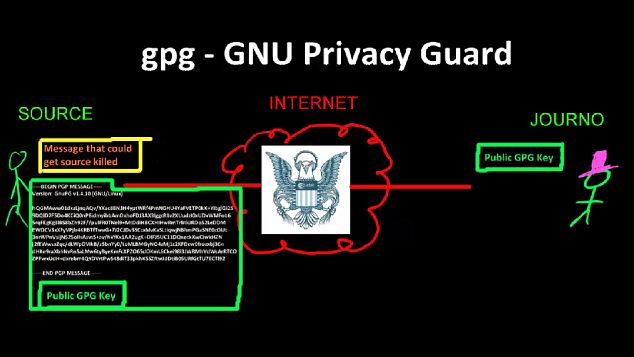




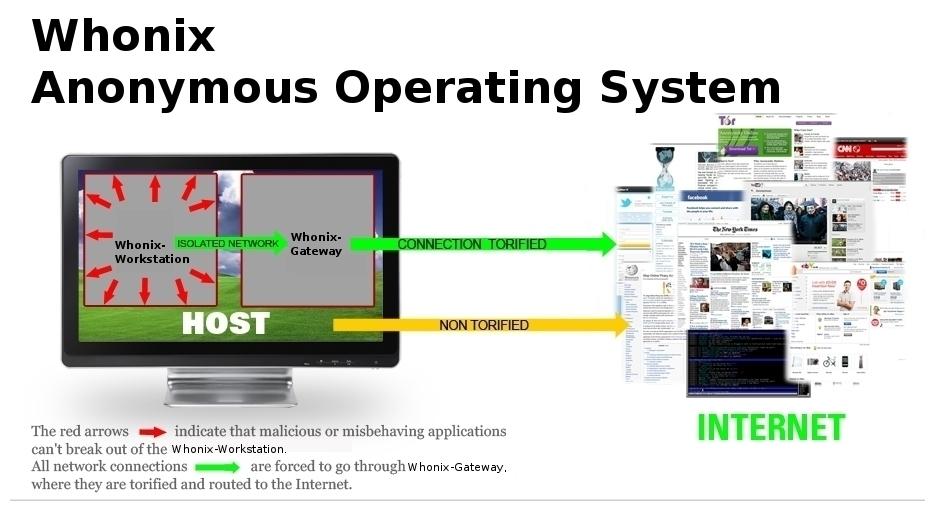





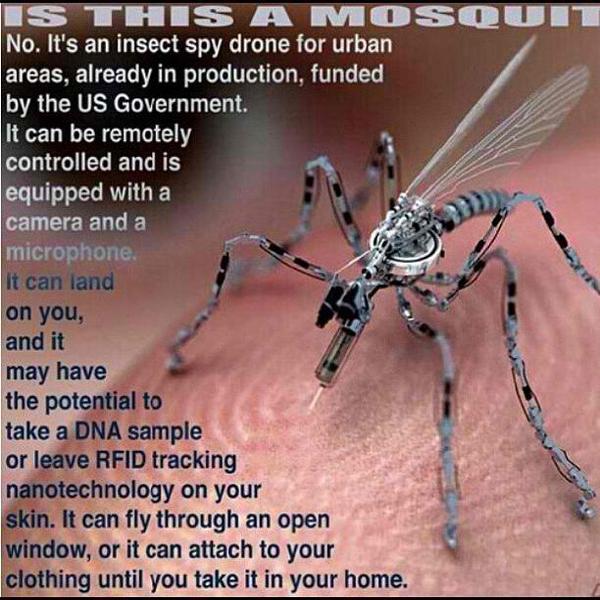



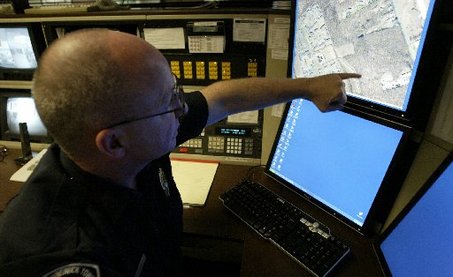

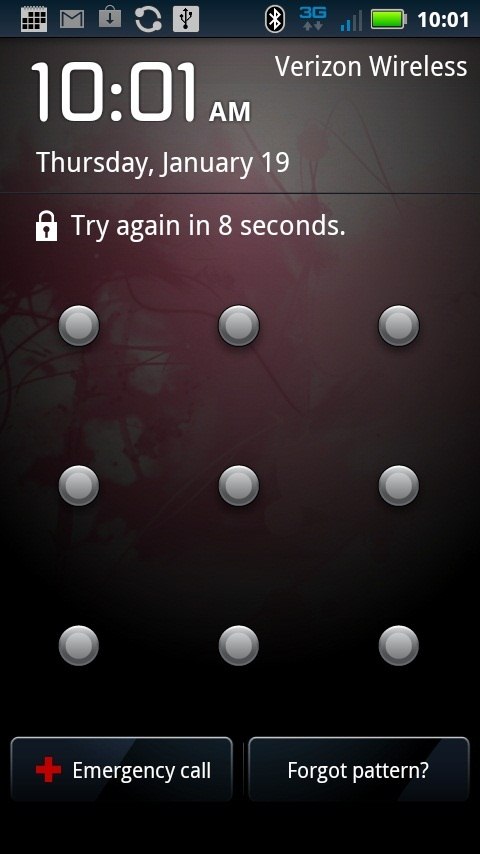
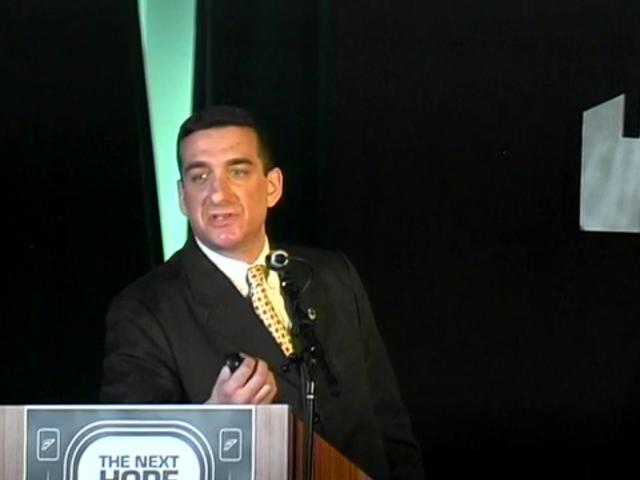



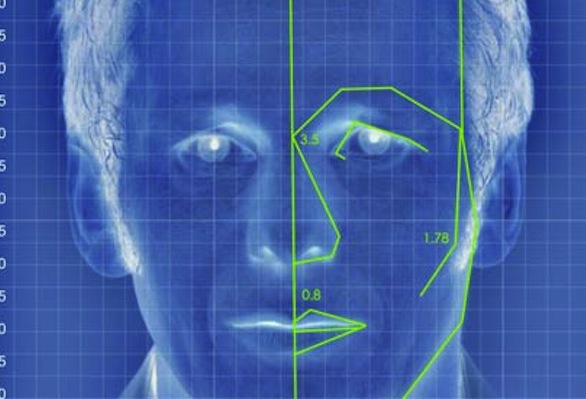

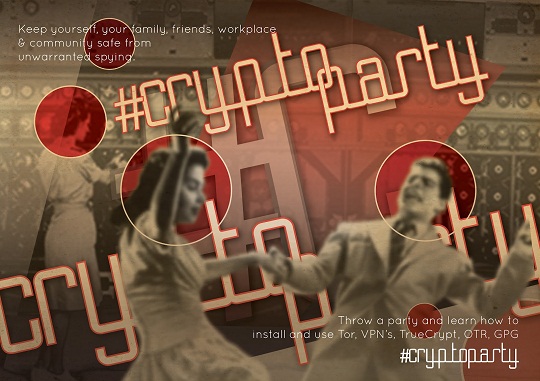

















 satellite_hacker said…