These are tense times for the friendly folks at Facebook. Mark Zuckerberg, CEO of the social media dictatorship, has steered his multi-billion dollar corporation into the stormy seas of multiple civil courtroom battles over violating user rights.
There is no question that Facebook is guilty of numerous civil rights violations. The Cambridge Analytics scandal of 2018 caused Facebook shares (FB) to plummet. Subsequent scandals have created a continuous decline in the company’s shareholder value.
But that doesn’t seem to matter to a company which seems to be fueled by higher sources, perhaps related to the federal surveillance state.
CORRECT, they don’t care. Millie Weaver – Shadowgate Documentary Exposes This as an intentional ‘Ploy’ to restructure data sharing
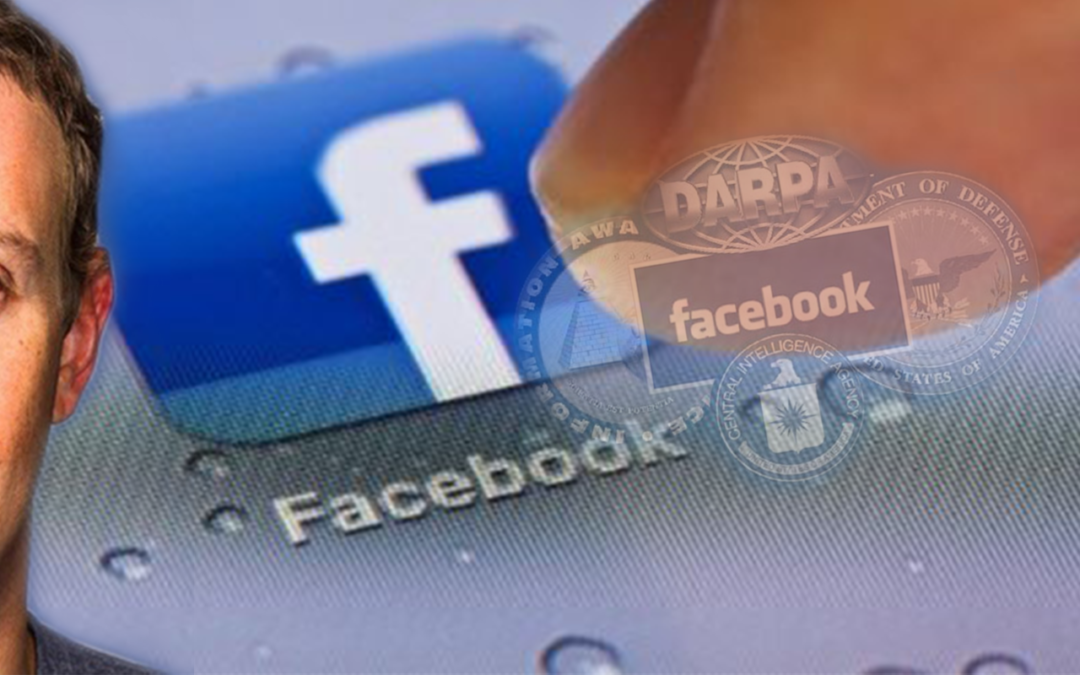
In a video dated March 9, 2019, PeterOfEngland spoke out in an earnest warning about “the criminal behavior of Facebook, its data collection network, and its working with the United States government – the Pentagon initially – to begin what’s called an ontological data collection point on what’s called ‘designated targets.’”
We the People of the World are the designated targets who were selected by the U.S. government, the CIA, and the Pentagon, according to Peter.
Was it a mere coincidence that on the very same day that Facebook launched – February 4, 2004 – a Pentagon civilian spy project called LifeLog shut down?

The U.S. Defense Advanced Research Projects Agency (DARPA) Pentagon-sponsored Project LifeLog was set up to collect data on all individuals. DARPA functions as the Defense Department’s research branch and is responsible for spending oodles of legally unaccountable taxpayer dollars to conduct Black Operations, secret from public scrutiny.
The data our government was interested in was – and still is – “every conceivable and imaginable platform possible,” said Peter.
LifeLog is “an ontology-based (sub)system that captures, stores, and makes accessible the flow of one person’s experience in and interactions with the world in order to support a broad spectrum of associates/assistants and other system capabilities.”
LifeLog was designed to be an all-encompassing personal data vacuuming system “aimed to gather in a single place just about everything an individual says, sees or does: the phone calls made, the TV shows watched, the magazines read, the plane tickets bought, the e-mail sent and received.”
Why bother with this massive collection of individual citizen’s personal, professional, and social activities, you ask? “Out of this seemingly endless ocean of information, computer scientists would plot distinctive routes in the data, mapping relationships, memories, events and experiences.”
Back in 2004, civil rights activists immediately opposed the surveillance scheme, raising the red flag that LifeLog could be turned against Us the People and “become the ultimate tool for profiling potential enemies of the state.”
The U.S. government responded by shutting down Project LifeLog. Or did they? In February 2004, “Researchers close to the project say they’re not sure why it was dropped late last month. Darpa hasn’t provided an explanation for LifeLog’s quiet cancellation. ‘A change in priorities’ is the only rationale agency spokeswoman Jan Walker gave to Wired News.”
Observers such as PeterOfEngland wonder if LifeLog was replaced by Facebook, which, oddly enough, launched on February 4, 2004 – the very same day DARPA announced the termination of their public surveillance Project LifeLog.
The thinking here is that the determined masterminds at DARPA realized that people might not flock to divulge their personal information to a cold, hard-hearted government agency. But Facebook was warm and inviting: “Sign up for a free account and make Friends” – thumbs up!
The public did flock to Facebook. We were told, in 2004, that the social media platform was the brainchild of a couple of Harvard students (Mark Zuckerberg and Eduardo Saverin) who wanted a face-pic-based school directory to keep in touch with classmates and other associates. The “social networking service launched as FaceMash in July 2003, but later changing to TheFacebook on February 4, 2004.”
Just look at Facebook now! Some people post every intimate detail of their daily lives as well as vital information: name, address, phone, email, web address, family names, veterinarian’s name, etc.
Harvard students made up the initial test base, followed by “other colleges in the Boston area, the Ivy League, and gradually most universities in the United States and Canada, corporations, and by September 2006, to everyone with a valid email address along with an age requirement of being 13 and older.”
Facebook’s growth and social acceptance were nothing short of phenomenal. This makes perfect sense if Facebook is actually a government-sponsored psyop (psychic operation or mind control). It appears, more and more, that this is the case, as Facebook “Community Standards” are suppressing free speech about anything anti-establishmentarian.
Not surprisingly, other world governments and the NSA also got on board with the covert agenda to ease user-friendly Facebook into the role of Global Personal Information Gatherer.
But Facebook got sloppy about user privacy and security concerns and is now staring down the barrel of lawsuits brought by large numbers of angry users whose personal information was abused by the social media spy site.
Perhaps foreshadowing the fate of Facebook, on February 1, 2019, a federal judge in San Francisco ruled that Facebook can be sued for allowing users’ private data to fall into the hands of third-parties such as Cambridge Analytics.
U.S. District Judge Vince Chhabria ruled briefly that “The injury is the disclosure of private information.”
We couldn’t agree more. But will this flagrant violation of civil rights shutter Facebook for good? Only time will tell.
There is one way to shut down Facebook for good. What if they have a social media platform and nobody came?
In the months prior to the most ferocious stock market crash in history and the eruption of the biggest public health crisis of our generation, we witnessed the biggest exodus of corporate CEOs that we have ever seen. And as you will see below, corporate insiders also sold off billions of dollars worth of shares in their own companies just before the stock market imploded. In life, timing can be everything, and sometimes people simply get lucky. But it does seem odd that so many among the corporate elite would be so exceedingly “lucky” all at the same time. In this article I am not claiming to know the motivations of any of these individuals, but I am pointing out certain patterns that I believe are worth investigating.
One financial publication is using the phrase “the great CEO exodus” to describe the phenomenon that we have been witnessing. It all started last year when chief executives started resigning in numbers unlike anything that we have ever seen before. The following was published by NBC News last November…
Chief executives are leaving in record numbers this year, with more than 1,332 stepping aside in the period from January through the end of October, according to new data released on Wednesday. While it’s not unusual to see CEOs fleeing in the middle of a recession, it is noteworthy to see such a rash of executive exits amid robust corporate earnings and record stock market highs.
Last month, 172 chief executives left their jobs, according to executive placement firm Challenger, Gray & Christmas.It’s the highest monthly number on record, and the year-to-date total outpaces even the wave of executive exits during the financial crisis.
By the end of the year, an all-time record high 1,480 CEOs had left their posts.
But to most people it seemed like the good times were still rolling at the end of 2019. Corporate profits were rising and the stock market was setting record high after record high.
Yes, there were lots of signs that the global economy was really slowing down, but most experts were not forecasting an imminent recession.
So why did so many chief executives suddenly decide that it was time to move on?
The following are just a few of the big name CEOs that chose to step down in 2019…
United Airlines — Oscar Munoz
Alphabet — Larry Page
Gap — Art Peck
McDonald’s — Steve Easterbrook
Wells Fargo — Tim Sloan
Under Armour — Kevin Plank
PG&E — Geisha Williams
Kraft Heinz — Bernardo Hees
HP — Dion Weisler
Bed, Bath & Beyond — Steven Temares
Warner Bros. — Kevin Tsujihara
Best Buy — Hubert Joly
New York Post — Jesse Angelo
Colgate-Palmolive — Ian Cook
MetLife — Steven Kandarian
eBay — Devin Wenig
Nike — Mark Parker
Of course the mass exodus of chief executives did not end there.
In fact, a whopping 219 CEOs stepped down during the month of January 2020 alone.
By then, it was starting to become clear that the coronavirus that was ripping through China could potentially become a major global pandemic, and I certainly can understand why many among the corporate elite would choose to abandon ship at that moment.
Some of these CEOs have made absolutely absurd salaries for many years, and it is much easier to take the money and run than it is to stick around and steer a major corporation through the most difficult global crisis that any of us have ever experienced.
It is important for me to say that I do not have any special insight into the personal motivations of any of these individuals, and every situation is different.
But I do think that it is quite strange that we have seen such an unprecedented corporate exodus at such a critical moment in our history.
Meanwhile, top corporate executives were dumping billions of dollars worth of shares in their own companies just before the market completely cratered. The following comes from the Wall Street Journal…
Top executives at U.S.-traded companies sold a total of roughly $9.2 billion in shares of their own companies between the start of February and the end of last week, a Wall Street Journal analysis shows.
The selling saved the executives—including many in the financial industry—potential losses totaling $1.9 billion, according to the analysis, as the S&P 500 stock index plunged about 30% from its peak on Feb. 19 through the close of trading March 20.
In the stock market, you only make money if you get out in time, and many among the corporate elite seem to have impeccable timing.
Perhaps they just got really lucky. Or perhaps they were reading my articles and understood that COVID-19 was going to cause the global economy to shut down. In any event, things worked out really well for those that were able to dump their stocks before it was too late.
And it turns out that several members of Congress were also selling stocks just before the market went nuts…
Sen. Dianne Feinstein of California and three of her Senate colleagues reported selling off stocks worth millions of dollars in the days before the coronavirus outbreak crashed the market, according to reports.
The data is listed on a U.S. Senate website containing financial disclosures from Senate members.
Of course most ordinary Americans were not so “lucky”, and the financial losses for the country as a whole have been absolutely staggering.
The good news is that there was a tremendous rally on Wall Street on Tuesday, and that will provide some temporary relief for investors.
But the number of confirmed coronavirus cases continues to escalate at an exponential rate all over the globe, and this crisis appears to be a long way from over.
About the Author: I am a voice crying out for change in a society that generally seems content to stay asleep. My name is Michael Snyder and I am the publisher of The Economic Collapse Blog, End Of The American Dream and The Most Important News, and the articles that I publish on those sites are republished on dozens of other prominent websites all over the globe. I have written four books
Definitely worth a listen! We all know that Facebook had some shady beginnings.. stolen code.. angel investment via outed CIA ‘front company’ In-Q-Tel, and it goes on.. What if Zuck really was just the chosen puppet leader of what would ultimately be the worlds largest ‘voluntary citizen dossier’? Give it a listen and decide for yourself. These statements certainly seem to ring true with plenty of background info to give reasonable merit.
Highlights:
Mark’s real name is not even Zuckerberg.
Mark was chosen ahead of time and ‘placed’ at Harvard to fit the story.
Mark did not create the Facebook brand name nor did he write any code.
Mark has ‘handlers’ that dictated (and still do) his every move.
Mark’s lack of any moral compass made him the perfect figure-head.
Mark is the just the face of a much bigger agenda at work.
Interesting ‘Top Comment’
” So, Zuckerberg’s Harvard professor, James P. Chandler, is one in the same patent attorney who stole Michael McKibben’s Leader Technology ideas that he was supposed to help get a patent and instead STOLE the information! WOW, all these deep stater’s are totally intertwined, like a huge cancer. How do you kill a cancer? STARVE IT! “
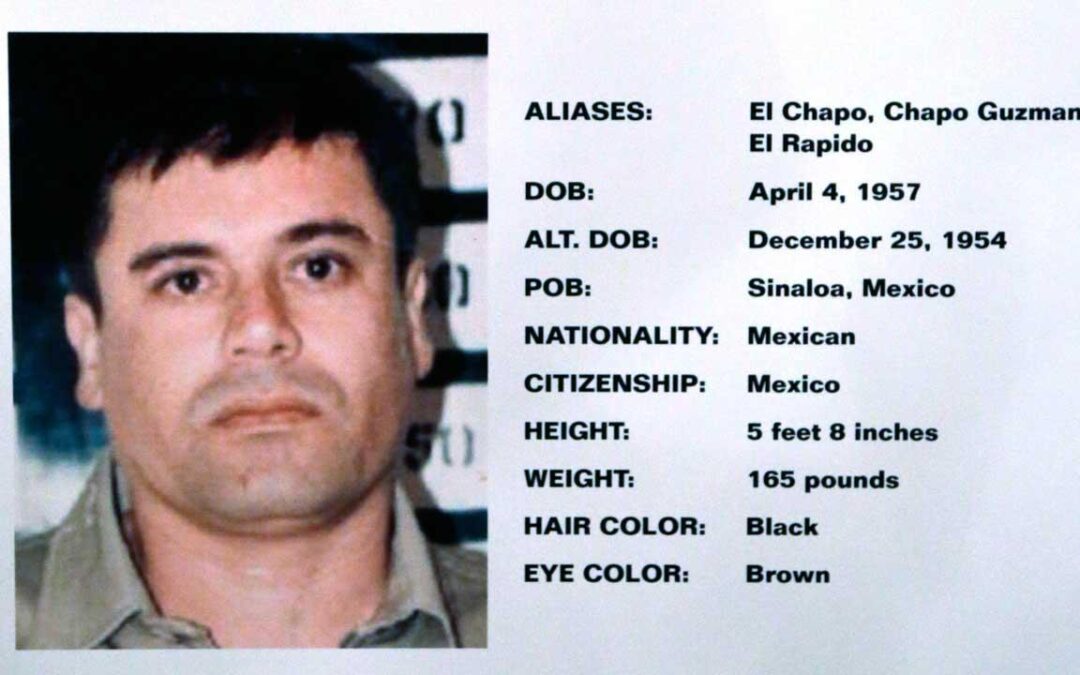
So I’m certain you’ve seen the news non stop, Chapo escaped, again. Happened on a Saturday night, he disappeared from the view of a surveillance camera in his cell and went underground into a tunnel under the Altiplano maximum security prison and wasn’t seen again. That’s the summary of the official story, and the video does appear to show that he went out through the tunnel dug where his shower was located. The story being spun is that since they couldn’t see him escape because Chapo was in a blind spot for the cameras. The authorities stated that out of respect for “human rights” they didn’t want to invade a prisoner’s privacy by placing a surveillance camera that could look into the shower area. That’s their trick up their sleeve, and the one that brings the story down.
An ex prisoner of the very same jail Chapo was doing time in said there is no respect for human rights let alone privacy rights in that prison. The authorities made it seem like they thought Chapo might have just been getting ready to shower. The ex prisoner explained that showers at night are not allowed. You can only shower once, at six in the morning. So there goes that part. He also states that there are indeed cameras that can see into the shower, even the toilet. That you’re only allowed ten minutes in the shower but really about 8 since the guards rush the prisoners to finish. He says the only blind spot in a jail cell at Altiplano is under your bed. You have to take into account that the authorities have stressed that the reason for these so called blind spots, is their concern for human rights. Okay.
If you’ve read enough about the Mexican government and their many hands, then you know that the last thing on their mind is a concern for human rights for its citizens. You can look at a photo of what police did to a young student that will verify that, Google that if you would like to but a face ripped off isn’t something I recommend you look at. The Mexican authorities aren’t concerned with human rights for its citizens let alone prisoners. The conditions at that jail and many others throughout Mexico are nightmarish. Put aside that we all know they don’t care about privacy, because don’t forget about this right here.
Secretary of the Interior Osorio Chong had repeatedly stated that the reason for the blind spots was out of respect for human rights, that turned into backlash as people began to say they looked the other way. He had to state that respecting human rights for a prisoner is not the same as helping them escape. That is true, it isn’t the same thing, but he wasn’t respecting human rights, so let’s get that straight.
It was obvious from the beginning of the story that Chapo must have had help from the inside, and you could ask any Mexican if they thought he had bought his way out and they’ll laugh and explain to you how reasoning works. It was confirmed that several prison workers including the director of Altiplano were detained for their alleged roles in Chapo’s escape. The former prisoner however stated that Chapo needed to have four departments under his control in that prison because of its maximum security status. He needed to control the federal, the prison guards, the prison officials and the special guards. So obviously he was able to do that, since he’s out of prison. Outside the prison is another link of the story of how Chapo was released.
The house at the end of the tunnel had no permit to be built. How could a maximum security prison not notice a building being built not far from its walls? You can say that Mexican authorities are very relaxed with their regulations, but a maximum security prison that houses the most wanted criminals is something else. Not only did it house Chapo, it had the leader of The Zetas Cartel, leader of the Knights Templar Cartel, “La Barbie” of the Beltran-Leyva Cartel, it is the prison of the most high profile cartel leaders. Surely they would notice a house being built about a mile from their walls, right? People familiar with the area have stated how secure that entire area is, you can’t even pick up radio signals there. With regards to how Chapo could’ve pulled this off, again, it isn’t how but why. Chapo didn’t escape if the authorities allowed all the pieces to be put into place for him to leave. He didn’t escape, he just left. He left behind a nice gift at least. That little bracelet used to monitor his location.
The bracelet that kept track of him doesn’t work outside the prison walls, pretty neat feature there for a maximum security prison. That’s another story in itself, the bracelet isn’t of importance because he removed it before going down the tunnel. How did he remove it so easily? What kind of bracelet for prisoner monitoring be so easily removable? Well, it was left behind and even if he couldn’t remove it, it would have stopped working once he was out. To be honest, he could have a huge lighthouse blaring out his location on top of his head and the authorities will still not find him, because they’re not looking for him. They released him. Well, for certain the local authorities did.
Shit rolls downhill, and so does money. This is an embarrassment for the upper echelons of power. President Enrique Peña Nieto is looking like quite the fool for being en route to France as the most prolific drug trafficker in the world just slipped out of prison on a motorcycle through a tunnel. Secretary of the Interior Osorio Chong looked like he was about to suffer an anxiety attack as he held a press conference over Chapo’s escape. They might not be happy about it, but certainly the lower level officials have quite a nice family retirement plan because of this. Sorry, us Mexicans usually think about, “I hope my family is taken care of” not, “I hope the president and the top brass is happy.” I can assure you, anyone involved in letting Chapo go aren’t worrying about the future of their family. They might go to jail, but just like those who sacrifice their being to work endlessly in the US to send money back home to ensure their families are taken care of, that’s all that matters. Speaking of money, that might be the key to the whole story.
Not going to get into specifics here, but the biggest buzz from the Left in Mexico on this story is, the bigger picture. Yeah Chapo is the head of arguably the biggest and most powerful cartel in the world. It was that way when he was in jail, and when he wasn’t in jail. So why all the effort to find him, arrest him, jail him? Well, the biggest bit on that has to do with a general goal with the EPN administration. Privatization and more oversight from the US government over Mexico. There has been talks about the need to privatize Mexican prisons, among other neoliberal proposals such as in the education sector which has met with fierce resistance from education workers. There’s lots of quotes in US media from law enforcement agents saying this is an embarrassment for the corrupt and weak Mexican judicial system, that it needs more US assistance, and you get the idea. This of course is the US lead war on drugs, and they have the final say and if need be, final action. Loretta Lynch went as far to say that the US is ready to “help” Mexico find and capture Chapo. Anytime the US says they’re ready to help another country find “justice” well you know how that story ends. Sovereignty or any resemblance to it not only flies out the window, it leaves a bloody mess. Wow, sorry but I’m looking at this post and it is rather long and tedious to write and I’m certain it’s getting tedious to read as well so I’ll break this down to the core, just a moment.
The rumors, Chapo was allowed to walk right out the front door of the prison. Let’s say that was the truth, that the tunnel was just a prop to assist this novela like story streaming from the TV networks. Even if it wasn’t, his release, yes release, serves a powerful purpose. Either the Mexican state is weak and corrupt, it is. Or, it’s another excuse for a “soft” intervention from the US. It can be both, it most certainly feels that way. We forget the War on Drugs is an actual war, and propaganda is a tool of war. You can point to the bad guy and say that’s enough reason to go to war, but at least recognize that this is part of a war. So treat it like one. Bin Laden was sought after in the War on Terror and many innocent people died going after the bad guy. Remember that lives are a factor here, it’s war after all.
A mere cursory glimpse into the future foretells of a world in which the Internet has been integrated into almost every facet of our lives. However, the flood of smartphones, laptops, and “Internet of Things”-enabled devices in recent years has led it to expand at a rate far beyond the expectations of its original creators. With today’s generation of technology pushing the limits of current fiber optic capacity, in the next decade, radical new solutions to the “capacity crunch” are crucial to the sustained success of the web.
The domain of all things digital is evolving quickly, and tomorrow’s Internet promises to be in places it never was before: inside our appliances, in far-flung villages, even in space. While some of these needs are practical (“smart” healthcare devices, learning thermostats, rural WiFi) others are purely for amusement (Netflix, the introduction of Oculus Rift). All in all, coming changes to the constantly-expanding role of the net stand to make our world a much different place than it was just several years ago.
As much of the world races to improve Internet connection speeds, researchers are concerned that the fiber optic cables which form the physical backbone of the global Internet are reaching their peak capacity and may run out of bandwidth in as soon as five to eight years. According to UK scientists, the cables and fiber optics that deliver data to users will have reached their limit by 2023. No longer able to transmit information, this may trigger an Internet collapse of epic proportions. This is a massive problem, of course, especially taking into account the fact that much of the developing world still needs to be brought online, even as Western superpowers continue to demand greater bandwidth and faster Internet speeds.
This issue has made it to the mainstream, as doomsday predictions from scientists, physicists and engineers warning of a “full” Internet summoned the attention of all who depend on the web (for cat videos, or other perhaps more worthwhile pursuits). Until now, Internet providers have kept up with increased demand simply by sending more and more data down a single line of optic fiber. But now, the optical fibers have reached maximum capacity, and cannot transfer any additional information. Some of the world’s largest providers of fiber optic connections, such as VerizonFiOS, Google, and Microsoft, have recently worked to improve their networking infrastructure to keep up with our insatiable desire for faster, stronger Internet. However, this does not change the fact that computer-to-computer interactions are growing at an exponentially faster rate than anyone had predicted.
As reported by the media, there are several Internet initiatives afoot which may serve to mitigate this issue completely. Some of the biggest names in technology today have a stake in the race to develop better and faster forms of Internet delivery, implementing some wild schemes in an attempt to move beyond broadband. From Google’s Loons to Elon Musk’s lofty plan for individual Internet satellites, some plans are perhaps less “grounded” in reality than others. However, the key to fighting capacity crunch might already be beneath our feet.
“Dark fiber” is a term used to refer to networks of unlit optical cable infrastructure, laid down and left unused during the dotcom era. In the city of San Francisco alone, over 110 miles of fiber optic cable run underground. Only a fraction of that fiber network is currently being put to use. Right now, networks of dark-fiber primarily serve corporate entities, in high-density urban centers. But experts say that putting them to use residential communities wouldn’t be tough.
Robert Steele, former intelligence officer with the CIA, has proposed another idea to solve this problem: open source everything. As the growth of online media consumption – through streaming sites such as Netflix and Youtube – promises to further skyrocket in years ahead, his solution may make the most sense.
Steele spoke on the matter, saying:
“Sharing, not secrecy, is the means by which we realise such a lofty destiny as well as create infinite wealth. The wealth of networks, the wealth of knowledge, revolutionary wealth – all can create a nonzero win-win Earth that works for one hundred percent of humanity. This is the ‘utopia’ that Buckminster Fuller foresaw, now within our reach.”
Does reaching the end of the current optical fiber limit mean an Internet apocalypse will occur within our lifetimes? Personally, I’m optimistic that engineers will soon ameliorate the problem and clean up the mess – hopefully before I have to cancel my Netflix subscription.
In less than 15 years, the United States’ airline industry has shrunk from ten airlines in the sky to just the big four that are left today. (Photo via Shutterstock)
There’s a stunning lack of choice for American consumers today, and nowhere is that more evident than in our nation’s ever-shrinking airline industry.
According to a new report from the AP, the average roundtrip ticket to anywhere in the US was over $509.15, including taxes, in the first half of this year. That’s up $14 from the same period last year.
The AP also points out that domestic airfare pricing is outpacing inflation, up 2.7 percent compared to the 2.1 percent increase in the Consumer Price Index.
And, according to data from the Airlines Reporting Corporation, airfare costs have shot up 10.7 percent during the past five years alone.
So, what’s behind these sky-high airfare prices?
Well, as the AP piece points out, airlines have discovered that thanks to the economic recovery, more people want to fly, so airlines have dropped the number of available seats on their planes, which all translates to higher ticket prices.
The airlines are taking advantage of simple supply-and-demand economics.
But that’s just one piece of the puzzle.
The real reason that airfare costs are so high is because of the stunning lack of competition in the airline industry today.
Back in 2001, there were 10 major airlines flying through American skies: American Airlines, TWA, America West, US Airways, Delta, Northwest, United, Continental, Southwest, and AirTran.
All those airline choices meant more completion in the marketplace, which translated into lower airfare prices for American consumers.
However, slowly but surely, the competition in the airline industry has disappeared.
In 2001, American Airlines bought out TWA.
In 2005, America West bought up US Airways, keeping the US Airways name.
In 2008, Delta officially began the process of merging with Northwest.
In 2010, United and Continental announced that they were joining forces, and just a few months later, Southwest announced that it was taking over AirTran.
And finally, last year, US Airways and American Airlines announced that they were merging to form the world’s largest airline.
So, in less than 15 years, the American airline industry has shrunk from ten airlines in the sky to just the big four that are left today.
Similarly, as the number of airlines has dwindled, airfare prices have shot up, because there’s so little competition in the marketplace.
The disappearing competition in the airline industry isn’t just some strange phenomenon.
In fact, this same sort of thing is happening in just about every other industry in America.
Look at America’s media and telecom industries.
Back in 1983 – 90 percent of American media was owned by 50 companies.
As of 2011 – that same 90 percent was controlled by just six massive corporations: GE, Newscorp, Disney, Viacom, Time-Warner and CBS.
Similarly, right now, there are just 10 giant corporations that control, either directly or indirectly, virtually all American consumer products.
And then there’s America’s banking industry.
As Mother Jones points out, 37 banks and financial institutions back in 1990 have slowly transformed into the big four banks we see today (Citigroup, JPMorgan Chase, Bank of America and Wells Fargo).
And we all know how much damage those big banks have done to the American economy.
From fewer airlines in the skies, to fewer banks on Main Street, competition has disappeared from the American marketplace, and it’s all because Ronald Reagan, in 1982, stopped enforcing the Sherman Anti-Trust Act.
Ever since Ronald Reagan came to Washington, “mergers and acquisitions” became the main way to do business, and we’ve all suffered as a result, in the form of things like higher airfare costs.
The steady aggregation of big businesses taking over entire industries over the past 34 years in just about every major commercial sector has concentrated far too much power in the hands of too few players.
Americans deserve choice.
We shouldn’t have to feel like we’re being robbed every time we fly home to see family members or jet off for vacations.
And the only way to bring that choice back is by undoing the damage that 34 years of failed Reaganomics has caused, by starting again to enforce the Sherman Anti-Trust Act, by breaking up America’s giant corporations, and by thus bringing competition back into our marketplace.
This article was first published on Truthout and any reprint or reproduction on any other website must acknowledge Truthout as the original site of publication.
Even the mightiest have their come-uppance when their internal logic spews out destructiveness returning on the self—“blowback” in a way perhaps not seen before. I refer to James Risen’s extraordinary article in the New York Times, “Before Shooting in Iraq, a Warning on Blackwater,” (June 30), in which the customary meaning of “blowback” refers to policies, e.g., the invasions of Iraq and Afghanistan, the confrontation with Russia over Ukraine, the “pivot” of military power to the Pacific intent on the encirclement, containment, isolation of China, produce unintended, or if intended, still unwelcome, consequences for the initiator of the policy or action.
Thus: Iraq, out-of-control (from the US standpoint, a raging civil war negating massive intervention and alerting the world to America’s hegemonic purposes); Afghanistan, original support of the Taliban against the Soviet Union, resulting in their material strengthening now turned against the US, endangering its power-position in the region; use of Ukraine as a basis for bringing NATO forces to the Russian border, now an overreach which may disrupt the EU and weaken US dominance over it; and blatant confrontation with China, both military and trade, with potential for war leading to nuclear annihilation. The status and role of world policeman is losing its blackjack, its reputation as global bully being challenged through the rise of multiple power-centers and industrial-commercial-financial patterns no longer defined, supervised, indeed controlled, by American global interests and military implementation.
That is blowback in its familiar guise. Less so, the self-chosen instruments of repression spilling out of behemoth’s mouth because America’s dependence on repression to secure its aims makes it dependent as well on the executors of repression, in this case, given the extreme stress on privatization (the core of the monster’s functional existence), Blackwater at your service, a private army on hire to USG for pursuit of the dirty work, deemed necessary, yet, delegated to official forces, the cause of embarrassment and shame. Browbeating indigenous populations, with an overwhelming swagger and display in the grand tradition of conquerors, in addition to protecting representatives of the conquerors, is a mission worthy, as here, of billion dollar contracts to the private militias (euphemism: “security guards”) as insurance the military victory and occupation will hold.
Here Blackwater is, and is treated as, inseparable from the intervention (read: conquest) itself, at times assisting in the fighting on an informal basis—it has not yet been invited to join NATO(!)—but more to the point, the intimidating presence in the post-military phase, as though instilling the message: You Iraqis think the military is bad, well don’t mess around, for far worse awaits you, we former Navy SEALS know nothing can touch us. Our motto might as well be, A Law Unto Ourselves, even USG—beyond the status-of-forces agreement it forced your government to sign—afraid of us. Blowback: the cancer in the bowels of behemoth rapidly spreading to the extremities, spinal column, brain. Soon we shall all be made over in the image of Blackwater, or rather, as Blackwater would like to see, as its actions show, America become, a nation subservient to its thugs, extolling martial glory for its own sake and for the sake of global dominance. Authoritarianism once off the ground knows no limits and demands the complete adherence of its subjects. America has lived with CIA for decades; Blackwater is icing on the cake.
***
Before turning to the evidence contained in James Risen’s article, it is important to see how events from the past are converging on the present. His credentials as a whistleblower are borne out by his previous record (exposure of CIA dirty tricks, in his book State of War, with respect to Iran’s nuclear program) and current circumstances (he faces a possible jail sentence for refusing to disclose, from that account, the identity of an anonymous source). In the Bush doghouse for exposing the use of warrantless wire taps in 2005, and now, Obama contemplating more serious action, jail time for not complying with a DOJ subpoena, possibly leading to an Espionage Act prosecution, for which Obama excels over all of his predecessors combined (liberals, of course, furiously denying the sordid record), Risen not only stares down his persecutors, Obama, Holder, DOJ, but here presents an exposure in some ways more damning of US baseness from the top down, nurturing a murderous nest in the structure of government.
As for the administration hounding, Jonathan Mahler’s New York Times article, “Reporter’s Case Poses Dilemma for Justice Dept.,” (June 27), implies that Risen’s refusal to be intimidated is causing Obama and Holder second thoughts about pushing for his imprisonment. According to John Rizzo, CIA’s acting general counsel, Bush people wanted State of War kept off the market—too late, however. Risen then was subpoenaed to testify against the suspected leaker—and refused. “More than six years of legal wrangling,” in what Mahler terms “the most serious confrontation between the government and the press in recent history,” is coming to a head. Risen “is now out of challenges. Early this month, the Supreme Court declined to review his case, a decision that allows prosecutors to compel his testimony.”
But The Times, in defending its own man, cannot strongly protest, lest it antagonize the White House. Yes, Obama appears to be in a bind: “Though the court’s decision looked like a major victory for the government, it has forced the Obama administration to confront a hard choice. Should it demand Mr. Risen’s testimony and be responsible for a reporter’s being sent to jail? Or reverse course and stand down, losing credibility with an intelligence community that has pushed for the aggressive prosecution of leaks?” If Obama and USG were truly democratic (small “d”), there should not be a choice but only one course of action, moreover reigning in the “intelligence community” serving under their control.
The reporter, I believe reflecting the paper’s view, however, credits the Obama administration with actually weighing alternatives and being capable of making moral choices: “The dilemma comes at a critical moment for an administration that has struggled to find a balance between aggressively enforcing laws against leaking and demonstrating concern for civil liberties and government transparency.” What balance? What concern? Everything points the other way, on both civil liberties (e.g., due process and habeas corpus rights for detainees) and government transparency (simply, a thick protective shield in place, symbolized by the high art of redaction—and, as with Blackwater’s killing sprees, the refusal or half-heartedness about prosecution). Its reporter’s back against the wall, NYT ignores the Espionage Act prosecutions of whistleblowers.
Mahler succinctly describes the reporting: “The failed C.I.A. action at the heart of Mr. Risen’s reporting was intended to sabotage Iran’s nuclear weapons program. Intelligence officials assigned a former Russian scientist who had defected to the United States to deliver a set of faulty blueprints for a nuclear device to an Iranian scientist. But the Russian scientist became nervous and informed the Iranians that the plans were flawed.” One readily appreciates the dangers to the National Security State, especially revelations of the stupidity and dangerousness of its crown jewel, CIA, posed by investigative journalism. The Times, to its everlasting shame, bowed to Coldoleezza Rice’s request to withhold publication of the article. As a Times spokesperson later declared, “We weighed the government’s concerns and the usual editorial considerations and decided not to run the story.” Hence, James Risen—enemy of National Security; he “broke the story” later in State of War. Yet Bush is not the only culprit in this story; Obama ordered two additional subpoenas to force Risen to testify, his DOJ going after him hammer-and-tongs: “After a trial court largely quashed his third subpoena [the first under Bush] in late 2010, the Justice Department successfully challenged the ruling in a federal appeals court, arguing that the First Amendment does not afford any special protections to journalists.” Enough said about the dedication to civil liberties and freedom of the press: “The administration then urged the Supreme Court not to review Mr. Risen’s case.”
***
I have already discussed the mass killings in Nisour Square, Baghdad, in a previous article. Now we learn that this was part of a pattern in Blackwater’s behavior—again, Risen’s reporting. Even for one who is a seasoned critic, it is painful for me to write about. Organized thuggery knows no limits particularly when working for the highest authority, immunity from punishment worn as a badge of honor, as meanwhile government officials hide their eyes. Risen writes, “Just weeks before Blackwater guards fatally shot 17 civilians in Baghdad’s Nisour Square in 2007, the State Department began investigating the security contractor’s operations in Iraq. But the inquiry was abandoned after Blackwater’s top manager there issued a threat: ‘that he could kill’ the government’s chief investigator and ‘no one could or would do anything about it as we were in Iraq,’ according to department reports.” A private contractor threatens the life of a State Department investigator! No reprisal, punishment, cancellation of the contract, not even disclosure of the threat—yet Blackwater still in place years later, as part of the silence on atrocities in the Obama-Hillary era.
Those 17 killed are on America’s hands, bloody hands. There was a clear warning about what to expect: “After returning to Washington, the chief investigator wrote a scathing report to State Department officials documenting misconduct by Blackwater employees and warning that lax oversight of the company, which had a contract worth more than $1 billion to protect American diplomats, had created ‘an environment full of liability and negligence.’” Even more outrageous, Risen notes, the investigators become the criminals gumming up the security works: “American Embassy officials in Baghdad sided with Blackwater rather than the State Department investigators as a dispute over the probe escalated in August 2007, the previously undisclosed documents show. The officials told the investigators that they had disrupted the embassy’s relationship with the security contractor and ordered them to leave the country, according to the reports.”
Jean Richter, lead investigator, wrote, in a memo to the State Department only weeks prior to Nisour Square: “’The management structures in place to manage and monitor our contracts in Iraq have become subservient to the contractors themselves. Blackwater contractors saw themselves as above the law…. ‘hands off’ [management meant that] the contractors, instead of Department officials, are in command and in control.’” Now, nearly seven years later, four Blackwater guards are on trial, facing, if ever convicted, watered down charges, this being “ the government’s second attempt to prosecute the case in an American court [I wonder how serious the effort under Holder and Obama] after previous charges against five guards were dismissed in 2009.” Much of the time this is on Obama’s watch, yet, “despite a series of investigations in the wake of Nisour Square, the back story of what happened with Blackwater and the embassy in Baghdad before the fateful shooting has never been fully told.”
So much for transparency, civil liberties, and prosecuting the crimes of a predecessor (the cardinal rule of presidents, at least this one, cover-up WAR CRIMES past and present, a solemn command of the National Security State). Silence and deniability, in all matters large and small, characterize the responses of USG and private principals: “The State Department declined to comment on the aborted investigation. A spokesman for Erik Prince, the founder and former chief executive of Blackwater, who sold the company in2010, said Mr. Prince had never been told about the matter.” The $1B contract itself testifies to the fusion of patriotism, secrecy, repression, and yes, corporate profit: “After Mr. Prince sold the company, the new owners named it Academi. In early June, it merged with Triple Canopy, one of its rivals for government and commercial contracts to provide private security. The new firm is called Constellis Holdings.” Like war, private security stands to make a killing (pardon the pun), no doubt in flight from the original name for damage-control and public-relations purposes.
Previous to Nisour Square (Sept. 16, 2007) Blackwater guards “acquired a reputation…for swagger and recklessness,” but complaints “about practices ranging from running cars off the road to shooting wildly in the streets and even killing civilians typically did not result in serious action by the United States or the Iraqi government.” After firing in the Square, there was closer scrutiny, the Blackwater claim that they were fired on even US military officials denied, and “[f]ederal prosecutors later said Blackwater personnel had shot indiscriminately with automatic weapons, heavy machine guns and grenade launchers.” To no avail, given the symbiotic relationship between the company and the government. In fact, Blackwater had itself been run by Prince as a nation in microcosm, its people shortly before Nisour Square gathered by him at company headquarters in Moyock, North Carolina and made to “swear an oath of allegiance” like the one required of enlistees in the US military. They were handed copies of the oath, which, after reciting the words, were told to sign.
The State Department investigation into Blackwater in Iraq, which began Aug. 1, 2007 and was slated for one month, led early to the “volatile” situation (including the death threat), our knowledge coming from “internal State Department documents” furnished “to plaintiffs in a lawsuit against Blackwater that was unrelated to the Nisour Square shootings,” seemingly by accident then and fleshed out by Risen. In that month—or that part of it before being forced to leave– the investigators discovered “a long list of contract violations by Blackwater,” staffing changes of security details “without State Department approval,” reducing the number of guards on details, “storing automatic weapons and ammunition in their private rooms, where they were drinking heavily and partying with frequent female visitors,” and, for many, failing “to regularly qualify on their weapons” or “carrying weapons on which they had never been certified” nor “authorized to use.” Extravagance for mayhem abroad, less than peanuts for critical needs at home, education, health care, employment, beyond the means or reach of Imperial grandeur as the national obsession.
In addition to “overbilling the State Department by manipulating its personnel records, using guards assigned to the State Department contract for other work and falsifying other staffing data on the contract,” (no wonder the investigators’ poor reception by Blackwater’s resident head in Iraq), one of its affiliates forced “third country nationals” who did the dirty work at low wages “to live in squalid conditions, sometimes three to a cramped room with no bed,” according to the investigators’ report. Their conclusion: “Blackwater was getting away with such conduct because embassy personnel had gotten too close to the contractor.”
Ah, the denouement; we have a name to go with the face of the project manager who threatened Richter’s life, Daniel Carroll, who said he could kill him without anything happening to himself “as we were in Iraq” (this was witnessed by Donald Thomas, the other investigator), and Richter, in his memo to the Department stated: “I took Mr. Carroll’s threat seriously. We were in a combat zone where things can happen unexpectedly, especially when issues involve potentially negative impacts on a lucrative security contract.” Nicely put, and corroborated by Thomas, who wrote in a separate memo that “others in Baghdad had told the two investigators to be ‘very careful,’ considering that their review could jeopardize job security for Blackwater personnel.” The wonder perhaps is that Richter and Thomas were not prosecuted under the Espionage Act for spoiling the show. It didn’t matter. No one at State listened.
The two men were ordered to leave (Aug 23), and “cut short their inquiry and returned to Washington the next day.” Finally, on Oct. 5, after the Nisour Square scandal, State Department officials responded to Richter’s “August warning,” and took statements from him and Thomas about “their accusations of a threat by Mr. Carroll, but took no further action.” A special panel convened by Rice on Nisour Square “never interviewed Mr. Richter or Mr. Thomas.” The official who led the panel “told reporters on Oct. 23, 2007, that the panel had not found any communications from the embassy in Baghdad before the Nisour Square shooting that raised concerns about contractor conduct.” Voila, vanished in thin air. This State Department officer deserves the last word: “We interviewed a large number of individuals. We did not find any, I think, significant pattern of incidents that had not—that the embassy had suppressed in any way.” And my last word: fascism. Beyond all structural-cultural-societal considerations about wealth-concentration, industrial-financial consolidation, foreign expansion through preponderant power and the spirit of militarism, the rampaging privatization with government consent witnessed here, which has wreaked havoc on another people, only to be covered over by the state, aka, the National Security State, disregarding its Constitutional protections to the individual, as in sponsoring massive surveillance, is enough for me to satisfy the working definition of that single word.
via Norman Pollack has written on Populism. His interests are social theory and the structural analysis of capitalism and fascism. He can be reached at [email protected].
Planned obsolescence (OR PROGRAM) is the deliberate reduction of the useful life of products, to ensure frequent repurchases and consumption.
In the past, products were built to last. Then, in early 1920, a group of industrial reached the following conclusion:
“An article that refuses to goes down is a tragedy for the business”, especially in the modern consumer society, which is based on accelerated production cycles, repurchase and disposal.
This documentary combines research work with rare footage, stored under lock and key, on the practice of planned obsolescence by large companies in the world from 1920 to the present day.
The film, spoken in English, French, Spanish and German, travels the world interviewing witnesses who experienced the beginning of this practice, now applied worldwide, which harms consumers, generates mountains of waste and feeds the cemeteries of electronic equipment, which never stop growing.
I am a former Google employee and I am writing this to leak information to the public of what I
witnessed and took part in while being an employee. My position was to deal with AdSense accounts,
more specifically the accounts of publishers (not advertisers). I was employed at Google for a period of
several years in this capacity.
Having signed many documents such as NDA’s and non-competes, there are many repercussions for me,
especially in the form of legal retribution from Google. I have carefully planned this leak to coincide with
certain factors in Google such as waiting for the appropriate employee turn around so that my identity
could not be discovered.
To sum it up for everyone, I took part in what I (and many others) would consider theft of money from
the publishers by Google, and from direct orders of management. There were many AdSense employees
involved, and it spanned many years, and I hear it still is happening today except on a much wider scale.
No one on the outside knows it, if they did, the FBI and possibly IRS would immediately launch an
investigation, because what they are doing is so inherently illegal and they are flying completely under
the radar.
It began in 2009. Everything was perfectly fine prior to 2009, and in fact it couldn’t be more perfect from
an AdSense employees perspective, but something changed.
Google Bans and Ban Criteria
Before December 2012:
In the first quarter of 2009 there was a “sit-down” from the AdSense division higher ups to talk about
new emerging issues and the role we (the employees in the AdSense division needed to play. It was a
very long meeting, and it was very detailed and intense. What it boiled down to was that Google had
suffered some very serious losses in the financial department several months earlier. They kept saying
how we “needed to tighten the belts” and they didn’t want it to come from Google employees pockets.
So they were going to (in their words) “carry out extreme quality control on AdSense publishers”. When
one of my fellow co-workers asked what they meant by that. Their response was that AdSense itself
hands out too many checks each month to publishers, and that the checks were too large and that
needed to end right away. Many of the employees were not pleased about this (like myself). But they
were successful in scaring the rest into thinking it would be their jobs and their money that would be on
the line if they didn’t participate. The meeting left many confused as to how this was going to happen.
What did they mean by extreme quality control? A few other smaller meetings occur with certain key
people in the AdSense division that furthered the idea and procedure they planned on implementing.
There were lots of rumors and quiet talking amongst the employees, there was lots of speculations,
some came true and some didn’t. But the word was that they were planning to cut off a large portion of
publisher’s payments.
After that point there was a running gag amongst fellow co-workers where we would walk by each other
and whisper “Don’t be evil, pft!” and roll our eyes.
What happened afterwards became much worse. Their “quality control” came into full effect. Managers
pushed for wide scale account bans, and the first big batch of bans happened in March of 2009. The
main reason, the publishers made too much money. But something quite devious happened. We were
told to begin banning accounts that were close to their payout period (which is why account bans never
occur immediately after a payout). The purpose was to get that money owed to publishers back to
Google AdSense, while having already served up the ads to the public.
This way the advertiser’s couldn’t claim we did not do our part in delivering their ads and ask for money
back. So in a sense, we had thousands upon thousands of publishers deliver ads we knew they were
never going to get paid for.
Google reaped both sides of the coin, got money from the advertisers, used the publishers, and didn’t
have to pay them a single penny. We were told to go and look into the publishers accounts, and if any
publisher had accumulated earnings exceeding $5000 and was near a payout or in the process of a
payout, we were to ban the account right away and reverse the earnings back. They kept saying it was
needed for the company, and that most of these publishers were ripping Google off anyways, and that
their gravy train needed to end. Many employees were not happy about this. A few resigned over it.
I did not. I stayed because I had a family to support, and secondly I wanted to see how far they would
go.
From 2009 to 2012 there were many more big batches of bans. The biggest of all the banning sessions
occurred in April of 2012. The AdSense division had enormous pressure from the company to make up
for financial losses, and for Google’s lack of reaching certain internal financial goals for the quarter prior.
So the push was on. The employees felt really uneasy about the whole thing, but we were threatened
with job losses if we didn’t enforce the company’s wishes. Those who voiced concerned or issue were
basically ridiculed with “not having the company’s best interest in mind” and not being “team players”.
Morale in the division was at an all-time low. The mood of the whole place changed quite rapidly. It no
longer was a fun place to work.
The bans of April 2012 came fast and furious. Absolutely none of them were investigated, nor were they
justified in any way. We were told to get rid of as many of the accounts with the largest
checks/payouts/earnings waiting to happen. No reason, just do it, and don’t question it. It was heart
wrenching seeing all that money people had earned all get stolen from them. And that’s what I saw it as,
it was a robbery of the AdSense publishers. Many launched appeals, complaints, but it was futile
because absolutely no one actually took the time to review the appeals or complaints. Most were simply
erased without even being opened, the rest were deposited into the database, never to be touched
again.
Several publishers launched legal actions which were settled, but Google had come up with a new policy
to deal with situations such as that because it was perceived as a serious problem to be avoided.
So they came up with a new policy.
After December 2012: The New Policy
The new policy; “shelter the possible problem makers, and fuck the rest” (those words were actually
said by a Google AdSense exec) when he spoke about the new procedure and policy for “Account
Quality Control”.
The new policy was officially called AdSense Quality Control Color Codes (commonly called AQ3C by
employees). What it basically was a categorization of publisher accounts. Those publisher’s that could
do the most damage by having their account banned were placed in a VIP group that was to be left
alone. The rest of the publishers would be placed into other groupings accordingly.
The new AQ3C also implemented “quality control” quotas for the account auditors, so if you didn’t meet
the “quality control” target (aka account bans) you would be called in for a performance review.
There were four “groups” publishers could fall into if they reached certain milestones.
They were:
Red Group: Urgent Attention Required
Any AdSense account that reaches the $10,000/month mark is immediately flagged (unless they are part
of the Green Group).
– In the beginning there were many in this category, and most were seen as problematic and were seen
as abusing the system by Google. So every effort was taken to bring their numbers down.
– They are placed in what employees termed “The Eagle Eye”, where the “AdSense Eagle Eye Team”
would actively and constantly audit their accounts and look for any absolute reason for a ban. Even if
the reason was far-fetched, or unsubstantiated, and unprovable, the ban would occur. The “Eagle Eye
Team” referred to a group of internal account auditors whose main role was to constantly monitor
publisher’s accounts and sites.
– A reason has to be internally attached to the account ban. The problem was that notifying the
publisher for the reason is not a requirement, even if the publisher asks. The exception: The exact
reason must be provided if a legal representative contacts Google on behalf of the account holder.
– But again, if a ban is to occur, it must occur as close to a payout period as possible with the most
amount of money accrued/earned. Yellow Group: Serious Attention Required
Any AdSense account that reaches the $5,000/month mark is flagged for review (unless they are part of
the Green Group).
– All of the publisher’s site(s)/account will be placed in queue for an audit.
– Most of the time the queue is quite full so most are delayed their audit in a timely fashion.
– The second highest amount of bans occur at this level.
– A reason has to be internally attached to the account ban. Notifiying the publisher for the reason is not
a requirement, even if the publisher asks. The exception: The exact reason must be provided if a legal
representative contacts Google on behalf of the account holder.
– But again, if a ban is to occur, it must occur as close to a payout period as possible with the most
amount of money accrued/earned. Blue Group: Moderate Attention Required
Any AdSense account that reaches the $1,000/month mark is flagged for possible review (unless they
are part of the Green Group).
– Only the main site and account will be place in queue for what is called a quick audit.
– Most bans that occur happen at this level. Main reason is that a reason doesn’t have to be attached to
the ban, so the employees use these bans to fill their monthly quotas. So many are simply a random pick
and click.
– A reason does not have to be internally attached to the account ban. Notifying the publisher for the
reason is not a requirement, even if the publisher asks.
– But again, if a ban is to occur, it must occur as close to a payout period as possible with the most
amount of money accrued. Green Group: VIP Status (what employees refer to as the “untouchables”)
Any AdSense account associated with an incorporated entity or individual that can inflict serious
damage onto Google by negative media information, rallying large amounts of anti-AdSense support, or
cause mass loss of AdSense publisher support.
– Google employees wanting to use AdSense on their websites were automatically placed in the Green
group. So the database contained many Google insiders and their family members. If you work or
worked for Google and were placed in the category, you stayed in it, even if you left Google. So it
included many former employees. Employees simply had to submit a form with site specific details and
their account info.
– Sites in the Green Group were basically given “carte blanche” to do anything they wanted, even if they
flagrantly went against the AdSense TOS and Policies. That is why you will encounter sites with AdSense,
but yet have and do things completely against AdSense rules.
– Extra care is taken not to interrupt or disrupt these accounts.
– If an employee makes a mistake with a Green Level account they can lose their job. Since it seen as
very grievous mistake. New Policy 2012 Part 2:
Internal changes to the policy were constant. They wanted to make it more efficient and streamlined.
They saw its current process as having too much human involvement and oversight. They wanted it
more automated and less involved.
So the other part of the new policy change was to incorporate other Google services into assisting the
“quality control” program. What they came up with will anger many users when they find out. It
involved skewing data in Google Analytics. They decided it was a good idea to alter the statistical data
shown for websites. It first began with just altering data reports for Analytics account holders that also
had an AdSense account, but they ran into too many issues and decided it would be simpler just to skew
the report data across the board to remain consistent and implement features globally.
So what this means is that the statistical data for a website using Google Analytics is not even close to
being accurate. The numbers are incredibly deflated. The reasoning behind their decision is that if an
individual links their AdSense account and their Analytics account, the Analytics account can be used to
deflate the earnings automatically without any human intervention. They discovered that if an individual
had an AdSense account then they were also likely to use Google Analytics. So Google used it to their
advantage.
This led to many publishers to actively display ads, without earning any money at all (even to this day).
Even if their actual website traffic was high, and had high click-throughs the data would be automatically
skewed in favor of Google, and at a total loss of publishers. This successfully made it almost impossible
for anyone to earn amounts even remotely close what individuals with similar sites were earning prior
to 2012, and most definitely nowhere near pre-2009 earnings.
Other policy changes also included how to deal with appeals, which still to this day, the large majority
are completely ignored, and why you will rarely get an actual answer as to why your account was
banned and absolutely no way to resolve it.
—- The BIG Problem (which Google is aware of)
There is an enormous problem that existed for a long time in Google’s AdSense accounts. Many of the
upper management are aware of this problem but do not want to acknowledge or attempt to come up
with a solution to the problem.
It is regarding false clicks on ads. Many accounts get banned for “invalid clicks” on ads. In the past this
was caused by a publisher trying to self inflate click-throughs by clicking on the ads featured on their
website. The servers automatically detect self-clicking with comparison to IP addresses and other such
information, and the persons account would get banned for invalid clicking.
But there was something forming under the surface. A competitor or malicious person would actively go
to their competitor’s website(s) or pick a random website running AdSense and begin multiple-clicking
and overclicking ads, which they would do over and over again. Of course this would trigger an invalid
clicking related ban, mainly because it could not be proven if the publisher was actually behind the
clicking. This was internally referred to as “Click-Bombing”. Many innocent publishers would get caught
up in bans for invalid clicks which they were not involved in and were never told about.
This issue has been in the awareness of Google for a very long time but nothing was done to rectify the
issue and probably never will be. Thus if someone wants to ruin a Google AdSense publishers account,
all you would have to do is go to their website, and start click-bombing their Google Ads over and over
again, it will lead the servers to detect invalid clicks and poof, they get banned. The publisher would be
completely innocent and unaware of the occurrence but be blamed for it anyways.
—-
Their BIG Fear
The biggest fear that Google has about these AdSense procedures and policies is that it will be publicly
discovered by their former publishers who were banned, and that those publishers unite together and
launch an class-action lawsuit.
They also fear those whose primary monthly earnings are from AdSense, because in many countries if a
person claims the monthly amount to their tax agency and they state the monthly amount and that they
are earning money from Google on a monthly basis, in certain nations technically Google can be seen as
an employer. Thus, an employer who withholds payment of earnings, can be heavily fined by
government bodies dealing with labor and employment. And if these government bodies dealing with
labor and employment decide to go after Google, then it would get very ugly, very quickly ….. that is on
top of a class-action lawsuit.
It’s time to demand an end to the cover-up of the leading cause of breast cancer – tight bras.
It’s been 20 years since our research showing a major link between breast cancer and the wearing of tight bras for long periods of time daily was announced to cancer experts in our book, Dressed To Kill: The Link Between Breast Cancer and Bras.
Cancer charities don’t care about a cure
This breakthrough information was promptly ignored, ridiculed, and censored by the very people and organizations whose mission is to find a cure and cause of this modern day epidemic.
Despite the resistance, our message did get out to millions of women, some of whom discovered on themselves that ending the habit of constricting their breasts with bras improved overall breast health – including reducing breast pain, cysts, and tenderness.
Boycott breast cancer charities: Send you’re your bra instead of money!
While the cancer industry still thinks of the lymphatic system as merely the pathway for the spread of cancer, leading them to remove lymph nodes creating painful and disabling lymphedema in their patients, there are now more healthcare providers who understand the vital role the lymphatic system plays in disease prevention.
They understand how constriction of the lymphatic drainage from the breasts caused by tight bras can result in tissue toxification, cysts, pain, and ultimately, cancer.
But, despite the successes of women regaining breast health by altering their bra wearing habits, the cancer detection and treatment industry has consistently and arrogantly dismissed the bra-cancer link.
Does a bra really contribute to breast cancer?
It does, according to at least 5 research studies and numerous healthcare providers, including oncologists and MD’s. Even some lingerie manufacturers have developed new bra designs hoping to minimize lymphatic constriction and thereby help prevent breast cancer – citing the bra-cancer theory for their patents.
But it doesn’t, according to the American Cancer Society (ACS) and the Susan G. Komen Foundation, fundraising giants of the cancer detection and treatment world – which consider the link absurd and unworthy of serious consideration, and unquestionably assume that research showing a link must have some other explanation besides bras.
Shrugging off the bra-cancer link is killing hundreds of thousands of women and wasting billions of dollars in unnecessary detection and treatment.
As breast cancer researchers, we are calling for a boycott of these organizations until they stop dismissing the bra-cancer link, and begin educating doctors and women about the cancer hazards of wearing tight bras.
What is the risk of wearing a bra?
Our research showed that bra-free women have about the same incidence of breast cancer as men, and that the tighter and longer a bra is worn the higher the incidence rose, up to 100 times greater for 24/7 bra wearers.
Why are women not hearing about this from the ACS and Komen Foundation? Why are these organizations, so eager to fund raise for a cure, so opposed to preventing this disease by addressing the bra-cancer link?
Could it be because lingerie companies donate to their charities? Could it be that preventing this disease by challenging the cultural norm of bra wearing is too taboo for these detection and treatment focused organizations?
Whatever their reason, it is wrong for the bra-cancer link to be dismissed and ignored. Because of this unscientific stonewalling of this information, over the past 20 years 2,000,000 women in the United States alone have gotten breast cancer – which may have been prevented by simply loosening their bra and wearing it less often, each day.
So, when the ACS or Komen Foundation ask for a donation, send them your bra, instead. This will give them the message, and help you prevent breast cancer at the same time.
About the author: Sydney Ross Singer is a world-renown medical anthropologist, author, and director of the Institute for the Study of Culturogenic Disease, located in Hawaii. A pioneer in the field of applied medical anthropology, Sydney, along with his wife and co-author, Soma Grismaijer have written numerous groundbreaking books that provide new theories, research, and revelations on disease causation and prevention, including the internationally acclaimed book, Dressed To Kill: The Link Between Breast Cancer and Bras. For more information – visit:KillerCulture.com
“Scientific evidence does not support a link between wearing an underwire bra (or any type of bra) and an increased risk of breast cancer. There is no biological reason the two would be linked, and any observed relationship is likely due to other factors.”
Internet e-mail rumors and at least one book have suggested that bras cause breast cancer by obstructing lymph flow. There is no good scientific or clinical basis for this claim.
1991 Harvard study (CC Hsieh, D Trichopoulos (1991). Breast size, handedness and breast cancer risk. European Journal of Cancer and Clinical Oncology 27(2):131-135.). This study found that, “Premenopausal women who do not wear bras had half the risk of breast cancer compared with bra users…”
1991-93 U.S. Bra and Breast Cancer Study by Singer and Grismaijer, published in Dressed To Kill: The Link Between Breast Cancer and Bras (Avery/Penguin Putnam, 1995; ISCD Press, 2005). Found that bra-free women have about the same incidence of breast cancer as men. 24/7 bra wearing increases incidence over 100 times that of a bra-free woman.
Singer and Grismaijer did a follow-up study in Fiji, published in Get It Off! (ISCD Press, 2000). Found 24 case histories of breast cancer in a culture where half the women are bra-free. The women getting breast cancer were all wearing bras. Given women with the same genetics and diet and living in the same village, the ones getting breast disease were the ones wearing bras for work.
A 2009 Chinese study (Zhang AQ, Xia JH, Wang Q, Li WP, Xu J, Chen ZY, Yang JM (2009). [Risk factors of breast cancer in women in Guangdong and the countermeasures]. In Chinese. Nan Fang Yi Ke Da Xue Xue Bao. 2009 Jul;29(7):1451-3.) found that NOT sleeping in a bra was protective against breast cancer, lowering the risk 60%.
2011 a study was published, in Spanish, confirming that bras are causing breast disease and cancer.http://www.portalesmedicos.com/publicaciones/articles/3691/1/Patologias-mamarias-generadas-por-el-uso-sostenido-y-seleccion-incorrecta-del-brassier-en-pacientes-que-acuden-a-la-consulta-de-mastologia- It found that underwired and push-up bras are the most harmful, but any bra that leaves red marks or indentations may cause disease.
For those who are completely new to the Palantir Platform or could simply use a refresher, this talk will start from scratch and provide a broad overview of Palantir’s origins and mission. A live demonstration of the product will help to familiarize newcomers with Palantir’s intuitive graphical interface and revolutionary analytical functionality, while highlighting the major engineering innovations that make it all possible. -Palantir
“Facts do not cease to exist because they are ignored.” — Aldous Huxley
So who really controls the world?
The Illuminati? Freemasons? The Bilderberg Group?
Or are these all red herrings to distract your prying eyes from the real global elite? The answer, like most topics worth exploring, is not quite so simple. Have no doubt, there aresecretive global powers whose only goal is to keep and grow that power. But it really may not be as secretive as you’d think. And that’s what makes it even more nefarious…
But don’t take my word for it, we have both science and insider testimony to back it up…
We’re going to break this down into three categories: Financial, Political and Media. This is a harder task than you may imagine, since they all work in concert by design.
Financial Elite
Thanks to the science of complex system theory, the answer may actually be right in front of our faces.
This scientific process sheds light on the dark corners of bank control and international finance and pulls some of the major players out from the shadows.
And it goes back to the old credo: Just follow the money…
Systems theorist James B. Glattfelder did just that.
From a massive database of 37 million companies, Glattfelder pulled out the 43,060 transnational corporations (companies that operate in more than one country) that are all connected by their shareholders.
Digging further, he constructed a model that actually displays just how connected these companies are to one another through ownership of shares and their corresponding operating revenues.
The 1318 transnational corporations that form the core of the economy.
Superconnected companies are red, very connected companies are yellow. The size of the dot represents revenue.
I’ll openly admit that this graphic almost scared me off. Complex scientific theories are not my forte, and this looks like some sort of intergalactic snow globe.
But Glattfelder has done a remarkable job of boiling these connections down to the main actors — as well as pinpointing how much power they have over the global market. These “ownership networks” can reveal who the key players are, how they are organized, and exactly how interconnected these powers are.
From New Scientist: Each of the 1318 had ties to two or more other companies, and on average they were connected to 20. What’s more, although they represented 20 per cent of global operating revenues, the 1318 appeared to collectively own through their shares the majority of the world’s large blue chip and manufacturing firms — the “real” economy — representing a further 60 per cent of global revenues.
When the team further untangled the web of ownership, it found much of it tracked back to a “super-entity” of 147 even more tightly knit companies — all of their ownership was held by other members of the super-entity — that controlled 40 per cent of the total wealth in the network.
According to his data, Glattfelder found that the top 730 shareholders control a whopping 80% of the entire revenue of transnational corporations.
And — surprise, surprise! — they are mostly financial institutions in the United States and the United Kingdom.
That is a huge amount of concentrated control in a small number of hands…
Here are the top ten transnational companies that hold the most control over the global economy (and if you are one of the millions that are convinced Big Banks run the world, you should get a creeping sense of validation from this list):
1) Barclays plc
2) Capital Group Companies Inc.
3) FMR Corporation
4) AXA
5) State Street Corporation
6) JPMorgan Chase & Co.
7) Legal & General Group plc
8) Vanguard Group Inc.
9) UBS AG
10) Merrill Lynch & Co Inc.
Some of the other usual suspects round out the top 25, including JP Morgan, UBS, Credit Suisse, and Goldman Sachs.
What you won’t find are ExxonMobil, Microsoft, or General Electric, which I found shocking. In fact, you have to scroll all the way down to China Petrochemical Group Company at number 50 to find a company that actually creates something.
The top 49 corporations are financial institutions, banks, and insurance companies — with the exception of Wal-Mart, which ranks at number 15…
The rest essentially just push money around to one another.
Here’s the interconnectedness of the top players in this international scheme:
Here’s a fun fact about the number one player, Barclays:
Barclays was a main player in the LIBOR manipulation scandal, and were found to have committed fraud and collusion with other interconnected big banks. They were fined $200 million by the Commodity Futures Trading Commission, $160 million by the United States Department of Justice and £59.5 million by the Financial Services Authority for “attempted manipulation” of the Libor and Euribor rates.
Despite their crimes, Barclays still paid $61,781,950 in bonuses earlier this year, including a whopping $27,371,750 to investment banking head Rich Ricci. And yes, that’s actually his real name…
These are the guys that run the world.
It’s essentially the “too big to fail” argument laid out in a scientific setting — only instead of just the U.S. banks, we’re talking about an international cabal of banks and financial institutions so intertwined that they pose a serious threat to global economics.
And instead of “too big to fail,” we’re looking at “too connected to fail”…
Glattfelder contends that “a high degree of interconnectivity can be bad for stability, because stress can spread through the system like an epidemic.”
Industrialist Henry Ford once quipped, “It is well enough that people of the nation do not understand our banking and money system, for if they did, I believe there would be a revolution before tomorrow morning.”
It’s one thing to have suspicions that someone is working behind the scenes to control the world’s money supply. It’s quite another to have scientific evidence that clearly supports it.
But these guys can only exist within a political system that supports their goals. And those political systems are pretty much operating in the open…
POLITCAL ELITE
For the sake of brevity, let’s cut right to the chase. Every major geopolitical decision of the last few decades has been run through one of these three organizations: the Trilateral Commission, the Council on Foreign Relations and the World Bank/International Monetary Fund (IMF).
The Trilateral Commission
In 1973, the infamous David Rockefeller created a group of the world’s power brokers to work together — outside of any official governmental or political allegiance — to bring about cooperation of North America, Western Europe and Japan.
They launched under the guise of working together to solve the world’s problems. A noble goal — but “problems” are very subjective.
Here’s the rundown of members:
The North American continent is represented by 120 members (20 Canadian, 13 Mexican and 87 U.S. citizens). The European group has reached its limit of 170 members from almost every country on the continent; the ceilings for individual countries are 20 for Germany, 18 for France, Italy and the United Kingdom, 12 for Spain and 1–6 for the rest. At first, Asia and Oceania were represented only by Japan. However, in 2000 the Japanese group of 85 members expanded itself, becoming the Pacific Asia group, composed of 117 members: 75 Japanese, 11 South Koreans, 7 Australian and New Zealand citizens, and 15 members from the ASEAN nations (Indonesia, Malaysia, Philippines, Singapore and Thailand). The Pacific Asia group also included 9 members from China, Hong Kong and Taiwan. Currently, the Trilateral Commission claims “more than 100″ Pacific Asian members.
It’s a global who’s-who of power brokers. And while the Trilateral Commission excludes anyone currently holding public office from membership, it serves as a revolving door of the rich and powerful from the financial, political and academic elite.
Most suspicions of the group began during the Jimmy Carter administration, when Carter — himself a member of the Trilateral Commission — made Zbigniew Brzezinski his National Security advisor. Brzezinski was the Trilateral Commission’s first executive director. Carter’s Vice President Walter Mondale was also a member.
And perhaps most importantly, Trilateral member Paul Volker served as Carter’s Chair of the Federal Reserve. He is still the North American Honorary Chairman.
Such a concentration of power in a U.S. president’s cabinet obviously made people nervous,
Notable recent additions include Austan Goolsbe — former chairman for Obama’s Council of Economic Advisors. I’d suggest you familiarize yourselves with the entire member list here.
You’ll be shocked at who else is part of this secretive organization.
Follow the Outsider Club for Part II of this important subject.
One Bank to Rule Them All: World Bank Whistle-blower Reveals Bank Conspiracy
If you had any doubt, we now have science and first-hand testimony to prove it.
Note: This is not some wild conspiracy theory. It’s systems theory, a serious scientific discipline, used by researcher James B. Gladfelder to prove that a small group of banks essentially control the world’s finances.
Gladfelder’s research proved that the top 730 shareholders control a whopping 80% of the entire revenue of transnational corporations.
But the truth is the global banking elite simply cannot maintain a stranglehold on the world’s power all by themselves. And so, while they run off with the money, their lackeys in the political sphere acts as gatekeepers.
Again, we’re not relying on labyrinthine explanations and vague fears of domination; we’re looking at the matter through scientific discipline and actual admissions from the power brokers themselves.
The fact is we simply cannot talk about global control without talking about the World Bank…
The World Bank represents 188 different countries from Albania to Zimbabwe. However, it is controlled by a small number of powerful countries, each with its own serious economic interests.
Since there is no voting for the leadership and chief economists at the bank, the United States and other large countries have complete control to appoint who they’d like to do their bidding — and they have appointed some highly questionable folks to run the behemoth:
Robert McNamara – JFK’s former secretary of defense and president of Ford Motor Company was chosen to lead the Bank in 1968, fresh off his disastrous handling of the Vietnam War.
Lewis T. Preston – a bank executive with J.P. Morgan. We all know J.P. Morgan doesn’t have the interest of the working poor at heart, as evidenced by years of abuse of regular folks, culminating in their record $13 billion fine this year.
Robert Zoellick – a bank executive with Goldman Sachs. Again, if the head of Goldman Sachs is at the helm, you know the bidding of the powerful will get its due… After all, you don’t earn a nickname like “The Great Vampire Squid” for your altruism.
Paul Wolfowitz – Much like McNamara, Wolfowitz was handed the reigns to the World Bank after helping orchestrate George Bush’s outrageous war on Iraq. While president of the Bank, he gave his girlfriend massive pay raises — more than double what she was entitled to! The fact that the head of the World Bank could engage in such petty corruption doesn’t bode well for the bank at large, considering the immense power they wield. Wolfowitz was eventually forced to resign.
Perhaps more alarmingly, the World Bank also receives complete immunity from any and all countries it does “business” with, so it cannot be held legally accountable for its actions.
The United States has complete veto power over the Bank’s actions as well, which it can use to block any action by the Bank that may threaten national interests — and the interests of the global financial powers that control them.
The World Bank’s stated purpose is to help poor and developing countries by providing loans.
The catch? To obtain one of these loans, you have to comply with the Bank’s draconian wish lists.
Examples of the conditions countries must meet to gain access to a loan include suppressing wages, cutting programs like education and health care, and easing limits on foreign investment.
How do the results stack up with its stated mission?
Not well. In fact, data shows most countries that have taken the World Bank’s money and agreed to its terms are no better off today then they were when they received their first loan — and many are actually worse off.
From the Heritage Foundation:
Of the 66 less-developed countries receiving money from the World Bank for more than 25 years (most for more than 30 years), 37 are no better off today than they were before they received such loans.
Of these 37 countries, most (20 in all) are actually poorer today than they were before receiving aid from the Bank.
Former less-developed countries that have prospered over the past 30 years did so by freeing up the productive forces of their economies. The best examples are Hong Kong and Singapore: Even though a country like Singapore received a small amount of money from the World Bank, the evidence shows that what most affected economic growth was not World Bank aid, but economic freedom.
What’s more, an ex-World Bank employee described something far more nefarious than ineptitude…
Karen Hudes watched first-hand as the World Bank manipulated and covered up corruption in its economic development projects.
It’s important to know Hudes wasn’t some disgruntled lackey; she served as Senior Counsel and worked for the bank for 20 years. During those two decades at the World Bank, Hudes saw systematic and widespread corruption.
“It’s a mafia,” she told the New American.
“These culprits that have grabbed all this economic power have succeeded in infiltrating both sides of the issue, so you will find people who are supposedly trying to fight corruption who are just there to spread disinformation and as a placeholder to trip up anybody who manages to get their act together. Those thugs think that if they can keep the world ignorant, they can bleed it longer.”
Hudes saw large-scale enrichment of the powerful, while the poor the Bank was supposed to be helping were getting stiffed.
“I realized we were now dealing with something known as state capture, which is where the institutions of government are co-opted by the group that’s corrupt,” she noted.
Hudes was eventually fired after she spoke out against the Bank’s attempt to cover up a botched bailout of a crooked bank in the Philippines.
Here are a few choice examples of what happens to the $2.5 billion in U.S. taxpayer money that is funneled into the World Bank each and every year, from the American Enterprise Institute:
38 countries have amassed $71 billion in unpayable multilateral loans, encouraged by the Bank’s self-serving projections of country growth, on which rich-country taxpayers must now make good.
Corruption has been exposed both within the World Bank and in its programs, and is now estimated at more than $100 billion.
Protest is rising among leading African scholars who seek to stop all aid because it serves only to entrench and enrich a series of corrupt elites. Massive anecdotal evidence of waste, ineptitude, and outright theft can no longer be ignored.
Not exactly the poverty-fighting superhero the institution makes itself out to be.
The World Bank works in conjunction with the International Monetary Fund, which operates in the same vein of enriching Wall Street and supporting dictators. We’ll pull the curtain back on the IMF next week.
Jimmy is a managing editor for Outsider Club and the Investment Director of the personal finance advisory The Crow’s Nest. You may also know him as the architect behind the wildly popular finance and investing website Wealth Wire, where he’s brought readers the stories behind the mainstream financial news each and every day. For more on Jimmy, check out his editor’s page.
If you had a business selling something that made you well over a hundred billion dollars per year, would you take steps to eradicate the need for your business? Or would you make every effort for that money continue rolling in?
Take cancer, for example. Don’t let all the media hype about “The Cure” fool you. No one who is in a position to do so wants to end cancer because they are all making a killing on the big business of treatment, while ordinary people go broke, suffer horribly, and die.
There will never be a “cure” brought to market because there just isn’t enough profit in eradicating the disease entirely. There will never be a governing body that protects consumers from being subjected to known carcinogens, because that, too, will stop the cash from rolling in. A great deal of research is covered up and many potential cures are ignored and discredited because there is far more money in perpetuating illness than in curing it. In 2012, the reported spending on cancer treatment was 124.6 billion dollars. Blood money.
The Grim Statistics
Just the word “cancer” sends a frisson of fear down the spine of the most stalwart optimist. Terrifyingly, almost one in two people will get the dreaded disease, and the numbers are only getting worse. Here are some quick stats for background:
Nearly half of all Americans will develop cancer in their lifetime. (source) Quick math tells us that is an astonishing 157 million victims.
Over half a million people in America died of cancer in 2012. (source)
In 2011, cancer was the #1 cause of death in the Western world, and #2 in developing countries. (source)
Cancer is the #1 cause of childhood death in the United States. (source)
This is a fairly recent increase. A hundred years ago, the number was far different. At that time, 1 in 33 people was stricken with the disease. And despite billions of dollars being spent to find “the cure”, the World Health Organization predicts that deaths from cancer will DOUBLE by the year 2030.
It’s being normalized. The news is full of photos of babies who are missing an eye, of beautiful bald children who have lost their hair to chemo, and of people who have had to have body parts removed in order to survive a few more years. But cancer is NOT normal. It isn’t something that “just happens.” Researchers know the things that cause cancer. Government protection agencies do, too, but they do nothing to limit these toxins in the marketplace.
Why?
Because, cancer is big business and those who are profiting have great financial interest in seeing the deadly trend continue to increase.
Poisoned for Profit
So what has changed? How did we go from a 3% chance of contracting cancer to a 41% chance?
It’s the advent of Big Pharma, Big Agri and Big Business. They are getting rich off of poisoning Americans through the manufacture of toxic elements that we are exposed to on a daily basis.
Unless you live in a bubble and have no contact with manufactured items, outside air, or the sun, you are exposed to a staggering number of known and suspected carcinogens every day. (Check out THIS LIST to see the known and suspected carcinogens that are readily available in the United States.)
The statistics support that the cumulative build up of all these different toxins in the human body eventually results in cancer in many people.
First, the manufacturers and the “food” producers profit when we buy their poisoned goods.
Then the medical system and pharmaceutical companies profit when we become ill and must fight cancer.
The drugs alone can cost over $100,000 per year, and that is on top of exorbitant costs for radiation, chemotherapy, and physicians’ bills. In the United States, cancer is the #1 most expensive “per person” illness to treat. (source)
Why would those who profit want to prevent cancer when 95.5 BILLION DOLLARS PER YEAR is spent on treating it? There is a vested interest in this increase in illness and the people benefiting from it have no intention of reducing the cases of cancer.
Don’t Count on Obamacare
Don’t look to Obamacare to be the saving grace of cancer victims, either. With this type of government-controlled medicine, budgets will be strictly adhered to and the decisions on how to proceed and what will be paid for will NOT be in the hands of the ill person. Treatments, medications, and funds will be strictly allocated through what many people are referring to as “death panels.”
Furthermore, Obamacare only covers 60% of your medical costs in most cases (after a hefty deductible) and none of your medication is covered. If you don’t have $50,000 or more kicking around for your co-pay, you will be out of luck, despite diligently paying your worthless monthly premiums.
Prevention: Your Only Defense
Avoiding carcinogens as diligently as possible is your best defense against becoming the “1 in 3″, but it isn’t easy. Furthermore, you’ll be considered an “extremist” or a “kook” by those around you who have buried their heads in the sand.
Basically, a spending day in the Western world is a like spending a day running a gauntlet of toxins and carcinogens. Big Pharma, Big Agri and Big Business are getting rich off of poisoning Americans.
There are steps you can take to limit your exposure but be prepared for many people to consider your actions extreme. Very few people are committed enough to their health and the health of their family to do the research required to identify the dangers around them and then go against the current to avoid those perils. (source)
Since most of us don’t live in a bubble, we will be subjected to some of these toxins – they’re impossible to avoid entirely. However, you can limit your exposure by taking the following steps to reduce your exposure to everyday poisons. (This list is expanded from the article, “The Great American Cancer Cluster” with permission from The Daily Sheeple.)
Purchase organic foods as often as possible.GMOs and pesticides are proven carcinogens.
Load your plate with colorful antioxidants. Opt for organic versions of foods like berries, colorful veggies, dark chocolate, and coffee, to name a few, are loaded with powerful, cancer-fighting antioxidants and will boost your immune system against other types of illness and disease as well.
Avoid processed foods. Many of the additives and preservatives featured abundantly in North America are banned in other countries precisely because of the health risks they represent.
Select non-toxic cookware. Nonstick cookware contains Teflon and perfluorooctanoic acid (PFOA), which emit at least toxic gases within 5 minutes of heating up that nonstick pan. Once the pans become scratched, toxic particles are leached directly into the food you’re preparing. Aluminum cookware is also potentially toxic. Cast iron, ceramic, glass, and clay are all better cookware options.
Don’t smoke.
Consume alcohol only in moderation.
Limit the use of plastic in your home. BPA or Bisphenol-A are petrochemical plastics that are a major component of many water bottles, lines the inside of canned goods, and makes up the hard material of many reusable food containers, including some brands of baby bottles. They leach cancer causing endocrine disruptors into food, especially if the food is hot. Use glass containers whenever possible.
Select personal care products that do not contain petrochemicals. Many cosmetics and other health and beauty aids contain petrochemicals. The danger of this is their byproduct, 1,4-dioxane, a proven carcinogen. The U.S. Environmental Protection Agency classifies dioxane as a probable human carcinogen California state law has classified dioxane to cause cancer. Animal studies in rats suggest that the greatest health risk is associated with inhalation of vapors. Avoid the following ingredients:
Paraffin Wax
Mineral Oil
Toluene
Benzene
Phenoxyethanol
Anything with PEG (polyethylene glycol)
Anything ending in ‘eth’ indicates that it required ethylene oxide (a petrochemical) to produce e.g. myreth, oleth, laureth, ceteareth
Anything with DEA (diethanolamine) or MEA (ethanolamine)
Butanol and any word with ‘butyl’ – butyl alcohol, butylparaben, butylene glycol
Ethanol and word with ‘ethyl’ – ethyl alcohol, ethylene glycol, ethylene dichloride, EDTA (ethylene-diamine-tetracetatic acid), ethylhexylglycerin
Any word with “propyl” – isopropyl alcohol, propylene glycol, propylalcohol, cocamidopropyl betaine
Methanol and any word with ‘methyl’ – methyl alcohol, methylparaben, methylcellulose
Parfum or fragrance – 95% of chemicals used in fragrance are from petroleum
Opt for natural, biodegradable food grade cleaning products. According to the website Natural Pure Organics, the average household contains up to 25 gallons of toxic materials, most of which are in cleaning products. When you use these cleaners, they linger in the air and on the surfaces, increasing your exposure to carcinogens as you inhale the toxins into your lungs or absorb them through your skin.
Avoid artificial sweeteners.Aspartame, for example, is a known carcinogen that breaks down into formaldehyde in the human body.
Refuse vaccines. Many vaccines contain formaldehyde and mercury, both of which are known carcinogens. By the age of two, if a child has received all of the recommended vaccines, he or she has received 2,370 times the “allowable safe limit” for mercury (if there is such a thing as a safe level of poison). The HPV vaccine can actually increase the risk of reproductive cancer. The polio vaccine most recently came under fire for its cancer-causing ingredients. (Learn more about the cancer causing ingredients in vaccines HERE.)
Avoid tap water. If you have municipal water, drink it at the risk of ingesting loads of toxins. First, there is the willful addition of sodium fluoride, a pesticide which is labeled as “deadly to humans.” Not only has the consumption of fluoride been linked to cancer, but it also lowers IQs, causes infertility, and causes hardening of the arteries. Then there is the addition of chlorine, which is used to kill bacteria that could make us sick. Unfortunately, according to Dr. Michael J. Plewa, a genetic toxicology expert at the University of Illinois, chlorinated water is carcinogenic. “Individuals who consume chlorinated drinking water have an elevated risk of cancer of the bladder, stomach, pancreas, kidney and rectum as well as Hodgkin’s and non-Hodgkin’s lymphoma.”
Maintain a healthy body weight. Obesity has been linked to increased risks of cancers of the esophagus, breast, endometrium, uterus, colon and rectum, kidney, pancreas, thyroid, and gallbladder.
Exercise daily.
The mindboggling thing is that those who strictly avoiding carcinogens and toxins are labeled “crazy” or “hysterical”. I can’t tell you how many times I have watched people roll their eyes or scoff when I refuse to partake in things that are hazardous. Somehow, drinking water from my own BPA-free water bottle is considered to be “extreme”. Not taking my children to McDonald’s or feeding them hot-dogs and Doritos is “mean”. Making our body care products and cleaning products from wholesome, non-toxic ingredients is “silly”.
I believe that knowingly ingesting toxic ingredients is “crazy”. I believe that rubbing carcinogens on my body or spraying them around my house is “ridiculous”. I think that having poison injected into my defenseless children or feeding it to them on a colorful plate is “mean”.
Never forget that the bottom line is profit. Don’t expect the FDA or the EPA to step in. They’ve proven time and again that their purpose is to serve the interests of Big Business, not the consumers.
Cancer represents big money to the pharmaceutical companies and the health industry. They do NOT have a vested interest in prevention. So, maybe, just maybe, subjecting your body to the tender mercies of Big Pharma and the AMA and lining their already loaded pockets is just a little bit sillier than taking steps to avoid illness altogether.
This article is dedicated to some beloved people in my life, one of whom fought it and won and the other who is fighting the good fight and will not go quietly… much love to SD and JS, and all who are touched by this icy finger.
Daisy Luther is a freelance writer and editor. Her website, The Organic Prepper, where this article first appeared, offers information on healthy prepping, including premium nutritional choices, general wellness and non-tech solutions. You can follow Daisy on Facebook and Twitter, and you can email her at [email protected]
Below is a letter claimed to be written by a former music executive who says he witnessed a secret meeting in 1991 where the prison industrial complex encouraged the music industry to promote rap artists who glorify crime with the goal of encouraging listeners to get locked up in prison, so the private prisons could make more money. It’s a very interesting read, but unless others come forward and confirm his story, there is no way to verify whether or not this meeting took place. This letter first surfaced on HipHopisRead.com after the admin claims he received it in his email anonymously on April 24, 2012. The spelling and grammatical errors have been left as they were in the original and have not been corrected. This ‘Dot’ Connects to Others, namely Prisons – for – Profit, Police Militarization, and plans for Martial Law by way of Racial Divide. All of which we’ve documented for some time. The buttons below will auto-search those keywords.
After more than 20 years, I’ve finally decided to tell the world what I witnessed in 1991, which I believe was one of the biggest turning point in popular music, and ultimately American society. I have struggled for a long time weighing the pros and cons of making this story public as I was reluctant to implicate the individuals who were present that day. So I’ve simply decided to leave out names and all the details that may risk my personal well being and that of those who were, like me, dragged into something they weren’t ready for.
Between the late 80’s and early 90’s, I was what you may call a “decision maker” with one of the more established company in the music industry. I came from Europe in the early 80’s and quickly established myself in the business. The industry was different back then. Since technology and media weren’t accessible to people like they are today, the industry had more control over the public and had the means to influence them anyway it wanted. This may explain why in early 1991, I was invited to attend a closed door meeting with a small group of music business insiders to discuss rap music’s new direction. Little did I know that we would be asked to participate in one of the most unethical and destructive business practice I’ve ever seen.
The meeting was held at a private residence on the outskirts of Los Angeles. I remember about 25 to 30 people being there, most of them familiar faces. Speaking to those I knew, we joked about the theme of the meeting as many of us did not care for rap music and failed to see the purpose of being invited to a private gathering to discuss its future. Among the attendees was a small group of unfamiliar faces who stayed to themselves and made no attempt to socialize beyond their circle. Based on their behavior and formal appearances, they didn’t seem to be in our industry. Our casual chatter was interrupted when we were asked to sign a confidentiality agreement preventing us from publicly discussing the information presented during the meeting. Needless to say, this intrigued and in some cases disturbed many of us. The agreement was only a page long but very clear on the matter and consequences which stated that violating the terms would result in job termination. We asked several people what this meeting was about and the reason for such secrecy but couldn’t find anyone who had answers for us. A few people refused to sign and walked out. No one stopped them. I was tempted to follow but curiosity got the best of me. A man who was part of the “unfamiliar” group collected the agreements from us.
Quickly after the meeting began, one of my industry colleagues (who shall remain nameless like everyone else) thanked us for attending. He then gave the floor to a man who only introduced himself by first name and gave no further details about his personal background. I think he was the owner of the residence but it was never confirmed. He briefly praised all of us for the success we had achieved in our industry and congratulated us for being selected as part of this small group of “decision makers”. At this point I begin to feel slightly uncomfortable at the strangeness of this gathering. The subject quickly changed as the speaker went on to tell us that the respective companies we represented had invested in a very profitable industry which could become even more rewarding with our active involvement. He explained that the companies we work for had invested millions into the building of privately owned prisons and that our positions of influence in the music industry would actually impact the profitability of these investments. I remember many of us in the group immediately looking at each other in confusion. At the time, I didn’t know what a private prison was but I wasn’t the only one. Sure enough, someone asked what these prisons were and what any of this had to do with us. We were told that these prisons were built by privately owned companies who received funding from the government based on the number of inmates. The more inmates, the more money the government would pay these prisons. It was also made clear to us that since these prisons are privately owned, as they become publicly traded, we’d be able to buy shares. Most of us were taken back by this. Again, a couple of people asked what this had to do with us. At this point, my industry colleague who had first opened the meeting took the floor again and answered our questions. He told us that since our employers had become silent investors in this prison business, it was now in their interest to make sure that these prisons remained filled. Our job would be to help make this happen by marketing music which promotes criminal behavior, rap being the music of choice. He assured us that this would be a great situation for us because rap music was becoming an increasingly profitable market for our companies, and as employee, we’d also be able to buy personal stocks in these prisons. Immediately, silence came over the room. You could have heard a pin drop. I remember looking around to make sure I wasn’t dreaming and saw half of the people with dropped jaws. My daze was interrupted when someone shouted, “Is this a f****** joke?” At this point things became chaotic. Two of the men who were part of the “unfamiliar” group grabbed the man who shouted out and attempted to remove him from the house. A few of us, myself included, tried to intervene. One of them pulled out a gun and we all backed off. They separated us from the crowd and all four of us were escorted outside. My industry colleague who had opened the meeting earlier hurried out to meet us and reminded us that we had signed agreement and would suffer the consequences of speaking about this publicly or even with those who attended the meeting. I asked him why he was involved with something this corrupt and he replied that it was bigger than the music business and nothing we’d want to challenge without risking consequences. We all protested and as he walked back into the house I remember word for word the last thing he said, “It’s out of my hands now. Remember you signed an agreement.” He then closed the door behind him. The men rushed us to our cars and actually watched until we drove off.
A million things were going through my mind as I drove away and I eventually decided to pull over and park on a side street in order to collect my thoughts. I replayed everything in my mind repeatedly and it all seemed very surreal to me. I was angry with myself for not having taken a more active role in questioning what had been presented to us. I’d like to believe the shock of it all is what suspended my better nature. After what seemed like an eternity, I was able to calm myself enough to make it home. I didn’t talk or call anyone that night. The next day back at the office, I was visibly out of it but blamed it on being under the weather. No one else in my department had been invited to the meeting and I felt a sense of guilt for not being able to share what I had witnessed. I thought about contacting the 3 others who wear kicked out of the house but I didn’t remember their names and thought that tracking them down would probably bring unwanted attention. I considered speaking out publicly at the risk of losing my job but I realized I’d probably be jeopardizing more than my job and I wasn’t willing to risk anything happening to my family. I thought about those men with guns and wondered who they were? I had been told that this was bigger than the music business and all I could do was let my imagination run free. There were no answers and no one to talk to. I tried to do a little bit of research on private prisons but didn’t uncover anything about the music business’ involvement. However, the information I did find confirmed how dangerous this prison business really was. Days turned into weeks and weeks into months. Eventually, it was as if the meeting had never taken place. It all seemed surreal. I became more reclusive and stopped going to any industry events unless professionally obligated to do so. On two occasions, I found myself attending the same function as my former colleague. Both times, our eyes met but nothing more was exchanged.
As the months passed, rap music had definitely changed direction. I was never a fan of it but even I could tell the difference. Rap acts that talked about politics or harmless fun were quickly fading away as gangster rap started dominating the airwaves. Only a few months had passed since the meeting but I suspect that the ideas presented that day had been successfully implemented. It was as if the order has been given to all major label executives. The music was climbing the charts and most companies when more than happy to capitalize on it. Each one was churning out their very own gangster rap acts on an assembly line. Everyone bought into it, consumers included. Violence and drug use became a central theme in most rap music. I spoke to a few of my peers in the industry to get their opinions on the new trend but was told repeatedly that it was all about supply and demand. Sadly many of them even expressed that the music reinforced their prejudice of minorities.
I officially quit the music business in 1993 but my heart had already left months before. I broke ties with the majority of my peers and removed myself from this thing I had once loved. I took some time off, returned to Europe for a few years, settled out of state, and lived a “quiet” life away from the world of entertainment. As the years passed, I managed to keep my secret, fearful of sharing it with the wrong person but also a little ashamed of not having had the balls to blow the whistle. But as rap got worse, my guilt grew. Fortunately, in the late 90’s, having the internet as a resource which wasn’t at my disposal in the early days made it easier for me to investigate what is now labeled the prison industrial complex. Now that I have a greater understanding of how private prisons operate, things make much more sense than they ever have. I see how the criminalization of rap music played a big part in promoting racial stereotypes and misguided so many impressionable young minds into adopting these glorified criminal behaviors which often lead to incarceration. Twenty years of guilt is a heavy load to carry but the least I can do now is to share my story, hoping that fans of rap music realize how they’ve been used for the past 2 decades. Although I plan on remaining anonymous for obvious reasons, my goal now is to get this information out to as many people as possible. Please help me spread the word. Hopefully, others who attended the meeting back in 1991 will be inspired by this and tell their own stories. Most importantly, if only one life has been touched by my story, I pray it makes the weight of my guilt a little more tolerable.
Thank you.
KRS One saw the reality of the situation a long time ago.
He tried to warn us. How relevant are these lyrics today?
Ask Yourself Why You’ve Never Heard of this OG Truth-Bomb dropper
Now here’s a little truth, open up your eye While you’re checkin’ out the boom-bap, check the exercise Take the word overseer, like a sample Repeat it very quickly in a crew, for example Overseer, overseer, overseer, overseer Officer, officer, officer, officer Yeah,officerfromoverseer You need a little clarity? Check the similarity! The overseer rode around the plantation The officer is off, patrollin’ all the nation The overseer could stop you, “What you’re doing?” The officer will pull you over just when he’s pursuing The overseer had the right to get ill And if you fought back, the overseer had the right to kill The officer has the right to arrest And if you fight back they put a hole in your chest
Conscious hip-hop is often confused with its musical cousin, political hip-hop, possibly because they both speak to social turmoil.
A disdain for commercialism is another common thread that weaves the two styles together. Politically charged songs by rappers such as Dead Prez and Public Enemy are usually delivered in a militant fashion.
September 6, 2012: Decrypted Matrix with Max Maverick on Revealing Talk Radio
Prison Industrial Complex Explained: Learn how Corporations are outsourcing & privatizing labor costs to the Prison Industry and how there are massive profits exploding from within this corrupted Incarceration System. Slave Labor Camps, Return of the Debtor Prisons, Products most often created by Prisoners, Recent Wallstreet investments & the Goldman Sachs connection. SERCO, UNICOR, Federal Prison Industries, Inc. and the astronomical nationwide per-capita figures that will make your head spin.
You will notice Decrypted Matrix no longer operates a Facebook Page. Within the last few days we have willfully resigned from the service and shut down all pages and profiles. This new information below proves that was an appropriate course of action. -Max Maverick, Editor
Facebook is purging accounts that carry pro-second amendment and pro-liberty information in a censorship purge that has accelerated over the past few hours, with innumerable pages being disappeared merely for posting legitimate political content.
NaturalNews.com’s Mike Adams contacted us to alert us to the fact that “Facebook banned our account for posting this,” with an attached image of a Gandhi quote about how the British disarmed the citizenry during their rule in India.
The following is a list of Facebook accounts operated by individuals in the alternative media that have been shut down by Facebook staff over the past 24 hours. Infowars writer Aaron Dykes and political dissident Brandon J. Raub have also had their accounts deleted. Raub was snatched by police and forcibly imprisoned in a psychiatric ward earlier this year for posting political content on Facebook. Infowars editor Kurt Nimmo also had his account suspended this morning.
Kurt Nimmo (account suspended)
Aaron Dykes (account inactive)
Amber Lyon (account suspended)
Brandon J. Raub (account inactive)
Michael F Rivero (account inactive)
Anthony J Hilder (account inactive)
William Lewis (account inactive)
Richard Gage (account inactive)
William Rodriguez (account inactive)
Infowar Artist (account inactive)
We are Change (account inactive)
Wacboston At Twitter (account inactive)
Michael Murphy Tmp (account inactive)
Robert M Bowman (account inactive)
Peter Dale Scott (account inactive)
Jason Infowars (account inactive)
Mike Skuthan (account inactive)
Packy Savvenas (account inactive)
Sean Wright (account inactive)
Katherine Albrect (account inactive)
It is important to stress that most of these accounts have not simply been temporarily suspended, they have been shut down completely. Some are now being reinstated after complaints. Accounts that have been suspended can still be seen but posting rights have been revoked.
A 24 hour suspension was also placed on the Alex Jones Facebook account due to an image that another user had posted in which Alex Jones was tagged.
One of the messages being received by users having their accounts suspended is displayed below. In most cases, users are not even being informed of why their page was suspended or deleted, with Facebook merely referring them to the company’s guidelines.
Last week, we reported on how Facebook was suspending user accounts that questioned the official narrative behind the Sandy Hook school massacre.
As we have previously highlighted, Facebook occasionally deletes images and posts that it claims violate “Facebook’s Statement of Rights and Responsibilities,” yet constitute little more than political conjecture or a healthy skepticism of official narratives on current events.
In September 2011, Infowars reporter Darrin McBreen was told by Facebook staff not to voice his political opinion on the social networking website.
Responding to comments McBreen had made about off-grid preppers being treated as criminals, the “Facebook Team” wrote, “Be careful making about making political statements on facebook,” adding, “Facebook is about building relationships not a platform for your political viewpoint. Don’t antagonize your base. Be careful and congnizat (sic) of what you are preaching.”
Frequently Unanswered Questions – of the “Australian” Government
Which “government” do you presume to be dealing with..?
Onus rests on those claiming Government authority to prove it…Only if YOU demand the evidence!
Millions of Australians Deal With “Government” Every Day.
Whether income tax, carbon tax, drivers licence or marriage license, liquor legislation or car registration – not forgetting GST… Dire threats & penalties loom should one dare step out of line…yet
A probing documentary that dares to ask vital questions:
Is Luxury Car Tax lawful?
Is Goods & Services tax lawful?
Are they pretend laws?
Which Parliament did those laws come from?
Which Commonwealth do those laws belong to?
Why is there a Commonwealth of Australia registered in Washington DC?
Questions raised in this documentary are of vital concern for every Australian and indeed anyone searching for liberty, freedom and justice.
Why was “Government” billed millions for a 50 year old car?
As few as one diet soda daily may increase the risk for leukemia in men and women, and for multiple myeloma and non-Hodgkin lymphoma in men, according to new results from the longest-ever running study on aspartame as a carcinogen in humans. Importantly, this is the most comprehensive, long-term study ever completed on this topic, so it holds more weight than other past studies which appeared to show no risk. And disturbingly, it may also open the door for further similar findings on other cancers in future studies.
The most thorough study yet on aspartame – Over two million person-years
For this study, researchers prospectively analyzed data from the Nurses’ Health Study and the Health Professionals Follow-Up Study for a 22-year period. A total of 77,218 women and 47,810 men were included in the analysis, for a total of 2,278,396 person-years of data. Apart from sheer size, what makes this study superior to other past studies is the thoroughness with which aspartame intake was assessed. Every two years, participants were given a detailed dietary questionnaire, and their diets were reassessed every four years. Previous studies which found no link to cancer only ever assessed participants’ aspartame intake at one point in time, which could be a major weakness affecting their accuracy.
One diet soda a day increases leukemia, multiple myeloma and non-Hodgkin lymphomas
The combined results of this new study showed that just one 12-fl oz. can (355 ml) of diet soda daily leads to:
– 42 percent higher leukemia risk in men and women (pooled analysis) – 102 percent higher multiple myeloma risk (in men only) – 31 percent higher non-Hodgkin lymphoma risk (in men only)
These results were based on multi-variable relative risk models, all in comparison to participants who drank no diet soda. It is unknown why only men drinking higher amounts of diet soda showed increased risk for multiple myeloma and non-Hodgkin lymphoma. Note that diet soda is the largest dietary source of aspartame (by far) in the U.S. Every year, Americans consume about 5,250 tons of aspartame in total, of which about 86 percent (4,500 tons) is found in diet sodas.
Confirmation of previous high quality research on animals
This new study shows the importance of the quality of research. Most of the past studies showing no link between aspartame and cancer have been criticized for being too short in duration and too inaccurate in assessing long-term aspartame intake. This new study solves both of those issues. The fact that it also shows a positive link to cancer should come as no surprise, because a previous best-in-class research study done on animals (900 rats over their entire natural lifetimes) showed strikingly similar results back in 2006: aspartame significantly increased the risk for lymphomas and leukemia in both males and females. More worrying is the follow on mega-study, which started aspartame exposure of the rats at the fetal stage. Increased lymphoma and leukemia risks were confirmed, and this time the female rats also showed significantly increased breast (mammary) cancer rates. This raises a critical question: will future, high-quality studies uncover links to the other cancers in which aspartame has been implicated (brain, breast, prostate, etc.)?
There is now more reason than ever to completely avoid aspartame in our daily diet. For those who are tempted to go back to sugary sodas as a “healthy” alternative, this study had a surprise finding: men consuming one or more sugar-sweetened sodas daily saw a 66 percent increase in non-Hodgkin lymphoma (even worse than for diet soda). Perhaps the healthiest soda is no soda at all.
It is known that for at least two years Monsanto, the company that specialises in genetically modified organisms, contracted Blackwater (later renamed Xe, then Academi) to spy upon anti-GM protesters (see below for details), though what Monsanto do not like is when the tables are turned and they are spied upon (by citizens at large). So, as a first step in this process, thanks to an anonymous leaker, Darker Net can provide names and email addresses of 300 key Monsanto staff should you like to offer your thoughts on their products (and espionage strategies).
Note: the window of names and email addresses is scrollable..
Summary of Monsanto/Blackwater deal
Internal communications from Total Intelligence (later renamed OODA) showed Monsanto first hired Blackwater operatives in 2008. Here are the events that led to that.
1. In January, 2008, Total Intelligence chair, Cofer Black, travelled to Switzerland to meet Kevin Wilson, Monsanto’s global security manager. Afterwards, Black emailed other Blackwater executives, saying that Wilson “understands that we can span collection from internet, to reach out, to boots on the ground on legit basis protecting the Monsanto [brand] name…. Ahead of the curve info and insight/heads up is what he is looking for.” Black also wrote that payments to TI would be paid out of Monsanto’s “generous protection budget” and estimated the potential payments at between $100,000 and $500,000. According to documents exposed by journalist, Jeremy Scahill, Monsanto paid TI $127,000 in 2008 and $105,000 in 2009.
2. In a later email to The Nation , Wilson confirmed that Monsanto hired Total Intelligence until early 2010, but claimed that Total Intelligence only provided Monsanto “with reports about the activities of groups or individuals that could pose a risk to company personnel or operations around the world which were developed by monitoring local media reports and other publicly available information”.
3. Wilson asserted that Black told him that Total Intelligence was “a completely separate entity from Blackwater.” However, we should note the following… Academi (the current name for Blackwater) was founded by Erik Prince, a former Navy SEAL and Cofer Black was its vice-chairman from 2006 to 2008 (he was formerly the director of the CIA’s Counterterrorist Center at the time of the September 11 attacks in 2001). Before joining Academi, Black was the Chair of Total Intelligence Solutions as well as vice-chair of Blackwater. Also, Robert Richer was vice-president of intelligence at Academi until January 2007, when he then formed Total Intelligence (he was formerly the head of the CIA’s Near East Division).
4. In summary, Black and Richer are the key players that link Blackwater with Total Solutions and both with Monsanto and their contract to spy on anti-GM groups and organisations worldwide as well as retail disinformation via the Internet using proxy identities. Click here for a map of Xe (Blackwater’s new name before becoming Academi) front companies and here for map of company relationships.
If you like to express yourself through painting, writing, or any other form of artistic action, scientists now say that you must be suffering from a mental illness of some kind. In a new display of how truly insane the mainstream medical health paradigm has become, mainstream media outlets are now regurgitating the words of ‘experts’ who say that those who are creative are actually, more often than not, mentally ill.
After all, more than 50% of the United States is, by definition of the psychiatrists of the nation, mentally ill. Even questioning the government is considered a mental disorder. It should come as no surprise to know that upwards of 70% of the psychiatrists who write the conditions are — of course — on the payroll of those who produce the drugs to ‘treat’ the conditions. It should also therefore come as no surprise to note that the DSM (the Diagnostic and Statistical Manual of Mental Disorders, which is the foundation of the entire diagnosis system) now contains over 900 pages of bogus disorders.
And perhaps creativity may soon be added to the massive textbook, which labels people who are shy, eccentric, or have unconventional romantic lives as mentally ill.
Is it any wonder that the 4th edition of the manual, which added hundreds of new ways to diagnose patients, led to a 40 times increase in bipolar disorder diagnoses. Even the lead editor of the DSM-IV Allen Frances, MD, has stated the book is utter nonsense:
There is no definition of a mental disorder. It’s bull****. I mean, you just can’t define it, he said.
Real information like this is what has led the mainstream news to re-title their pieces regarding the new classification of creativity as a mental illness, changing the headlines to more ‘ginger’ ways of linking the two together. Meanwhile, the writers of the study claiming that creativity is part of a mental illness are quite clear in stating that creativity is literally a mental illness. The extent in which you wish to ‘treat’ your creativity, however, is apparently up to you and your doctor.
Be of caution, however, as you have to decide at ‘what cost’ you will allow your creativity to exist. As the study writer stated:
If one takes the view that certain phenomena associated with the patient’s illness are beneficial, it opens the way for a new approach to treatment. In that case, the doctor and patient must come to an agreement on what is to be treated, and at what cost.
As expected the way to ‘treat’ your creativity is of course to take pharmaceutical drugs in the form of anti-depressants or hardcore psychotropic drugs. The same drugs that virtually all suicidal massacre shooters have taken before or during their rampages.
As virtually everything we think and do is classified as a symptom of a mental disorder, the mainstream psychiatric paradigm will continue to grow like a massive parasite alongside the pharmaceutical industry that profits off of the absolute laughable diagnoses of regular adults, children, and even toddlers. Until we realize that we need to shift into a new health paradigm that is centered around personal health freedom and shed corporate science as a whole, we will continue to see insane headlines classifying thought and emotion as mental illness.
But Apple didn’t shout quite so loud about an enhancement to its new mobile operating system, iOS 6, which also occurred in September: The company has started tracking users so that advertisers can target them again, through a new tracking technology called IFA or IDFA.
Previously, Apple had all but disabled tracking of iPhone users by advertisers when it stopped app developers from utilizing Apple mobile device data via UDID, the unique, permanent, non-deletable serial number that previously identified every Apple device.
For the last few months, iPhone users have enjoyed an unusual environment in which advertisers have been largely unable to track and target them in any meaningful way.
In iOS 6, however, tracking is most definitely back on, and it’s more effective than ever, multiple mobile advertising executives familiar with IFA tell us. (Note that Apple doesn’t mention IFA in its iOS 6 launch page).
Users can switch off that targeting, but it’s tricky, as we discovered a couple of days ago. Although at least iOS 6 users are able to turn off tracking, which they weren’t before.
Here’s how it works.
IFA or IDFA stands for “identifier for advertisers.” It’s a random, anonymous number that is assigned to a user and their device. It is temporary and can be blocked, like a cookie.
When you look at an app, or browse the web, your presence generates a call for an ad. The publisher’s site that you’re looking at then passes the IFA to the ad server. The advertiser is then able to know that a specific iPhone user is looking at a specific publication and can serve an ad targeting that user. IFA becomes particularly useful, for instance, if an ad server notices that a particular IFA is looking at a lot of different car sites. Perhaps that user is interested in buying a new car. They’ll likely start seeing a lot of car ads on their iPhone.
More importantly, IFA will allow advertisers to track the user all the way to “conversion” — which for most advertisers consists of an app download. Previously, advertisers had no idea whether their ads actually drove people to download apps or buy things. Now IFA will tell them.
The IFA does not identify you personally — it merely provides a bunch of aggregate audience data that advertisers can target with ads.
iPhone Screengrab
Tracking is on by default
The new iPhone operating system comes with three things that make tracking easier for advertisers and reduce the likelihood that you’ll opt out.
iOS 6 comes in a default “tracking on” position. You have to affirmatively switch it off if you do not want advertisers to see what you’re up to.
The tracking control in iPhone’s settings is NOT contained where you might expect it, under the “Privacy” menu. Instead, it’s found under “General,” then “About,” and then the “Advertising” section of the Settings menu.
The tracking control is titled “Limit Ad Tracking,” and must be turned to ON, not OFF, in order to work. That’s slightly confusing — “ON” means ads are off! — so a large number of people will likely get this wrong.
Those three factors combined mean that a huge proportion of iPhone users are unlikely to ever opt out of tracking.
“It’s a really pretty elegant, simple solution,” says Mobile Theory CEO Scott Swanson. “The biggest thing we’re excited about is that it’s on by default, so we expect most people will leave it on.”
(His take on IFA’s capabilities was confirmed by two other mobile ad execs at rival companies.)
Again, IFA doesn’t identify you as a person to advertisers. What it does do, however, is provide advertisers with “a really meaningful inference of behavior,” Swanson says. “We haven’t had access to that information before.”
Tagg Romney, the son of Republican presidential candidate Mitt Romney, has purchased electronic voting machines that will be used in the 2012 elections in Ohio, Texas, Oklahoma, Washington and Colorado.
“Late last month, Gerry Bello and Bob Fitrakis at FreePress.org broke the story of the Mitt Romney/Bain Capital investment team involved in H.I.G. Capital which, in July of 2011, completed a “strategic investment” to take over a fair share of the Austin-based e-voting machine company Hart Intercivic,” according to independent journalist Brad Friedman.
But Friedman is not the only one to discover the connection between the Romney family, Bain Capital, and ownership of voting machines.
“Through a closely held equity fund called Solamere, Mitt Romney and his wife, son and brother are major investors in an investment firm called H.I.G. Capital. H.I.G. in turn holds a majority share and three out of five board members in Hart Intercivic, a company that owns the notoriously faulty electronic voting machines that will count the ballots in swing state Ohio November 7. Hart machines will also be used elsewhere in the United States.
In other words, a candidate for the presidency of the United States, and his brother, wife and son, have a straight-line financial interest in the voting machines that could decide this fall’s election. These machines cannot be monitored by the public. But they will help decide who “owns” the White House.”
Both The Nation and New York Times confirm the connection between the Romney family, Solamere and the Bain Capital investment in the voting machine company, Hart Intercivic, whose board of directors serve H.I.G. Capital.
“Mitt Romney, his wife Ann Romney, and their son Tagg Romney are also invested in H.I.G. Capital, as is Mitt’s brother G. Scott Romney.
The investment comes in part through the privately held family equity firm called Solamere, which bears the name of the posh Utah ski community where the Romney family retreats to slide down the slopes.” Truth out added.
There are also political connections between Solamere and the Romney’s. “Matt Blunt, the former Missouri governor who backed Mr. Romney in 2008, is a senior adviser to Solamere, as is Mitt Romney’s brother, Scott, a lawyer,” according to the New York Times.
Voter ID and voter fraud have been top issues in the 2012 race, as have claims of Republican voter suppression. Mr. Romney’s campaign has also been the subject of controversy over misleading ads, false claims, sketchy math on his tax plan, and overall vagueness on women’s rights and other hot button issues.
Raising further questions of legitimacy in the Romney campaign is an audio recording recently made public, where Mitt Romney is heard asking independent business owners to apply pressure to their employees to influence their votes. What has also been made public are the emails those employers have sent to their employees with an implied threat that if they don’t vote for Romney they may lose their jobs.
What it all says is that Mitt Romney, with the help of his family and Bain Capital connections, is more than willing to try to take the White House through illegitimate and highly unethical, if not specifically illegal means.
With each passing day, the character and campaign methods of Mitt Romney cast an ever-darker shadow over free and fair American elections.
Yet there is an irony in the Romney campaign that cannot be ignored. For all the noise the right-wing has made in questioning the legitimacy of Obama’s presidency, there have been so many questionable efforts made to help put Romney in the White House, if he wins, there should be great dispute over whether his election could ever be called genuinely illegitimate.
The nagging question is why, if Mr. Romney truly has the qualities that American voters want in their president, does he have to go to such great and questionable lengths to try to win the election.
A French farmer who can no longer perform his routine farming duties because of permanent pesticide injuries has had his day in court, literally, and the perpetrator of his injuries found guilty of chemical poisoning. The French court in Lyon ruled that Monsanto’s Lasso weedkiller formula, which contains the active ingredient alachlor, caused Paul Francois to develop lifelong neurological damage that manifests as persistent memory loss, headaches, and stuttering during speech.
Reports indicate that the 47-year-old farmer sued Monsanto back in 2004 after inhaling the Lasso product while cleaning his sprayer tank equipment. Not long after, Francois began experiencing lasting symptoms that prevented him from working, which he says were directly linked to exposure to the chemical. Since Lasso’s packaging did not bear adequate warnings about the dangers of exposure, Francois alleged at the time that Monsanto was essentially negligent in providing adequate protection for its customers.
To the surprise of many, the French court agreed with the claims and evidence presented before it, declaring earlier this year that “Monsanto is responsible for Paul Francois’ suffering after he inhaled the Lasso product … and must entirely compensate him.” The court is said to be seeking expert opinion on how to gauge Francois’ losses in order to determine precisely how much Monsanto will be required to compensate him in the case.
“It is a historic decision in so far as it is the first time that a (pesticide) maker is found guilty of such a poisoning,” said Francois Lafforgue, Paul Francois’ lawyer, to Reuters earlier in the year.
According to the U.S. Environmental Protection Agency (EPA), exposure to alachlor can cause damage to the liver, kidneys, spleen, and eyes, and may lead to the development of anemia and even cancer. The EPA apparently views alachlor as so dangerous, in fact, that the agency has set the maximum contaminant level goals (MCLG) for alachlor to zero in order to “prevent potential health problems.” (http://water.epa.gov/drink/contaminants/basicinformation/alachlor.cfm)
In 2007, France officially banned Lasso from use in the country in accordance with a European Union (EU) directive enacted in 2006 prohibiting the chemical from further use on crops in any member countries. But despite all the evidence proving that alachlor can disrupt hormonal balance, induce reproductive or developmental problems, and cause cancer, the chemical is still being used on conventional crops throughout the U.S. to this very day. (http://www.pesticideinfo.org/Detail_ChemReg.jsp?Rec_Id=PC35160)
“I am alive today, but part of the farming population is going to be sacrificed and is going to die because of (alachlor),” added Francois to Reuters.