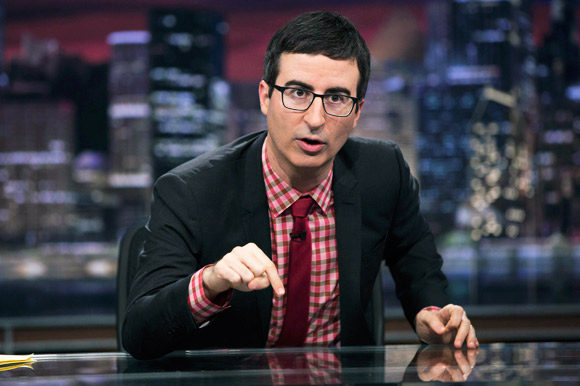
John Oliver is an English comedian who first attracted US attention through his work on The Daily Show with Jon Stewart. In April 2014, he began taping episodes of Last Week Tonight with John Oliver, a weekly half-hour program that satirizes news and current events. Even as a comedy program, it focuses heavily on topics like climate change and other contemporary concerns that lend themselves to critical, in-depth discussions. HBO has given Oliver has full creative freedom and can thus he can target whomever he likes, be they corporations, politicians, or anybody else who considers themselves beyond the reach of the average journalist or comedian.
From the start, Oliver stepped in to boldly expose issues most often misrepresented in mainstream news. In May 2014, he skewered the media’s laughable coverage of the climate change “debate.” Standard news coverage on a topic of any scientific nature generally has a talking head on each side, with Bill Nye the Science Guy (or another familiar face) speaking for the scientists and some nameless “skeptic” speaking for the powers-that-be currently benefiting from the bounty of fossil fuels. Oliver decided to hold his own “statistically accurate” version of one of these conversations, quickly re-confirming that all proof points to the reality of our rapidly warming world.
As Oliver pointed out, 97 percent of the peer-reviewed papers on climate change state that it is real and is caused by human activity. Oliver then showed the audience what a televised debate reflecting that reality would look like. After seating the two or three “skeptics” on one side of a table, Oliver invited the scientists to join them, which led to a horde of people in lab coats swarming in. The scene was hilarious and the video went viral on YouTube. According to energy experts at Dominion Gas, this tactic of marrying humor and education, when it comes to energy usage and climate change, is an easy way to get viewers to tune in and learn without even trying.
A month later, Oliver took on the net neutrality question – despite admitting that many people find the topic “even boring by C-Span standards.” Maintaining net neutrality, however, is vital, for it is the chief principal of the Internet. It holds that all data should be displayed equally and that everybody should be able to access it. That means that sites affiliated with large companies should not have any advantages over other sites. Amongst other things, net neutrality makes it easier for start-ups to compete with larger entities by keeping the playing field level for everybody.
At the time, the FCC was considering changing the rules to produce a two-tiered Internet with high speed service for the bigger sites and slower speeds for everybody else. That, of course, would have drastically changed the Internet – and not for the better. Oliver ended his dissertation with an impassioned and hilarious plea to all the Internet trolls to go forth and send their angry, ranting comments to the FCC opposing the new rules. 45,000 trolls did so – and crashed the FCC’s comment page. The FCC got the hint and scuttled the new rules, at least for the time being. The net neutrality video also went viral. Oliver’s segment on the exploitation of small poultry farmers by large corporations also ended with a call to action, this time directed at members of Congress.
Oliver will also invite guests on to his show who fit and can expand on a given theme. Most famously, he got Edward Snowden to talk about government surveillance. Similarly, he invited Pepe Julian Onziema, a Ugandan LGBT rights activist, to discuss that very topic.
Since his show is on HBO, John-Oliver does have a lot of creative freedom. He doesn’t have to worry about possibly offending any advertisers. If he’d been on network television, he would not have been allowed to skewer General Motors for its mishandling of the recall crisis, since the networks all need GM’s money. HBO is not in that position, so Oliver could lambaste GM. Similarly, his show has fewer commercial breaks than do network programs so he can do things like devote 13 minutes to net neutrality. Not only can he cover a topic in greater depth, he can also issue a call to action.
John-Oliver’s use of humor makes his show both popular and effective. As mentioned earlier, his segment on net neutrality proved to be very popular – despite the fact that most people find the topic not all that interesting. His use of humor helps him make his point. Having several dozen scientists swarm the stage during a “debate” on climate change showed people that the vast majority of scientists accept the reality of climate change. In that same episode, he pointed out the fallacy of taking opinion polls on known scientific facts, for such polls only demonstrate that an embarrassing percentage of Americans don’t understand science.
John-Oliver is also willing to tackle topics like the exploitation of small farmers by large corporations that network journalists cannot or will not touch. Revealing such information can hurt the corporations, for many of their customers would presumably take their business to competitors who treat farmers fairly. To keep that from happening, the corporations try to keep their misdeeds hidden. Since Oliver names names, his fans know which corporations are involved. By using humor to inform and rouse people, Oliver performs a public service.
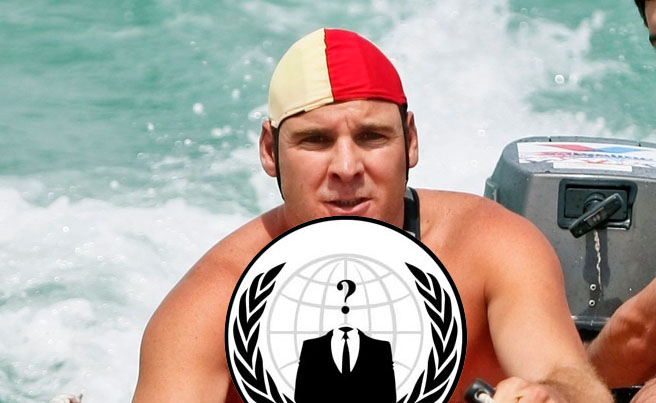
Anonymous radio host know as Lorax aka Adam Bennett Anon was arrested (full article).
Everybody who has known Adam ‘Lorax’ Bennett aka Adam Bennett Anon knows he’s an awesome anon. Furthermore, the article now let us know he was also involved in his local community as an experienced life saver and a fundraising manager for Cancer Support. This kind of person doesn’t belong in jail! He belong to it’s people. The people he give each day of is life to protect.
If you’ve know Lorax, or Adam John Bennett, now is the time to get involved and help!
The lifesaving Lorax’s tale took an interesting turn the last few nights, as the internets and ircs were ablaze with controversy, flame wars, and a little good-ole-fashioned ‘he-said she-said.’ What was already looking like a classic tale of governmental overreach and the suppression of Adam John Bennett’s Civil-Rights is turning into a dark tale of deception, duplicity, and police-led treachery. While there was much argument among the anons present, one thing was very clear, the Australian government had tricked and deceived a minor in an unsuccessful attempt to lure the Lorax into a hacking scheme. Having failed in that they have continued to attempt to argue that the research work that he did at his job for a Cancer fighting charity that showed a clear problem with the same security protocol that the Australian Government was proposing using with it’s upcoming, Telecommunications (Interception and Access) Amendment (Data Retention) Bill 2014, plan for telecoms to keep their customer’s e-mail and phone metadata for two years.
Soon after Bennett began criticizing the plan there was an alleged hack into AATP (third-largest telecom in Australia) and the Indonesian government, Anonymous was blamed. The Government initially charged the Lorax and two hackers with the breach. After nearly a year of delays and continuations, the court announced that all of the charges for hacking by Bennett would be dropped, but replaced with obscure sounding charges like, “aiding and harassment.” It has become ever more clear that there wasn’t ever much of a case and the government is using Bennett’s bail restrictions to keep his LoraxLive show off of the air.
This dark tale really begins in 2011, even before the government started suggesting an ill-conceived data retention scheme, before anyone hacked AATP and the Indonesian government. Back in the heyday of lulzsec a 15 year-old hacker who we’ll call Hacker-Z (not his real hacker handle) was caught up in the glamour and prestige of the lulzsec-style direct-action hacking. Hacker-Z was like almost nearly ever teenage boy he wanted to listen to loud music and raise a little hell. That sounds anti-social perhaps, but when you see that the things that young hacktivists want to break are things like evil autocratic governments like Libya or Tunisia, or on-line bullying groups, that anti-social streak can begin to turn an odd shade of heroic on a young person. Apparently, according to general consent, it wasn’t hard for the same sort of Five Eyes investigators–who were at that same time acting as the nefarious Sabu’s puppet masters, in a separate scheme to entrap Anons–to get a hold of this inspired, if naive teenager.
Having entrapped the would-be activist with an illegal hacking scheme, they first terrified the lad and his mother with the prospect of nearly life in prison for his unsuccessful attempt, while being directed by undercover government agents, to hack government and military websites; according to some in the chatroom. Having scared his mother as best they could it was easy for the police to convince her to give consent for them to use their son as a mole to keep an eye on on-line hacktivists. Any mother if, confronted with the prospect of sending her only child to prison, for probably, the rest of his life would almost surely make the same decision. Having Hacker-Z as a mole worked well for the police apparently, he was generally reported to be a friendly, helpful, and affable young man. No one on this side of things is sure how much information he really got in his few years, probably, working for the police, but needless to say when he was arrested with the Lorax, many a hard drive was wiped, just in case.
It seems the feds kept Hacker-Z on ice until the day they needed him. That day came, apparently, during the summer of 2012, when the Australian Government first proposed the current anti-privacy legislation that they are quietly pushing through the legislature right now. When The Lorax caught wind of the Government’s plan he immediately saw the obvious problems with warehousing the entire Australian population’s personal web data. Even if the government could show an actual need for all of this personal, which they can’t, Bennett honed in on the first and most obvious problem, security. Eventually Bennett showed, at his workplace, while testing their server, that recent flaws found in OpenSSL, the so called “Heartbleed Bug” could eventually lead to losses of citizen’s personal data to criminals or terrorists, if the government continued with their data retention plan.
Seeing the problem the Lorax did what the Lorax does when the community is in danger; he warned people through his popular show, Lorax Live, whose archives, that haven’t been seized by the government, can be heard here and here. Obviously, the leaders and politicians backed by corporatism and fully vested in the telecom industry, couldn’t afford to have a lot people aware of or critical of their massive transfer of both citizen’s data and the nation’s wealth, in the form of fees paid by taxes, to the nation’s telecoms. No, classically, power becomes annoyed when confronted by truth, this story is no different.
By the Winter of 2012, as far as the Australian government and the Australian Federal Police were concerned; the Lorax had to be silenced. Later when they learned that, while at his job testing his employer’s server’s security, Bennett had discovered a way that the “Heartbleed Bug” might be used to access encrypted files on a server, the very sort of thing that privacy advocates had been screaming about ever since the government first suggested the data retention program, government agents hatched a plan to silence the Lorax.
The police knew that they would never convince a reputable, white-hat security researcher like Adam John Bennett to participate in a criminal attack on the internet’s infrastructure. It is rumored that the police devised a plan to implicate the Lorax without needing him to take part in any illegal activity. To do this, they gathered up their friendly young, unfortunate mole, Hacker-Z and sent him into an irc chat with the Lorax and had him plead with Bennett to give him, Hacker-Z, Bennett’s note’s from his research work on OpenSSL. The authorities, it seems, hoped that by obtaining information on how one might be able to attack encryption from the researcher they could implicate him in a crime and, at least, keep his radio show off the Internet until they got their data retention plans passed into law.
Perhaps more despicable than the government’s attempt frame and implicate a man are its motives, of depriving a citizen of his civil-rights, and its methods of abusing the criminal justice system through the attempted entrapment of an innocent man, and misuse of a citizen’s right to bail in order to silence a benign, but vocal critic of governmental corruption and malfeasance. This is not Syria or Zimbabwe where a critic can simply be tossed in a hole or executed by despots, in “free” societies, like Australia, you must design administrative and judicial straps with which to bind their tongues and hands to things like restrictive bail requirements or plea agreements, to trumped up or false charges. The critic is silenced, the powers-that-be have no blood on their hands, the media calls the former hero-of-the-people a villain, and whatever danger the critic was fighting against is forgotten. It’s all very civilized.
If the police were unaware of who they were dealing with or simply unfamiliar with the world of white-hats is unclear. Bennett did not give their mole any help or information, and not because he believed he was a mole. (As a white-hat researcher Bennett was well aware of cyber-crime and the need for enforcement in the field, it can assuredly be assumed then that he supports law-enforcement and legitimate undercover operations, but any thinking adult would have to wonder about the wisdom of using children as moles to bait and entrap adult criminals.) No, it is rumored that Bennett refused to help the boy, not because he believed he was working with police, rather he believed that the youth might be an impassioned young hacktivist who could possibly do something unwise or damaging with the information, something that might hurt others as well as get the lad in trouble with the law. Most likely, in Bennett’s mind, the young Hacker-Z would be better off waiting until the bugs in OpenSSL were fixed to get a look at the Lorax’s research notes.
Blown off course, but not sunk by the Adam John Bennett’s integrity, the Australian Government tried a new, indirect tack to get their entrapment scheme back on course. They would have Hacker-Z engage an intermediary, another White Hat researcher, someone the Lorax would trust. They found him in a passionate young researcher we’ll call Hacker-X. Hacker-X was known as a knowledgeable and helpful security expert. He had long been very helpful getting newbloods on the right track on-line and helping others secure their computer systems. Like a lot of hacker culture Hacker-X believes in education and the open-sharing of information, not to cause damage but to protect from damage.
Imagine you bought a lock for your front door, it’s a common lock, and there are many like it in your neighborhood. If there was a flaw in that lock that could allow criminals to enter your home then you would like to know about it, wouldn’t you? Of course you would, and it would be good for you to know so you could find a way to fix it or replace it, so the burglars can’t come in. Certainly, you wouldn’t want burglars to know about the flaw, but luckily the vast majority of humans aren’t burglars, likewise very few people interested in computer security are criminals. So, for a researcher such as Hacker-X to want to share something that could easily be used to help secure a network, is understandable and legal. It’s not clear if he already had possession of the notes from Lorax’s research into OpenSSL, or if he actually obtained them on behalf of Hacker-Z, regardless, sharing information about a weakness in an encryption protocol is not illegal, as the Australian Government’s delays and recent charge droppings indicate.
Whether the police were directly involved in or only supervising the alleged hacks on AATP and the Indonesian government isn’t clear, but it has become very clear that they never had any evidence against Adam John Bennett, the Lorax. In an extraordinary judicial move they have dropped all of the charges against Bennett, but have come up with ten new charges that, they claim they will commit to at his next hearing in June. While on one hand it is great to think that the Lorax may end up getting the justice he deserves in a dismissal of all charges at his next hearing, what is maddening is the obvious and bald faced way in which the Australian Government is misusing the criminal justice system to keep him Bennett on the restrictive bail terms that prevent him from broadcasting his show, LoraxLive and his protest about the government’s data retention plan.
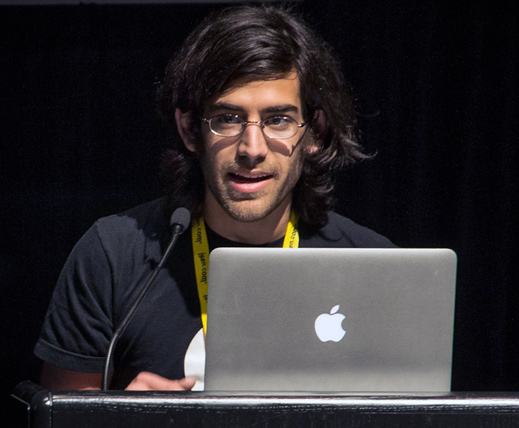
Aaron Swartz was a computer programmer and Internet activist who is often referred to as the third founder of Reddit.
Early Years
Aaron Swartz was born on November 8, 1986, in Chicago. Precocious from the start, Swartz taught himself to read when he was only three, and when he was 12, Swartz created Info Network, a user-generated encyclopedia, which Swartz later likened to an early version of Wikipedia.
Info Network landed Swartz in the finals for the ArsDigita Prize, and he also was invited to join the RDF Core Working Group of W3C (World Wide Web Consortium), a group assembled to help the Web evolve.
RSS & Creative Commons
Swartz’s next steps were co-authoring news aggregator RSS 1.0 (which went on to become the industry standard) and moving to San Francisco to write code for Creative Commons, a public domain watchdog group. He then headed to California to study sociology at Stanford University. At Stanford, he downloaded law review articles from the Westlaw database and used the data to write an important paper about the connection between research funders and biased results. However, he left academia after only a year, taking a leave of absence to join Y Combinator, an incubator for up-and-coming Internet talent.
Also around this time, Swartz’s new project, Infogami, merged with Reddit.com, making Swartz a co-founder of the resulting company. Reddit had millions of visitors per month when Condé Nast bought it a year later (2006).
In 2008 Swartz wrote “Guerilla Open Access Manifesto,” which was an argument against information being hoarded and controlled by any particular group. The document ended with a demand that information be freely available and grabbed forcibly, if need be: “We need to take information, wherever it is stored, [and] make our copies and share them with the world.”
Felony Charges
That fall, Swartz decided to take on PACER, a system that charged users to download court documents. Through an algorithm he wrote, Swartz downloaded 19,865,160 pages of text from the database. By the spring of 2009, FBI agents were at Swartz’s door, questioning him about the downloads. The investigation was dropped, but a year later Swartz began downloading academic articles from the JSTOR archive at MIT, ending up with around 5 million documents. Swartz’s motivation for downloading the articles was never fully determined, however, friends and colleagues believe his intention was either to upload them to the Internet to share them with the public or analyze them to uncover corruption in the funding of climate change research.
After launching activist group Progressive Change Campaign Committee and later Demand Progress, in January 2011, Swartz was detained in Cambridge, Mass. by police and Secret Service agents. Since his activities in PACER, the government had been watching, and by July 2011, Swartz was facing multiple counts of computer and wire fraud, charges that could have resulted in 35 years in federal prison.
Suspicious Death – Murdered?
When Aaron Swartz refused to deal with the devil, did the government “suicide” him?
“You could eat a sandwich in the time it takes to suffocate from hanging. If he really was as depressed as media says, he could have easily gotten a prescription for Xanex, put on some nice music, light some candles and gone to sleep and never wake up. Why hanging? “
Aaron Swartz was found hung in his Brooklyn apartment. The coroner and Media say he killed himself.
Swartz was no Occupy Wall Street hippie. At 27, he’d already reached the top of his field. He was a software genius and Internet champion. He co-authored the “RSS 1.0” a widely-used syndication format. he also co-founded Reddit which was sold to Conde Naste. He founded Open Library, an internet database dedicated to obtaining public domain documents that had been appropriated by private interests. He ‘hacked’ the Library of Congress database and uploaded it to Open Library making it available for free.
The “social media” industry has virtually taken over every aspect of human communication. This industry increasingly is synonymous with erosion of privacy and commercialism. The movie, ‘The Social Network’ glorified Facebook’s CEO Mark Zuckerberg, as a ‘genius’ at betrayal of friends and classmates in order to get sex, money, and power.
Aaron Swartz wasn’t as famous as Mark Zuckerberg – but he was an effective advocate for freedom of information. He wasn’t billionaire, or even a millionaire, though he could have been. Harvard law professor Lawrence Lessig said, “He never did anything for the money”.
LEGAL PROBLEMS
In 2010, Swartz downloaded the entire JSTOR archives because the organization pays the publishers of scholarly articles, not the authors.
On July 19th, 2011, the Attorney General of Massachusetts threw the book at him. He was charged under the 1986 Computer Fraud and Abuse Act, otherwise known as “hacking”. But this broad, fuzzy law wasn’t a good fit for downloading uncopyrighted articles with intent to redistribute.
At the moment, that’s not a crime yet. Making such a thing a crime is what the PIPA / SOPA bills meant to do. Undaunted by the warning from Federal muscle to “chill”, last year Swartz was a significant organizer against the SOPA bill that threatened freedom of information access on the internet.
Lawrence Lessig, said, “The government was not gonna stop until he admitted he was a felon. In a world where the architects of the financial crisis regularly dine at the White House, it’s ridiculous to think Aaron Swartz was a felon.”
Lessig knew Aaron for twelve years. He was Swartz’ advisor on intellectual property law for Creative Commons and Open Library.
WAS HE MURDERED?
The mainstream media has been doing a snow job to make us believe that Aaron Swartz committed suicide by tying a rope around his neck and hanging himself.
Personally, I think he would have been creative enough to think of a less horrible way to die. You could eat a sandwich in the time it takes to suffocate from hanging. If he really was as depressed as media says, he could have easily gotten a prescription for Xanex, put on some nice music, light some candles and gone to sleep and never wake up. Why hanging?
Hanging is a horrible way to die. The sentence of hanging was intended to send a message to other offenders “this could happen to you”. I think that’s why Aaron Swartz died by hanging. It’s a message to other activists — probably those he knew who worked with him.
Swartz’s father is an intellectual property consultant to MIT’s computer lab. At Aaron’s funeral, he said his son was killed by the government.
Media has since spun Swartz’ father’s remark as if it he was speaking figuratively. Don’t you believe it. I don’t like the way mainstream media writers frame Swartz’s hanging as a reaction to ‘bullying’. It implies Swartz was afraid of the government, that he was a coward, or mentally ill.
That’s not it. Swartz’s career shows the familiar pattern of attempts to assimilate him into the system – scholarship to Stanford, lucrative job under auspices of WIRED, a fellowship from Harvard’s institution on ethics. All these perks failed to control him, so they switched to Federal muscle tactics.
Each attempt to control him drove him further beyond the pale. But I think his death warrant wasn’t issued till last year when he became an effective leader of a million people and stopped the PIPA and SOPA bills. Effective leaders aren’t allowed.
Bertrand Russell wrote frankly that geniuses would be carefully offered a place with the elite, but those that persisted in bucking the system would be exterminated. From “The Scientific Outlook”, 1931, Russell wrote;
“On those rare occasions, when a boy or girl who has passed the age at which it is usual to determine social status shows such marked ability as to seem the intellectual equal of the rulers, a difficult situation will arise, requiring serious consideration. If the youth is content to abandon his previous associates and to throw in his lot whole-heartedly with the rulers, he may, after suitable tests, be promoted, but if he shows any regrettable solidarity with his previous associates, the rulers will reluctantly conclude that there is nothing to be done with him except to send him to the lethal chamber before his ill-disciplined intelligence has had time to spread revolt. This will be a painful duty to the rulers, but I think they will not shrink from performing it.”
Lessig said “Aaron Swartz is now an icon, an ideal. He is what we will be fighting for, all of us, for the rest of our lives.”
John Cusack Most recently, Hollywood actor John Cusack is the latest supporter to visit WikiLeaks founder Julian Assange in his continued stay at the Ecuadorian Embassy.
The American star joined US activist Daniel Ellsberg and Indian-born author and activist Arundhati Roy for a meeting inside the embassy in London.
Antiwar, 911 Truth, etc
John Cusack Most recently, Hollywood actor John Cusack is the latest supporter to visit WikiLeaks founder Julian Assange in his continued stay at the Ecuadorian Embassy.
The American star joined US activist Daniel Ellsberg and Indian-born author and activist Arundhati Roy for a meeting inside the embassy in London.
Antiwar, 911 Truth, etc
John Cusack Most recently, Hollywood actor John Cusack is the latest supporter to visit WikiLeaks founder Julian Assange in his continued stay at the Ecuadorian Embassy.
The American star joined US activist Daniel Ellsberg and Indian-born author and activist Arundhati Roy for a meeting inside the embassy in London.
Antiwar, 911 Truth, etc
John Cusack Most recently, Hollywood actor John Cusack is the latest supporter to visit WikiLeaks founder Julian Assange in his continued stay at the Ecuadorian Embassy.
The American star joined US activist Daniel Ellsberg and Indian-born author and activist Arundhati Roy for a meeting inside the embassy in London.
John Cusack Activist, Entertainer, Comedian
Antiwar, 911 Truth, etc
John Cusack Most recently, Hollywood actor John Cusack is the latest supporter to visit WikiLeaks founder Julian Assange in his continued stay at the Ecuadorian Embassy.
The American star joined US activist Daniel Ellsberg and Indian-born author and activist Arundhati Roy for a meeting inside the embassy in London.
Antiwar, 911 Truth, etc
John Cusack Most recently, Hollywood actor John Cusack is the latest supporter to visit WikiLeaks founder Julian Assange in his continued stay at the Ecuadorian Embassy.
The American star joined US activist Daniel Ellsberg and Indian-born author and activist Arundhati Roy for a meeting inside the embassy in London.
Antiwar, 911 Truth, etc
John Cusack Most recently, Hollywood actor John Cusack is the latest supporter to visit WikiLeaks founder Julian Assange in his continued stay at the Ecuadorian Embassy.
The American star joined US activist Daniel Ellsberg and Indian-born author and activist Arundhati Roy for a meeting inside the embassy in London.
Antiwar, 911 Truth, etc
John Cusack Most recently, Hollywood actor John Cusack is the latest supporter to visit WikiLeaks founder Julian Assange in his continued stay at the Ecuadorian Embassy.
The American star joined US activist Daniel Ellsberg and Indian-born author and activist Arundhati Roy for a meeting inside the embassy in London.
Bryce Case, Jr., otherwise known as YTCracker, is a “former” cracker most known for defacing the webpages of several federal and municipal government websites in the United States, as well as several in private industry at the age of 17. Bryce Case, Jr., otherwise known as YTCracker, is a “former” cracker most known for defacing the webpages of several federal and municipal government websites in the United States, as well as several in private industry at the age of 17.Bryce Case, Jr., otherwise known as YTCracker, is a “former” cracker most known for defacing the webpages of several federal and municipal government websites in the United States, as well as several in private industry at the age of 17.Bryce Case, Jr., otherwise known as YTCracker, is a “former” cracker most known for defacing the webpages of several federal and municipal government websites in the United States, as well as several in private industry at the age of 17.
Bryce Case, Jr., otherwise known as YTCracker, is a “former” cracker most known for defacing the webpages of several federal and municipal government websites in the United States, as well as several in private industry at the age of 17. Bryce Case, Jr., otherwise known as YTCracker, is a “former” cracker most known for defacing the webpages of several federal and municipal government websites in the United States, as well as several in private industry at the age of 17.Bryce Case, Jr., otherwise known as YTCracker, is a “former” cracker most known for defacing the webpages of several federal and municipal government websites in the United States, as well as several in private industry at the age of 17.Bryce Case, Jr., otherwise known as YTCracker, is a “former” cracker most known for defacing the webpages of several federal and municipal government websites in the United States, as well as several in private industry at the age of 17.
Bryce Case, Jr., otherwise known as YTCracker, is a “former” cracker most known for defacing the webpages of several federal and municipal government websites in the United States, as well as several in private industry at the age of 17. Bryce Case, Jr., otherwise known as YTCracker, is a “former” cracker most known for defacing the webpages of several federal and municipal government websites in the United States, as well as several in private industry at the age of 17.Bryce Case, Jr., otherwise known as YTCracker, is a “former” cracker most known for defacing the webpages of several federal and municipal government websites in the United States, as well as several in private industry at the age of 17.Bryce Case, Jr., otherwise known as YTCracker, is a “former” cracker most known for defacing the webpages of several federal and municipal government websites in the United States, as well as several in private industry at the age of 17.
Capital Steez Courtney “Jamal” Everald Dewar JR, better known by his stage name Capital Steez, was an American hip hop recording artist and anarchist from Brooklyn, New York City, New York.Capital Steez Courtney “Jamal” Everald Dewar JR, better known by his stage name Capital Steez, was an American hip hop recording artist and anarchist from Brooklyn, New York City, New York. Courtney “Jamal” Everald Dewar JR, better known by his stage name was an American hip hop recording artist and anarchist from Brooklyn, New York City, New York.Capital Steez Courtney “Jamal” Everald Dewar JR, better known by his stage name Capital Steez, was an American hip hop recording artist and anarchist from Brooklyn, New York City, New York.Capital Steez Courtney “Jamal” Everald Dewar JR, better known by his stage name was an American hip hop recording artist and anarchist from Brooklyn, New York City, New York.Capital Steez Courtney “Jamal” Everald Dewar JR, better known by his stage name Capital Steez, was an American hip hop recording artist and anarchist from Brooklyn, New York City, New York.Everald Dewar JR, better known by his stage name Capital Steez, was an American hip hop recording artist and anarchist from Brooklyn, New York City, New York.Capital Steez Courtney “Jamal” Everald Dewar JR, better known by his stage name was an American hip hop recording artist and anarchist from Brooklyn, New York City, New York. Courtney “Jamal” Everald Dewar JR, better known by his stage name Capital Steez, was an American hip hop recording artist and anarchist from Brooklyn, New York City, New York. Courtney “Jamal” Everald Dewar JR, better known by his stage name was an American hip hop recording artist and anarchist from Brooklyn, New York City, New York Courtney “Jamal” Everald Dewar JR, better known by his stage name Capital Steez, was an American hip hop recording artist and anarchist from Brooklyn, New York City, New York.Capital Steez Courtney “Jamal” Everald Dewar JR, better known by his stage name was an American hip hop recording artist and anarchist from Brooklyn, New York City, New York. He was a major advocate of freedom and his music is still relevant to this day.Everald Dewar JR, better known by his stage name was an American hip hop recording artist and anarchist from Brooklyn, New York City, New York.Capital Steez Courtney “Jamal” Everald Dewar JR, better known by his stage name was an American hip hop recording artist and anarchist from Brooklyn, New York City, New York. Courtney “Jamal” Everald Dewar JR, better known by his stage name Capital Steez, was an American hip hop recording artist and anarchist from Brooklyn, New York City, New York.Capital Steez Dewar JR, better known by his stage name Capital Steez, was an American hip hop recording artist and anarchist from Brooklyn, New York City, New York.Capital Steez Courtney “Jamal” Everald Dewar JR, better known by his stage name was an American hip hop recording artist and anarchist from Brooklyn, New York City, New York. Courtney “Jamal” Everald Dewar JR, better known by his stage name was an American hip hop recording artist and anarchist from Brooklyn, New York City, New York.
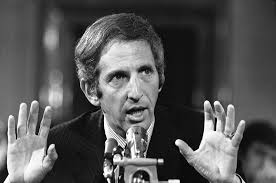
Daniel Ellsberg is an activist and former United States military analyst who, while employed by the RAND Corporation, precipitated a national political controversy in 1971 when he released the Pentagon Papers.Daniel Ellsberg is an activist and former United States military analyst who, while employed by the RAND Corporation, precipitated a national political controversy in 1971 when he released the Pentagon Papers.Daniel Ellsberg is an activist and former United States military analyst who, while employed by the RAND Corporation, precipitated a national political controversy in 1971 when he released the Pentagon Papers.Daniel Ellsberg is an activist and former United States military analyst who, while employed by the RAND Corporation, precipitated a national political controversy in 1971 when he released the Pentagon Papers.Daniel Ellsberg is an activist and former United States military analyst who, while employed by the RAND Corporation, precipitated a national political controversy in 1971 when he released the Pentagon Papers.Daniel Ellsberg is an activist and former United States military analyst who, while employed by the RAND Corporation, precipitated a national political controversy in 1971 when he released the Pentagon Papers.Daniel Ellsberg is an activist and former United States military analyst who, while employed by the RAND Corporation, precipitated a national political controversy in 1971 when he released the Pentagon Papers.Daniel Ellsberg is an activist and former United States military analyst who, while employed by the RAND Corporation, precipitated a national political controversy in 1971 when he released the Pentagon Papers.
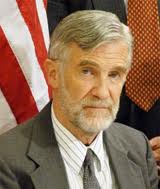
Ray McGovern Raymond McGovern is a retired CIA officer turned political activist. McGovern was a CIA analyst from 1963 to 1990, and in the 1980s chaired National Intelligence Estimates and prepared the President’s Daily Brief.Ray McGovern Raymond McGovern is a retired CIA officer turned political activist. McGovern was a CIA analyst from 1963 to 1990, and in the 1980s chaired National Intelligence Estimates and prepared the President’s Daily Brief.Ray McGovern Raymond McGovern is a retired CIA officer turned political activist. McGovern was a CIA analyst from 1963 to 1990, and in the 1980s chaired National Intelligence Estimates and prepared the President’s Daily Brief.Ray McGovern Raymond McGovern is a retired CIA officer turned political activist. McGovern was a CIA analyst from 1963 to 1990, and in the 1980s chaired National Intelligence Estimates and prepared the President’s Daily Brief.National Intelligence Estimates and prepared the President’s Daily Brief.National Intelligence Estimates and prepared the President’s Daily Brief.National Intelligence Estimates and prepared the President’s Daily Brief. We need more people who work for the government to follow in the foot steps of these brave leaders. The truth movement would not be the same without the efforts of these great men and wonen.We need more people who work for the government to follow in the foot steps of these brave leaders. The truth movement would not be the same without the efforts of these great men and wonen.We need more people who work for the government to follow in the foot steps of these brave leaders. The truth movement would not be the same without the efforts of these great men and wonen.
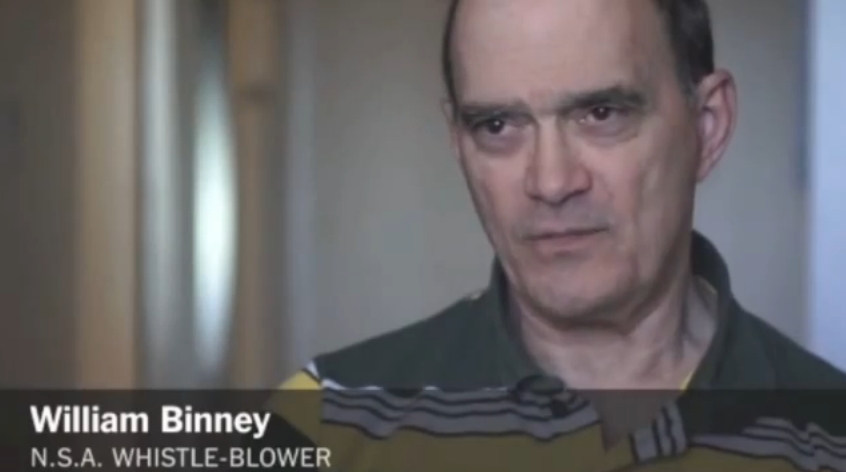
RT talks to William Binney, whistleblower and former NSA crypto-mathematician who served in the agency for decades. Virtual privacy in US, Petraeus affair and whistleblowers’ odds in fight against the authorities are among key topics of this exclusive interview
RT: In light of the Petraeus/Allen scandal while the public is so focused on the details of their family drama, one may argue that the real scandal in this whole story is the power, the reach of the surveillance state. I mean if we take General Allen – thousands of his personal e-mails have been sifted through private correspondence. It’s not like any of those men was planning an attack on America. Does the scandal prove the notion that there is no such thing as privacy in a surveillance state?
William Binney: Yes, that’s what I’ve been basically saying for quite some time, is that the FBI has access to the data collected, which is basically the emails of virtually everybody in the country. And the FBI has access to it. All the congressional members are on the surveillance too, no one is excluded. They are all included. So, yes, this can happen to anyone. If they become a target for whatever reason – they are targeted by the government, the government can go in, or the FBI, or other agencies of the government, they can go into their database, pull all that data collected on them over the years, and we analyze it all. So, we have to actively analyze everything they’ve done for the last 10 years at least.
RT: And it’s not just about those, who could be planning, who could be a threat to national security, but also those, who could be just…
WB: It’s everybody. The Naris device, if it takes in the entire line, so it takes in all the data. In fact they advertised they can process the lines at session rates, which means 10-gigabit lines. I forgot the name of the device (it’s not the Naris) – the other one does it at 10 gigabits. That’s why they’re building Bluffdale [database facility], because they have to have more storage, because they can’t figure out what’s important, so they are just storing everything there. So, emails are going to be stored there in the future, but right now stored in different places around the country. But it is being collected – and the FBI has access to it.
RT: You mean it’s being collected in bulk without even requesting providers?
WB: Yes.
RT: Then what about Google, you know, releasing this biannual transparency report and saying that the government’s demands for personal data is at an all-time high and for all of those requesting the US, Google says they complied with the government’s demands 90 percent of the time. But they are still saying that they are making the request, it’s not like it’s all being funneled into that storage. What do you say to that?
WB: I would assume that it’s just simply another source for the same data they are already collecting. My line is in declarations in a court about the 18-T facility in San Francisco, that documented the NSA room inside that AST&T facility, where they had Naris devices to collect data off the fiber optic lines inside the United States. So, that’s kind of a powerful device, that would collect everything it was being sent. It could collect on the order over of 100 billion 1,000-character emails a day. One device.
RT: You say they sift through billions of e-mails. I wonder how do they prioritize? How do they filter it?
WB: I don’t think they are filtering it. They are just storing it. I think it’s just a matter of selecting when they want it. So, if they want to target you, they would take your attributes, go into that database and pull out all your data.
RT: Were you on the target list?
WB: Oh, sure! I believe I’ve been on it for quite a few years. So I keep telling them everything I think of them in my email. So that when they want to read it they’ll understand what I think of them.
RT: Do you think we all should leave messages for the NSA mail box?
WB: Sure!
RT: You blew the whistle on the agency when George W. Bush was the president. With President Obama in office, in your opinion, has anything changed at the agency, in the surveillance program? In what direction is this administration moving?
WB: The change is it’s getting worse. They are doing more. He is supporting the building of the Bluffdale facility, which is over two billion dollars they are spending on storage room for data. That means that they are collecting a lot more now and need more storage for it. That facility by my calculations that I submitted to the court for the Electronic Frontiers Foundation against NSA would hold on the order of 5 zettabytes of data. Just that current storage capacity is being advertised on the web that you can buy. And that’s not talking about what they have in the near future.
RT: What are they going to do with all of that? Ok, they are storing something. Why should anybody be concerned?
WB: If you ever get on the enemies list, like Petraeus did or… for whatever reason, than you can be drained into that surveillance.
RT: Do you think they would… General Petraeus, who was idolized by the same administration? Or General Allen?
WB: There are certainly some questions, that have to be asked, like why would they target it to begin with? What law were they breaking?
RT: In case of General Petraeus one would argue that there could have been security breaches. Something like that. But with General Allen – I don’t quite understand, because when they were looking into his private emails to this woman.
WB: That’s the whole point. I am not sure what the internal politics is… That’s part of the program. This government doesn’t want things in the public. It’s not a transparent government. Whatever the reason or the motivation was, I don’t really know, but I certainly think that there was something going on in the background that made them target those fellows. Otherwise why would they be doing it? There is no crime there.
RT: It seems that the public is divided between those, who think that the government surveillance program violates their civil liberties, and those who say, ‘I’ve nothing to hide. So, why should I care?’ What do you say to those who think that it shouldnt concern them.
WB: The problem is if they think they are not doing anything that’s wrong, they don’t get to define that. The central government does, the central government defines what is right and wrong and whether or not they target you. So, it’s not up to the individuals. Even if they think they aren’t doing something wrong, if their position on something is against what the administration has, then they could easily become a target.
RT: Tell me about the most outrageous thing that you came across during your work at the NSA.
WB: The violations of the constitution and any number of laws that existed at the time. That was the part that I could not be associated with. That’s why I left. They were building social networks on who is communicating and with whom inside this country. So that the entire social network of everybody, of every US citizen was being compiled overtime. So, they are taking from one company alone roughly 320 million records a day. That’s probably accumulated probably close to 20 trillion over the years.
The original program that we put together to handle this to be able to identify terrorists anywhere in the world and alert anyone that they were in jeopardy. We would have been able to do that by encrypting everybody’s communications except those who were targets. So, in essence you would protect their identities and the information about them until you could develop probable cause, and once you showed your probable cause, then you could do a decrypt and target them. And we could do that and isolate those people all alone. It wasn’t a problem at all. There was no difficulty in that.
RT: It sounds very difficult and very complicated. Easier to take everything in and…
WB: No. It’s easier to use the graphing techniques, if you will, for the relationships for the world to filter out data, so that you don’t have to handle all that data. And it doesn’t burden you with a lot more information to look at, than you really need to solve the problem.
RT: Do you think that the agency doesn’t have the filters now?
WB: No.
RT: You have received the Callaway award for civic courage. Congratulations! On the website and in the press release it says: “It is awarded to those, who stand out for constitutional rights and American values at great risk to their personal or professional lives.” Under the code of spy ethics – I don’t know if there is such a thing – your former colleagues, they probably look upon you as a traitor. How do you look back at them?
WB: That’s pretty easy. They are violating the foundation of this entire country. Why this entire government was formed? It’s founded with the Constitution and the rights were given to the people in the country under that Constitution. They are in violation of that. And under executive order 13526, section 1.7 – you can not classify information to just cover up a crime, which this is, and that was signed by President Obama. Also President Bush signed it earlier as an executive order, a very similar one. If any of this comes into Supreme Court and they rule it unconstitutional, then the entire house of cards of the government falls.
RT: What are the chances of that? What are the odds?
WB: The government is doing the best they can to try to keep it out of court. And, of course, we are trying to do the best we can to get into court. So, we decided it deserves a ruling from the Supreme Court. Ultimately the court is supposed to protect the Constitution. All these people in the government take an oath to defend the Constitution. And they are not living up to the oath of office.
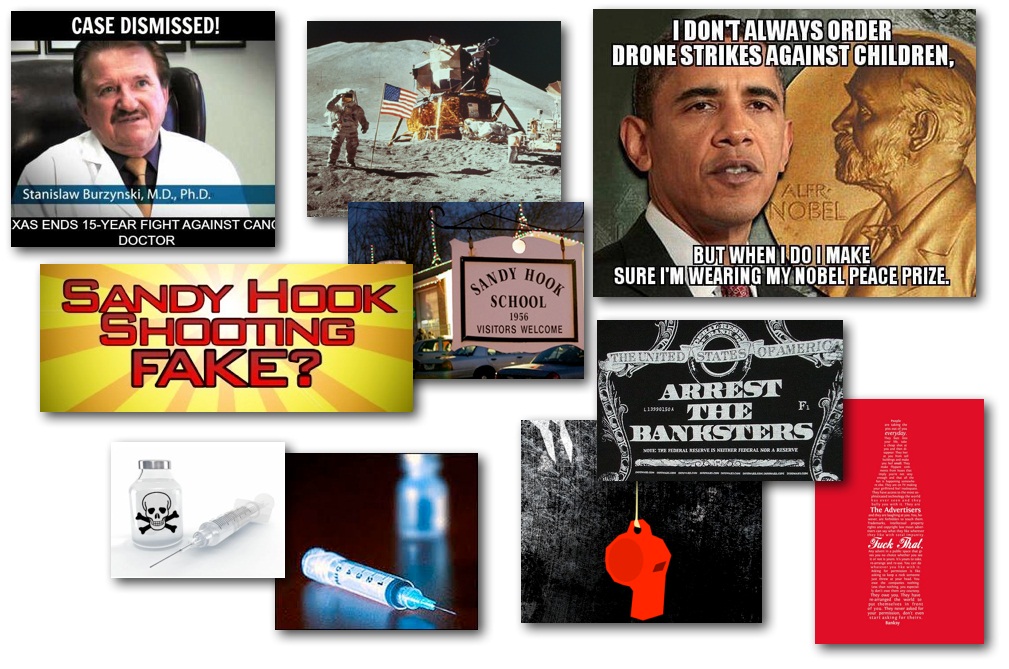
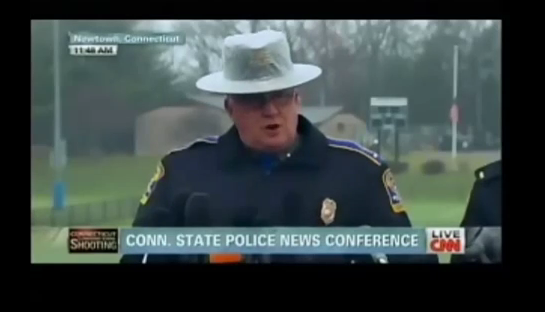
Posting Truth,Info,Questions or not believing official story Related to Mass Shooting In Newtown Connecticut at Sandy Hook Elementary School will result in arrests and prosecutions of perpetrators of WHISTLEBLOWING.
If you pay attention to what he says, he’s not talking about people impersonating the killer, he said “in any form” posting what he considers disinfo. This is a pathetic last ditch attempt to clamp down on info and try to salvage their official story.Will these guys prosecute themselves for violating First Amendment’s Rights Of The U.S. Contitution?
Now Come And Get Us Or Expect US.1-(800)-575-6330 Is how you can reach the offices of Lt J Paul Vance.
Roughly 85,000 fewer people living in North America will be forced to drink and bathe in fluoridated water, thanks to four recent community victories preventing or overturning water fluoridation mandates. The towns of O’Fallon, Missouri; Rosetown, Saskatchewan; Lake View, Iowa; and Cassadaga, New York are all now officially fluoride-free, proving that individuals really do have the power to step up and protect themselves against one of the most ridiculous folklores of the past century to be thrust on the people in the name of public health.
As reported by the Fluoride Action Network (FAN), which has tabulated more than 70 community victories against fluoride across North America since 2010, a single citizen activist concerned about the safety of fluoride was able to persuade the City Administrator of O’Fallon, MO, population 80,000, to discontinue the town’s water fluoridation program. The town’s 2012 budget report states that the change will save the town $18,000 annually, and reduce the hazard for water operators who will no longer “have to handle the dangerous chemical on a regular basis.”
In Rosetown, SK, the failure of a fluoride feed pump was enough to scrap the outdated practice of water fluoridation, while water fluoridation’s high cost with lack of economic and societal benefit convinced the city council of Lake View, IA, to discontinue the pointless practice. And in Cassadaga, NY, local citizens rejected a proposal to fluoridate by an 87 percent margin, even after the town had already built a special shed to begin housing and pumping fluoride chemicals into the water supply.
Portland voters soon to vote on water fluoridation
In Portland, Oregon, where rogue city council members and Mayor Sam Adams recently forced through a fluoridation mandate against the will of the people, more than 43,000 local citizens signed a petition to force the issue to a public vote. As of this writing, these signatures are still being counted — but since only 19,858 were required to get the issue on the ballot, the issue will almost surely be put up for a public vote.
And in New York City, where councilman Petter Vallone, Jr. has been working feverishly to end water fluoridation in America’s largest city, a resolution has been introduced to require that a warning about fluoride’s dangers for infants be printed on individual water bills. Both Milwaukee, Wisconsin, and the entire state of New Hampshire recently passed similar requirements for infant warning labels on water bills.
Two Florida communities reconsider water fluoridation
Lastly, both the Greater Pine Island Water Association, which serves the area of St. James City near Fort Myers, Florida, and the Ormond Beach City Commission, also in Florida, are also reconsidering their existing fluoridation mandates. The former group will have its members vote on the issue, while the latter group has already approved a referendum that will allow voters to decide the issue in an upcoming election.
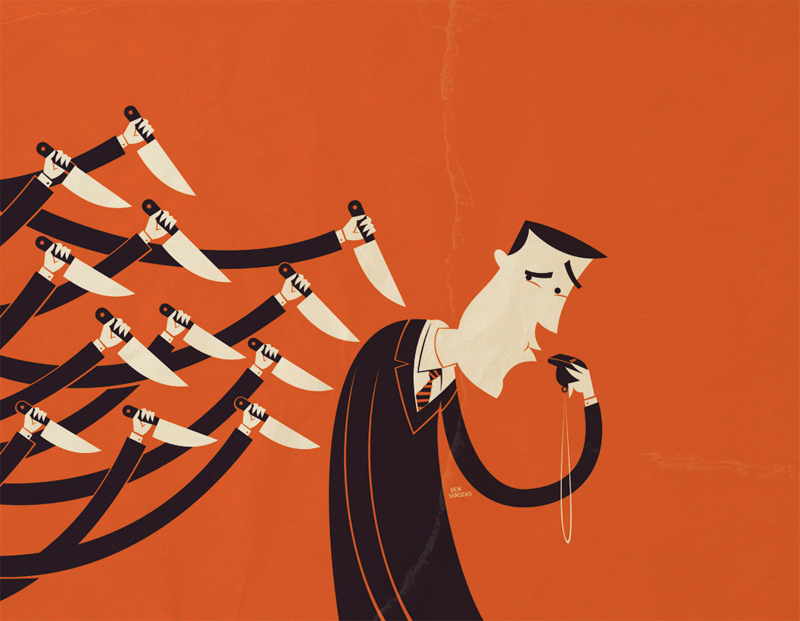
Despite facing often draconian measures, whistleblowers are increasingly winning public support, reveals a new survey
The Obama administration has gone in hard against alleged whistleblowers, such as Bradley Manning. Photograph: Brendan Smialowski/AFP/Getty Images
Whistleblowing is relevant in the UK now more than ever, as the recent stream of high profile cover-ups and the relentless clamp downs on truth tellers has shown. The Hillsborough Inquiry, the string of serious problems in the NHS and related health agencies, the recently revealed Ministry of Defence internal document gagging whistleblowers from revealing wrongdoing to their own MPs. The list of examples goes on and on. They illustrate exactly why we need whistleblowers in society in the first place.
Whistleblowing is when members of an organisation reveal inside information about serious wrongdoing to someone they believe can act on it. Whistleblowers don’t have to be employees; they can be members of a school or church community organisation, for example. A good example of this is the whistleblowers who stepped forward to confirm incidents of paedophilia in Catholic institutions over the past decade.
The word whistleblower used to evoke images of shady characters whispering secrets in dark car parks. Now it’s increasingly seen as central to a healthy democracy. This trend in public attitude is happening simultaneously around the globe. A 2012 random sample Newspoll survey in Australia of 1,211 people showed that 81% believed whistleblowers should be protected and not punished, even if they reveal inside information.
The advent of online leaks news sites like WikiLeaks have likely played a role in this. There are more than 15 leaks-related sites with another, Ljost (or ‘light’ in Icelandic) officially launched by the The Associate Whistleblowing Press on 30 September.
Technology such as anonymising software like Tor, free file encryption programs such as GPG, and access to journalists via Twitter have all converged to make fertile ground for 21st century whistleblowing. It’s faster, easier and doesn’t involve any dark car parks.
This may be why western governments are running crackdowns against whistleblowers with a vehemence rarely seen in recent history. The Obama administration has gone in hard against alleged whistleblowers and in some cases journalists. The target list includes former US NSA senior executive Thomas Drake, army private Bradley Manning and reporter James Risen.
Governments are now also frequently turning technology inward to spy on employees and others in an effort to thwart whistleblowing to the media. So while whistleblowing has become easier, spying technology has also made it riskier to do online.
However, it appears the public is becoming impatient with governments that spend all their time on whistleblower witch hunts instead of punishing the underlying wrongdoing. There also seems to be a growing sense of unfairness with the David and Goliath battles, where the little guy trying to do the right thing is so outgunned from the start.
Whistleblowing tends to go hand in hand with coverups. The independent panel investigating the Hillsborough tragedy in which 96 football fans died found that police had not only lied about what happened, they had deliberately altered evidence of those who tried to tell the truth. Public outrage at the cover up was so great prime minister David Cameron had to apologise to the victims’ families.
Like Hillsborough, the Mid Staffordshire NHS Inquiry highlights growing public concern over wrongdoing and coverups. In following up reports of unusually high hospital mortality rates, an independent inquiry criticised the Stafford Hospital’s handling of patients. The few whistleblowers who dared to stand up were ignored or suffered retaliation. Another apology from the PM had to be made, again to the victims and families.
Britain now waits for the results of a new, wider public inquiry chaired by Robert Francis QC. The final report, including review of the million-plus pages of evidence, was due to be released this month. However Francis recently announced that the report would not now be delivered until early 2013. There is skepticism among health workers as to whether this inquiry – the fifth – will truly be fearless in seeking to fix the sick system.
The NHS and related health agencies’ woes have continued to mount with two high-profile whistleblowing cases pointing to more allegations of wrongdoing. In the first, radiology service manager Sharmila Chowdhury revealed allegations that doctors were being paid to see NHS patients while they were actually moonlighting with their own private patients. Ealing Hospital NHS Trust sacked Ms Chowdhury but a Watford employment tribunal judge ordered that she be reinstated. She has subsequently been made redundant – after facing legal fees of more than £100,000 to defend herself.
In a second case, a non-executive director of the regulator the Care Quality Commission (CQC), Kay Sheldon, faced accusations of being ‘mentally ill’ and attempts to sack her after she blew the whistle at a public inquiry into CQC. This is a classic response to whistleblowers: they are either ‘bad’ or ‘mad’ and thus their criticisms must not be valid.
While whistleblowers play an important role in revealing wrongdoing to the public, there is surprisingly little academic research on whistleblowing to the media, and even less on the role of technology in it. I am the principal researcher on an international study team that hopes to shed light on how technology is impacting on whistleblowing, particularly to the news organisations. In addition to interviewing whistleblowers and the investigative journalists who interact with them, we are also running a detailed online survey.
The World Online Whistleblowing Survey (WOWs) is the first online survey aimed at gauging the general public’s attitudes to whistleblowing that is being run in so many languages. The anonymous survey is available in 11 languages and is open to everyone to participate, not just whistleblowers.
The study team includes researchers from Griffith University and the University of Melbourne in Australia, and Georgetown University in the US. Early data from the online survey points strongly to a public belief among both Australian and British respondents that there is too much secrecy in organisations (a breathtaking 90% in both cases).
However, British respondents were more cynical than Australians about the usefulness of official channels for reporting wrongdoing in organisations.
About 38% of Australians believed that going to authorities via official channels was the best way to stop serious wrongdoing while only 15% of respondents from the UK agreed. Instead 43% of UK respondents thought going to the media was the most effective way, compared to 27% of Australians.
The increasing importance of whistleblowing in the health area is evidenced by a recent conference on the topic run jointly between the British Medical Association and the Patients First group. Whistleblower pediatrician Dr Kim Holt, a speaker at the event, co-founded Patients First in response to the persistent mistreatment of whistleblowers in health. She said UK legislation did not properly defend whistleblowers, and it needed to be amended to address problems such as whistleblowers facing employer ‘gag’ clauses on revealing wrongdoing and huge legal defence costs.
It’s clear whistleblowing is an important part of a participatory democracy, yet many still remain confused about what value governments and legal scholars place on it. Time will tell what influence cases such as Wikileaks and the NHS will have on this value, but one thing seems likely – despite facing often draconian measures, whistleblowers are increasingly winning public support.
EFF Asks Court to Reject Stale State Secret Arguments So Case Can Proceed
San Francisco – Three whistleblowers – all former employees of the National Security Agency (NSA) – have come forward to give evidence in the Electronic Frontier Foundation’s (EFF’s) lawsuit against the government’s illegal mass surveillance program, Jewel v. NSA.
In a motion filed today, the three former intelligence analysts confirm that the NSA has, or is in the process of obtaining, the capability to seize and store most electronic communications passing through its U.S. intercept centers, such as the “secret room” at the AT&T facility in San Francisco first disclosed by retired AT&T technician Mark Klein in early 2006.
“For years, government lawyers have been arguing that our case is too secret for the courts to consider, despite the mounting confirmation of widespread mass illegal surveillance of ordinary people,” said EFF Legal Director Cindy Cohn. “Now we have three former NSA officials confirming the basic facts. Neither the Constitution nor federal law allow the government to collect massive amounts of communications and data of innocent Americans and fish around in it in case it might find something interesting. This kind of power is too easily abused. We’re extremely pleased that more whistleblowers have come forward to help end this massive spying program.”
The three former NSA employees with declarations in EFF’s brief are William E. Binney, Thomas A. Drake, and J. Kirk Wiebe. All were targets of a federal investigation into leaks to the New York Times that sparked the initial news coverage about the warrantless wiretapping program. Binney and Wiebe were formally cleared of charges and Drake had those charges against him dropped.
Jewel v. NSA is back in district court after the 9th U.S. Circuit Court of Appeals reinstated it in late 2011. In the motion for partial summary judgment filed today, EFF asked the court to reject the stale state secrets arguments that the government has been using in its attempts to sidetrack this important litigation and instead apply the processes in the Foreign Intelligence Surveillance Act that require the court to determine whether electronic surveillance was conducted legally.
“The NSA warrantless surveillance programs have been the subject of widespread reporting and debate for more than six years now. They are just not a secret,” said EFF Senior Staff Attorney Lee Tien. “Yet the government keeps making the same ‘state secrets’ claims again and again. It’s time for Americans to have their day in court and for a judge to rule on the legality of this massive surveillance.”
Juice Rap News: Episode XIII – A NEWS HOPE. It is a time of corporate war; deprived of a reliable media the people of Planet Earth are kept misinformed and in a state of perpetual conflict. Is an honest Fourth Estate the only Force than can restore peace and balance to the Galaxy? To find out, we consult two of journalism’s most influential and inflammatory figures: Rebel journalist enfant terrible, Julian Assange, who awaits a verdict in London which could see him ‘extradited’ to Sweden. And on the opposite end of the journalistic spectrum: Rupert Murdoch, head of the mighty NewsCorp media Empire, embroiled in legal scandals that go to the highest and lowest levels of celebrity in Britain. In the manichean manner of some ancient laser sword and forcery epic, join the wisest news-anchor in the Galaxy, Robert Foster, as he attempts to wrangle these two figures together for a rap-debate. Will the light or the dark side prevail – and is it really that easy to know which is which? How many Bothans died to bring us this information? Is the Force Estate with Robert? Will we see THE RETURN OF THE JOURNALI before the EMPIRE EXTRADITES BACK? For answers to all these questions and more, pull down your blast shields, switch off your on-board computer and feel the Force, in this latest episode of Juice Rap News… or click play.
SUPPORT the creation of new episodes of Juice Rap News – a show which relies on private donations: http://thejuicemedia.com/donate
CREDITS:
– ARTWORK by Zoe Tame http://visualtonic.com.au
– ORIGINAL MUSIC: Main Beat: “The Golden Era” – by The GOAT, ILL Beat Constructor: http://www.thegoatbeats.com
– ORIGINAL RAP-WARS theme music composed by Adrian Sergovich.
– VIDEO: Special thanks to Jonas Schweizer in Germany for creating the animated intro and RapWars special FX. (ATM he’s working on an awesome new documentary project: http://www.indiegogo.com/CaribbeanNewcomer)
– Many thanks to the following humans for lending their time and talent to the making of this episode: Ellen (Brianna Manning and SwededTrooper_1) and Zoe (SwedeTrooper_2); Lucy for voiceovers (Admiral Gillard, Manning & SwedeTroopers); Rosie Dunlop for make-up magick; Dave Abbott for technical & video advice. And finally, to Kristinn Hrafnsson of WikiLeaks for his debut kameo.
CAPTIONS: Thanks Koolfy & Siltaar at La Quadrature du Net for English captions.
TRANSLATIONS: Thanks to Euclides for Portuguese translation :)
**If you would like to translate this episode into your language, please contact us first via: http://thejuicemedia.com/contact**
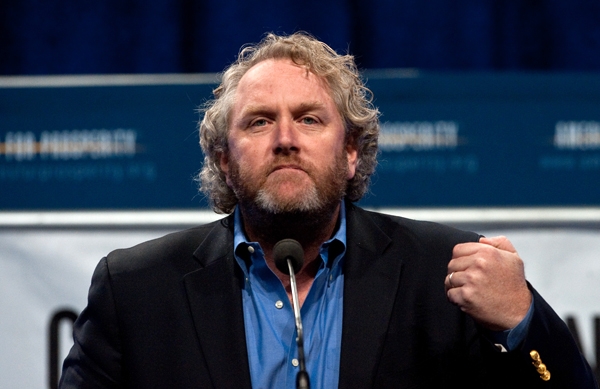
Veteran Los Angeles coroner forensic technican Michael Cormier had died, apparently due to arsenic poisoning. The 61 year old Cormier was discovered dead on April 20th – the same day the city officials had released their preliminary autopsy report on the death of conservative media powerhouse Andrew Breitbart.
According to early reports, Michael Cormier was “seemingly healthy,” yet “suddenly stricken” with a fatal condition – just like Andrew Breitbart.
It’s the latest twist in the case of Andrew Breitbart’s untimely death that will surely fuel increased speculation into possible foul play – in both cases.
The sluggish release of the Breitbart autopsy follows the unorthodox, rushed announcement by city authorities at the time of Breitbart’s death that he had died of ‘natural causes’ on March 1, 2012 at the age of 43.
The timing of Breitbart’s death came on the eve of a few highly anticipated events. Firstly, he had announced that he would be releasing rare ‘game changing’, rather damning video footage of President Obama allegedly cavorting with communist activists years earlier. Some footage was released in the days after his death, but it is not believed to be material that would change the corse of the 2012 election as Breitbart had indicated beforehand. He was also due to reveal his new Breitbart.com format, and had met only one before his death with Sheriff Joe Arpaio’s Cold Case Posse team in Phoenix in relation to Obama’s forged PDF birth certificate and forged US Selective Service registration card.
The LA County Coroner’s office announced in their preliminary reportthat Breitbart had died of heart failure, and that a negligible amount of alcohol was found in his system. No prescription or illicit drugs were discovered at any point during the autopsy. The final, definitive medical explaination on Breitbart’s death has yet to be made public.
Coroner Michael Cormier’s mysterious death was first reported by KTLA TV reporter Elizabeth Espinosa explaining how city detectives were investigating a possible ‘arsenic poisoning’ in the case. This report was later picked up and reported in an LA Times Local blog:
“The sources, who spoke on the condition of anonymity, said that finding the presence of poison does not necessarily mean the death was a homicide, because the substance could have accidentally entered his system.”
“At this point we haven’t ruled out foul play,” said Lt. Alan Hamilton of the Los Angeles Police Department. “It is one of the things being considered. We are waiting for the coroner’s results.”
A toxicology report is expected to be released sometime between May 25th and June 1st.
WND also recounted Breitbart’s early career, by summarizing:
Matt Drudge paid tribute to his colleague and friend with a posting on the Drudge Report: “In the first decade of the DRUDGEREPORT Andrew Breitbart was a constant source of energy, passion and commitment. We shared a love of headlines, a love of the news, an excitement about what’s happening. I don’t think there was a single day during that time when we did not flash each other or laugh with each other, or challenge each other. I still see him in my mind’s eye in Venice Beach, the sunny day I met him. He was in his mid 20′s. It was all there. He had a wonderful, loving family and we all feel great sadness for them today.”
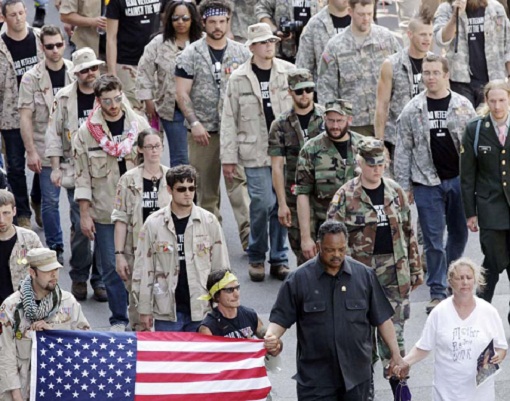
CHICAGO (Reuters) – Nearly 50 U.S. military veterans at an anti-NATO rally in Chicago threw their service medals into the street on Sunday, an action they said symbolized their rejection of the U.S.-led wars in Iraq and Afghanistan.
Some of the veterans, many wearing military uniform shirts over black anti-war t-shirts, choked back tears as they explained their actions. Others folded an American flag while a bugle played “Taps,” which is typically performed at U.S. military funerals.
“The medals are supposed to be for acts of heroism. I don’t feel like a hero. I don’t feel like I deserve them,” said Zach LaPorte, who served in Iraq in 2005 and 2006.
LaPorte, a 28-year-old mechanical engineer from Milwaukee, said he enlisted in the Army at 19 because he felt there were few other options. At the time, he could not afford to stay in college.
“I witnessed civilian casualties and civilians being arrested in what I consider an illegal occupation of a sovereign nation,” LaPorte said.
He said he was glad the United States had withdrawn its combat troops from Iraq, but said he did not believe the NATO military alliance was going to leave Afghanistan.
On Sunday, NATO Secretary-General Anders Fogh Rasmussen opened the two-day summit of the 26-member alliance saying there would be no hasty exit from Afghanistan.
A veteran from New York who only gave his name as Jerry said: “I don’t want any part of this anymore. I chose human life over war, militarism and imperialism.”
The veterans had hoped to present their medals to a NATO representative. The closest they could get was the fence ringing the McCormick Place convention center about a block from where U.S. President Barack Obama and other leaders were meeting. The veterans threw their medals toward the convention center.
Matt Howard, 29, who served in the Marines from 2001 to 2006, said the rate of suicides among veterans returning from the wars is high.
“These medals are not worth the cloth and steel they’re printed on. They’re representative of failed policies,” said Howard, a spokesman for Iraq Veterans Against the War.
Former U.S. Army Sergeant Alejandro Villatoro, 29, of Chicago, served during the Iraq 2003 invasion and in Afghanistan in 2011.
He said he suffers from post-traumatic stress syndrome and depression and gave back three medals – one “War on Terrorism” medal, one for participating in the Iraq war and a NATO medal from the Afghanistan war. He said he wants the war in Afghanistan to end.
“There’s no honor in these wars,” said Villatoro, before he threw away his medals. “There’s just shame.”
One of the more extreme government abuses of the post-9/11 era targets U.S. citizens re-entering their own country, and it has received far too little attention. With no oversight or legal framework whatsoever, the Department of Homeland Security routinely singles out individuals who are suspected of no crimes, detains them and questions them at the airport, often for hours, when they return to the U.S. after an international trip, and then copies and even seizes their electronic devices (laptops, cameras, cellphones) and other papers (notebooks, journals, credit card receipts), forever storing their contents in government files. No search warrant is needed for any of this. No oversight exists. And there are no apparent constraints on what the U.S. Government can do with regard to whom it decides to target or why.
In an age of international travel — where large numbers of citizens, especially those involved in sensitive journalism and activism, frequently travel outside the country — this power renders the protections of the Fourth Amendment entirely illusory. By virtue of that amendment, if the government wants to search and seize the papers and effects of someone on U.S. soil, it must (with some exceptions) first convince a court that there is probable cause to believe that the objects to be searched relate to criminal activity and a search warrant must be obtained. But now, none of those obstacles — ones at the very heart of the design of the Constitution — hinders the U.S. government: now, they can just wait until you leave the country, and then, at will, search, seize and copy all of your electronic files on your return. That includes your emails, the websites you’ve visited, the online conversations you’ve had, the identities of those with whom you’ve communicated, your cell phone contacts, your credit card receipts, film you’ve taken, drafts of documents you’re writing, and anything else that you store electronically: which, these days, when it comes to privacy, means basically everything of worth.
This government abuse has received some recent attention in the context of WikiLeaks. Over the past couple of years, any American remotely associated with that group — or even those who have advocated on behalf of Bradley Manning — have been detained at the airport and had their laptops, cellphones and cameras seized: sometimes for months, sometimes forever. But this practice usually targets people having nothing to do with WikiLeaks.
A 2011 FOIA request from the ACLU revealed that just in the 18-month period beginning October 1, 2008, more than 6,600 people — roughly half of whom were American citizens — were subjected to electronic device searches at the border by DHS, all without a search warrant. Typifying the target of these invasive searches is Pascal Abidor, a 26-year-old dual French-American citizen and an Islamic Studies Ph.D. student who was traveling from Montreal to New York on an Amtrak train in 2011 when he was stopped at the border, questioned by DHS agents, handcuffed, taken off the train and kept in a holding cell for several hours before being released without charges; those DHS agents seized his laptop and returned it 11 days later when, the ACLU explains, “there was evidence that many of his personal files, including research, photos and chats with his girlfriend, had been searched.” That’s just one case of thousands, all without any oversight, transparency, legal checks, or any demonstration of wrongdoing.
* * * * *
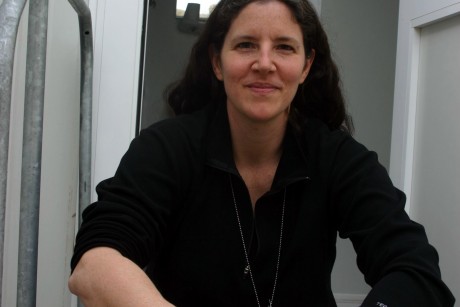
But the case of Laura Poitras, an Oscar-and Emmy-nominated filmmaker and intrepid journalist, is perhaps the most extreme. In 2004 and 2005, Poitras spent many months in Iraq filming a documentary that, as The New York Times put it in its review, “exposed the emotional toll of occupation on Iraqis and American soldiers alike.” The film, “My Country, My Country,” focused on a Sunni physician and 2005 candidate for the Iraqi Congress as he did things like protest the imprisonment of a 9-year-old boy by the U.S. military. At the time Poitras made this film, Iraqi Sunnis formed the core of the anti-American insurgency and she spent substantial time filming and reporting on the epicenter of that resistance. Poitras’ film was released in 2006 and nominated for the 2007 Academy Award for Best Documentary.
In 2010, she produced and directed “The Oath,” which chronicled the lives of two Yemenis caught up in America’s War on Terror: Salim Hamdan, the accused driver of Osama bin Laden whose years-long imprisonment at Guantanamo led to the 2006 Supreme Court case, bearing his name, that declared military commissions to be a violation of domestic and international law; and Hamdan’s brother-in-law, a former bin Laden bodyguard. The film provides incredible insight into the mindset of these two Yemenis. TheNYT feature on “The Oath” stated that, along with “My Country, My Country,” Poitras has produced ”two of the most searching documentaries of the post-9/11 era, on-the-ground chronicles that are sensitive to both the political and the human consequences of American foreign policy.” At the 2010 Sundance film festival, “The Oath” won the award for Best Cinematography.
Poitras’ intent all along with these two documentaries was to produce a trilogy of War on Terror films, and she is currently at work on the third installment. As Poitras described it to me, this next film will examine the way in which The War on Terror has been imported onto U.S. soil, with a focus on the U.S. Government’s increasing powers of domestic surveillance, its expanding covert domestic NSA activities (includingconstruction of a massive new NSA facility in Bluffdale, Utah), its attacks on whistleblowers, and the movement to foster government transparency and to safeguard Internet anonymity. In sum, Poitras produces some of the best, bravest and most important filmmaking and journalism of the past decade, often exposing truths that are adverse to U.S. government policy, concerning the most sensitive and consequential matters (a 2004 film she produced for PBS on gentrification of an Ohio town won the Peabody Award and was nominated for an Emmy).
But Poitras’ work has been hampered, and continues to be hampered, by the constant harassment, invasive searches, and intimidation tactics to which she is routinely subjected whenever she re-enters her own country. Since the 2006 release of “My Country, My Country,” Poitras has left and re-entered the U.S. roughly 40 times. Virtually every timeduring that six-year-period that she has returned to the U.S., her plane has been met by DHS agents who stand at the airplane door or tarmac and inspect the passports of every de-planing passenger until they find her (on the handful of occasions where they did not meet her at the plane, agents were called when she arrived at immigration). Each time, they detain her, and then interrogate her at length about where she went and with whom she met or spoke. They have exhibited a particular interest in finding out for whom she works.
She has had her laptop, camera and cellphone seized, and not returned for weeks, with the contents presumably copied. On several occasions, her reporter’s notebooks were seized and their contents copied, even as she objected that doing so would invade her journalist-source relationship. Her credit cards and receipts have been copied on numerous occasions. In many instances, DHS agents also detain and interrogate her in the foreign airport before her return, on one trip telling her that she would be barred from boarding her flight back home, only to let her board at the last minute. When she arrived at JFK Airport on Thanksgiving weekend of 2010, she was told by one DHS agent — after she asserted her privileges as a journalist to refuse to answer questions about the individuals with whom she met on her trip — that he “finds it very suspicious that you’re not willing to help your country by answering our questions.” They sometimes keep her detained for three to four hours (all while telling her that she will be released more quickly if she answers all their questions and consents to full searches).
Poitras is now forced to take extreme steps — ones that hamper her ability to do her work — to ensure that she can engage in her journalism and produce her films without the U.S. Government intruding into everything she is doing. She now avoids traveling with any electronic devices. She uses alternative methods to deliver the most sensitive parts of her work — raw film and interview notes — to secure locations. She spends substantial time and resources protecting her computers with encryption and password defenses. Especially when she is in the U.S., she avoids talking on the phone about her work, particularly to sources. And she simply will not edit her films at her home out of fear — obviously well-grounded — that government agents will attempt to search and seize the raw footage.
That’s the climate of fear created by the U.S. Government for an incredibly accomplished journalist and filmmaker who has never been accused, let alone convicted, of any wrongdoing whatsoever. Indeed,documents obtained from a FOIA request show that DHS has repeatedly concluded that nothing incriminating was found from its border searches and interrogations of Poitras. Nonetheless, these abuses not only continue, but escalate, after six years of constant harassment.
* * * * *
Poitras has been somewhat reluctant to speak publicly about the treatment to which she is subjected for fear that doing so would further impede her ability to do her work (the NYT feature on “The Oath” included some discussion of it). But the latest episode, among the most aggressive yet, has caused her to want to vociferously object.
On Thursday night, Poitras arrived at Newark International Airport from Britain. Prior to issuing her a boarding pass in London, the ticket agent called a Customs and Border Patrol (CBP) agent (Yost) who questioned her about whom she met and what she did. Upon arriving in Newark, DHS/CBP agents, as always, met her plane, detained her, and took her to an interrogation room. Each time this has happened in the past, Poitras has taken notes during the entire process: in order to chronicle what is being done to her, document the journalistic privileges she asserts and her express lack of consent, obtain the names of the agents involved, and just generally to cling to some level of agency.
This time, however, she was told by multiple CBP agents that she was prohibited from taking notes on the ground that her pen could be used as a weapon. After she advised them that she was a journalist and that her lawyer had advised her to keep notes of her interrogations, one of them, CBP agent Wassum, threatened to handcuff her if she did not immediately stop taking notes. A CBP Deputy Chief (Lopez) also told her she was barred from taking notes, and then accused her of “refusing to cooperate with an investigation” if she continued to refuse to answer their questions (he later clarified that there was no “investigation” per se, but only a “questioning”). Requests for comment from the CBP were not returned as of the time of publication.
Just consider the cumulative effect of this six years of harrassment and invasion. Poitras told me that it is “very traumatizing to come home to your own country and have to go through this every time,”and described the detentions, interrogations and threats as “infuriating,” “horrible” and “intimidating.” She told me that she now “hates to travel” and avoids international travel unless it is absolutely necessary for her work. And as she pointed out, she is generally more protected than most people subjected to similar treatment by virtue of the fact that she is a known journalist with both knowledge of her rights and the ability to publicize what is done to her. Most others are far less able to resist these sorts of abuses. But even for someone in Poitras’ position, this continuous unchecked government invasion is chilling in both senses of the word: it’s intimidating in its own right, and deters journalists and others from challenging government conduct.
* * * * *
As is true for so many abuses of the Surveillance State and assaults on basic liberties in the post-9/11 era, federal courts have almost completely abdicated their responsibility to serve as a check on these transgressions. Instead, federal judges have repeatedly endorsed the notion that the U.S. Government can engage in the most invasive border searches of citizens, including seizures and copying of laptops, without any reasonable suspicion of wrongdoing whatsoever, let alone probable cause.
That has happened in part because federal courts have become extremely submissive to assertions of Executive authority in the post-9/11 era, particularly when justified in the name of security. It’s also in part because anyone with a record of anti-authoritarianism or a willingness to oppose unrestrained government power, with very rare exception, can no longer get appointed to the federal bench; instead, it’s an increasingly homogeneous lot with demonstrated fealty to institutional authority. And it’s also in part because many life-tenured federal judges have been cloistered on the bench for decades, are technologically illiterate, and thus cannot apprehend the basic difference between having your suitcase searched at the airport and having the contents of your laptop and cellphone copied and stored by the U.S. Government.
One potentially important and encouraging exception to this trend was a ruling two weeks ago by U.S. District Judge Denise Casper, an Obama-appointed judge in the District of Massachusetts. As I’ve reported previously, David House, an activist who helped found the Bradley Manning Support Network, was detained by DHS when returning from a vacation in Mexico and had all of his electronic devices, including his laptop, seized; those devices were returned to him after almost two months only after he retained the ACLU of Massachusetts to demand their return. The ACLU then represented him in a lawsuit he commenced against the U.S. Government, alleging that his First and Fourth Amendment rights were violated by virtue of being targeted for his political speech and advocacy.
The DOJ demanded dismissal of the lawsuit, citing the cases approving of its power to search without suspicion, and also claimed that House was targeted not because of his political views but because of his connection to the criminal investigation of Manning and WikiLeaks. But the court refused to dismiss House’s lawsuit, holding that if he were indeed targeted by virtue of his protected activities, then his Constitutional rights have been violated:
Before even questioning House, the agents seized his electronic devices and in seizing them for forty-nine days, reviewed, retained, copied and disseminated information about the Support Network. Although the agents may not need to have any particularized suspicion for the initial search and seizure at the border for the purpose of the Fourth Amendment analysis, it does not necessarily follow that the agents, as is alleged in the complaint, may seize personal electronic devices containing expressive materials, target someone for their political association and seize his electronic devices and review the information pertinent to that association and its members and supporters simply because the initial search occurred at the border. . . .
When agents Santiago and Louck stopped House while he was en route to his connecting flight, they directed him to surrender the electronic devices he was carrying. They questioned him for an extended period of time only after seizing his devices. When the agents questioned House, they did not ask him any questions related to border control, customs, trade, immigration, or terrorism and did not suggest that House had broken the law or that his computer may contain illegal material or contraband. Rather, their questions focused solely on his association with Manning, his work for the Support Network, whether he had any connections to WikiLeaks, and whether he had contact with anyone from WikiLeaks during his trip to Mexico. Thus, the complaint alleges that House was not randomly stopped at the border; it alleges that he was stopped and questioned solelyto examine the contents of his laptop that contained expressive material and investigate his association with the Support Network and Manning. . . .
That the initial search and seizure occurred at the border does not strip House of his First Amendment rights, particularly given the allegations in the complaint that he was targeted specifically because of his association with the Support Network and the search of his laptop resulted in the disclosure of the organizations, members, supporters donors as well as internal organization communications that House alleges will deter further participation in and support of the organization. Accordingly, the Defendants’ motion to dismiss House’s First Amendment claim is DENIED. [emphasis added]
As Kevin Gosztola notes in an excellent report on this ruling, the court — although it dubiously found that “the search of House’s laptop and electronic devices is more akin to the search of a suitcase and other closed containers holding personal information travelers carry with them when they cross the border which may be routinely inspected by customs and require no particularized suspicion” – also ruled that the length of time DHS retained House’s laptop (six weeks) may render the search and seizure unreasonable in violation of the Fourth Amendment.
But thus far, very few efforts have been made to restrain this growing government power. More than a year ago, Democratic Rep. Loretta Sanchez described to me legislation she proposed just to impose someminimal rules and safeguards governing what DHS can do at the airport, but it’s gone nowhere. A much stronger bill, proposed by then-Sen. Feingold, would have barred laptop seizures entirely without a search warrant, but it suffered the same fate. Apparently, the Small Government faction calling itself the “Tea Party” has no greater interest in restraining this incredibly invasive government power than the Democratic Party which loves to boast of its commitment to individual rights.
It’s hard to overstate how oppressive it is for the U.S. Government to be able to target journalists, film-makers and activists and, without a shred of suspicion of wrongdoing, learn the most private and intimate details about them and their work: with whom they’re communicating, what is being said, what they’re reading. That’s a radical power for a government to assert in general. When it starts being applied not randomly, but to people engaged in activism and journalism adverse to the government, it becomes worse than radical: it’s the power of intimidation and deterrence against those who would challenge government conduct in any way. The ongoing, and escalating, treatment of Laura Poitras is a testament to how severe that abuse is.
If you’re not somebody who films the devastation wrought by the U.S. on the countries it attacks, or provides insight into Iraqi occupation opponents and bin Laden loyalists in Yemen, or documents expanding NSA activities on U.S. soil, then perhaps you’re unlikely to be subjected to such abuses and therefore perhaps unlikely to care much. As is true for all states that expand and abuse their own powers, that’s what the U.S. Government counts on: that it is sending the message that none of this will affect you as long as you avoid posing any meaningful challenges to what they do. In other words: you can avoid being targeted if you passively acquiesce to what they do and refrain from interfering in it. That’s precisely what makes it so pernicious, and why it’s so imperative to find a way to rein it in.