DHS Insider ‘Rosebud’: “Coming This Spring, Life for the Average American is Going to Change Significantly”

DHS Insider ‘Rosebud’: “Coming This Spring, Life for the Average American is Going to Change Significantly”

police-state-insider

SHTFplan Editor’s Note: The following interview is both informative and terrifying, and essential reading for anyone concerned about what comes next.

What the DHS Insider suggests is about to happen is exactly what many of us fear – a police state takeover of America, with urban centers to be pacified first, all outspoken critics of the government to be silenced, and travel restrictions across the United States to come shortly thereafter.

The dollar collapse, riots, the mobilization of domestic law enforcement, gun control, rationing of food and gas, suspension of the U.S. Constitution and a complete lock-down of America as we know it. According to the report, sinister forces within the U.S. government operating at the highest levels of our country’s political, financial, intelligence and military hierarchies have set into motion a series of events that will leave the populace so desperate for government intervention that they’ll willingly surrender their liberty for the perceived security of a militarized police state.

Interviewer Doug Hagmann cites an anonymous source operating deep inside the Department of Homeland Security, which may leave many skeptical of the accuracy of the reports. But the fact is, were such events being planned behind the scenes we certainly wouldn’t be given official mainstream warning. If real, the report is a game changer, and it makes sense that anyone privy to such information would want to keep their identity hidden. Whistle blowers in America who expose the corruption of officials in our government are treated not as patriots, but as traitors, and are often branded as psychos or terrorists.

What’s most alarming is the speed at which these events may play out.


The latest from “DHS Insider”
(This is the complete interview from The Hagmann and Hagmann Report)

Introduction

23 December 2012: After a lengthy, self-imposed informational black-out, my high-level DHS contact known as “Rosebud” emerged with new, non-public information about plans being discussed and prepared for implementation by the Department of Homeland Security (DHS) in the near future. It is important to note that this black-out was directly related to the aggressive federal initiative of identifying and prosecuting “leakers,” at least those leaks and leakers not sanctioned by the executive office – the latter of which there are many.

Due to those circumstances, my source exercised an abundance of caution to avoid compromising a valuable line of communication until he had information he felt was  significant enough to risk external contact. The following information is the result of an in-person contact between this author and “Rosebud” within the last 48 hours. With his permission, the interview was digitally recorded and the relevant portions of the contact are provided in a conversational format for easier reading. The original recording was copied onto multiple discs and are maintained in secure locations for historical and insurance purposes.

Meeting

The following began after an exchange of pleasantries and other unrelated discussion:

DH: Do I have your permission to record this conversation?

RB: You do.

DH: I’ve received a lot of e-mail from people wondering where you went and why you’ve been so quiet.

RB: As I told you earlier, things are very dicey. Weird things began to happen before the election and have continued since. Odd things, a clampdown of sorts. I started looking and I found [REDACTED AT THE REQUEST OF THIS SOURCE], and that shook me up. I’m not the only one, though, that found a [REDACTED], so this means there’s surveillance of people within DHS by DHS. So, that explains this cloak and dagger stuff for this meeting.

DH: I understand. What about the others?

RB: They are handling it the same way.

DH: I’ve received many e-mails asking if you are the same person giving information to Ulsterman. Are you?

RB: No, but I think I know at least one of his insiders.

DH: Care to elaborate?

RB: Sorry, no.

DH: Do you trust him or her. I mean, the Ulsterman source?

RB: Yes.

DH: Okay, so last August, you said things were “going hot.” I printed what you said, and things did not seem to happen as you said.

RB: You’d better recheck your notes and compare [them] with some of the events leading up to the election. I think you’ll find that a full blown campaign of deception took place to make certain Obama got back into office. The polls, the media, and a few incidents that happened in the two months before the election. I guess if people are looking for some big event they can point to and say “aha” for verification, well then I overestimated people’s ability to tell when they are being lied to.

DH: What specific incidents are you referring to?

RB:  Look at the threats to Obama. Start there. The accusations of racism. Then look at the polls, and especially the judicial decisions about voter ID laws. Bought and paid for, or where there was any potential for problems, the judges got the message, loud and clear. Then look at the voter fraud. And not a peep from the Republicans. Nothing. His second term was a done deal in September. This was planned. Frankly, the Obama team knew they had it sewn up long before election day. Benghazi could have derailed them, but the fix was in there, so I never saw anything on my end to suggest a ready-made solution had to be implemented.

DH: What’s going on now?

RB: People better pay close attention over the next few months. First, there won’t be any meaningful deal about the fiscal crisis. This is planned, I mean, the lack of deal is planned. In fact, it’ necessary to pave the way for what is in the short term agenda.

DH: Wait, you’re DHS – not some Wall Street insider.

RB: So you think they are separate agendas? That’s funny. The coming collapse of the U.S. dollar is a done deal. It’s been in the works for years – decades, and this is one of the most important cataclysmic events that DHS is preparing for. I almost think that DHS was created for that purpose alone, to fight Americans, not protect them, right here in America. But that’s not the only reason. There’s the gun issue too.

DH: So, what are you seeing at DHS?

RB: We don’t have a lot of time, tonight – our meeting –  as well as a country. I mean I have heard – with my own ears – plans being made that originate from the White House that involve the hierarchy of DHS. You gotta know how DHS works at the highest of levels. It’s Jarrett and Napolitano, with Jarrett organizing all of the plans and approaches. She’s the one in charge, at least from my point of view, from what I am seeing. Obama knows that’s going on and has say, but it seems that Jarrett has the final say, not the other way around. It’s [screwed] up. This really went into high gear since the election.

But it’s a train wreck at mid management, but is more effective at the lower levels. A lot of police departments are being gifted with federal funds with strings attached. That money is flowing out to municipal police departments faster than it can be counted. They are using this money to buy tanks, well, not real tanks, but you know what I mean. DHS is turning the police into soldiers.

By the way, there has been a lot of communication recently between Napolitano and Pistole [TSA head]. They are planning to use TSA agents in tandem with local police for certain operations that are being planned right now. This is so [deleted] important that you cannot even begin to imagine. If you get nothing else out of this, please, please make sure you tell people to watch the TSA and their increasing involvement against the American public. They are the stooges who will be the ones to carry out certain plans when the dollar collapses and the gun confiscation begins.

DH: Whoa, wait a minute. You just said a mouthful. What’s the agenda here?

RB: Your intelligence insider – he knows that we are facing a planned economic collapse. You wrote about this in your articles about Benghazi, or at least that’s what I got out of the later articles. So why the surprise?

DH: There’s a lot here. Let’s take it step by step if you don’t mind.

RB: Okay, but I’m not going to give it to you in baby steps. Big boy steps. This is what I am hearing. Life for the average American is going to change significantly, and not the change people expect. First, DHS is preparing to work with police departments and the TSA to respond to civil uprisings that will happen when there is a financial panic. And there will be one, maybe as early as this spring, when the dollar won’t get you a gumball. I’m not sure what the catalyst will be, but I’ve heard rumblings about a derivatives crisis as well as an oil embargo. I don’t know, that’s not my department. But something is going to happen to collapse the dollar, which has been in the works since the 1990′s. Now if it does not happen as soon as this, it’s because there are people, real patriots, who are working to prevent this, so it’s a fluid dynamic. But that doesn’t change the preparations.

And the preparations are these: DHS is prepositioning assets in strategic areas near urban centers all across the country. Storage depots. Armories. And even detainment facilities, known as FEMA camps. FEMA does not even know that the facilities are earmarked for detainment by executive orders, at least not in the traditional sense they were intended. By the way, people drive by some of these armories everyday without even giving them a second look. Commercial and business real estate across the country are being bought up or leased for storage purposes. Very low profile.

Anyway, I am hearing that the plan from on high is to let the chaos play out for a while, making ordinary citizens beg for troops to be deployed to restore order. but it’s all organized to make them appear as good guys. That’s when the real head knocking will take place. We’re talking travel restrictions, which should no be a problem because gas will be rationed or unavailable. The TSA will be in charge of travel, or at least be a big part of it. They will be commissioned, upgraded from their current status.

They, I mean Jarrett and Obama as well as a few others in government, are working to create a perfect storm too. This is being timed to coincide with new gun laws.

DH: New federal gun laws?

RB: Yes. Count on the criminalization to possess just about every gun you can think of. Not only restrictions, but actual criminalization of possessing a banned firearm. I heard this directly from the highest of my sources. Plans were made in the 90′s but were withheld. Now, it’s a new day, a new time, and they are riding the wave of emotion from Sandy Hook., which, by the way and as tragic as it was, well, it stinks to high heaven. I mean there are many things wrong there, and first reports are fast disappearing. The narrative is being changed. Look, there is something wrong with Sandy Hook, but if you write it, you’ll be called a kook or worse.

DH: Sure

RB: But Sandy Hook, there’s something very wrong there. But I am hearing that won’t be the final straw. There will be another if they think it’s necessary.

DH: Another shooting?

RB: Yes.

DH: That would mean they are at least complicit.

RB: Well, that’s one way of looking at it.

DH: Are they? Were they?

RB: Do your own research. Nothing I say, short of bringing you photographs and documents will convince anyone, and even then, it’s like [DELETED] in the wind.

DH: So…

RB: So what I’m telling you is that DHS, the TSA and certain, but not all, law enforcement agencies are going to be elbow deep in riot control in response to an economic incident. At the same time or close to it, gun confiscation will start. It will start on a voluntary basis using federal registration forms, then an amnesty, then the kicking-in of doors start.

Before or at the same time, you know all the talk of lists, you know, the red and blue lists that everyone made fun of? Well they exist, although I don’t know about their colors. But there are lists of political dissidents maintained by DHS. Names are coordinated with the executive branch, but you know what? They did not start with Obama. They’ve been around in one form or another for years. The difference though is that today, they are much more organized. And I’ll tell you that the vocal opponents of the politics of the global elite, the bankers, and the opponents of anything standing in their way, well, they are on the top of the list of people to be handled.

DH: Handled?

RB: As the situations worsen, some might be given a chance to stop their vocal opposition. Some will, others won’t. I suppose they are on different lists. Others won’t have that chance. By that time, though, it will be chaos and people will be in full defensive mode. They will be hungry, real hunger like we’ve never experienced before. They will use our hunger as leverage. They will use medical care as leverage.

DH: Will this happen all at once?

RB: They hope to make it happen at the same time. Big cities first, with sections being set apart from the rest of the country. Then the rural areas. There are two different plans for geographical considerations. But it will all come together.

DH: Wait, this sounds way, way over the top. Are you telling me… [Interrupts]

RB: [Over talk/Unintelligible] …know who was selected or elected twice now. You know who his associates are. And you are saying this is way over the top? Don’t forget what Ayers said – you talked to Larry Grathwohl. This guy is a revolutionary. He does not want to transform our country in the traditional sense. He will destroy it. And he’s not working alone. He’s not working for himself, either. He has his handlers. So don’t think this is going to be a walk in the park, with some type of attempt to rescue the country. Cloward-Piven. Alinsky. Marx. All rolled into one. And he won’t need the rest of his four years to do it.

DH: I need you to be clear. Let’s go back again, I mean, to those who speak out about what’s happening.

RB: [Edit note: Obviously irritated] How much clearer do you want it? The Second Amendment will be gone, along with the first, at least practically or operationally. The Constitution will be gone, suspended, at least in an operational sense. Maybe they won’t actually say that they are suspending it, but will do it. Like saying the sky is purple when it’s actually blue. How many people will look a the sky and say yeah, it’s purple? They see what they want to see.

So the DHS, working with other law enforcement organizations, especially the TSA as it stands right now, will oversee the confiscation of assault weapons, which includes all semi-automatic weapons following a period of so-called amnesty. It also includes shotguns that hold multiple rounds, or have pistol grips. They will go after the high capacity magazines, anything over, say 5 rounds.

They will also go after the ammunition, especially at the manufacturer’s level. They will require a special license for certain weapons, and make it impossible to own anything. More draconian than England. This is a global thing too. Want to hunt? What gives you the right to hunt theiranimals? Sound strange? I hope so, but they believe they own the animals. Do you understand now, how sick and twisted this is? Their mentality?

The obvious intent is to disarm American citizens. They will say that we’ll still be able to defend ourselves and go hunting, but even that will be severely regulated. This is the part that they are still working out, though. While the plans were made years ago, there is some argument over the exact details. I know that Napalitano, even with her support of the agenda, would like to see this take place outside of an E.O. [Executive Order] in favor of legislative action and even with UN involvement.

DH: But UN involvement would still require legislative approval.

RB: Yes, but your still thinking normal – in normal terms. Stop thinking about a normal situation. The country is divided, which is exactly where Obama wants us to be. We are as ideologically divided as we were during the Civil War and that rift is growing every day. Add in a crisis – and economic crisis – where ATM and EBT cards will stop working. Where bank accounts will contain nothing but air. They are anticipating a revolution and a civil war rolled into one (emphasis added by this author).

Imagine when talk show hosts or Bloggers or some other malcontent gets on the air or starts writing about the injustice of it all, and about how Obama is the anti-Christ or something. They will outlaw such talk or writing as inciting the situation – they will make it illegal by saying that it is causing people to die. The Republicans will go along with everything as it’s – we have – a one party system. Two parties is an illusion. It’s all so surreal to talk about but you see where this is headed, right?

DH: Well, what about the lists?

RB: Back to that again, okay. Why do you think the NSA has surveillance of all communications? To identify and stop terrorism? Okay, to be fair, that is part of it, but not the main reason. The federal agencies have identified people who present a danger to them and their agendas. I don’t know if they are color coded like you mentioned, red blue purple or peach mango or whatever, but they exist. In fact, each agency has their own. You know, why is it so [deleted] hard for people to get their heads around the existence of lists with names of people who pose a threat to their plans? The media made a big deal about Nixon’s enemies list and everyone nodded and said yeah, that [deleted], but today? They’ve been around for years and years.

DH: I think it’s because of the nature of the lists today. What do they plan to do with their enemies?

RB: Go back to what Ayers said when, in the late 60′s? 70′s? I forget. Anyway, he was serious. But to some extent, the same thing that happened before. They – the people on some of these lists – are under surveillance, or at least some, and when necessary, some are approached and made an offer. Others, well, they can be made to undergo certain training. Let’s call it sensitivity training, except on a much different level. Others, most that are the most visible and mainstream are safe for the most part. And do you want to know why? It’s because they are in the pockets of the very people we are talking about, but they might or might not know it. Corporate sponsorship – follow the money. You know the drill. You saw it happen before, with the birth certificate.

It’s people that are just under the national radar but are effective. They have to worry. Those who have been publicly marginalized already but continue to talk or write or post, they are in trouble. It’s people who won’t sell out, who think that they can make a difference. Those are the people who have to worry.

Think about recent deaths that everybody believes were natural or suicides. Were they? People are too busy working their [butts] off to put food on the table to give a damn about some guy somewhere who vapor locks because of too many doughnuts and coffee and late nights. And it seems plausible enough to happen. This time, when everything collapses, do you think they will care if it is a bullet or a heart attack that takes out the opposition? [Deleted] no.

DH: That’s disturbing. Do you… [interrupts]

RB: Think about the Oklahoma City bombing in ’95. Remember how Clinton blamed that on talk radio, or at least in part. Take what happened then and put it in context of today. Then multiply the damnation by 100, and you will begin to understand where this is going. People like Rush and Hannity have a narrow focus of political theater. They’ll still be up and running during all of this to allow for the appearance of normal. Stay within the script, comrade.

But as far as the others, they have certain plans. And these plans are becoming more transparent. They are getting bolder. They are pushing lies, and the bigger the lie, the easier it is to sell to the people. They will even try to sell a sense of normalcy as things go absolutely crazy and break down. It will be surreal. And some will believe it, think that it’s only happening in certain places, and we can draw everything back once the dust settles. But when it does, this place will not be the same.

DH: Will there be resistance within the ranks of law enforcement? You know, will some say they won’t go along with the plan, like the Oath Keepers?

RB: Absolutely. But they will not only be outnumbered, but outgunned – literally. The whole objective is to bring in outside forces to deal with the civil unrest that will happen in America. And where does their allegiance lie? Certainly not to Sheriff Bob. Or you or me.

During all of this, and you’ve got to remember that the dollar collapse is a big part of this, our country is going to have to be redone. I’ve seen – personally – a map of North America without borders. Done this year. The number 2015 was written across the top, and I believe that was meant as a year. Along with this map – in the same area where this was – was another map showing the United States cut up into sectors. I’m not talking about what people have seen on the internet, but something entirely different. Zones. And a big star on the city of Denver.

Sound like conspiracy stuff on the Internet? Yup. But maybe they were right. It sure looks that way. It will read that way if you decide to write about this. Good luck with that. Anyway, the country seemed to be split into sectors, but not the kind shown on the internet. Different.

DH: What is the context of that?

RB: Across the bottom of this was written economic sectors. It looked like a work in progress, so I can’t tell you any more than that. From the context I think it has to do with the collapse of the dollar.

DH: Why would DHS have this? I mean, it seems almost contrived, doesn’t it?

RB: Not really, when you consider the bigger picture. But wait before we go off into that part. I need to tell you about Obamacare, you know, the new health care coming up. It plays a big part – a huge [deleted] part in the immediate reshaping of things.

DH: How so?

RB: It creates a mechanism of centralized control over people. That’s the intent of this monster of a bill, not affordable health care. And it will be used to identify gun owners. Think your health records are private? Have you been to the doctor lately? Asked about owning a gun? Why do you think they ask, do you think they care about your safety? Say yes to owning a gun and your information is shared with another agency, and ultimately, you will be identified as a security risk. The records will be matched with other agencies.

You think that they are simply relying on gun registration forms? This is part of data collection that people don’t get.  Oh, and don’t even think about getting a script for some mood enhancement drug and being able to own a gun.

Ayers and Dohrn are having the times of their lives seeing things they’ve worked for all of their adult lives actually coming to pass. Oh, before I forget, look at the recent White House visitor logs.

DH: Why? Where did that come from?

RB: Unless they are redacted, you will see the influence of Ayers. Right now. The Weather Underground has been reborn. So has their agenda.

DH: Eugenics? Population control?

RB: Yup. And re-education camps. But trust me, you write about this, you’ll be called a kook. It’s up to you, it’s your reputation, not mine. And speaking about that, you do know that this crew is using the internet to ruin people, right? They are paying people to infiltrate discussion sites and forums to call people like you idiots. Show me the proof they say. Why doesn’t you source come forward? If he knows so much, why not go to Fox or the media? To them, if it’s not broadcast on CNN, it’s not real. Well, they’ve got it backwards. Very little on the news is real. The stock market, the economy, the last presidential polls, very little is real.

But this crew is really internet savvy. They’ve got a lot of people they pay to divert issues on forums, to mock people, to marginalize them. They know what they’re doing. People think they’ll take sites down – hack them. Why do that when they are more effective to infiltrate the discussion? Think about the birth certificate, I mean the eligibility problem of Obama. Perfect example.

DH: How soon do you see things taking place?

RB: They already are in motion. If you’re looking for a date I can’t tell you. Remember, the objectives are the same, but plans, well, they adapt. They exploit. Watch how this fiscal cliff thing plays out. This is the run-up to the next beg economic event.

I can’t give you a date. I can tell you to watch things this spring. Start with the inauguration and go from there. Watch the metals, when they dip. It will be a good indication that things are about to happen. I got that little tidbit from my friend at [REDACTED].

NOTE: At this point, my contact asked me to reserve further disclosures until after the  inauguration.


Copyright Douglas Hagmann.

Via SHTFplan.com.

Douglas J. Hagmann and his son, Joe Hagmann host The Hagmann & Hagmann Report, a live Internet radio program broadcast each weeknight from 8:00-10:00 p.m. ET.

Douglas Hagmann, founder & director of the Northeast Intelligence Network, and a multi-state licensed private investigative agency. Doug began using his investigative skills and training to fight terrorism and increase public awareness through his website.

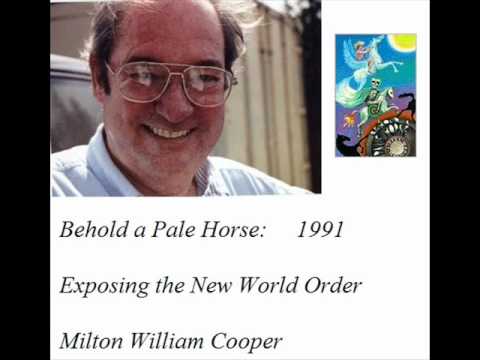
William Cooper’s “Behold A Pale Horse” Book Foretold Schoolyard Shootings

William Cooper’s “Behold A Pale Horse” Book Foretold Schoolyard Shootings

Below is found in Chapter 12 of Milton William Cooper’s 1991 book Behold A Pale Horse:

“The government encouraged the manufacture and importation of firearms for the criminals to use. This is intended to foster a feeling of insecurity, which would lead the American people to voluntarily disarm themselves by passing laws against firearms. Using drugs and hypnosis on mental patients in a process called Orion, the CIA inculcated the desire in these people to open fire on schoolyards and thus inflame the anti-gun lobby. This plan is well under way, and so far is working perfectly. The middle class is begging the government to do away with the 2nd Amendment.”

behold_a_pale_horse_school_shootings_conspiracy_gun_confiscation_2nd_amendment


BACKGROUND:

William Cooper was reared in an Air Force family. As a child he lived in many different countries, graduating from Yamato High School in Japan. Since he has traveled through or lived in many different foreign countries Mr. Cooper has a world view much different than most Americans.

William served with the Strategic Air Command, United States Air Force. He held a secret clearance working on B-52 bombers, KC-135 refueling aircraft, and Minuteman missiles. William received his Honorable Discharge from the United States Air Force in 1965.

William joined the United States Navy fulfilling a dream previously frustrated by chronic motion sickness. He served aboard the submarine USS Tiru (SS-416), USS Tombigbee (AOG-11), Naval Support Activity Danang RVN, Naval Security and Intelligence Camp Carter RVN, Danang Harbor Patrol RVN, Dong Ha River Security Group RVN, USS Charles Berry (DE-1035), Headquarters Commander in Chief Pacific Fleet, USS Oriskany (CVA-34).

Cooper was a member of the Office of Naval Security and Intelligence serving as a Harbor and River Patrol Boat Captain at Danang and the Dong Ha River Security Group, Cua Viet, Republic of Vietnam. William Cooper was awarded several medals for his leadership and heroism during combat including two with “V” for Valor.

He served on the Intelligence Briefing Team for the Commander In Chief of the Pacific Fleet. William was the Petty Officer of the Watch and designated KL-47 SPECAT operator in the CINCPACFLT Command Center at Makalapa Hawaii. There he held a Top Secret, Q, SI, security clearance.

William Cooper achieved the rank of First Class Petty Officer, QM1, E- 6 after only 8 years of Naval service, a difficult task in any branch of the United States military. William Cooper received an Honorable Discharge from the United States Navy on December 11, 1975.

William attended Long Beach City College where he picked up an Associate of Science Degree in Photography. He founded the Absolute Image Studio and Gallery of Fine Art Photography in Long Beach, California.

William held the position of Executive Director of Adelphi Business College, Pacific Coast Technical Institute, and National Technical College. Mr. Cooper was the National Marketing Coordinator for National Education and Software.

He produced several documentaries covering subjects such as the Kennedy assassination and secret black projects that have built flying disk shaped craft. William is an internationally acclaimed radio personality broadcasting the Hour Of The Time on WBCQ worldwide short-wave 7.415 MHz from 10 PM until 11 PM Eastern Standard Time (0300 to 0400 UTC) Monday through Thursday nights.

William Cooper is the author of Behold A Pale Horse. The book has become the best selling underground book of all time. It is read and promoted by word of mouth by People of all races, religions, and nationalities.

Mr. Cooper is a world class lecturer, one of the few other than superstars, monarchs, and Popes who have appeared at Wembly in London. William Cooper has lectured for 10 years in every State.

William Cooper, Trustee, has founded for Harvest Trust, the CAJI News Service, VERITAS national full size newspaper, The Intelligence Service, Harvest Publications, and has helped over 700 low power FM affiliate stations get equipped and on the air… including the station he managed as Trustee for the Independence Foundation Trust, 101.1 FM Eagar, Arizona, broadcasting to 7,000 people.

Under his leadership Harvest Trust ventured into the publishing trade. The first book under the Harvest Trust imprint was Oklahoma City: Day One by Michele Marie Moore… the definitive classic on the Oklahoma City bombing of the Alfred P. Murrah Federal Building on April 19, 1995.

Shortly after the bombing of the Alfred P. Murrah federal building Rush Limbaugh read a White House memo on the air during his broadcast which named William Cooper, “…the most dangerous radio host in America”. Mr. Cooper considers William Clinton’s pronouncement the greatest compliment that he has ever received.

William Cooper’s FBI file, promulgated by the investigation required by his security clearances while in military service, was one of those unlawfully in possession of the White House in what has become known as, “Filegate”. Shortly after this discovery President Clinton ordered all federal agencies to begin investigation, persecution, and prosecution of Mr. Cooper to shut him up.

After years of filing FOIA requests and researching the IRS William Cooper brought suit against the IRS in Federal District Court in Phoenix Arizona to force the IRS to produce proof of jurisdiction and delegation of authority which the IRS was unable to do. To short circuit Mr. Cooper’s attempt to reveal the true nature of the criminal IRS, and to carry out the orders of the White House, the agency lied to a Grand Jury, not allowing William Cooper to testify, and secured indictments against Mr. Cooper and his wife Annie. This ploy successfully stopped Mr. Cooper from continuing his suit against the criminal IRS for fear of being arrested.

In 1998 VERITAS and Harvest Publications was sold to Hallmark Creative Corporation along with the copyright and all rights to all written material produced or ever to be produced by William Cooper including Behold A Pale Horse and Oklahoma City: Day one. Hallmark Creative Corporation has contracted to insure this material is always available to the public.

In 1998 copyrights and all rights to all audio and video material produced or ever to be produced by William Cooper was sold to Excel Studios Corporation including the Hour Of The Time broadcast. Excel Studios has contracted to insure this material is always available to the public.

In March of 1999, Cooper William Sent his family out of the United States for their security. He lived and worked alone with his two dogs, one rooster, and one chicken.


DEATH:

William Cooper was killed by an Apache County  sheriff’s deputy wounded in a shootout, authorities claim (Eager, Arizona USA).

Details surrounding his demise were highly suspicious and may never be fully determined.

“…God bless my family. I love my wife & children more than life itself. Everything I do is for the future of all my children. They may not understand why I have sacrificed so much, why I am so dedicated to this work; but someday they will. I want them to know they are the most important People in my life, and how very, very much I love them…” – William Cooper


DHS Insider Part 2: Gun Confiscation, Assassination, Timeline & End Of The Constitution

DHS Insider Part 2: Gun Confiscation, Assassination, Timeline & End Of The Constitution

fema_camp_DHS_gun_confiscation_insider

The latest from “DHS Insider” (Part II)

By Douglas J. Hagmann

DH: Wait, this sounds way, way over the top. Are you telling me… [Interrupts]

RB: [Over talk/Unintelligible] …know who was selected or elected twice now. You know who his associates are. And you are saying this is way over the top? Don’t forget what Ayers said – you talked to Larry Grathwohl. This guy is a revolutionary. He does not want to transform our country in the traditional sense. He will destroy it. And he’s not working alone. He’s not working for himself, either. He has his handlers. So don’t think this is going to be a walk in the park, with some type of attempt to rescue the country. Cloward-Piven. Alinsky. Marx. All rolled into one. And he won’t need the rest of his four years to do it.

DH: I need you to be clear. Let’s go back again, I mean, to those who speak out about what’s happening.

RB: [Edit note: Obviously irritated] How much clearer do you want it? The Second Amendment will be gone, along with the first, at least practically or operationally. The Constitution will be gone, suspended, at least in an operational sense. Maybe they won’t actually say that they are suspending it, but will do it. Like saying the sky is purple when it’s actually blue. How many people will look a the sky and say yeah, it’s purple? They see what they want to see.
So the DHS, working with other law enforcement organizations, especially the TSA as it stands right now, will oversee the confiscation of assault weapons, which includes all semi-automatic weapons following a period of so-called amnesty. It also includes shotguns that hold multiple rounds, or have pistol grips. They will go after the high capacity magazines, anything over, say 5 rounds.
They will also go after the ammunition, especially at the manufacturer’s level. They will require a special license for certain weapons, and make it impossible to own anything. More draconian than England. This is a global thing too. Want to hunt? What gives you the right to hunt their animals? Sound strange? I hope so, but they believe they own the animals. Do you understand now, how sick and twisted this is? Their mentality?
The obvious intent is to disarm American citizens. They will say that we’ll still be able to defend ourselves and go hunting, but even that will be severely regulated. This is the part that they are still working out, though. While the plans were made years ago, there is some argument over the exact details. I know that Napalitano, even with her support of the agenda, would like to see this take place outside of an E.O. [Executive Order] in favor of legislative action and even with UN involvement.

DH: But UN involvement would still require legislative approval.

RB: Yes, but your still thinking normal – in normal terms. Stop thinking about a normal situation. The country is divided, which is exactly where Obama wants us to be. We are as ideologically divided as we were during the Civil War and that rift is growing every day. Add in a crisis – and economic crisis – where ATM and EBT cards will stop working. Where bank accounts will contain nothing but air. They are anticipating a revolution and a civil war rolled into one (emphasis added by this author).
Imagine when talk show hosts or Bloggers or some other malcontent gets on the air or starts writing about the injustice of it all, and about how Obama is the anti-Christ or something. They will outlaw such talk or writing as inciting the situation – they will make it illegal by saying that it is causing people to die. The Republicans will go along with everything as it’s – we have – a one party system. Two parties is an illusion. It’s all so surreal to talk about but you see where this is headed, right?

DH: Well, what about the lists?

RB: Back to that again, okay. Why do you think the NSA has surveillance of all communications? To identify and stop terrorism? Okay, to be fair, that is part of it, but not the main reason. The federal agencies have identified people who present a danger to them and their agendas. I don’t know if they are color coded like you mentioned, red blue purple or peach mango or whatever, but they exist. In fact, each agency has their own. You know, why is it so [deleted] hard for people to get their heads around the existence of lists with names of people who pose a threat to their plans? The media made a big deal about Nixon’s enemies list and everyone nodded and said yeah, that [deleted], but today? They’ve been around for years and years.

DH: I think it’s because of the nature of the lists today. What do they plan to do with their enemies?

RB: Go back to what Ayers said when, in the late 60’s? 70’s? I forget. Anyway, he was serious. But to some extent, the same thing that happened before. They – the people on some of these lists – are under surveillance, or at least some, and when necessary, some are approached and made an offer. Others, well, they can be made to undergo certain training. Let’s call it sensitivity training, except on a much different level. Others, most that are the most visible and mainstream are safe for the most part. And do you want to know why? It’s because they are in the pockets of the very people we are talking about, but they might or might not know it. Corporate sponsorship – follow the money. You know the drill. You saw it happen before, with the birth certificate.
It’s people that are just under the national radar but are effective. They have to worry. Those who have been publicly marginalized already but continue to talk or write or post, they are in trouble. It’s people who won’t sell out, who think that they can make a difference. Those are the people who have to worry.
Think about recent deaths that everybody believes were natural or suicides. Were they? People are too busy working their [butts] off to put food on the table to give a damn about some guy somewhere who vapor locks because of too many doughnuts and coffee and late nights. And it seems plausible enough to happen. This time, when everything collapses, do you think they will care if it is a bullet or a heart attack that takes out the opposition? [Deleted] no.

DH: That’s disturbing. Do you… [interrupts]

RB: Think about the Oklahoma City bombing in ’95. Remember how Clinton blamed that on talk radio, or at least in part. Take what happened then and put it in context of today. Then multiply the damnation by 100, and you will begin to understand where this is going. People like Rush and Hannity have a narrow focus of political theater. They’ll still be up and running during all of this to allow for the appearance of normal. Stay within the script, comrade.
But as far as the others, they have certain plans. And these plans are becoming more transparent. They are getting bolder. They are pushing lies, and the bigger the lie, the easier it is to sell to the people. They will even try to sell a sense of normalcy as things go absolutely crazy and break down. It will be surreal. And some will believe it, think that it’s only happening in certain places, and we can draw everything back once the dust settles. But when it does, this place will not be the same.

DH: Will there be resistance within the ranks of law enforcement? You know, will some say they won’t go along with the plan, like the Oath Keepers?

RB: Absolutely. But they will not only be outnumbered, but outgunned – literally. The whole objective is to bring in outside forces to deal with the civil unrest that will happen in America. And where does their allegiance lie? Certainly not to Sheriff Bob. Or you or me.
During all of this, and you’ve got to remember that the dollar collapse is a big part of this, our country is going to have to be redone. I’ve seen – personally – a map of North America without borders. Done this year. The number 2015 was written across the top, and I believe that was meant as a year. Along with this map – in the same area where this was – was another map showing the United States cut up into sectors. I’m not talking about what people have seen on the internet, but something entirely different. Zones. And a big star on the city of Denver.
Sound like conspiracy stuff on the Internet? Yup. But maybe they were right. It sure looks that way. It will read that way if you decide to write about this. Good luck with that. Anyway, the country seemed to be split into sectors, but not the kind shown on the internet. Different.

DH: What is the context of that?

RB: Across the bottom of this was written economic sectors. It looked like a work in progress, so I can’t tell you any more than that. From the context I think it has to do with the collapse of the dollar.

DH: Why would DHS have this? I mean, it seems almost contrived, doesn’t it?

RB: Not really, when you consider the bigger picture. But wait before we go off into that part. I need to tell you about Obamacare, you know, the new health care coming up. It plays a big part – a huge [deleted] part in the immediate reshaping of things.

DH: How so?

RB: It creates a mechanism of centralized control over people. That’s the intent of this monster of a bill, not affordable health care. And it will be used to identify gun owners. Think your health records are private? Have you been to the doctor lately? Asked about owning a gun? Why do you think they ask, do you think they care about your safety? Say yes to owning a gun and your information is shared with another agency, and ultimately, you will be identified as a security risk. The records will be matched with other agencies.
You think that they are simply relying on gun registration forms? This is part of data collection that people don’t get. Oh, and don’t even think about getting a script for some mood enhancement drug and being able to own a gun.
Ayers and Dohrn are having the times of their lives seeing things they’ve worked for all of their adult lives actually coming to pass. Oh, before I forget, look at the recent White House visitor logs.

DH: Why? Where did that come from?

RB: Unless they are redacted, you will see the influence of Ayers. Right now. The Weather Underground has been reborn. So has their agenda.

DH: Eugenics? Population control?

RB: Yup. And re-education camps. But trust me, you write about this, you’ll be called a kook. It’s up to you, it’s your reputation, not mine. And speaking about that, you do know that this crew is using the internet to ruin people, right? They are paying people to infiltrate discussion sites and forums to call people like you idiots. Show me the proof they say. Why doesn’t you source come forward? If he knows so much, why not go to Fox or the media? To them, if it’s not broadcast on CNN, it’s not real. Well, they’ve got it backwards. Very little on the news is real. The stock market, the economy, the last presidential polls, very little is real.
But this crew is really internet savvy. They’ve got a lot of people they pay to divert issues on forums, to mock people, to marginalize them. They know what they’re doing. People think they’ll take sites down – hack them. Why do that when they are more effective to infiltrate the discussion? Think about the birth certificate, I mean the eligibility problem of Obama. Perfect example.

DH: How soon do you see things taking place?

RB: They already are in motion. If you’re looking for a date I can’t tell you. Remember, the objectives are the same, but plans, well, they adapt. They exploit. Watch how this fiscal cliff thing plays out. This is the run-up to the next beg economic event. I can’t give you a date. I can tell you to watch things this spring. Start with the inauguration and go from there. Watch the metals, when they dip. It will be a good indication that things are about to happen. I got that little tidbit from my friend at [REDACTED].

NOTE: At this point, my contact asked me to reserve further disclosures until after the inauguration.

via SteveQuayle

Prodigy (of Mobb Deep) on the Illuminati

Prodigy (of Mobb Deep) on the Illuminati

http://youtu.be/YJ5Ww8cZABI

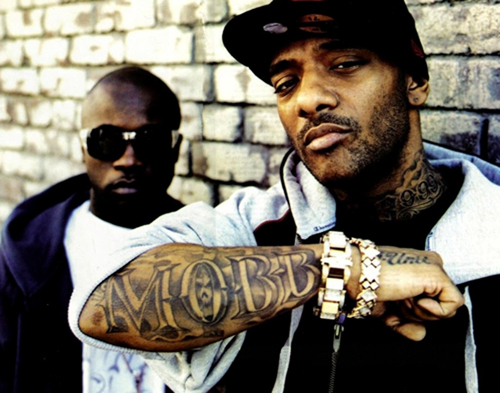
Prodigy has been talking about the the Illuminati for years. Long before contemporary hip-hop’s obsession with the secret society, P was vocal about the “enlightened ones” who he believes control the population to push their own agendas though food, television, radio and more.

In this exclusive Complex video, he elaborates on the subject, and also speaks on Kanye West and Jay-Z’s rumored involvement with the group.

ACTIVISTS: How to Resist the Federalization and Militarization of Your Local Police

ACTIVISTS: How to Resist the Federalization and Militarization of Your Local Police

About nine months before a Senate subcommittee for investigations report blasted DHS fusion centers as colossal wastes of money, redundant bureaucracies and threats to our liberty, the Department delivered testimony to the House Permanent Select Committee on Intelligence called “Homeland Security and Intelligence:  Next Steps in Evolving the Mission.”

The testimony might as well have been called “We Are Doing Important Stuff, Seriously Guys, C’mon, Please Don’t Cut Our Budget!” It seems like every third sentence in it is an implicit acknowledgement and desperate rebuttal of the fact that DHS’ “intelligence mission” is largely redundant. There are 17 intelligence agencies in the United States at present. As the Senate subcommittee for investigations report on fusion centers observed, the “intelligence mission” DHS has spent hundreds of billions of dollars to implement is being more effectively executed by the FBI’s Joint Terrorism Task Force (JTTF) operations.
So what’s left for poor DHS? According to the January 2012 testimony: more of the same, with a (bad) twist. Read the following paragraph from the testimony keeping in mind what we learned here in Boston about the local fusion center’s spying on peaceful First Amendment protected speech and assembly. (We found that the DHS-funded Boston Regional Intelligence Center (BRIC) has been spying on peace activists and labeling them “Extremists” and “HomeSec-Domestic” threats in “intelligence reports” that could easily be shared with the federal government.)
As threat grows more localized, the prospect that a state/local partner will generate the first lead to help understand a new threat, or even an emerging cell, will grow.  And the federal government’s need to train, and even staff, local agencies, such as major city police departments, will grow. Because major cities are the focus for threat, these urban areas also will become the sources of intelligence that will help understand these threats at the national level, DHS might move toward decentralizing more of its analytic workforce to partner with state/local agencies in the collection and dissemination of intelligence from the local level.
A translation into non-beltway English: DHS is doubling down on its quest to transform local police departments into mini intelligence agencies. That’s a terrible idea and it is up to us to stop it.
Why resist police federalization? Put simply: we need police departments to respond to local issues, not serve as foot soldiers for the federal spy agencies. Fortunately, terrorism isn’t a major problem in 99% of cities in the United States. As Micah Zenko observes, if you live in the US you are as likely to be killed by your furniture as you are by a terrorist. But that fact has not stopped and will not stop DHS from showering your local police department with money and technology to enable its militarization and federalization, with terror threats as the alibi. Only we can stop this dangerous trend.
And it will likely take some serious organizing. After all, it’s highly unlikely that departments will easily give up access to the “free” federal money for surveillance gadgets and data sharing programs they’ve been raking in for the past ten years. The only way to bring some democracy to this largely shadowy process is to bring it yourself, like people in Oakland are doing right now by stirring up a storm about Alameda County’s plans to acquire surveillance drones.
How can you resist the federal government trying to turn your local police department into a mini-FBI? First you need to know what is going on. Visit your local police department’s website and see if it has posted any information about federal grants for equipment or information sharing programs. File public records requests to the department to learn how any federal monies have been spent over the past five years. (You can file public records requests quickly and easily here.) Then take what you find to the people.
After you’ve learned about what the police department is doing with federal funds, write about it for your local paper. Most local newspapers are happy to accept op-eds from people who live in town. If your area has a Patch online newspaper, write something for that. Spread the word in whatever way you can and make it clear to the local government that you are paying attention to what goes on at the police department.
Finally, bring the issue to your town or city governing body. Here in Massachusetts we have a very strong town government system (the strength of these local offices varies state by state, but it’s a good place to start no matter where you live).
So for example, if your research shows you that the local police department got lots of DHS cash for surveillance cameras and simply installed them without a public conversation on the merits of the enhanced spying, raise the issue with the governing body that controls the police department. Make it clear that you want all future federal grants to the police to be discussed and debated publicly, and that you want your elected officials to play a role in deciding policing procedures. Ask about data policies and whether the information from the cameras can be shared with outside agencies. If there’s the political will in the community, maybe you can get the cameras turned off like people did here in Cambridge, MA.
Let it be known that you want your community to retain local control over your local police. The bureaucrats at DHS will likely be sad if we can work together to reverse the troubling federalization and militarization of our local police departments — it very well might put many of them out of work — but our democracy will be much better off.
Inside Par-AnoIA: The Anonymous Intelligence Agency

Inside Par-AnoIA: The Anonymous Intelligence Agency

Paranoia is reputed to destroy you. But if you’re a whistleblower in search of a safe, neutral outlet, it just might save you instead.

Par:AnoIA, short for Potentially Alarming Research: Anonymous Intelligence Agency, is a website designed to collect leaks, allow project participants to work on them, and release them in a way that draws the attention of the public. The Releases section of the site, for example, currently features 1.9 gigs of information from American intel corporation Innodata.

The leaks site developed in part by necessity. WikiLeaks’ touted anonymous submission system has been offline for a year. OpenLeaks never materialized. And Cryptome is… Cryptome, meaning it neither edits nor markets its documents to the public at large.

Simply put, if WikiLeaks is a PR agency for documents and Cryptome is a leak dissemination site, Par:AnoIA aims to have the best of both. Launched in March after a year and a half of development, the site picks up where Anonleaks.ch, an earlier Anonymous leaks site, left off—literally. (Par:AnoIA currently hosts HBGary documents, which were inherited from Anonleaks.ch.) Following a July profile in Wired’s Threat Level blog, it’s suddenly the hottest disclosure site still up and running. More recently, Par:AnoIA published the private information of 3,900 members of the International Pharmaceutical Federation, and a pile of documents related to the Cambodian government, a move dubbed Operation The Pirate Bay.

The Daily Dot reached out on Twitter and, after some back-and-forth that included the stipulation that all chat and Twitter handles would be disguised, sat down for a Web chat with half a dozen key members of Par:AnoIA. We’ve given them letters of the alphabet instead of usernames.

Let’s establish the tone with this excerpt from their front-page manifesto:

Thou hath interrupted our tea moment and hath made us stand up with our backs against thine wall. But hear us; we shall fight back for it is the only choice we hath left. With our whole hearts we shall support this cause. We shan’t enjoy the fight but it is our only option to protect the ones that are not protected, the ones we love and for thine fairness. It is known to us thou doth not fear damage of the collateral kind and thou loveth to contain and restrict innocent peasants.

As Cryptome founder John Young pointed out, Par:AnoIA, being Anonymous, at least has a sense of humor, which differentiates it from the rest of the serious disclosure industry. As you can see from our introduction to the Web chat:

raincoaster has joined #paranoia
<raincoaster> Well, I’m in.

<A> lol
<A> in
<A> out
<A> left
<A> right
<A> up down left right right left down up a b a b a x y

So far, so typical. Anonymous may be trying to make the world a better place, but the hacktivist collective has always been in it for the lulz, too.

“[W]e’re not as srs,” C wrote in regards to Anonymous.

B wanted one thing clarified. “Let it be known that paranoia is not a hacker group.” They are a publishing group, meaning they won’t go out and create their own leaks.

The leak/disclosure community considers itself collegial, although no one else does. Quite the contrary, it can be competitive and even petty. There were no tears at WikiLeaks when rival site OpenLeaks failed to materialize. Cryptome founder John Young has taken pains to distance himself from WikiLeaks, on whose board he originally served. And, of course, whistleblowers and hackers alike are paranoid all the time, for obvious reasons.

For example, on July 12, a WikiLeaks supporter called Par:AnoIA out on Twitter for their choice of top-level domain registrar, Neustar, which Buzzfeed has called “the Keyzer Söze of surveillance,” the law enforcement’s data surveillance provider of choice. @Par:AnoIA, who at that point had fewer than 2,000 followers, said the whole thing was just another pointless flame war that distracted from the issue at hand.

One member explained, “To be honest, we are indifferent to WikiLeaks. They just should not start trying to tell people we host honeypots for feds.” In other words, WikiLeaks accused Par:AnoIA of being a front for the FBI, a sensitive subject given the arrest of former hacker turned informant Hector “Sabu” Monsegur.

“We don’t strive to be unique; why should we?” C asked.

“We just do what we think is good and right, and i think we can do it with minimal efforts, at least in a financial sense. we are not here for competition. We don’t strive to be the best. We just want to offer the best we can.”

Unlike most Anonymous projects, Par:AnoIA does ask for donations in the form of Bitcoins, an international online currency that’s difficult to trace and favored by hackers. They told us publicly that the money goes for server costs. John Young of Cryptome estimates his own server costs at around $100 per month, and he has relatively high traffic, so it’s logical to estimate their costs at less than half that.

They volunteer their time, and they volunteer a lot of it: They read each and every document that comes in. They do not edit the documents in any way, although they will not guarantee publication of every document. Archivists are philosophically split on whether their duty is owed to the documents or to the users, and Par:AnoIA clearly comes down on the side of the documents, as does Cryptome. Its redaction policy means WikiLeaks is on the other side of this prickly, barbed-wire fence.

What does that mean day-to-day? Would they refuse to release a document because it could change the world in a way they didn’t like? According to the Web chat consensus, the only leak they’d withhold would be nuclear launch codes. C explained that, “Public information is better than information in secret hands. We make spies obsolete.”

They’re not relying on the general public for the leaks but rather on people within their existing networks. B said they would never run out of sources. “You always make new connections.” C added, “Our connections extend daily.”

You don’t need an engraved invitation, though, or even a Guy Fawkes mask; the site can accept submissions from anyone. The Anons dismissed the idea of accepting links via email only, for security, context, and philosophical reasons. The point is not simply to take information in, but to take it in in the original form and to also post it in a form the public can access without going through some interstitial person or process.

“You need to have a nice working site where people can just click and read and even see a summary, see evidence that this whole shit is corrupted like fuck,” C said. “Research is another vector. We do that already on a limited basis.”

The first project Par:AnoIA tackled was the Arrest Tracker, correlating all the arrests of Anons worldwide by Anon name. You’d think this would be for PR or media purposes. You’d be wrong. The Arrest Tracker is an old-school wiki (fans of Wikipedia will recognize the aesthetics) that’s thoroughly annotated, with links to newspaper reports of court appearances and schedules. C explained: “We actually started that for ourselves so we can check wtf was going on. Real names are only mentioned if disclosed in media, of course. Everything has a source. It’s no foo, it’s facts. I hate foo.”

The members of Par:AnoIA claimed to not have plans to monetize their content, nor did they desire to market their materials like WikiLeaks does, making media partnerships and controlling the flow of information.

“We do shit when we have time, interest .. and .. meh,” C replied. “All media are the same, 14 reader blog or Fox News. I hate the idea of elitism. Eure, some initial attention is nice.. but in the end…it’s our releases that will speak.”

“I’d like see Bush & Co at the Hague…and…. something that would set Manning free,” B added, referring to alleged WikiLeaks cooperative Bradley Manning.

Knocking out private security and intel corporations like HBGary also remains a priority for the future.

C put it best, in typical chat humor: “I would like to have that document that really buttfucks the whole establishment in a bad way.

“I know it’s out there, on some server, somewhere, hand us enough leaks and we will find it!”

Photo via Par:AnoIA

via DailyDot

November 5, 2012 – DCMX Radio: Eric Jon Phelps on the Jesuits Part I (Exclusive)

November 5, 2012 – DCMX Radio: Eric Jon Phelps on the Jesuits Part I (Exclusive)

Click Here: Revealing Talk Radio

Eric Jon Phelps, noted Jesuit expert, author of the book Vatican Assassins: Wounded In The House Of My Friends, lecturer and talk show host, will be our exclusive guest on November 5, 2012 on the Decrypted Matrix Radio Show on Revealing Talk Radio. We will start at the beginning of the Jesuits and learn how they were formed, what their hands have caused and where their influence directly affects us as individuals as well as in our government.


Eric Jon Phelps on Decrypted Matrix Radio

November 5th – Midnight EST

Revealing Talk Radio


Every Week Night 12-1am EST (9-10pm PST)

– Click Image to Listen LIVE –

The Federal Reserve Plans To Identify “Key Bloggers”

The Federal Reserve Plans To Identify “Key Bloggers”

Conversations About The Fed On Facebook, Twitter, Forums And Blogs

Big brotherThe Federal Reserve wants to know what you are saying about it.  In fact, the Federal Reserve has announced plans to identify “key bloggers” and to monitor “billions of conversations” about the Fed on Facebook, Twitter, forums and blogs.  This is yet another sign that the alternative media is having a dramatic impact.  As first reported on Zero Hedge, the Federal Reserve Bank of New York has issued a “Request for Proposal” to suppliers who may be interested in participating in the development of a “Sentiment Analysis And Social Media Monitoring Solution”.  In other words, the Federal Reserve wants to develop a highly sophisticated system that will gather everything that you and I say about the Federal Reserve on the Internet and that will analyze what our feelings about the Fed are.  Obviously, any “positive” feelings about the Fed would not be a problem.  What they really want to do is to gather information on everyone that views the Federal Reserve negatively.  It is unclear how they plan to use this information once they have it, but considering how many alternative media sources have been shut down lately, this is obviously a very troubling sign.

You can read this “Request for Proposal” right here.  Posted below are some of the key quotes from the document (in bold) with some of my own commentary in between the quotes….

“The intent is to establish a fair and equitable partnership with a market leader who will who gather data from various social media outlets and news sources and provide applicable reporting to FRBNY. This Request for Proposal (“RFP”) was created in an effort to support FRBNY’s Social Media Listening Platforms initiative.”

(more…)

Victories Against Fluoride Becoming more Frequent as Citizens Get Informed, Empowered

Victories Against Fluoride Becoming more Frequent as Citizens Get Informed, Empowered

Roughly 85,000 fewer people living in North America will be forced to drink and bathe in fluoridated water, thanks to four recent community victories preventing or overturning water fluoridation mandates. The towns of O’Fallon, Missouri; Rosetown, Saskatchewan; Lake View, Iowa; and Cassadaga, New York are all now officially fluoride-free, proving that individuals really do have the power to step up and protect themselves against one of the most ridiculous folklores of the past century to be thrust on the people in the name of public health.

As reported by the Fluoride Action Network (FAN), which has tabulated more than 70 community victories against fluoride across North America since 2010, a single citizen activist concerned about the safety of fluoride was able to persuade the City Administrator of O’Fallon, MO, population 80,000, to discontinue the town’s water fluoridation program. The town’s 2012 budget report states that the change will save the town $18,000 annually, and reduce the hazard for water operators who will no longer “have to handle the dangerous chemical on a regular basis.”

In Rosetown, SK, the failure of a fluoride feed pump was enough to scrap the outdated practice of water fluoridation, while water fluoridation’s high cost with lack of economic and societal benefit convinced the city council of Lake View, IA, to discontinue the pointless practice. And in Cassadaga, NY, local citizens rejected a proposal to fluoridate by an 87 percent margin, even after the town had already built a special shed to begin housing and pumping fluoride chemicals into the water supply.

Portland voters soon to vote on water fluoridation

In Portland, Oregon, where rogue city council members and Mayor Sam Adams recently forced through a fluoridation mandate against the will of the people, more than 43,000 local citizens signed a petition to force the issue to a public vote. As of this writing, these signatures are still being counted — but since only 19,858 were required to get the issue on the ballot, the issue will almost surely be put up for a public vote.

And in New York City, where councilman Petter Vallone, Jr. has been working feverishly to end water fluoridation in America’s largest city, a resolution has been introduced to require that a warning about fluoride’s dangers for infants be printed on individual water bills. Both Milwaukee, Wisconsin, and the entire state of New Hampshire recently passed similar requirements for infant warning labels on water bills.

Two Florida communities reconsider water fluoridation

Lastly, both the Greater Pine Island Water Association, which serves the area of St. James City near Fort Myers, Florida, and the Ormond Beach City Commission, also in Florida, are also reconsidering their existing fluoridation mandates. The former group will have its members vote on the issue, while the latter group has already approved a referendum that will allow voters to decide the issue in an upcoming election.

Sources for this article include:

http://www.foodconsumer.org

Are Aliens Real? Hacker Gary McKinnon Says Evidence is in Military Computers, US Seeks Extradition

Are Aliens Real? Hacker Gary McKinnon Says Evidence is in Military Computers, US Seeks Extradition

Are aliens real? One hacker who broke into US Military computers says yes, claiming that he found evidence of extraterrestrial life in the computer networks he broke into. Now, the United States is seeking extradition for breaching both military and NASA computer networks. However, the UK says that he isn’t fit to stand trial and has blocked his extradition.

Gary McKinnonGary McKinnon, 46, was a computer administrator previously. He hacked into military networks right after the September 11th, 2001 attacks. He says that he was looking for evidence of extraterrestrial life in those computers and that he found it. He claims he found both photographs of alien spacecraft and names of aliens who had flown them. If that is true, then the conspiracy theorists have been right all along. Aliens have landed on Earth and the United States Government is covering them up.

US Officials said that he caused almost a million dollars in damage and prosecutor Paul McNulty called it the ” biggest hack of military computers ever, at least ever detected.” UK Officials like Home Secretary Theresa May say that McKinnon suffers from depression and is at-risk of taking his own life. British Prime Minister David Cameron is also a supporter of McKinnon, even taking the case to President Barack Obama.

So, are aliens real? Is the government covering up extraterrestrials? This is perhaps not the most credible case that involves aliens, but depression does not necessarily mean mental incompetence, and apparently Gary McKinnon was competent enough to hack into one of the most secure computer networks in the world. One thing is certain. If the conspiracy theorists are right, Gary McKinnon should be receiving a visit from the Men in Black sometime in the near future.


via Gather

Anonymous Releases How-to Instructions on Fooling Facial Recognition

Anonymous Releases How-to Instructions on Fooling Facial Recognition

http://youtu.be/mxgOn8ikQuQ

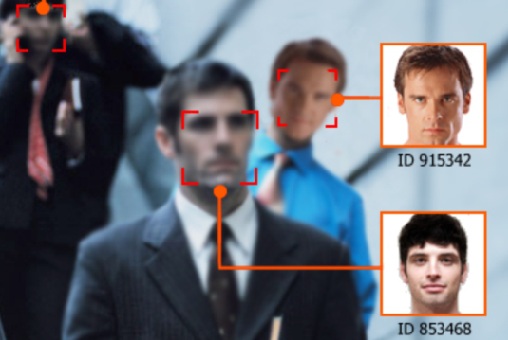
New Tips and Tricks to Fool Surveillance Cameras now Known to be using advanced algorithm technology for automated Facial Recognition and profiling. With a few of the right LED lights, and a 9 volt battery on the brim of a hat, one can walk around with a veil of protection yet not stand out in public.

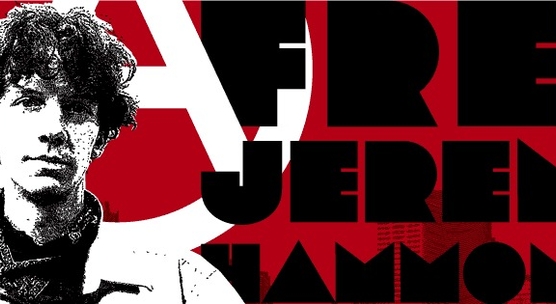
Statement from Jeremy Hammond, alleged Anonymous hacker, July 23 2012

Statement from Jeremy Hammond, alleged Anonymous hacker, July 23 2012

23 July 2012 – Statement from Jeremy Hammond, alleged Anonymous hacker – read in Foley Square, NYC

Thanks for everybody coming out in support! It is so good to know folks on the street got my back. Special thanks to those who have been sending books and letters, and to my amazing lawyers.

I remember maybe a few months before I was locked up I went to a few noise demonstrations a the federal jail MCC Chicago in support of all those locked up there. Prisoners moved in front of the windows, turned the lights on and off, and dropped playing cards through the cracks in the windows. I had no idea I would soon be in that same jail facing multiple trumped up computer hacking “conspiracies.”

Now at New York MCC, the other day I was playing chess when another prisoner excitedly cam e up as was like, “Yo, there are like 50 people outside the window and they are carrying banners with your name!” Sure enough, there you all were with lights, banners, and bucket drums just below our 11th floor window. Though you may not have been able to here us or see us, over one hundred of us in this unit saw you all and wanted to know who those people were, what they were about, rejuvenated knowing people on the outside got there back.

As prisoners in this police state – over 2.5 million of us – we are silenced, marginalized, exploited, forgotten, and dehumanized. First we are judged and sentenced by the “justice” system, then treated as second class citizens by mainstream society. But even the warden of MCC New York has in surprising honesty admitted that “the only difference between us officers here and you prisoners is we just haven’t been caught.”

The call us robbers and fraudsters when the big banks get billion dollar bailouts and kick us out of our homes.

They call us gun runners and drug dealers when pharmaceutical corporations and defense contractors profit from trafficking armaments and drugs on a far greater scale.

They call us “terrorists” when NATO and the US military murder millions of innocents around the world and employ drones and torture tactics.

And they call us cyber criminals when they themselves develop viruses to spy on and wage war against infrastructure and populations in other countries.

Yes, I am one of several dozen around the world accused of Anonymous-affiliated computer hacking charges.

One of many here at MCC New York facing trumped up “conspiracy” charges based on the cooperation of government informants who will say anything and sell out anyone to save themselves.

And this jail is one of several thousand other jails, prisons, and immigrant detention centers – lockups which one day will be reduced to rubble and grass will grow between the cracks of the concrete.

So don’t let fear of imprisonment deter you from speaking up and fighting back. Silencing our movement is exactly what they hope to accomplish with these targeted, politically motivated prosecutions. They can try to stop a few of us but they can never stop us all.

Thanks again for coming out.

Keep bringing the ruckus!


——-
You can write to Jeremy in prison here:


Jeremy Hammond    18729-424
Metropolitan Correctional Center
150 Park Row
New York, New York, 10007
original paste


“Shut up, Barrett Brown”  – The Indictment Cover Up

“Shut up, Barrett Brown” – The Indictment Cover Up

Real or imagined- reasonable or grandiose, I think we can all agree that things that Barrett Brown has recently said leading to his recent arrest and indictment were on the solid side of stupid.  People who hate him figured it was about time they nailed him on something, and people who… don’t hate him as much… have defended him under the banner of “Freedom of Speech” and pointed to his claims of being harassed and goaded by the FBI and alleged informants, which, according to Brown, have included the Feds threatening to arrest his mother who he said has had nothing to do with his Anonymous hactivism and crowd-source-style-journalism ProjectPM activities.

As I mentioned in my previous post about the Kelly Thomas killing, the functions and execution of government powers and the legal system are by default biased heavily in favor of the powers that be and such powers have great potential to be, and many times have proven to be, corrupt as hell.  That said, before  we all collectively tell Barrett Brown to shut up regardless of whether such a pleading would tip a hat to his right to free speech, I think it is fair to acknowledge that Brown’s paranoid ramblings and associated “threats” may have been his only recourse to defend himself from the fears he professed were true: Agent Robert Smith is corrupt; the FBI is corrupt; the Zetas are out to get him; the FBI is in on it with the Zetas; and if armed men charged in on his home, Brown would feel justified in assuming it was a Zeta assassination attempt coordinated in conjunction with the FBI.

…THAT said, and in addition to Brown’s own confession of heroin addiction and issues with Suboxone withdrawal at and around the time of the “threats” and other tweets listed in the indictment, I think we can at least give the government credit for allowing a mental competence hearing for Brown before the trial against him proceeds.  This should especially be appreciated by Constitution enthusiasts as the evidence of actus reus of Brown’s alleged crimes primarily revolves around a combination of arguably- and absolutely- protected speech.

As for that “conspiracy” charge? Well, look at the indictment: he was soliciting others to find “Restricted” information on Agent Robert Smith, which has been dubbed a “conspiracy” due to another’s attempt to find such “RESTRICTED” information with what is only described as an “Internet search”. Because you know, when I want to get down and dirty on a Federal Agent’s RESTRICED  information, forget unauthorized access to a security clearance-protected Federal Database, I’m all about the old-fashioned Google stalk.  For this charge, maybe we should give the FBI a mental competency hearing while we’re at it….

If you haven’t taken a peek at the Federal indictment against Barrett Lancaster Brown, I implore you to do so. Then, I invite you on a First Amendment adventure where I explain to you why we should all be offended and worried by the United States’ Prosecutor’s attack on our Right to Speech.  The tale I shall tell will not necessarily defend Brown completely or successfully, but it will point out the fallacy of this indictment against him, which is supposed to contain “essential facts of the case”, but really just reveals the Government’s fear of our right to voice dissent and grievance against them.

Join me…

Count 1: Knowingly and Willfully transmitting in interstate commerce communications containing threats to injure the person of another. 18 USC Section 875(c).

While Brown does make vague and conditional threats against others such as @AsherahResearch and @_Dantalion, the indictment count doesn’t seem to care much about them, citing only “threatening to shoot and injure agents of the FBI” – specifically Robert Smith.

So let’s take a look at the first few useless items in this indictment:

Item 5) f. is a conditional threat made on Brown’s twitter against twitter user @_Dantalion in which Brown warns he will shoot if @_Dantalion comes near Brown’s home in Texas.  Brown adds that such an act of self-defense of self and property is legal. Which it is.  When I went to check @_Dantalion’s profile on October 5, 2012, on of the first tweets I came across was @_Dantalion explaining to another twitter user, “I am not an FBI agent”.  So Brown made a conditional threat, the condition being an act that would trigger a legal right to defend oneself, against someone who is not an FBI agent.  This cited evidence in the indictment does not lend to Count 1. At all.

Something I will say now that will apply across all of my arguments is that my belief, which may or may not be held up in a criminal law context in court, is that a threat that is not imminent does not constitute Assault.  I base this on my understanding of the civil Tort offense of Assault which defines the intent behind Assault as an intention to cause imminent harm or apprehension of imminent harm.  The above conditional threat Brown made to @_Dantalion does not detail imminence, and, as you will see as this story unravels, NONE of the threats made by Brown were imminent. Moving on…

Item 8) c. Is a vague, conditional threat toward renowned Anonymous foe, @AsherahResearch. Talk about my momma again and “see what happens”.  So… what’s gonna happen?  And what is it about this tweet that implies or infers the requisite intent for a threat against an FBI agent?

More importantly, why doesn’t Count 1 even mention that people who were not FBI agents were also “threatened”? Poor Dantalion and Asherah.

Where Brown is in trouble on Count 1, albeit with room for a defense, are items 12) c. and d.

The Greatest Incriminating Hits from the infamous “last video” by a disheveled, suboxone-withdrawn Brown include “Robert Smith’s life is over”, “I’m gonna look into his kids”, and “I will shoot and kill [the FBI] if they come.”

This is where we should all yell a hearty “Shut up, Barrett Brown” in the general direction of Texas.  Don’t threaten a federal law enforcement agent, you guys. It’s enumerated in a Federal statute and is one of the few types of threats out there that does not need to be imminent to be illegal. It is contingent upon whether the threat is made in regards to LE carrying out their official duties.

But there is still a defense. Maybe.  The “threats” regarding Robert Smith and his kids aren’t threats of injury.  Brown even states “By ruin his life, I don’t mean kill him”.  As for shooting and killing the FBI?  I point to the “knowingly” sub-element of intent for this particular statute.  The threat is conditional on whether or not the FBI comes.  Brown never indicates that he knows the FBI is coming.  He says in the item 12. video that the FBI has held onto his seized computers for months and has yet to allege Brown of a crime based on the evidence from a previous raid.  In fact, as the worst evidence against Brown is this singular video, the FBI probably didn’t even know whether or not they were going to raid Brown at the time that this conditional threat was made.  Admittedly, this is a tight defense to make, but I will come back to it for Count 3.

Further defense?  Mental and emotional instability: persisting paranoia issues plus suboxone withdrawal.  Although a finding of Brown’s allegation of FBI corruption would probably not happen, there is a question of self-defense.  And if there was no real reason for self-defense, see: delusions of grandeur, delusions of persecutions, paranoid psychosis. In other words, possible insanity defense (and the thresholds for the insanity defense may be lowered when there was no action taken beyond speech).

Count 2: knowingly and willfully combine, conspire, confederate, and agree with other persons known and unknown to Grand Jury … to make restricted personal information about an FBI agent and immediately family publicly available with intent to threaten and intimidate the agent and to incite commission of violence against the agent.  18 USC Section 371 and 18 USC Section 119.

…How much more element-loaded can a charge get?

The “with intent” and the all-elements-must-be-fulfilled-indicative “and” ‘s of the latter part of this Statute combo are hard for the Government to corroborate with the facts of this indictment.  They’re doing pretty good up to “incite commission of violence against” Robert Smith.  We’ve got solicitation which, upon the cited agreement Brown made with another to gather Smith’s personal information, merges into conspiracy.  We have immediate family members.  We have intent to threaten and intimidate.  But incite violence?  That’s where the prosecution stretches it.  Look through the indictment closely, and there is never a threat or suggestion of committing violence against Smith.  Only the hypothetical FBI raiders, generally.

But I think this Count specifically is why the indictment tries to pancake all of Brown’s tweets together.  Actually, the majority of this indictment is an attempt to build a criminal, violence-inciting profile of Brown out of several non-criminal tweets.  This compilation is why I say we should be afraid for our Right to Speech.

It is clear in several tweets, that Brown is soliciting and possibly conspiring to gather restricted information on Robert Smith for the purpose of publicly releasing it.  None of these tweets suggest violence toward Smith.
Non-exhaustively: 6) a. 8) a., 11, and 13. Although it legally doesn’t matter for conspiracy, it should be noted that no evidence is listed in the indictment that Brown succeeded in obtaining the sought restricted information on Smith.

One memorable case from my Criminal Law class (at the moment I cannot find the case, but will likely come back to revise this paragraph when I find it) is a case where a drunk driver was acquitted on appeal because evidence levied against him included, basically, pro-drinking propaganda bumper stickers the driver had.  These bumper stickers were used as evidence toward the defendant’s intent.  It simply didn’t work.  Pro-drinking speech didn’t help the prosecutors in adding to the defendant’s intent for criminal drunken behavior.  Similarly to this decision, I argue anti-government speech not directly associated with the accused behavior for the alleged crime of conspiracy shouldn’t lend to intent for the conspiracy.
In fact, this is nearly exactly what was held in California State Appellate courts in People v. Huss regarding the instruction of including picketing sign slogans as evidence for conspiracy to incite a riot as being an invalid, unconstitutional instruction. 241. Cal.App.2d 361.  Although a California Appellate court decision doesn’t serve as precedent over the Federal District Court that Brown will face trial in, Huss borrows its reasoning from Federal Supreme Court case Terminiello v. City of Chicago. 337 U.S. 1. (How do you like them apples?)

…which should also hold for the next count…

Count 3: knowingly and willfully threaten to assault a federal law enforcement officer with intent to impede, intimidate, and interfere with such federal law enforcement while engaged in the performance of official duties and with the intent to retaliate against such federal law enforcement officers on account of performance of official duties.  18 USC Sections 115 (a)(1)(B) and (b)(4).

…and some of my favorite highlights of the Free Speech-protected tweets that shouldn’t lend to the intent of Counts 2 and 3 are…

2) c. “Do you know how to shoot? You have five years to learn. Maybe less.” Links to a short video of Brown doing some shotgun practice in an open field.

My assumption for this tweet is that in saying “You have five years to learn” how to shoot is a reference to a conspiracy such as FEMA camps where conspiracy theorists believe the government will raid us all and send us to “FEMA concentration camps”. Or something like that.  But isn’t self-defense against a corrupt government the heart and soul of the Second Amendment?  Otherwise, there is no specific (or even general) mentioned target for the suggested self-defense nor is there an imminence of the assumed threat posed by Brown’s pro-arms propaganda.

3) a. “Kids! Overthrow your government lol” Link? Get this- the link is to a Blondie music video, “Rapture”.  A political satire on how the government and media has zombified us all. OH NOES! DISSENT AND GRIEVANCE!

The tweet itself reeks of satire.  See: “Kids!” and “lol”.  Before heading to the music video link, I thought maybe the link would lead me to something that would really rile me up with a fervent violent fire if I were susceptible to do so. Maybe a conspiracy theory that pulled at revolutionary heart strings?  Maybe excerpts from the Anarchists’ Cookbook?
No. It’s a Blondie music video.  Not exactly speaking to an incitement of violence nor an intent to retaliate against a raid.
Similar anti-government, pro-self-defense-against-a-corrupt-government comments include “Don’t Wait. Retaliate.” and 10) b.’s vague threat by Brown that he will use “other means at [his] disposal” to ‘wipe out the government’… the “wiping out” he promises to do includes more specific, non-violent threats of using courts, media, and his investigative journalism at ProjectPM.
And 2) e. “Have a plan to kill every government you meet.”  in which there is no specific or general threat to any human being, but an abstract entity and with such an abstract entity being the object of the threat, “kill” could be interpreted as a non-violent version of the verb such as “stop” or “get rid of”.
Moving on…

The not-physical, non-injurious, cyber threats….
5) a. “…the net will give us revenge.”
5) c. “Nothing restrains me from my real work. #ProjectPM”
5) e. “Help #ProjectPM plan, execute further attacks … #PantherModerns”
For the record, the Panther Moderns are a FICTIONAL hacking group from the work “Neuromancer” who simulated a CYBER terrorist attack on a media conglomerate called “Sense/Net”

The ReTweeted threat that is actually a threat to himself:
7) “A dead man can’t leak stuff… Illegally shoot the son of a bitch.”  Brown is comparing himself to the object and victim of this retweeted threat, Julian Assange.  The presumed subject of the tweet instructed to “illegally shoot the son of a bitch” would be a LE officer who should act as a due process-depriving judge jury and executioner for Assange (comparatively, Brown).

Well, at least they’re giving Brown due process so far…

Not even threats and I don’t even know why they were included in the indictment:
2) a. “Don’t be a pussy. Call up every fascist and tell them you’re watching.” Links to a weird music remix featuring harmless sound clips that include Brown.
5) b.: “Fuck you.” -directed at the feds for apparently depriving Brown of his opiates, somehow.
5) d. “Journalists allow the guilty to escape. #ProjectPM ensures the guilty will be known to their children as they are, forever.
10) a. “This is part two of why I’m so fucking angry.” BB mad.

Here, I’ll repeat my defense for Brown’s intent.  Knowledge is requisite for Count 3. Brown did not know that the FBI would raid him and his threat was contingent on a raid that he wasn’t even certain would occur based on a lack of the FBI’s ability to charge him with anything from the first raid of Brown.
And once again: insanity or diminished mental capacity due to Suboxone withdrawal.  The worst and most incriminating of Brown’s threats from item 12 were coupled with Brown’s admission that he was a Heroin addict and hadn’t taken his Suboxone.  In addition, Brown thinks he’s entitled to get his stuff back from the first raid months ago where the FBI took and held his computers. (Non-exhaustively: Items 8) b and 2, 10) b.) He also thinks he deserves an apology [10) b.].  Grandiose and possibly delusional.  I almost wonder why the FBI didn’t go for a discrediting involuntary psych ward hold.

Or you know, just give him his stuff back, which as we are learning from recent developments in the PayPal 14 case, he may have very well had the right to after 60 days of the FBI holding it. (But I think feeling entitled to an apology is still a bit delusional.)

In Conclusion…

With and indictment riddled with constitutionally-protected speech, my fear is that the US Prosecutors and FBI wanted to put an attack on anti-government dissent and critique at the forefront of this issue.  They wanted to scare us all into shutting up and watching what we say when it comes to speculating government conspiracies and suggesting we consider the possibility of an increasingly corrupt government and promote the intention behind the Second Amendment which is to protect ourselves from a worst-case scenario resulting from such corruption.

Shut up, Anonymous. Shut up, Occupy. Shut up, investigative journalists. Shut up, militias. Shut up, delusional and justified paranoia.  Shut up, Tea Party. Shut up, dissidents.

Watch your televisions.  Click on those targeted advertisements tailored by our tracking of your Google searches.  Did somebody tell you that non-violent protesters were beat and shot at by Riot Cops? Don’t worry. We did it for National Security reasons.  And don’t mind the surveillance cameras in every retail store and on every street corner.  They’re just livestreaming and storing your every move for TrapWire.

Shut up, Barrett Brown.


via ChaosInOrder

Hacktivist’s Advocate: Meet the Lawyer Who Defends Anonymous

Hacktivist’s Advocate: Meet the Lawyer Who Defends Anonymous

As a lawyer not particularly immersed in the technology world, Jay Leiderman first became interested in the hacker collective Anonymous around December 2010. That was when Anonymous activists launched distributed denial of service attacks (DDoS) against Mastercard and PayPal, who stopped processing donations to WikiLeaks.

Since then, he has represented a number of high-profile hackers, including Commander X, who is on the run from the FBI for a DDoS attack on a county website in Santa Cruz, California, to protest a ban on public sleeping, and Raynaldo Rivera, a suspected hacker from LulzSec who is accused of stealing information from Sony computer systems. Both Commander X and Rivera could face up to 15 years in prison.

Leiderman, who represents many of his hacker clients pro bono, argues that the law should be changed on DDoS. In an interview I conducted with Leiderman recently, he told me why slapping teenaged hackers with harsh prison sentences is counterproductive.

How did you first become involved with representing Anonymous?

The politics of it spoke to me and the fact that it was a newly emerging area of law really spoke to me. My partner and I do a lot of medical marijuana law. Primary among the reasons that we do that are that it’s new and emerging so we can help shape the way that the law ultimately fits society. And because we believe in the politics behind it. And it’s the exact same with Anonymous.

We have an opportunity here to make the courts, as these cases wind their way up, understand privacy issues, emerging tech issues, against the backdrop of civil rights and through the prism of free information. And that was something that was just an amazing opportunity for me and something that still engages me as I continue to take on these cases.

You’ve said about DDoS attacks that “they are the equivalent of occupying the Woolworth’s lunch counter during the civil rights movement,” but under U.S. law DDoS attacks are illegal. Do you think the law should be changed?

Oh, absolutely. Keep in mind that I didn’t say that in an unqualified manner about DDoS. If you were knocking someone’s front page offline to ultimately rape their servers and take credit-card information and things like that, that’s not speech in the classic sense. When you look at Commander X’s DDoS, what he was accused of in Santa Cruz, or with [the] PayPal [protests], these are really perfect examples. And very rarely in law do we have perfect examples.

Take PayPal for example, just like Woolworth’s, people went to PayPal and said, I want to give a donation to WikiLeaks. In Woolworth’s they said, all I want to do is buy lunch, pay for my lunch, and then I’ll leave. People said I want to give a donation to WikiLeaks, I’ll take up my bandwidth to do that, then I’ll leave, you’ll make money, I’ll feel fulfilled, everyone’s fulfilled. PayPal will take donations for the Ku Klux Klan, other racists and questionable organizations, but they won’t process donations for WikiLeaks. All the PayPal protesters did was take up some bandwidth. In that sense, DDoS is absolutely speech, it should absolutely be recognized as such, protected as such, and the law should be changed.

But say that I had a rival law practice across town from you and I was perhaps a bigger more powerful rival with more money and perhaps I wanted to down your website every single day. Isn’t that just the equivalent of me just going outside and spray painting and taking down your sign every day and preventing customers from coming to you?

Jay-Leiderman.jpgBut both of those actions would be illegal in the abstract. Taking down my sign or vandalizing it would be a graffiti or vandalism type charge whereas repeatedly DDoSing my site would be similar in method and manner to that. It’s why you have to be careful with the speech. What you have with PayPal, it’s a pure form of speech — it was a limited and qualified thing like Woolworth’s. African-Americans went into Woolworth’s and said, I want lunch, feed me lunch, I will eat it, pay for it, and leave. Same with PayPal.

Santa Cruz perhaps provides a more compelling case on that because Santa Cruz was about literally petitioning the government for a redress of grievances. Santa Cruz wanted to essentially criminalize — or did criminalize — homeless people sleeping in public without qualification. And the city council wouldn’t listen, the police wouldn’t listen, no one would listen. People regularly die from exposure, because they can’t find safe and secure places to sleep in the community. Therefore getting your government’s attention in that manner should not be something that the U.S. government is interested in criminalizing and spending resources to prosecute. So in those regards, it’s different from the examples you gave, where I would be under perpetual DDoS.

So you’re not saying decriminalize DDoS per se, but perhaps it’s the way that DDoS is used and other legal factors would come into play there.

Here’s what we conceived in terms of the DDoS. The government and people who write about tech tend to call it a “DDoS attack” but in certain circumstances it’s not a DDoS attack, but a DDoS protest. So the law should be narrowly drawn and what needs to be excised from that are the legitimate protests. It’s really easy to tell legitimate protests, I think, and we should be broadly defining legitimate protests. The example you gave of the rival law firms, that’s not protest activities or traditional free speech activities.

The argument has been made that the problem with some of the sentences for Anonymous/LulzSec members is that a lot of them are really just foot soldiers, naive, young, vulnerable kids, who perhaps get into something over their heads. And they’re not skilled hackers who are trying to bring down the U.S. government and they don’t deserve long jail terms . Would you agree with that?

Absolutely, that’s probably one of the most often-repeated and truest things about a lot of these Anonymous members is that they’re not these ill-intentioned, misanthropes that really need to have the weight of the law come down on them. I agree with that 100 percent.

Who should the weight of the law come down on then? Should the weight of the law come down on the ringleaders who are behind these people?

Sabu‘s cooperation [aside], he would be a good example of someone who’s cruising for one of these eye-popping over-the-top sentences. He was a bit older, he had been involved in the hacking world for 10 or 15 years; he had a lot of prior Internet misdeeds. He was very skilled, or at least reasonably skilled, he had special skills. He was involved in other criminal activity, he was selling pounds of marijuana, which they didn’t charge him with. They dismissed those charges as part of his cooperation.

He was using his skills to commit credit-card fraud, without ideology, without politics behind it, without anything. He was literally stealing from people — this was not a big, nameless, faceless corporation…There was no ideology behind him stealing credit-card numbers from Mr. and Mrs. Smith…. He was recruiting people actively into LulzSec. One of the allegations in the case I’m handling [Raynaldo Rivera] is that Sabu recruited my client based upon my client’s skill, through another member of LulzSec, an intermediary.

Sabu was unquestionably the leader of LulzSec. When you read through the reports, as I have, it’s very clear that Sabu was giving orders, pressuring people to “get their hands dirty.” … It was Sony Pictures and the databases were organized via movie sweepstakes — names and password that were ultimately dumped on the Internet — and Sabu made individual people go in there and do individual databases so everyone had their hands dirty so that he could exert more control and get them to do more. He had importuned them to criminality.

… He’s looking at 124 years so that’s obviously beyond ludicrous. But if Sabu were to get a decade or something, that [could be] a sentence for someone like him with a really malignant heart. But for someone like Rivera and the typical member of Anonymous, no, those sentences simply don’t fit and for the most part I don’t believe they should be going to jail. A lot of these kids — and most of them are kids — don’t understand the criminal consequences here and could be rehabilitated; scared straight without a jail sentence. There are other things that we could do to them to make them understand that this is in fact illegal and not the way to express yourselves politically.

If we are not talking about harsh prison sentences, how should society respond to rehabilitate those hackers?

I really think this is a situation where a lot of these people are really scared of the consequences once they understand them. Usually someone like that, a criminal conviction in and of itself is a terrible black mark on someone’s record now. It becomes difficult to get a job. If you’re a person with computer skills, it becomes difficult to get computer clearances to be able to work your way up in a lot of these areas. So simply the conviction alone gets the message across, a probationary period where they’re being monitored or checked in on, some community-type service, working with the community in a productive manner. All sorts of creative punishments like those that are available and at the government’s disposal.

Do you think denying them access to the Internet is useful?

In some cases it might be useful and appropriate. You really have to look at the offense and the offender. If someone’s really unhealthy in their Internet use, it may not be a bad thing to look at them and say, a year, 18 months, two years, let’s see how you do without Internet in your life except work and school. That may well be a very good and healthy thing for some people, but you have to look at the offense and the offender before saying we should just yank this person’s Internet privileges.

You don’t think there’s a purpose to passing harsh prison sentences in that it sends a message and acts as a deterrent to any potential offenders?

I don’t necessarily think that message gets received by this population which are exclusively naive, not legally savvy, fairly young first-time offenders. That’s not a population who can really understand in a practical sense that if you do this, you’re going to get a harsh prison sentence. In some of their minds, it almost may be worse, to take away Internet use or modify their behavior in some ways as it so violently changes how their life ordinarily progresses.

Are there any Anons you wouldn’t represent?

It depends. I’ve been asked that question before and I struggle with it and here’s why. I don’t have to like or agree with the people that I represent to represent them. I have represented neo-Nazis and I’m Jewish. I’ve been assigned them when I was a public defender and it never really occurred to me until someone asked me, how do you feel about representing this skinhead and I said, you know, I didn’t think about it.

Everyone is entitled to a defense and the more reprehensible they are and maybe the more guilty they seem at the beginning of the case makes them more entitled to a vigorous and hard-hitting defense. So I don’t necessarily know that there’s someone I wouldn’t represent based upon what they did or based upon their politics. I wouldn’t go ahead and represent someone whose views I didn’t agree with pro bono. I’m not going to spend my time and energy that way. … Certainly there are many people I wouldn’t represent pro bono.

Would you represent Sabu pro bono?

No. The damage he did by turning so completely on people he used to call his brother [was considerable]. People who cooperate, throw someone else into harm’s way so they can soften the blow on themselves, I tend not to represent. For those reasons, I wouldn’t represent Sabu at all. […] He hurt a lot of people and he did it to save his own skin and he hurt a lot of people worse than they would otherwise be hurt.

via TheAtlantic

Che Guevara Remembered in Palestine

Che Guevara Remembered in Palestine

Fight Back New Service is circulating the following statement from the Popular Front for the Liberation of Palestine.

On the Day of the Heroic Guerilla, we remember Che Guevara

On October 8, 2012, the Day of the Heroic Guerilla, the Popular Front for the Liberation of Palestine remembers Comandante Ernesto “Che” Guevara, revolutionary leader, fierce fighter, and principled struggler whose true commitment to internationalism and liberation lives on in the struggles of peoples around the world for freedom, justice and socialism.

Following the revolutionary victory in Cuba in 1959, Che’s commitment to international revolution did not diminish, and he joined Bolivian revolutionaries in 1966. On October 8, 1967, Che and his comrades were captured and surrounded by the US-backed Bolivian military, and executed.

Nine days later, Fidel Castro spoke, memorializing Che and commemorating October 8 as the Day of the Heroic Guerilla, saying “Che died defending no other interest, no other cause than the cause of the exploited and oppressed of this continent. Che died defending no other cause than the cause of the poor and humble of this earth … Before history, people who act as he did, people who do and give everything for the cause of the poor, grow in stature with each passing day and find a deeper place in the heart of the people with each passing day.”

In Palestine, Che’s spirit, his commitment to liberation, rises in the streets of our occupied homeland. We mourn and honor our Guevara Gaza, Mohammad al-Aswad, and the thousands of Palestinian Guevaras, the eternal martyrs, who have struggled, fought, sacrificed and died for the liberation of Palestine, and the thousands of Palestinian Guevaras still to come, to hold high the banner of the resistance until the day of victory is ours.

On the 45th anniversary of Che’s death, we remember him as one of the martyrs of Palestine, a great martyr for the freedom of the oppressed of the world. And we continue to live his words: “Let us sum up our hopes for victory: total destruction of imperialism by eliminating its firmest bulwark: the oppression exercised by the United States of America…And if we were all capable of uniting to make our blows stronger and infallible and so increase the effectiveness of all kinds of support given to the struggling people – how great and close would that future be!… Wherever death may surprise us, let it be welcome, provided that this, our battle cry, may have reached some receptive ear and another hand may be extended to wield our weapons and other men be ready to intone the funeral dirge with the staccato singing of the machine-guns and new battle cries of war and victory.”

Che Guevara Presente! Viva viva Palestina!

via FightBackNews.org

Imran Khan Detained and ‘Interrogated Over Drone Views’ by US immigration

Imran Khan Detained and ‘Interrogated Over Drone Views’ by US immigration

Imran Khan, the former Pakistan cricket captain turned politician, was taken off an international flight from Canada to New York and questioned by US immigration officials over his views on drone strikes and jihad.

Khan, who has been at the forefront of a high-profile campaign as leader of the Pakistan Movement for Justice party (PTI) to end US drone strikes in northern Pakistan, had been in Canada to give a speech and was on his way to a fundraising dinner in the US on Friday.

Khan recently attempted to lead a high-profile march into south Waziristan which included US peace activists from the Code Pink group with some 15,000 of his supporters.

He claims that the drone strikes kill large numbers of innocent civilians – a claim denied by the US.

“I was taken off from plane and interrogated by US Immigration in Canada on my views on drones. My stance is known. Drone attacks must stop,” Khan tweeted yesterday after his questioning.

He added: “Missed flight and sad to miss the fundraising lunch in NY but nothing will change my stance.”

A US state department spokeswoman confirmed Khan’s questioning. “We are aware that Imran Khan was briefly delayed in Toronto before boarding the next flight to the United States,” she told Pakistani media.

“The issue was resolved. Mr Khan is welcome in the United States.”

US immigration authorities refused to comment on Khan’s case but a spokeswoman quoted by the Toronto Sun newspaper said: “Our dual mission is to facilitate travel in the United States while we secure our borders, our people, and our visitors from those that would do us harm like terrorists and terrorist weapons, criminals, and contraband,” said CBP spokesman Joanne Ferreira.

“Under US immigration law, applicants for admission bear the burden of proof to establish that they are clearly eligible to enter the United States. In order to demonstrate that they are admissible, the applicant must overcome all grounds of inadmissibility.”

Some Canadian commentators have speculated that Khan’s questioning was because of groups who have been protesting his visit to the US, including a group called the American Islamic Leadership Coalition which reportedly wrote to US secretary of state Hillary Clinton asking her to revoke the US visa granted to Khan.

“The US embassy made a significant error in granting this Islamist leader a visa,” the group said in a statement.

“Granting individuals like Khan access to the US to fundraise is against the interest of the people of Pakistan and the national security interests of the US.”

Ali Zaidi, an official in Khan’s party demanded “a prompt and thorough inquiry into this sordid episode” and “an unconditional apology from the US government”.

via Guardian.co.uk


National Guard Whistleblower: “Doomsday Preppers Will Be Treated As Terrorists”

National Guard Whistleblower: “Doomsday Preppers Will Be Treated As Terrorists”

I do solemnly swear that I will support and defend the Constitution of the United States against all enemies, foreign and domestic…”

So begins the Oath of Enlistment for the U.S. military, but in an explosive interview with a National Guard whistleblower shown below, soldiers are now being advised they will be ordered to break that oath should civil unrest erupt across the country.

photo

Referred to only as “Soldier X” under promise of anonymity, an Army National Guardsman spoke via phone with Infowars Nightly News Producer Rob Dew regarding a recent briefing his unit underwent on actions the military would take in the event that an Obama election loss sparked rioting in America’s streets.

Citing not only recent widespread threats to riot if Mitt Romney were to become the next U.S. president, but threats to actually assassinate him should he win, Soldier X’s superiors dispensed plans of how the National Guard would be responsible for “taking over” and quelling such unrest.

The soldiers were reportedly told “Doomsday preppers will be treated as terrorists.”

In addition, guns will be confiscated.

“They have a list compiled of all these doomsday preppers that have gone public and they plan to go after them first,” Soldier X said. He claimed those in charge are acting under the belief that preppers will be “the worst part” of any potential civil unrest.

Soldier X was also told that any soldiers in the ranks who are known as preppers will be deemed “defects.” He explained the label meant these soldiers would be treated as traitors. “If you don’t conform, they will get rid of you,” he added.

Unit members also warned not to associate with any fellow soldiers who are preppers.

Not only does the military reportedly plan to target preppers should mass chaos break out, but Soldier X also voiced his concerns regarding civilian gun confiscation.

Soldier X admitted, “Our worry is that Obama’s gonna do what he said he’s gonna do and he’s gonna outlaw all weapons altogether and anybody’s name who is on a weapon, they’re gonna come to your house and try to take them.”

It would not be the first time the National Guard has been used to unconstitutionally disarm law-abiding citizens, robbing them of their Second Amendment right to bear arms. In the aftermath of hurricane Katrina, police and military took to the streets disarming lawful gun owners, including  those who were on dry land and had plenty of stored food and water.

Fast forward to this past summer when a leaked Army manual dated 2006 entitled, “Civil Disturbance Operations” surfaced outlining plans not only to confiscate firearms domestically during mass unrest, but to actually detain and even kill American citizens who refuse to hand over their guns. This manual works in conjunction with “FM 3-39.40 Internment and Resettlement Operations,” another Army manual leaked this year, which instructs troops on how to properly detain and intern Americans into re-education camps, including ways that so-called “psy-op officers” will “indoctrinate” incarcerated “political activists” into developing an “understanding and appreciation of U.S. policies and actions.”

Add these manuals to the plethora of Executive Orders Obama has signed during his term which have dismantled our Constitution piece by piece, including the martial law implementing National Defense Resources Preparedness Executive Order which gives the president the power to confiscate citizens’ private property in the event of any national emergency, including economic.

Add it all to the National Defense Authorization Act (NDAA) in which Obama granted powers to disappear and indefinitely detain American citizens without any due process, and it is easy to see the tyrannical big picture our government has painted.

When asked if he would go along with gun confiscation, Soldier X replied he and his fellow like-minded guardsmen planned to stand down — not answer the phone or show up to post.

“I’m sorry but I don’t believe in suicide,” he said.

Preppers are becoming regular government targets these days, most recently when a Missisippi prepper group member with a clean record was suddenly taken off his flight halfway to Japan and informed he was on the no-fly list, an FBI terrorist watchlist, stranding him in Hawaii. Other preppers have been denied their Second Amendment rights without legitimate cause.

It is beyond glaringly obvious at this point the U.S. government is gearing up for mass civil unrest. Not only has the DHS sparked controversy by purchasing billions of rounds of ammo, but the department even went so far as to begin classifying further purchases, blacking out bullet figures it is using taxpayer money to buy.

In addition, while FEMA can procure a billion dollars in bulk food supplies, the FBI’s Communities Against Terrorism project released a flier instructing military surplus store owners to report any customers who “make bulk purchases of items” including “meals ready to eat”.

Should society as we know it collapse following the election, it would seem the ultimate prepper and the ultimate terrorist is, indeed, the U.S. government.

http://youtu.be/0ZqDY-z4mGY

via InfoWars

How Online Privacy Tools Are Changing Internet Security

How Online Privacy Tools Are Changing Internet Security

How online privacy tools are changing Internet security and driving the (probably quixotic) quest for anonymity in the digital age.

For many of us, the Internet is like a puppy—lovable by design and fun to play with, but prone to biting. We suspect that our digital footprint is being tracked and recorded (true), mined and sold (super true), but we tolerate these teeth marks because, for many of us, the Internet is irresistible, its rewards greater than its risks. In a 2011 Gallup poll, more than half of those surveyed said they worried about privacy issues with Google, yet 60 percent paid weekly visits to the search giant. As long as we clear our search terms, block cookies, use antivirus software and see that our social media presence isn’t too social, we’ll be OK. Right?

Increasingly, this sense of security is an illusion. “I don’t trust anything on the Internet,” says digital whistleblower John Young. “Cybersecurity is a fiction.” He would know: Young was a seminal member of WikiLeaks and runs Cryptome, a website that posts “documents prohibited by governments worldwide”—think FBI files and manuals detailing how Microsoft spies on us. He argues that the tenuous architecture of the Internet prevents it from being truly secure.

Case in point: Mat Honan, the wired.com writer whose entire digital existence was destroyed by hackers within the span of an hour last August. The cyberbaddies broke into Honan’s Gmail, accessed his Apple ID account and deleted data on his MacBook, iPhone and iPad, including photos of his family. The scariest part of this privacy breach—aside from the fact that its victim is a tech writer (ahem)—is that the hackers hijacked his online world using nothing more than his billing address and the last four digits of his credit card, information that’s relatively easy to obtain online if you know the right tricks. Honan’s story served as yet another reminder that THE INTERNET IS NOT SAFE, PEOPLE.

So is it time to go off the grid? That’s one option. Another is to ditch the puppy analogy and view the Internet the way those who demand higher than average levels of security do: as a giant tracking device that can be outsmarted. Countless tools exist to cloak your digital identity: email encryption services, “meta search engines” that promise private browsing and networks and software that offer a degree of anonymity and, in some cases, entry to previously inaccessible websites. Sounds like the stuff of spy novels, but these tools are available to anyone with an Internet connection.

Of course, the idea of online anonymity clashes with the prevailing “share everything” approach to the Internet—and the moneymaking opportunities therein—which makes it a fascinating and complicated topic. Its opponents say it fosters hate and crime (Mark Zuckerberg’s sister, Randi Zuckerberg, who used to head up marketing at Facebook, famously called for the end of online anonymity earlier this year, stating that “People behave a lot better when they have their real names down”), while privacy champions argue that anonymity grants greater security and freedom of expression. The John Youngs of the world will tell you that being truly unidentifiable online is a fairy tale. But every fairy tale has a lesson, and even if you get hives thinking about trading your identity for a more armored online existence, there’s plenty to learn from the heroes, villains and everyday secret-keepers attempting to go John Doe in the digital realm.


Photo by Richard Fleischman.

There’s a famous New Yorker cartoon from 1993 that shows two dogs in front of a computer, one saying to the other, “On the Internet, nobody knows you’re a dog.” This was a novel proposition in the Web’s early days. Liberated from our actual identity, we chatted in forums using ridiculous pseudonyms such as “beaniebabyaddict47” and posted comments as “Anonymous,” our snarky alter ego. Anonymity felt great, even if technically it was just a state of mind. But then social media arrived, and with it the idea that transparency is power. Suddenly, we decided it was important to tell the Internet our real name and what we had for breakfast.

For those who want to keep their breakfast habits a secret, the rise of transparency created new security risks. Enter the digital cloaking device. In 2002, the U.S. Naval Research Lab debuted Tor, one of the more effective “anonymizers” to date. A group of M.I.T. grads developed it with the goal of masking one’s IP address, the string of numbers that reveals a given computer’s physical location (snoops and hacks love your IP because it brings them one step closer to determining the real you).

At the heart of Tor is a concept called “onion routing,” which sends the “packets” of info needed to get from points A to B online on a winding route through a network of randomly selected servers, each one knowing only the packet’s previous and next stops in the chain, thereby hiding the user’s IP and allowing a degree of anonymous Web browsing. Confused? In the simplest terms, Tor separates the origin and destination of your online communication, essentially tunneling you through the Web.

The U.S. Navy financed this tunnel to protect government communications, but its code was released to the public because, as Karen Reilly, development director for the nonprofit Tor Project, puts it, “A Navy anonymity network wouldn’t work. The idea is to have many diverse users so that you can’t tell who somebody is just by virtue of them using Tor.” Using seed money from the Electronic Frontier Foundation, a digital rights advocacy group, the Tor Project formed a decade ago to grow Tor’s user base and maintain and improve its network. Today, Reilly estimates that Tor has about half a million daily users and 3,000 to 4,000 “nodes,” volunteer servers that hopscotch you through the network.

Tor is available as a free download on torproject.org. This software includes a Tor-enabled version of the Firefox Web browser that hides your IP address and forces an encrypted connection where available. Sounds great, but like most anonymizing tools, Tor is flawed. It slows Web browsing and, if someone decided to keep an eye on a large enough swath of the Internet, he could theoretically analyze data patterns to guess where the communication originated.

These weaknesses haven’t stopped hundreds of thousands from downloading the service. Reilly says most people use it to protect their browsing because “they think it’s creepy to be tracked. They don’t like the fact that there’s a file on them somewhere being kept by an advertiser who knows what cereal they like to eat.” And there are more weighty reasons to use Tor: Journalists and activists in oppressive regimes use it to circumvent Internet censorship. It’s been reported that Arab Spring revolutionaries tapped Tor to access Facebook and Twitter, both of which were blocked at various points by Egypt, Iran and others (incidentally, Iran has the second-highest number of Tor users; the United States has the most).

Criminals, trolls and other creeps also love Tor—no surprise given their affinity for the Internet in general. In the mood for some heroin? Silk Road is a one-stop online shop for illegal goods that uses Tor to hide its location from users and, ostensibly, law enforcement. Anonymity haters reference nasty sites like these when stating their case, but Reilly thinks this is misguided. “If Tor didn’t exist, criminals would have other options.”

Other options used by both crooks and law-abiders include virtual private networks, which are faster than Tor and sometimes less secure—and generally not free. Like Tor, VPNs provide a secure connection between computers and can be used as a gateway to websites that would otherwise be inaccessible. VPNs are all the rage in China, where government censorship of the Internet is the norm. Mara Hvistendahl, a Shanghai-based correspondent for Science magazine, has experimented with different privacy tools since moving to the city in 2004. She started with Tor, but found it too slow for regular Web browsing, so she switched to VPNs to access Gmail and Google Scholar, sites that have been blocked by Chinese censors. “Every foreign journalist I know in China uses a VPN,” she says. Another VPN user—a China-based English and journalism teacher who spoke to Sky on the condition of you know what—says she pays for a VPN called Astrill to reach Facebook.

Both women mentioned pairing VPNs with other privacy tools. Hvistendahl has heard of reporters combining VPNs, multiple SIM cards and the secure email service Hushmail to protect sources. If it’s true that no online cloaking device is totally effective, this bundling strategy might be our best bet for protecting ourselves online—though good luck trying to convince the average Web user to do it.
Most people have a difficult time with far-off risk,” says Ashkan Soltani, a former technologist with the Federal Trade Commission’s privacy division who’s currently a privacy/security researcher and consultant. “That’s why we passed seat belt laws. The likelihood of you getting in a car accident is low, but the harm that you might experience in that accident is potentially high. It’s the same online. We’re bad at figuring out how our data could be used against us in the future, so we don’t care.”

We should care, says Lee Tien, senior staff attorney for the Electronic Frontier Foundation, because data privacy laws are “not incredibly strong.” This is an understatement in countries such as China and Iran, where Web users have little or no online freedom. The US has the Wiretap Act and the Stored Communications Act, both of which address basic privacy issues such as police needing an interception order to tap emails. But these laws fail to look at how private corporations handle our digital footprint, and as a result, we’re at the mercy of, say, Facebook’s data policy or Google’s data policy, and we all know that they have our best interests in mind . . . .

But here’s the real stinger: Let’s say you decide to take control of your digital footprint and start using some of the tools mentioned above. Also, you begin paying closer attention to the privacy policies on the various sites you visit, clicking “do not track” when possible and opting out of initiatives such as Google’s targeted ads program, which is based on the content of your email. Congratulations, responsible netizen, you now have more online security than most—have fun on your cumbersome, hard-to-manage, less optimized version of the Internet!

Ken Berman puts it another way: “If you want to be on Facebook, there are certain things—anonymizing tools that prevent tracking, prevent cookies, prevent identifying behavior—that make some of these social media tools difficult to work with.” Berman, an IT security expert who for years worked at the Broadcasting Board of Governors (the United States’ international broadcasting arm), sees two options for Internet users: “Either you say, ‘I give in. I enjoy the Web, so I’ll put up with walking by a store and getting a text message that says go in this store and you’ll get an immediate 10 percent coupon.’ Or you say, ‘No, I don’t want to play in that world, so I’m going to use Tor or a VPN. I’m going to clean up my session every time I log out and not leave any remnants of my behavior.’ I don’t see how there’s anything in between.”

Soltani is more optimistic. He sees a future where governments pass stronger digital privacy laws and geeks build easier-to-use privacy controls that work seamlessly with the slobbering puppy version of the Internet we all love. In the meantime, he’s doing his best to educate as many people as possible on the virtues of proper digital hygiene, whether that means using anonymity tools or simply being more aware of the fact that you leave a data trail wherever you go these days (don’t even get us started on smartphones).

“My big thing is to demystify I.T.,” says Soltani. “It doesn’t help to think of it as magic or something that’s bringing the world to an end. Tech changes the way we interact with one another and our society—and we should be cognizant of that and adjust accordingly.”

For now, it remains to be seen how these changes will affect online anonymity, a concept that begs important questions about what sort of society we want to live in: Is anonymity a right? Should we be able to engage in discourse anonymously? Should beaniebabyaddict47 be allowed to have such an obnoxious alias? Stay tuned. //
With consultation on information systems security from Matt Lange at Milwaukee Area Technical College.

via DeltaSkyMag

The Little-known Dark Side of Ender’s Game

The Little-known Dark Side of Ender’s Game

Summary:  A follow-up to “Generals read Ender’s Game” and see their vision of the future Marine Corps, exploring how it appeals to our dark side — with even darker historical echos.  Valuable reading for USN midshipmen and USMC privates, PFCs, and Lance Corporals.

Contents

  1. Why is Ender’s Game popular?
  2. It’s powerful, weird dynamics
  3. Ender as an appealing Hitler-like figure

(1)  Why is Ender’s Game popular?

One aspect of its mass appeal: it tells the story of modern America.  The world’s superpower — bigger, richer, stronger than any other nation — but we see ourselves as victims.  Forced to invade our Latin neighbors, repeatedly, to see that our businessmen get a fair deal.  Pearl Harbor and 9/11, forcing us to bomb nations into oblivion (the total weight of bombs dropped on Vietnam was 3x what we used in WWII, aprox 1,000/person).  But we remain pure in our own eyes because our motives are pure.

Others see its appeal in the personal history of its readers:  “Creating the Innocent Killer: Ender’s Game, Intention, and Morality“, John Kessel, update of an article originally published in Foundation – the International Review of Science Fiction, Spring 2004 — Excerpt:

Ender gets to strike out at his enemies and still remain morally clean. Nothing is his fault. Stilson already lies defeated on the ground, yet Ender can kick him in the face until he dies, and still remain the good guy. Ender can drive bone fragments into Bonzo’s brain and then kick his dying body in the crotch, yet the entire focus is on Ender’s suffering. For an adolescent ridden with rage and self-pity, who feels himself abused (and what adolescent doesn’t?), what’s not to like about this scenario?

An even more pointed answer comes from “Ender’s Game: fascist revenge fantasy? Nah, geek revenge fantasy.“, posted at Wax Banks, 21 August 2006:

Needless to say most of the people I know who Really Love the book aren’t soldiers, they’re socially-malformed geeks who’re attracted to the ‘meritocratic’ vision of the genius freak, ‘precociously’ outwitting everyone around him, morally pure though his thoughts are bloody and selfish, who wins battles with his brain but secretly is almost superhumanly effective at physical tasks – which you’d never guess to look at him.

Card’s writing comes, I think, from a more plainly geeky wish-fulfillment urge, and is a way of placing the misunderstood genius/asshole at the center of the moral universe. It’s no wonder that Ender spends most of his time lecturing his peers (moral/intellectual inferiors) and playing video games, and it’s no wonder so many people at (e.g.) MIT, where Ender’s Game is a kind of shared keystone text, live identical or very similarly narcissistic lives. The dominant social pathologies at MIT line up neatly with Ender’s own.


For such people, I think, the military side of the story functions on several levels: at once you (as Ender) can outwit the System, freak out the guys in uniform, and yet vicariously live through the quasi-military exploits of Battle School. The appeal of the book is then partly the faux-countercultural appeal of sticking it to the Man by listening to loud rock music while you work 60-hour weeks at the office, being cool rather than doing anything cool, or anything at all. Ender’s moral purity has nothing to do with his actions; it’s adversity that has blessed him.

(2)  The powerful and often weird aspects of Ender’s Game

From the best analysis of the book, a chapter in Science fiction in the real world by Norman Spinrad (1990):

Card has faithfully followed the plot skeleton. He writes a terse, well-paced, transparent line of prose that expertly moves the reader through the story without calling attention to itself, which is the stylistic ideal of the pulp tradition.  It is not surprising, therefore, that Ender’s Game would be a successful work of commercial sci-fi. But it ended up winning both the Hugo and the Nebula and, indeed, made Card’s commercial career. Yet from the plot-summary, it is not so easy to see why such a work should stand out from the pack.

Something must be going on at a deeper level.  Something certainly is.  For one thing, there is a truly bizarre subplot, in which Ender’s brother Paul and sister Valentine take over political leadership of the Earth while still in their teens. They do this by creating pseudonymous letterhack personas who debate each other on a worldwide computernetwork bulletin board. I kid you not, you could look it up.

For another thing, Ender, Valentine, and Paul simply do not come off as the young children Card tells us they are. Their speech patterns, their level of intellection, the style of their interaction with their peers, what they say, and what they do all mark them as adolescents.

Except for one factor. Superficially, at least, sex never rears its head. What Card gives us in the guise of young children are desexualized adolescents.  Well, not exactly, for beneath the surface there certainly is a strong sexual subtext in Ender’s Game. Paul and Ender compete throughout the novel for the affections of sister Valentine, and in the denouement, Ender, the hero, gets the girl. Valentine goes off with Ender to colonize the home planet of the aliens in a complex, hurried, over-dense final chapter that reads like an outline for a whole other novel, while poor Paul must content himself with being ruler of the solar system.

Why has this novel struck such a strong chord with SF readers? The main plot would seem to be a rather ordinary variation on the standard plot skeleton. Card’s realization of his future civilization is narrowly confined to a few self-contained locales and game-realities, the subplot is entirely unbelievable, and the main character relationship is a thinly sublimated incestuous love triangle.

No, the strength of Ender’s Game as a piece of sci-fi can’t rest on the plot, or the uniqueness of the speculation, or the world building, all of which, while certainly craftsmanlike, are no stronger than similar jobs of work in hundreds of novels.  But when we compare the psychic profile of the typical sci-fi fan to the characters Card has created as reader- identification figures, we see at once why Ender’s Game does such a world-class job of pushing the buttons of the targeted audience.

Talk about sympathetic heroes with whom the reader can identify! How about a sexually arrested adolescent who becomes the savior of the human race through his prowess at war-sports and video games? How about two other sexually arrested adolescents who take over the world as electronic fanzine letterhacks?  This is as close as identification of the audience with the hero can get — the identification figures are the audience’s fantasy images of themselves.

… It is difficult to believe that such a writer would name the central figure in his incestuous love triangle Valentine (as in Be My Valentine) were he not deliberately pointing to the nature of the relationship.

Even more difficult to believe that he was unaware of the obvious sexual connotations when he named his aliens the “Buggers.” That’s right, the insectoid aliens who are never really described, aren’t called “Bugs” or “Bug-Eyed Monsters,” but Buggers throughout the whole novel. The little boys and girls, the desexualized adolescents, are trained by the adults to go out and fight buggers, and Ender, the hero, wins his Valentine, at least in plot terms, when he exterminates Buggery.

What is Card actually addressing in this subtext? He’s certainly playing with powerful symbology! Incest, buggery, genocide, and power fantasies lurking darkly below the surface of his supposedly desexualized adolescents, and in the context of a militaristic milieu that seems to indicate that he is groping toward some libidinal equation between military power fantasies, war games, and the sublimated sexual dynamic.  Alas, all this powerfully evoked psychosexual subtext never coheres into a comprehensible thematic statement, nor does it really seem to mesh with the overt storyline in a way that adds resonance.

… The bulk of the novel is something of a guiltless military masturbation fantasy, nicely epitomized by the fact that all the action takes place in war-games frameworks. Only when Ender is consumed by guilt after he learns that the final game was real does Card turn the moral tables and make a perfunctory anti-war statement, a thematic turnaround that, in plot terms, seems to come from deep left field.

(3)  Ender as an appealing Hitler-like figure

Ender and Hitler: Sympathy for the Superman“, Elaine Radford, update to a book review in Fantasy Review originally published June 1987, 26 March 2007 — Excerpt:

Let me tell you about a book I just read.  It’s the story of a young boy who was dreadfully abused by the grown-ups who wanted to mold him into an exemplary citizen. Forced to suppress his own emotions in order to avoid being paralyzed by trauma, he directed his energy into duty rather than sex or love. In time, he came to believe that his primary duty was to wipe out a species of gifted but incomprehensible aliens who had devastated his kind in a previous war. He found the idea of exterminating an entire race distasteful, of course. But since he believed it was required to save the people he defined as human, he put the entire weight of his formidable energy behind the effort to wipe out the aliens.

You’ve read it, you say? It’s Ender’s Game by Orson Scott Card, right? Wrong. The aliens I’m talking about were the European Jews, blamed by many Germans for gearing up World War I for their own profit. The book is Robert G. L. Waite’s The Psychopathic God: Adolf Hilter.

… Hitler, like Ender, spent his formative years as the third of three children. Like Ender, he eventually grew away from all of his family except his older sister. The main difference is that it was her daughter, and not Angela herself, with whom he engaged in a chaste but emotionally compelling love affair. … Similarly, both children’s lives were deformed by physical and emotional abuse. Ender escapes the abuse of his peers to join the Battle School — where he is, of course, abused by adults. Hitler was literally treated like a dog by his father, who expected him to answer to his whistle and accept vicious beatings …

Ender’s chastity until his marriage at the age of 37 is puzzling. But, again, when we look at the Hitler connection, all becomes clear. Probably because of his childhood trauma, Hitler remained chaste for an unusually long time. He isn’t known to have felt love for any woman until — are you ahead of me here? — age 37.

Another bizarre element is the fact that Ender chooses a bitter, self-destructive woman for his mate. Why? I presume it’s to remind us that Hitler too chose self-destructive women. Of the seven close to him, six killed themselves or made serious attempts to do so.


via FabiusMaximus

Whistleblowers: Gagged by Those in Power, Admired by the Public

Whistleblowers: Gagged by Those in Power, Admired by the Public

Despite facing often draconian measures, whistleblowers are increasingly winning public support, reveals a new survey

The Obama administration has gone in hard against alleged whistleblowers, such as Bradley Manning. Photograph: Brendan Smialowski/AFP/Getty Images

Whistleblowing is relevant in the UK now more than ever, as the recent stream of high profile cover-ups and the relentless clamp downs on truth tellers has shown. The Hillsborough Inquiry, the string of serious problems in the NHS and related health agencies, the recently revealed Ministry of Defence internal document gagging whistleblowers from revealing wrongdoing to their own MPs. The list of examples goes on and on. They illustrate exactly why we need whistleblowers in society in the first place.

Whistleblowing is when members of an organisation reveal inside information about serious wrongdoing to someone they believe can act on it. Whistleblowers don’t have to be employees; they can be members of a school or church community organisation, for example. A good example of this is the whistleblowers who stepped forward to confirm incidents of paedophilia in Catholic institutions over the past decade.

The word whistleblower used to evoke images of shady characters whispering secrets in dark car parks. Now it’s increasingly seen as central to a healthy democracy. This trend in public attitude is happening simultaneously around the globe. A 2012 random sample Newspoll survey in Australia of 1,211 people showed that 81% believed whistleblowers should be protected and not punished, even if they reveal inside information.

The advent of online leaks news sites like WikiLeaks have likely played a role in this. There are more than 15 leaks-related sites with another, Ljost (or ‘light’ in Icelandic) officially launched by the The Associate Whistleblowing Press on 30 September.

Technology such as anonymising software like Tor, free file encryption programs such as GPG, and access to journalists via Twitter have all converged to make fertile ground for 21st century whistleblowing. It’s faster, easier and doesn’t involve any dark car parks.

This may be why western governments are running crackdowns against whistleblowers with a vehemence rarely seen in recent history. The Obama administration has gone in hard against alleged whistleblowers and in some cases journalists. The target list includes former US NSA senior executive Thomas Drake, army private Bradley Manning and reporter James Risen.

Governments are now also frequently turning technology inward to spy on employees and others in an effort to thwart whistleblowing to the media. So while whistleblowing has become easier, spying technology has also made it riskier to do online.

However, it appears the public is becoming impatient with governments that spend all their time on whistleblower witch hunts instead of punishing the underlying wrongdoing. There also seems to be a growing sense of unfairness with the David and Goliath battles, where the little guy trying to do the right thing is so outgunned from the start.

Whistleblowing tends to go hand in hand with coverups. The independent panel investigating the Hillsborough tragedy in which 96 football fans died found that police had not only lied about what happened, they had deliberately altered evidence of those who tried to tell the truth. Public outrage at the cover up was so great prime minister David Cameron had to apologise to the victims’ families.

Like Hillsborough, the Mid Staffordshire NHS Inquiry highlights growing public concern over wrongdoing and coverups. In following up reports of unusually high hospital mortality rates, an independent inquiry criticised the Stafford Hospital’s handling of patients. The few whistleblowers who dared to stand up were ignored or suffered retaliation. Another apology from the PM had to be made, again to the victims and families.

Britain now waits for the results of a new, wider public inquiry chaired by Robert Francis QC. The final report, including review of the million-plus pages of evidence, was due to be released this month. However Francis recently announced that the report would not now be delivered until early 2013. There is skepticism among health workers as to whether this inquiry – the fifth – will truly be fearless in seeking to fix the sick system.

The NHS and related health agencies’ woes have continued to mount with two high-profile whistleblowing cases pointing to more allegations of wrongdoing. In the first, radiology service manager Sharmila Chowdhury revealed allegations that doctors were being paid to see NHS patients while they were actually moonlighting with their own private patients. Ealing Hospital NHS Trust sacked Ms Chowdhury but a Watford employment tribunal judge ordered that she be reinstated. She has subsequently been made redundant – after facing legal fees of more than £100,000 to defend herself.

In a second case, a non-executive director of the regulator the Care Quality Commission (CQC), Kay Sheldon, faced accusations of being ‘mentally ill’ and attempts to sack her after she blew the whistle at a public inquiry into CQC. This is a classic response to whistleblowers: they are either ‘bad’ or ‘mad’ and thus their criticisms must not be valid.

While whistleblowers play an important role in revealing wrongdoing to the public, there is surprisingly little academic research on whistleblowing to the media, and even less on the role of technology in it. I am the principal researcher on an international study team that hopes to shed light on how technology is impacting on whistleblowing, particularly to the news organisations. In addition to interviewing whistleblowers and the investigative journalists who interact with them, we are also running a detailed online survey.

The World Online Whistleblowing Survey (WOWs) is the first online survey aimed at gauging the general public’s attitudes to whistleblowing that is being run in so many languages. The anonymous survey is available in 11 languages and is open to everyone to participate, not just whistleblowers.

The study team includes researchers from Griffith University and the University of Melbourne in Australia, and Georgetown University in the US. Early data from the online survey points strongly to a public belief among both Australian and British respondents that there is too much secrecy in organisations (a breathtaking 90% in both cases).

However, British respondents were more cynical than Australians about the usefulness of official channels for reporting wrongdoing in organisations.

About 38% of Australians believed that going to authorities via official channels was the best way to stop serious wrongdoing while only 15% of respondents from the UK agreed. Instead 43% of UK respondents thought going to the media was the most effective way, compared to 27% of Australians.

The increasing importance of whistleblowing in the health area is evidenced by a recent conference on the topic run jointly between the British Medical Association and the Patients First group. Whistleblower pediatrician Dr Kim Holt, a speaker at the event, co-founded Patients First in response to the persistent mistreatment of whistleblowers in health. She said UK legislation did not properly defend whistleblowers, and it needed to be amended to address problems such as whistleblowers facing employer ‘gag’ clauses on revealing wrongdoing and huge legal defence costs.

It’s clear whistleblowing is an important part of a participatory democracy, yet many still remain confused about what value governments and legal scholars place on it. Time will tell what influence cases such as Wikileaks and the NHS will have on this value, but one thing seems likely – despite facing often draconian measures, whistleblowers are increasingly winning public support.

Sulette Dreyfus is a research fellow at The University of Melbourne and is part of the international research team behind the World Online Whistleblowing Survey, which you can complete here

via Guardian.co.uk

October 25, 2012 – DCMX Radio: Anonymous Part 2 – Jailbreaking DMCA, Hacktivist Lawyer, InfoSec Jokers, Wiki ‘Detention’ Leak, Anons Defend Humanity

October 25, 2012 – DCMX Radio: Anonymous Part 2 – Jailbreaking DMCA, Hacktivist Lawyer, InfoSec Jokers, Wiki ‘Detention’ Leak, Anons Defend Humanity

WikiLeaks to Release Over 100 Secret Documents on Detention Policies

Jailbreaking now legal under DMCA for smartphones, but not tablets

PlayStation ‘master key’ leaked online, Tiny Drones Work Together!

Jester Update: th3j35t3r ‘patriot hacker’ Promotes the Military Industrial Complex & Al-CIA-duh.  FYI, it’s a group account, one of them exposed himself to be Tom Ryan, of Provide Security. (‘Terrorist Hackers’ are good for InfoSec biz)

Hacktivists Advocate: Meet The Lawyer Who Defends Anonymous

We’re as harmless or dangerous as anyone else. Chances are that we’re less dangerous because we don’t want to screw you all over. #Anonymous


Every Week Night 12-1am EST (9-10pm PST)

– Click Image to Listen LIVE –

Third-party Candidates Spar in US Debate

Third-party Candidates Spar in US Debate

Representatives of the Libertarian, Green, Constitution, and Justice parties have held a presidential debate in Chicago.

Four third-party candidates, who were not invited to the presidential debates between President Barack Obama and former Massachusetts Governor Mitt Romney, have faced eachother in Chicago.

Tuesday’s debate was hosted by the Free and Equal Elections Foundation, a group promoting a more open electoral process, and moderated by talk show host Larry King.

“It’s a two-party system, but not a two-party system by law,” King said. Obama and Romney were also invited, but declined to attend.

The participants included former Salt Lake City mayor Rocky Anderson, former Virginia congressman Virgil Goode, former New Mexico governor Gary Johnson, and Green Party nominee Jill Stein, who ran against Romney in Massachusetts in 2002.

When asked about the Pentagon’s budget, during the debate, all four candidates agreed that military spending should be cut. Goode was perhaps the most circumspect; the other candidates called for big cuts.

For instance, Johnson said military spending should be cut by 43 per cent.

Goode, who voted to authorise the war in Iraq in 2003, said: “If I’m elected president … part of the cuts have to be in the Deparmtent of Defence. We cannot do as Mitt Romney and Paul Ryan suggest. I support a strong defence but we need to retrench rather than being the policeman of the world.”

In response, Johnson said: “The biggest threat to our national security is the fact that we’re bankrupt.” He supports a 43 per cent reduction in military spending – 2003 spending levels, he pointed out.

Stein, the Green Party nominee, said: “A foreign policy based on militarism … is making us less secure, not more secure. We need to cut the budget and bring the troops home.”

Since 1988, candidates have only been invited by the Commission on Presidential Debates to participate if polls find they have more than 15 per cent support.

So far, only one candidate has met that criterion, the billionaire Ross Perot, who debated Bill Clinton and George H W Bush in 1992.

Alternative presidential debates for third-party candidates have been held since 1996, but George Farah, author of No Debate: How the Republican and Democratic Parties Secretly Control the Presidential Debates, says he “[doesn’t] remember one getting this much attention, having Larry King moderate it.”

A second third-party match-up will be held on October 30.

High threshold

Farah describes the 15 per cent threshold as “just substantially too high”.

He notes that in order to receive federal matching funds, parties only have to have received five per cent of the vote in the previous election. “It doesn’t make any sense. It’s an arbitrary figure,” he told Al Jazeera.

Farah says third-party or independent candidates face “Herculean structural barriers”, arguing they face a fundraising disadvantage compared to Republican and Democratic candidates, and have to collect huge numbers of signatures in some states to get their names printed on the ballot.

Another hurdle is the structure of the US winner-take-all electoral system. Research shows third-party candidates perform better in countries that have proportional representation or instant runoff voting systems.

Although most public opinion polls of the presidential race do not ask whether voters support third-party candidates, one Gallup survey released in September found that three per cent nationally say they will vote for either Stein, Johnson, or Goode.

In many states, citizens will not be able to vote for third-party candidates even if they want to.

It’s a two-party system, but not a two-party system by law.

– Larry King

The US has a highly complex patchwork of ballot access laws, and all 50 states have somewhat different requirements for candidates’ names to be printed on the ballot.

Candidates not affiliated with either major party must collect a certain number of signatures from voters in order for their names to be automatically printed on ballots.

If they fail to meet this threshold, some states allow third-party candidates’ names to be manually written in by voters instead.

Certain states, like North Carolina and Oklahoma, are notoriously difficult for third-party candidates to gain access; others, like Louisiana, are much easier.

Only Obama and Romney are on the ballot in all 50 states and Washington, although Johnson is close, with 48 state ballots listing his name.

Records broken

Richard Winger, who runs the website Ballot Access News, thinks third-party candidates are likely to receive a higher share of the vote this year than in 2008.

He attributes this partly to the high enthusiasm for Barack Obama in 2008.

“There was so much optimism and happiness” about Obama and about electing the country’s first black president, he told Al Jazeera. As a result, less than 1.5 per cent of the vote went to minor parties.

Winger said the state which will deliver the highest share of its vote to third-party candidates “may very well be Alaska”.

Because it is four time zones behind the East Coast, many voters already know who will win, explains Winger.

He notes that Ralph Nader, who ran in every presidential election from 1992 to 2008, received a greater share of the vote there in 2004 than in any other state.

Farah also predicts a higher share of voters in New Mexico than in other states will choose third-party candidates as Johnson used to govern the state and “remains quite popular” there.

Third-party candidates have already broken one record this year: Winger says that there are 27 individuals this year whose names are on the ballot in at least one state. The previous record was 23, set in the 1992 election.

The debate was broadcast by Al Jazeera and Russia Today but on no major US cable news networks

via Al-Jazeera

Anonymous – Documentary ”We Are Legion” Peels Back Hacktivist Group’s History

Anonymous – Documentary ”We Are Legion” Peels Back Hacktivist Group’s History

http://youtu.be/-_aWLu58Y1U


New documentary We Are Legion puts an actual human face on Anonymous, the hacktivist group whose members usually are seen wearing Guy Fawkes masks — if they are seen at all.

Considering Anonymous’ retaliatory acts against websites run by the Department of Justice and the entertainment industry just last week in response to the government takedown of file-sharing site Megaupload, We Are Legion: The Story of the Hacktivists could almost be mistaken for a 93-minute news segment.

But unlike most news segments about the group, the documentary contains genuine moments with actual Anons (some maintain their anonymity in the doc, but others don’t).

“The last two or three days we’ve seen a lot of what Anonymous does,” We Are Legion director Brian Knappenberger said in an interview with Wired.com here Saturday, the morning after the documentary’s premiere at the Slamdance Film Festival. “You know, there was a film about the Weather Underground that came out a few years ago, and that was made 30 years after they were blowing up buildings, and I love that film. But picture making a film like that while they were still blowing up buildings — that’s what I’m talking about.”

We Are Legion might be the first to portray the group’s members as true revolutionaries, and it could serve as a time capsule if the kind of online sit-ins and retaliatory strikes that Anonymous has helped create become the new model for civil disobedience across the globe.

For those who didn’t hear of Anonymous until Occupy Wall Street started up, We Are Legion effectively puts the group’s current incarnation in historical perspective. The documentary traces the roots of early hacker-activist groups like the Cult of the Dead Cow and Electronic Disturbance Theater before jumping into Anonymous’ roots in 4chan.

The documentary goes deep. Speaking with current and former Anonymous participants — as well as Wired writers Ryan Singel and Steven Levy — Knappenberger gives a thorough chronological account of Anonymous’ exploits, up to the group’s current place at the forefront of online disobedience.

Starting with Mercedes Renee Haefer, who was arrested in conjunction with the denial-of-service attacks against online payment service PayPal last July, the documentary talks to Anons and experts about Anonymous’ vendetta against Scientology, defense of WikiLeaks, and support of the actions in Tunisia and Egypt during the Arab Spring.

Slamdance, the underground alternative movie fest that runs during the Sundance Film Festival here each year, seems like the perfect place for We Are Legion’s primer on Anonymous. The film might have seemed out of place at a glitzy Hollywood-in-the-hills screening.

“It feels right,” Knappenberger said of the premiere. “Slamdance has a kind of undercurrent of revolutionary, counterculture, slightly anarchic vibe that just seemed to fit [the film] right away.”

Knappenberger is looking for distribution for his film so it can be seen by a wider audience. It seems possible that Hollywood backers will shy away from a film about Anonymous after the group’s actions against the Motion Picture Association of America and other entertainment industry power players. But Knappenberger said he isn’t worried.

“I just want to tell the story,” he said, adding that considering Anonymous’ various targets over the years, “Who aren’t I offending?”

He could also take advice from his subject Haefer, who in the film says that what Anonymous ultimately hopes to protect is freedom of speech, regardless of a person’s opinions or background.

Or, as she says simply, “Your opinion matters.”

via TellMeSpud