US-Israel Alliance: Obama’s “Green Light” to Israel Attack on Gaza

US-Israel Alliance: Obama’s “Green Light” to Israel Attack on Gaza

A short interview broadcast by CNN late last week featuring two participants – a Palestinian in Gaza and an Israeli within range of the rocket attacks – did not follow the usual script.

For once, a media outlet dropped its role as gatekeeper, there to mediate and therefore impair our understanding of what is taking place between Israel and the Palestinians, and inadvertently became a simple window on real events.

The usual aim of such “balance” interviews relating to the Israeli-Palestinian conflict is twofold: to reassure the audience that both sides of the story are being presented fairly; and to dissipate potential outrage at the deaths of Palestinian civilians by giving equal time to the suffering of Israelis.

But the deeper function of such coverage in relation to Gaza, given the media’s assumption that Israeli bombs are simply a reaction to Hamas terror, is to redirect the audience’s anger exclusively towards Hamas. In this way, Hamas is made implicitly responsible for the suffering of both Israelis and Palestinians.

The dramatic conclusion to CNN’s interview appears, however, to have otherwise trumped normal journalistic considerations.

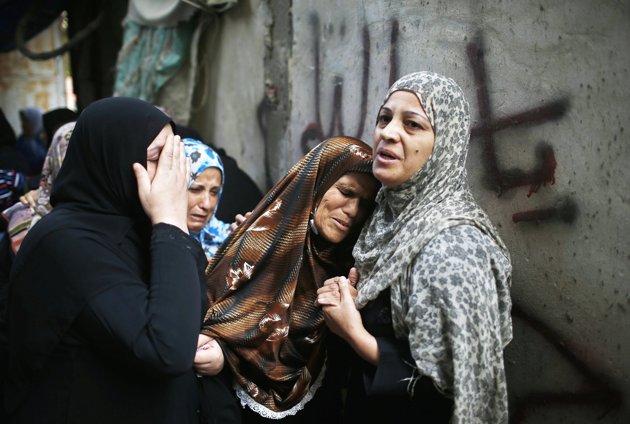
The pre-recorded interview via Skype opened with Mohammed Sulaiman in Gaza. From what looked like a cramped room, presumably serving as a bomb shelter, he spoke of how he was too afraid to step outside his home. Throughout the interview, we could hear the muffled sound of bombs exploding in the near-distance. Mohammed occasionally glanced nervously to his side.

The other interviewee, Nissim Nahoom, an Israeli official in Ashkelon, also spoke of his family’s terror, arguing that it was no different from that of Gazans. Except in one respect, he hastened to add: things were worse for Israelis because they had to live with the knowledge that Hamas rockets were intended to harm civilians, unlike the precision missiles and bombs Israel dropped on Gaza.

The interview returned to Mohammed. As he started to speak, the bombing grew much louder. He pressed on, saying he would not be silenced by what was taking place outside. The interviewer, Isha Sesay, interrupted – seemingly unsure of what she was hearing – to inquire about the noise.

Then, with an irony that Mohammed could not have appreciated as he spoke, he began to say he refused to be drawn into a comparison about whose suffering was worse when an enormous explosion threw him from his chair and severed the internet connection. Switching back to the studio, Sesay reassured viewers that Mohammed had not been hurt.

The bombs, however, spoke more eloquently than either Mohammed or Nissim.

If Mohammed had had more time, he might have been able to challenge Nissim’s point about Israelis’ greater fears as well as pointing to another important difference between his and his Israeli interlocutor’s respective plights.

The far greater accuracy of Israel’s weaponry in no way confers peace of mind. The fact is that a Palestinian civilian in Gaza is in far more danger of being killed or injured by one of Israel’s precision armaments than an Israeli is by one of the more primitive rockets being launched out of Gaza.

In Operation Cast Lead, Israel’s attack on Gaza in winter 2008-09, three Israelis were killed by rocket attacks, and six soldiers died in fighting. In Gaza, meanwhile, nearly 1,400 Palestinians were killed, of whom at least 1,000 were not involved in hostilities, according to the Israeli group B’Tselem. Many, if not most, of those civilians were killed by so-called precision bombs and missiles.

If Israelis like Nissim really believe they have to endure greater suffering because the Palestinians lack accurate weapons, then maybe they should start lobbying Washington to distribute its military hardware more equitably, so that the Palestinians can receive the same allocations of military aid and armaments as Israel.

Or alternatively, they could lobby their own government to allow Iran and Hizbullah to bring into Gaza more sophisticated technology than can currently be smuggled in via the tunnels.

The other difference is that, unlike Nissim and his family, most people in Gaza have nowhere else to flee. And the reason that they must live under the rain of bombs in one of the most densely populated areas on earth is because Israel – and to a lesser extent Egypt – has sealed the borders to create a prison for them.

Israel has denied Gaza a port, control of its airspace and the right of its inhabitants to move to the other Palestinian territory recognised by the Oslo accords, the West Bank. It is not, as Israel’s supporters allege, that Hamas is hiding among Palestinian civilians; rather, Israel has forced Palestinian civilians to live in a tiny strip of land that Israel turned into a war zone.

So who is chiefly to blame for the escalation that currently threatens the nearly two million inhabitants of Gaza? Though Hamas’ hands are not entirely clean, there are culprits far more responsible than the Palestinian militants.

First culprit: The state of Israel

The inciting cause of the latest confrontation between Israel and Hamas has little to do with the firing of rockets, whether by Hamas or the other Palestinian factions.

The conflict predates the rockets – and even the creation of Hamas – by decades. It is the legacy of Israel’s dispossession of Palestinians in 1948, forcing many of them from their homes in what is now Israel into the tiny Gaza Strip. That original injustice has been compounded by the occupation Israel has not only failed to end but has actually intensified in recent years with its relentless siege of the small strip of territory.

Israel has been progressively choking the life out of Gaza, destroying its economy, periodically wrecking its infrastructure, denying its inhabitants freedom of movement and leaving its population immiserated.

One only needs to look at the restrictions on Gazans’ access to their own sea. Here we are not considering their right to use their own coast to leave and enter their territory, simply their right to use their own waters to feed themselves. According to one provision of the Oslo accords, Gaza was given fishing rights up to 20 miles off its shore. Israel has slowly whittled that down to just three miles, with Israeli navy vessels firing on fishing boats even inside that paltry limit.

Palestinians in Gaza are entitled to struggle for their right to live and prosper. That struggle is a form of self-defence – not aggression – against occupation, oppression, colonialism and imperialism.

Second culprit: Binyamin Netanyahu and Ehud Barak

The Israeli prime minister and defence minister have taken a direct and personal hand, above and beyond Israel’s wider role in enforcing the occupation, in escalating the violence.

Israel and its supporters always make it their first priority when Israel launches a new war of aggression to obscure the timeline of events as a way to cloud responsibility. The media willingly regurgitates such efforts at misdirection.

In reality, Israel engineered a confrontation to provide the pretext for a “retaliatory” attack, just as it did four years earlier in Operation Cast Lead. Then Israel broke a six-month ceasefire agreed with Hamas by staging a raid into Gaza that killed six Hamas members.

This time, on 8 November, Israel achieved the same end by invading Gaza again, on this occasion following a two-week lull in tensions. A 13-year-old boy out playing football was killed by an Israeli bullet.

Tit-for-tat violence over the following days resulted in the injury of eight Israelis, including four soldiers, and the deaths of five Palestinian civilians, and the wounding of dozens more in Gaza.

On November 12, as part of efforts to calm things down, the Palestinian militant factions agreed a truce that held two days – until Israel broke it by assassinating Hamas military leader Ahmed Jabari. The rockets out of Gaza that followed these various Israeli provocations have been misrepresented as the casus belli.

But if Netanyahu and Barak are responsible for creating the immediate pretext for an attack on Gaza, they are also criminally negligent for failing to pursue an opportunity to secure a much longer truce with Hamas.

We now know, thanks to Israeli peace activist Gershon Baskin, that in the period leading up to Jabari’s execution Egypt had been working to secure a long-term truce between Israel and Hamas. Jabari was apparently eager to agree to it.

Baskin, who was intimately involved in the talks, was a credible conduit between Israel and Hamas because he had played a key role last year in getting Jabari to sign off on a prisoner exchange that led to the release of Israeli soldier Gilad Shalit. Baskin noted in the Haaretz newspaper that Jabari’s assassination “killed the possibility of achieving a truce and also the Egyptian mediators’ ability to function.”

The peace activist had already met Barak to alert him to the truce, but it seems the defence minister and Netanyahu had more pressing concerns than ending the tensions between Israel and Hamas.

What could have been more important than finding a mechanism for saving lives, on both the Palestinian and Israeli sides. Baskin offers a clue: “Those who made the decision must be judged by the voters, but to my regret they will get more votes because of this.”

It seems Israel’s general election, due in January, was uppermost in the minds of Netanyahu and Barak.

A lesson learnt by Israeli leaders over recent years, as Baskin notes, is that wars are vote-winners solely for the right wing. That should be clear to no one more than Netanyahu. He has twice before become prime minister on the back of wars waged by his more “moderate” political opponents as they faced elections.

Shimon Peres, a dove by no standard except a peculiar Israeli one, launched an attack on Lebanon, Operation Grapes of Wrath, that cost him the election in 1996. And centrists Ehud Olmert and Tzipi Livni again helped Netanyahu to victory by attacking Gaza in late 2008.

Israelis, it seems, prefer a leader who does not bother to wrap a velvet glove around his iron fist.

Netanyahu was already forging ahead in the polls before he minted Operation Pillar of Defence. But the electoral fortunes of Ehud Barak, sometimes described as Netanyahu’s political Siamese twin and a military mentor to Netanyahu from their commando days together, have been looking grim indeed.

Barak desperately needed a military rather than a political campaign to boost his standing and get his renegade Independence party across the electoral threshold and into the Israeli parliament. It seems Netanyahu, thinking he had little to lose himself from an operation in Gaza, may have been willing to oblige.

Third culprit: The Israeli army

Israel’s army has become addicted to two doctrines it calls the “deterrence principle” and its “qualitative military edge”. Both are fancy ways of saying that, like some mafia heavy, the Israeli army wants to be sure it alone can “whack” its enemies. Deterrence, in Israeli parlance, does not refer to a balance of fear but Israel’s exclusive right to use terror.

The amassing of rockets by Hamas, therefore, violates the Israeli army’s own sense of propriety, just as Hizbullah’s stockpiling does further north. Israel wants its neighbouring enemies to have no ability to resist its dictates.

Doubtless the army was only too ready to back Netanyahu and Barak’s electioneering if it also provided an opportunity to clean out some of Hamas’ rocket arsenal.

But there is another strategic reason why the Israeli army has been chomping at the bit to crack down on Hamas again.

Haaretz’s two chief military correspondents explained the logic of the army’s position last week, shortly after Israel killed Jabari. They reported: “For a long time now Israel has been pursuing a policy of containment in the Gaza Strip, limiting its response to the prolonged effort on the part of Hamas to dictate new rules of the game surrounding the fence, mainly in its attempt to prevent the entry of the IDF into the ‘perimeter,’ the strip of a few hundred meters wide to the west of the fence.”

In short, Hamas has angered Israeli commanders by refusing to sit quietly while the army treats large areas of Gaza as its playground and enters at will.

Israel has created what it terms a “buffer zone” inside the fence around Gaza, often up to a kilometre wide, that Palestinians cannot enter but the Israeli army can use as a gateway for launching its “incursions”. Remote-controlled guns mounted on Israeli watch-towers around Gaza can open fire on any Palestinian who is considered to have approached too close.

Three incidents shortly before Jabari’s extra-judicial execution illustrate the struggle for control over Gaza’s interior.

On November 4, the Israeli army shot dead a young Palestinian man inside Gaza as he was reported to have approached the fence. Palestinians say he was mentally unfit and that he could have been saved by medics had ambulances not been prevented from reaching him for several hours.

On November 8, as already noted, the Israeli army made an incursion into Gaza to attack Palestinian militants and in the process shot dead a boy playing football.

And on November 10, two days later, Palestinian fighters fired an anti-tank missile that destroyed a Jeep patrolling the perimeter fence around Gaza, wounding four soldiers.

As the Haaretz reporters note, Hamas appears to be trying to demonstrate that it has as much right to defend its side of the “border fence” as Israel does on the other side.

The army’s response to this display of native impertinence has been to inflict a savage form of collective punishment on Gaza to remind Hamas who is boss.

Fourth culprit: the White House

It is near-impossible to believe that Netanyahu decided to revive Israel’s policy of extra-judicial executions of Hamas leaders – and bystanders – without at least consulting the White House. Israel clearly also held off from beginning its escalation until after the US elections, restricting itself, as it did in Cast Lead, to the “downtime” in US politics between the elections and the presidential inauguration.

That was designed to avoid overly embarrassing the US president. A fair assumption must be that Barack Obama approved Israel’s operation in advance. Certainly he has provided unstinting backing since, despite the wildly optimistic scenarios painted by some analysts that he was likely to seek revenge on Netanyahu in his second term.

Also, it should be remembered that Israel’s belligerence towards Gaza, and the easing of domestic pressure on Israel to negotiate with Hamas or reach a ceasefire, has largely been made possible because Obama forced US taxpayers to massively subsidise Israel’s rocket interception system, Iron Dome, to the tune of hundreds of millions of dollars.

Iron Dome is being used to shoot down rockets out of Gaza that might otherwise have landed in built-up areas of Israel. Israel and the White House have therefore been able to sell US munificence on the interception of rockets as a humanitarian gesture.

But the reality is that Iron Dome has swung Israel’s cost-benefit calculus sharply in favour of greater aggression because it is has increased Israel’s sense of impunity. Whatever Hamas’ ability to smuggle into Gaza more sophisticated weaponry, Israel believes it can neutralise that threat using interception systems.

Far from being a humanitarian measure, Iron Dome has simply served to ensure that Gaza will continue to suffer a far larger burden of deaths and injuries in confrontations with Israel and that such confrontations will continue to occur regularly.

Here are the four main culprits. They should be held responsible for the deaths of Palestinians and Israelis in the days and, if Israel expands its operation, weeks ahead.

Jonathan Cook won the Martha Gellhorn Special Prize for Journalism. His latest books are “Israel and the Clash of Civilisations: Iraq, Iran and the Plan to Remake the Middle East” (Pluto Press) and “Disappearing Palestine: Israel’s Experiments in Human Despair” (Zed Books).  His new website is www.jonathan-cook.net.

November 12, 2012 – DCMX Radio: Eric Jon Phelps on the Jesuits Part II (Exclusive)

November 12, 2012 – DCMX Radio: Eric Jon Phelps on the Jesuits Part II (Exclusive)

Eric Jon Phelps was again on the Decrypted Matrix show on Revealing Talk Radio, November 12, 2012 at Midnight EST / 9pm PST. During last Monday night’s show it became apparent that Decrypted Matrix host, Max Maverick, was not going to get everything he wanted in the show. After the show, the ratings, site traffic and archive hits of the show made it quite obvious that this coming show would be important.


Every Week Night 12-1am EST (9-10pm PST)

– Click Image to Listen LIVE –

Tears of Gaza: The War They Don’t Show You

Tears of Gaza: The War They Don’t Show You

“Disturbing, powerful and emotionally devastating, Tears of Gaza is less a conventional documentary than a record — presented with minimal gloss — of the 2008 to 2009 bombing of Gaza (dubbed ‘Operation Cast Lead’) by the Israeli military. Filmed by several Palestinian cameramen both during and after the offensive, this powerful film by director Vibeke Løkkeberg focuses on the impact of the attacks on the civilian population.

Tears of Gaza makes no overriding speeches or analyses. The situation leading up to the incursion (in which the Jewish state broke a truce unprovoked) is never mentioned. Similar events certainly occurred in Dresden, Tokyo, Baghdad and Sarajevo, but of course Gaza isn’t those places. Tears of Gaza demands that we examine the costs of war on a civilian populace.”
(Excerpt from Steve Gravestock, 2011 Toronto International Film Festival)
http://tearsofgazamovie.com/

A Quick History: Illuminati, Nazis and the Illegal State of Israel

A Quick History: Illuminati, Nazis and the Illegal State of Israel

If we wish to end the Israeli/Palestinian conflict, we need to know who created Israel and why. 

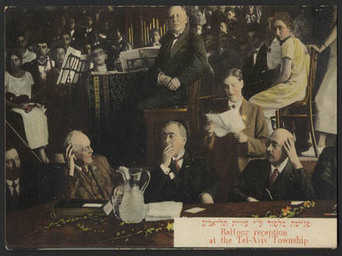
In 1917 British Foreign Secretary Arthur Balfour penned a letter to Zionist Second Lord Lionel Walter Rothschild in which he expressed support for a Jewish homeland on Palestinian-controlled lands in the Middle East. 

This Balfour Declaration justified the brutal seizure of Palestinian lands for the post-WWII establishment of Israel.

Israel would serve, not as some high-minded “Jewish homeland”, but as lynchpin in Rothschild/Eight Families control over the world’s oil supply.

Baron Edmond de Rothschild built the first oil pipeline from the Red Sea to the Mediterranean to bring BP Iranian oil to Israel.  He founded Israeli General Bank and Paz Oil and is considered the father of modern Israel.

The Rothschilds are the planet’s wealthiest clan, worth an estimated $100 trillion.  They control Royal Dutch/Shell, BP, Anglo-American, BHP Billiton, Rio Tinto, Bank of America and scores of other global corporations and banks. 

They are the largest shareholders in the Bank of England, the Federal Reserve and most every private central bank in the world.  They needed a footprint in the Middle East to protect their new oil concessions, which they procured through Four Horsemen fronts like the Iranian Consortium, Iraqi Petroleum Company and Saudi ARAMCO.

The Brothers Rothschild

Rothschild’s Shell and BP formed these cartels with the Rockefeller half of the Four Horsemen- Exxon Mobil and Chevron Texaco.  This new alliance required a “special relationship” between Great Britain and the US, which still exists today.

Rothschild and other wealthy European shareholders could now utilize the United States military as a Hessianized mercenary force, deployed to protect their oil interests and paid for by US taxpayers.

Israel would serve the same purpose in closer proximity to the oilfields.  The Israeli Mossad is less a national intelligence agency than it is a Rothschild/Rockefeller family security force.

The Rothschilds exert political control through the secretive Business Roundtable, which they created in 1909 with the help of Lord Alfred Milner and Cecil Rhodes- whose Rhodes Scholarship is granted by Cambridge University, out of which oil industry propagandist Cambridge Energy Research Associates operates. Rhodes founded De Beers and Standard Chartered Bank.

The Roundtable takes its name from the legendary knight King Arthur, whose tale of the Holy Grail is synonymous with the Illuminati notion that the Eight Families possess Sangreal or holy blood- a justification for their lording over the people and resources of the planet.

According to former British Intelligence officer John Coleman, who wrote Committee of 300, “Round Tablers armed with immense wealth from gold, diamond and drug monopolies fanned out throughout the world to take control of fiscal and monetary policies and political leadership in all countries where they operated.”

John Coleman

Rhodes and Oppenheimer deployed to South Africa to launch the Anglo-American conglomerate.  Kuhn and Loeb were off to re-colonize America with Morgan and Rockefeller.

Rudyard Kipling was sent to India.  Schiff and Warburg manhandled Russia.  Rothschild, Lazard and Israel Moses Seif pushed into the Middle East.  At Princeton, the Round Table founded the Institute for Advanced Study (IAS) as partner to its All Souls College at Oxford.

IAS was funded by the Rockefeller’s General Education Board.  IAS members Robert Oppenheimer, Neils Bohr and Albert Einstein created the atomic bomb.

In 1919 Rothschild’s Business Roundtable spawned the Royal Institute of International Affairs (RIIA) in London.  The RIIA sponsored sister organizations around the globe, including the US Council on Foreign Relations.  The RIIA is a registered charity of the Queen and, according to its annual reports, is funded largely by the Four Horsemen.

Former British Foreign Secretary and Kissinger Associates co-founder Lord Carrington is president of both the RIIA and the Bilderbergers.  The inner circle at RIIA is dominated by Knights of St. John Jerusalem, Knights of Malta, Knights Templar and 33rd Degree Scottish Rite Freemasons.

The Knights of St. John were founded in 1070 and answer directly to the British House of Windsor.  Their leading bloodline is the Villiers dynasty, which the Hong Kong Matheson family- owners of the HSBC opium laundry- married into. The Lytton family also married into the Villiers gang.

Edward Lytton – Bloodlines of de Rascals

Colonel Edward Bulwer-Lytton led the English Rosicrucian secret society, which Shakespeare opaquely referred to as Rosencranz, while the Freemasons were symbolized by Guildenstern.

Lytton was spiritual father of both the RIIA and Nazi fascism.  In 1871 he penned a novel titled, Vril: The Power of the Coming Race.  Seventy years later the Vril Society received ample mention in Adolf Hitler’s Mein Kampf.

Lytton’s son became Viceroy to India in 1876 just before opium production spiked in that country.  His good friend Rudyard Kipling introduced the swastika to India and later worked under Lord Beaverbrook as Propaganda Minister, alongside Sir Charles Hambro of the Hambros banking dynasty.

Children of the Roundtable elite are members of a Dionysian cult known as Children of the Sun.  Initiates include Aldous Huxley, T. S. Eliot, D. H. Lawrence and H. G. Wells.  Wells headed British intelligence during WWI.  His books speak of a “one-world brain” and “a police of the mind”.

William Butler Yeats, another Sun member, was a pal of Aleister Crowley.  The two formed an Isis Cult based on a Madam Blavatsky manuscript, which called on the British aristocracy to organize itself into an Aryan priesthood.  Blavatsky’s Theosophical Society and Bulwer-Lytton’s Rosicrucians joined forces to form the Thule Society, out of which the Nazis emerged.

Rothschild, Rockefeller and the rest of the Illuminati bankers backed the Nazis.  Max and Paul Warburg sat on I. G. Farben’s board, as did H. A. Metz, who was director at the Warburg Bank of Manhattan- later Chase Manhattan.  Bank of Manhattan director and Federal Reserve Board member C. E. Mitchell sat on the board of I. G. Farben’s US branch.

In 1936 Avery Rockefeller set up a combination with the German Schroeder family, who served as Hitler’s personal bankers.  Time magazine called the new Schroeder, Rockefeller & Company “the economic booster of the Rome-Berlin Axis”.  Morgan Guaranty Trust and Union Banking Corporation (UBC) also funded the Nazis.  UBC board member Prescott Bush is W’s grandfather.

___________________________________

The WWI Veteran in the Crowd – Adolf Hitler

In 1933 at the home of banker Baron Kurt von Schroeder, a deal was cut to bring Hitler to power.  Attending the meeting were brothers John Foster and Allen Dulles- Rockefeller cousins and partners at law firm Sullivan & Cromwell, which represented Schroeder Bank.

Schroeder, managing director T. C. Tiarks, was a director at the Rothschild-controlled Bank of England.  In the spring of 1934 Bank of England Chairman Montagu Norman convened a meeting of London bankers who decided to covertly fund Hitler.

Royal Dutch/Shell Chairman Sir Henri Deterding helped in this effort.  Even after the US went to war with Germany, Exxon Chairman Walter Teagle remained on the board of I. G. Chemical- the US I. G. Farben subsidiary.  Exxon was integral in supplying the Nazis with tetraethyl lead, an important component of aviation fuel.  Only Exxon, Du Pont and GM made the stuff.  Teagle also supplied the Japanese with his product.

Exxon and I. G. Farben were such close business associates that by 1942 Thurman Arnold – head of the US Justice Department’s Anti-Trust Division- produced documents that showed, “Standard and Farben in Germany had literally carved up the world markets, with oil and chemical monopolies established all over the map.”

Daddy Prescott Bush had his companies seized during WWI for ‘trading with the enemy’ – but managed to get all his money back after the war, which financed the Bush political dynasty.

In 1912 railroad magnate Edward Harriman’s widow joined John D. Rockefeller in funding a eugenics research lab at Cold Spring Harbor, NY.  That same year the First International Congress of Eugenics was convened in London with Winston Churchill presiding.

In 1932 the conference was held in New York.  Hamburg-Amerika Shipping Line, owned by George Walker and Prescott Bush, brought the German contingent to the gene-fest.

One member of the German delegation was Dr. Ernst Rudin of the Kaiser Wilhelm Institute for Genealogy in Berlin.  He was unanimously elected president for his work in founding the German Society of Race Hygiene- a forerunner to Hitler’s race institutes.

As of 1998 there were still scores of lawsuits pending against Ford, Chase Manhattan, J.P. Morgan, Deutsche Bank, Allianz AG and several Swiss banks for their dealings with the Nazis.

At the heart of Hitler’s inner circle were the secret societies Germanordern (brothers of Yale’s Skull & Bones), the Thule Society, and Vril.  The concepts “Great Masters”, “Adepts” and the “Great White Brotherhood”, which the Nazis used to justify their idea of Aryan superiority, were ancient ideas carried forth from the Egyptian Mystery Schools by the Teutonic Knights, the Illuminati, and Hebrew Cabalists.

These same concepts can be found in today’s New Age Movement, whose New Age magazine was first published by the Grand Orient Masonic Lodge of Washington, DC.  Henry Kissinger was an early supporter.

Nazi occultists believed ancient German tribes were the true keepers of the Ancient Mysteries which had their origin in Atlantis, when seven races of God-men were introduced to Earth.  Thule was a Teutonic Atlantis believed by the Nazis to house these long-vanquished races, who lost their godly Annunaki powers by interbreeding with humans.

At the inner core of the Thule Society were Satanists who practiced black magic. Hitler was once described as a “child of Illuminism”.

Is it time to check Hitler’s DNA?

According to Dr. Walter Langer, who did a war-time psychoanalysis of Hitler for the CIA-predecessor OSS, Hitler was also a Rothschild.  Langer uncovered an Austrian police report proving Hitler’s father was an illegitimate son of a peasant cook named Maria Anna Schicklgruber, who at the time of her conception was a servant in the Vienna home of Baron Rothschild.

In May 1941 Rudolf Hess parachuted into the estate of the Duke of Hamilton, saying a supernatural force told him to negotiate with the British.  Hitler was ostensibly visited by this same apparition and suddenly turned vehemently against occultism.

He ordered a crackdown against Freemasons, Templars and the Theosophical Society.  Suddenly the international banker crowd pulled the plug on Hitler’s finances and began to denounce him.  Six months later the Hessianized US military entered WWII.

Hitler’s fate was no different than that of Saddam Hussein or Manuel Noriega.  The Illuminati bankers’ modus operandi is to use men of low integrity to do their dirty work, before conveniently discarding and distancing themselves from them.

The horrific Holocaust that ensued assured sympathy for the already-planned state of Israel.  Towards the end of WWII, the murderous Haganah and Stern Gangs were deployed by the Rothschild bankers to terrorize Palestinians and steal their land.  Jews who escaped Hitler’s gas chambers were those of means who bought into Zionism.

For a fee of $1,000 – lots of money at that time – these right-wingers bought passage to Israel and escaped the fate of the poor Jews, Serbs, communists and gypsies.  The whole bloody affair was a massive eugenics project.  It had more to do with culling the herd along class lines, than it did with ethnicity or religion.

The key to this historic puzzle is to understand that the Rothschild/Rockefeller sangreal international bankers supported both the rise of the Nazis and the creation of Israel.  None of this has anything to do with religion.  It has everything to do with oil, arms, drugs, money and power.

The Rothschilds say they are Jewish.  The Rockefellers claim to be Christian.  These are irrelevant smokescreens.  Any demagogue- who blames injustice a religion or race of people- is sadly misinformed.  Throughout history the Illuminati Satanists have sacrificed people of all race and religion to further their agenda of total planetary control.

Israel is not a “Jewish homeland”.  It is an oil monopoly lynchpin.  Its citizens are being put in harms way- used by the Four Horsemen and their Eight Families-owners as geopolitical pawns in an international resource grab.  No peaceful solution is possible until the stolen land is returned to its rightful Palestinian owners.

Israel is an illegal entity.  Viva Palestine!

Dean Henderson is the author of four books: Big Oil & Their Bankers in the Persian Gulf: Four Horsemen, Eight Families & Their Global Intelligence, Narcotics & Terror Network, The Grateful Unrich: Revolution in 50 Countries, Das Kartell der Federal Reserve & Stickin’ it to the Matrix.  You can subscribe free to his weekly Left Hook column @ www.deanhenderson.wordpress.com


via VeteransToday

Top Army Officer Accused of Sex Crimes: ‘I’m a General, I’ll do whatever the f**k I want’

Top Army Officer Accused of Sex Crimes: ‘I’m a General, I’ll do whatever the f**k I want’

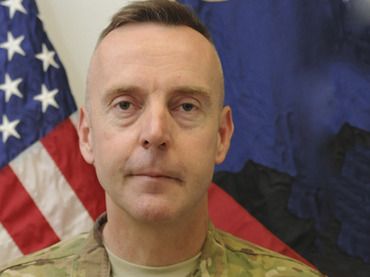
After months of keeping the details of a case against a US soldier under wraps, Army prosecutors on Monday presented evidence against Brig. Gen. Jeffrey A. Sinclair, a 50-year-old serviceman being charged with a slew of sex crimes against five women.

From Fort Bragg, North Carolina on Monday, prosecutors for the US Army began presenting evidence in the Article 32 hearing that will determine if Sinclair, a 30-year-plus veteran of the military, will have to be court-martialed over allegations of sexual assaults and other crimes committed while representing the United States.

Sinclair had been under Army investigation for several months, but was not formally indicted until late September. Now for the first time since the Pentagon went public with the case, evidence being used to prosecute the one-star general is being presented to the media.

According to the Fayetteville Observer, Monday’s hearing detailed sexual misconduct against four female Army subordinates — two female captains, a major and a lieutenant — and a civilian. Sinclair is being accused of violating military code at Fort Bragg, as well as bases in Germany, Iraq and Afghanistan, where the encounters were described graphically to the court as occurring “in a parking lot, in his office in Afghanistan with the door open, on an exposed balcony at a hotel and on a plane, where he allegedly groped a woman.”

Prosecutors say that Sinclair had women send him sexually explicit photos and videos, and allegedly made “frequent derogatory comments towards women,” the Observer reporters.

“When confronted about those comments,” the paper notes, “Sinclair is accused of replying, ‘I’m a general, I’ll do whatever the (expletive) I want.’”

Pending the outcome of this week’s hearing, Sinclair could be court martialed on charges that include forcible sodomy, wrongful sexual conduct, violating orders, engaging in inappropriate relationships, misusing a government travel charge card, and possessing pornography and alcohol while deployed.

“This doesn’t just smell bad,” former Air Force lawyer Col. Morris Davis tells Wired.com’s Danger Room, “it reeks.”

Lt. Col. Jackie Thompson, a military attorney representing Sinclair in the case, says that the defendant had his rights violated by Army investigators that accessed and viewed personal emails sent from the soldier to his wife regarding the charges. According to the Observer, prosecutors accessed more than 16,000 emails from both military and personal accounts that belonged to Sinclair, which attorneys say were protected under attorney-client confidentiality privileges. On Monday, Thompson asked for the court to appoint a new prosecutorial team to charge Sinclair.

Eugene R. Fidell of Yale Law School tells the AP he expects the case with reduction in rank and forced retirement for Sinclair, adding, “It’s a rare thing for an officer to go to jail” because sanctions against more high-ranking officials “tend to be more in the nature of political sanctions, in other words getting rid of people rather than sending them to the brig.”

Previously, the Associated Press filed a Freedom of Information Act request to obtain the charging documents regarding any evidence against Sinclair. Lt. Col. Nelson Van Eck, Jr., the acting chief of the U.S. Army’s Criminal Law Division, refused their request by writing, “Release of these documents could reasonably be expected to interfere with law enforcement proceedings, would deprive Brig. Gen. Sinclair of a fair trial or impartial adjudication and could also reasonably be expected to constitute an unwarranted invasion of personal privacy.”

via RT

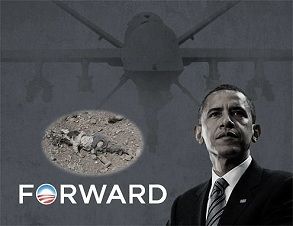
4 More Drones! Robot Attacks Are on Deck for Obama’s Next Term

4 More Drones! Robot Attacks Are on Deck for Obama’s Next Term

When Barack Obama took office, drone strikes were a once-in-a-while thing, with an attack every week or two. Now, they’re the centerpiece of a global U.S. counterterrorism campaign. Obama institutionalized the strikes to the point where he could hand off to the next president an efficient bureaucratic process for delivering death-by-robot practically on autopilot. Only now he’s the next president. Welcome to Obama’s second-term agenda for dealing with the world. As the Ramones sang: second verse, same as the first.

Early in the first term, then-CIA director Leon Panetta observed that drones were the “only game in town” for attacking al-Qaida in Pakistan. By that he meant invading a country for the third time in a decade was a nonstarter, and the flesh-and-blood spies needed to do a traditional intelligence operation weren’t available in sufficient numbers. So the Obama administration all but crafted its counterterrorism strategy around the drones, turning their surveillance and lethal operations into a bureaucratic apparatus led by White House aides with minimal outside oversight. The CIA and the Joint Special Operations Command, elite forces that rarely operate visibly, have the lead for implementing the robot-based agenda — and augmenting it with commando raids. Backstopping them are new tools to invade and disrupt enemy data networks.

The strikes have spread from Pakistan to Yemen to Somalia. And now that Obama’s been reelected, expect them to spread to Mali, another country most Americans neither know nor understand. The northern part of the North African country has fallen into militant hands. U.S.-aligned forces are currently plotting to take it back. The coming arrival of Army Gen. David Rodriguez, the former day-to-day commander of the Afghanistan war, as leader of U.S. forces in Africa is a signal that Obama wants someone experienced at managing protracted wars on a continent where large troop footprints aren’t available. Instead, Rodriguez will have to track, check and erode the spread of al-Qaida in northern and eastern Africa using drones and commando forces, available from his expanding bases in places like Djibouti. If all of this seems routine, that’s the point.

The Obama administration is doing something similar with cyber weaponry. It’s trying to make them a normal part of everyday conflict. Gone are the days when senior officers equivocated in public about their ability to disrupt enemy data networks. Now the Air Force talks openly about spending $10 million on new tools “to destroy, deny, degrade, disrupt, deceive, corrupt, or usurp the adversaries [sic] ability to use the cyberspace domain for his advantage.” The Pentagon’s futurists at Darpa have launched a new “Plan X” to routinize the corruption of enemy networks and the exfiltration of data within normal military operations. Routinization may actually be the wrong word: Darpa wants military malware that works like “the auto-pilot function in modern aircraft.” The Stuxnet worm that messed with Iran’s centrifuges was only the beginning.

All this might seem aggressive for a president who liked to say on the campaign trail that “the tide of war is receding.” But the tide of war never actually goes out. And the wicked-hard problems facing Obama’s national security team may only be getting under way.

First, Obama’s got to help Congress avert 9.4 percent annual, automatic cuts to practically every Defense Department program for the next 10 years, as both he and his defense secretary, Leon Panetta, are on record opposing them.

Next comes Iran. Israel’s Benjamin Netanyahu has suggested that he will feel the need to strike Iran by next summer. Obama has a stronger hand with Netanyahu now that he doesn’t have to worry about reelection, but he’s still committed himself rhetorically to preventing an Iranian nuclear weapon. Even if Obama can avert a war, his clear preference, Iran will continue to consume a tremendous amount of the White House and the Pentagon’s attention. The alternative to a massive bombing campaign might not be so benign, either: the point of Stuxnet was to make the Iranians distrust the industrial controls on their nuclear program’s centrifuges.

Then comes Afghanistan, a war that Obama does not discuss candidly. He’s fond of saying, as he did in one of his final ads, that he plans on “ending the war in Afghanistan, so we can do some nation-building here at home.” His real policy is way more complex than that. Yes, Obama is committed to withdrawing most troops and ending a formal U.S. combat role by 2014. Obama plans to keep a residual troop presence in the country, even after the 2014 “withdrawal,” and negotiations with the Afghans about what shape that presence will take — and for what purpose — are supposed to begin shortly. Among the things Obama is likely to seek: Afghanistan’s permission to keep its air bases as launchpads for drone strikes into Pakistan. The charitable interpretation is to say Obama is caveating his out-of-Afghanistan pledge. The uncharitable interpretation is that he’s misleading the country on it.

The Obama administration is still grappling with the implications of its sprawling, robot-led war. Some of its top officials are just starting to question how long the strikes have to persist. But they haven’t addressed concerns about the precedent the U.S. is setting by sending robots to violate the sovereignty of nations, which are unavoidable as drone technology advances and proliferates. Micah Zenko, a scholar at the Council on Foreign Relations, sees a reckoning with the robots on the horizon.

“There is a recognition within the administration that the current trajectory of drone strikes is unsustainable,” Zenko says. “They are opposed in countries where strikes occur and globally, and that opposition could lead to losing host-nation support for current or future drone bases or over-flight rights.” In other words, tomorrow’s America diplomats may find that drones overshadow the routine geopolitical agenda they seek to advance. The trouble is, the administration’s early search for less-lethal policies to supplement or supplant the drones isn’t promising.

Obama’s broader foreign policy agenda keeps getting derailed. He barely talks about his expansive goal of eliminating global nuclear weapons anymore. Any route to an Israeli-Palestinian peace runs through Netanyahu, who only wants to talk about Iran. The much-heralded “pivot” of the U.S. defense posture toward Asia, a relatively modest goal, keeps getting deferred by the crises of the moment: the Navy’s newest and more advanced ships are going to confront Iran, not to preserve the freedom of the Pacific shipping lanes. A former Obama Pentagon official, Rosa Brooks, recently lamented the Obama team’s chronic inability to shape global events.

Civil libertarians rightly point to Obama’s reversals on expanding warrantless surveillance; the indefinite detention of terrorism suspects; military tribunals at Guantanamo Bay; prosecuting whistleblowers; and embracing an expensive definition of the war on terrorism’s executive powers. But there’s little evidence that Obama will change course. In an insightful blog post, the Brookings Institution’s Benjamin Wittes writes that Obama’s civil-liberties and national security record is best explained by a policy “consensus” in D.C., running through George W. Bush’s second term and Obama’s first, that basically agrees on a definition of executive power that civil libertarians dislike. It’s uncomfortable with torture, but basically comfortable with expansive domestic spying and detention powers.

As Obama’s second term dawns, it’s time to put away ideological illusions about his approach to foreign affairs. Liberals keep waiting for an agenda that’s less killer-robot-y. Conservatives are unable to see him as anything but a peacenik: “We’ll get to see what jimmy carter’s 2nd term would have looked like,” tweeted Jim Carafano, a defense analyst at the conservative Heritage Foundation.

But the evidence is staring everyone in the face. Obama has elevated a practice of stealthy robotic warfare to the tactic of choice for U.S. security priorities, and built around it a system that operates it practically on bureaucratic inertia. Obama has a powerful incentive of all to continue his trajectory: with the one major exception of the Benghazi consulate disaster, Obama’s handling of global affairs has been notably free of high-profile screwups. That’s the sort of thing that propels a foreign policy agenda — to borrow a term — forward.

Gaza, The World’s Largest Open-Air Prison

Gaza, The World’s Largest Open-Air Prison

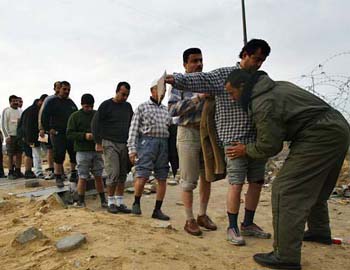
Palestinian workers line up to get checked by a Palestinian security officer before entering the Israeli controlled industrial zone in Erez area between Israel and the Gaza Strip.

A look at life under occupation.

Gaza has the look of a Third World country, with pockets of wealth surrounded by hideous poverty. It is not, however, undeveloped. Rather it is “de-developed,” and very systematically so, to borrow the term from Sara Roy, the leading academic specialist on Gaza.

Even a single night in jail is enough to give a taste of what it means to be under the total control of some external force.

And it hardly takes more than a day in Gaza to appreciate what it must be like to try to survive in the world’s largest open-air prison, where some 1.5 million people on a roughly 140-square-mile strip of land are subject to random terror and arbitrary punishment, with no purpose other than to humiliate and degrade.

Such cruelty is to ensure that Palestinian hopes for a decent future will be crushed, and that the overwhelming global support for a diplomatic settlement granting basic human rights will be nullified. The Israeli political leadership has dramatically illustrated this commitment in the past few days, warning that they will “go crazy” if Palestinian rights are given even limited recognition by the U.N.

This threat to “go crazy” (“nishtagea”)–that is, launch a tough response–is deeply rooted, stretching back to the Labor governments of the 1950s, along with the related “Samson Complex”: If crossed, we will bring down the Temple walls around us.

Thirty years ago, Israeli political leaders, including some noted hawks, submitted to Prime Minister Menachem Begin a shocking report on how settlers on the West Bank regularly committed “terrorist acts” against Arabs there, with total impunity.

Disgusted, the prominent military-political analyst Yoram Peri wrote that the Israeli army’s task, it seemed, was not to defend the state, but “to demolish the rights of innocent people just because they are Araboushim (a harsh racial epithet) living in territories that God promised to us.”

Gazans have been singled out for particularly cruel punishment. Thirty years ago, in his memoir “The Third Way,” Raja Shehadeh, a lawyer, described the hopeless task of trying to protect fundamental human rights within a legal system designed to ensure failure, and his personal experience as a Samid, “a steadfast one,” who watched his home turned into a prison by brutal occupiers and could do nothing but somehow “endure.”

Since then, the situation has become much worse. The Oslo Accords, celebrated with much pomp in 1993, determined that Gaza and the West Bank are a single territorial entity. By that time, the U.S. and Israel had already initiated their program to separate Gaza and the West Bank, so as to block a diplomatic settlement and punish the Araboushim in both territories.

Punishment of Gazans became still more severe in January 2006, when they committed a major crime: They voted the “wrong way” in the first free election in the Arab world, electing Hamas.

Displaying their “yearning for democracy,” the U.S. and Israel, backed by the timid European Union, immediately imposed a brutal siege, along with military attacks. The U.S. turned at once to its standard operating procedure when a disobedient population elects the wrong government: Prepare a military coup to restore order.

Gazans committed a still greater crime a year later by blocking the coup attempt, leading to a sharp escalation of the siege and attacks. These culminated in winter 2008-09, with Operation Cast Lead, one of the most cowardly and vicious exercises of military force in recent memory: A defenseless civilian population, trapped, was subjected to relentless attack by one of the world’s most advanced military systems, reliant on U.S. arms and protected by U.S. diplomacy.

Of course, there were pretexts–there always are. The usual one, trotted out when needed, is “security”: in this case, against homemade rockets from Gaza.

In 2008, a truce was established between Israel and Hamas. Not a single Hamas rocket was fired until Israel broke the truce under cover of the U.S. election on Nov. 4, invading Gaza for no good reason and killing half a dozen Hamas members.

The Israeli government was advised by its highest intelligence officials that the truce could be renewed by easing the criminal blockade and ending military attacks. But the government of Ehud Olmert–himself reputedly a dove–rejected these options, resorting to its huge advantage in violence: Operation Cast Lead.

The internationally respected Gazan human-rights advocate Raji Sourani analyzed the pattern of attack under Cast Lead. The bombing was concentrated in the north, targeting defenseless civilians in the most densely populated areas, with no possible military basis. The goal, Sourani suggests, may have been to drive the intimidated population to the south, near the Egyptian border. But the Samidin stayed put.

A further goal might have been to drive them beyond the border. From the earliest days of the Zionist colonization it was argued that Arabs have no real reason to be in Palestine: They can be just as happy somewhere else, and should leave–politely “transferred,” the doves suggested.

This is surely no small concern in Egypt, and perhaps a reason why Egypt doesn’t open the border freely to civilians or even to desperately needed supplies.

Sourani and other knowledgeable sources have observed that the discipline of the Samidin conceals a powder keg that might explode at any time, unexpectedly, like the first Intifada in Gaza in 1987, after years of repression.

A necessarily superficial impression after spending several days in Gaza is amazement, not only at Gazans’ ability to go on with life but also at the vibrancy and vitality among young people, particularly at the university, where I attended an international conference.

But one can detect signs that the pressure may become too hard to bear. Reports indicate that there is simmering frustration among young people–a recognition that under the U.S.-Israeli occupation the future holds nothing for them.

Gaza has the look of a Third World country, with pockets of wealth surrounded by hideous poverty. It is not, however, undeveloped. Rather it is “de-developed,” and very systematically so, to borrow the term from Sara Roy, the leading academic specialist on Gaza.

The Gaza Strip could have become a prosperous Mediterranean region, with rich agriculture and a flourishing fishing industry, marvelous beaches and, as discovered a decade ago, good prospects for extensive natural gas supplies within its territorial waters. By coincidence or not, that’s when Israel intensified its naval blockade. The favorable prospects were aborted in 1948, when the Strip had to absorb a flood of Palestinian refugees who fled in terror or were forcefully expelled from what became Israel – in some cases months after the formal cease-fire. Israel’s 1967 conquests and their aftermath administered further blows, with terrible crimes continuing to the present day.

The signs are easy to see, even on a brief visit. Sitting in a hotel near the shore, one can hear the machine-gun fire of Israeli gunboats driving fishermen out of Gaza’s territorial waters and toward land, forcing them to fish in waters that are heavily polluted because of U.S.-Israeli refusal to allow reconstruction of the sewage and power systems they destroyed.

The Oslo Accords laid plans for two desalination plants, a necessity in this arid region. One, an advanced facility, was built: in Israel. The second one is in Khan Yunis, in the south of Gaza. The engineer in charge at Khan Yunis explained that this plant was designed so that it can’t use seawater, but must rely on underground water, a cheaper process that further degrades the meager aquifer, guaranteeing severe problems in the future.

The water supply is still severely limited. The U.N. Relief and Works Agency (UNRWA), which cares for refugees but not other Gazans, recently released a report warning that damage to the aquifer may soon become “irreversible,” and that without quick remedial action, Gaza may cease to be a “livable place” by 2020.

Israel permits concrete to enter for UNRWA projects, but not for Gazans engaged in the huge reconstruction efforts. The limited heavy equipment mostly lies idle, since Israel does not permit materials for repair.

All this is part of the general program that Dov Weisglass, an adviser to Prime Minister Olmert, described after Palestinians failed to follow orders in the 2006 elections: “The idea,” he said, “is to put the Palestinians on a diet, but not to make them die of hunger.”

Recently, after several years of effort, the Israeli human rights organization Gisha succeeded in obtaining a court order for the government to release its records detailing plans for the “diet.” Jonathan Cook, a journalist based in Israel, summarizes them: “Health officials provided calculations of the minimum number of calories needed by Gaza’s 1.5 million inhabitants to avoid malnutrition. Those figures were then translated into truckloads of food Israel was supposed to allow in each day … an average of only 67 trucks–much less than half of the minimum requirement–entered Gaza daily. This compared to more than 400 trucks before the blockade began.”

The result of imposing the diet, Middle East scholar Juan Cole observes, is that “about 10 percent of Palestinian children in Gaza under age 5 have had their growth stunted by malnutrition. … In addition, anemia is widespread, affecting over two-thirds of infants, 58.6 percent of schoolchildren, and over a third of pregnant mothers.”

Sourani, the human-rights advocate, observes that “what has to be kept in mind is that the occupation and the absolute closure is an ongoing attack on the human dignity of the people in Gaza in particular and all Palestinians generally. It is systematic degradation, humiliation, isolation and fragmentation of the Palestinian people.”

This conclusion has been confirmed by many other sources. In The Lancet, a leading medical journal, Rajaie Batniji, a visiting Stanford physician, describes Gaza as “something of a laboratory for observing an absence of dignity,” a condition that has “devastating” effects on physical, mental and social well-being.

“The constant surveillance from the sky, collective punishment through blockade and isolation, the intrusion into homes and communications, and restrictions on those trying to travel, or marry, or work make it difficult to live a dignified life in Gaza,” Batniji writes. The Araboushim must be taught not to raise their heads.

There were hopes that Mohammed Morsi’s new government in Egypt, which is less in thrall to Israel than the western-backed Hosni Mubarak dictatorship was, might open the Rafah Crossing, Gaza’s sole access to the outside that is not subject to direct Israeli control. There has been a slight opening, but not much.

The journalist Laila el-Haddad writes that the reopening under Morsi “is simply a return to status quo of years past: Only Palestinians carrying an Israeli-approved Gaza ID card can use Rafah Crossing.” This excludes a great many Palestinians, including el-Haddad’s own family, where only one spouse has a card.

Furthermore, she continues, “the crossing does not lead to the West Bank, nor does it allow for the passage of goods, which are restricted to the Israeli-controlled crossings and subject to prohibitions on construction materials and export.”

The restricted Rafah Crossing doesn’t change the fact that “Gaza remains under tight maritime and aerial siege, and continues to be closed off to the Palestinians’ cultural, economic and academic capitals in the rest of the (Israeli-occupied territories), in violation of U.S.-Israeli obligations under the Oslo Accords.”

The effects are painfully evident. The director of the Khan Yunis hospital, who is also chief of surgery, describes with anger and passion how even medicines are lacking, which leaves doctors helpless and patients in agony.

One young woman reports on her late father’s illness. Though he would have been proud that she was the first woman in the refugee camp to gain an advanced degree, she says, he “passed away after six months of fighting cancer, aged 60 years.

“Israeli occupation denied him a permit to go to Israeli hospitals for treatment. I had to suspend my study, work and life and go to sit next to his bed. We all sat, including my brother the physician and my sister the pharmacist, all powerless and hopeless, watching his suffering. He died during the inhumane blockade of Gaza in summer 2006 with very little access to health service.

“I think feeling powerless and hopeless is the most killing feeling that a human can ever have. It kills the spirit and breaks the heart. You can fight occupation but you cannot fight your feeling of being powerless. You can’t even ever dissolve that feeling.”

A visitor to Gaza can’t help feeling disgust at the obscenity of the occupation, compounded with guilt, because it is within our power to bring the suffering to an end and allow the Samidin to enjoy the lives of peace and dignity that they deserve.

by Noam Chomsky

Noam Chomsky is Institute Professor & Professor of Linguistics (Emeritus) at the Massachusetts Institute of Technology, and the author of dozens of books on U.S. foreign policy. He writes a monthly column for The New York Times News Service/Syndicate.

Afghan Corruption, and How the U.S. Facilitates It

Afghan Corruption, and How the U.S. Facilitates It

When it comes to corruption in Afghanistan, the time may be now for the United States to look in the mirror and see what lessons can be learned from contracting out parts of that war.

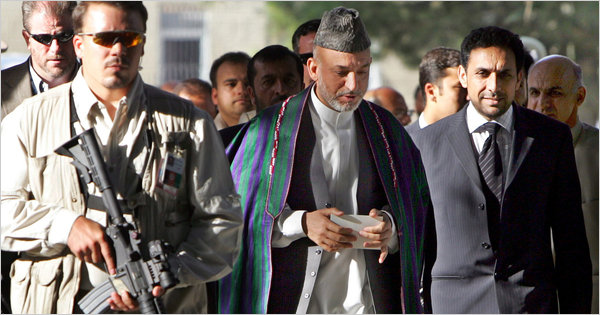
On Sept. 30, Afghan President Hamid Karzai told CBS’s “60 Minutes” that the corruption wracking his government and its people has been at a level “not ever before seen in Afghanistan.”

In the 1980s, when the Soviets ran the country, the government was “not even 5 percent as corrupt,” Karzai said.

“ The Soviets didn’t give contracts to the relatives, brothers and the kin of the influential and high ups,” he said. “The Americans did, and they continue to do, but we get blamed for it.”

It’s easy to disregard what Karzai told CBS. He has often blamed the United States and its allies for corrupting his country and certainly will again. And his complaint about U.S. contracts going to relatives of influential Afghans rings hollow when you go down the list that includes many members of his own family as well as cabinet ministers.

But the record shows Karzai has a point with which others agree.

“It is time that we as Americans — in government, in the media, and as analysts and academics — took a hard look at the causes of corruption in Afghanistan. The fact is that we are at least as much to blame for what has happened as the Afghans, and we have been grindingly slow to either admit our efforts or correct them.”

That was written in September 2010 by Anthony H. Cordesman, national security expert and a former Reagan Pentagon official, in a Center for Strategic and International Studies report, “How America Corrupted Afghanistan.”

Cordesman, who spent a good deal of time in Afghanistan, wrote: “We can probably do more to fight the worst causes of Afghan corruption by changing our own actions than by any amount of effort to encourage Afghan anti-corruption drives.”

He particularly criticized the military contracting process, saying, “The bulk of the money actually spent inside Afghanistan went through poorly supervised military contracts and through aid projects where the emphasis was speed, projected starts, and measuring progress in terms of spending rather than results.”

That process led to what Karzai is complaining about now — as Cordesman did two years ago. “U.S. and foreign contractors poured money into a limited number of Afghan powerbrokers who set up companies that were corrupt and did not perform. . . . In many cases, they also paid off insurgents to let them operate,” Cordesman wrote.

He suggested that the government “tightly control the influx of outside money, limit its flow to honest and capable Afghans at every level of government, and provide the transparency to allow Afghans to see how honestly and effectively the money is used.”

I thought of the 2010 Cordesman report last week after reading an interim report sent to Defense Secretary Leon E. Panetta and top Pentagon officers associated with Afghanistan. The report criticized how the U.S. military is preparing to turn over to the Afghan National Army the buying of petroleum, oil and lubricants that is estimated next year to involve $343 million in U.S taxpayer funds and another $123 million from international donors.

The funding is based on an estimate of the Afghan National Army’s needs. However, the report, by the Special Inspector General for Afghanistan Reconstruction (SIGAR), found that the program after transition will be “vulnerable to theft and waste” because the United States and its allies do not have a “valid method for estimating [Afghan army] fuel needs,” nor records on its past “fuel purchases, deliveries and consumption.”

Corruption was evident in the past when the United States supervised the buying and delivery of fuel in Afghanistan. John F. Sopko, the special inspector general, told a House Oversight subcommittee on Sept. 13 that fuel “is a valuable commodity that is vulnerable to theft.”

Just last month, an Army sergeant pleaded guilty to approving fake documents that allowed truckers to steal $1.5 million of fuel from a forward operating base in 2010. In August, a former Army sergeant pleaded guilty to soliciting $400,000 in a similar plot that involved stealing $1.4 million of fuel in 2010 from another forward operating base.

In June, two Army servicemen pleaded guilty in a plot to steal jet fuel from a base and getting $6,000 for clandestinely filling 3,000-gallon trucks owned by an Afghan contractor.

Sopko told the House panel that his office has 20 active criminal investigations looking into the theft and diversion of fuel or bribery or bid-rigging on fuel contracts involving more than $100 million.

Perhaps worse, the SIGAR inquiry found that U.S. coalition financial records covering $475 million in fuel purchases and payments from October 2006 to February 2011 had been shredded. This was done “in violation of DOD [Department of Defense] and Department of the Army policies,” according to the SIGAR report.

In addition, SIGAR auditors were not given half the records sought for the March 2011 to March 2012 period. And although June 2012 Afghan army fuel purchases and payments were reconciled, the command “still could not account for the amount of fuel delivered and consumed,” SIGAR said.

A July SIGAR report found that because the military command did not “file claims for damaged or missing equipment, it was providing fuel for vehicles that had been destroyed.”

Sopko said his audit found that in one case “as much as 1 million gallons of fuel had been stolen over a four-month period without causing any red flags to be raised in the system.”

In short, corruption involves Americans and Afghans.

Now, according to SIGAR, the U.S.-NATO command “does not have accurate or supportable information on how much U.S. funds are needed for ANA [Afghan National Army] fuel, where and how the fuel is actually used, or how much fuel has been lost or stolen.”

The command has taken actions “to improve controls over fuel purchases, vendor deliveries, and the payment of invoice amounts,” but SIGAR maintains there is still a need to ensure “all fuel activity is tracked and accounted for.”

There may be a history of corruption in Afghanistan, but the United States is continuing to create tempting, rich, new targets such as fuel, and apparently enough Americans are willing to join in the illegal action.

via WashingtonPost


Mormon Church Appointee Aided CIA on Terror

Mormon Church Appointee Aided CIA on Terror

Controversial techniques included waterboarding

A Spokane psychologist who helped develop controversial interrogation methods, which some human rights groups say amount to torture, became the new spiritual leader of a Mormon congregation on the South Hill this week.

Bruce Jessen was proposed by Spokane Stake President James Lee, or “called” in the terminology of the Mormon faith, to be the bishop of Spokane’s 6th Ward, approved by the Church of Jesus Christ of Latter-day Saints hierarchy in Salt Lake City and presented to the congregation on Sunday. He was unanimously accepted by some 200 in attendance, Lee said.

As a bishop – an unpaid, part-time position that usually lasts several years – Jessen will take confessions and help people with their personal problems, Lee said. “They just try to help people with their lives, marriages or finances,” he said.

The appointment surprised some groups who have denounced Jessen and his then-partner James Mitchell for techniques they helped develop for the U.S. Central Intelligence Agency to interrogate suspected terrorists after the Sept. 11, 2001, attacks. Among those techniques were sleep deprivation and waterboarding, according to a 2009 U.S. Senate committee report.

“I can think of no one less qualified for a position of moral and spiritual leadership,” Shahid Battar, executive director of the Bill of Rights Defense Committee, which describes itself as a national grass-roots network for civil rights, civil liberties and the rule of law.

Contacted by telephone for a comment for this article, Jessen said, “I don’t have anything to say to you,” and hung up the phone.

Lee, however, said he interviewed Jessen about the controversy during the several-month period the psychologist was being considered for the bishop’s post, and Jessen shared some information that Lee couldn’t reveal. He believes Jessen, who has been a member of that congregation for years, is an honorable, trustworthy and humble man who will be able to help other members and keep their confidences. He is, however, “tight-lipped” about his work with the government, the stake president added.

“He’ll take a beating in the press before he sets the record straight,” Lee said. “The whole story has not been told.”

Jessen served as bishop of a congregation in another city in the 1980s, Lee said. The recommendation to name Jessen as bishop was sent to the LDS Office of the First Presidency for approval, as are all such proposed appointments.

Asked whether the Office of the First Presidency had any concerns about Jessen becoming bishop to the ward, an LDS spokesman in Salt Lake City would only say Wednesday by e-mail that “Church leaders are looking into this matter” and refused further comment.

Mormons believe their bishops are called by God, and Lee said he has had nominees rejected by congregations and by church officials in Salt Lake City. “God’s perfect. We’re rank amateurs,” Lee said.

When the appointment was presented to the 6th Ward on Sunday, members of the congregation attending the service were given a chance for a show of hands whether they accepted it. All did, Lee said. No one raised their hand to oppose the appointment and no one came to him privately to voice concerns, which is an option the church makes available for people who don’t want to dissent in public.

Jessen is a former Air Force psychologist who helped develop training for air crews and other military personnel to resist interrogation at the Survival School at Fairchild Air Force Base. The interrogation techniques he and Mitchell developed for the CIA following the Sept. 11 attacks were derived, or “reverse engineered,” from that resistance training. They are among the practices cited in a Senate Armed Services Committee report that concluded “those efforts damaged our ability to collect accurate intelligence that could save lives, strengthened the hand of our enemies and compromised our moral authority.”

As Jessen and Mitchell’s tactics became known through the Senate investigation and news accounts, local peace activists demonstrated outside the building that housed their office in downtown Spokane. Rusty Nelson, former co-director of the Peace and Justice Action League of Spokane who helped coordinate some of those protests, was surprised by Jessen’s appointment and questioned the message it sends: “He developed enhanced interrogation methods that are universally condemned.”

Battar, of the Bill of Rights committee, said he would not criticize the Mormon church, but: “It’s depressing how little human rights seems to matter to people.”

But Alex Abdo, of the American Civil Liberties Union’s National Security Project, which also has criticized the interrogation techniques, said the appointment is a matter strictly for Jessen and the Mormon church: “He certainly has a right to practice his faith as he wishes. Someone’s religious beliefs are their own affair.”


Future TSA: Track All ‘Daily Travels To Work, Grocery Stores & Social Events’

Future TSA: Track All ‘Daily Travels To Work, Grocery Stores & Social Events’

While the TSA can’t explain why invasive patdowns without probable cause are legal, that isn’t stopping TSA from future plans to track all your daily travels, anywhere you go, from work, to stores, or even when you go out to play.

When the TSA was asked to provide legal reasons that definitely spelled out why physically invasive patdowns are legal, without any probable cause, not one TSA person had an answer. There was no legal documentation for enhanced patdowns other than it serves “the essential administrative purpose.”

Peep show, police state or privacy invasion, patdowns and body scans are not just in airports. EPIC said DHS is refusing to disclose details of mobile body scanner technology. In fact, in answer to EPIC’s FOIA request, DHS handed over “several papers that were completely redacted.”

Meanwhile at airports, the TSA is rolling out “less-invasive gingerbread man” body scanners to a tune of $2.7 million for 240 machines. At this point, I don’t think skinnier versions of the Pillsbury Doughboy via kinder and gentler naked body scans are going to placate people who are secretly murmuring that America is truly becoming a police state. Spending countless billions of dollars on all this ‘security theater’ makes it look like the TSA is “doing their best to ensure that if there’s a terrorist attack the public doesn’t blame the TSA for missing it.”

According to TSA Blogger Bob, in the 10 years after 9/11, there have been vast improvements and new technology as well as a “professionalized workforce” of Transportation Security Officers. Professional as in claiming no more enhanced groping of children under 12, only to break that promise and seemingly molest this little boy dressed as Spiderman?

The Los Angeles Times reported on TSA launching a behavior-detection program at Boston’s Logan International Airport. These TSA officers received a whopping two weeks of training and are supposed to ask each passenger a “few” questions “in an effort to detect suspicious behavior.” Doesn’t this seem like yet another strike at your privacy? Some people are stressed or even nervous when they are traveling. What if you don’t feel like talking or being questioned? Is this too going to become yet another TSA-mandated “you will answer if you want the privilege of flying?”

A MSNBC travel article warned that when it comes to airport security, “you ain’t seen nothing yet.” Some security analysts suggest Big Brother will employ an even Bigger Brother in the form of “chip-embedded passports that someday tell the federal transportation watchdogs all about your daily commutes to work, the mall — even to parties.”

Other security analysts suggest it will all be about “gathering intelligence technologically” or that increased biometrics is the security answer. The Known Traveler Program will launch this fall so previously known and trusted travelers will “have bar codes stamped on their boarding passes, authorizing TSA screeners to allow those passengers to skip shoe and laptop removals.” TSA Administrator John Pistole said, “Enhancing identity-based screening is another common sense step in the right direction as we continue to strengthen overall security and improve the passenger experience whenever possible.”

So even though the TSA is building up its ranks with bomb-sniffing dogs, there will be dramatic changes in store for travelers within the next 30 years. There will be biometric fingerprinting as well as other biometric and personal info stored in government databases.

Senior policy analyst at the Center for Health and Homeland Security Vernon R. Herron told MSNBC that your official travel document “will not only have information as to who you are and where you have traveled, but it will also … allow government officials to track your travel not only in the air, but your daily travels to work, grocery stores and social events.” In the future the “government will detain passengers who have traveled to places that are suspicious in nature” once they enter an airport, Herron added. “All these measures seem extreme. However, after we declared a war on terror, we must be more proactive than reactive when it comes to airport security.”

Ah, again with the “suspicious” lists even if it’s places to which you traveled this time. Regarding the dreaded list after list of supposed suspicious activity, are they meant to keep the public in a state of paranoia and fear so they just roll over and watch it happen? Digg commenter leodin said, “Strange… The actual threat of terrorism hasn’t increased, and the odds of actually dying in a terrorist attack make the lottery look like a sound investment, and yet the government seems insistent upon taking more and more measures to protect us from these imaginary threats.”

It seems as if the massive DHS database of secret watchlists will continue to grow with U.S. citizens’ names even if the threat of terrorism does not.

Gingerbread Man Scanner: Popsci via Flying with Fish

Follow me on Twitter @PrivacyFanatic

Guantanamo Military Commissions: ‘Piece of a Larger Disturbing Trend Toward Centralized Presidential Power’

Guantanamo Military Commissions: ‘Piece of a Larger Disturbing Trend Toward Centralized Presidential Power’

Just over two weeks ago, Khalid Sheikh Mohammed and other 9/11 terror suspects had a pre-trial hearing before the Guantanamo Bay commission. The judge presiding over the commission is Army Colonel James L. Pohl. Key issues argued were whether a forty-second daly between the press and courtroom was constitutional and whether the suspects could testify about being tortured by CIA interrogators or not.

John Knefel for The Nation traveled to Guantanamo Bay to cover the hearing. His dispatch on the proceedings he witnessed has been posted and it is worth reading.

As he reports, the court heard argument on ”whether the five co-defendants can be barred from testifying about their own experiences on the grounds that their thoughts, emotions and memories are classified information. The prosecution, on behalf of the government, has argued that all utterances by the accused should be “presumptively classified”—that is, every possible statement by should be treated as secret government information—but this request has since been weakened.”

He adds, “The prosecution’s argument is that the five defendants are in a “particularly credible position to confirm or deny” elements of the CIA’s rendition, detention and interrogation program. Having been tortured, they are in possession to describe it, and the government has clear incentives to keep them from doing so.”

The American Civil Liberties Union has opposed the effort to censor torture testimony. Hina Shamsi, director of the ACLU’s National Security Project, declares, “The government’s claim that it can keep from the public the defendants’ testimony about their ‘thoughts and experiences’ of torture is legally untenable and morally abhorrent.”

I was covering the latest hearing in the court martial of Pfc. Bradley Manning, the soldier accused of releasing classified information to WikiLeaks, when this was all unfolding weeks ago. I did not get a chance to highlight some of the government’s argument, but I think this is an appropriate opportunity to share some more of what the government’s argument is on classifying the memories of terror suspects. It nicely complements the totalitarian arguments proffered by government attorneys in support of the indefinite detention provision of the National Defense Authorization Act of 2012 and the FISA Amendments Act of 2008, which essentially legalized warrantless wiretapping that had been occurring under the administration of President George W. Bush.

Justice Department lawyer and deputy trial counsel for the prosecution Theresa Baltes stated in court on October 16 that an executive order issued by President Barack Obama was in force that authorized classification of “orally conveyed information that falls within the subsection of foreign or intelligence sources and methods.” Baltes was alluding to observations and memories of torture or, to use Vice President Dick Cheney’s phrase, “enhanced interrogation techniques.” The “intelligence sources” are the agents who tortured them. The “methods” are how they were tortured and that is not something the government thinks the press or American public should ever find out about.

Baltes said to Judge Pohl later in the proceedings on October 16 the government had originally proposed an order that required defense attorneys to treat everything their client said as classified, including details on what their client had for lunch a day or two ago. The order was narrowed to protect statements on what occurred while in CIA custody.

“The prosecution is proposing that they only treat as classified and handle as classified statements that they know to be classified based on their security clearance,” Baltes told the commission. “And that would specifically include — or believe to be classified, and specifically include information about the CIA RDI program and their prior custody, detention, interrogation.” (RDI being the CIA’s Rendition, Detention and Interrogation program.)

Navy Lieutenant Commander Kevin Bogucki, who represents former CIA captive and former translator for Osama bin Laden, Muhammad Rahim, tried to outline the draconian and preposterous nature of the government’s position. He argued, “When the government voluntarily exposes someone outside their control to information, they are voluntarily relinquishing control over that information.” For example:

..[L]et’s say we are just imagining, for the sake of argument, that there is a classified CIA assassination program and one of the agents in this program goes and attempts to take out a target but fails, wounds the target but doesn’t kill him. That victim is now unable to describe the circumstances of the assault upon him because it might tend to reveal the personnel involved in this secret program, the means by which this program executes its duties? Clearly that makes no sense. It doesn’t matter how secret they kept it when they were planning and when they were working through the techniques of this secret program. Once they decide to execute that program in the real world and expose people outside their control to the essentially mechanisms or the product of that planning, they have now relinquished control over that. And to simply say, well, it relates to the secret program and therefore you can’t talk about it, goes far beyond what can properly be classified… [emphasis added]

Judge Pohl, at one point in the proceedings, notes that the government is not seeking to classify all experiences and memories. They have sough to limit the classification to certain dates and places. Bogucki countered by arguing the information has to be owned, produced or under the control of the US government.

…Now, the only one of those that the government can even arguably rely upon is under the control of the United States Government. If you can go to the next slide, please. So again here, they are relying upon the prong that this statement is arguably under the control of the United States Government….Okay, but the only reason that they think they  have control over this information, the only reason that theythink that final prong is satisfied is because they are holding our clients essentially in isolation…

What Bogucki is suggesting is his client has been completely dehumanized. To the government, he is not a person. He is a vessel containing details that if disseminated would invite scrutiny or possibly undermined current operations or missions against terrorism. Therefore, this vessel cannot come in contact with other prisoners or else those prisoners might come into possession of this information that the government wishes to keep secret. So, Bogucki’s client must be held in solitary confinement and suffer under those conditions because some agents used classified methods of interrogation or torture on him.

Let’s return to Knefel’s piece. He puts this all into the larger context hinting at the reality that what the military commissions system is a second-class system of legal justice that has been constructed to ensure convictions. He also highlights how Obama says he intends to close Guantanamo but a person suspected of being involved in the Benghazi attack could potentially end up at Guantanamo. The moment new prisoners start arriving at Guantanamo under Obama is the moment that any more platitudes about closing Guantanamo are exposed to be completely hollow.

And Knefel writes, “The military commissions are just one piece of a larger, disturbing trend toward centralized presidential power with virtually no oversight or transparency.” He contends:

…The bigger problem is that a once radical idea—that the executive branch should have its own legal system to try so-called enemy combatants—has been normalized and codified under two separate administrations. Recent claims that the CIA and FBI are attempting to send a suspect in the Benghazi killing of Libya Ambassador Christopher Stevens to Guantánamo Bay underscore critics’ skepticism that military commissions will be a limited tool with a definite ending.

The same, of course, is true for the “War on Terror” more broadly, as evidenced by a chilling Washington Postreport on the “disposition matrix,” a counterterrorism tool that further entrenches the policy of “targeted killing” embraced by the Obama administration. As Spencer Ackerman writes, “Obama did not run for president to preside over the codification of a global war fought in secret. But that’s his legacy.” Indeed, as John Kiriakou, a whistleblower recently prosecuted for trying to shed light on the CIA’s torture program, knows too well, the Obama administration has charged more whistleblowers under the Espionage Act of 1917 than all previous presidents combined…

The case of Kiriakou is a kind of bookend to the first term of a president, who pledged to be different from Bush and then decided to be completely subservient to the national security state like previous presidents. Kiriakou was subjected to a prosecution for revealing the name of a covert agent involved in the RDI program, who multiple people in the human rights community are believed to have known. He was prosecuted after he went on television and said the CIA had an official policy of torture because it did use waterboarding on detainees. That the CIA did not like and it made him a target. The government went after Kiriakou and in the process destroyed his life and the lives of his wife and five children by putting them through a prosecution that has left him impoverished and ruined.

What has happened to the torturers? How many people who actually engaged in torture of terror suspects have you heard about, whose lives have been wrecked because they were savages toward human beings? How many people have you read about in the news who authorized this policy and now are in jail because they instructed people lower than them to engage in torture and sought to cover it up with crafty legal justifications?

The answer is none. The answer is nobody. The answer is the US government remains committed to concealing details on methods of torture that were used on people now imprisoned at Guantanamo because the continuity of government was more important to the Obama administration than justice. And, the classification of the experiences and memories of terror suspects is supported by the government so agents, who engaged in torture, do not go through the kind of life-wrecking experience Kiriakou did.

via FireDogLake

“Shut up, Barrett Brown”  – The Indictment Cover Up

“Shut up, Barrett Brown” – The Indictment Cover Up

Real or imagined- reasonable or grandiose, I think we can all agree that things that Barrett Brown has recently said leading to his recent arrest and indictment were on the solid side of stupid.  People who hate him figured it was about time they nailed him on something, and people who… don’t hate him as much… have defended him under the banner of “Freedom of Speech” and pointed to his claims of being harassed and goaded by the FBI and alleged informants, which, according to Brown, have included the Feds threatening to arrest his mother who he said has had nothing to do with his Anonymous hactivism and crowd-source-style-journalism ProjectPM activities.

As I mentioned in my previous post about the Kelly Thomas killing, the functions and execution of government powers and the legal system are by default biased heavily in favor of the powers that be and such powers have great potential to be, and many times have proven to be, corrupt as hell.  That said, before  we all collectively tell Barrett Brown to shut up regardless of whether such a pleading would tip a hat to his right to free speech, I think it is fair to acknowledge that Brown’s paranoid ramblings and associated “threats” may have been his only recourse to defend himself from the fears he professed were true: Agent Robert Smith is corrupt; the FBI is corrupt; the Zetas are out to get him; the FBI is in on it with the Zetas; and if armed men charged in on his home, Brown would feel justified in assuming it was a Zeta assassination attempt coordinated in conjunction with the FBI.

…THAT said, and in addition to Brown’s own confession of heroin addiction and issues with Suboxone withdrawal at and around the time of the “threats” and other tweets listed in the indictment, I think we can at least give the government credit for allowing a mental competence hearing for Brown before the trial against him proceeds.  This should especially be appreciated by Constitution enthusiasts as the evidence of actus reus of Brown’s alleged crimes primarily revolves around a combination of arguably- and absolutely- protected speech.

As for that “conspiracy” charge? Well, look at the indictment: he was soliciting others to find “Restricted” information on Agent Robert Smith, which has been dubbed a “conspiracy” due to another’s attempt to find such “RESTRICTED” information with what is only described as an “Internet search”. Because you know, when I want to get down and dirty on a Federal Agent’s RESTRICED  information, forget unauthorized access to a security clearance-protected Federal Database, I’m all about the old-fashioned Google stalk.  For this charge, maybe we should give the FBI a mental competency hearing while we’re at it….

If you haven’t taken a peek at the Federal indictment against Barrett Lancaster Brown, I implore you to do so. Then, I invite you on a First Amendment adventure where I explain to you why we should all be offended and worried by the United States’ Prosecutor’s attack on our Right to Speech.  The tale I shall tell will not necessarily defend Brown completely or successfully, but it will point out the fallacy of this indictment against him, which is supposed to contain “essential facts of the case”, but really just reveals the Government’s fear of our right to voice dissent and grievance against them.

Join me…

Count 1: Knowingly and Willfully transmitting in interstate commerce communications containing threats to injure the person of another. 18 USC Section 875(c).

While Brown does make vague and conditional threats against others such as @AsherahResearch and @_Dantalion, the indictment count doesn’t seem to care much about them, citing only “threatening to shoot and injure agents of the FBI” – specifically Robert Smith.

So let’s take a look at the first few useless items in this indictment:

Item 5) f. is a conditional threat made on Brown’s twitter against twitter user @_Dantalion in which Brown warns he will shoot if @_Dantalion comes near Brown’s home in Texas.  Brown adds that such an act of self-defense of self and property is legal. Which it is.  When I went to check @_Dantalion’s profile on October 5, 2012, on of the first tweets I came across was @_Dantalion explaining to another twitter user, “I am not an FBI agent”.  So Brown made a conditional threat, the condition being an act that would trigger a legal right to defend oneself, against someone who is not an FBI agent.  This cited evidence in the indictment does not lend to Count 1. At all.

Something I will say now that will apply across all of my arguments is that my belief, which may or may not be held up in a criminal law context in court, is that a threat that is not imminent does not constitute Assault.  I base this on my understanding of the civil Tort offense of Assault which defines the intent behind Assault as an intention to cause imminent harm or apprehension of imminent harm.  The above conditional threat Brown made to @_Dantalion does not detail imminence, and, as you will see as this story unravels, NONE of the threats made by Brown were imminent. Moving on…

Item 8) c. Is a vague, conditional threat toward renowned Anonymous foe, @AsherahResearch. Talk about my momma again and “see what happens”.  So… what’s gonna happen?  And what is it about this tweet that implies or infers the requisite intent for a threat against an FBI agent?

More importantly, why doesn’t Count 1 even mention that people who were not FBI agents were also “threatened”? Poor Dantalion and Asherah.

Where Brown is in trouble on Count 1, albeit with room for a defense, are items 12) c. and d.

The Greatest Incriminating Hits from the infamous “last video” by a disheveled, suboxone-withdrawn Brown include “Robert Smith’s life is over”, “I’m gonna look into his kids”, and “I will shoot and kill [the FBI] if they come.”

This is where we should all yell a hearty “Shut up, Barrett Brown” in the general direction of Texas.  Don’t threaten a federal law enforcement agent, you guys. It’s enumerated in a Federal statute and is one of the few types of threats out there that does not need to be imminent to be illegal. It is contingent upon whether the threat is made in regards to LE carrying out their official duties.

But there is still a defense. Maybe.  The “threats” regarding Robert Smith and his kids aren’t threats of injury.  Brown even states “By ruin his life, I don’t mean kill him”.  As for shooting and killing the FBI?  I point to the “knowingly” sub-element of intent for this particular statute.  The threat is conditional on whether or not the FBI comes.  Brown never indicates that he knows the FBI is coming.  He says in the item 12. video that the FBI has held onto his seized computers for months and has yet to allege Brown of a crime based on the evidence from a previous raid.  In fact, as the worst evidence against Brown is this singular video, the FBI probably didn’t even know whether or not they were going to raid Brown at the time that this conditional threat was made.  Admittedly, this is a tight defense to make, but I will come back to it for Count 3.

Further defense?  Mental and emotional instability: persisting paranoia issues plus suboxone withdrawal.  Although a finding of Brown’s allegation of FBI corruption would probably not happen, there is a question of self-defense.  And if there was no real reason for self-defense, see: delusions of grandeur, delusions of persecutions, paranoid psychosis. In other words, possible insanity defense (and the thresholds for the insanity defense may be lowered when there was no action taken beyond speech).

Count 2: knowingly and willfully combine, conspire, confederate, and agree with other persons known and unknown to Grand Jury … to make restricted personal information about an FBI agent and immediately family publicly available with intent to threaten and intimidate the agent and to incite commission of violence against the agent.  18 USC Section 371 and 18 USC Section 119.

…How much more element-loaded can a charge get?

The “with intent” and the all-elements-must-be-fulfilled-indicative “and” ‘s of the latter part of this Statute combo are hard for the Government to corroborate with the facts of this indictment.  They’re doing pretty good up to “incite commission of violence against” Robert Smith.  We’ve got solicitation which, upon the cited agreement Brown made with another to gather Smith’s personal information, merges into conspiracy.  We have immediate family members.  We have intent to threaten and intimidate.  But incite violence?  That’s where the prosecution stretches it.  Look through the indictment closely, and there is never a threat or suggestion of committing violence against Smith.  Only the hypothetical FBI raiders, generally.

But I think this Count specifically is why the indictment tries to pancake all of Brown’s tweets together.  Actually, the majority of this indictment is an attempt to build a criminal, violence-inciting profile of Brown out of several non-criminal tweets.  This compilation is why I say we should be afraid for our Right to Speech.

It is clear in several tweets, that Brown is soliciting and possibly conspiring to gather restricted information on Robert Smith for the purpose of publicly releasing it.  None of these tweets suggest violence toward Smith.
Non-exhaustively: 6) a. 8) a., 11, and 13. Although it legally doesn’t matter for conspiracy, it should be noted that no evidence is listed in the indictment that Brown succeeded in obtaining the sought restricted information on Smith.

One memorable case from my Criminal Law class (at the moment I cannot find the case, but will likely come back to revise this paragraph when I find it) is a case where a drunk driver was acquitted on appeal because evidence levied against him included, basically, pro-drinking propaganda bumper stickers the driver had.  These bumper stickers were used as evidence toward the defendant’s intent.  It simply didn’t work.  Pro-drinking speech didn’t help the prosecutors in adding to the defendant’s intent for criminal drunken behavior.  Similarly to this decision, I argue anti-government speech not directly associated with the accused behavior for the alleged crime of conspiracy shouldn’t lend to intent for the conspiracy.
In fact, this is nearly exactly what was held in California State Appellate courts in People v. Huss regarding the instruction of including picketing sign slogans as evidence for conspiracy to incite a riot as being an invalid, unconstitutional instruction. 241. Cal.App.2d 361.  Although a California Appellate court decision doesn’t serve as precedent over the Federal District Court that Brown will face trial in, Huss borrows its reasoning from Federal Supreme Court case Terminiello v. City of Chicago. 337 U.S. 1. (How do you like them apples?)

…which should also hold for the next count…

Count 3: knowingly and willfully threaten to assault a federal law enforcement officer with intent to impede, intimidate, and interfere with such federal law enforcement while engaged in the performance of official duties and with the intent to retaliate against such federal law enforcement officers on account of performance of official duties.  18 USC Sections 115 (a)(1)(B) and (b)(4).

…and some of my favorite highlights of the Free Speech-protected tweets that shouldn’t lend to the intent of Counts 2 and 3 are…

2) c. “Do you know how to shoot? You have five years to learn. Maybe less.” Links to a short video of Brown doing some shotgun practice in an open field.

My assumption for this tweet is that in saying “You have five years to learn” how to shoot is a reference to a conspiracy such as FEMA camps where conspiracy theorists believe the government will raid us all and send us to “FEMA concentration camps”. Or something like that.  But isn’t self-defense against a corrupt government the heart and soul of the Second Amendment?  Otherwise, there is no specific (or even general) mentioned target for the suggested self-defense nor is there an imminence of the assumed threat posed by Brown’s pro-arms propaganda.

3) a. “Kids! Overthrow your government lol” Link? Get this- the link is to a Blondie music video, “Rapture”.  A political satire on how the government and media has zombified us all. OH NOES! DISSENT AND GRIEVANCE!

The tweet itself reeks of satire.  See: “Kids!” and “lol”.  Before heading to the music video link, I thought maybe the link would lead me to something that would really rile me up with a fervent violent fire if I were susceptible to do so. Maybe a conspiracy theory that pulled at revolutionary heart strings?  Maybe excerpts from the Anarchists’ Cookbook?
No. It’s a Blondie music video.  Not exactly speaking to an incitement of violence nor an intent to retaliate against a raid.
Similar anti-government, pro-self-defense-against-a-corrupt-government comments include “Don’t Wait. Retaliate.” and 10) b.’s vague threat by Brown that he will use “other means at [his] disposal” to ‘wipe out the government’… the “wiping out” he promises to do includes more specific, non-violent threats of using courts, media, and his investigative journalism at ProjectPM.
And 2) e. “Have a plan to kill every government you meet.”  in which there is no specific or general threat to any human being, but an abstract entity and with such an abstract entity being the object of the threat, “kill” could be interpreted as a non-violent version of the verb such as “stop” or “get rid of”.
Moving on…

The not-physical, non-injurious, cyber threats….
5) a. “…the net will give us revenge.”
5) c. “Nothing restrains me from my real work. #ProjectPM”
5) e. “Help #ProjectPM plan, execute further attacks … #PantherModerns”
For the record, the Panther Moderns are a FICTIONAL hacking group from the work “Neuromancer” who simulated a CYBER terrorist attack on a media conglomerate called “Sense/Net”

The ReTweeted threat that is actually a threat to himself:
7) “A dead man can’t leak stuff… Illegally shoot the son of a bitch.”  Brown is comparing himself to the object and victim of this retweeted threat, Julian Assange.  The presumed subject of the tweet instructed to “illegally shoot the son of a bitch” would be a LE officer who should act as a due process-depriving judge jury and executioner for Assange (comparatively, Brown).

Well, at least they’re giving Brown due process so far…

Not even threats and I don’t even know why they were included in the indictment:
2) a. “Don’t be a pussy. Call up every fascist and tell them you’re watching.” Links to a weird music remix featuring harmless sound clips that include Brown.
5) b.: “Fuck you.” -directed at the feds for apparently depriving Brown of his opiates, somehow.
5) d. “Journalists allow the guilty to escape. #ProjectPM ensures the guilty will be known to their children as they are, forever.
10) a. “This is part two of why I’m so fucking angry.” BB mad.

Here, I’ll repeat my defense for Brown’s intent.  Knowledge is requisite for Count 3. Brown did not know that the FBI would raid him and his threat was contingent on a raid that he wasn’t even certain would occur based on a lack of the FBI’s ability to charge him with anything from the first raid of Brown.
And once again: insanity or diminished mental capacity due to Suboxone withdrawal.  The worst and most incriminating of Brown’s threats from item 12 were coupled with Brown’s admission that he was a Heroin addict and hadn’t taken his Suboxone.  In addition, Brown thinks he’s entitled to get his stuff back from the first raid months ago where the FBI took and held his computers. (Non-exhaustively: Items 8) b and 2, 10) b.) He also thinks he deserves an apology [10) b.].  Grandiose and possibly delusional.  I almost wonder why the FBI didn’t go for a discrediting involuntary psych ward hold.

Or you know, just give him his stuff back, which as we are learning from recent developments in the PayPal 14 case, he may have very well had the right to after 60 days of the FBI holding it. (But I think feeling entitled to an apology is still a bit delusional.)

In Conclusion…

With and indictment riddled with constitutionally-protected speech, my fear is that the US Prosecutors and FBI wanted to put an attack on anti-government dissent and critique at the forefront of this issue.  They wanted to scare us all into shutting up and watching what we say when it comes to speculating government conspiracies and suggesting we consider the possibility of an increasingly corrupt government and promote the intention behind the Second Amendment which is to protect ourselves from a worst-case scenario resulting from such corruption.

Shut up, Anonymous. Shut up, Occupy. Shut up, investigative journalists. Shut up, militias. Shut up, delusional and justified paranoia.  Shut up, Tea Party. Shut up, dissidents.

Watch your televisions.  Click on those targeted advertisements tailored by our tracking of your Google searches.  Did somebody tell you that non-violent protesters were beat and shot at by Riot Cops? Don’t worry. We did it for National Security reasons.  And don’t mind the surveillance cameras in every retail store and on every street corner.  They’re just livestreaming and storing your every move for TrapWire.

Shut up, Barrett Brown.


via ChaosInOrder

Rogue U.S. General Arrested for Activating Special Forces Teams; Ignoring Libya Stand-Down Order

Rogue U.S. General Arrested for Activating Special Forces Teams; Ignoring Libya Stand-Down Order

The official story surrounding the events of September 11, 2012 in Benghazi, Libya which left four Americans dead, has now officially fallen apart.

After numerous flips and flops by the Obama administration, which originally attempted to paint the incident as a Muslim outcry over an anti-Islamic video, whistle blowers throughout the U.S. government, including within the White House, the State Department, national intelligence agencies and the U.S.military have made available stunning details that suggest not only did operational commanders have live visual and audio communications from drones overhead and intelligence assets on the ground, but that some commanders within the military were prepared to go-it-alone after being told to “stand down.”

Africom commanding officer U.S. General Carter Ham, after being ordered to essentially surrender control of the situation to alleged Al Queda terrorists and let Americans on the ground die, made the unilateral decision to ignore orders from the Secretary of Defense and activated special operations teams at his disposal for immediate deployment to the area.

According to reports, once the General went rogue he was arrested within minutes by his second in command and relieved of duty.

“(The) basic principle is that you don’t deploy forces into harm’s way without knowing what’s going on; without having some real-time information about what’s taking place,” Panetta told Pentagon reporters. “And as a result of not having that kind of information, the commander who was on the ground in that area, Gen. Ham, Gen. Dempsey and I felt very strongly that we could not put forces at risk in that situation.”

The information I heard today was that General Ham as head of Africom received the same e-mails the White House received requesting help/support as the attack was taking place. General Ham immediately had a rapid response unit ready and communicated to the Pentagon that he had a unit ready.

General Ham then received the order to stand down. His response was to screw it, he was going to help anyhow. Within 30 seconds to a minute after making the move to respond, his second in command apprehended General Ham and told him that he was now relieved of his command.

The question now is whether the American people will hold to account the chain of command responsible for leaving our people behind, fabricating a politically expedient story, and continuing to sell the now defunct lie(s) even after all of their variations of the story were found to be false and misleading.

A General who made the decision to assist diplomatic and intelligence assets on the ground has been arrested and will likely be retired or worse, while those who ordered the removal of embassy security details and ordered U.S. forces to stand-down are left to go on about their business and likely risk more American lives in the future.

In some circles the actions of those at the very top of the command structure during the Bengzahi attacks would be considered traitorous.

via  The Daily Sheeple

Did the CIA Arrange a Marriage in Order to Kill Al-Awlaki?

Did the CIA Arrange a Marriage in Order to Kill Al-Awlaki?

A Danish spy claims that the third marriage of terrorist Anwar al-Awlaki was actually part of a CIA plot to set up the al-Qaeda leader for a CIA assassination attempt. A former member of Denmark’s intelligence service claims that he was paid by the CIA to introduce the American-born al-Awlaki to his future bride via letters and video proposals.

According to several reports in the Danish newspaper Jyllands-Posten over the weekend, the spy is 36-year-old Morten Storm, a Dutch citizen who converted to Islam and moved to Yemen in the late 1990s. Storm says that he befriend many Islamic radicals during his time there, but became disillusioned with their cause and turned against them in 2006, offering to become a spy on behalf of PET, Denmark’s intelligence agency.

Storm says that in 2009, al-Awlaki asked him to help find a European Muslim woman to become his third wife. So Storm recruited a Croatian woman, who’s identified as “Aminah” in the reports, who was  sympathetic to al-Awlaki via Facebook and helped introduce them. All the while, Storm says he was paid $250,000 by the CIA to set up the marriage, and they also supplied a suitcase rigged with tracking devices that was given to the woman—who was not in on the plot—when she traveled to Yemen to meet al-Awlaki. The supposed idea behind the plot was to use the device to determine the terrorist’s location and then kill them both with a bombing strike. The plan failed when the al-Awlaki’s aides made her get rid of the suitcase upon her arrival, but al-Awlaki and Aminah did eventually marry.

Even though that plan didn’t work out, Storm says he still contributed to the drone strike that did kill al-Awlaki in 2011. He says he continued to exchange messages with al-Awlaki via a USB stick that was passed back and forth between them. That stick may been the device that allowed the U.S. to pinpoint his location for the drone attack that killed him. (Aminah is said to still be alive today, working for an al-Qaeda magazine.)

The reports have upset some Danish citizens who are worried that if Storm’s story is real, it means their government participated in an illegal assassination. PET has said in the past that they played no part in his death. That doesn’t even get into the fact that they may have used an unsuspecting person as “live bait” for a deadly hit. Also, a Muslim community leader from Birmingham who knew Storm when he lived briefly in England has spoken out against him, saying Storm was a troublemaker who tired to radicalize young Muslims and is only out for attention and money. Storm claims that was just part of his cover as a radical Muslim and there are audio recordings linking him to al-Awlaki. Neither PET or CIA would comment on the story.

via AtlanticWire

Imran Khan Detained and ‘Interrogated Over Drone Views’ by US immigration

Imran Khan Detained and ‘Interrogated Over Drone Views’ by US immigration

Imran Khan, the former Pakistan cricket captain turned politician, was taken off an international flight from Canada to New York and questioned by US immigration officials over his views on drone strikes and jihad.

Khan, who has been at the forefront of a high-profile campaign as leader of the Pakistan Movement for Justice party (PTI) to end US drone strikes in northern Pakistan, had been in Canada to give a speech and was on his way to a fundraising dinner in the US on Friday.

Khan recently attempted to lead a high-profile march into south Waziristan which included US peace activists from the Code Pink group with some 15,000 of his supporters.

He claims that the drone strikes kill large numbers of innocent civilians – a claim denied by the US.

“I was taken off from plane and interrogated by US Immigration in Canada on my views on drones. My stance is known. Drone attacks must stop,” Khan tweeted yesterday after his questioning.

He added: “Missed flight and sad to miss the fundraising lunch in NY but nothing will change my stance.”

A US state department spokeswoman confirmed Khan’s questioning. “We are aware that Imran Khan was briefly delayed in Toronto before boarding the next flight to the United States,” she told Pakistani media.

“The issue was resolved. Mr Khan is welcome in the United States.”

US immigration authorities refused to comment on Khan’s case but a spokeswoman quoted by the Toronto Sun newspaper said: “Our dual mission is to facilitate travel in the United States while we secure our borders, our people, and our visitors from those that would do us harm like terrorists and terrorist weapons, criminals, and contraband,” said CBP spokesman Joanne Ferreira.

“Under US immigration law, applicants for admission bear the burden of proof to establish that they are clearly eligible to enter the United States. In order to demonstrate that they are admissible, the applicant must overcome all grounds of inadmissibility.”

Some Canadian commentators have speculated that Khan’s questioning was because of groups who have been protesting his visit to the US, including a group called the American Islamic Leadership Coalition which reportedly wrote to US secretary of state Hillary Clinton asking her to revoke the US visa granted to Khan.

“The US embassy made a significant error in granting this Islamist leader a visa,” the group said in a statement.

“Granting individuals like Khan access to the US to fundraise is against the interest of the people of Pakistan and the national security interests of the US.”

Ali Zaidi, an official in Khan’s party demanded “a prompt and thorough inquiry into this sordid episode” and “an unconditional apology from the US government”.

via Guardian.co.uk


Who Bought Your Politician? Check via Embeddable Widget

Who Bought Your Politician? Check via Embeddable Widget

Ask politicians whether campaign contributions influence their decisions, and they’ll tell you certainly not.

Ask any citizen, and they’ll likely give the opposite answer.

With that in mind, we’re re-introducing a web-based embeddable widget — for anybody to use — that lists the top 10 donors and their contributions to any member of the House and Senate, their opponents, and the presidential candidates. Wired updated the widget in conjunction with Maplight, the Berkeley, California-based nonprofit dedicated to following money and politics.

“Corporate influence in politics has gone off the charts, and it’s more important than ever for voters to understand who is financing candidates,” said Evan Hansen, editor in chief of Wired.com. “Maplight has done the hard work of compiling the data. At Wired, we’re happy to help get that information out to the wider public, and share it as broadly as possible with this web-based embeddable widget.”

The widget is free to steal and comes with a Creative Commons license. The widget displays a shadow outline of the politician adorned with NASCAR-style logos of some of the top donors giving that candidate money.

Maplight pulls down up-to-date campaign-financing figures from the Federal Election Commission, which are fed into a database so the widget stays current.

“In just a few weeks, voters will confront a ballot filled with candidates whose campaigns have been paid for by wealthy donors. People deserve to know the truth about whose interests their candidates are really representing,” said Daniel Newman, president and co-founder of MapLight. “We’re proud to work with Wired to give voters a tool they can use to draw back the curtain on the moneyed influence plaguing our political system.”

The widget shows where candidates are ranked in terms of how much money they’ve raked in compared to their peers. It also shows how they rank among all federal candidates.

President Barack Obama, for example, comes in first for presidential candidates, having garnered $201 million. His GOP rival, Mitt Romney, comes in second for presidential candidates with $150 million. Not surprisingly, the two rank first and second among all candidates for federal office.

When it comes to the top-10 donor lists, the total from each company or organization includes donations from individual workers and a firm’s Political Action Committee, if it has one. Goldman Sachs and its PAC has given Romney nearly $544,000 — Romney’s top contributor.

The largest contributors to the president were government employees, at more than $2 million.

The Supreme Court ruled in 2010 that the First Amendment prohibited the government from limiting contributions from unions and Political Action Committees to political campaigns that are independent of an individual’s campaign. Of note, however, the widget does not keep track these types of independent expenditures.

We introduced the first version of the widget in 2010, with Maplight’s help. But that one only listed incumbents and did not have challengers, unlike the new widget. The older version was viewed millions of times.

When we unveiled the original widget, we used it to produce a story about federal funding and a controversial helicopter — Follow the Money: Pork-Powered Pig Preps for Flight, which highlighted pay-to-play contributions to select politicians from defense firms hoping to win a contract to build the next Marine One, the president’s personal helicopter.

What we learned was something we suspected and knew all along: There is a correlation to politicians’ voting records and where they get their money.

And we’re giving away the widget to help you prove it in other cases, as well.

via Wired.com

Soldier Sacked By The Army 72 Hours Before He Gets His Full Pension

Soldier Sacked By The Army 72 Hours Before He Gets His Full Pension

An Iraq war veteran was made redundant just 72 HOURS before ­qualifying for a full Army ­pension.

Sergeant Lee Nolan will lose out on at least £100,000 after he became one of 20,000 soldiers who are being axed in savage military cuts.

He was so furious at losing his job, his Army home and financial ­security after risking his life for his country that he sent his six military medals to David Cameron.

And in a moving letter to the PM he wrote: “The events of the past 12 months have turned my life on its head and sullied my near-18 years of loyal and exemplary service to my ­country.

“The medals I have enclosed would only serve to ­remind me of the shocking way I have been treated.”

Sgt Nolan is one of at least 80 soldiers, sailors and aircrew made redundant when they are less than a year away from qualifying.

There have been claims that they are being intentionally ­selected to save the MoD millions of pounds.

And the axed troops’ plight has sparked calls for a review, with an online petition demanding that the issue is debated in Parliament.

Sgt Nolan, 43 – who did tours of duty in Bosnia, Iraq and Kosovo – joined the Army when he was 24.

He was made compulsorily ­redundant from his job as a medical technician in the Royal Electrical and Mechanical Engineers last September, leaving on August 31 after a 12-month notice period.

Depending on their rank, forces personnel aged over 40 need 16 or 18 years’ service to earn a pension and lump sum when they leave.

When Sgt Nolan’s redundancy was worked out he was stunned to find his service was 17 years and 362 days… just three days short.

He said: “I was absolutely dumbfounded. In one moment I lost my ­livelihood, my way of life and the pension I’d relied on to start again.”

He was given a redundancy payout of £93,000 and when he reaches 60 he will get a £5,000-a-year pension. If he had been made redundant three days later he would have received £188,500, made up of a £76,000 lump sum plus £6,250 a year until he was 60. After he complained, he made a heartbreaking discovery.

He said: “They discovered there had been an administrative error. They had only wanted 20 redundancies. I was the 21st.”

Appalled, Sgt Nolan, who has been forced to move in with ­relatives in Manchester, sent his letter and medals to Mr Cameron.

He received a letter dated a month ago thanking him and promising a reply but has not heard any more. He has now joined the campaign group Pensions Justice for Troops, which says ­redundant personnel will miss out on at least £40million between them.

Spokeswoman Jayne Bullock said: “People who leave the Armed Forces lose a whole way of life and need financial security as they adapt, retrain and start over again.”

A Number 10 spokesman ­declined to comment on the letter. The MoD said nearness to qualifying for a pension was not a factor in being selected for redundancy.

via RefreshingNews99

America’s Deadly Double Tap Drone Attacks Are ‘killing 49 people for every known terrorist in Pakistan’

America’s Deadly Double Tap Drone Attacks Are ‘killing 49 people for every known terrorist in Pakistan’

  • Study found war against violent Islamists has become increasingly deadly
  • Researchers blame common tactic now being used – the ‘double-tap’ strike
  • Drone strikes condemned for their ineffectiveness in targeting militants
Just one in 50 victims of America’s deadly drone strikes in Pakistan are terrorists – while the rest are innocent civilians, a new report claimed today.The authoritative joint study, by Stanford and New York Universities, concludes that men, women and children are being terrorised by the operations ’24 hours-a-day’.

And the authors lay much of the blame on the use of the ‘double-tap’ strike where a drone fires one missile – and then a second as rescuers try to drag victims from the rubble. One aid agency said they had a six-hour delay before going to the scene.

The tactic has cast such a shadow of fear over strike zones that people often wait for hours before daring to visit the scene of an attack. Investigators also discovered that communities living in fear of the drones were suffering severe stress and related illnesses. Many parents had taken their children out of school because they were so afraid of a missile-strike.

Today campaigners savaged the use of drones, claiming that they were destroying a way of life.

Clive Stafford Smith, director of the charity Reprieve which helped interview people for the report, said: ‘This shows that drone strikes go much further than simply killing innocent civilians. An entire region is being terrorised by the constant threat of death from the skies. ‘

There have been at least 345 strikes in Pakistan’s tribal areas near the border with Afghanistan in the past eight years.

‘These strikes are becoming much more common,’ Mirza Shahzad Akbar, a Pakistani lawyer who represents victims of drone strikes, told The Independent.

‘In the past it used to be a one-off, every now and then. Now almost every other attack is a double tap. There is no justification for it.’

The study is the product of nine months’ research and more than 130 interviews, it is one of the most exhaustive attempts by academics to understand – and evaluate – Washington’s drone wars.

Despite assurances the attacks are ‘surgical’, researchers found barely two per cent of their victims are known militants and that the idea that the strikes make the world a safer place for the U.S. is ‘ambiguous at best’.

Researchers added that traumatic effects of the strikes go far beyond fatalities, psychologically battering a population which lives under the daily threat of annihilation from the air, and ruining the local economy.

They conclude by calling on Washington completely to reassess its drone-strike programme or risk alienating the very people they hope to win over.

They also observe that the strikes set worrying precedents for extra-judicial killings at a time when many nations are building up their unmanned weapon arsenals.

The Obama administration is unlikely to heed their demands given the zeal with which America has expanded its drone programme over the past two years.

Washington says the drone program is vital to combating militants that threaten the U.S. and who use Pakistan’s tribal regions as a safe haven.

The number of attacks have fallen since a Nato strike in 2011 killed 24 Pakistani soldiers and strained U.S.-Pakistan relations.

Pakistan wants the drone strikes stopped – or it wants to control the drones directly – something the U.S. refuses.

Reapers and Predators are now active over the skies of Somalia and Yemen as well as Pakistan and – less covertly – Afghanistan.

But campaigners like Mr Akbar hope the Stanford/New York University research may start to make an impact on the American public.

‘It’s an important piece of work,’ he told The Independent. ‘No one in the U.S. wants to listen to a Pakistani lawyer saying these strikes are wrong. But they might listen to American academics.’

Today, Pakistani intelligence officials revealed a pair of missiles fired from an unmanned American spy aircraft slammed into a militant hideout in northwestern Pakistan last night.

The two officials said missiles from the drone aircraft hit the village of Dawar Musaki in the North Waziristan region, which borders Afghanistan to the west.

Some of the dead were believed to be foreign fighters but the officials did not know how many or where they were from.

The Monday strike was the second in three days. On Saturday a U.S. drone fired two missiles at a vehicle in northwest Pakistan, killing four suspected militants.

That attack took place in the village of Mohammed Khel, also in North Waziristan.

North Waziristan is the last tribal region in which the Pakistan military has not launched an operation against militants, although the U.S. has been continually pushing for such a move.

The Pakistanis contend that their military is already overstretched fighting operations in other areas but many in the U.S. believe they are reluctant to carry out an operation because of their longstanding ties to some of the militants operating there such as the Haqqani network.

Journalist Glenn Greenwald Speech on “Humanitarian” Wars

Journalist Glenn Greenwald Speech on “Humanitarian” Wars

http://youtu.be/MMirTxSlhBA

Greenwald is that increasingly rare commodity in the US, a true journalist. I don’t agree with him on a lot of things, but he is definitely correct here in debunking the hogwash about “humanitarian” wars. Nobody goes to war for humanitarian reasons. There may be an unplanned byproduct of humanitarianism, but it is never the objective. The objective of war is always the acquisition of land and resources or the defense thereof. That’s it.


What Happens After Jurors Get It Wrong?

What Happens After Jurors Get It Wrong?

About 300 people have been wrongfully convicted and exonerated in the U.S. thanks to DNA evidence. But overlooked in those stories are the accounts of jurors who unwittingly played a role in the injustice.

One of those stories is playing out in Washington, D.C., where two jurors who helped convict a teenager of murder in 1981 are now persuaded that they were wrong. They’re dealing with their sense of responsibility by leading the fight to declare him legally innocent.

Santae Tribble, now 51, is already out of prison, but he’s asking a judge to sign a certificate of actual innocence that would help him get compensation for more than 25 years he spent behind bars.

Bad Evidence And Faulty Facts

In January 1981, a jury took only a few hours to convict Tribble for shooting a cabbie dead in a botched robbery. There was only one witness, the cabbie’s wife, who couldn’t make a positive identification. The key evidence was a woman’s stocking, which the murderer wore over his face. That stocking contained hair the FBI said it had matched to Tribble.

“They admitted that they didn’t know with certainty, but the numbers they threw out were so steep as to make it virtually certain that it was his hair,” juror Susan Dankoff said.

In fact, prosecutors told the jury in the closing argument there was only a 1 in 10 million chance it could be someone else’s hair.

Juror Anita Woodruff is haunted by her decision to help convict Santae Tribble of murder.

EnlargeCarrie Johnson/NPRJuror Anita Woodruff is haunted by her decision to help convict Santae Tribble of murder.

But Tribble, his family members and his girlfriend all testified that he was home, sleeping at his mother’s apartment in Maryland at the time of the murder.

Dankoff remembers she considered the alibi — and rejected it.

“Then you start to think, OK, maybe they’re covering for him. And I think that that was really what it came down to,” she said.

So the jury voted to convict — except that the hair analysis that proved so persuasive has been completely discredited. Even the Justice Department says Santae Tribble didn’t do it. Dankoff said she got a call from Tribble’s lawyer not too long ago letting her know.

“And that really, really left a mark,” she said. “I was just devastated. I think I walked around feeling numb for a week after hearing that.”

Anita Woodruff also served on that jury. She said she went home and cried after voting to convict. The case never really left her. So when Tribble’s lawyer Sandra Levick, of the Public Defender Service, called to say new DNA tests on that hair did not match, Woodruff recalled, “I was like, ‘Oh my God.’ I said, ‘He spent all that time in jail, for nothing.’ ”

Starting Over After Decades In Prison

Woodruff was only 20 years old at the time of the trial, close in age and experience to Tribble. She said she started thinking about how their lives diverged.

“You know, and I’m thinking about all the things that … I did,” Woodruff said. “I got married, you know, got a divorce, but I had kids, you get to raise your kids, and I did see them get their license and go to proms and high school graduations.”

Santae Tribble had none of that.

“I did have a son that was born soon after I was incarcerated,” Tribble said. “I missed his entire life growing up.”

Tribble said he understands the jury and the justice system made a mistake. But now, he said, is the time to make amends.

“Like, they went the extra mile to, when the pieces didn’t fit, to make them fit,” Tribble said. “Now that it’s clear that the pieces don’t fit, make it right.”

Under the law, Tribble can collect as much as $50,000 a year for each year he was wrongfully incarcerated, if a judge signs off and formally declares him innocent.

The two jurors from his trial so long ago have written to urge the court to support that idea. They say they’re haunted by Tribble’s circumstances. He has no job, no money and no real home. He’s living with his older brother. No big dreams, but maybe a landscaping business, he says, since he spent too many years indoors.

“Well, in landscaping they call it beautification,” Tribble said. “You know, to make it pretty, the flowers and arranging the grass and stuff like that.”

He says he only wants a chance, another chance, at a normal life.

What If Mitt Romney Inherits Obama’s Killer Drone Fleet?

What If Mitt Romney Inherits Obama’s Killer Drone Fleet?

Andrew Sullivan says he’ll use it less scrupulously than the president. But based on what evidence? Current policy is plenty unscrupulous already.

Asked about drone strikes during Monday’s foreign policy debate, Mitt Romney basically said that President Obama is right to use them. Expect more drone warfare in 2013 regardless of who wins the election. Does that mean that the two candidates are indistinguishable on the issue? My friend and former boss Andrew Sullivan doesn’t think so. “Memo to Conor Friedersdorf,” he wrote while live-blogging at The Dish. “You think Romney would be as scrupulous in drone warfare as Obama?” Implicit is the judgment that Obama has been “scrupulous.”

But it isn’t so.

Sullivan and I agree that Obama won last night’s debate, and that he’d be likely to preside over a more prudent, reality-based foreign policy than Romney, based on the respective campaigns that they’ve run. On drones, however, Romney appears to have the exact same position as Obama. And Obama has been egregiously unscrupulous. I don’t want to hear the dodge about how drone strikes are necessary. It’s beside the point. This is about the specific ways Obama has waged the drone war. Even if you agree in theory with drone strikes, Obama’s actions ought to bother you.

Let me be specific:

  1. As Jane Mayer noted when describing the CIA’s drone strikes, “The program is classified as covert, and the intelligence agency declines to provide any information to the public about where it operates, how it selects targets, who is in charge, or how many people have been killed.”
  2. The Obama Administration avoids judicial accountability by arguing that the drone program is secret, even as it acknowledges the existence of the program when bragging about killing terrorists.
  3. As the Mayer article goes on to state, “because of the C.I.A. program’s secrecy, there is no visible system of accountability in place, despite the fact that the agency has killed many civilians inside a politically fragile, nuclear-armed country with which the U.S. is not at war. Should something go wrong in the C.I.A.’s program — last month, the Air Force lost control of a drone and had to shoot it down over Afghanistan — it’s unclear what the consequences would be.”
  4. According to The New York Times, “Mr. Obama embraced a disputed method for counting civilian casualties that did little to box him in. It in effect counts all military-age males in a strike zone as combatants, according to several administration officials, unless there is explicit intelligence posthumously proving them innocent.”
  5. The Obama Administration permits the CIA to carry out “signature strikes” even though they don’t know the identity of the people they’re trying to kill!
  6. As Glenn Greenwald explained, “In February, the Bureau of Investigative Journalism documented that after the U.S. kills people with drones in Pakistan, it then targets for death those who show up at the scene to rescue the survivors and retrieve the bodies, as well as those who gather to mourn the dead at funerals.”
  7. As a report published by the law clinics at NYU and Standford document, innocent people in Waziristan are being terrorized and traumatized daily by Obama’s drone war. And the policy has killed, at minimum, hundreds of innocent people, a judgment that is supported even by data from the New America Foundation, whose methods almost certainly under-count dead innocents.
So to sum up, Obama has implemented a global killing program with zero checks and balances; he’s operated it out of the CIA rather than the Department of Defense; he invokes the state-secrets privilege to avoid defending it in court, even as he brags about its efficacy; it includes killing people whose identities we don’t even know; all military-aged males we kill are presumed to be “militants”; the Pakistani government reportedly gets to pick some of the targets; at minimum, hundreds of innocents have been killed, including rescuers and funeral-goers; a 16-year-old American citizen was among those killed; and Sullivan, having been exposed many times to all the information I’ve just included, thinks its accurate to call Obama’s drone program “scrupulous,” though it could easily be made more transparent, accountable, and lawful.

What really gets me is that, in addition to arguing that Obama has run this program scrupulously (something implied in Sullivan’s question, and explicitly argued in threads like this one), Sullivan has also himself articulated almost all of the reasons why the program has been unscrupulous — that is to say, why Obama’s drone policy “disregards, or has contempt for, laws of right or justice with which he  is perfectly well acquainted, and which should restrain his actions.”

“One thing I’ve learned this past decade is that the CIA is pretty much its own judge, jury and executioner,” Sullivan wrote. “It is much less accountable to the public, more likely to break the laws of war and destroy the evidence, more likely to do things that could escalate rather than ameliorate a conflict.” Is it scrupulous to pick an organization like that to run your drone program?

Says Sullivan’s post from June of 2011 (emphasis added):

Obama is now engaged in two illegal wars — in Libya and in Yemen. There was no Congressional debate or vote on these wars — and one is being waged by the CIA with unmanned drones. I think we have learned a little about what happens when you give the CIA carte blanche to run a war with no accountability except to a president who has a vested interest in covering up errors.

Said Sullivan on another occasion, “Put drones in the hands of an executive who is empowered to do anything without any input from the other branches of government … and we have a problem indeed.” He is also on record stating that “counting every military-age man in the vicinity of a Jihadist as a terrorist is a total cop-out,” and he even wrote that “if the CIA, based on its own intelligence, can launch a war or wars with weapons that can incur no US fatalities, the propensity to be permanently at war, permanently making America enemies, permanently requiring more wars to put out the flames previous wars started, then the Founders’ vision is essentially over. I think it’s a duty to make sure their vision survives this twenty-first century test.”

So let’s get back to Sullivan’s debate night question. “You think Romney would be as scrupulous in drone warfare as Obama?” My best guess is that, on drone warfare, their policies would be about the same — that is to say, alarmingly unscrupulous, with unpredictable consequences. That’s what happens when you give someone the power to kill without checks in secret.

I have no reason to think one or the other would predictably kill more innocent people with drones. Does Sullivan? If Romney wins, what odds would Sullivan give on the proposition that Romney ultimately kills more civilians with drones than Obama has? Based on what evidence? Obama has already killed an American citizen without trial and conducted drone strikes in a country where no war has been declared, so I don’t see how Romney would set any precedents that are even more alarming. (What precedent would that be?) Overall, I have no idea whose drone war would be more damaging. Having watched Sullivan strongly denounce and other times defend Obama’s drone war in posts that cannot be reconciled with one another, I don’t think he knows either.

So what if Romney is elected and turns out to be much worse on drones? It could totally happen. I wouldn’t be surprised. I’ll be opposing his unaccountable killing policy from day one regardless, just as I’ve opposed Obama’s policy due to its manifold flaws. And if Romney’s drone policy turns out to have all sorts of catastrophic consequences? I hope Sullivan remembers that Obama established the bipartisan consensus behind a worldwide drone-strike strategy and set all the necessary precedents without losing the support of backers like Sullivan. (He didn’t even lose support for continuing his current drone policy itself.) A Romney drone fleet, operating in numerous countries with zero oversight from the judiciary or Congress, with American citizens in the crosshairs? Obama and his supporters built that. It would be ready for President Romney on day one.

National Counter-Terrorism Center Operates “Disposition Matrix” Assassination List

National Counter-Terrorism Center Operates “Disposition Matrix” Assassination List

A wild Washington Post story reports that the Obama administration has been developing plans to “institutionalize” its extrajudicial assassination program. The lede is bonkers:

Over the past two years, the Obama administration has been secretly developing a new blueprint for pursuing terrorists, a next-generation targeting list called the “disposition matrix.”
It gets crazier:
The matrix contains the names of terrorism suspects arrayed against an accounting of the resources being marshaled to track them down, including sealed indictments and clandestine operations. U.S. officials said the database is designed to go beyond existing kill lists, mapping plans for the “disposition” of suspects beyond the reach of American drones.
Although the matrix is a work in progress, the effort to create it reflects a reality setting in among the nation’s counterterrorism ranks: The United States’ conventional wars are winding down, but the government expects to continue adding names to kill or capture lists for years.
Among senior Obama administration officials, there is a broad consensus that such operations are likely to be extended at least another decade. Given the way al-Qaeda continues to metastasize, some officials said no clear end is in sight.
You should really take the time to read the entire piece yourself; the information contained therein is truly alarming.
Many observers of related matters will have a lot to say about these revelations over the coming weeks, months and probably even years — and I’m one of them. But I quickly want to point out something that immediately struck me as particularly disturbing, and that many people likely won’t notice.
The “evolving database” — the “disposition matrix”
was developed by the NCTC, under former director Michael Leiter, to augment those organizations’ separate but overlapping kill lists, officials said.
The NCTC stands for the National Counterterrorism Center. What’s the big deal, right? The NCTC sounds like a terrorism related thing, so why wouldn’t it have developed the Kill List replacement, the Disposition Matrix?
Not that long ago the ACLU’s Chris Calabrese warned us about what really goes on at the NCTC: massive, secretive data collection and mining of trillions of points of data about most people in the United States. These points of data can include “records from law enforcement investigations, health information, employment history, travel and student records. Literally anything the government collects would be fair game, and the original agency in charge of protecting the privacy of those records would have little say over whether this happened, or what the spy agency did with the information afterward. What if that spy agency could add commercial information, anything it – or any other federal agency – could buy from the huge data aggregators that are monitoring our every move?”
Calabrese wasn’t describing a “what if” scenario. He was describing the NCTC.
The rules governing that data collection and retention used to say that “non-terrorism related” data about US persons had to be purged within 180 days of collection — and it wasn’t supposed to be collected in the first place. But this year President Obama oversaw a troubling change in that policy; non-terrorism related data about US citizens can now be retained for five years — or forever if the government feels like it.
From the ACLU’s blog:
Once information is acquired, the new guidelines authorize broad new search powers. As long NCTC says its search is aimed at identifying terrorism information, it may conduct queries that involve non-terrorism data points and pattern-based searches and analysis (data mining). The breadth and wrongheadedness of these changes are particularly noteworthy. Not only do they mean that anytime you interact with any government agency you essentially enter a lineup as a potential terrorist, they also rely on a technique, datamining, which has been thoroughly discredited as a useful tool for identifying terrorists. As far back as 2008 the National Academy of Sciences found that data mining for terrorism was scientifically “not feasible” as a methodology, and likely to have significant negative impacts on privacy and civil liberties.
Perhaps most disturbing, once information is gathered (not necessarily connected to terrorism), in many cases it can be shared with “a federal, state, local, tribal, or foreign or international entity, or to an individual or entity not part of a government” – literally anyone. That sharing can happen in relation to national security and safety, drug investigations, if it’s evidence of a crime or to evaluate sources or contacts. This boundless sharing is broad enough to encompass disclosures to an employer or landlord about someone who NCTC may think is potentially a criminal, or at the request of local law enforcement for vetting an informant.
All of this is happening with very little oversight.
As they say in the intelligence world: let’s connect the dots.
The NCTC collects impossibly enormous reams of data about all of us, routinely, stores it for a long time (maybe forever), and “data mines” it to look for “suspicious patterns” or whatever else the government wants to look for. Now we know that the NCTC is also the government outfit in charge of crafting a “disposition matrix” to oversee the management and institutionalization of the US government’s extrajudicial assassinations — a power the Obama administration asserts it can (without due process) apply to US citizens as well as foreigners.
We need to know a whole lot more about how these two operations intertwine. For some reason, I am not holding my breath for forthright government disclosures to that effect.