There was some surprise in the comments of yesterday’s post over the fact that the United Kingdom has effectively outlawed encryption: the UK will send its citizens to jail for up to five years if they cannot produce the key to an encrypted data set.
First of all, references – the law is here. You will be sent to jail for refusing to give up encryption keys, regardless of whether you have them or not. Five years of jail if it’s a terrorism investigation (or child porn, apparently), two years otherwise. It’s fascinating – there are four excuses that keep coming back for every single dismantling of democracy. It’s terrorism, child porn, file sharing, and organized crime. You cannot fight these by dismantling civil liberties – they’re just used as convenient excuses.
We knew that this was the next step in the cat-and-mouse game over privacy, right? It starts with the government believing they have a right to interfere into any one of your seven privacies if they want to and find it practical. The next step, of course, is that the citizens protect themselves from snooping – at which point some bureaucrat will confuse the government’s ability to snoop on citizen’s lives for a right to snoop on citizen’s lives at any time, and create harsh punishments for any citizens who try to keep a shred of their privacy. This is not a remotely dystopic scenario; as we see, it has already happened in the UK.
But it’s worse than that. Much worse. You’re not going to be sent to jail for refusal to give up encryption keys. You’re going to be sent to jail for an inability to unlock something that the police think is encrypted. Yes, this is where the hairs rise on our arms: if you have a recorded file with radio noise from the local telescope that you use for generation of random numbers, and the police asks you to produce the decryption key to show them the three documents inside the encrypted container that your radio noise looks like, you will be sent to jail for up to five years for your inability to produce the imagined documents.
But wait – it gets worse still.
The next step in the cat-and-mouse game over privacy is to use steganographic methods to hide the fact that something is encrypted at all. You can easily hide long messages in high-resolution photos today, just to take one example: they will not appear to contain an encrypted message in the first place, but will just look like a regular photo until decoded and decrypted with the proper key. But of course, the government and police are aware of steganographic methods, and know that pretty much any innocent-looking dataset can be used as a container for encrypted data.
So imagine your reaction when the police confiscate your entire collection of vacation photos, claim that your vacation photos contain hidden encrypted messages (which they don’t), and sends you off to jail for five years for being unable to supply the decryption key?
This is not some dystopic pipe dream: this law already exists in the United Kingdom.
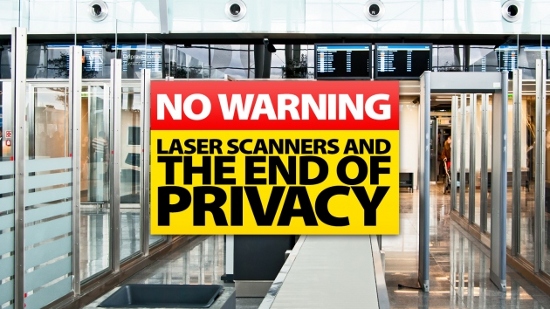
Within the next year or two, the U.S. Department of Homeland Security will instantly know everything about your body, clothes, and luggage with a new laser-based molecular scanner fired from 164 feet (50 meters) away. From traces of drugs or gun powder on your clothes to what you had for breakfast to the adrenaline level in your body—agents will be able to get any information they want without even touching you.
And without you knowing it.
The technology is so incredibly effective that, in November 2011, its inventors were subcontracted by In-Q-Tel to work with the US Department of Homeland Security. In-Q-Tel is a company founded “in February 1999 by a group of private citizens at the request of the Director of the CIA and with the support of the U.S. Congress.” According to In-Q-Tel, they are the bridge between the Agency and new technology companies.
Their plan is to install this molecular-level scanning in airports and border crossings all across the United States. The official, stated goal of this arrangement is to be able to quickly identify explosives, dangerous chemicals, or bioweapons at a distance.
The machine is ten million times faster—and one million times more sensitive—than any currently available system. That means that it can be used systematically on everyone passing through airport security, not just suspect or randomly sampled people.
Analyzing everything in real time
But the machine can sniff out a lot more than just explosives, chemicals and bioweapons. The company that invented it, Genia Photonics, says that its laser scanner technology is able to “penetrate clothing and many other organic materials and offers spectroscopic information, especially for materials that impact safety such as explosives and pharmacological substances.” [PDF]
Formed in Montreal in 2009 by PhDs with specialties in lasers and fiber optics, Genia Photonics has 30 patents on this technology, claiming incredible biomedical and industrial applications—from identifying individual cancer cells in a real-time scan of a patient, to detecting trace amounts of harmful chemicals in sensitive manufacturing processes.
Above: The Genia Photonics’ Picosecond Programmable Laser scanner is capable of detecting every tiny trace of any substance on your body, from specks of gunpowder to your adrenaline levels to a sugar-sized grain of cannabis to what you had for breakfast.
Meanwhile, In-Q-Tel states that “an important benefit of Genia Photonics’ implementation as compared to existing solutions is that the entire synchronized laser system is comprised in a single, robust and alignment-free unit that may be easily transported for use in many environments… This compact and robust laser has the ability to rapidly sweep wavelengths in any pattern and sequence.” [PDF]
So not only can they scan everyone. They would be able to do it everywhere: the subway, a traffic light, sports events… everywhere.
How does it work?
The machine is a mobile, rack-mountable system. It fires a laser to provide molecular-level feedback at distances of up to 50 meters in just picoseconds. For all intents and purposes, that means instantly.
The small, inconspicuous machine is attached to a computer running a program that will show the information in real time, from trace amounts of cocaine on your dollar bills to gunpowder residue on your shoes. Forget trying to sneak a bottle of water past security—they will be able to tell what you had for breakfast in an instant while you’re walking down the hallway.
The technology is not new, it’s just millions times faster and more convenient than ever before. Back in 2008, a team at George Washington University developed a similar laser spectrometer using a different process. It could sense drug metabolites in urine in less than a second, trace amounts of explosive residue on a dollar bill, and even certain chemical changes happening in a plant leaf.
And the Russians also have a similar technology: announced last April, their “laser sensor can pick up on a single molecule in a million from up to 50 meters away.”
So if Genia Photonics’ claims pan out, this will be an incredible leap forward in terms of speed, portability, and convenience. One with staggering implications.
Observation without limits
There has so far been no discussion about the personal rights and privacy issues involved. Which “molecular tags” will they be scanning for? Who determines them? What are the threshold levels of this scanning? If you unknowingly stepped on the butt of someone’s joint and are carrying a sugar-sized grain of cannabis like that unfortunate traveler currently in jail in Dubai, will you be arrested?
And, since it’s extremely portable, will this technology extend beyone the airport or border crossings and into police cars, with officers looking for people on the street with increased levels of adrenaline in their system to detain in order to prevent potential violent outbursts? And will your car be scanned at stoplights for any trace amounts of suspicious substances? Would all this information be recorded anywhere?
Above: A page from a Genia Photonics paper describing its ability to even penetrate through clothing.
There are a lot of questions with no answer yet, but it’s obvious that the potential level of personal invasion of this technology goes far beyond that of body scans, wiretaps, and GPS tracking.
In other words, these portable, incredibly precise molecular-level scanning devices will be cascading lasers across your body as you walk from the bathroom to the soda machine at the airport and instantly reporting and storing a detailed breakdown of your person, in search of certain “molecular tags”.
Going well beyond eavesdropping, it seems quite possible that U.S. government plans on recording molecular data on travelers without their consent, or even knowledge that it’s possible—a scary thought. While the medical uses could revolutionize the way doctors diagnose illness, and any technology that could replace an aggressive pat-down is tempting, there’s a potential dark side to this implementation, and we need to shine some light on it before it’s implemented.
The author of this story is currently completing his PhD in renewable energy solutions, focusing on converting waste to energy in the urban environment. Even while most of this information is publicly available, he wanted to remain anonymous.
EFF Asks Court to Reject Stale State Secret Arguments So Case Can Proceed
San Francisco – Three whistleblowers – all former employees of the National Security Agency (NSA) – have come forward to give evidence in the Electronic Frontier Foundation’s (EFF’s) lawsuit against the government’s illegal mass surveillance program, Jewel v. NSA.
In a motion filed today, the three former intelligence analysts confirm that the NSA has, or is in the process of obtaining, the capability to seize and store most electronic communications passing through its U.S. intercept centers, such as the “secret room” at the AT&T facility in San Francisco first disclosed by retired AT&T technician Mark Klein in early 2006.
“For years, government lawyers have been arguing that our case is too secret for the courts to consider, despite the mounting confirmation of widespread mass illegal surveillance of ordinary people,” said EFF Legal Director Cindy Cohn. “Now we have three former NSA officials confirming the basic facts. Neither the Constitution nor federal law allow the government to collect massive amounts of communications and data of innocent Americans and fish around in it in case it might find something interesting. This kind of power is too easily abused. We’re extremely pleased that more whistleblowers have come forward to help end this massive spying program.”
The three former NSA employees with declarations in EFF’s brief are William E. Binney, Thomas A. Drake, and J. Kirk Wiebe. All were targets of a federal investigation into leaks to the New York Times that sparked the initial news coverage about the warrantless wiretapping program. Binney and Wiebe were formally cleared of charges and Drake had those charges against him dropped.
Jewel v. NSA is back in district court after the 9th U.S. Circuit Court of Appeals reinstated it in late 2011. In the motion for partial summary judgment filed today, EFF asked the court to reject the stale state secrets arguments that the government has been using in its attempts to sidetrack this important litigation and instead apply the processes in the Foreign Intelligence Surveillance Act that require the court to determine whether electronic surveillance was conducted legally.
“The NSA warrantless surveillance programs have been the subject of widespread reporting and debate for more than six years now. They are just not a secret,” said EFF Senior Staff Attorney Lee Tien. “Yet the government keeps making the same ‘state secrets’ claims again and again. It’s time for Americans to have their day in court and for a judge to rule on the legality of this massive surveillance.”
Romney’s close relationship with Orit Gadiesh and Israeli military intelligence is the real reason he is the chosen candidate of the Zionist establishment. Romney is being supported by high-level Zionists, Israeli military intelligence, and their controlled media network.
First of all, to the idiots who monitor all our communications, internet, telephone, who knows how far they have gone or are going, do not think there aren’t lists of those who oppose this illegal effort and will see to it you are indicted. If you believe the current form of government is going to be superseded by a corporate plutocracy as in the Canadian TV shown “Continuum,” (find it) you are mistaken.
The old power bases are gone, too many have been burned. Playing spy as though you think the courts still support FISA will get you some GITMO time, don’t take my word for it, “times are a changin.’”
Homeland Security (DHS) is strangling the efforts of several older institutions. This is beyond just “turf war” and is becoming an embarrassment.
The machinery put together during Bush II is entirely dysfunctional, control of the Justice Department is gone, in fact, under Holder, we aren’t sure it exists anymore. Only Homeland Security is still around and will be held accountable, not for passenger searches but for childish plots. Go ahead, bug the Pentagon, you won’ t like it.
Here is where things stand on 9/11 today:
The official accepted belief on the towers is that the two were destroyed by 4 small nuclear devices, two in the basement, two on upper floors, that produced over a million degrees of heat that dissolved the building, put out minor radiation for a short distance and kept fires burning for months. It vaporized enough steel to build 3 huge aircraft carriers and huge beams hundreds of yards away show more damage than anything in Hiroshima. This is the official opinion of DARPA and the US Army. This is highly classified but I am printing it anyway.
Building 7 is said to have been destroyed with conventional explosives.
No official secret finding has been reached on the Pentagon attack other than that wreckage from a Columbia crash in 1995 was dumped on the lawn and the site was altered during the day to simulate an air crash. I have not been given access to anything beyond this and choose not to make something up.
The official finding as to rationale for the 9/11 attacks was to cheat insurance companies out of billions. Those who have examined US policy said that there were other simpler possibilities for bringing the US to war other than the 9/11 action against the US. (for those who don’t catch the connection, it has been accepted that 9/11 was an “inside job”)
Many Israeli teams were involved in 9/11 and the twin tower attack was entirely an Israeli action with our military and intelligence services denying involvement. This is not my opinion, this is official.
Several Israeli teams were arrested on 9/11, one after the George Washington Bridge explosion. There were other attacks on 9/11 thwarted by police, one on the Lincoln Tunnel. There is no evidence of an attack on the Verrazano Bridge or Brooklyn Bridge. Arrests were made of the Israeli’s at the GWB, hard proof exists but the arrests at the Lincoln Tunnel, two Israeli citizens, van of explosives and weapons is only backed by limited police testimony and they are scared to death. An authoritative source on the scene says the terrorists, Israelis, were turned over to Bernie Kerik, Police Commissioner and never heard from again.
Thousands of cancer victims, hundreds, maybe thousands dead of “radiation poisoning” already are attributed to use of fire hoses directly on the moulton nuclear “ground zero” which put radiated water vapor into the air which was unintended. These nuclear heat chambers below the twin towers put out massive heat for 64 days under a flood of continual cold water although there is no official attribution to their heat source. Perhaps it was burning asbestos and insurance policies?
An outrageously false cover story about a “toxic stew” involving “dry wall” was part of the “official record.” By that standard, every firefighter, drywaller or person who has lived in a building with drywall is actually dead but not yet informed.
Thousands of New Yorkers are dying of radiation poisoning from 9/11 and being “monitored” or being offered payments from a several billion dollar fund that mysterious appeared to buy their silence.
Other groups have evidence regarding the aircraft, crews, passengers, “theoretical phone calls and text messages” with much of it in FBI files. Some of that information is evidence worthy and some is not but there is much that can be introduced in court.
Many people who are potential witnesses have disappeared, thousands have been threatened. The numbers are so large that they in themselves have been used by some as proof there was a massive coverup conspiracy. “Why or how could so many people be controlled or killed and what kind of person would do this?”
Do you really want that question answered? You think the million plus dead on Rwanda was an accident? You never heard of the uncounted dead in Guatemala, Mexico and where you have heard, you have been lulled into immunity.
VITAL INTERESTS
There technically was no “9/11″ and thus, any defense of American interests through military occupation, stimulation of insurrection, emplacement of puppet governments and theft of resources, no matter how profitable for the gang inside the Beltway, is not sustainable.
America has no vital interests in Central Asia nor is there any potential threat to oil supplies in a nation that has the choice of becoming oil independent in less than 3 years. (Can prove this is court).
Even Iran would sell us all their oil at deep discount and take payment in new Jeeps and Fords if we wanted, were we not run by crazy people. Want me to prove it to you?
ROMNEY, MASTER CRIMINAL AND SPY OR SIMPLY A “WANNABEE ANTI-CHRIST?” (Thanks to Tex Marrs and Christopher Bollyn)
Orit Gadiesh (Hebrew: אורית גדיש) is an Israeli-American corporate strategist and chairwoman of management consulting firm Bain & Company. Source-Wikipedia
We are now holding strong proof that Romney and “Bain Capital” are agents of the State of Israel who is attempting to rig an American election on behalf of a group of European entities unfriendly to the continued freedoms left to the American people.
Mitt Romney is, in fact, a clear and present danger to the United States. Chris Bollyn has stated the following, and I find Chris a credible source:
ROMNEY’S ISRAELI HANDLER – Orit Gadiesh, former “War Room” assistant to Ezer Weizman and Moshe Dayan, is the daughter of Israeli Brigadier General Falk Gadiesh (born Falk Gruenfeld, Berlin, 1921) and his Ukrainian-born wife. Gadiesh is chairman of the management consulting firm Bain & Company, the parent company of Bain Capital, and was the company’s managing director under CEO Mitt Romney in 1992. “She’s like a Jewish mother figure to many of the people at Bain,” ex-Bainie Dan Quinn told Fortune magazine in 1996.
Bain Capital owns Clear Channel, the largest radio station group owner in the United States. Clear Channel owns the networks which air the most popular radio talk shows, including The Rush Limbaugh Show, The Glenn Beck Program, The Sean Hannity Show, America Now with Andy Dean, Coast to Coast AM, The Savage Nation, The Mark Levin Show, and The Dave Ramsey Show. (Graphic: “Rush Limbaugh Spills the Beans on the Jewish Conspiracy” by Pat Healy)
Mitt Romney was a co-founder of Bain Capital along with Bill Bain, seen here. Bain was ousted in 1991 and Romney served as CEO of Bain & Company in 1991-1992. In May 1991, while Romney was CEO, Gadiesh was named chairman of the company’s Policy Committee, which set the company’s business strategy and policy. In 1992, under Romney, she became managing director. Orit Gadiesh, who has worked at Bain & Co. since 1977, became chairman of Bain & Co. in 1993.
Orit Gadiesh, born in Israel in 1951, has worked closely with Mitt Romney since at least 1991, and probably much longer since she joined Bain & Company in 1977, when she was 26. Romney appointed Gadiesh to his transition team when he became governor of Massachusetts in November 2002. Gadiesh is the daughter of Falk Gadiesh, an Israeli brigadier general and former member of the general staff who reorganized the Israeli army in the early 1950s after a stint at the Massachusetts Institute of Technology (MIT).
Falk’s daughter Orit was chosen to serve in Israeli military intelligence. Her first position in the Israeli military was as assistant to Ezer Weizman, the deputy chief of staff who later became president of Israel. During the early 1970s, she worked in the war room, a bunker where Gen. Moshe Dayan was in charge. As a war room assistant to Weizman, Orit provided military leaders with documents and correspondence.
Prior to joining Bain & Company, Gadiesh served in the office of the Deputy Chief of Staff of the Israeli Army. Currently, she is on the board of directors of the Peres Center for Peace, an organization headed by a former chief of staff of the Israeli military, Lt. General Amnon Lipkin-Shahak. The high-level Mossadnik Avner Azulay, managing director of the Marc Rich Foundation, is also on the executive board of the Peres Center.
ROMNEY’S INTELLIGENCE CHIEF AND CAMPAIGN ADVISER – Mitt Romney named Michael Chertoff, the Israeli agent who supervised the destruction of the crucial evidence of 9/11, co-chair of his counterterrorism and intelligence advisory committee in October 2011. The 9/11 cover-up continues.
Mitt Romney attended the Mossad’s “Herzliya Conference on Israeli Security” in 2007. Romney and the current Israeli prime minister Benjamin Netanyahu worked together as consultants at the Boston Consulting Group early in their careers.
Romney’s close relationship with Orit Gadiesh and Israeli military intelligence is the real reason he is the chosen candidate of the Zionist establishment. Romney is being supported by high-level Zionists, Israeli military intelligence, and their controlled media network. This relationship between the Israeli military and Mitt Romney, a presidential candidate, should be of great concern to all Americans because this is how the Israeli military plans to drag the United States into a war with Iran.
RON PAUL
If it is not clear it should be. Ron Paul won the Republican nomination for president. He could have won the Democratic nomination just as easily. The only reason we are seeing Romney is that he is a foreign agent who represents an attempt at further overthrowing American freedoms and has absolutely no right to represent himself as a candidate from the Republican Party.
The nominating process, which has yet to conclude, has been wrought with vote rigging, millions in bribes and violations of every kind.
Ron Paul won and Romney is a foreign spy, a demagogue, a dangerous fanatic and has spent his life as part of an organized crime syndicate. Most elections, priaries, caucuses were rigged, almost all show clear criminal activity and there is no effort to correct this because the election for president of the United States is being managed from Tel Aviv (read Moscow).
He makes Obama look good. Does America need a president put in office by another rigged election, this one with 4 wives (only a rumor from people near him) and over 10000 illegal Swiss bank accounts. Bain Capital, according to reliable sources is one of the biggest sources of terrorist funding on earth, biggest traders in conflict diamonds, and deeply involved in human trafficking.
Did Romney learn this as a Mormon Bishop?
CANADA
Last week, Canada’s banking system crashed, something kept out of their papers. America sent Canada $131 billion dollars to underwrite their currency or Canada would be gone. Canada has prided itself at being independent, at being free, at being a model nation.
Want some unpleasant truth?
Israeli spies run Canadas’ government and economic system through blackmail, bribery and intimidation.
Canada has smuggled more nuclear technology and refined uranium than any other country on earth and are a greater danger than even Germany and North Korea, the biggest exporters of WMD technologies.
If one were to want to find an evil empire, the “secret society” ruling sectors of both Canada and Germany, whose citizens are kept in absolute ignorance, are the real world axis of evil or as close as we have now. A few decades ago, one could have made a list including East Germany, South Africa, Libya, Germany (even then), Czechoslovakia.
I love Canada, my family helped found it but watchfulness and strength are needed more in Canada than petty socialism, political correctness and stifling the truth, which is Canada’s greatest skill as yet. Let me look in the drawer here, I think I still have charters awarding us everything from Windsor and Amherstburg to well past Toronto. Now, if I want to repossess Southern Ontario, I have to negotiate with Timothy Geithner who seems to be holding the mortgage on Canada.
What kind of nation would accept a secret bailout with counterfeit money? (For my Canadian friends, ask about the $131 billion, where did it go and who authorized it?)
CONCLUSION
These are the hard facts and accepted theories by the real experts, without any of the speculation of activists or “conspiracy theory” folks. There is more, much more, but how much anger is allowed?
What we can’t do is walk away from our political system when we have one party of foreign controlled traitors, the GOP and another of petty mobsters and incompetents, the Democrats. We have what we deserved. When we were offered the candidate we dreamed of, perhaps not the charisma of Bobby Kennedy but Ron Paul, once free of the “bought and paid for” congress, could and is likely to begin restoring America.
Let us first jail those who created this upcoming election and do it quickly, ridding ourselves of Mr. Romney, Mr. Adelson, Mr. Netanyahu, Ms. “Ferkel” Merkel of Germany and the pack of thieves who have taken control of Canada.
Maybe an early place to look for our Israeli friends is Wisconsin.
Careless mistake reveals subversion of Windows by NSA?
A CARELESS mistake by Microsoft programmers has revealed that special access codes prepared by the US National Security Agency have been secretly built into Windows. The NSA access system is built into every version of the Windows operating system now in use, except early releases of Windows 95 (and its predecessors). The discovery comes close on the heels of the revelations earlier this year that another US software giant, Lotus, had built an NSA “help information” trapdoor into its Notes system, and that security functions on other software systems had been deliberately crippled.
The first discovery of the new NSA access system was made two years ago by British researcher Dr Nicko van Someren. But it was only a few weeks ago when a second researcher rediscovered the access system. With it, he found the evidence linking it to NSA.
Juice Rap News: Episode XIII – A NEWS HOPE. It is a time of corporate war; deprived of a reliable media the people of Planet Earth are kept misinformed and in a state of perpetual conflict. Is an honest Fourth Estate the only Force than can restore peace and balance to the Galaxy? To find out, we consult two of journalism’s most influential and inflammatory figures: Rebel journalist enfant terrible, Julian Assange, who awaits a verdict in London which could see him ‘extradited’ to Sweden. And on the opposite end of the journalistic spectrum: Rupert Murdoch, head of the mighty NewsCorp media Empire, embroiled in legal scandals that go to the highest and lowest levels of celebrity in Britain. In the manichean manner of some ancient laser sword and forcery epic, join the wisest news-anchor in the Galaxy, Robert Foster, as he attempts to wrangle these two figures together for a rap-debate. Will the light or the dark side prevail – and is it really that easy to know which is which? How many Bothans died to bring us this information? Is the Force Estate with Robert? Will we see THE RETURN OF THE JOURNALI before the EMPIRE EXTRADITES BACK? For answers to all these questions and more, pull down your blast shields, switch off your on-board computer and feel the Force, in this latest episode of Juice Rap News… or click play.
SUPPORT the creation of new episodes of Juice Rap News – a show which relies on private donations: http://thejuicemedia.com/donate
CREDITS:
– ARTWORK by Zoe Tame http://visualtonic.com.au
– ORIGINAL MUSIC: Main Beat: “The Golden Era” – by The GOAT, ILL Beat Constructor: http://www.thegoatbeats.com
– ORIGINAL RAP-WARS theme music composed by Adrian Sergovich.
– VIDEO: Special thanks to Jonas Schweizer in Germany for creating the animated intro and RapWars special FX. (ATM he’s working on an awesome new documentary project: http://www.indiegogo.com/CaribbeanNewcomer)
– Many thanks to the following humans for lending their time and talent to the making of this episode: Ellen (Brianna Manning and SwededTrooper_1) and Zoe (SwedeTrooper_2); Lucy for voiceovers (Admiral Gillard, Manning & SwedeTroopers); Rosie Dunlop for make-up magick; Dave Abbott for technical & video advice. And finally, to Kristinn Hrafnsson of WikiLeaks for his debut kameo.
CAPTIONS: Thanks Koolfy & Siltaar at La Quadrature du Net for English captions.
TRANSLATIONS: Thanks to Euclides for Portuguese translation :)
**If you would like to translate this episode into your language, please contact us first via: http://thejuicemedia.com/contact**
The FBI sees the anonymous Bitcoin payment network as an alarming haven for money laundering and other criminal activity — including as a tool for hackers to rip off fellow Bitcoin users.
That’s according to a new FBI internal report that leaked to the internet this week, which expresses concern about the difficulty of tracking the identify of anonymous Bitcoin users, while also unintentionally providing tips for Bitcoin users to remain more anonymous.
In the document, the FBI notes that because Bitcoin combines cryptography and a peer-to-peer architecture to avoid a central authority, contrary to how digital currencies such as eGold and WebMoney operated, law enforcement agencies have more difficulty identifying suspicious users and obtaining transaction records.
Though the Bureau expresses confidence that authorities can still snag some suspects who use third-party Bitcoin services that require customers to submit valid identification or banking information in order to convert their bitcoins into real-world currencies, it notes that using offshore services that don’t require valid IDs can thwart tracking by law enforcement.
Bitcoin is an online currency that allows buyers and sellers to exchange money anonymously. To “cash out,” the recipient has to convert the digital cash into U.S. dollars, British pounds or another established currency. Bitcoin is used as a legitimate form of payment by numerous online retailers selling traditional consumer goods, such as clothing and music. But it’s also used by underground sites, such as Silk Road, for the sale of illegal narcotics.
To generate bitcoins, users have to download and install a free Bitcoin software client to their computers. The software generates Bitcoin addresses or accounts — a unique 36-character string of numbers and letters — to receive Bitcoin payments. The currency is stored on the user’s computer in a virtual “wallet.” Users can create as many addresses or accounts that they want.
To send bitcoins, the sender enters the recipient’s address as well as the number of bitcoins she wants to transfer to the address. The sender’s computer digitally signs the transaction and sends the information to the peer-to-peer Bitcoin network, which validates the transaction in a matter of minutes and releases the coins for the receiver to spend or convert.
The conversion value fluctuates with supply and demand and the trust in the currency. As of last month, there were more than 8.8 million bitcoins in circulation, according to Bitcoin, with a value of about $4 and $5 per bitcoin. The FBI estimates in its report that the Bitcoin economy was worth between $35 million and $44 million.
It’s easy to see the attraction for criminals.
“If Bitcoin stabilizes and grows in popularity, it will become an increasingly useful tool for various illegal activities beyond the cyber realm,” the FBI writes in the report. “For instance, child pornography and Internet gambling are illegal activities already taking place on the Internet which require simple payment transfers. Bitcoin might logically attract money launderers, human traffickers, terrorists, and other criminals who avoid traditional financial systems by using the Internet to conduct global monetary transfers.”
Bitcoin transactions are published online, but the only information that identifies a Bitcoin user is a Bitcoin address, making the transaction anonymous. Or at least somewhat anonymous. As the FBI points out in its report, the anonymity depends on the actions of the user.
Since the IP address of the user is published online with bitcoin transactions, a user who doesn’t use a proxy to anonymize his or her IP address is at risk of being identified by authorities who are able to trace the address to a physical location or specific user.
And a report published by researchers in Ireland last year showed how, by analyzing publicly available Bitcoin information, such as transaction records and user postings of public-private keys, and combining that with less public information that might be available to law enforcement agencies, such as bank account information or shipping addresses, the real identity of users might be ascertained.
But the FBI helpfully lists several ways that Bitcoin users can protect their anonymity.
Create and use a new Bitcoin address for each incoming payment.
Route all Bitcoin traffic through an anonymizer.
Combine the balance of old Bitcoin addresses into a new address to make new payments.
Use a specialized money-laundering service.
Use a third-party eWallet service to consolidate addresses. Some third-party services offer the option of creating an eWallet that allows users to consolidate many bitcoin address and store and easily access their bitcoins from any device.
Individuals can create Bitcoin clients to seamlessly increase anonymity (such as allowing users to choose which Bitcoin addresses to make payments from), making it easier for non-technically savvy users to anonymize their Bitcoin transactions.
But the bigger risk for crooks and others who use bitcoin might not come from law enforcement identifying them, but from hackers who are out to rob their virtual Bitcoin wallets dry.
There have been several cases of hackers using malware to steal the currency in the virtual wallet stored on a user’s machine.
Last year, computer security researchers discovered malware called “Infostealer.Coinbit” that was designed specifically to steal bitcoins from virtual Bitcoin wallets and transfer them to a server in Poland.
One Bitcoin user complained in a Bitcoin forum that 25,000 bitcoins had been stolen from an unencrypted Bitcoin wallet on his computer. Since the exchange rate for bitcoins at the time was about $20 per bitcoin, the value of his loss at the time was about $500,000. A popular web hosting company called Linode was also infiltrated by an attacker looking to pilfer bitcoins.
And there have also been cases of hackers attempting to use “botnets” to generate bitcoins on compromised machines.
According to the FBI, quoting an anonymous “reliable source,” last May someone compromised a cluster of machines at an unidentified Midwestern university in an attempt to manufacture bitcoins. The report doesn’t provide any additional details about the incident.
Remember the Occupy Movement? Since last November, when the NYPD closed the Zuccotti Park encampment in downtown Manhattan –the Movement’s birthplace and symbolic nexus—Occupy’s relevance has seriously dwindled, at least as measured by coverage in the mainstream media. We’re told that this erosion is due to Occupy’s own shortcomings—an inevitable outcome of its disjointed message and decentralized leadership.
While that may be the media’s take, the U.S. Government seems to have a different view.
If recent documents obtained by the Partnership for Civil Justice Fund (PCJF) are any indication, the Occupy Movement continues to be monitored and curtailed in a nationwide, federally-orchestrated campaign, spearheaded by the Department of Homeland Security (DHS).
The documents, many of which are partially blacked-out emails, demonstrate a surprising degree of coordination between the DHS’s National Operations Center (NOC) and local authorities in the monitoring of the Occupy movement. Cities implicated in this wide-scale snooping operation include New York, Oakland, Atlanta, Washington, D.C., Denver, Boston, Portland, Detroit, El Paso, Houston, Dallas, Seattle, San Diego, and Los Angeles.
Interest in the Occupy protesters was not limited to DHS and local law enforcement authorities. The most recently released correspondence contains Occupy-related missives between the DHS and agencies at all levels of government, including the Mayor of Portland, regional NOC “fusion centers,” the General Services Administration (GSA), the Pentagon’s USNORTHCOM (Northern Command), and the White House. Mara Verheyden-Hilliard, Executive Director of the PCJF, contends that the variety and reach of the organizations involved point to the existence of a larger, more pervasive domestic surveillance network than previously suspected.
These documents show not only intense government monitoring and coordination in response to the Occupy Movement, but reveal a glimpse into the interior of a vast, tentacled, national intelligence and domestic spying network that the U.S. government operates against its own people. These heavily redacted documents don’t tell the full story. They are likely only a subset of responsive materials and the PCJF continues to fight for a complete release. They scratch the surface of a mass intelligence network including Fusion Centers, saturated with ‘anti-terrorism’ funding, that mobilizes thousands of local and federal officers and agents to investigate and monitor the social justice movement. (justiceonline.org)
As alarmist as Verheyden-Hilliard’s charge may sound, especially given the limited, bowdlerized nature of the source material, the texts made available contain disturbing evidence of insistent federal surveillance. In particular, the role of the “Fusion Centers,” a series of 72 federally-funded information hubs run by the NOC, raises questions about the government’s expansive definition of “Homeland Security.”
Created in the wake of 9/11, the Fusion Centers were founded to expedite the sharing of information among state and local law enforcement and the federal government, to monitor localized terrorist threats, and to sidestep the regulations and legislation preventing the CIA and the military from carrying out domestic surveillance (namely, the CIA ban on domestic spying and the Posse Comitatus Act).
Is nonviolent, albeit obstructive, citizen dissent truly an issue of national security? The DHS, for its part, is aware of the contentiousness of civilian monitoring. That’s why, in a White House-approved statement to CBS News included in the dossier, DHS Press Secretary Matthew Chandler asserts that
Any decisions on how to handle specifics (sic) situations are dealt with by local authorities in that location. . . DHS is not actively coordinating with local law enforcement agencies and/or city governments concerning the evictions of Occupy encampments writ large.
However, as a reading of the documents unmistakably demonstrates, this expedient PR nugget is far from the truth. In example after example, from its seeking of “public health and safety” grounds from the City of Portland for Occupy’s ejection from Terry Schrunk Plaza, to its facilitation of information sharing between the police departments of Chicago and Boston (following a 1500-person Occupy protest in Chicago), the DHS’s active ”coordinating” with local authorities is readily apparent. Other communiqués are even more explicit in revealing a national focus, such as the DHS’s preemptive coordination with the Pentagon about a port closure in Oakland, and its collection of identity and contact information of Occupy protesters arrested at a Bank of America in Dallas.
Those Pesky Amendments
The right to public assembly is a central component of the First Amendment. The Fourth Amendment is supposed to protect Americans from warrantless searches—with the definition of “search” expanded in 1967 to include electronic surveillance, following the Supreme Court’s ruling in Katz v. United States. Assuming the Occupy protesters refrain from violence—and the vast majority do, in accord with a stated tenet of the Occupy movement—the movement’s existence is constitutionally protected, or should be.
The DHS’s monitoring, documenting, and undermining of protesters may in fact violate the First Amendment. In a recent piece for Dissent Magazine, sociologist James B. Rule explains the fundamental importance of a movement like Occupy in the American political landscape.
This surveillance campaign against Occupy is bad news for American democracy. Occupy represents an authentic, utterly home-grown, grassroots movement. Taken as a whole, it is neither terrorist nor conspiratorial. Indeed, it is hard to think of another movement so cumbersomely public in its deliberations and processes. Occupy is noisy, disorderly, insubordinate, and often inconvenient for all concerned—statements that could equally well apply to democracy in general. But it should never be targeted as a threat to the well-being of the country—quite the contrary.
Accordingly, Rule calls for the White House to rein in the ever-expanding surveillance activity of the DHS—which he contends is motivated by its own funding interests, and which prioritizes security at the expense of civil liberties.
The resource-rich Department of Homeland Security and its allies no doubt see in the rise of the movement another opportunity to justify their own claims for public legitimacy. We can be sure that many in these agencies view any noisy dissent as tantamount to a threat to national security.
[snip]
Nobody who cares about democracy wants to live in a world where simply engaging in vociferous protest qualifies any citizen to have his or her identity and life details archived by state security agencies. Specific, overt threats of civil disobedience or other law-breaking should be dealt with on a piecemeal basis—not by attempting to monitor everyone who might be moved to such actions, all the time. Meanwhile, the White House should issue clear directives that identification and tracking of lawful protesters will play no further role in any government response to this populist moment.
Optimistic as it may be, Rule’s appeal to the White House is a problematic one, given the ubiquitous influence of the DHS revealed by these documents. If the White House-approved press release is any indication, the Oval Office, while not directly authorizing the DHS’s initiatives, is certainly turning a blind eye to the Department’s focus on the Occupy movement as a potential terrorist threat. Federal surveillance of citizens in the Bush years, most visible in NSA warrantless wiretapping controversy, has apparently not ceased with Obama’s inauguration.
Which raises the question: Does Obama, as he claims, “stand with the 99 percent,” or with those who cannot stand them?
# #
WhoWhatWhy plans to continue doing this kind of groundbreaking original reporting. You can count on it. But can we count on you? We cannot do our work without your support.
Surveillance cameras are now so powerful they are able to zoom in and read your text messages – leading to fears of further privacy intrusion by a ‘Big Brother’ style state.
As well as being advanced enough to close in on an individual’s phone screen, security cameras will soon be able to pick up on raised voices and sniff out drugs too.
The revelations were made at a privacy conference in Wellington, New Zealand, where it was also disclosed that the average person is digitally recorded about a dozen times a day.
Worrying: Surveillance cameras are now so powerful they can zoom in to see what people are texting
During last year’s Rugby World Cup in New Zealand CCTV cameras focused in on the crowd of thousands to read the text message someone was sending.
As part of extensive police monitoring during the tournament, camera operators scanned the spectators looking for suspicious looking packages and aggressive behaviour.
They then chose to zoom in on one man who was texting – although it turned out he was simply writing about the poor quality of the rugby match.
Experts warned the fact that the cameras were able to do this raises concerns about breeches of individual’s privacy.
Watch out: Technological advances mean cameras will soon be able to pick up on raised voices and detect smells too
Civil liberties lawyer Michael Bott described the pervasiveness of surveillance as ‘worrying’ and warned of the extent people’s private lives were being intruded upon.
‘It’s quite worrying when we, by default, move to some sort of Orwellian 1984 where the state or Big Brother watches your every move,’ he said.
‘The road to hell is paved with good intentions and we don’t realise what we are giving up when we give the state the power to monitor our private lives.’
However, others argued the camera’s ability to zoom in on texts would be helpful in preventing crimes, including rioting.
The conference also discussed how technological developments meant that soon cameras will be able to pick up on raised voices and sniffing devices will be able to detect drug residue.
Of course, the number of surveillance cameras drastically varies from place to place with exact figures hard to pin down.
Cameras are commonplace on streets, public transport, shopping malls, hospitals and public buildings.
In the decade after the 9/11 attacks the amount of surveillance cameras across the U.S soared by about 30 million.
And figures showed the number of cameras in some areas of Manhattan increased by more than 400 per cent between 1998 and 2005.
Across the pond, Britain is notorious for the high amount of cameras it has with an estimated 2 million across the country.
The Occupy Wall Street protests have been going on for a month. And it seems the FBI and NYPD have had help tracking protesters’ moves thanks to a conservative computer security expert who gained access to one of the group’s internal mailing lists,and then handed over information on the group’s plans to authorities and corporations targeted by protesters.
Since the Occupy Wall Street protest began on September 17, New York security consultant Thomas Ryan has been waging a campaign to infiltrate and discredit the movement. Ryan says he’s done contract work for the U.S. Army and he brags on his blog that he leads “a team called Black Cell, a team of the most-highly trained and capable physical, threat and cyber security professionals in the world.” But over the past few weeks, he and his computer security buddies have been spending time covertly attending Occupy Wall Street meetings, monitoring organizers’ social media accounts, and hanging out with protesters in Lower Manhattan.
As part of their intelligence-gathering operation, the group gained access to a listserv used by Occupy Wall Street organizers called September17discuss. On September17discuss, organizers hash out tactics and plan events, conduct post-mortems of media appearances, and trade the latest protest gossip. On Friday, Ryan leaked thousands of September17discuss emails to conservative blogger Andrew Breitbart, who is now using them to try to smear Occupy Wall Street as an anarchist conspiracy to disrupt global markets.
What may much more alarming to Occupy Wall Street organizers is that while Ryan was monitoring September17discuss, he was forwarding interesting email threads to contacts at the NYPD and FBI, including special agent Jordan T. Loyd, a member of the FBI’s New York-based cyber security team.
On September 18th, the day after the protest’s start, Ryan forwarded an email exchange between Occupy Wall Street organizers to Loyd. The email exchange is harmless: Organizers discuss how they need to increase union participation in the protest. “We need more outreach to workers. The best way to do that is by showing solidarity with them,” writes organizer Jackie DiSalvo in the thread. She then lists a group of potential unions to work with.
Another organizer named Conor responds: “+1,000,000 to Jackie’s proposal on working people/union struggles outreach and solidarity. Also, why not invite people to protest Troy Davis’s execution date at Liberty Plaza this Monday?”
Five minutes after Conor sent his email, Ryan forwarded the thread—with no additional comment—to Loyd’s FBI email address. “Thanks!” Loyd responded. He cc’d his colleague named Ilhwan Yum, a fellow cybersecurity expert at the agency, on the reply.
On September 26th, Ryan forwarded another email thread to Agent Loyd. But this time he clued in the NYPD as well, sending the email to Dennis Dragos, a detective with the NYPD Computer Crimes Squad.
The NYPD might have been very grateful he did so, since it involved a proposed demonstration outside NYPD headquarters at 1 Police Plaza. In the thread, organizers debated whether to crash an upcoming press conference planned by marijuana advocates to celebrate NYPD commissioner Ray Kelly ordering officers to halt arrests over possession of small amounts of marijuana.
“Should we bring some folks from Liberty Plaza to chant “SHAME” for the NYPD’s recent brutalities on Thursday night for the Troy Davis and Saturday for the Occupy Wall Street march?” asked one person in the email thread. (That past Saturday, the video of NYPD officer Anthony Bologna pepper-spraying a protester had gone viral.) Ryan promptly forwarded the email thread to Loyd at the FBI and Dragos at the NYPD.
Interestingly, it was Ryan who revealed himself as a snitch. We learned of these emails from the archive Ryan leaked yesterday in the hopes of undermining the Occupy Wall Street movement. In assembling the archive of September17discuss emails, it appears he accidentally included some of his own forwarded emails indicating he was ratting out organizers.
“I don’t know, I just put everything I had into one big package,” Ryan said when asked how the emails ended up in the file posted to Andrew Breitbart’s blog. Some security expert.
But Ryan didn’t just tip off the authorities. He was also giving information to companies as well. When protesters discussed demonstrating in front of morning shows like Today and Good Morning America, Ryan quickly forwarded the thread to Mark Farrell, the chief security officer at Comcast, the parent company of NBC Universal.
Ryan wrote:
Since you are the CSO, I am not sure of your role in NBC since COMCAST owns them.
There is a huge protest in New York call “Occupy Wall Street”. Here is an email of stunts that they will try to pull on the TODAY show.
We have been heavily monitoring Occupy Wall Street, and Anonymous.
“Thanks Tom,” Farrell responded. “I’ll pass this to my counterpart at NBCU.”
Did the FBI and/or NYPD ask him to monitor Occupy Wall Street? Was he just forwarding the emails on out of the goodness of his heart? In a phone interview with us, Ryan denied being an informant. “I do not work with the FBI,” he said.
Ryan said he knows Loyd through their mutual involvement in the Open Web Application Security Project, a non-profit computer security group of which Ryan is a board member. Ryan said he sent the emails to Loyd unsolicited simply because “everyone’s curious” about Occupy Wall Street, and he had a ground-eye view. “Jordan never asked me for anything.”
Was he sending every email he got to the authorities? Ryan said he couldn’t remember how many he’d passed on to the FBI or NYPD, or other third parties. Later he said that he only forwarded the two emails we noticed, detailed above.
But even if he’d been sending them on regularly, they were probably of limited use to the authorities. Most of the real organizing at Occupy Wall Street happens face-to-face, according to David Graeber, who was one of the earliest organizers. “We did some practical work on [the email list] at first—I think that’s where I first proposed the “we are the 99%” motto—but mainly it’s just an expressive forum,” he wrote in an email. “No one would seriously discuss a plan to do something covert or dangerous on such a list.”
But regardless of how many emails Ryan sent—or whether Loyd ever asked Ryan to spy on Occupy Wall Street—Loyd was almost certainly interested in the emails he received. Loyd has helped hunt down members of the hacktivist collective Anonymous, and he and his colleagues in the FBI’s cyber security squad have been monitoring their involvement in Occupy Wall Street.
At a New York cyber security conference one day before the protest began, Loyd cited Occupy Wall Street as an example of a “newly emerging threat to U.S. information systems.” (In the lead-up to Occupy Wall Street, Anonymous had issued threats against the New York Stock Exchange.) He told the assembled crowd the FBI has been “monitoring the event on cyberspace and are preparing to meet it with physical security,” according to a New York Institute of Technology press release.
We contacted Loyd to ask about his relationship with Ryan and if any of the information Ryan passed along was of any use to the agency. He declined to answer questions and referred us to the FBI’s press office. We’ll post an update if we hear back from them.
We asked Ryan again this morning about how closely he was working with the authorities. Again, he claimed it was only these two emails, which is unlikely given he forwarded them to the FBI and NYPD without providing any context or explaining where he’d gotten them.
And he detailed his rationale for assisting the NYPD:
My respect for FDNY & NYPD stems from them risking their lives to save mine when my house was on fire in sunset park when I was 8 yrs old. Also, for them risking their lives and saving many family and friends during 9/11.
Don’t you find it Ironic that out of all the NYPD involved with the protest, [protesters] have only targeted the ones with Black Ribbons, given to them for their bravery during 9/11?
I am sorry if we see things differently, I try to look at everything as a whole and in patterns. Everything we do in life and happens in life, there is a pattern behind it.
It has emerged that Michigan State Police have been using a high-tech mobile forensics device that can extract information from over 3,000 models of mobile phone, potentially grabbing all media content from your iPhone in under two minutes.
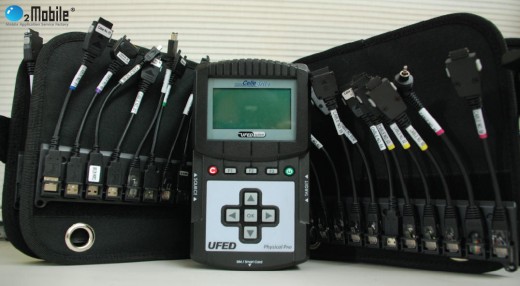
The CelleBrite UFED is a handheld device that Michigan officers have been using since August 2008 to copy information from mobile phones belonging to motorists stopped for minor traffic violations. The device can circumvent password restrictions and extract existing, hidden, and deleted phone data, including call history, text messages, contacts, images, and geotags.
In short, it can copy everything on your smartphone in a matter of minutes.
Learning that the police had been using mobile forensic devices, the American Civil Liberties Union (ACLU) has issued freedom of information requests which demand that state officials open up the data collected, to better assess if penalised motorists warrant having their data copied.
Michigan State Police were more than happy to provide the information – as long as the ACLU paid $544,680. Obviously not pocket change.
“Law enforcement officers are known, on occasion, to encourage citizens to cooperate if they have nothing to hide,” ACLU staff attorney Mark P. Fancher wrote. “No less should be expected of law enforcement, and the Michigan State Police should be willing to assuage concerns that these powerful extraction devices are being used illegally by honoring our requests for cooperation and disclosure.”
Once the data is obtained, the device’s “Physical Analyzer” can map both existing and deleted locations on Google Earth, porting location data and image geotags on Google Maps.
The ACLU’s main worry is that the handheld is quietly being used to bypass Fourth Amendment protections against unreasonable searches:
“With certain exceptions that do not apply here, a search cannot occur without a warrant in which a judicial officer determines that there is probable cause to believe that the search will yield evidence of criminal activity.
A device that allows immediate, surreptitious intrusion into private data creates enormous risks that troopers will ignore these requirements to the detriment of the constitutional rights of persons whose cell phones are searched.”
The next time you are Michigan, be sure drive carefully!
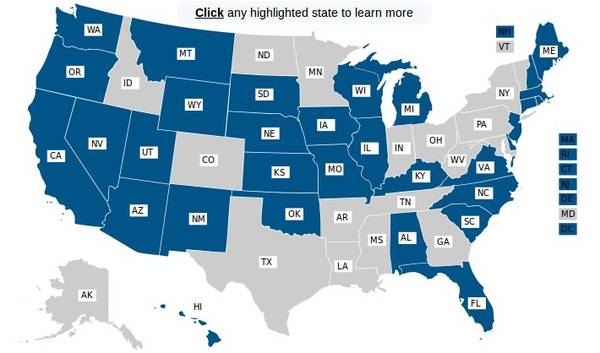
ACLU affiliates across America requested information on local law enforcement’s use of cell-phone tracking, and received a wealth of disturbing information about the extent of wireless tracking. They produced a map showing which police departments were discovered to be tracking people’s phones without a warrant, either by getting gutless phone companies to fink out their own customers for warrantless fishing expeditions, or by buying some kind of “cell phone tracking equipment.”
Many law enforcement agencies track cell phones quite frequently. For example, based on invoices from cell phone companies, it appears that Raleigh, N.C. tracks hundreds of cell phones a year. The practice is so common that cell phone companies have manuals for police explaining what data the companies store, how much they charge police to access that data, and what officers need to do to get it.
Most law enforcement agencies do not obtain a warrant to track cell phones, but some do, and the legal standards used vary widely. Some police departments protect privacy by obtaining a warrant based upon probable cause when tracking cell phones. For example, police in the County of Hawaii, Wichita, and Lexington, Ky. demonstrate probable cause and obtain a warrant when tracking cell phones. If these police departments can protect both public safety and privacy by meeting the warrant and probable cause requirements, then surely other agencies can as well.
Unfortunately, other departments do not always demonstrate probable cause and obtain a warrant when tracking cell phones. For example, police in Lincoln, Neb. obtain even GPS location data, which is more precise than cell tower location information, on telephones without demonstrating probable cause. Police in Wilson County, N.C. obtain historical cell tracking data where it is “relevant and material” to an ongoing investigation, a standard lower than probable cause.
Police use various methods to track cell phones. Most commonly, law enforcement agencies obtain cell phone records about one person from a cell phone carrier. However, some police departments, like in Gilbert, Ariz., have purchased their own cell tracking technology.
A few months back, I reposted here an article that I wrote 10 years ago, before the invasion of Iraq: a fictional scenario of how the Terror War would play out on the ground of the target nations — and in the minds of those sent to wage these campaigns. I was reminded of that piece by a story in the latest Rolling Stone.
The RS story, by Michael Hastings, depicts the drone mentality now consuming the US military-security apparatus, a process which makes the endless slaughter of the endless Terror War cheaper, easier, quieter. I didn’t anticipate the development in my proleptic piece; the first reported “kill” by American drones, in Yemen, had taken place just a few weeks before my article appeared in the Moscow Times.
(One of the victims of this historic first drawing of blood was an American citizen, by the way. Thus from the very beginning, the drone war — presented as noble shield to defend American citizens from harm — has been killing American citizens, along with the hundreds and hundreds and hundreds and hundreds of innocent men and women around the world being murdered without warning — and without any chance to defend themselves or take shelter — by cowards sitting in padded seats behind computer consoles thousands of miles away, following orders from the even greater cowards who strut around the Pentagon, CIA headquarters and the White House.)
But what brought my earlier piece to mind was a brief mention of the “military slang” now being used to designate the victims of the drones. Below are a few snippets from my 2002 post, a fictional email by an occupation soldier to a friend:
Yo, Ed! I’m looking out the window of Watchtower 19 in Force Zone Seven. They’re loading up the dead wagon. Three friendlies, two uncardeds, the usual collateral – and one bug. We zapped the market before the bug got his hard-on – another one of those Czech AK-47 knock-offs that our friendly neighborhood warlord keeps bringing in. He says he doesn’t know how the bugs get hold of them – they drop down from heaven, I guess …
… I’d just come off night patrol in Deep-City Zone, hardcore bugland, backing up some Special Ops doing a Guantanamo run on terrorperp suspects. Banging down doors, barrel in the face of some shrieking bug-woman in her black bag, children scuttling in the dark like rats, the perp calling down an airstrike from Allah on our heads. You know the drill. You know the jangle. Not even the new meds can keep you blanked out completely. So there’s always the overstep somewhere. Woman’s cheekbone cracking from a backhand, some kid stomped or booted out of the way. Some perp putting his hand in one of those damned dresses they wear, going for who knows what – Koran? Mosquito bite? Scimitar? Czech special? – and you open up. More shrieking, more screaming – and then the splatter on the wall.
In the new Rolling Stone story, Hastings tells us how America’s brave drone warriors view their victims:
For a new generation of young guns, the experience of piloting a drone is not unlike the video games they grew up on. Unlike traditional pilots, who physically fly their payloads to a target, drone operators kill at the touch of a button, without ever leaving their base – a remove that only serves to further desensitize the taking of human life. (The military slang for a man killed by a drone strike is “bug splat,” since viewing the body through a grainy-green video image gives the sense of an insect being crushed.)
“Bugs” being “splattered.” This is what Barack Obama — who has expanded the drone death squads beyond the imaginings of George W. Bush — and all of his brave button pushers and joystick riders think of the defenseless human beings they are killing (including 174 children by last count).
This has been the attitude underlying the Terror War since its beginnings. When I wrote my piece with its “bug” imagery, I was only reflecting what was already obvious and pervasive, both in the military-security war machine and in much of the general public. Anyone designated by those in power as an “enemy” — for any reason, known or unknown, or for no reason at all — is considered a subhuman, an insect, whose destruction is meaningless, without moral content, like swatting a fly on the wall. (As, for example, in this 2008 piece about a figure much lauded by progressives at the time: “Crushing the Ants.”)
There is not only a tolerance for this official program of state murder; there is an absolute enthusiasm for it. Our rulers heartily enjoy ordering people to be killed. (And to be tortured, as we noted here last week.) It makes them feel good. It makes them feel “hard,” in every sense of the word. As Hastings notes:
From the moment Obama took office, according to Washington insiders, the new commander in chief evinced a “love” of drones. “The drone program is something the executive branch is paying a lot of attention to,” says Ken Gude, vice president of the Center for American Progress. “These weapons systems have become central to Obama.” In the early days of the administration, then-chief of staff Rahm Emanuel would routinely arrive at the White House and demand, “Who did we get today?”
Here are some examples of what Rahm and his then-boss, the Nobel Peace Prize Laureate, were “getting” with their flying deaths squads:
But for every “high-value” target killed by drones, there’s a civilian or other innocent victim who has paid the price. The first major success of drones – the 2002 strike that took out the leader of Al Qaeda in Yemen – also resulted in the death of a U.S. citizen. More recently, a drone strike by U.S. forces in Afghanistan in 2010 targeted the wrong individual – killing a well-known human rights advocate named Zabet Amanullah who actually supported the U.S.-backed government. The U.S. military, it turned out, had tracked the wrong cellphone for months, mistaking Amanullah for a senior Taliban leader. A year earlier, a drone strike killed Baitullah Mehsud, the head of the Pakistani Taliban, while he was visiting his father-in-law; his wife was vaporized along with him. But the U.S. had already tried four times to assassinate Mehsud with drones, killing dozens of civilians in the failed attempts. One of the missed strikes, according to a human rights group, killed 35 people, including nine civilians, with reports that flying shrapnel killed an eight-year-old boy while he was sleeping. Another blown strike, in June 2009, took out 45 civilians, according to credible press reports.
And of course there is this, the follow-up to the “extrajudicial killing” of U.S. citizen Anwar al-Awlaki. After killing al-Awlaki — without ever charging him with a single crime — the Obama administration then murdered his 16-year-old son (as we noted here last year). Hastings writes:
In the days following the killing, Nasser and his wife received a call from Anwar’s 16-year-old son, Abdulrahman al-Awlaki, who had run away from home a few weeks earlier to try to find his now-deceased father in Yemen. “He called us and gave us his condolences,” Nasser recalls. “We told him to come back, and he promised he would. We really pressed him, me and his grandmother.”
The teenage boy never made it home. Two weeks after that final conversation, his grandparents got another phone call from a relative. Abdulrahman had been killed in a drone strike in the southern part of Yemen, his family’s tribal homeland. The boy, who had no known role in Al Qaeda or any other terrorist operation, appears to have been another victim of Obama’s drone war: Abdulrahman had been accompanying a cousin when a drone obliterated him and seven others. The suspected target of the killing – a member of Al Qaeda in the Arabian Peninsula – is reportedly still alive; it’s unclear whether he was even there when the strike took place.
The news devastated the family. “My wife weeps every day and every morning for her grandson,” says Nasser, a former high-ranking member of the Yemenite government. “He was a nice, gentle boy who liked to swim a lot. This is a boy who did nothing against America or against anything else. A boy. He is a citizen of the United States, and there are no reasons to kill him except that he is Anwar’s son.”
The boy was probably killed in a “signature strike,” where bold and brave CIA analysts sit back in their chairs and observe people going about their business in a foreign country far away. If their activities look “suspicious” according to some arbitrary, secret criteria, then they can be slaughtered instantly by a drone missile — even if the attackers have no idea whatsoever who the targets are or what they are actually doing. Plotting terrorism, or praying? Organizing jihad, or holding a wedding? Building bombs, or having lunch? The attackers don’t know — and can’t know. They simply put down their Cheetohs and fire the missile. Who cares? It’s just “bug splatter.”
And the fact is, no one does care. As Hastings notes, this hideous program of murder and terror has been fully embraced by the political elite and by society at large. And our rulers are now bringing it back home with a vengeance, putting more and more Americans under the unsleeping eye of government drones watching their every move, looking for the “signature” of “suspicious” behaviour. Hastings notes:
In the end, it appears, the administration has little reason to worry about any backlash from its decision to kill an American citizen – one who had not even been charged with a crime. A recent poll shows that most Democrats overwhelmingly support the drone program, and Congress passed a law in February that calls for the Federal Aviation Administration to “accelerate the integration of unmanned aerial systems” in the skies over America. Drones, which are already used to fight wildfires out West and keep an eye on the Mexican border, may soon be used to spy on U.S. citizens at home: Police in Miami and Houston have reportedly tested them for domestic use, and their counterparts in New York are also eager to deploy them.
History affords few if any examples of a free people — in such a powerful country, under no existential threat, undergoing no invasion, no armed insurrection, no natural disaster or epidemic or societal collapse — giving up their own freedoms so meekly, so mutely. Most Americans like to boast of their love of freedom, their rock-ribbed independence and their fiercely-held moral principles: yet they are happy to see the government claim — and use — the power to murder innocent people whenever it pleases while imposing an ever-spreading police state regimen on their lives and liberties. Sheep doped with Rohypnol would put up a stronger fight than these doughty patriots.
Hasting’s story should be read in full. In its straightforward marshalling of facts and refusal to simply parrot the spin of the powerful (something we used to call “journalism,” kids; ask your grandparents about it, they might remember), it lays out the hideous reality of our times. I am tempted to call it an important story — but I know that it will sink with scarcely a ripple into the abyss of our toxic self-regard. A few will read it and be horrified; the rest will stay riveted on the oh-so-exciting and oh-so-important race to see who will get to perpetuate this vile and murderous system for the next four years.
WRITTEN BY CHRIS FLOYD
WEDNESDAY, 18 APRIL 2012 08:37
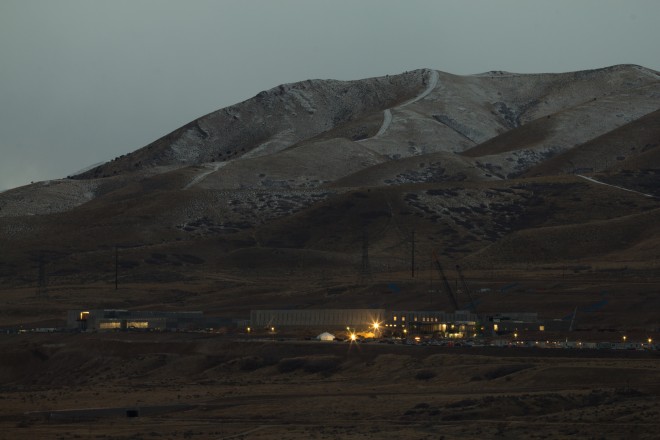
In his first television interview since he resigned from the National Security Agency over its domestic surveillance program, William Binney discusses the NSA’s massive power to spy on Americans and why the FBI raided his home after he became a whistleblower. Binney was a key source for investigative journalist James Bamford’s recent exposé in Wired Magazine about how the NSA is quietly building the largest spy center in the country in Bluffdale, Utah. The Utah spy center will contain near-bottomless databases to store all forms of communication collected by the agency, including private emails, cell phone calls, Google searches and other personal data.
Binney served in the NSA for over 30 years, including a time as technical director of the NSA’s World Geopolitical and Military Analysis Reporting Group. Since retiring from the NSA in 2001, he has warned that the NSA’s data-mining program has become so vast that it could “create an Orwellian state.” Today marks the first time Binney has spoken on national television about NSA surveillance. This interview is part of a 5-part special on state surveillance. Click here to see segment 2, 3, 4 and 5. [includes rush transcript]
The tiny town of Lakota, N.D., is quickly becoming a key testing ground for the legality of the use of unmanned drones by law enforcement after one of its residents became the first American citizen to be arrested with the help of a Predator surveillance drone.
The bizarre case started when six cows wandered onto Rodney Brossart’s 3,000 acre farm. Brossart, an alleged anti-government “sovereignist,” believed he should have been able to keep the cows, so he and two family members chased police off his land with high powered rifles.
After a 16-hour standoff, the Grand Forks police department SWAT team, armed with a search warrant, used an agreement they’ve had with Homeland Security for about three years, and called in an unmanned aerial vehicle to pinpoint Brossart’s location on the ranch. The SWAT team stormed in and arrested Brossart on charges of terrorizing a sheriff, theft, criminal mischief, and other charges, according to documents.
Brossart says he “had no clue” they used a drone during the standoff until months after his arrest.
“We’re not laying over here playing dead on it,” says Brossart, who is scheduled to appear in court on April 30. He believes what the SWAT team did was “definitely” illegal.
“We’re dealing with it, we’ve got a couple different motions happening in court fighting [the drone use].”
Repeated calls to Brossart’s attorney were not returned. Douglas Manbeck, who is representing the state of North Dakota in the case, says the drone was used after warrants were already issued.
“The alleged crimes were already committed long before a drone was even thought of being used,” he says. “It was only used to help assure there weren’t weapons and to make [the arrest] safer for both the Brossarts and law enforcement.”
“I know it’s a touchy subject for anyone to feel that drones are in the air watching them, but I don’t think there was any misuse in this case,” he added.
While there’s no precedent for the use of unmanned drones by law enforcement, John Villasenor, an expert on information gathering and drone use with the Washington, D.C.-based Brookings Institution, says he’d be “floored” if the court throws the case out. Using a drone is no different than using a helicopter, he says.
“It may have been the first time a drone was used to make an arrest, but it’s certainly not going to be the last,” Villasenor says. “I would be very surprised if someone were able to successfully launch a legal challenge [in Brossart’s case].”
Villasenor points to two Supreme Court cases—California v. Ciraolo in 1986 and Florida v. Riley in 1989— that allow law enforcement to use “public navigable airspace, in a physically nonintrusive manner” to gather evidence to make an arrest.
By summertime, there may be many more cases like Brossart’s—on May 14, the government must begin issuing permits for drone use by law enforcement.
Currently, about 300 law enforcement agencies and research institutions—including the Grand Forks SWAT team—have “temporary licenses” from the FAA to use drones. Currently, drones are most commonly used by Homeland Security along America’s borders.
Bill Macki, head of the Grand Forks SWAT team, says Brossart’s case was the first and only time they’ve used a drone to help make an arrest—they tried one other time (to search for an armed, suicidal individual), but gusty weather conditions made navigation impossible.
With a population of less than 70,000, it doesn’t make sense for the Grand Forks police department to own a helicopter, but the ability to call in a drone when necessary can provide a similar purpose.
In the future, if you tweet out a photo of a hilarious, meme-tastic kitten, it might be best not to include terms like “white powder,” “dirty bomb,” or “Death to America.”
Since late January, the Federal Bureau of Investigation has been asking the IT industry to help it develop an open-source social-media application that would provide a panoramic real-time picture of any “breaking event, crisis, activity, or natural disaster…in progress in the U.S. or globally,” according tostatements released by the agency. Essentially, the bureau wants to crowd-source software that would data-mine Twitter and other websites to scan for—and perhaps predict—mass uprisings, criminal activity, and terror plots.
To make something like what the FBI is looking for, a programmer would have to write a scriptto yank content from, say, open Facebook profiles and Twitter feeds. Once the data is obtained, it can be quickly searched for key terms. The next step is “geotagging“—tying individual posts to specific geographical locations. But the app would have to deal with more than just keywords. Ideally, the FBI wants a “threat index” that combines multiple metrics such as locations, links, and networks into one waterfall search engine. Think Klout, but souped-up for the NatSec establishment.
At first glance, the concept seems sensible enough. It’s no surprise the US government would want to use every resource possible to stay ahead of the news and intelligence curve in case a new crisis hits at home or abroad. And because the program would be aimed at monitoring open sources, it might not sound like a major civil-liberties tripwire, since tweets and online forums are usually available for anybody to view.
Still, the idea of Big Brother checking up on whom you’ve friended on Facebook or watching the embarrassing videos you’ve posted on YouTube might be off-putting, even if you’re not a die-hard civil libertarian. Such initiatives are probably legal, says Rebecca Jeschke, a digital-rights analyst at the Electronic Frontier Foundation, but they’re also “creepy.”
The FBI isn’t completely oblivious to such concerns. In statement sent to Mother Jones, a bureau spokeswoman insisted that the FBI is not looking for a program that would access private data or “focus on specific persons or protected groups.” Instead, she claims, the program would hone in on “activities constituting violations of federal criminal law or threats to national security.” The FBI also provided examples of words the application would be built to single out, including “bomb,” “suspicious package,” “white powder,” “active shoot,” and “lockdown.” “Although the FBI has always adapted to meet changes in technology,” the statement reads, “the rule of law civil liberties, and civil rights, will remain our guiding principles.” (They don’talways live up to those.)
Privacy concerns aside, the efficacy of open-source data-mining applications is, at best, questionable. “It reads almost like science fiction,” Mike German, a senior policy counsel for the ACLU’s Washington Legislative Office and former FBI agent, says. “The FBI has this unquenchable thirst for more data…Here they are in this day and age, thinking there is some easy solution to identifying threats against the country. But it’s often foolish for agents to take what they see online and treat it as intelligence. For instance, if you run a search for some of their key terms like ‘lockdown,’ ‘white powder,’ and ‘active shoot,’ you get over 345 million hits. That’s 345 million potential false tips.”
The government has tried this sort of thing before, without much success. The Department of Homeland Security already has several controversial data-mining programs. In 2007, a DHS program known as ADVISE was suspended following an internal audit by the department’s inspector general for dodging a required privacy review. And last September, the Government Accountability Office issued a report (PDF) that urged stronger executive oversight of DHS data-mining to ensure necessary privacy protections. The Defense Intelligence Agency, National Security Agency, and Central Intelligence Agency also have well-documented histories of flirting with large-scale data-mining, with mixed, secret, and often controversial results.
In 2008, a privacy and terrorism commission backed by DHS published a 376-page report titled “Protecting Individual Privacy in the Struggle Against Terrorists” that panned the logic behind post-9/11 data-mining. “Automated identification of terrorists through data mining (or any other known methodology) is neither feasible as an objective nor desirable as a goal of technology development effort,” the commissioners wrote. “Even in well-managed programs, such tools are likely to return significant rates of false positives, especially if the tools are highly automated.”
The FBI, however, is undaunted. As of Wednesday, it’s still looking for programmers.
We speak with Jacob Appelbaum, a computer researcher who has faced a stream of interrogations and electronic surveillance since he volunteered with the whistleblowing website, WikiLeaks. He describes being detained more than a dozen times at the airport and interrogated by federal agents who asked about his political views and confiscated his cell phone and laptop. When asked why he cannot talk about what happened after he was questioned, Appelbaum says, “Because we don’t live in a free country. And if I did, I guess I could tell you about it.” A federal judge ordered Twitter to hand over information about Appelbaum’s account. Meanwhile, he continues to work on the Tor Project, an anonymity network that ensures every person has the right to browse the internet without restriction and the right to speak freely. This interview is part of a 5-part special on growing state surveillance. Click here to see segment 1, 2, 4 and 5surveillance. [includes rush transcript]
The Cyber Intelligence Sharing and Protection Act (H.R. 3523) is a bill introduced in the United States House of Representatives by Reps. Mike Rogers (D-MI) and C.A. “Dutch” Ruppersberger (D-MD) in late 2011. It amends the National Security Act of 1947 to allow private companies and US government intelligence agencies to share information regarding perceived cyber threats.
WHAT IS WRONG WITH CISPA?
1. CISPA’s language, particularly in reference to how it defines “cyber threat,” is far too broad.
The bill’s definition of a “cyber threat” is so vague that it may potentially allow CISPA to encompass a far broader range of targets and data than initially contemplated by its authors. “Cyber threat” is a critical term in the bill, and is defined therein as:
…information directly pertaining to a vulnerability of, or threat to a system of network of a government or private entity, including information pertaining to the protection of a system or network from —
(A) efforts to degrade, disrupt, or destroy such system or network; or
(B) theft or misappropriation of private or government information, intellectual property, or personally identifiable information.
Under this overly broad, vague definition, whistleblowers and leakers such as Wikileaks, tech blogs carrying the latest rumours and gossip from companies, news and media sites publishing investigations, security researchers and whitehat pen testers, torrent sites (including our beloved Pirate Bay), and of course, yours truly, Anonymous, would all be ripe targets.
Additionally, as the Electronic Frontier Foundation (EFF) notes, CISPA’s broad definition of “cybersecurity” is so vague that it leaves open the door “to censor any speech that a company believes would ‘degrade the network.’” Going one step further, the bill’s inclusion of “intellectual property” provides for the strong possibility that both private companies and the federal government will likely be granted “new powers to monitor and censor communications for copyright infringement.” (Full EFF letter here)
2. CISPA demonstrates a complete disregard for reasonable expectations of privacy protection and essential liberties by providing for unaccountable sharing of user data.
As laid out, CISPA allows a large, nearly unchecked quantity of any and all information on a target to be obtained and shared between private companies and government agencies. The bill’s text states, “Notwithstanding any other provision of law, a self-protected entity may, for cybersecurity purposes…share such cyber threat information with any other entity, including the Federal Government.”
Why is this problematic? As it stands, CISPA’s text allows for a slippery slope of information and data that could be shared amongst private companies and the federal government without any regard for a target’s personal privacy protections. Such information could very well include account names and passwords, histories, message content, and other information not currently available to agencies under federal wiretap laws.
In a position letter addressed to Congress on 17 April 2012, CISPA critics point out:
CISPA creates an exception to all privacy laws to permit companies to share our information with each other and with the government in the name of cybersecurity. Although a carefully-‐crafted information sharing program that strictly limits the information to be shared and includes robust privacy safeguards could be an effective approach to cybersecurity, CISPA lacks such protections for individual rights. CISPA’s ‘information sharing’ regime allows the transfer of vast amounts of data, including sensitive information like internet use history or the content of emails, to any agency in the government including military and intelligence agencies like the National Security Agency or the Department of Defense Cyber Command.
3. The broad language in CISPA provides for the uncertain future expansion of federal government powers and a slippery slope of cybersecurity warrantless wiretapping.
Of particular concern is the word “notwithstanding,” which is a dangerously broad word when included in legislation. The use of “notwithstanding” will allow CISPA to apply far beyond the stated intentions of its authors. It is clear that the word was purposefully included (and kept throughout rewrites) by the bill’s authors to allow CISPA to supersede and trump all existing federal and state civil and criminal laws, including laws that safeguard privacy and personal rights.
The fact that the sponsors and authors of CISPA claim that they have no intentions to use the overly broad language of the bill to obtain unprecedented amounts of information on citizens should be of little comfort to a concerned onlooker. As it stands, if CISPA passes in Congress and is signed into law by the President, its broad language WILL be law of the land and WILL be available for use by agencies and companies as desired. Why should our only protection against rampant cyber-spying be us trusting the government or companies NOT to take CISPA over the line of acceptable (if any) data collection?
WOW, CISPA SUCKS! HOW CAN I HELP STOP IT?
Below are some various ways that YOU can get involved in the online and real world struggles against CISPA. It will take all of us to stop this bill, but we did it before with SOPA, PIPA, and [hopefully] ACTA, and we’re confident that it can be done once more with CISPA. The voice of the People WILL be heard loud and clear, and you can help because your voice matters. It’s time to stand up for your rights because, in the end, who else will? Internet, unite!
Educate a Congressman about the Internet and pitfalls of CISPA – here
Email a Congressman directly about the bill – here
Sign and pass around online petitions – here || here || here
Spread awareness. Tweet, blog and post about CISPA. Use the hashtags #StopCISPA and #CISPA so everyone can follow. Change your profile picture to an anti-CISPA image or add a STOP CISPA banner.
Tweet to CISPA’s proponents, @HouseIntelComm and @RepMikeRogers and let them know about the pitfalls of CISPA.
Let CISPA’s sponsor, Rep. MikeRogers, know how much his bill fails – here
Check out Fight For The Future’s #CongressTMI movement in regard to CISPA – here
Join the Twitter Campaign and Contact a Representative about CISPA – here
Protest. Organise in front of Congress and let them know what happens when they try to govern the Internet and strip our liberties in the name of national security. If you organise an IRL protest, please contact us@YourAnonNews so we can facilitate spreading the word on it and helping boost attendance.
I WANT TO LEARN EVEN MORE ABOUT CISPA! TELL ME MORE!
Ok…clearly you like reading and knowing the issues thoroughly. We’re proud of your dedication and passion to better educating yourself and others about this concerning bill. Below are additional helpful resources that you can check out to get an even better understanding of CISPA and how it will affect the world of tomorrow should it pass and become law.
Full text of CISPA, including recent rewrites and Amendments – here
A brilliant series of TechDirt articles on CISPA shed some light on the bill and point out exactly where its flaws are found — CISPA is a Really Bad Bill, and Here’s Why – read
– Did Congress Really Not Pay Attention to What Happened with SOPA? CISPA Ignorance is Astounding –read
– Forget SOPA, You Should Be Worried About This Cybersecurity Bill – read
NOTE: Even Obama seems to dislike CISPA — On 17 April 2012, the White House issued a statement criticising CISPA for lacking strong privacy protections and failing to set forth basic security standards.
In 2008, Congress enacted a statute that authorized the National Security Agency to carry out dragnet surveillance of Americans’ international communications. Almost four years later, the statute — called the FISA Amendments Act — has yet to be reviewed by the courts, and, if the Obama administration has its way, the courts are unlikely ever to review it. In February, the administration asked the Supreme Court to overturn acourt of appeals decision that would allow an ACLU challenge to the statute to go forward. Today we filed our brief in opposition, which asks the Supreme Court to let the appeals court’s decision stand.
As we explain in our brief, the statute gives the NSA extraordinary power:
[The FISA Amendments Act] allows the government to collect [Americans’ international communications] en masse without specifying the individuals or facilities to be monitored; without observing meaningful limitations on the retention, analysis, and dissemination of acquired information; without individualized warrants based on criminal or foreign intelligence probable cause; and without prior judicial or even administrative determinations that the targets of surveillance are foreign agents or connected in any way, however remotely, to terrorism.
We argue that the appeals court was right to rule that our plaintiffs have standing to challenge the statute, and we ask the Supreme Court to leave that ruling in place. We write:
In the end, what the government disguises as a narrow, technical argument about justiciability reveals itself to be this sweeping proposition: The courts have no meaningful role to play in protecting Americans’ international communications from wholesale government surveillance, or even in determining whether that surveillance is consistent with the Constitution. For sound strategic reasons, the government avoids stating the proposition forthrightly, but it is the inescapable consequence of the argument it advances. Nothing in this Court’s precedents countenances such a result.
The plaintiffs in the case include Amnesty International USA, the Global Fund for Women, Human Rights Watch, the International Criminal Defence Attorneys Association, The Nation Magazine, PEN American Center, Service Employees International Union, and the Washington Office on Latin America.
You can find more information about the FISA Amendments Act here, and more information about the case — called Clapper v. Amnesty International USA et al. —here.
If the Pentagon gets its way, the gentleman doodling on his notepad as your next overseas business trip goes on endlessly could be a soldier, sailor, airman or marine in disguise.
This extraordinary redefinition of the U.S. military’s authorities for clandestine action overseas is officially part of a Pentagon wish list for revisions to its legal authorities recently sent to Congress.
There’s another change the proposal would make — one that seems boring and bureaucratic, but explains a great deal. Authority for overseeing the Defense Department’s human spying lies with the Defense Intelligence Agency. The proposal would give it instead to the Undersecretary of Defense for Intelligence, the top aide for intel to the secretary of defense. And that undersecretary, Michael Vickers, is one of the Pentagon’s leading advocates of the transformation of special operations forces into elite intelligence operatives. Basically, Vickers would take control of a broad expansion in clandestine military activity.
Notice how the proposal says that using the cover of “commercial activities” would “provide an important safeguard for U.S. military forces.” Perhaps it would. But it would also place businessmen in danger. Once civilian commercial activities become a front for U.S. military spying, then foreign governments will likely view normal businessmen as targets for their own counterspying, or even detention.
This is why medical aid workers had such a negative reaction to the CIA’s use of a Pakistani doctor tocollect DNA in the town where Osama bin Laden was hiding under the cover of a vaccination program. If civilian activities become tied up with military activities, then the civilians who perform them will be seen as military targets, even if they have nothing to do with the military themselves.
“Additional classified background information regarding the Department’s conduct of its commercial cover program will be made available to the armed services committees,” the Pentagon promises in the proposal. Perhaps the generals will brief congressional staff in business suits.
NEW YORK, NY — Brian Amento gripped the deadbolted door handle on the display next to him and with a click, the door unlocked at his touch. In his other hand, he was pinching a small metal disk called a piezoelectric transducer — like the ones used in guitar pickups — that was wired to his smartphone. The phone sent a digital key, identifying Amento as the homeowner, through his body and into the door.
Amento is a computer scientist at AT&T Labs. He talked with InnovationNewsDaily Thursday at a research fair AT&T held for reporters. Though for this display, the piezoelectric transducer connected to Amento’s phone with a large wire, eventually such sensors would be embedded directly in phones or perhaps wristwatches, Amento said. People’s smartphones would become their door keys, too.
In this prototype, Amento’s phone produced several frequencies of vibrations that humans can’t feel, but can hear, if the room is very quiet. In other words, as Amento said, “It’s an acoustic signal.”
The frequencies travel from the phone and through the skeleton, in the way that sound waves vibrate bones in the skull and inner ear. At the other end, the door handle has another piezoelectric transducer to detect the vibrations coming through a person’s hand. If this technology comes to market, different phones and door handles would have different vibration signatures that need to match for the door to unlock.
Amento switched the settings on his phone, demonstrating that his demo door would also open for the vibrations from a friend’s phone. On the other hand, it would send an alert to the homeowner if a stranger touched the door handle.
Amento and his colleagues think they can add another layer of security to the smartphone key, too — one that’s based on the unique properties of people’s skeletons. Because of differences in bone lengths and density, people’s skeletons should carry vibrations differently, they think. “If the signal goes through my body, it degrades in a different way than if it goes through your body,” Amento said. Among the five people he has tested, all of their skeletons transmitted vibrations differently. Of course, he’ll have to test more people to check if everyone is unique, but if that’s true, then the smartphone key will only work when the right person is using it.
The key is still in its prototype stage, Amento said, so he couldn’t say when people might be able to unlock their front doors with their own unique cellphone vibes. Once such systems work, however, people could start transmitting much more than their door keys through their bones. Amento and his colleagues are also working to see if people can exchange contact information just by shaking hands. The data would flow from one phone, through one person’s skeleton, into the next person’s and finally, into the recipient’s phone.
They also think a person’s unique vibes might help other smart devices identify them. A piezoelectric couch, for example, could sense who’s sitting there and offer her favorite channels. A piezoelectric car driver’s seat could identify the driver and adjust the mirrors accordingly.
The following collection of 25 flyers produced by the FBI and the Department of Justice are distributed to local businesses in a variety of industries to promote suspicious activity reporting. The flyers are not released publicly, though several have been published in the past by news media and various law enforcement agencies around the country. We have compiled this collection from a number of online sources.
To view the documents, click on a threat area in the menu to the left and the PDF will appear on the right side of the page. You can also download the complete collection of files (ZIP Archive, 6.27 MB).
Army General Keith Alexander, the director of the NSA, is having a busy year — hopping around the country, cutting ribbons at secret bases and bringing to life the agency’s greatly expanded eavesdropping network.
In January he dedicated the new $358 million CAPT Joseph J. Rochefort Building at NSA Hawaii, and in March he unveiled the 604,000-square-foot John Whitelaw Building at NSA Georgia.
Designed to house about 4,000 earphone-clad intercept operators, analysts and other specialists, many of them employed by private contractors, it will have a 2,800-square-foot fitness center open 24/7, 47 conference rooms and VTCs, and “22 caves,” according to an NSA brochure from the event. No television news cameras were allowed within two miles of the ceremony.
Overseas, Menwith Hill, the NSA’s giant satellite listening post in Yorkshire, England that sports 33 giant dome-covered eavesdropping dishes, is also undergoing a multi-million-dollar expansion, with $68 million alone being spent on a generator plant to provide power for new supercomputers. And the number of people employed on the base, many of them employees of Lockheed Martin and Northrop Grumman, is due to increase from 1,800 to 2,500 in 2015, according to a study done in Britain. Closer to home, in May, Fort Meade will close its 27-hole golf course to make room for a massive $2 billion, 1.8-million-square-foot expansion of the NSA’s headquarters, including a cybercommand complex and a new supercomputer center expected to cost nearly $1 billion.
The climax, however, will be the opening next year of the NSA’s mammoth 1-million-square-foot, $2 billion Utah Data Center. The centerpiece in the agency’s decade-long building boom, it will be the “cloud” where the trillions of millions of intercepted phone calls, e-mails, and data trails will reside, to be scrutinized by distant analysts over highly encrypted fiber-optic links.
Despite the post-9/11 warrantless wiretapping of Americans, the NSA says that citizens should trust it not to abuse its growing power and that it takes the Constitution and the nation’s privacy laws seriously.
But one of the agency’s biggest secrets is just how careless it is with that ocean of very private and very personal communications, much of it to and from Americans. Increasingly, obscure and questionable contractors — not government employees — install the taps, run the agency’s eavesdropping infrastructure, and do the listening and analysis.
And with some of the key companies building the U.S.’s surveillance infrastructure for the digital age employing unstable employees, crooked executives, and having troubling ties to foreign intelligence services, it’s not clear that Americans should trust the secretive agency, even if its current agency chief claims he doesn’t approve of extrajudicial spying on Americans. His predecessor, General Michael V. Hayden, made similar claims while secretly conducting the warrantless wiretapping program.
Until now, the actual mechanics of how the agency constructed its highly secret U.S. eavesdropping net, code-named Stellar Wind, has never been revealed. But in the weeks following 9/11, as the agency and the White House agreed to secretly ignore U.S. privacy laws and bypass the Foreign Intelligence Surveillance Court, J. Kirk Wiebe noticed something odd. A senior analyst, he was serving as chief of staff for the agency’s Signals Intelligence Automation Research Center (SARC), a sort of skunkworks within the agency where bureaucratic rules were broken, red tape was cut, and innovation was expected.
“One day I notice out in the hallway, stacks and stacks of new servers in boxes just lined up,” he said.
Passing by the piles of new Dell 1750 servers, Wiebe, as he often did, headed for the Situation Room, which dealt with threat warnings. It was located within the SARC’s Lab, on the third floor of Operations Building 2B, a few floors directly below the director’s office. “I walk in and I almost get thrown out by a guy that we knew named Ben Gunn,” he said. It was the launch of Stellar Wind and only a handful of agency officials were let in on the secret.
“He was the one who organized it,” said Bill Binney of Gunn. A former founder and co-director of SARC, Binney was the agency official responsible for automating much of the NSA’s worldwide monitoring networks. Troubled by the unconstitutional nature of tapping into the vast domestic communications system without a warrant, he decided to quit the agency in late 2001 after nearly forty years.
Gunn, said Binney, was a Scotsman and naturalized U.S. citizen who had formerly worked for GCHQ, Britain’s equivalent of the NSA, and later become a senior analyst at the NSA. The NSA declined Wired’s request to interview Gunn, saying that, as policy, it doesn’t confirm or deny if a person is employed by the agency.
Shortly after the secret meeting, the racks of Dell servers were moved to a room down the hall, behind a door with a red seal indicating only those specially cleared for the highly compartmented project could enter. But rather than having NSA employees putting the hardware and software together and setting up walls of monitors showing suspected terrorism threats and their U.S. communications, the spying room was filled with a half-dozen employees of a tiny mom-and-pop company with a bizarre and troubling history.
“It was Technology Development Corporation,” said Binney.
The agency went to TDC, he says, because the company had helped him set up a similar network in SARC — albeit one that was focused on foreign and international communications — the kind of spying the NSA is chartered to undertake.
“They needed to have somebody who knew how the code works to set it up,” he said. “And then it was just a matter of feeding in the attributes [U.S. phone numbers, e-mail addresses and personal data] and any of the content you want.” Those “attributes” came from secret rooms established in large telecom switches around the country. “I think there’s 10 to 20 of them,” Binney says.
Formed in April 1984, TDC was owned by two brothers, Randall and Paul Jacobson, and largely run out of Randall’s Clarkesville, Maryland house, with his wife acting as bookkeeper. But its listed address is a post office box in Annapolis Junction, across the Baltimore-Washington Parkway from the NSA, and thecompany’s phone number in various business directories is actually an NSA number in Binney’s old office.
The company’s troubles began in June 1992 when Paul lost his security clearance. “If you ever met this guy, you would know he’s a really strange guy,” Binney said of Paul. “He did crazy stuff. I think they thought he was unstable.” At the time, Paul was working on a contract at the NSA alongside a rival contractor, Unisys Corporation. He later blamed Unisys for his security problems and sued it, claiming that Unisys employees complained about him to his NSA supervisors. According to the suit, Unisys employees referred to him as “weird” and that he “acted like a robot,” “never wore decent clothes,” and was mentally and emotionally unstable. About that time, he also began changing his name, first to Jimmy Carter, and later to Alfred Olympus von Ronsdorf.
With “von Ronsdorf’s” clearance gone and no longer able to work at the NSA, Randy Jacobson ran the company alone, though he kept his brother and fellow shareholder employed in the company, which led to additional problems.
“What happened was Randy still let him have access to the funds of the company and he squandered them,” according to Binney. “It was so bad, Randy couldn’t pay the people who were working for him.” According to court records, Ronsdorf allegedly withdrew about $100,000 in unauthorized payments. But Jacobson had troubles of his own, having failed to file any income tax statements for three years in the 1990s, according to tax court records. Then in March 2002, around the time the company was completing Stellar Wind, Jacobson fired his brother for improper billing and conversion of company funds. That led to years of suits and countersuits over mismanagement and company ownership.
Despite that drama, Jacobson and his people appeared to have serious misgivings about the NSA’s program once they discovered its true nature, according to Binney. “They came and said, ‘Do you realize what these people are doing?’” he said. “‘They’re feeding us other stuff [U.S.] in there.’ I mean they knew it was unconstitutional right away.” Binney added that once the job was finished, the NSA turned to still another contractor to run the tapping operation. “They made it pretty well known, so after they got it up and running they [the NSA] brought in the SAIC people to run it after that.” Jacobsen was then shifted to other work at the NSA, where he and his company are still employed.
Randall Jacobsen answered his phone inside the NSA but asked for time to respond. He never called back.
In addition to constructing the Stellar Wind center, and then running the operation, secretive contractors with questionable histories and little oversight were also used to do the actual bugging of the entire U.S. telecommunications network.
According to a former Verizon employee briefed on the program, Verint, owned by Comverse Technology, taps the communication lines at Verizon, which I first reported in my book The Shadow Factory in 2008. Verint did not return a call seeking comment, while Verizon said it does not comment on such matters.
What is especially troubling is that both companies have had extensive ties to Israel, as well as links to that country’s intelligence service, a country with a long and aggressive history of spying on the U.S.
In fact, according to Binney, the advanced analytical and data mining software the NSA had developed for both its worldwide and international eavesdropping operations was secretly passed to Israel by a mid-level employee, apparently with close connections to the country. The employee, a technical director in the Operations Directorate, “who was a very strong supporter of Israel,” said Binney, “gave, unbeknownst to us, he gave the software that we had, doing these fast rates, to the Israelis.”
Because of his position, it was something Binney should have been alerted to, but wasn’t.
“In addition to being the technical director,” he said, “I was the chair of the TAP, it’s the Technical Advisory Panel, the foreign relations council. We’re supposed to know what all these foreign countries, technically what they’re doing…. They didn’t do this that way, it was under the table.” After discovering the secret transfer of the technology, Binney argued that the agency simply pass it to them officially, and in that way get something in return, such as access to communications terminals. “So we gave it to them for switches,” he said. “For access.”
But Binney now suspects that Israeli intelligence in turn passed the technology on to Israeli companies who operate in countries around the world, including the U.S. In return, the companies could act as extensions of Israeli intelligence and pass critical military, economic and diplomatic information back to them. “And then five years later, four or five years later, you see a Narus device,” he said. “I think there’s a connection there, we don’t know for sure.”
Narus was formed in Israel in November 1997 by six Israelis with much of its money coming from Walden Israel, an Israeli venture capital company. Its founder and former chairman, Ori Cohen, once told Israel’sFortune Magazine that his partners have done technology work for Israeli intelligence. And among the five founders was Stanislav Khirman, a husky, bearded Russian who had previously worked for Elta Systems, Inc. A division of Israel Aerospace Industries, Ltd., Elta specializes in developing advanced eavesdropping systems for Israeli defense and intelligence organizations. At Narus, Khirman became the chief technology officer.
A few years ago, Narus boasted that it is “known for its ability to capture and collect data from the largest networks around the world.” The company says its equipment is capable of “providing unparalleled monitoring and intercept capabilities to service providers and government organizations around the world” and that “Anything that comes through [an Internet protocol network], we can record. We can reconstruct all of their e-mails, along with attachments, see what Web pages they clicked on, we can reconstruct their [Voice over Internet Protocol] calls.”
Like Narus, Verint was founded by in Israel by Israelis, including Jacob “Kobi” Alexander, a former Israeli intelligence officer. Some 800 employees work for Verint, including 350 who are based in Israel, primarily working in research and development and operations, according to the Jerusalem Post. Among its products is STAR-GATE, which according to the company’s sales literature, lets “service providers … access communications on virtually any type of network, retain communication data for as long as required, and query and deliver content and data …” and was “[d]esigned to manage vast numbers of targets, concurrent sessions, call data records, and communications.”
In a rare and candid admission to Forbes, Retired Brig. Gen. Hanan Gefen, a former commander of the highly secret Unit 8200, Israel’s NSA, noted his former organization’s influence on Comverse, which owns Verint, as well as other Israeli companies that dominate the U.S. eavesdropping and surveillance market. “Take NICE, Comverse and Check Point for example, three of the largest high-tech companies, which were all directly influenced by 8200 technology,” said Gefen. “Check Point was founded by Unit alumni. Comverse’s main product, the Logger, is based on the Unit’s technology.”
According to a former chief of Unit 8200, both the veterans of the group and much of the high-tech intelligence equipment they developed are now employed in high-tech firms around the world. “Cautious estimates indicate that in the past few years,” he told a reporter for the Israeli newspaper Ha’artez in 2000, “Unit 8200 veterans have set up some 30 to 40 high-tech companies, including 5 to 10 that were floated on Wall Street.” Referred to only as “Brigadier General B,” he added, “This correlation between serving in the intelligence Unit 8200 and starting successful high-tech companies is not coincidental: Many of the technologies in use around the world and developed in Israel were originally military technologies and were developed and improved by Unit veterans.”
When asked about these contractors, the NSA declined to “verify the allegations made.”
But the NSA did “eagerly offer” that it “ensures deliberate and appropriate measures are taken to thoroughly investigate and resolve any legitimate complaints or allegations of misconduct or illegal activity” and “takes seriously its obligation to adhere to the U.S. Constitution and comply with the U.S. laws and regulations that govern our activities.”
The NSA also added that “we are proud of the work we do to protect the nation, and allegations implying that there is inappropriate monitoring of American communications are a disservice to the American public and to the NSA civilian and military personnel who are dedicated to serving their country.”
However, that statement elides the voluminous reporting by the New York Times, Washington Post, USA Today, Los Angeles Times and Wired on the NSA’s warrantless wiretapping program. Also not reflected is that in the only anti-warrantless wiretapping lawsuit to survive the government’s use of the “state secrets” privilege to throw them out, a federal judge ruled that two American lawyers had been spied on illegally by the government and were entitled to compensation.
So take the NSA’s assurances as you will.
But as NSA director Alexander flies around the country, scissors in hand, opening one top-secret, outsourced eavesdropping center after another, someone might want to ask the question no one in Congress seems willing to ask: Who’s listening to the listeners?
A guide to what data mining is, how it works, and why it’s important.
Big data is everywhere we look these days. Businesses are falling all over themselves to hire ‘data scientists,’ privacy advocates are concerned about personal data and control, and technologists and entrepreneurs scramble to find new ways to collect, control and monetize data. We know that data is powerful and valuable. But how?
This article is an attempt to explain how data mining works and why you should care about it. Because when we think about how our data is being used, it is crucial to understand the power of this practice. Without data mining, when you give someone access to information about you, all they know is what you have told them. With data mining, they know what you have told them and can guess a great deal more. Put another way, data mining allows companies and governments to use the information you provide to reveal more than you think.
Data mining allows companies and governments to use the information you provide to reveal more than you think.
To most of us data mining goes something like this: tons of data is collected, then quant wizards work their arcane magic, and then they know all of this amazing stuff. But, how? And what types of things can they know? Here is the truth: despite the fact that the specific technical functioning of data mining algorithms is quite complex — they are a black box unless you are a professional statistician or computer scientist — the uses and capabilities of these approaches are, in fact, quite comprehensible and intuitive.
For the most part, data mining tells us about very large and complex data sets, the kinds of information that would be readily apparent about small and simple things. For example, it can tell us that “one of these things is not like the other” a la Sesame Street or it can show us categories and then sort things into pre-determined categories. But what’s simple with 5 datapoints is not so simple with 5 billion datapoints.
And these days, there’s always more data. We gather far more of it then we can digest. Nearly every transaction or interaction leaves a data signature that someone somewhere is capturing and storing. This is, of course, true on the internet; but, ubiquitous computing and digitization has made it increasingly true about our lives away from our computers (do we still have those?). The sheer scale of this data has far exceeded human sense-making capabilities. At these scales patterns are often too subtle and relationships too complex or multi-dimensional to observe by simply looking at the data. Data mining is a means of automating part this process to detect interpretable patterns; it helps us see the forest without getting lost in the trees.
Discovering information from data takes two major forms: description and prediction. At the scale we are talking about, it is hard to know what the data shows. Data mining is used to simplify and summarize the data in a manner that we can understand, and then allow us to infer things about specific cases based on the patterns we have observed. Of course, specific applications of data mining methods are limited by the data and computing power available, and are tailored for specific needs and goals. However, there are several main types of pattern detection that are commonly used. These general forms illustrate what data mining can do.
Anomaly detection : in a large data set it is possible to get a picture of what the data tends to look like in a typical case. Statistics can be used to determine if something is notably different from this pattern. For instance, the IRS could model typical tax returns and use anomaly detection to identify specific returns that differ from this for review and audit.
Association learning: This is the type of data mining that drives the Amazon recommendation system. For instance, this might reveal that customers who bought a cocktail shaker and a cocktail recipe book also often buy martini glasses. These types of findings are often used for targeting coupons/deals or advertising. Similarly, this form of data mining (albeit a quite complex version) is behind Netflix movie recommendations.
Cluster detection: one type of pattern recognition that is particularly useful is recognizing distinct clusters or sub-categories within the data. Without data mining, an analyst would have to look at the data and decide on a set of categories which they believe captures the relevant distinctions between apparent groups in the data. This would risk missing important categories. With data mining it is possible to let the data itself determine the groups. This is one of the black-box type of algorithms that are hard to understand. But in a simple example – again with purchasing behavior – we can imagine that the purchasing habits of different hobbyists would look quite different from each other: gardeners, fishermen and model airplane enthusiasts would all be quite distinct. Machine learning algorithms can detect all of the different subgroups within a dataset that differ significantly from each other.
Classification: If an existing structure is already known, data mining can be used to classify new cases into these pre-determined categories. Learning from a large set of pre-classified examples, algorithms can detect persistent systemic differences between items in each group and apply these rules to new classification problems. Spam filters are a great example of this – large sets of emails that have been identified as spam have enabled filters to notice differences in word usage between legitimate and spam messages, and classify incoming messages according to these rules with a high degree of accuracy.
Regression: Data mining can be used to construct predictive models based on many variables. Facebook, for example, might be interested in predicting future engagement for a user based on past behavior. Factors like the amount of personal information shared, number of photos tagged, friend requests initiated or accepted, comments, likes etc. could all be included in such a model. Over time, this model could be honed to include or weight things differently as Facebook compares how the predictions differ from observed behavior. Ultimately these findings could be used to guide design in order to encourage more of the behaviors that seem to lead to increased engagement over time.
The patterns detected and structures revealed by the descriptive data mining are then often applied to predict other aspects of the data. Amazon offers a useful example of how descriptive findings are used for prediction. The (hypothetical) association between cocktail shaker and martini glass purchases, for instance, could be used, along with many other similar associations, as part of a model predicting the likelihood that a particular user will make a particular purchase. This model could match all such associations with a user’s purchasing history, and predict which products they are most likely to purchase. Amazon can then serve ads based on what that user is most likely to buy.
Data mining, in this way, can grant immense inferential power. If an algorithm can correctly classify a case into known category based on limited data, it is possible to estimate a wide-range of other information about that case based on the properties of all the other cases in that category. This may sound dry, but it is how most successful Internet companies make their money and from where they draw their power.