In 1929, the Soviet Union established gun control. From 1929 to 1953, about 20 million dissidents, unable to defend themselves, were rounded up and exterminated
In 1911, Turkey established gun control. From 1915 to 1917, 1.5 million Armenians, unable to defend themselves, were rounded up and exterminated.
Germany established gun control in 1938 and from 1939 to 1945, a total of 13 million Jews and others who were unable to defend themselves were rounded up and exterminated.
China established gun control in 1935. From 1948 to 1952, 20 million political dissidents, unable to defend themselves were rounded up and exterminated
Guatemala established gun control in 1964. From 1964 to 1981, 100,000 Mayan Indians, unable to defend themselves, were rounded up and exterminated.
Uganda established gun control in 1970. From 1971 to 1979, 300,000 Christians, unable to defend themselves, were rounded up and exterminated.
Cambodia established gun control in 1956. From 1975 to 1977, one million educated people, unable to defend themselves, were rounded up and exterminated.
Defenceless people rounded up and exterminated in the 20th Century because of gun control: 56 million.
You won’t see this data on the US evening news, or hear politicians disseminating this information.
Guns in the hands of honest citizens save lives and property and, yes, gun-control laws adversely affect only the law-abiding citizens.
Take note my fellow Americans, before it’s too late!
The next time someone talks in favour of gun control, please remind them of this history lesson.
With guns, we are ‘citizens’. Without them, we are ‘subjects’.
During WWII the Japanese decided not to invade America because they knew most Americans were ARMED!
If you value your freedom, please spread this anti-gun-control message to all of your friends.
SWITZERLAND ISSUES EVERY HOUSEHOLD A GUN!
SWITZERLAND’S GOVERNMENT TRAINS EVERY ADULT THEY ISSUE A RIFLE.
SWITZERLAND HAS THE LOWEST GUN RELATED CRIME RATE OF ANY CIVILIZED COUNTRY IN THE WORLD!!!
DON’T LET OUR GOVERNMENT WASTE MILLIONS OF OUR TAX DOLLARS IN AN EFFORT TO MAKE ALL LAW ABIDING CITIZENS AN EASY TARGET.
Spread the word everywhere you can that you are a firm believer in the 2nd Amendment!
Back to the Future: What History Teaches About Gun Confiscations
It is clear that Obama, Boxer, a host of other elected representatives, the media, and Hollywood stars are coming after our guns. Leading the media charge is none other than Michael Moore; he implores the nation to let the murders of 20 Sandy Hook elementary students not “be in vain and stand for gun control.” Moore seems to forget that he and his family have several armed bodyguards.
Then there is Obama who refuses to mandate that gun free zones at schools be replaced with armed guards designed in order to protect our children. And Obama also seems to forget to mention that he has 11 armed guards protecting his children while they attend school in a “gun free zone.”
Oh, I think Obama and Moore think that our children are important. It is just that their children are much more important than our children. Simply put, Obama and Moore advocate for “rules for thee but not for me.”
Outright Gun Bans Are Looming
Regrettably, I believe that we are going to see an incrementally based approach to seizing our guns on the part of the Obama administration. Subsequently, Americans could very well be on the verge of committing “National Suicide by Gun Control”.
The gun control advocates are positioning themselves and their gun-grabbing policies to be perfectly timed to influence people during this window of opportunity motivated by the highly suspicious set of mass shootings (e.g. Batman shootings, Sandy Hook shootings)
All totalitarian governments begin their invasion into civil liberties with the promise of safety from whoever plays the convenient role of the “bogeyman” of the day. In Nazi Germany, the original bogeymen were the communists, and then this specter of bogeymen kept expanding until anyone who was an enemy of the State needed to be controlled and disarmed. Isn’t this what we have witnessed since the days of 9/11 with the creation of the DHS-inspired MIAC report which lists returning veterans, gun owners, Libertarians, Ron Paul supporters and Constitutionalists as domestic terrorists. This is your list of people who will be disarmed first, and the list will keep growing until all Americans are disarmed. The totalitarian pleas of “Let us protect you from yourself” ring loudly and clearly through the halls of Congress and in the Oval Office. History shows that when governments demand to protect you from yourself, we should all get a little bit nervous.
History Speaks Will American Listen?
History shows that bad things, very bad things, happen when a government confiscates the guns of its citizens. It is an undisputed fact that gun control and gun confiscation have preceded every instance of genocide in the 20th century. How quickly we forget the lessons of history, or, perhaps we never bothered to learn the true lessons of history in the first place.
If we ever allow government to subvert the Second Amendment, we very well could be witnessing a prelude to an American genocide for specific targeted groups, for there is nothing as dangerous to a totalitarian regime as an educated and well-armed populace. Totalitarian regimes flourish in an atmosphere of ignorance. The dumbing down of American students has removed the first obstacle which could stand in the way of the establishment of a brutal police state control grid. The second obstacle, the removal of America’s citizens guns as a last line of defense against tyrannical government has commenced with the catalyst being the Sandy Hook shootings.
And let’s not forget that this criminal Obama administration has been caught shipping guns into Mexico to the drug cartels in order to undermine the Second Amendment; and we are supposed to trust these proven criminals to be the only ones who will have guns in the new UN-controlled America?
What Happens After Gun Confiscation?
Before we passively allow the Obama administration to strip away our last line of defense from an increasingly totalitarian government, by acquiescing to the United Nations and American advocates for gun control, perhaps we should examine the end game resulting from past gun control efforts:
1. In 1911, Turkey established gun control. From 1915-1917, 1.5 million Armenians, unable to defend themselves against their ethnic-cleansing government, were arrested and exterminated.
2. In 1929, the former Soviet Union established gun control as a means of controlling the “more difficult” of their citizens. From 1929 to the death of Stalin, 40 million Soviets met an untimely end at the hand of various governmental agencies as they were arrested and exterminated.
3. After the rise of the Nazis, Germany established their version of gun control in 1938 and from 1939 to 1945, 13 million Jews, gypsies, homosexuals, the mentally ill, and others, who were unable to defend themselves against the “Brown Shirts”, were arrested and exterminated. Interestingly, the Brown Shirts were eventually targeted for extermination themselves following their blind acts of allegiance to Hitler. Any American military and police would be wise to grasp the historical significance of the Brown Shirts’ fate.
4. After Communist China established gun control in 1935, an estimated 50 million political dissidents, unable to defend themselves against their fascist leaders, were arrested and exterminated.
5. Closer to home, Guatemala established gun control in 1964. From 1964 to 1981, 100,000 Mayans, unable to defend themselves against their ruthless dictatorship, were arrested and exterminated.
6. Uganda established gun control in 1970. From 1971 to 1979, 300,000 Christians, unable to defend themselves from their dictatorial government, were arrested and exterminated.
7. Cambodia established gun control in 1956. From 1975 to 1977, one million of the “educated” people, unable to defend themselves against their fascist government, were arrested and exterminated.
8. In 1994, Rwanda disarmed the Tutsi people and being unable to defend themselves from their totalitarian government, nearly one million were summarily executed.
The total numbers of victims who lost their lives because of gun control is approximately 70 million people in the 20th century. The historical voices from 70 million corpses speak loudly and clearly to those Americans who are advocating for a de facto gun ban. Governments murdered four times as many civilians as were killed in all the international and domestic wars combined. Governments murdered millions more people than were killed by common criminals and it all followed gun control.
Historically, American gun control legislation has been imitating Hitler’s Nazi Germany gun control legislation for quite some time. Consider the key provisions of the Nazi Weapons Act of 1938 and compare it with the United States Gun Control Act of 1968. The parallels of both the provisions and the legal language are eerily similar.
The Nazi Weapons Act of 1938
1. Classified guns for sporting purposes.
2. All Germans desiring to purchase firearms had to register with the Nazi officials and submit to a background check.
3. The law assumed that non-Nazi German citizens were hostile and thereby exempted Nazis from the gun control law.
4. The Nazis assumed unrestricted power to decide what kinds of firearms could, or could not, be owned by private persons.
5. The types of ammunition that were legal were subject to control by governmental bureaucrats.
6. Citizens under 18 years of age could not buy firearms and ammunition.
United States Gun Control Act of 1968
1. Introduced term “sporting purpose.”
2. Exempted government agencies from the controls which applied to law-abiding citizens.
3. Age restrictions of 18 years and 21 years were applied to anyone who wished to purchase firearms and ammunition.
4. Authorized the Secretary of the Treasury to decide what firearms could or could not be owned by private persons.
5.The types of ammunition that were legal were subject to control by governmental bureaucrats.
6. Age restriction of 18 years and 21 years were applied to anyone who wished to purchase firearms and ammunition.
Thomas Jefferson was very clear in his writings regarding the right to bear arms. Jefferson knew that the preservation of the Republic ultimately rested upon a well-armed citizenry. Jefferson felt it was absolutely necessary for American citizens to be able to protect themselves. The protection that Jefferson spoke of was not from our obvious enemies of the day (France and Britain), but from our own government. Jefferson made this point quite clear when he admonished future generations of Americans to fulfill their duty to overthrow a government if they failed to serve the needs of the majority of its citizens.
Private ownership of guns is the necessary component needed to fulfill the Jeffersonian mandate for national self-defense. Yet, increasingly reminiscent of Nazi Germany, the United States government is incrementally chipping away at private citizens’ right to own a gun. This does doesn’t make sense because FBI statistics clearly show that 90% of the guns used in the commission of a crime are stolen! Does the government really believe that criminals, both American citizens and illegal aliens, as well as terrorists, are suddenly going to perform their civic duty and immediately register their guns? How is America better-served if the only ones who don’t have access to guns are the law-abiding citizens? So, one must ask who are the gun control laws designed to protect and why?
Finally, most would wonder what gun confiscation would look and feel like in America. No speculation is necessary because of the gun confiscations which took place in New Orleans in 2006 in the aftermath of Katrina. Any American who thinks that gun confiscation is a good idea, needs desperately to watch the following video.
Is this the government that you are going to accept? Even the most brainwashed of Americans cannot deny what you just watched on the preceding video. If we allow Obama to possess the ability to ban our guns, this is what you will likely see across the country; and the potential for this to spread into a flashpoint for widespread violence, and even revolution, should be concerning to all of us. This issue, in my humble opinion, needs to be our line in the sand against this tyrannical government.
Historians generally agree that there are eight identifiable stages associated with an unfolding genocide. It would behoove all Americans to familiarize themselves with these stages in order to accurately assess the developing threat should gun confiscation ever become a reality. An analysis of the applicability of the eight stages of genocide to present day America will be the focus of the next part in this series.
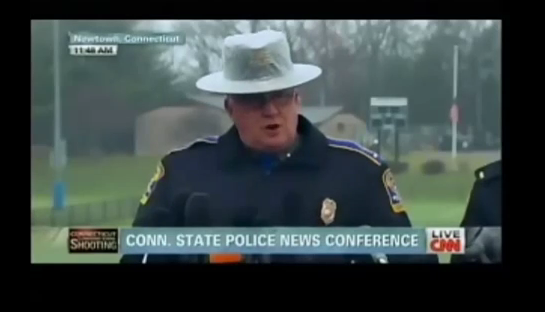
Posting Truth,Info,Questions or not believing official story Related to Mass Shooting In Newtown Connecticut at Sandy Hook Elementary School will result in arrests and prosecutions of perpetrators of WHISTLEBLOWING.
If you pay attention to what he says, he’s not talking about people impersonating the killer, he said “in any form” posting what he considers disinfo. This is a pathetic last ditch attempt to clamp down on info and try to salvage their official story.Will these guys prosecute themselves for violating First Amendment’s Rights Of The U.S. Contitution?
Now Come And Get Us Or Expect US.1-(800)-575-6330 Is how you can reach the offices of Lt J Paul Vance.
Talk to someone who has never dealt with the cops about police behaving badly, and he or she will inevitably say, “But they can’t do that! Can they?” The question of what the cops can or can’t do is natural enough for someone who never deals with cops, especially if their inexperience is due to class and/or race privilege. But a public defender would describe that question as naïve. In short, the cops can do almost anything they want, and often the most maddening tactics are actually completely legal.
There are many reasons for this, but three historical developments stand out: the war on drugs provided the template for social control based on race; 9/11 gave federal and local officials the opportunity to ensnare Muslims (and activists) in the ever-increasing surveillance and incarceration state; and a lack of concern from the public at large means these tactics can be applied, often controversy-free, to anyone who resists them.
What follows are 10 of the innumerable tactics the police can use against a population often incapable of constraining their behavior.
1. Infiltration, informants and monitoring. The NYPD’s Demographics Unit has engaged in a massive surveillance program directed at Muslims throughout the entire Northeast region, ignoring any jurisdictional limitations and acting as a secret police and intelligence gathering agency – a regional FBI of sorts. The AP’s award-winning reports [3] on the Demographics Unit helped bring some information about the program to light, including the revelation that its efforts have resulted in exactly zero terrorism leads. [4]
Although a lawsuit from 1971, the Handschu case, [4] “resulted in federal guidelines that prohibit the NYPD from collecting information about political speech unless it is related to potential terrorism,” legal experts worry that privacy rights have been so diminished that Muslims who are spied on may not be able to seek recourse. The AP quoted [5] Donna Lieberman in November 2011, who said, “It’s really not clear that people can do anything if they’ve been subjected to unlawful surveillance anymore.”
Muslims are not the only group that has been targeted. The AP reported [6] that the NYPD has also infiltrated liberal groups and protest organizers. Other cases of entrapment of activists, such as the NATO 5 [7] and the Cleveland 5, are also troubling. [8]
2. Warrantless home surveillance. Just in case you still think there must be some limit on how the authorities can surveil you, there’s this — a federal agency, not the police, but the larger point stands. The Ninth Circuit Court of Appeals recently ruled that it is legal for a law enforcement agent [9] to enter your house and videotape you without your consent. The case, United States v. Wahchumwah, revolved around a U.S. Fish and Wildlife undercover agent who recorded Wahchumwah without a warrant. The Ninth Circuit found the search to be “voluntary,” which led the EFF to write on its Web site: “The sad truth is that as technology continues to advance, surveillance becomes ‘voluntary’ only by virtue of the fact we live in a modern society where technology is becoming cheaper, easier and more invasive.”
“CNET has learned that U.S. District Judge William Griesbach [11] ruled that it was reasonable for Drug Enforcement Administration agents to enter rural property without permission — and without a warrant — to install multiple ‘covert digital surveillance cameras’ in hopes of uncovering evidence that 30 to 40 marijuana plants were being grown.”
During the Bush years, Congress had to grant retroactive immunity to giant telecoms that engaged in warrantless wiretapping. It seems, the judicial branch wants to save Congress the trouble.
3. Preemptive visits and harassment. One of the favorite tactics of police departments is targeting activists a day before a large event. We saw this on May Day in New York City, as cops descended on several activists’ apartments before the day of action, [12] and in Chicago before the massive No NATO protests. [13] The Cleveland 5 were also arrested before May Day, and back in 2008 the RNC8 were also preemptively arrested. [7]
4. Creating call logs from stolen phones. If you lose your phone in NYC and report it to the police, they’ll help you find it. So far, so good. Where the agreement turns pear-shaped, however, is what they do with your call logs. The NYPD subpoenas your call log from the day it was stolen onward, under the logic that the records could help find your phone.
But — and here’s the kicker — they get info for the calls you made on the day it was swiped, and possibly even info from your new cell phone if you keep your number. The information is added to a database called the Enterprise Case Management System, and the numbers are hyperlinked for cross-referencing. The call logs, all obtained without a court order and often without the victim’s permission or knowledge, could “conceivably be used for any investigative purpose,” according to the New York Times. [14]
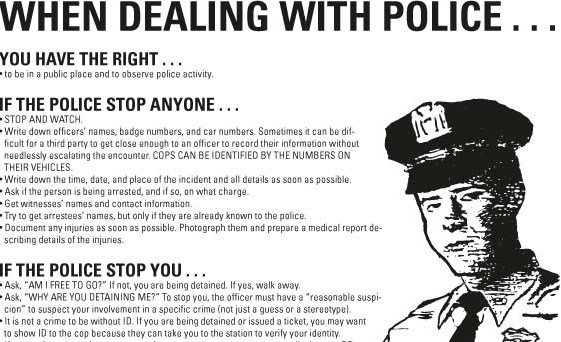
5. Consent searches. Sometimes a cop gives you a command, but phrases it as a question, like, “Would you open your bag so I can look inside?” If you’re anything like the vast majority of people in the United States, you have no idea that you’re under no lawful obligation to answer in the affirmative. You can, legally speaking, ask if you are being detained, and if the answer is no, you are free to walk away. Or at the very least, not open your bag.
Cops are aware that they can intimidate someone they decide to search, and once they obtain “consent” – e.g. “Yes, man with a gun who is towering over me, you can look in my bag” – any evidence of criminality they find can be used in court. This method of searching people was developed, like several other tactics on this list, during the early 1980s when the Reagan administration ramped up the so-called war on drugs.
Many critics argue that the very idea of a “consensual” interaction between police and the public is impossible, if the police initiate contact. As Justin Peters writes [15], “[Police] know the average person doesn’t feel they’re in a position to decline a conversation with a cop.” A common tactic [16] is for officers to say they’ll let someone off with a warning, then proceed to ask a bunch of questions, even though the person is technically free to go.
6. Stop and frisk. You’ve probably heard about stop and frisk by now, but for years this odious tactic – and close cousin to consent searches – went woefully underreported in establishment media. The NYCLU released staggering statistics for the year 2011 detailing the massive size of the program in New York City. One particularly memorable figure was that the NYPD stopped more young men of color than there are men of color in NYC. [17] (More information at stopmassincarceration.org [18].)
7. Pretext stops (Operation Pipeline). The Supreme Court has repeatedly ruled that cops are free to use minor traffic violations as a pretext to pull over people they suspect of committing drug crimes. Once pulled over, the police obtain “consent” – “Would you get out of the car and empty your pockets?” – and can go on fishing expeditions.
In the Supreme Court’s ruling in Ohio v. Robinette, “The Court made clear to all lower courts that, from now on, the Fourth Amendment should place no meaningful constraints on the police in the War on Drugs,” writes Michelle Alexander in The New Jim Crow. The Court determined [19] that cops don’t have to tell motorists they’re free to leave before getting “permission” to search their car.
In the mid-1980s, the DEA rolled out Operation Pipeline, a federal program that trained city cops in the shady art of leveraging pretext stops into consent searches. The discretionary nature of many of these searches resulted in massive amounts of racial profiling, so much so that some officials say [20] “the reason racial profiling is a national problem is that it was initiated, and in many ways encouraged, by the federal government’s war on drugs.”
8. Police dogs. Don’t consent to cops searching your bag? If you’re in a car or an airport, police can bring in the dogs to smell your stuff, and if the dog responds, they have probable cause to search you without your consent. “The Supreme Court has ruled that walking a drug-sniffing dog around someone’s vehicle (or someone’s luggage) does not constitute a ‘search,’ and therefore does not trigger Fourth Amendment scrutiny,” Michelle Alexander writes.
But if a dog barks or sits, shouldn’t we be comfortable with that triggering probable cause? Radley Balko has reported on the phenomenon of drug dogs giving false positives after reading cues from their handlers [16]:
The problem isn’t that the dogs aren’t capable of picking up the scent; it’s that dogs have been bred to please and interact with humans. A dog can easily be manipulated to alert whenever needed. But even with conscientious cops, a dog without the proper training may pick up on its handler’s body language and alert whenever it detects its handler is suspicious.
This is called the “Clever Hans effect,” [21] named after the horse who could do arithmetic by tapping his hoof. In reality, the horse could recognize the shift in his owner’s body language when he had arrived at the right number.
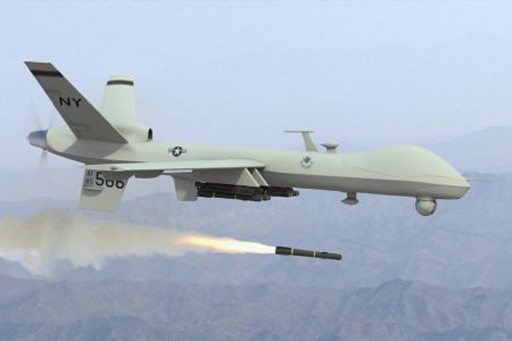
9. Surveillance drones. The drones are coming, and the few illusions of privacy we cling to will soon disappear. The domestic market for drones in the next decade is estimated in the billions, [22] and police departments are chomping at the bit to implement this new technology. Drones already patrol the US-Mexico border, [23] and cities such as Seattle are moving toward using surveillance drones [24]. In August, a North Dakota court ruled [25] that the first-ever drone-assisted arrest was perfectly legal.
In our ever more authoritarian society, [26] expect politicians and the lobbyists who fund their campaigns to justify increased incursions into privacy in the name of security. The short-term incentives to value privacy have been all but forgotten, as “if you’re not doing anything wrong you’ve got nothing to fear” has gone from self-evidently absurd cliché to national motto.
10. Enlist the private sector. The comedian Chris Laker says of privatization: “You can’t privatize everything. Learned that from RoboCop.” But it seems police departments haven’t learned that lesson. In Arizona, police enlisted the help of the Corrections Corporation of America, a private, for-profit prison corporation, in a drug sweep of a public school. PRWatch reports: [27]
“To invite for-profit prison guards to conduct law enforcement actions in a high school is perhaps the most direct expression of the ‘schools-to-prison pipeline’ I’ve ever seen,” said Caroline Isaacs, program director of the Tucson office of the American Friends Service Committee (AFSC), a Quaker social justice organization that advocates for criminal justice reform.
The privatization of nearly all aspects of public life, from education to law enforcement, is a trend we should all find disturbing, not least of all when a company that profits from locking humans in cages is directly involved in the arrest process.
The larger point here is obvious. In the last decade, the Bill of Rights has been shredded at the federal level and the local level. There are few constraints on police, FBI, NSA, and private intelligence companies when it comes to surveillance of the public. That many of these programs and tactics are discretionary exacerbates and magnifies conscious and subconscious racist and classist attitudes among those who carry them out.
Editor’s note: a formatting error which has since been corrected erased a block quote from the text of this article, leading to inadvertently incorrect attribution of a quote.
After months of keeping the details of a case against a US soldier under wraps, Army prosecutors on Monday presented evidence against Brig. Gen. Jeffrey A. Sinclair, a 50-year-old serviceman being charged with a slew of sex crimes against five women.
From Fort Bragg, North Carolina on Monday, prosecutors for the US Army began presenting evidence in the Article 32 hearing that will determine if Sinclair, a 30-year-plus veteran of the military, will have to be court-martialed over allegations of sexual assaults and other crimes committed while representing the United States.
Sinclair had been under Army investigation for several months, but was not formally indicted until late September. Now for the first time since the Pentagon went public with the case, evidence being used to prosecute the one-star general is being presented to the media.
According to the Fayetteville Observer, Monday’s hearing detailed sexual misconduct against four female Army subordinates — two female captains, a major and a lieutenant — and a civilian. Sinclair is being accused of violating military code at Fort Bragg, as well as bases in Germany, Iraq and Afghanistan, where the encounters were described graphically to the court as occurring “in a parking lot, in his office in Afghanistan with the door open, on an exposed balcony at a hotel and on a plane, where he allegedly groped a woman.”
Prosecutors say that Sinclair had women send him sexually explicit photos and videos, and allegedly made “frequent derogatory comments towards women,” the Observer reporters.
“When confronted about those comments,” the paper notes, “Sinclair is accused of replying, ‘I’m a general, I’ll do whatever the (expletive) I want.’”
Pending the outcome of this week’s hearing, Sinclair could be court martialed on charges that include forcible sodomy, wrongful sexual conduct, violating orders, engaging in inappropriate relationships, misusing a government travel charge card, and possessing pornography and alcohol while deployed.
“This doesn’t just smell bad,” former Air Force lawyer Col. Morris Davis tells Wired.com’s Danger Room, “it reeks.”
Lt. Col. Jackie Thompson, a military attorney representing Sinclair in the case, says that the defendant had his rights violated by Army investigators that accessed and viewed personal emails sent from the soldier to his wife regarding the charges. According to the Observer, prosecutors accessed more than 16,000 emails from both military and personal accounts that belonged to Sinclair, which attorneys say were protected under attorney-client confidentiality privileges. On Monday, Thompson asked for the court to appoint a new prosecutorial team to charge Sinclair.
Eugene R. Fidell of Yale Law School tells the AP he expects the case with reduction in rank and forced retirement for Sinclair, adding, “It’s a rare thing for an officer to go to jail” because sanctions against more high-ranking officials “tend to be more in the nature of political sanctions, in other words getting rid of people rather than sending them to the brig.”
Previously, the Associated Press filed a Freedom of Information Act request to obtain the charging documents regarding any evidence against Sinclair. Lt. Col. Nelson Van Eck, Jr., the acting chief of the U.S. Army’s Criminal Law Division, refused their request by writing, “Release of these documents could reasonably be expected to interfere with law enforcement proceedings, would deprive Brig. Gen. Sinclair of a fair trial or impartial adjudication and could also reasonably be expected to constitute an unwarranted invasion of personal privacy.”
Just over two weeks ago, Khalid Sheikh Mohammed and other 9/11 terror suspects had a pre-trial hearing before the Guantanamo Bay commission. The judge presiding over the commission is Army Colonel James L. Pohl. Key issues argued were whether a forty-second daly between the press and courtroom was constitutional and whether the suspects could testify about being tortured by CIA interrogators or not.
John Knefel for The Nation traveled to Guantanamo Bay to cover the hearing. His dispatch on the proceedings he witnessed has been posted and it is worth reading.
As he reports, the court heard argument on ”whether the five co-defendants can be barred from testifying about their own experiences on the grounds that their thoughts, emotions and memories are classified information. The prosecution, on behalf of the government, has argued that all utterances by the accused should be “presumptively classified”—that is, every possible statement by should be treated as secret government information—but this request has since been weakened.”
He adds, “The prosecution’s argument is that the five defendants are in a “particularly credible position to confirm or deny” elements of the CIA’s rendition, detention and interrogation program. Having been tortured, they are in possession to describe it, and the government has clear incentives to keep them from doing so.”
The American Civil Liberties Union has opposed the effort to censor torture testimony. Hina Shamsi, director of the ACLU’s National Security Project, declares, “The government’s claim that it can keep from the public the defendants’ testimony about their ‘thoughts and experiences’ of torture is legally untenable and morally abhorrent.”
I was covering the latest hearing in the court martial of Pfc. Bradley Manning, the soldier accused of releasing classified information to WikiLeaks, when this was all unfolding weeks ago. I did not get a chance to highlight some of the government’s argument, but I think this is an appropriate opportunity to share some more of what the government’s argument is on classifying the memories of terror suspects. It nicely complements the totalitarian arguments proffered by government attorneys in support of the indefinite detention provision of the National Defense Authorization Act of 2012 and the FISA Amendments Act of 2008, which essentially legalized warrantless wiretapping that had been occurring under the administration of President George W. Bush.
Justice Department lawyer and deputy trial counsel for the prosecution Theresa Baltes stated in court on October 16 that an executive order issued by President Barack Obama was in force that authorized classification of “orally conveyed information that falls within the subsection of foreign or intelligence sources and methods.” Baltes was alluding to observations and memories of torture or, to use Vice President Dick Cheney’s phrase, “enhanced interrogation techniques.” The “intelligence sources” are the agents who tortured them. The “methods” are how they were tortured and that is not something the government thinks the press or American public should ever find out about.
Baltes said to Judge Pohl later in the proceedings on October 16 the government had originally proposed an order that required defense attorneys to treat everything their client said as classified, including details on what their client had for lunch a day or two ago. The order was narrowed to protect statements on what occurred while in CIA custody.
“The prosecution is proposing that they only treat as classified and handle as classified statements that they know to be classified based on their security clearance,” Baltes told the commission. “And that would specifically include — or believe to be classified, and specifically include information about the CIA RDI program and their prior custody, detention, interrogation.” (RDI being the CIA’s Rendition, Detention and Interrogation program.)
Navy Lieutenant Commander Kevin Bogucki, who represents former CIA captive and former translator for Osama bin Laden, Muhammad Rahim, tried to outline the draconian and preposterous nature of the government’s position. He argued, “When the government voluntarily exposes someone outside their control to information, they are voluntarily relinquishing control over that information.” For example:
..[L]et’s say we are just imagining, for the sake of argument, that there is a classified CIA assassination program and one of the agents in this program goes and attempts to take out a target but fails, wounds the target but doesn’t kill him. That victim is now unable to describe the circumstances of the assault upon him because it might tend to reveal the personnel involved in this secret program, the means by which this program executes its duties? Clearly that makes no sense. It doesn’t matter how secret they kept it when they were planning and when they were working through the techniques of this secret program. Once they decide to execute that program in the real world and expose people outside their control to the essentially mechanisms or the product of that planning, they have now relinquished control over that. And to simply say, well, it relates to the secret program and therefore you can’t talk about it, goes far beyond what can properly be classified… [emphasis added]
Judge Pohl, at one point in the proceedings, notes that the government is not seeking to classify all experiences and memories. They have sough to limit the classification to certain dates and places. Bogucki countered by arguing the information has to be owned, produced or under the control of the US government.
…Now, the only one of those that the government can even arguably rely upon is under the control of the United States Government. If you can go to the next slide, please. So again here, they are relying upon the prong that this statement is arguably under the control of the United States Government….Okay, but the only reason that they think they have control over this information, the only reason that theythink that final prong is satisfied is because they are holding our clients essentially in isolation…
What Bogucki is suggesting is his client has been completely dehumanized. To the government, he is not a person. He is a vessel containing details that if disseminated would invite scrutiny or possibly undermined current operations or missions against terrorism. Therefore, this vessel cannot come in contact with other prisoners or else those prisoners might come into possession of this information that the government wishes to keep secret. So, Bogucki’s client must be held in solitary confinement and suffer under those conditions because some agents used classified methods of interrogation or torture on him.
Let’s return to Knefel’s piece. He puts this all into the larger context hinting at the reality that what the military commissions system is a second-class system of legal justice that has been constructed to ensure convictions. He also highlights how Obama says he intends to close Guantanamo but a person suspected of being involved in the Benghazi attack could potentially end up at Guantanamo. The moment new prisoners start arriving at Guantanamo under Obama is the moment that any more platitudes about closing Guantanamo are exposed to be completely hollow.
And Knefel writes, “The military commissions are just one piece of a larger, disturbing trend toward centralized presidential power with virtually no oversight or transparency.” He contends:
…The bigger problem is that a once radical idea—that the executive branch should have its own legal system to try so-called enemy combatants—has been normalized and codified under two separate administrations. Recent claims that the CIA and FBI are attempting to send a suspect in the Benghazi killing of Libya Ambassador Christopher Stevens to Guantánamo Bay underscore critics’ skepticism that military commissions will be a limited tool with a definite ending.
The same, of course, is true for the “War on Terror” more broadly, as evidenced by a chilling Washington Postreport on the “disposition matrix,” a counterterrorism tool that further entrenches the policy of “targeted killing” embraced by the Obama administration. As Spencer Ackerman writes, “Obama did not run for president to preside over the codification of a global war fought in secret. But that’s his legacy.” Indeed, as John Kiriakou, a whistleblower recently prosecuted for trying to shed light on the CIA’s torture program, knows too well, the Obama administration has charged more whistleblowers under the Espionage Act of 1917 than all previous presidents combined…
The case of Kiriakou is a kind of bookend to the first term of a president, who pledged to be different from Bush and then decided to be completely subservient to the national security state like previous presidents. Kiriakou was subjected to a prosecution for revealing the name of a covert agent involved in the RDI program, who multiple people in the human rights community are believed to have known. He was prosecuted after he went on television and said the CIA had an official policy of torture because it did use waterboarding on detainees. That the CIA did not like and it made him a target. The government went after Kiriakou and in the process destroyed his life and the lives of his wife and five children by putting them through a prosecution that has left him impoverished and ruined.
What has happened to the torturers? How many people who actually engaged in torture of terror suspects have you heard about, whose lives have been wrecked because they were savages toward human beings? How many people have you read about in the news who authorized this policy and now are in jail because they instructed people lower than them to engage in torture and sought to cover it up with crafty legal justifications?
The answer is none. The answer is nobody. The answer is the US government remains committed to concealing details on methods of torture that were used on people now imprisoned at Guantanamo because the continuity of government was more important to the Obama administration than justice. And, the classification of the experiences and memories of terror suspects is supported by the government so agents, who engaged in torture, do not go through the kind of life-wrecking experience Kiriakou did.
Real or imagined- reasonable or grandiose, I think we can all agree that things that Barrett Brown has recently said leading to his recent arrest and indictment were on the solid side of stupid. People who hate him figured it was about time they nailed him on something, and people who… don’t hate him as much… have defended him under the banner of “Freedom of Speech” and pointed to his claims of being harassed and goaded by the FBI and alleged informants, which, according to Brown, have included the Feds threatening to arrest his mother who he said has had nothing to do with his Anonymous hactivism and crowd-source-style-journalism ProjectPM activities.
As I mentioned in my previous post about the Kelly Thomas killing, the functions and execution of government powers and the legal system are by default biased heavily in favor of the powers that be and such powers have great potential to be, and many times have proven to be, corrupt as hell. That said, before we all collectively tell Barrett Brown to shut up regardless of whether such a pleading would tip a hat to his right to free speech, I think it is fair to acknowledge that Brown’s paranoid ramblings and associated “threats” may have been his only recourse to defend himself from the fears he professed were true: Agent Robert Smith is corrupt; the FBI is corrupt; the Zetas are out to get him; the FBI is in on it with the Zetas; and if armed men charged in on his home, Brown would feel justified in assuming it was a Zeta assassination attempt coordinated in conjunction with the FBI.
…THAT said, and in addition to Brown’s own confession of heroin addiction and issues with Suboxone withdrawal at and around the time of the “threats” and other tweets listed in the indictment, I think we can at least give the government credit for allowing a mental competence hearing for Brown before the trial against him proceeds. This should especially be appreciated by Constitution enthusiasts as the evidence of actus reus of Brown’s alleged crimes primarily revolves around a combination of arguably- and absolutely- protected speech.
As for that “conspiracy” charge? Well, look at the indictment: he was soliciting others to find “Restricted” information on Agent Robert Smith, which has been dubbed a “conspiracy” due to another’s attempt to find such “RESTRICTED” information with what is only described as an “Internet search”. Because you know, when I want to get down and dirty on a Federal Agent’s RESTRICED information, forget unauthorized access to a security clearance-protected Federal Database, I’m all about the old-fashioned Google stalk. For this charge, maybe we should give the FBI a mental competency hearing while we’re at it….
If you haven’t taken a peek at the Federal indictment against Barrett Lancaster Brown, I implore you to do so. Then, I invite you on a First Amendment adventure where I explain to you why we should all be offended and worried by the United States’ Prosecutor’s attack on our Right to Speech. The tale I shall tell will not necessarily defend Brown completely or successfully, but it will point out the fallacy of this indictment against him, which is supposed to contain “essential facts of the case”, but really just reveals the Government’s fear of our right to voice dissent and grievance against them.
Join me…
Count 1: Knowingly and Willfully transmitting in interstate commerce communications containing threats to injure the person of another. 18 USC Section 875(c).
While Brown does make vague and conditional threats against others such as @AsherahResearch and @_Dantalion, the indictment count doesn’t seem to care much about them, citing only “threatening to shoot and injure agents of the FBI” – specifically Robert Smith.
So let’s take a look at the first few useless items in this indictment:
Item 5) f. is a conditional threat made on Brown’s twitter against twitter user @_Dantalion in which Brown warns he will shoot if @_Dantalion comes near Brown’s home in Texas. Brown adds that such an act of self-defense of self and property is legal. Which it is. When I went to check @_Dantalion’s profile on October 5, 2012, on of the first tweets I came across was @_Dantalion explaining to another twitter user, “I am not an FBI agent”. So Brown made a conditional threat, the condition being an act that would trigger a legal right to defend oneself, against someone who is not an FBI agent. This cited evidence in the indictment does not lend to Count 1. At all.
Something I will say now that will apply across all of my arguments is that my belief, which may or may not be held up in a criminal law context in court, is that a threat that is not imminent does not constitute Assault. I base this on my understanding of the civil Tort offense of Assault which defines the intent behind Assault as an intention to cause imminent harm or apprehension of imminent harm. The above conditional threat Brown made to @_Dantalion does not detail imminence, and, as you will see as this story unravels, NONE of the threats made by Brown were imminent. Moving on…
Item 8) c. Is a vague, conditional threat toward renowned Anonymous foe, @AsherahResearch. Talk about my momma again and “see what happens”. So… what’s gonna happen? And what is it about this tweet that implies or infers the requisite intent for a threat against an FBI agent?
More importantly, why doesn’t Count 1 even mention that people who were not FBI agents were also “threatened”? Poor Dantalion and Asherah.
Where Brown is in trouble on Count 1, albeit with room for a defense, are items 12) c. and d.
The Greatest Incriminating Hits from the infamous “last video” by a disheveled, suboxone-withdrawn Brown include “Robert Smith’s life is over”, “I’m gonna look into his kids”, and “I will shoot and kill [the FBI] if they come.”
This is where we should all yell a hearty “Shut up, Barrett Brown” in the general direction of Texas. Don’t threaten a federal law enforcement agent, you guys. It’s enumerated in a Federal statute and is one of the few types of threats out there that does not need to be imminent to be illegal. It is contingent upon whether the threat is made in regards to LE carrying out their official duties.
But there is still a defense. Maybe. The “threats” regarding Robert Smith and his kids aren’t threats of injury. Brown even states “By ruin his life, I don’t mean kill him”. As for shooting and killing the FBI? I point to the “knowingly” sub-element of intent for this particular statute. The threat is conditional on whether or not the FBI comes. Brown never indicates that he knows the FBI is coming. He says in the item 12. video that the FBI has held onto his seized computers for months and has yet to allege Brown of a crime based on the evidence from a previous raid. In fact, as the worst evidence against Brown is this singular video, the FBI probably didn’t even know whether or not they were going to raid Brown at the time that this conditional threat was made. Admittedly, this is a tight defense to make, but I will come back to it for Count 3.
Further defense? Mental and emotional instability: persisting paranoia issues plus suboxone withdrawal. Although a finding of Brown’s allegation of FBI corruption would probably not happen, there is a question of self-defense. And if there was no real reason for self-defense, see: delusions of grandeur, delusions of persecutions, paranoid psychosis. In other words, possible insanity defense (and the thresholds for the insanity defense may be lowered when there was no action taken beyond speech).
Count 2: knowingly and willfully combine, conspire, confederate, and agree with other persons known and unknown to Grand Jury … to make restricted personal information about an FBI agent and immediately family publicly available with intent to threaten and intimidate the agent and to incite commission of violence against the agent. 18 USC Section 371 and 18 USC Section 119.
…How much more element-loaded can a charge get?
The “with intent” and the all-elements-must-be-fulfilled-indicative “and” ‘s of the latter part of this Statute combo are hard for the Government to corroborate with the facts of this indictment. They’re doing pretty good up to “incite commission of violence against” Robert Smith. We’ve got solicitation which, upon the cited agreement Brown made with another to gather Smith’s personal information, merges into conspiracy. We have immediate family members. We have intent to threaten and intimidate. But incite violence? That’s where the prosecution stretches it. Look through the indictment closely, and there is never a threat or suggestion of committing violence against Smith. Only the hypothetical FBI raiders, generally.
But I think this Count specifically is why the indictment tries to pancake all of Brown’s tweets together. Actually, the majority of this indictment is an attempt to build a criminal, violence-inciting profile of Brown out of several non-criminal tweets. This compilation is why I say we should be afraid for our Right to Speech.
It is clear in several tweets, that Brown is soliciting and possibly conspiring to gather restricted information on Robert Smith for the purpose of publicly releasing it. None of these tweets suggest violence toward Smith.
Non-exhaustively: 6) a. 8) a., 11, and 13. Although it legally doesn’t matter for conspiracy, it should be noted that no evidence is listed in the indictment that Brown succeeded in obtaining the sought restricted information on Smith.
One memorable case from my Criminal Law class (at the moment I cannot find the case, but will likely come back to revise this paragraph when I find it) is a case where a drunk driver was acquitted on appeal because evidence levied against him included, basically, pro-drinking propaganda bumper stickers the driver had. These bumper stickers were used as evidence toward the defendant’s intent. It simply didn’t work. Pro-drinking speech didn’t help the prosecutors in adding to the defendant’s intent for criminal drunken behavior. Similarly to this decision, I argue anti-government speech not directly associated with the accused behavior for the alleged crime of conspiracy shouldn’t lend to intent for the conspiracy.
In fact, this is nearly exactly what was held in California State Appellate courts in People v. Huss regarding the instruction of including picketing sign slogans as evidence for conspiracy to incite a riot as being an invalid, unconstitutional instruction. 241. Cal.App.2d 361. Although a California Appellate court decision doesn’t serve as precedent over the Federal District Court that Brown will face trial in, Huss borrows its reasoning from Federal Supreme Court case Terminiello v. City of Chicago. 337 U.S. 1. (How do you like them apples?)
…which should also hold for the next count…
Count 3: knowingly and willfully threaten to assault a federal law enforcement officer with intent to impede, intimidate, and interfere with such federal law enforcement while engaged in the performance of official duties and with the intent to retaliate against such federal law enforcement officers on account of performance of official duties. 18 USC Sections 115 (a)(1)(B) and (b)(4).
…and some of my favorite highlights of the Free Speech-protected tweets that shouldn’t lend to the intent of Counts 2 and 3 are…
2) c. “Do you know how to shoot? You have five years to learn. Maybe less.” Links to a short video of Brown doing some shotgun practice in an open field.
My assumption for this tweet is that in saying “You have five years to learn” how to shoot is a reference to a conspiracy such as FEMA camps where conspiracy theorists believe the government will raid us all and send us to “FEMA concentration camps”. Or something like that. But isn’t self-defense against a corrupt government the heart and soul of the Second Amendment? Otherwise, there is no specific (or even general) mentioned target for the suggested self-defense nor is there an imminence of the assumed threat posed by Brown’s pro-arms propaganda.
3) a. “Kids! Overthrow your government lol” Link? Get this- the link is to a Blondie music video, “Rapture”. A political satire on how the government and media has zombified us all. OH NOES! DISSENT AND GRIEVANCE!
The tweet itself reeks of satire. See: “Kids!” and “lol”. Before heading to the music video link, I thought maybe the link would lead me to something that would really rile me up with a fervent violent fire if I were susceptible to do so. Maybe a conspiracy theory that pulled at revolutionary heart strings? Maybe excerpts from the Anarchists’ Cookbook?
No. It’s a Blondie music video. Not exactly speaking to an incitement of violence nor an intent to retaliate against a raid.
Similar anti-government, pro-self-defense-against-a-corrupt-government comments include “Don’t Wait. Retaliate.” and 10) b.’s vague threat by Brown that he will use “other means at [his] disposal” to ‘wipe out the government’… the “wiping out” he promises to do includes more specific, non-violent threats of using courts, media, and his investigative journalism at ProjectPM.
And 2) e. “Have a plan to kill every government you meet.” in which there is no specific or general threat to any human being, but an abstract entity and with such an abstract entity being the object of the threat, “kill” could be interpreted as a non-violent version of the verb such as “stop” or “get rid of”.
Moving on…
The not-physical, non-injurious, cyber threats….
5) a. “…the net will give us revenge.”
5) c. “Nothing restrains me from my real work. #ProjectPM”
5) e. “Help #ProjectPM plan, execute further attacks … #PantherModerns”
For the record, the Panther Moderns are a FICTIONAL hacking group from the work “Neuromancer” who simulated a CYBER terrorist attack on a media conglomerate called “Sense/Net”
The ReTweeted threat that is actually a threat to himself:
7) “A dead man can’t leak stuff… Illegally shoot the son of a bitch.” Brown is comparing himself to the object and victim of this retweeted threat, Julian Assange. The presumed subject of the tweet instructed to “illegally shoot the son of a bitch” would be a LE officer who should act as a due process-depriving judge jury and executioner for Assange (comparatively, Brown).
Well, at least they’re giving Brown due process so far…
Not even threats and I don’t even know why they were included in the indictment:
2) a. “Don’t be a pussy. Call up every fascist and tell them you’re watching.” Links to a weird music remix featuring harmless sound clips that include Brown.
5) b.: “Fuck you.” -directed at the feds for apparently depriving Brown of his opiates, somehow.
5) d. “Journalists allow the guilty to escape. #ProjectPM ensures the guilty will be known to their children as they are, forever.
10) a. “This is part two of why I’m so fucking angry.” BB mad.
Here, I’ll repeat my defense for Brown’s intent. Knowledge is requisite for Count 3. Brown did not know that the FBI would raid him and his threat was contingent on a raid that he wasn’t even certain would occur based on a lack of the FBI’s ability to charge him with anything from the first raid of Brown.
And once again: insanity or diminished mental capacity due to Suboxone withdrawal. The worst and most incriminating of Brown’s threats from item 12 were coupled with Brown’s admission that he was a Heroin addict and hadn’t taken his Suboxone. In addition, Brown thinks he’s entitled to get his stuff back from the first raid months ago where the FBI took and held his computers. (Non-exhaustively: Items 8) b and 2, 10) b.) He also thinks he deserves an apology [10) b.]. Grandiose and possibly delusional. I almost wonder why the FBI didn’t go for a discrediting involuntary psych ward hold.
Or you know, just give him his stuff back, which as we are learning from recent developments in the PayPal 14 case, he may have very well had the right to after 60 days of the FBI holding it. (But I think feeling entitled to an apology is still a bit delusional.)
In Conclusion…
With and indictment riddled with constitutionally-protected speech, my fear is that the US Prosecutors and FBI wanted to put an attack on anti-government dissent and critique at the forefront of this issue. They wanted to scare us all into shutting up and watching what we say when it comes to speculating government conspiracies and suggesting we consider the possibility of an increasingly corrupt government and promote the intention behind the Second Amendment which is to protect ourselves from a worst-case scenario resulting from such corruption.
Watch your televisions. Click on those targeted advertisements tailored by our tracking of your Google searches. Did somebody tell you that non-violent protesters were beat and shot at by Riot Cops? Don’t worry. We did it for National Security reasons. And don’t mind the surveillance cameras in every retail store and on every street corner. They’re just livestreaming and storing your every move for TrapWire.
Imran Khan, the former Pakistan cricket captain turned politician, was taken off an international flight from Canada to New York and questioned by US immigration officials over his views on drone strikes and jihad.
Khan, who has been at the forefront of a high-profile campaign as leader of the Pakistan Movement for Justice party (PTI) to end US drone strikes in northern Pakistan, had been in Canada to give a speech and was on his way to a fundraising dinner in the US on Friday.
Khan recently attempted to lead a high-profile march into south Waziristan which included US peace activists from the Code Pink group with some 15,000 of his supporters.
He claims that the drone strikes kill large numbers of innocent civilians – a claim denied by the US.
“I was taken off from plane and interrogated by US Immigration in Canada on my views on drones. My stance is known. Drone attacks must stop,” Khan tweeted yesterday after his questioning.
He added: “Missed flight and sad to miss the fundraising lunch in NY but nothing will change my stance.”
A US state department spokeswoman confirmed Khan’s questioning. “We are aware that Imran Khan was briefly delayed in Toronto before boarding the next flight to the United States,” she told Pakistani media.
“The issue was resolved. Mr Khan is welcome in the United States.”
US immigration authorities refused to comment on Khan’s case but a spokeswoman quoted by the Toronto Sun newspaper said: “Our dual mission is to facilitate travel in the United States while we secure our borders, our people, and our visitors from those that would do us harm like terrorists and terrorist weapons, criminals, and contraband,” said CBP spokesman Joanne Ferreira.
“Under US immigration law, applicants for admission bear the burden of proof to establish that they are clearly eligible to enter the United States. In order to demonstrate that they are admissible, the applicant must overcome all grounds of inadmissibility.”
Some Canadian commentators have speculated that Khan’s questioning was because of groups who have been protesting his visit to the US, including a group called the American Islamic Leadership Coalition which reportedly wrote to US secretary of state Hillary Clinton asking her to revoke the US visa granted to Khan.
“The US embassy made a significant error in granting this Islamist leader a visa,” the group said in a statement.
“Granting individuals like Khan access to the US to fundraise is against the interest of the people of Pakistan and the national security interests of the US.”
Ali Zaidi, an official in Khan’s party demanded “a prompt and thorough inquiry into this sordid episode” and “an unconditional apology from the US government”.
An Iraq war veteran was made redundant just 72 HOURS before qualifying for a full Army pension.
Sergeant Lee Nolan will lose out on at least £100,000 after he became one of 20,000 soldiers who are being axed in savage military cuts.
He was so furious at losing his job, his Army home and financial security after risking his life for his country that he sent his six military medals to David Cameron.
And in a moving letter to the PM he wrote: “The events of the past 12 months have turned my life on its head and sullied my near-18 years of loyal and exemplary service to my country.
“The medals I have enclosed would only serve to remind me of the shocking way I have been treated.”
Sgt Nolan is one of at least 80 soldiers, sailors and aircrew made redundant when they are less than a year away from qualifying.
There have been claims that they are being intentionally selected to save the MoD millions of pounds.
And the axed troops’ plight has sparked calls for a review, with an online petition demanding that the issue is debated in Parliament.
Sgt Nolan, 43 – who did tours of duty in Bosnia, Iraq and Kosovo – joined the Army when he was 24.
He was made compulsorily redundant from his job as a medical technician in the Royal Electrical and Mechanical Engineers last September, leaving on August 31 after a 12-month notice period.
Depending on their rank, forces personnel aged over 40 need 16 or 18 years’ service to earn a pension and lump sum when they leave.
When Sgt Nolan’s redundancy was worked out he was stunned to find his service was 17 years and 362 days… just three days short.
He said: “I was absolutely dumbfounded. In one moment I lost my livelihood, my way of life and the pension I’d relied on to start again.”
He was given a redundancy payout of £93,000 and when he reaches 60 he will get a £5,000-a-year pension. If he had been made redundant three days later he would have received £188,500, made up of a £76,000 lump sum plus £6,250 a year until he was 60. After he complained, he made a heartbreaking discovery.
He said: “They discovered there had been an administrative error. They had only wanted 20 redundancies. I was the 21st.”
Appalled, Sgt Nolan, who has been forced to move in with relatives in Manchester, sent his letter and medals to Mr Cameron.
He received a letter dated a month ago thanking him and promising a reply but has not heard any more. He has now joined the campaign group Pensions Justice for Troops, which says redundant personnel will miss out on at least £40million between them.
Spokeswoman Jayne Bullock said: “People who leave the Armed Forces lose a whole way of life and need financial security as they adapt, retrain and start over again.”
A Number 10 spokesman declined to comment on the letter. The MoD said nearness to qualifying for a pension was not a factor in being selected for redundancy.
About 300 people have been wrongfully convicted and exonerated in the U.S. thanks to DNA evidence. But overlooked in those stories are the accounts of jurors who unwittingly played a role in the injustice.
One of those stories is playing out in Washington, D.C., where two jurors who helped convict a teenager of murder in 1981 are now persuaded that they were wrong. They’re dealing with their sense of responsibility by leading the fight to declare him legally innocent.
Santae Tribble, now 51, is already out of prison, but he’s asking a judge to sign a certificate of actual innocence that would help him get compensation for more than 25 years he spent behind bars.
Bad Evidence And Faulty Facts
In January 1981, a jury took only a few hours to convict Tribble for shooting a cabbie dead in a botched robbery. There was only one witness, the cabbie’s wife, who couldn’t make a positive identification. The key evidence was a woman’s stocking, which the murderer wore over his face. That stocking contained hair the FBI said it had matched to Tribble.
“They admitted that they didn’t know with certainty, but the numbers they threw out were so steep as to make it virtually certain that it was his hair,” juror Susan Dankoff said.
In fact, prosecutors told the jury in the closing argument there was only a 1 in 10 million chance it could be someone else’s hair.
EnlargeCarrie Johnson/NPRJuror Anita Woodruff is haunted by her decision to help convict Santae Tribble of murder.
But Tribble, his family members and his girlfriend all testified that he was home, sleeping at his mother’s apartment in Maryland at the time of the murder.
Dankoff remembers she considered the alibi — and rejected it.
“Then you start to think, OK, maybe they’re covering for him. And I think that that was really what it came down to,” she said.
So the jury voted to convict — except that the hair analysis that proved so persuasive has been completely discredited. Even the Justice Department says Santae Tribble didn’t do it. Dankoff said she got a call from Tribble’s lawyer not too long ago letting her know.
“And that really, really left a mark,” she said. “I was just devastated. I think I walked around feeling numb for a week after hearing that.”
Anita Woodruff also served on that jury. She said she went home and cried after voting to convict. The case never really left her. So when Tribble’s lawyer Sandra Levick, of the Public Defender Service, called to say new DNA tests on that hair did not match, Woodruff recalled, “I was like, ‘Oh my God.’ I said, ‘He spent all that time in jail, for nothing.’ ”
Starting Over After Decades In Prison
Woodruff was only 20 years old at the time of the trial, close in age and experience to Tribble. She said she started thinking about how their lives diverged.
“You know, and I’m thinking about all the things that … I did,” Woodruff said. “I got married, you know, got a divorce, but I had kids, you get to raise your kids, and I did see them get their license and go to proms and high school graduations.”
Santae Tribble had none of that.
“I did have a son that was born soon after I was incarcerated,” Tribble said. “I missed his entire life growing up.”
Tribble said he understands the jury and the justice system made a mistake. But now, he said, is the time to make amends.
“Like, they went the extra mile to, when the pieces didn’t fit, to make them fit,” Tribble said. “Now that it’s clear that the pieces don’t fit, make it right.”
Under the law, Tribble can collect as much as $50,000 a year for each year he was wrongfully incarcerated, if a judge signs off and formally declares him innocent.
The two jurors from his trial so long ago have written to urge the court to support that idea. They say they’re haunted by Tribble’s circumstances. He has no job, no money and no real home. He’s living with his older brother. No big dreams, but maybe a landscaping business, he says, since he spent too many years indoors.
“Well, in landscaping they call it beautification,” Tribble said. “You know, to make it pretty, the flowers and arranging the grass and stuff like that.”
He says he only wants a chance, another chance, at a normal life.
Andrew Sullivan says he’ll use it less scrupulously than the president. But based on what evidence? Current policy is plenty unscrupulous already.
Asked about drone strikes during Monday’s foreign policy debate, Mitt Romney basically said that President Obama is right to use them. Expect more drone warfare in 2013 regardless of who wins the election. Does that mean that the two candidates are indistinguishable on the issue? My friend and former boss Andrew Sullivan doesn’t think so. “Memo to Conor Friedersdorf,” he wrote while live-blogging at The Dish. “You think Romney would be as scrupulous in drone warfare as Obama?” Implicit is the judgment that Obama has been “scrupulous.”
But it isn’t so.
Sullivan and I agree that Obama won last night’s debate, and that he’d be likely to preside over a more prudent, reality-based foreign policy than Romney, based on the respective campaigns that they’ve run. On drones, however, Romney appears to have the exact same position as Obama. And Obama has been egregiously unscrupulous. I don’t want to hear the dodge about how drone strikes are necessary. It’s beside the point. This is about the specific ways Obama has waged the drone war. Even if you agree in theory with drone strikes, Obama’s actions ought to bother you.
Let me be specific:
As Jane Mayer noted when describing the CIA’s drone strikes, “The program is classified as covert, and the intelligence agency declines to provide any information to the public about where it operates, how it selects targets, who is in charge, or how many people have been killed.”
The Obama Administration avoids judicial accountability by arguing that the drone program is secret, even as it acknowledges the existence of the program when bragging about killing terrorists.
As the Mayer article goes on to state, “because of the C.I.A. program’s secrecy, there is no visible system of accountability in place, despite the fact that the agency has killed many civilians inside a politically fragile, nuclear-armed country with which the U.S. is not at war. Should something go wrong in the C.I.A.’s program — last month, the Air Force lost control of a drone and had to shoot it down over Afghanistan — it’s unclear what the consequences would be.”
According to The New York Times, “Mr. Obama embraced a disputed method for counting civilian casualties that did little to box him in. It in effect counts all military-age males in a strike zone as combatants, according to several administration officials, unless there is explicit intelligence posthumously proving them innocent.”
The Obama Administration permits the CIA to carry out “signature strikes” even though they don’t know the identity of the people they’re trying to kill!
As Glenn Greenwald explained, “In February, the Bureau of Investigative Journalism documented that after the U.S. kills people with drones in Pakistan, it then targets for death those who show up at the scene to rescue the survivors and retrieve the bodies, as well as those who gather to mourn the dead at funerals.”
As a report published by the law clinics at NYU and Standford document, innocent people in Waziristan are being terrorized and traumatized daily by Obama’s drone war. And the policy has killed, at minimum, hundreds of innocent people, a judgment that is supported even by data from the New America Foundation, whose methods almost certainly under-count dead innocents.
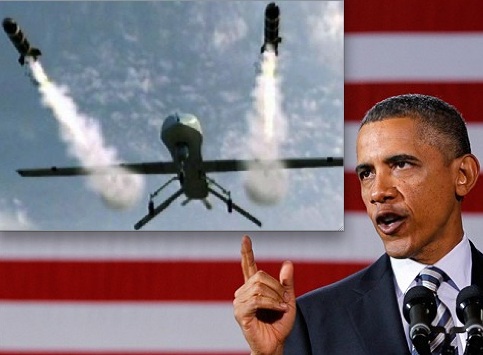
So to sum up, Obama has implemented a global killing program with zero checks and balances; he’s operated it out of the CIA rather than the Department of Defense; he invokes the state-secrets privilege to avoid defending it in court, even as he brags about its efficacy; it includes killing people whose identities we don’t even know; all military-aged males we kill are presumed to be “militants”; the Pakistani government reportedly gets to pick some of the targets; at minimum, hundreds of innocents have been killed, including rescuers and funeral-goers; a 16-year-old American citizen was among those killed; and Sullivan, having been exposed many times to all the information I’ve just included, thinks its accurate to call Obama’s drone program “scrupulous,” though it could easily be made more transparent, accountable, and lawful.
What really gets me is that, in addition to arguing that Obama has run this program scrupulously (something implied in Sullivan’s question, and explicitly argued in threads like this one), Sullivan has also himself articulated almost all of the reasons why the program has been unscrupulous — that is to say, why Obama’s drone policy “disregards, or has contempt for, laws of right or justice with which he is perfectly well acquainted, and which should restrain his actions.”
“One thing I’ve learned this past decade is that the CIA is pretty much its own judge, jury and executioner,” Sullivan wrote. “It is much less accountable to the public, more likely to break the laws of war and destroy the evidence, more likely to do things that could escalate rather than ameliorate a conflict.” Is it scrupulous to pick an organization like that to run your drone program?
Says Sullivan’s post from June of 2011 (emphasis added):
Obama is now engaged in two illegal wars — in Libya and in Yemen. There was no Congressional debate or vote on these wars — and one is being waged by the CIA with unmanned drones. I think we have learned a little about what happens when you give the CIA carte blanche to run a war with no accountability except to a president who has a vested interest in covering up errors.
Said Sullivan on another occasion, “Put drones in the hands of an executive who is empowered to do anything without any input from the other branches of government … and we have a problem indeed.” He is also on record stating that “counting every military-age man in the vicinity of a Jihadist as a terrorist is a total cop-out,” and he even wrote that “if the CIA, based on its own intelligence, can launch a war or wars with weapons that can incur no US fatalities, the propensity to be permanently at war, permanently making America enemies, permanently requiring more wars to put out the flames previous wars started, then the Founders’ vision is essentially over. I think it’s a duty to make sure their vision survives this twenty-first century test.”
So let’s get back to Sullivan’s debate night question. “You think Romney would be as scrupulous in drone warfare as Obama?” My best guess is that, on drone warfare, their policies would be about the same — that is to say, alarmingly unscrupulous, with unpredictable consequences. That’s what happens when you give someone the power to kill without checks in secret.
I have no reason to think one or the other would predictably kill more innocent people with drones. Does Sullivan? If Romney wins, what odds would Sullivan give on the proposition that Romney ultimately kills more civilians with drones than Obama has? Based on what evidence? Obama has already killed an American citizen without trial and conducted drone strikes in a country where no war has been declared, so I don’t see how Romney would set any precedents that are even more alarming. (What precedent would that be?) Overall, I have no idea whose drone war would be more damaging. Having watched Sullivan strongly denounce and other times defend Obama’s drone war in posts that cannot be reconciled with one another, I don’t think he knows either.
So what if Romney is elected and turns out to be much worse on drones? It could totally happen. I wouldn’t be surprised. I’ll be opposing his unaccountable killing policy from day one regardless, just as I’ve opposed Obama’s policy due to its manifold flaws. And if Romney’s drone policy turns out to have all sorts of catastrophic consequences? I hope Sullivan remembers that Obama established the bipartisan consensus behind a worldwide drone-strike strategy and set all the necessary precedents without losing the support of backers like Sullivan. (He didn’t even lose support for continuing his current drone policy itself.) A Romney drone fleet, operating in numerous countries with zero oversight from the judiciary or Congress, with American citizens in the crosshairs? Obama and his supporters built that. It would be ready for President Romney on day one.
A wild Washington Poststory reports that the Obama administration has been developing plans to “institutionalize” its extrajudicial assassination program. The lede is bonkers:
Over the past two years, the Obama administration has been secretly developing a new blueprint for pursuing terrorists, a next-generation targeting list called the “disposition matrix.”
It gets crazier:
The matrix contains the names of terrorism suspects arrayed against an accounting of the resources being marshaled to track them down, including sealed indictments and clandestine operations. U.S. officials said the database is designed to go beyond existing kill lists, mapping plans for the “disposition” of suspects beyond the reach of American drones.
Although the matrix is a work in progress, the effort to create it reflects a reality setting in among the nation’s counterterrorism ranks: The United States’ conventional wars are winding down, but the government expects to continue adding names to kill or capture lists for years.
Among senior Obama administration officials, there is a broad consensus that such operations are likely to be extended at least another decade. Given the way al-Qaeda continues to metastasize, some officials said no clear end is in sight.
You should really take the time to read the entire piece yourself; the information contained therein is truly alarming.
Many observers of related matters will have a lot to say about these revelations over the coming weeks, months and probably even years — and I’m one of them. But I quickly want to point out something that immediately struck me as particularly disturbing, and that many people likely won’t notice.
The “evolving database” — the “disposition matrix”
was developed by the NCTC, under former director Michael Leiter, to augment those organizations’ separate but overlapping kill lists, officials said.
The NCTC stands for the National Counterterrorism Center. What’s the big deal, right? The NCTC sounds like a terrorism related thing, so why wouldn’t it have developed the Kill List replacement, the Disposition Matrix?
Not that long ago the ACLU’s Chris Calabrese warned us about what really goes on at the NCTC: massive, secretive data collection and mining of trillions of points of data about most people in the United States. These points of data can include “records from law enforcement investigations, health information, employment history, travel and student records. Literally anything the government collects would be fair game, and the original agency in charge of protecting the privacy of those records would have little say over whether this happened, or what the spy agency did with the information afterward. What if that spy agency could add commercial information, anything it – or any other federal agency – could buy from the huge data aggregators that are monitoring our every move?”
Calabrese wasn’t describing a “what if” scenario. He was describing the NCTC.
The rules governing that data collection and retention used to say that “non-terrorism related” data about US persons had to be purged within 180 days of collection — and it wasn’t supposed to be collected in the first place. But this year President Obama oversaw a troubling change in that policy; non-terrorism related data about US citizens can now be retained for five years — or forever if the government feels like it.
Once information is acquired, the new guidelines authorize broad new search powers. As long NCTC says its search is aimed at identifying terrorism information, it may conduct queries that involve non-terrorism data points and pattern-based searches and analysis (data mining). The breadth and wrongheadedness of these changes are particularly noteworthy. Not only do they mean that anytime you interact with any government agency you essentially enter a lineup as a potential terrorist, they also rely on a technique, datamining, which has been thoroughly discredited as a useful tool for identifying terrorists. As far back as 2008 the National Academy of Sciences found that data mining for terrorism was scientifically “not feasible” as a methodology, and likely to have significant negative impacts on privacy and civil liberties.
Perhaps most disturbing, once information is gathered (not necessarily connected to terrorism), in many cases it can be shared with “a federal, state, local, tribal, or foreign or international entity, or to an individual or entity not part of a government” – literally anyone. That sharing can happen in relation to national security and safety, drug investigations, if it’s evidence of a crime or to evaluate sources or contacts. This boundless sharing is broad enough to encompass disclosures to an employer or landlord about someone who NCTC may think is potentially a criminal, or at the request of local law enforcement for vetting an informant.
All of this is happening with very little oversight.
As they say in the intelligence world: let’s connect the dots.
The NCTC collects impossibly enormous reams of data about all of us, routinely, stores it for a long time (maybe forever), and “data mines” it to look for “suspicious patterns” or whatever else the government wants to look for. Now we know that the NCTC is also the government outfit in charge of crafting a “disposition matrix” to oversee the management and institutionalization of the US government’s extrajudicial assassinations — a power the Obama administration asserts it can (without due process) apply to US citizens as well as foreigners.
We need to know a whole lot more about how these two operations intertwine. For some reason, I am not holding my breath for forthright government disclosures to that effect.
Former CIA agent John Kiriakou pleaded guilty Tuesday morning to crimes related to blowing the whistle on the US government’s torture of suspected terrorists and was sentenced to two-and-a-half years in prison.
The Wall Street Journal reports that Kiriakou, 48, agreed to admit to one count of disclosing information identifying a covert agent early Tuesday, just hours after his attorney entered a change of plea in an Alexandria, Virginia courtroom outside of Washington, DC.
Kiriakou was originally charged under the Espionage Act of 1917 after he went public with the Central Intelligence Agency’s use of waterboarding on captured insurgents in the wake of the September 11, 2001 terrorist attack. On Monday morning, though, legal counsel for the accused former CIA agent informed the court that Kiriakou was willing to plead guilty to a lesser crime.
Initially, Kiriakou pleaded not guilty to the charge that he had outted two intelligence agents directly tied to the drowning-simulation method by going to the press with their identities.
As RT reported last week, defense attorneys had hoped that the government would be tasked with having to prove that Kiriakou had intent to harm America when he went to the media. Instead, however, prosecutors were told they’d only need to prove that the former government employee was aware that his consequences had the potential to put the country in danger.
Had Kiriakou been convicted under the initial charges filed in court, he could have been sentenced to upwards of five decades behind bars.
“Let’s be clear, there is one reason, and one reason only, that John Kiriakou is taking this plea: for the certainty that he’ll be out of jail in 2 1/2 years to see his five children grow up,” Jesselyn Raddack, a former Justice Department official who blew the whistle on Bush administration’s mishandling in the case of “American Taliban” John Walker Lindh, wrote Tuesday.
Kiriakou, Raddack wrote, was all but certain to enter the Alexandria courthouse on Tuesday and plead guilty to the lesser charge of violating the Intelligence Identities Protection Act (IIPA), explaining, “there are no reported cases interpreting it because it’s nearly impossible to prove–for “outing” a torturer.”
“’Outing’ is in quotes because the charge is not that Kiriakou’s actions resulted in a public disclosure of the name, but that through a Kevin Bacon-style chain of causation, GITMO torture victims learned the name of one of their possible torturers,” Raddack wrote. “Regardless, how does outing a torturer hurt the national security of the U.S.? It’s like arguing that outing a Nazi guarding a concentration camp would hurt the national security of Germany.”
Speaking on condition of anonymity, a former government official told Firedoglake recently that the CIA was “totally ticked at Kiriakou for acknowledging the use of torture as state policy” and allegedly outing the identity of a covert CIA official “responsible for ensuring the execution” of the water-boarding program.
Kiriakou “outted” to the reporters the identities of the CIA’s “prime torturer” under its Bush-era interrogations, Firedoglake wrote. “For that, the CIA is counting on the Justice Department to, at minimum, convict Kiriakou on the charge of leaking an agent’s identity to not only send a message to other agents but also to continue to protect one of their own.”
Former National Security Agency staffer Thomas Drake suffered a similar fate in recent years after the government went after him for blowing the whistle on the NSA’s poorly handled collection of public intelligence. A grand jury indicted Drake on five counts tied to 1917’s Espionage Act as well as other crimes, but prosecutors eventually agreed to let him off with a misdemeanor computer violation that warranted zero jail time.
Together, Drake and Kirakou are two of six persons charged under the Espionage Act during the administration of US President Barack Obama. The current White House has indicted more people under the antiquated World War 1-era legislation than all previous presidents combined.
A Bloomberg investigation shows that the federal government is paying a military contractor facing allegations of torture to manage some public records work.
The Freedom of Information Act allows ordinary people to learn about behind the scenes functions of our government. There are a number of limited, discrete exemptions to the law, which allow agencies to redact or withhold documents in whole or in part. But generally speaking, the law grants us broad access into the workings of our government — and it is therefore one of the key mechanisms whereby we learn of illegal or inappropriate government activities. FOIA is a necessary transparency mechanism in our democracy.
That’s why it’s shocking to learn, as Bloomberg news reports today, that increasingly the process of managing and responding to our FOIA requests is being handled by private corporations. The investigation shows that at least 25 federal agencies are farming out their FOIA work to private companies, at a cost both to taxpayers and to the integrity of the open records system. As director of the Sunlight Foundation John Wonderlich told Bloomberg:
If I was in charge of an agency and wanted to create an unaccountable FOIA process, the first thing I would do is put an outside contractor in charge of it because fewer of our accountability laws apply to them…It would just be another layer between me and the public.
It gets worse. Not only does the contracting out of FOIA work shield the government from precisely the transparency the law is meant to institute. There could be very serious conflicts of interest involved when private companies are tasked with managing the processes whereby sensitive (and likely embarrassing or damning) government secrets are disclosed to the public.
Case in point is CACI International, a military and intelligence contractor that is facing a lawsuit alleging its employees participated in the torture of detainees at Abu Ghraib prison in Iraq. CACI is one of the companies the federal government has outsourced FOIA work to over the past ten years.
Should a company accused of serious human rights violations in a war zone have any involvement with open government processes designed to disclose precisely such abuses?
A school district in Texas came under fire earlier this year when it announced that it would require students to wear microchip-embedded ID cards at all times. Now students who refuse to be monitored say they are feeling the repercussions.
Since October 1, students at John Jay High School and Anson Jones Middle School in San Antonia, Texas have been asked to attend class clasping onto photo ID cards equipped with radio-frequency identification chips to keep track of each and every pupil’s personal location. Educators insist that the endeavor is being rolled out in Texas to relax the rampant truancy rates devastating the state’s school and the subsequent funding they are failing to receive as a result, and pending the program’s success the RFID chips could soon come to 112 schools in all and affect nearly 100,000 students.
Some pupils say they are already seeing the impact, though, and it’s not one they are very anxious to experience. Students who refuse to walk the schoolhouse halls with a location-sensitive sensor in their pocket or around their neck are being tormented by instructors and being barred from participating in certain school-wide functions, with some saying they are even being turned away from common areas like cafeterias and libraries.
Andrea Hernandez, a sophomore at John Jay, says educators have ignored her pleas to have her privacy respected and have told her she can’t participate in school elections if she doesn’t submit to the tracking program.
To Salon, Hernandez says subjecting herself to constant monitoring by way of wearing a RFID chip is comparable to clothing herself in the “mark of the beast.” When she reached out to WND.com to reveal the school’s response, though, she told them that she was threatened with exclusion from picking a homecoming king and queen for not adhering to the rules.
“I had a teacher tell me I would not be allowed to vote because I did not have the proper voter ID,” Hernandez told WND. “I had my old student ID card which they originally told us would be good for the entire four years we were in school. He said I needed the new ID with the chip in order to vote.”
Even after Hernandez politely refused to wear an RFID chip, Deputy Superintendent Ray Galindo offered a statement that suggests that both the student’s religious and civil liberty-anchored arguments will only allow her some leeway for so long.
“We are simply asking your daughter to wear an ID badge as every other student and adult on the Jay campus is asked to do,” Galindo wrote to the girl’s parents, WND reports. If she is allowed to forego the tracking now, he continued, it could only be a matter of time before the school signs off on making location-monitoring mandatory and the repercussions will be more than just revoking voting rights for homecoming contests.
“I urge you to accept this solution so that your child’s instructional program will not be affected. As we discussed, there will be consequences for refusal to wear an ID card as we begin to move forward with full implementation,” Galindo continued.
The girl’s father, Steve Hernandez, tells WND that the school has been somewhat willing to work with the daughter’s demands, but insists that her family “would have to agree to stop criticizing the program” and start publically supporting it.
“I told him that was unacceptable because it would imply an endorsement of the district’s policy and my daughter and I should not have to give up our constitutional rights to speak out against a program that we feel is wrong,” Mr. Hernandez responded.
By reversing the poor attendance figures, the Northside Independent School District is expected to collect upwards of $2 million in state funding, with the program itself costing around one-quarter of that to roll out and another $136,005 annually to keep it up and running. The savings the school stands to make in the long run won’t necessarily negate the other damages that could arise: Heather Fazio, of Texans for Accountable Government tells WND that for $30 she filed a Freedom of Information Act request and received the names and addresses of every student in the school district.
“Using this information along with an RFID reader means a predator could use this information to determine if the student is at home and then track them wherever they go. These chips are always broadcasting so anyone with a reader can track them anywhere,” she says.
Kirsten Bokenkamp of the ACLU told the San Antonio Express-News earlier this year that her organization was expecting to challenge the board’s decision this to roll out the tracking system, but the school has since gone ahead anyway. Steve Hernandez tells WND that he approached the ACLU for possible representation in his daughter’s case, but Rebecca Robertson of a local branch of the organization said, “the ACLU of Texas will not be able to represent you or your daughter in this matter,” saying his daughter’s case in particular fails to meet the criteria they use to pick and choose civil liberties cases to take on.
U.S. military guards move a detainee at Guantanamo Bay, Cuba, on March 30, 2010. In a motion unsealed last week, the government doubled down on its position that detainees’ observations and experiences of their time in U.S. custody are classified. (Paul J. Richards/AFP/Getty Images)
In a motion unsealed last week, the government proposed new ground rules for classified information in the trial of Khalid Sheikh Mohammed and four others charged with planning the 9/11 attacks.
The new order says the accused can’t talk about their “observations and experiences” of being held by the CIA, including “the enhanced interrogation techniques that were applied to the Accused” — that is, waterboarding and other abuse.
As we reported earlier this year, the government maintains that many details of the CIA’s detention program are still classified, despite widespread disclosures and an official acknowledgement by President George W. Bush in 2006. “Due to these individuals’ exposure to classified sources, methods, or activities of the United States,” an order filed in April read, anything the men say is “presumed to contain information classified as TOP SECRET / SCI.”
That sentence would have required defense attorneys to get the approval of a security officer to disclose even mundane information such as a date of birth, if it came from the defendant.
The new protective order — which is pending a judge’s approval — eliminates the line that all statements by the accused are presumed classified. In proposing the change, the government wrote it intended to “alleviate defense concerns” about the burden that presumptive classification added to their interactions with their clients. The government’s new motion says that attorneys would only need a review of information “they know or have a reason to know is classified.”
But when it comes to the CIA’s detention program, the new order states explicitly that “the term ‘information’ shall include without limitation observations and experiences of the Accused.”
A Pentagon spokesman did not return requests for comment about the new order.
The American Civil Liberties Union, news organizations, and James Connell, a lawyer representing one of the defendants, have challenged the government’s authority to declare something presumptively classified, and to extend classification to a detainee’s own statements. The ACLU filed a motion this spring arguing that the government forcibly “exposed” the detainees to this classified information, and that therefore the detainees couldn’t be bound to a non-disclosure agreement.
The group also argues that because the CIA program is now outlawed and has been so widely discussed, there is no compelling national security need to keep the details secret. The ACLU and media groups oppose the 40-second delay the government has imposed on broadcasting case proceedings. The government says the delay simply allows the commission to censor classified information. (That’s how the arraignments proceeded in May.)
The defense lawyer Connell said that in terms of the attorney-client relationship, the new proposal was an “important start.” But as far as public access goes, the ACLU’s lead lawyer on the case, Hina Shamsi, says that the new order “makes explicit what the government is seeking to do — prevent the public from hearing from the defendant’s own mouths their experiences of CIA torture.”
The judge presiding over the military commission, Army Col. James Pohl, would have to accept the government’s proposal for it to go into effect in the case. Pohl approved a similar protective order last year in the case of Abd al Rahim al Nashiri, who was allegedly behind the 2000 attack on the U.S.S. Cole. (That order has also been challenged by news organizations).
Hearings on the public access issue and Connell’s opposition to presumptive classification are scheduled for next week. Originally intended for August, they were postponed due to Hurricane Isaac.
The ranking Republican on a Senate panel on Wednesday accused the Department of Homeland Security of hiding embarrassing information about its so-called “fusion” intelligence sharing centers, charging that the program has wasted hundreds of millions of dollars while contributing little to the country’s counterterrorism efforts.
In a 107-page report released late Tuesday, the Senate Permanent Subcommittee on Investigations said that Homeland Security has spent up to $1.4 billion funding fusion centers — in effect, regional intelligence sharing centers– that have produced “useless” reports while at the same time collecting information on the innocent activities of American Muslims that may have violated a federal privacy
The fusion centers, created under President George W. Bush and expanded under President Barack Obama, consist of special teams of federal , state and local officials collecting and analyzing intelligence on suspicious activities throughout the country. They have been hailed by Homeland Security Secretary Janet Napolitano as “one of the centerpieces” of the nation’s counterterrorism efforts.
But Sen. Tom Coburn of Oklahoma, the ranking Republican on the panel, charged Wednesday that Homeland Security had tried to bury evidence of problems at the centers.
“Unfortunately, DHS has resisted oversight of these centers,” he said. “The Department opted not to inform Congress or the public of serious problems plaguing its fusion centers and broader intelligence efforts. When this subcommittee requested documents that would help it identify these issues, the department initially resisted turning them over, arguing that they were protected by privilege, too sensitive to share, were protected by confidentiality agreements, or did not exist at all. The American people deserve better. I hope this report will help generate the reforms that will help keep our country safe.”
A spokesman for Homeland Security said in a statement to NBC News Tuesday that the Senate report was “out of date, inaccurate and misleading.” Matt Chandler, a spokesman for Napolitano, said the Senate panel “refused to review relevant data, including important intelligence information pertinent to their findings.” Another Homeland Security official, who spoke with NBC News on condition of anonymity, said the department has made improvements to the fusion centers and that the skills of officials working in them are “evolving and maturing.”
The American Civil Liberties Union also issued a statement saying the report underscores problems that it and other civil liberity groups have been flagging for years. “The ACLU warned back in 2007 that fusion centers posed grave threats to Americans’ privacy and civil liberties, and that they needed clear guidelines and independent oversight,” said Michael German, ACLU senior policy counsel. “This report is a good first step, and we call upon Congress to hold public hearings to investigate fusion centers and their ongoing abuses.”
In addition to the value of much of the fusion centers’ work, the Senate panel found evidence of what it called “troubling” reports by some centers that may have violated the civil liberties and privacy of U.S. citizens. The evidence cited in the report could fuel a continuing controversy over claims that the FBI and some local police departments, notably New York City’s, have spied on American Muslims without a justifiable law enforcement reason for doing so. Among the examples in the report:
One fusion center drafted a report on a list of reading suggestions prepared by a Muslim community group, titled “Ten Book Recommendations for Every Muslim.” The report noted that four of the authors were listed in a terrorism database, but a Homeland Security reviewer in Washington chastised the fusion center, saying, “We cannot report on books and other writings” simply because the authors are in a terrorism database. “The writings themselves are protected by the First Amendment unless you can establish that something in the writing indicates planning or advocates violent or other criminal activity.”
A fusion center in California prepared a report about a speaker at a Muslim center in Santa Cruz who was giving a daylong motivational talk—and a lecture on “positive parenting.” No link to terrorism was alleged.
Another fusion center drafted a report on a U.S. citizen speaking at a local mosque that speculated that — since the speaker had been listed in a terrorism data base — he may have been attempting “to conduct fundraising and recruiting” for a foreign terrorist group.
“The number of things that scare me about this report are almost too many to write into this (form),” a Homeland Security reviewer wrote after analyzing the report. The reviewer noted that “the nature of this event is constitutionally protected activity (public speaking, freedom of assembly, freedom of religion.)”
The Senate panel found 40 reports — including the three listed above — that were drafted at fusion centers by Homeland Security officials, then later “nixed” by officials in Washington after reviewers “raised concerns the documents potentially endangered the civil liberties or legal privacy protections of the U.S. persons they mentioned.”
Despite being scrapped, however, the Senate report concluded that “these reports should not have been drafted at all.” It also noted that the reports were stored at Homeland Security headquarters in Washington, D.C., for a year or more after they had been canceled —a potential violation of the U.S. Privacy Act, which prohibits federal agencies from storing information on U.S. citizens’ First Amendment-protected activities if there is no valid reason to do so.
The report said the retention of these reports also appears to contradict Homeland Security’s own guidelines, which state that once a determination is made that a document should not be retained, “The U.S person identifying information is to be destroyed immediately.”
The investigation was led by the Republican staff of the subcommittee but the report was approved by chairman Sen. Carl Levin, D-Mich and Coburn. It stated that much basic information about the fusion centers – including exactly how much they cost the federal government — was difficult to obtain. Although the fusion centers are overseen by Homeland Security, they are funded primarily through grants to local governments by the Federal Emergency Management Agency. Although Homeland Security “was unable to provide an accurate tally,” the panel estimated the federal dollars spent on the centers between 2003 and 2011 at between $289 million and $1.4 billion.
The panel’s criticism of the fusion centers was shared in part by Michael Leiter, the former director of the National National Counter-Terrorism Center and now an NBC News analyst. “Since 9/11, the growth of state and local fusion centers has been exponential and regrettably in many instances it has produced an ill-planned mishmash rather than a true national system that is well-integrated with existing organizations like the FBI-led Joint Terrorism Task Forces,” Leiter wrote in an email when asked about the report.
In its response to the Senate panel , Homeland Security said that the canceled reports could still be retained “for administrative purposes such as audit and oversight.”
The report cited multiple examples of what it called fusion center reports that had little if any value to counterterrorism efforts.
One fusion center report cited described how a certain model car had folding rear seats to the trunk, a feature that it said could be useful to human traffickers. This prompted a Homeland Security reviewer to note that such folding rear seats are “featured on MANY different makes and model of vehicles” and “there is nothing of any intelligence value in this report.”
Another fusion center report, entitled “Possible Drug Smuggling Activity,” recounted the experiences of two state wildlife officials who spotted a pair of men in a bass boat “operating suspiciously” in the body of water off the U.S.-Mexico border. The report noted that the fishermen “avoided eye contact” and that their boat appeared to be low in the water, “as if it were laden with cargo” with high winds and choppy waters.
“The fact that some guys were hanging out in a boat where people normally do not fish MIGHT be an indicator of something abnormal, but does not reach the threshold of something we should be reporting,” a Homeland Security reviewer wrote, according to the Senate panel. “I … think that this should never have been nominated for production, nor passed through three reviews.”
In the Homeland Security Department’s response, spokesman Matt Chandler said the Senate subcommittee “refused to review relevant data, including important intelligence information pertinent to their findings.”
The senior Homeland Security official who spoke to NBC News said that, while the Senate panel reviewed fusion center reports from 2009 and 2010, a more recent June 2011 case in Seattle shows that a fusion center played a key role in helping to thwart a terrorist plot against a local U.S. military processing center.
Chandler added: “The (Senate) report fundamentally misunderstands the role of the federal government in supporting fusion centers and overlooks the significant benefits of this relationship to both state and local law enforcement and the federal government. Among other benefits, fusion centers play a key role by receiving classified and unclassified information from the federal government and assessing its local implications, helping law enforcement on the frontlines better protect their communities from all threats, whether it is terrorism or other criminal activities.”
A federal appeals court has extended a temporary stay of a district court judge’s order barring the government from using an indefinite detention provision in a defense bill passed by Congress and signed by President Barack Obama late last year.
A three-judge motions panel of the U.S. Court of Appeals for the 2nd Circuit issued the order Tuesday afternoon, indicating they saw flaws with the scope and rationale for U.S. District Court Judge Katherine Forrest’s original order blocking the disputed provision of the National Defense Authorization Act of 2011.
“We conclude that the public interest weighs in favor of granting the government’s motion for a stay,” Appeals Court Judges Denny Chin, Raymond Lohier and Christopher Droney wrote in a three-page order that also expedited the appeal.
The judges continue:
First, in its memorandum of law in support of its motion, the government clarifies unequivocally that, ‘based on their stated activities,’ plaintiffs, ‘journalists and activists[,] . . . are in no danger whatsoever of ever being captured and detained by the U.S. military.’
Second, on its face, the statute does not affect the existing rights of United States citizens or other individuals arrested in the United States. See NDAA § 1021(e) (‘Nothing in this section shall be construed to affect existing law or authorities relating to the detention of United States citizens, lawful resident aliens of the United States, or any other persons who are captured or arrested in the United States.’).
Third, the language of the district court’s injunction appears to go beyond NDAA § 1021 itself and to limit the government’s authority under the Authorization for Use of Military Force…
The case will go forward now before what will likely be a different trio of judges, but the stay will likely remain in place pending resolution of the government’s appeal.
The import of the law is disputed. Proponents say it simply reinforced authority a federal appeals court in Washington had already accorded to the U.S. government, at least as far as foreigner are concerned. Critics say the measure exposes journalists and human rights activists who meet with alleged terrorists to the prospect of open-ended detention.
All three judges on the motions panel were appointed to the appeals court by President Barack Obama.
Obama lawyers file a breathless, angry appeal against the court ruling that invalidated the NDAA’s chilling 2011 detention law
Bagram airbase was used by the US to detain its ‘high-value’ targets during the ‘war on terror’ and is still Afghanistan’s main military prison. Photograph: Dar Yasin/AP
In May, something extremely rare happened: a federal court applied the US constitution to impose some limits on the powers of the president. That happened when federal district court judge Katherine Forrest of the southern district of New York, an Obama appointee, preliminarily barred enforcement of the National Defense Authorization Act (NDAA), the statute enacted by Congress in December 2011 with broad bipartisan support and signed into law by President Obama (after he had threatened to veto it).
That 2011 law expressly grants the president the power to indefinitely detain in military custody not only accused terrorists, but also their supporters, all without charges or trial. It does so by empowering the president to indefinitely detain not only al-Qaida members, but also members of so-called “associated forces”, as well as anyone found to “substantially support” such forces – whatever those terms might mean. I wrote about that decision and the background to this case when it was issued.
What made Judge Forrest’s ruling particularly remarkable is that the lawsuit was brought by eight journalists and activists, such as former New York Times reporter Chris Hedges, Daniel Ellsberg, Noam Chomsky, and Birgitta Jónsdóttir, who argued that their work, which involves interactions with accused terrorists, could subject them to indefinite detention under the law’s broad and vague authority, even for US citizens on US soil. The court agreed, noting that the plaintiffs presented “evidence of concrete – non-hypothetical – ways in which the presence of the legislation has already impacted those expressive and associational activities”. The court was particularly disturbed by the Obama DOJ’s adamant refusal to say, in response to being asked multiple times, that the law could not be used to indefinitely detain the plaintiffs due to their journalistic and political activities.
Last week, Judge Forrest made her preliminary ruling permanent, issuing a 112-page decision explaining it. Noting that the plaintiffs “testified credibly to having an actual and reasonable fear that their activities will subject them to indefinite military detention”, she emphasized how dangerous this new law is given the extremely broad discretion it vests in the president to order people detained in military custody with no charges:
The court also brushed aside the Obama DOJ’s prime argument, echoing the theories of John Yoo: namely, that courts have no business “interfering” in the president’s conduct of war. After acknowledging that the president is entitled to deference in the national security realm, Judge Forrest dispensed with the Obama DOJ’s claim with this vital observation: one that should be unnecessary but, in the 9/11 era, is all too commonly ignored:
In other words: while the president is entitled to deference in his conduct of war, he’s not entitled to wield the power to order people, including American citizens, indefinitely imprisoned in military detention. Regardless of how he claims he intends to exercise this power, the mere act of vesting it in him so chills the exercise of first amendment and other protected rights that the constitution can have no meaning if courts permit it to stand.
In response to this ruling, the Obama administration not only filed an immediate appeal, but they filed an emergency motion asking the appeals court to lift the injunction pending the appeal. Obama lawyers wrote a breathless attack on the court’s ruling, denouncing it as “vastly troubling” and claiming that it “threatens tangible and dangerous consequences in the conduct of an active military conflict” and “threatens irreparable harm to national security”.
The Obama DOJ also objected that the decision “was entered against the president as commander-in-chief in his conduct of ongoing military operations, is unprecedented and exceeded the court’s authority”: how irreverent. And they argued that the broad detention power claimed by President Obama “has been endorsed by two presidents [meaning him and George W Bush], by the [rightwing] DC circuit in habeas litigation brought by Guantánamo detainees, and by the Congress in Section 1021(b)(2).”
I’ve written at length before about why indefinite detention is so dangerous, and why a statute such as the NDAA – which purposely (as the court here found) leaves open the question of whether it applies to US citizens – is one of the most pernicious laws enacted in some time. I won’t rehash that here, but I do want to make two points about the Obama administration’s new fight in defense of this law.
First, the Obama administration’s unhinged claim that Judge Forrest’s ruling imperils national security gives the lie to the central excuse for the NDAA: namely, that it does not expand the president’s detention powers beyond what is already vested by the 2001 Authorization to Use Military Force (AUMF). Judge Forrest’s ruling leaves the 2001 AUMF in place and did not purport to nullify any prior decisions applying it. Therefore, if the NDAA does nothing that the 2001 AUMF did not already do – as Obama defenders relentlessly claimed to justify his signing of this odious bill – then it cannot possibly be the case that Judge Forrest’s ruling harms national security, since Obama already has all the detention power he claims he needs under the 2001 AUMF.
The reality is that the NDAA did indeed wildly expand the president’s detention powers beyond what the 2001 AUMF provided. In contrast to the 2001 AUMF – which empowered the president to act against a relatively narrow category: those “he determines planned, authorized, committed, or aided the terrorist attacks that occurred on 11 September 2001, or harbored such organizations or persons” – the NDAA empowers him to act against a much broader range of people: not only those who perpetrated 9/11, but also “associated forces”, and not only those who are members of such groups, but those who “substantially support” them.
While the Bush and Obama DOJs have long absurdly interpreted the 2001 AUMF to apply to this broader range, and while some courts have accepted that interpretation, the law itself vested no such power. The NDAA did. That is why civil liberties groups such as the ACLU denounced Obama’s signing of it so vociferously, and it is why the Obama DOJ is so horrified, obviously, by the prospect that it will be invalidated: precisely because it so drastically expands their detention power. Both the court’s ruling and the Obama DOJ’s reaction to that ruling prove that the NDAA does indeed provide the president with significantly enhanced authority of indefinite detention.
Second, to see the sorry and wretched state of liberties in the US under President Obama, let us look to Afghanistan. The US is currently attempting to turn over to the Afghan government control of the lawless prison system the US has long maintained in Bagram and other parts of that country. But that effort is running into a serious problem: namely, the US wants the prisoners to remain there in cages without charges, but the Afghans are insisting that indefinite detention violates their belief in due process. From an Associated Press article Monday headlined “Afghans reject US-favored administrative detention”:
“An Afghan judicial panel ruled Monday that administrative detention violates Afghan law, potentially thwarting a US plan to hand over Afghan detainees that American officials believe should continue to be held without a trial.
“President Hamid Karzai’s office announced in a statement that a top-level judicial panel met earlier in the day and decided that the detention of Afghan citizens without a court trial ‘has not been foreseen in Afghan laws’ and therefore could not be used.
“The US government has long held Afghans captured in operations inside the country without trial, arguing that they are enemy combatants and therefore can be detained for as long as their release might pose a danger to the international coalition …
“A US official confirmed that the transfer of detainees had paused because of the dispute.”
Is that not amazing? On the very same day that the Obama DOJ fights vigorously in US courts for the right to imprison people without charges, the Afghan government fights just as vigorously for basic due process.
Remember: the US, we’re frequently told, is in Afghanistan to bring democracy to the Afghan people and to teach them about freedom. But the Afghan government is refusing the US demand to imprison people without charges on the ground that such lawless detention violates their conceptions of basic freedom. Maybe Afghanistan should invade the US in order to teach Americans about freedom.
This is not the first time this has happened. In 2009, the Obama administration decided that it wanted to target certain Afghan citizens for due process-free assassinations on the ground that the targets to be executed were drug “kingpins”. They were to be killed based solely on US accusations, with no trial, just as the Obama administration does with its own citizens. But again, that plan ran into a roadblock: Afghan leaders were horrified by the notion that their citizens would be extrajudicially executed based on unproven suspicions [my emphasis]:
“A US military hit list of about 50 suspected drug kingpins is drawing fierce opposition from Afghan officials, who say it could undermine their fragile justice system and trigger a backlash against foreign troops.
“The US military and Nato officials have authorized their forces to kill or capture individuals on the list, which was drafted within the past year as part of Nato’s new strategy to combat drug operations that finance the Taliban …
“General Mohammad Daud Daud, Afghanistan’s deputy interior minister for counternarcotics efforts, praised US and British special forces for their help recently in destroying drug labs and stashes of opium. But he said he worried that foreign troops would now act on their own to kill suspected drug lords, based on secret evidence, instead of handing them over for trial.
“‘They should respect our law, our constitution and our legal codes,’ Daud said. ‘We have a commitment to arrest these people on our own’ …
“There is a constitutional problem here. A person is innocent unless proven guilty,” [former Afghan interior minister Ali Ahmad Jalali] said. “If you go off to kill or capture them, how do you prove that they are really guilty in terms of legal process?”
In other words, the Obama administration has received far more resistance to its due process-free imprisonments and assassinations from Afghans than it has from its own citizens in the US. If only more Americans, including progressives, were willing to point out the most basic truths in response to these Obama power seizures, such as: “If you go off to kill or capture them, how do you prove that they are really guilty in terms of legal process?”
Instead, many Americans, particularly in the age of Obama, are content to assume that anyone whom the US government accuses of being a terrorist should, for that reason alone, be assumed to be guilty, and as a result, any punishment the president decides to dole out – indefinite imprisonment, summary execution – is warranted and just; no bothersome, obsolete procedures such as “trials” or “indictments” are necessary.
It is that mindset that will ensure that Obama’s vigorous fight to preserve the power of indefinite detention will provoke so little objection: among Americans, that is – though obviously not among Afghans, who seem to have an actual understanding of, and appreciation for, the value of due process.
Secret Service officials refused to allow protesting students at Wright State University to assemble within one-quarter mile of Vice President Joe Biden during his visit last week.
“The Secret Service respects everyone’s right to freedom of speech but we also have a duty to provide a safe and secure environment,” Secret Service spokesman Max Millien told Campus Reform, which reported that students rallying against Biden and President Obama in support of Mitt Romney moved twice at the orders of the Secret Service until they reached a designated “free speech zone.”
“After the students complied with the first request to move, they were again instructed to move – this time to the middle of a field, about a quarter mile away from the area where Biden planned to speak,” Campus Reform explains.
In July, the Secret Service shut down a student-led “fire Eric Holder” protest outside the White House, citing the discovery of a “suspicious package” just as the protest was getting underway.
Smartphones can be a cop’s best friend. They are packed with private information like emails, text messages, photos, and calling history. Unsurprisingly, law enforcement agencies now routinely seize and search phones. This occurs at traffic stops, during raids of a target’s home or office, and during interrogations and stops at the U.S. border. These searches are frequently conducted without any court order.
Several courts around the country have blessed such searches, and so as a practical matter, if the police seize your phone, there isn’t much you can do after the fact to keep your data out of their hands.
However, just because the courts have permitted law enforcement agencies to search seized smartphones, doesn’t mean that you—the person whose data is sitting on that device—have any obligation to make it easy for them.
Screen unlock patterns are not your friend
The Android mobile operating system includes the capability to lock the screen of the device when it isn’t being used. Android supports three unlock authentication methods: a visual pattern, a numeric PIN, and an alphanumeric password.
The pattern-based screen unlock is probably good enough to keep a sibling or inquisitive spouse out of your phone (providing they haven’t seen you enter the pattern, and there isn’t a smudge trail from a previous unlock that has been left behind). However, the pattern-based unlock method is by no means sufficient to stop law enforcement agencies.
After five incorrect attempts to enter the screen unlock pattern, Android will reveal a “forgot pattern?” button, which provides the user with an alternate way method of gaining access: By entering the Google account email address and password that is already associated with the device (for email and the App Market, for example). After the user has incorrectly attempted to unlock the screen unlock pattern 20 times, the device will lock itself until the user enters a correct username/password.
What this means is that if provided a valid username/password pair by Google, law enforcement agencies can gain access to an Android device that is protected with a screen unlock pattern. As I understand it, this assistance takes the form of two password changes: one to a new password that Google shares with law enforcement, followed by another that Google does not share with the police. This second password change takes place sometime after law enforcement agents have bypassed the screen unlock, which prevents the government from having ongoing access to new email messages and other Google account-protected content that would otherwise automatically sync to the device.
Anticipatory warrants
As The Wall Street Journal recently reported, Google was served with a search warrant earlier this year compelling the company to assist agents from the FBI in unlocking an Android phone seized from a pimp. According to the Journal, Google refused to comply with the warrant. The Journal did not reveal why Google refused, merely that the warrant had been filed with the court with a handwritten note by a FBI agent stating, “no property was obtained as Google Legal refused to provide the requested information.”
It is my understanding, based on discussions with individuals who are familiar with Google’s law enforcement procedures, that the company will provide assistance to law enforcement agencies seeking to bypass screen unlock patterns, provided that the cops get the right kind of court order. The company insists on an anticipatory warrant, which the Supreme Court has defined as “a warrant based upon an affidavit showing probable cause that at some future time, but not presently, certain evidence of crime will be located at a specific place.”
Although a regular search warrant might be sufficient to authorize the police to search a laptop or other computer, the always-connected nature of smartphones means that they will continue to receive new email messages and other communications after they have been seized and searched by the police. It is my understanding that Google insists on an anticipatory warrant in order to cover emails or other communications that might sync during the period between when the phone is unlocked by the police and the completion of the imaging process (which is when the police copy all of the data off of the phone onto another storage medium).
Presumably, had the FBI obtained an anticipatory warrant in the case that the Wall Street Journal wrote about, the company would have assisted the government in its attempts to unlock the target’s phone.
Praise for Google
The fact that Google can, in some circumstances, provide the government access to data on a locked Android phone should not be taken as evidence that Google is designing government backdoors into its software. If anything, it is a solid example of the fact that when presented with a choice between usability and security, most large companies offering services to the general public tend to lean towards usability (for example, Apple and Dropbox can provide law enforcement agencies access to users’ data stored with their respective cloud storage services).
The existence of the screen unlock pattern bypass is likely there because a large number of consumers forget their screen unlock patterns. Many of those users are probably glad that Google lets them restore access to their device (and any data on it), rather than forcing them to perform a factory reset whenever they forget their password.
However, as soon as Google provides a feature to consumers to restore access to their locked devices, the company can be forced to provide law enforcement agencies access to that same functionality. As the old saying goes, “If you build it, they will come.”
In spite of the fact that Google has prioritized usability over security, Google’s legal team has clearly put their customers’ privacy first.
First, the company has insisted on a stricter form of court order than a plain-vanilla search warrant, and then refused to provide assistance to law enforcement agencies that seek assistance without the right kind of order.
Second, by providing the government access to the Android device via a (temporary) change to the users’ Gmail password, Google has ensured that the target of the surveillance receives an automatic email notice that their password has been changed. Although the email they receive won’t make it explicit that the government has been granted access to their mobile device, it will still serve as a hint to the target that something fishy has happened.
Third, by changing the user’s password a second time, Google has prevented the government from having ongoing, real-time access to the surveillance target’s emails. There is, I believe, no law requiring Google to take this last step—Google has done it to protect the privacy of the user, and to deny the government what would otherwise be an indefinite email wiretap not approved by the courts.
For real protection you need full-disk encryption
Of the three screen lock methods available on Android (pattern, PIN, password), Google only offers a username/password based bypass for the pattern lock. If you’d rather that the police not be able to gain access to your device this way (and are comfortable with the risk of losing your data if you are locked out of your phone), I recommend not using a pattern-based screen lock, and instead using a PIN or password.
However, it’s important to understand that while locking the screen of your device with a PIN or password is a good first step towards security, it is not sufficient to protect your data. Commercially available forensic analysis tools can be used to directly copy all data off of a device and onto external media. To prevent against such forensic imaging, it is important to encrypt data stored on a device.
Since version 3.0 (Honeycomb) of the OS, Android has included support for full disk encryption, but it is not enabled by default. If you want to keep your data safe, enabling this feature is a must.
Unfortunately, Android currently uses the same PIN or password for both the screen unlock and to decrypt the disk. This design decision makes it extremely likely that users will pick a short PIN or password, since they will probably have to enter their screen unlock dozens of time each day. Entering a 16-character password before making a phone call or obtaining GPS directions is too great of a usability burden to place on most users.
Using a shorter letter/number PIN or password might be good enough for a screen unlock, but disk encryption passwords must be much, much longer to be able to withstand brute force attacks. Case in point: A tool released at the Defcon hacker conference this summer can crack the disk encryption of Android devices that are protected with 4-6 digit numeric PINs in a matter of seconds.
Hopefully, Google’s engineers will at some point add new functionality to Android to let you use a different PIN/password for the screen unlock and full disk encryption. In the meantime, users who have rooted their device can download a third-party app that will allow you to choose a different (and hopefully much longer) password for disk encryption.
What about Apple?
The recent Wall Street Journal story on Google also raises important questions about the phone unlocking assistance Apple can provide to law enforcement agencies. An Apple spokesperson told the Journal that the company “won’t release any personal information without a search warrant, and we never share anyone’s passcode. If a court orders us to retrieve data from an iPhone, we do it ourselves. We never let anyone else unlock a customer’s iPhone.”
The quote from Apple’s spokesperson confirms what others have hinted at for some time: that the company will unlock phones and extract data from them for the police. For example, an anonymous law enforcement source told CNET earlier this year that Apple has for at least three years helped police to bypass the lock code on iPhones seized during criminal investigations.
Unfortunately, we do not know the technical specifics of how Apple retrieves data from locked iPhones. It isn’t clear if they are brute-forcing short numeric lock codes, or if there exists a backdoor in iOS that the company can use to bypass the encryption. Until more is known, the only useful advice I can offer is to disable the “Simple Passcode” feature in iOS and instead use a long, alpha-numeric passcode.
By Chris Soghoian, Principal Technologist and Senior Policy Analyst, ACLU Speech, Privacy and Technology Project at 11:48am
While we in the civil liberties community disagree strongly with private investigator Steven Rambam‘s admonition to “Get Over It,” after listening to him describe electronic surveillance powers it’s hard to disagree with the first part of the title of his talk: “Privacy Is Dead.” (Part two of the talk is below.)
“Where you work, what your salary is, your criminal history, all the lawsuits you’ve been involved in, real property…everything you’ve ever purchased, everywhere you’ve ever been…Your information is worth money. Your privacy today isn’t being invaded by big brother — it’s being invaded by big marketer,” he told an audience of hackers and privacy activists at HOPE 9 in New York during the summer of 2012.
Lots of the talk is about big corporations and their insatiable hunger for data about all of us, but Ramdam also addresses government spying:
One of the biggest changes is the ability to track your physical location. I’m sorry I came in at the end of the previous talk. I heard them talk about surveying cell phones with a drone, in a wide area — this is something that is done routinely now. [Note: Is that what these microwave antennas were used for at Occupy Wall Street in mid September?] I can tell you that everybody that attended an Occupy Wall Street protest, and didn’t turn their cell phone off, or put it — and sometimes even if they did — the identity of that cell phone has been logged, and everybody who was at that demonstration, whether they were arrested, not arrested, whether their photos were ID’d, whether an informant pointed them out, it’s known they were there anyway. This is routine.
I can tell you that if you go into any police station right now, the first thing they do is tell you, “Oh I’m sorry you’re not allowed to bring a cell phone in there. We’ll hold it for you.” Not a joke. And by the way it’s a legitimate investigatory technique. But cell phones are now the little snitch in your pocket. Cell phones tell me where you are, what you do, who you talk to, everbody you associate with. Cell phone tells me [sic] intimate details of your life and character, including: Were you at a demonstration? Did you attend a mosque? Did you demonstrate in front of an abortion clinic? Did you get an abortion?
Watch to hear more on drones and open source intelligence. Part two of Rambam’s talk:
Book Description Publication Date: May 12, 2009
For the faction controlling the Pentagon, the military industry, and the oil industry, the Cold War never ended. They engineered an incredible plan to grab total control of the planet, of land, sea, air, space, outer space and cyberspace. Continuing ‘below the radar,’ they created a global network of military bases and conflicts to advance the long-term goal of Full Spectrum Dominance. Methods included control of propaganda, use of NGOs for regime change, Color Revolutions to advance NATO eastwards, and a vast array of psychological and economic warfare techniques. They even used ‘save the gorilla’ organizations in Africa to secretly run arms in to create wars for raw materials. It was all part of a Revolution in Military Affairs, as they termed it. The events of September 11, 2001 would allow an American President to declare a worldwide War on Terror, on an enemy who was everywhere, and nowhere. 9/11 justified the Patriot Act, the very act that destroyed Americans’ Constitutional freedoms in the name of security. This book gives a disturbing look at the strategy of Full Spectrum Dominance, at what is behind a strategy that could lead us into a horrific nuclear war in the very near future, and at the very least, to a world at continuous war. Seeds of Destruction: The Hidden Agenda of… by William F. Engdahl
4.3 out of 5 stars (28)
$16.47 A Century of War: : Anglo-American Oil Poli… by F. William Engdahl
5.0 out of 5 stars (1)
$24.95 Gods of Money: Wall Street and the Death of... by F. William Engdahl
5.0 out of 5 stars (1)
$21.33 They Own It All (Including You)!: By Means o… by Ronald MacDonald
4.8 out of 5 stars (38)
$14.96 Next
——————————————————————————–
Editorial Reviews About the Author
F. William Engdahl is author of the international best-selling book on oil and geopolitics, A Century of War: Anglo-American Politics and the New World Order. He is a widely discussed analyst of current political and economic developments whose articles have appeared in numerous newspapers and magazines and well-known international websites. His book, ‘Seeds of Destruction: The Hidden Agenda Behind Genetic Manipulation,’ deals with agribusiness and the attempt to control world food supply and thereby populations. He may be reached at his website, www.engdahl.oilgeopolitics.net –This text refers to an alternate Paperback edition.
——————————————————————————–
Product Details
Paperback: 268 pages
Publisher: Third Millennium Press (May 12, 2009)
Language: English
ISBN-10: 0979560861
ISBN-13: 978-0979560866
Product Dimensions: 8.9 x 5.9 x 0.6 inches
Shipping Weight: 5.6 ounces
Average Customer Review: 4.7 out of 5 stars See all reviews (15 customer reviews)
Amazon Best Sellers Rank: #1,109,639 in Books (See Top 100 in Books)
5.0 out of 5 stars Urgent and Essential Reading, June 21, 2009
By Margot L. White “M. Lachlan White”
(REAL NAME) This review is from: Full Spectrum Dominance: Totalitarian Democracy in the New World Order (Paperback)
FULL SPECTRUM DOMINANCE is a rare and essential book — one that orients readers quickly and deeply to the world we live in, and how we arrived here. William Engdahl presents the historical background of policy making and decision analysis that explains how the United States arrived at its present “mission” in the world. The value of Engdahl’s brilliant book is not only that it familiarizes American readers with a history that is not usually revealed to us, but it also guides us through the many overt and covert tactics employed by the US for regime change– primarily via the Pentagon and its nefarious weapons contractors, but also through various think tanks and foundations with innocuous names disingenuously referring to “democracy” and “freedom.” The “full spectrum” of tactics and deceptions and tricks — both violent and non-violent — is revealed here. Needless to say, this book falls within the honorable tradition of political histories that blow the cover off America’s much vaunted pretense and propaganda about serving the cause of “freedom” and “democracy” around the world! It is the only book available today that covers ALL of this, with ample quotations and documents from the architects of US policies, in just 250 well written pages. FULL SPECTRUM DOMINANCE is unique in presenting the evolution of CIA tactics, ranging from its crude “coups” of yesteryear (as in Iran and Guatemala) to its current — and perhaps more insidious — use of “non-violent” electronically manipulated technological “crowd control” via cell phones and (as is currently evident on the streets of Tehran) Twitter. If Americans are woefully ignorant of the full range and dangerous extremes of American violence around the world, of American interventions into and manipulations of other countries’ elections and environments and economics, then there is no longer any excuse for such ignorance. FULL SPECTRUM DOMINANCE is a “must read.” To understand pipeline politics, the critical importance of Eurasia to US defense contractors, read this book. To understand how and why America has become such a rapacious and violent empire with bases all over the world and tens of thousands of agents provocateurs doing its dirty work from Tibet to Tehran, manipulating elections, staging phony “revolutions” to surround Russia with hostile Made-in-USA regimes, propping up American-trained puppets or fomenting chaos from Myanmar to Congo and from Ukraine to Iran — read this book! Help other customers find the most helpful reviews
Was this review helpful to you? Yes No Report abuse | Permalink
Comment Comment (1)
5.0 out of 5 stars Essential reading, June 1, 2009
By Lori “The Rogue Reader Mom” (Arizona) This review is from: Full Spectrum Dominance: Totalitarian Democracy in the New World Order (Paperback)
F W Engdahl has succeeded again at the difficult task of explaining the complexities of how our world really works and how we got to this frightful point in world affairs.
An exacting researcher, Mr. Engdahl, with his latest book, has taken on the task of sorting out the USA’s real intentions as it pertains to the rest of the world. In connecting the dots he takes us on a journey of clarity and comprehension regarding the aggressive path our nation is on as it builds the American Empire.
To follow Mr. Engdahl’s logical explanations of why we do what we do to the rest of the world is to come to the realization that the US may not be the ‘good guys’ we think we are and the rest of the world may have plenty of reasons to be wary of the US.
A sobering examination of our real past and current policies towards Russia, China, Europe, the Middle East and the rest of world community, ‘full spectrum dominance’, as the Pentagon calls it, is a strong-arm policy of control over the rest of the world that is leading us down a disastrous path towards a possible world war. We can’t solve our world’s problems until we properly identify them. Mr. Engdahl has done that in superb fashion.
5.0 out of 5 stars A book everyone needs to read!, July 1, 2009
By William Fetty “Kamakazi” (Sweden)
(REAL NAME) This review is from: Full Spectrum Dominance: Totalitarian Democracy in the New World Order (Paperback)
Engdahl’s books are at the very top of my list of books I recommend to people who want to know what is happening geopolitically in the world, but more importantly WHY things are happening!
Engdahl, though an academic scholar and very well educated with years of experince has once again written a book that anyone can understand and which reads like a great documentary film, much due to the fact that Engdahl is also a journalist, historian and economic researcher!
Full Spectrum Dominance picks up where his first book on the subject “A Century Of War:Anglo-American oil politics and the new world order” ends.
Engdahl once again leads us through the matrix of anglo-american foreign policy and their century old agenda of literal world domination through brute force and covert non-violent means. The evil and criminal actions of the anglo-american empire throughout the 20th century which has now spilled over in to the new millenium are presented in great detail and just like Engdahls previous books makes for a page turner. Once again I cannot recommend this book enough! Read it!
The Obama administration is battling to restore a controversial provision of a new federal law that it admits could have been used to arrest and detain citizens indefinitely – even if their actions were protected by the First Amendment.
A federal judge this week made permanent an injunction against enforcement of Section 1021 of the most recent National Defense Authorization Act, which was declared unconstitutional.
The Obama administration then took only hours to file an appeal of the order from U.S. District Judge Katherine Forrest, and attorneys also asked her to halt enforcement of her order.
In her order, Forrest wrote, “The government put forth the qualified position that plaintiffs’ particular activities, as described at the hearing, if described accurately, if they were independent, and without more, would not subject plaintiffs to military detention under Section 1021.”
But she continued, “The government did not – and does not – generally agree or anywhere argue that activities protected by the First Amendment could not subject an individual to indefinite military detention under Section 1021.”
The case was brought last January by a number of writers and reporters, led by New York Times reporter Christopher Hedges. The journalists contend the controversial section allows for detention of citizens and residents taken into custody in the U.S. on “suspicion of providing substantial support” to anyone engaged in hostilities against the U.S.
The lawsuit alleges the law is vague and could be read to authorize the arrest and detention of people whose speech or associations are protected by the First Amendment. They wonder whether interviewing a member of al-Qaida would be considered “substantial support.”
“Here, the stakes get no higher: indefinite military detention – potential detention during a war on terrorism that is not expected to end in the foreseeable future, if ever. The Constitution requires specificity – and that specificity is absent from Section 1021,” the judge wrote.
“It most definitely tells us something about their intent,” he told WND.
He cited Obama’s signing statement, when the bill was made law, that he would not use the provision allowing detention of American citizens without probable cause in military facilities.
“Just because someone says something doesn’t mean they’re not lying,” he said.
Bloomberg reports the Obama administration also is asking Forrest for a stay of the ruling that found the law violates the First, Fifth and 14th Amendments.
The judge expressed dissatisfaction with what one observer described as the arrogance of the Department of Justice in the case.
Forrest asked the government to define the legal term, noting the importance of how they apply to reporting and other duties.
“The court repeatedly asked the government whether those particular past activities could subject plaintiffs to indefinite military detention; the government refused to answer,” she wrote.
“The Constitution places affirmative limits on the power of the executive to act, and these limits apply in times of peace as well as times of war,” she wrote.
She said the law “impermissibly impinges on guaranteed First Amendment rights and lacks sufficient definitional structure and protection to meet the requirements of due process.”
“This court rejects the government’s suggestion that American citizens can be placed in military detention indefinitely, for acts they could not predict might subject them to detention, and have as their sole remedy a habeas petition adjudicated by a single decision-maker (a judge versus a jury), by a ‘preponderance of the evidence’ standard,” she wrote.
“That scenario dispenses with a number of guaranteed rights,” she said.
The Obama administration already has described those who hold a pro-life position or support third-party presidential candidates or the Second Amendment fit the profile of a domestic terrorist.
Obama stated when he put his signature to the legislative plan that his administration “will not authorize the indefinite military detention without trial of American citizens.”
Virginia already has passed a law that states it would not cooperate with such detentions, and several local jurisdictions have done the same. Arizona, Rhode Island, Maryland, Oklahoma, Tennessee and Washington also have considered similar legislation.
The case was brought on behalf of Christopher Hedges, Daniel Ellsberg, Jennifer Bolen, Noam Chomsky, Alex O’Brien, Kai Warg All, Brigitta Jonsottir and the group U.S. Day of Rage. Many of the plaintiffs are authors or reporters who stated that the threat of indefinite detention by the U.S. military already had altered their activities.
Constitutional expert Herb Titus filed a friend-of-the-court brief on behalf of the sponsor of the Virginia law, Delegate Bob Marshall and others.
Titus, an attorney with William J. Olson, P.C., told WND the judge’s first decision to grant a preliminary injunction halting enforcement of paragraph 1021 “affirms the constitutional position taken by Delegate Marshall is correct.”
The impact is that “the statute does not have sufficient constitutional guidelines to govern the discretion of the president in making a decision whether to hold someone in indefinite military detention,” Titus said.
The judge had noted that the law doesn’t have a requirement that there be any knowledge that an act is prohibited before a detention. The judge also said the law is vague, and she appeared to be disturbed that the administration lawyers refused to answer her questions.
Titus said the judge’s conclusions underscore “the arrogance of the current regime, in that they will not answer questions that they ought to answer to a judge because they don’t think they have to.”
The brief was filed on behalf of Marshall and other individuals and organizations, including the United States Justice Foundation, Downsize DC Foundation, Institute on the Constitution, Gun Owners of America, Western Center for Journalism, the Tenth Amendment Center and Pastor Chuck Baldwin.
Marshall’s HB1160 passed the Virginia House of Delegates by a vote of 87-7 and the Virginia Senate 36-1. Since the vote was on changes recommended by Gov. Bob McDonnell, it was scheduled to take effect without further vote.
Marshall then wrote leaders in state legislatures around the country suggesting similar votes in their states.
Marshall’s letter noted Virginia was the first state in the nation to refuse cooperation “with federal authorities who, acting under the authority of section 1021 of the National Defense Authorization Act of 2012 (NDAA), could arrest and detain American citizens suspected of aiding terrorists without probable cause, without the right to know the charges against them, and without the procedural rights guaranteed by the Bill of Rights.”
He told lawmakers, “While we would hope that the U.S. Senate and U.S. House of Representatives would be vigilant to protect the constitutional rights of American citizens, even when addressing the problem of international terrorism, those efforts in Congress failed at the end of last year, and President Obama signed NDAA into law on December 31, 2011.”
Endorsing Marshall’s plan was the Japanese American Citizens League, which cited the detention of tens of thousands of Japanese Americans during World War II on no authorization other than the president’s signature.
The Obama administration continues to argue the law allows for detention without legal due process only those who “substantially supported” terror groups such as al-Qaida or “associated forces.” But the plaintiffs note that the law does not define those terms.
Instead, they point to the law’s provision that such individuals may be detained “without trial until the end of the hostilities.”
Obama attorneys said the new law simply affirms what already was precedent under the Authorization for Use of Military Force, which was adopted in the dust of the 9/11 terror attacks.
But plaintiffs wrote, “Nowhere does the AUMF convey to the executive the power to detain any person – citizen or otherwise – who ‘substantially supported’ al-Qaida or the Taliban or their associate forces, as section 1021 of the NDAA now provides.”
“No case has ever recognized the government’s contention that the AUMF authorized the detention of noncombatants. … Neither case law nor the actual text of the AUMF supports the government’s contention that such detention power already existed.”