The Chicago police department operates an off-the-books interrogation compound, rendering Americans unable to be found by family or attorneys while locked inside what lawyers say is the domestic equivalent of a CIA black site.
The facility, a nondescript warehouse on Chicago’s west side known as Homan Square, has long been the scene of secretive work by special police units. Interviews with local attorneys and one protester who spent the better part of a day shackled in Homan Square describe operations that deny access to basic constitutional rights.
Alleged police practices at Homan Square, according to those familiar with the facility who spoke out to the Guardian after its investigation into Chicago police abuse, include:
Keeping arrestees out of official booking databases.
Beating by police, resulting in head wounds.
Shackling for prolonged periods.
Denying attorneys access to the “secure” facility.
Holding people without legal counsel for between 12 and 24 hours, including people as young as 15.
At least one man was found unresponsive in a Homan Square “interview room” and later pronounced dead.
Brian Jacob Church, a protester known as one of the “Nato Three”, was held and questioned at Homan Square in 2012 following a police raid. Officers restrained Church for the better part of a day, denying him access to an attorney, before sending him to a nearby police station to be booked and charged.
“Homan Square is definitely an unusual place,” Church told the Guardian on Friday. “It brings to mind the interrogation facilities they use in the Middle East. The CIA calls them black sites. It’s a domestic black site. When you go in, no one knows what’s happened to you.”
The secretive warehouse is the latest example of Chicago police practices that echo the much-criticized detention abuses of the US war on terrorism. While those abuses impacted people overseas, Homan Square – said to house military-style vehicles, interrogation cells and even a cage – trains its focus on Americans, most often poor, black and brown.
Unlike a precinct, no one taken to Homan Square is said to be booked. Witnesses, suspects or other Chicagoans who end up inside do not appear to have a public, searchable record entered into a database indicating where they are, as happens when someone is booked at a precinct. Lawyers and relatives insist there is no way of finding their whereabouts. Those lawyers who have attempted to gain access to Homan Square are most often turned away, even as their clients remain in custody inside.
“It’s sort of an open secret among attorneys that regularly make police station visits, this place – if you can’t find a client in the system, odds are they’re there,” said Chicago lawyer Julia Bartmes.
Chicago civil-rights attorney Flint Taylor said Homan Square represented a routinization of a notorious practice in local police work that violates the fifth and sixth amendments of the constitution.
“This Homan Square revelation seems to me to be an institutionalization of the practice that dates back more than 40 years,” Taylor said, “of violating a suspect or witness’ rights to a lawyer and not to be physically or otherwise coerced into giving a statement.”
Much remains hidden about Homan Square. The Chicago police department did not respond to the Guardian’s questions about the facility. But after the Guardian published this story, the department provided a statement insisting, without specifics, that there is nothing untoward taking place at what it called the “sensitive” location, home to undercover units.
“CPD [Chicago police department] abides by all laws, rules and guidelines pertaining to any interviews of suspects or witnesses, at Homan Square or any other CPD facility. If lawyers have a client detained at Homan Square, just like any other facility, they are allowed to speak to and visit them. It also houses CPD’s Evidence Recovered Property Section, where the public is able to claim inventoried property,” the statement said, something numerous attorneys and one Homan Square arrestee have denied.
“There are always records of anyone who is arrested by CPD, and this is not any different at Homan Square,” it continued.
The Chicago police statement did not address how long into an arrest or detention those records are generated or their availability to the public. A department spokesperson did not respond to a detailed request for clarification.
When a Guardian reporter arrived at the warehouse on Friday, a man at the gatehouse outside refused any entrance and would not answer questions. “This is a secure facility. You’re not even supposed to be standing here,” said the man, who refused to give his name.
A former Chicago police superintendent and a more recently retired detective, both of whom have been inside Homan Square in the last few years in a post-police capacity, said the police department did not operate out of the warehouse until the late 1990s.
But in detailing episodes involving their clients over the past several years, lawyers described mad scrambles that led to the closed doors of Homan Square, a place most had never heard of previously. The facility was even unknown to Rob Warden, the founder of Northwestern University Law School’s Center on Wrongful Convictions, until the Guardian informed him of the allegations of clients who vanish into inherently coercive police custody.
“They just disappear,” said Anthony Hill, a criminal defense attorney, “until they show up at a district for charging or are just released back out on the street.”
‘They were held incommunicado for much longer than I think should be permitted in this country – anywhere – but particularly given the strong constitutional rights afforded to people who are being charged with crimes,” said Sarah Gelsomino, the lawyer for Brian Jacob Church. Photograph: Phil Batta/Guardian
Jacob Church learned about Homan Square the hard way. On May 16 2012, he and 11 others were taken there after police infiltrated their protest against the Nato summit. Church says officers cuffed him to a bench for an estimated 17 hours, intermittently interrogating him without reading his Miranda rights to remain silent. It would take another three hours – and an unusual lawyer visit through a wire cage – before he was finally charged with terrorism-related offenses at the nearby 11th district station, where he was made to sign papers, fingerprinted and photographed.
In preparation for the Nato protest, Church, who is from Florida, had written a phone number for the National Lawyers Guild on his arm as a precautionary measure. Once taken to Homan Square, Church asked explicitly to call his lawyers, and said he was denied.
“Essentially, I wasn’t allowed to make any contact with anybody,” Church told the Guardian, in contradiction of a police guidance on permitting phone calls and legal counsel to arrestees.
Church’s left wrist was cuffed to a bar behind a bench in windowless cinderblock cell, with his ankles cuffed together. He remained in those restraints for about 17 hours.
“I had essentially figured, ‘All right, well, they disappeared us and so we’re probably never going to see the light of day again,’” Church said.
The Disappeared
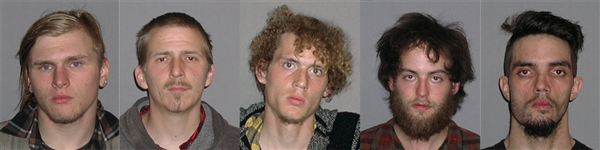
Brian Church, Jared Chase and Brent Vincent Betterly, known as the ‘Nato Three’
Though the raid attracted major media attention, a team of attorneys could not find Church through 12 hours of “active searching”, Sarah Gelsomino, Church’s lawyer, recalled. No booking record existed. Only after she and others made a “major stink” with contacts in the offices of the corporation counsel and Mayor Rahm Emanuel did they even learn about Homan Square.
They sent another attorney to the facility, where he ultimately gained entry, and talked to Church through a floor-to-ceiling chain-link metal cage. Finally, hours later, police took Church and his two co-defendants to a nearby police station for booking.
After serving two and a half years in prison, Church is currently on parole after he and his co-defendants were found not guilty in 2014 of terrorism-related offenses but guilty of lesser charges of possessing an incendiary device and the misdemeanor of “mob action”.
It’s almost like they throw a black bag over your head and make you disappear for a day or two
-Brian Jacob Church
The access that Nato Three attorneys received to Homan Square was an exception to the rule, even if Jacob Church’s experience there was not.
Three attorneys interviewed by the Guardian report being personally turned away from Homan Square between 2009 and 2013 without being allowed access to their clients. Two more lawyers who hadn’t been physically denied described it as a place where police withheld information about their clients’ whereabouts. Church was the only person who had been detained at the facility who agreed to talk with the Guardian: their lawyers say others fear police retaliation.
One man in January 2013 had his name changed in the Chicago central bookings database and then taken to Homan Square without a record of his transfer being kept, according to Eliza Solowiej of Chicago’s First Defense Legal Aid. (The man, the Guardian understands, wishes to be anonymous; his current attorney declined to confirm Solowiej’s account.) She found out where he was after he was taken to the hospital with a head injury.
“He said that the officers caused his head injuries in an interrogation room at Homan Square. I had been looking for him for six to eight hours, and every department member I talked to said they had never heard of him,” Solowiej said. “He sent me a phone pic of his head injuries because I had seen him in a police station right before he was transferred to Homan Square without any.”
Bartmes, another Chicago attorney, said that in September 2013 she got a call from a mother worried that her 15-year-old son had been picked up by police before dawn. A sympathetic sergeant followed up with the mother to say her son was being questioned at Homan Square in connection to a shooting and would be released soon. When hours passed, Bartmes traveled to Homan Square, only to be refused entry for nearly an hour.
An officer told her, “Well, you can’t just stand here taking notes, this is a secure facility, there are undercover officers, and you’re making people very nervous,” Bartmes recalled. Told to leave, she said she would return in an hour if the boy was not released. He was home, and not charged, after “12, maybe 13” hours in custody.
On February 2, 2013, John Hubbard was taken to Homan Square. Hubbard never walked out. The Chicago Tribune reported that the 44-year old was found “unresponsive inside an interview room”, and pronounced dead. After publication, the Cook County medical examiner told the Guardian that the cause of death was determined to be heroin intoxication.
Homan Square is hardly concerned exclusively with terrorism. Several special units operate outside of it, including the anti-gang and anti-drug forces. If police “want money, guns, drugs”, or information on the flow of any of them onto Chicago’s streets, “they bring them there and use it as a place of interrogation off the books,” Hill said.
‘The real danger in allowing practices like Guantanamo or Abu Ghraib is the fact that they always creep into other aspects,’ criminologist Tracy Siska told the Guardian. Photograph: Chandler West/Guardian
A former Chicago detective and current private investigator, Bill Dorsch, said he had not heard of the police abuses described by Church and lawyers for other suspects who had been taken to Homan Square. He has been permitted access to the facility to visit one of its main features, an evidence locker for the police department. (“I just showed my retirement star and passed through,” Dorsch said.)
Transferring detainees through police custody to deny them access to legal counsel, would be “a career-ender,” Dorsch said. “To move just for the purpose of hiding them, I can’t see that happening,” he told the Guardian.
Richard Brzeczek, Chicago’s police superintendent from 1980 to 1983, who also said he had no first-hand knowledge of abuses at Homan Square, said it was “never justified” to deny access to attorneys.
“Homan Square should be on the same list as every other facility where you can call central booking and say: ‘Can you tell me if this person is in custody and where,’” Brzeczek said.
“If you’re going to be doing this, then you have to include Homan Square on the list of facilities that prisoners are taken into and a record made. It can’t be an exempt facility.”
Indeed, Chicago police guidelines appear to ban the sorts of practices Church and the lawyers said occur at Homan Square.
A directive titled “Processing Persons Under Department Control” instructs that “investigation or interrogation of an arrestee will not delay the booking process,” and arrestees must be allowed “a reasonable number of telephone calls” to attorneys swiftly “after their arrival at the first place of custody.” Another directive, “Arrestee and In-Custody Communications,” says police supervisors must “allow visitation by attorneys.”
Attorney Scott Finger said that the Chicago police tightened the latter directive in 2012 after quiet complaints from lawyers about their lack of access to Homan Square. Without those changes, Church’s attorneys might not have gained entry at all. But that tightening – about a week before Church’s arrest – did not prevent Church’s prolonged detention without a lawyer, nor the later cases where lawyers were unable to enter.
The combination of holding clients for long periods, while concealing their whereabouts and denying access to a lawyer, struck legal experts as a throwback to the worst excesses of Chicago police abuse, with a post-9/11 feel to it.
On a smaller scale, Homan Square is “analogous to the CIA’s black sites,” said Andrea Lyon, a former Chicago public defender and current dean of Valparaiso University Law School. When she practiced law in Chicago in the 1980s and 1990s, she said, “police used the term ‘shadow site’” to refer to the quasi-disappearances now in place at Homan Square.
I’ve never known any kind of organized, secret place where they go and hold somebody before booking for hours and hours
James Trainum, former detective, Washington DC
“Back when I first started working on torture cases and started representing criminal defendants in the early 1970s, my clients often told me they’d been taken from one police station to another before ending up at Area 2 where they were tortured,” said Taylor, the civil-rights lawyer most associated with pursuing the notoriously abusive Area 2 police commander Jon Burge. “And in that way the police prevent their family and lawyers from seeing them until they could coerce, through torture or other means, confessions from them.”
Police often have off-site facilities to have private conversations with their informants. But a retired Washington DC homicide detective, James Trainum, could not think of another circumstance nationwide where police held people incommunicado for extended periods.
“I’ve never known any kind of organized, secret place where they go and just hold somebody before booking for hours and hours and hours. That scares the hell out of me that that even exists or might exist,” said Trainum, who now studies national policing issues, to include interrogations, for the Innocence Project and the Constitution Project.
Regardless of departmental regulations, police frequently deny or elide access to lawyers even at regular police precincts, said Solowiej of First Defense Legal Aid. But she said the outright denial was exacerbated at Chicago’s secretive interrogation and holding facility: “It’s very, very rare for anyone to experience their constitutional rights in Chicago police custody, and even more so at Homan Square,” Solowiej said.
Church said that one of his more striking memories of Homan Square was the “big, big vehicles” police had inside the complex that “look like very large MRAPs that they use in the Middle East.”
Cook County, home of Chicago, has received some 1,700 pieces of military equipment from a much-criticized Pentagon program transferring military gear to local police. It includes a Humvee, according to a local ABC News report.
Tracy Siska, a criminologist and civil-rights activist with the Chicago Justice Project, said that Homan Square, as well as the unrelated case of ex-Guantánamo interrogator and retired Chicago detective Richard Zuley, showed the lines blurring between domestic law enforcement and overseas military operations.
“The real danger in allowing practices like Guantánamo or Abu Ghraib is the fact that they always creep into other aspects,” Siska said.
“They creep into domestic law enforcement, either with weaponry like with the militarization of police, or interrogation practices. That’s how we ended up with a black site in Chicago.”
The PayPal 14 are a group of defendants allegedly connected with the hacktivist group Anonymous, thirteen of whom pled guilty in a San Jose court in California, United States in December 2013, to charges of conspiring to disrupt access to the PayPal payment service.are a group of defendants allegedly connected with the hacktivist group Anonymous, thirteen of whom pled guilty in a San Jose court in California, United States in December 2013, to charges of conspiring to disrupt access to the PayPal payment service.are a group of defendants allegedly connected with the hacktivist group Anonymous, thirteen of whom pled guilty in a San Jose court in California, United States in December 2013, to charges of conspiring to disrupt access to the PayPal payment service.are a group of defendants allegedly connected with the hacktivist group Anonymous, thirteen of whom pled guilty in a San Jose court in California, United States in December 2013, to charges of conspiring to disrupt access to the PayPal payment service.The PayPal 14 are a group of defendants allegedly connected with the hacktivist group Anonymous, thirteen of whom pled guilty in a San Jose court in California, United States in December 2013, to charges of conspiring to disrupt access to the PayPal payment service.are a group of defendants allegedly connected with the hacktivist group Anonymous, thirteen of whom pled guilty in a San Jose court in California, United States in December 2013, to charges of conspiring to disrupt access to the PayPal payment service.are a group of defendants allegedly connected with the hacktivist group Anonymous, thirteen of whom pled guilty in a San Jose court in California, United States in December 2013, to charges of conspiring to disrupt access to the PayPal payment service.are a group of defendants allegedly connected with the hacktivist group Anonymous, thirteen of whom pled guilty in a San Jose court in California, United States in December 2013, to charges of conspiring to disrupt access to the PayPal payment service.
Norman Finkelstein Norman Gary Finkelstein is an American political scientist, activist, professor, and author. His primary fields of research are the Israeli–Palestinian conflict and the politics of the Holocaust.Norman Gary Finkelstein is an American political scientist, activist, professor, and author. His primary fields of research are the Israeli–Palestinian conflict and the politics of the Holocaust.Norman Gary Finkelstein is an American political scientist, activist, professor, and author. His primary fields of research are the Israeli–Palestinian conflict and the politics of the Holocaust.Norman Gary Finkelstein is an American political scientist, activist, professor, and author. His primary fields of research are the Israeli–Palestinian conflict and the politics of the Holocaust.Norman Finkelstein Norman Gary Finkelstein is an American political scientist, activist, professor, and author. His primary fields of research are the Israeli–Palestinian conflict and the politics of the Holocaust.Norman Gary Finkelstein is an American political scientist, activist, professor, and author. His primary fields of research are the Israeli–Palestinian conflict and the politics of the Holocaust.Norman Gary Finkelstein is an American political scientist, activist, professor, and author. His primary fields of research are the Israeli–Palestinian conflict and the politics of the Holocaust.Norman Gary Finkelstein is an American political scientist, activist, professor, and author. His primary fields of research are the Israeli–Palestinian conflict and the politics of the Holocaust.
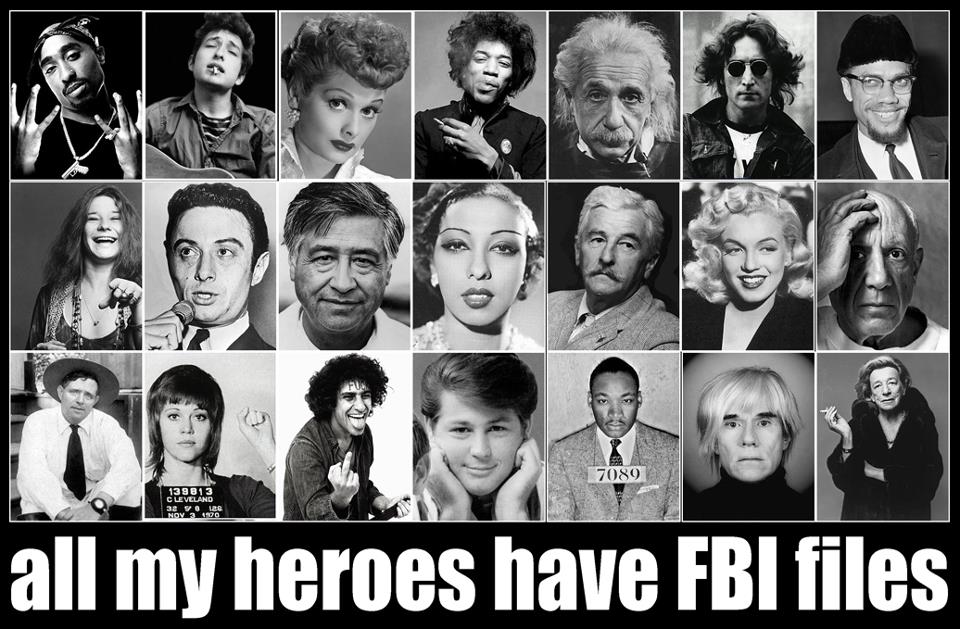
The FBI began COINTELPRO—short for Counterintelligence Program—in 1956 to disrupt the activities of the Communist Party of the United States. In the 1960s, it was expanded to include a number of other domestic groups, such as the Ku Klux Klan, the Socialist Workers Party, and the Black Panther Party. All COINTELPRO operations were ended in 1971. Although limited in scope (about two-tenths of one percent of the FBI’s workload over a 15-year period), COINTELPRO was later rightfully criticized by Congress and the American people for abridging first amendment rights and for other reasons.
When communities attempt to police the police, they often get, well… policed.
In several states, organized groups that use police scanners and knowledge of checkpoints to collectively monitor police activities by legally and peacefully filming cops on duty have said they’ve experienced retaliation, including unjustified detainment and arrests as well as police intimidation.
The groups operate under many decentralized organizations, most notably CopWatch and Cop Block, and have proliferated across the United States in the last decade – and especially in the aftermath of the events that continue to unfold in Ferguson, Missouri, after officer Darren Wilson fatally shot unarmed, black teenager Michael Brown.
Many such groups have begun proactively patrolling their communities with cameras at various times during the week, rather than reactively turning on their cameras when police enter into their neighborhoods or when they happen to be around police activity.
Across the nation, local police departments are responding to organized cop watching patrols by targeting perceived leaders, making arrests, threatening arrests, yanking cameras out of hands and even labeling particular groups “domestic extremist” organizations and part of the sovereign citizens movement – the activities of which the FBI classifies as domestic terrorism.
Courts across the nation at all levels have upheld the right to film police activity. The American Civil Liberties Union (ACLU) and photographer’s associcationshave taken many similar incidents to court, consistently winning cases over the years. The Supreme Court has ruled police can’t search an individual’s cellphone data without a warrant. Police also can’t legally delete an individual’s photos or video images under any circumstances.
“Yet, a continuing stream of these incidents (often driven by police who have been fed ‘nonsense‘ about links between photography and terrorism) makes it clear that the problem is not going away,” writes Jay Stanley, a senior policy analyst at the ACLU’s Speech, Privacy & Technology Project.
Sources who have participated in various organized cop watching groups in cities such as New York; Chicago; Cleveland; Las Vegas; Oakland; Arlington, Texas; Austin and lastly Ferguson, Missouri, told Truthout they have experienced a range of police intimidation tactics, some of which have been caught on film. Cop watchers told Truthout they have been arrested in several states, including Texas, New York, Ohio and California in retaliation for their filming activity.
More recently, in September, three cop watchers were arrested while monitoring police activity during a traffic stop in Arlington, Texas. A group of about 20 people, a few of them associated with the Tarrant County Peaceful Streets Project, gathered at the intersection of South Cooper Street and Lynda Lane during a Saturday night on September 6 to film police as they conducted a traffic stop. A video of what happened next was posted at YouTube.
Arlington police charged Janie Lucero, her husband, Kory Watkins, and Joseph Tye with interference of public duties. Lucero and Watkins were charged with obstructing a highway while Tye was arrested on charges of refusing to identify himself.
Arlington police have defended the arrests of the three cop watchers, but the watchers say they weren’t interfering with police work, and were told to move 150 feet away from the officers – around the corner of a building where they couldn’t film the officers.
“When we first started [cop watching, the police] seemed kind of bothered a little bit,” Watkins told Truthout. “There was a change somewhere where [the police] started becoming a little bit more offended, and we started having more cop watchers so I guess they felt like they needed to start bringing more officers to traffic stops.”
On the night of Watkin’s arrest, his group had previously monitored two other traffic stops without any confrontation with Arlington police officers before the incident that led to the arrests.
Sometimes, though, retaliation against cop watching groups goes far beyond arresting cop watchers on patrol.
Cops Label Cop Watch Groups Domestic Terrorists
On New Year’s Day in 2012, Antonio Buehler, a West Point graduate and former military officer, witnessed two Austin police officers assaulting a woman. He pulled out his phone.
As he began photographing the officers and asking questions about their activities, the cops assaulted and arrested him. He was charged with spitting in a cop’s face – a felony crime.
However, two witness videos of the incident surfaced and neither of them showed that Buehler spit in Officer Patrick Oborski’s face. A grand jury was finally convened in March 2013 and concluded there was not enough evidence to indict Buehler on any of the crimes he was charged with.
A few months after the New Year’s Day incident, Buehler and other Austin-based activists started the Peaceful Streets Project (PSP), an all-volunteer organization dedicated to stopping police abuse. The group has held “Know Your Rights” trainings and a Police Accountability Summit. The group also regularly organizes cop watch patrols in Austin.
Since the PSP was launched, the movement has grown, with local chapters popping up in other cities and states across the United States, including Texas’ Tarrant County chapter, which the three cop watchers arrested in Arlington were affiliated with.
But as the Peaceful Streets movement spread, police retaliation against the groups, and particularly Buehler himself, also escalated.
“[The Austin Police Department (APD)] sees us as a threat primarily because we shine a spotlight on their crimes,” Buehler said.
The group recently obtained documents from the APD through a Freedom of Information Act (FOIA) request that reveal Austin police colluded to arrest Buehler and other cop watchers affiliated with the Peaceful Streets Project. Since the New Year’s Day incident, Buehler has been arrested three more times by APD officers. At least four other members of PSP have been arrested on charges of interference or failing to identify themselves during their cop watching activities.
The emails indicate APD officers monitored Buehler’s social media posts and attempted to justify arresting him for another felony crime of online impersonation over an obviously satirical post he made on Facebook, as well as reveal that some APD officers coordinated efforts to stop PSP members’ legal and peaceful activities, even suggesting reaching out to the District Attorney’s office to see if anything could be done to incarcerate members of the group.
Another internal email from APD senior officer Justin Berry identifies PSP as a “domestic extremist” organization. Berry writes that he believes police accountability groups including PSP, CopWatch and Cop Block are part of a “national domestic extremism trend.” He believes he found “mirror warning signs” in “FBI intel.” Berry makes a strange attempt to lump police accountability activists and the hacker-collective Anonymous in with sovereign citizens groups as a collective revolutionary movement.
“Sovereign citizens” groups generally believe federal, state and local governments are illegitimate and operate illegally. Some self-described sovereign citizens create fake license plates, identification and forms of currency to circumvent official government institutions. The FBI classifies the activities of sovereign citizens groups as domestic terrorism, considering the groups a growing “domestic threat” to law enforcement.
Buehler told Truthout the APD is working with a Department of Homeland Security (DHS) fusion center to attempt to identify PSP as a sovereign citizens group to associate its members with domestic terrorism with state and federal authorities. DHS fusion centers are designed to gather, analyze and promote the sharing of intelligence information between federal and state agencies.
“They have spent a fair amount of resources tracking us, spying on us and infiltrating our group, and we are just peaceful activists who are demanding accountability for the police,” Buehler told Truthout. “They have absolutely no evidence that we’ve engaged in any criminal activity or that we’ve tried to engage in criminal activity.”
APD officials did not respond to a request for comment.
“They’ve pushed us; they’ve assaulted us for filming them; they’ve used their horses against us and tried to run us into walls; they’ve driven their cars up on us; they illegally detained us and searched us; they get in our face and they yell at us; they threaten to use violent force against us,” Buehler said. “But we didn’t realize until these emails just how deep this intimidation, how deep these efforts were to harm us for trying to hold them accountable.”
Buehler also said the group has additional internal emails which have not been released yet that reveal the APD attempted to take another charge to the District Attorney against him for felony child endangerment over the activities of a teenaged member of PSP.
He said he and other members of PSP were interested in pursuing a joint civil action against the APD over their attempts to frame and arrest them for their First Amendment activities.
This is not the first time a municipal police department has labeled a local cop watching group as an extremist organization.
In 2002, internal files from the Denver Police Department’s (DPD) Intelligence Unit were leaked to the ACLU, revealing the unit had been spying on several activist groups in the city, and keeping extensive records about members of the activist groups. Many of these groups were branded as “criminal extremist” organizations in what later became a full-scale controversy widely known as the Denver police’s “spy files.” Some of the groups falsely branded as “criminal extremist” groups included three police accountability organizations: Denver CopWatch, End the Politics of Cruelty and Justice for Mena.
Again, from October 2003 through the Republican National Convention (RNC) in August 2004, intelligence digests produced by the New York City Police Department (NYPD) on dozens of activist groups, including several police accountability organizations, were made public under a federal court order. TheNYPD labeled participants of the “Operation CopWatch” effort as criminal extremists.
Those who participated in “Operation CopWatch” during the RNC hoped to identify undercover cops who might attempt to provoke violence during demonstrations and document police violence or misconduct against protesters.
Communities Benefiting From Cop Watch Patrols Resist Police Retaliation Against Watchers
In some major urban areas, rates of police harassment of individuals drop considerably after cop watchers take to the streets – and communities band together to defend cop watch patrols that experience police retaliation, say veteran cop watchers.
Veteran police accountability activist José Martín has trained and organized with several organizations that participate in cop watch activities. Martín has been detained and arrested several times while cop watching with organized patrols in New York and Chicago.
His arrests in New York are part of a widely documented problem in the city. In fact, retaliation in New York against cop watchers has been so widespread that the NYPD had to send out an official memo to remind officers that it is perfectly legal for civilians to film cops on duty.
Martín described an experience in Chicago in which he felt police unjustly retaliated against him after a local CopWatch group formed and began regularly patrolling Chicago’s Pilsen neighborhood. After the group became well-known by the Pilsen community, residents gathered around an officer who had detained Martín after a patrol one night in 2009, calling for his release. The officer let him go shortly after.
“When cop watchers are retaliated against, if the community is organized, if there is a strong relationship between cop watch patrols and the community, but most importantly, if the cop watchers are people of the community, that community has the power to push back against retaliation and prevent its escalation,” Martín said. “Retaliation doesn’t work if you stand together.”
Another veteran cop watcher, Jacob Crawford, co-founder of Oakland’s We Copwatch, is helping the community of Ferguson, Missouri, organize cop watch patrols and prepare the community for the potential of police retaliation. His group raised $6,000 to pass out 110 cameras to organizers and residents in Ferguson, and train them to monitor police activity in the aftermath of the upheavals that rocked the city after Wilson killed Brown.
“I do expect retaliation, I do expect that these things won’t be easy, but these folks are in it,” Crawford told Truthout. “This is something that makes more sense to them than not standing up for themselves.”
About nine months before a Senate subcommittee for investigations report blasted DHS fusion centers as colossal wastes of money, redundant bureaucracies and threats to our liberty, the Department delivered testimony to the House Permanent Select Committee on Intelligence called “Homeland Security and Intelligence: Next Steps in Evolving the Mission.”
The testimony might as well have been called “We Are Doing Important Stuff, Seriously Guys, C’mon, Please Don’t Cut Our Budget!” It seems like every third sentence in it is an implicit acknowledgement and desperate rebuttal of the fact that DHS’ “intelligence mission” is largely redundant. There are 17 intelligence agencies in the United States at present. As the Senate subcommittee for investigations report on fusion centers observed, the “intelligence mission” DHS has spent hundreds of billions of dollars to implement is being more effectively executed by the FBI’s Joint Terrorism Task Force (JTTF) operations.
So what’s left for poor DHS? According to the January 2012 testimony: more of the same, with a (bad) twist. Read the following paragraph from the testimony keeping in mind what we learned here in Boston about the local fusion center’s spying on peaceful First Amendment protected speech and assembly. (We found that the DHS-funded Boston Regional Intelligence Center (BRIC) has been spying on peace activists and labeling them “Extremists” and “HomeSec-Domestic” threats in “intelligence reports” that could easily be shared with the federal government.)
As threat grows more localized, the prospect that a state/local partner will generate the first lead to help understand a new threat, or even an emerging cell, will grow. And the federal government’s need to train, and even staff, local agencies, such as major city police departments, will grow. Because major cities are the focus for threat, these urban areas also will become the sources of intelligence that will help understand these threats at the national level, DHS might move toward decentralizing more of its analytic workforce to partner with state/local agencies in the collection and dissemination of intelligence from the local level.
A translation into non-beltway English: DHS is doubling down on its quest to transform local police departments into mini intelligence agencies. That’s a terrible idea and it is up to us to stop it.
Why resist police federalization? Put simply: we need police departments to respond to local issues, not serve as foot soldiers for the federal spy agencies. Fortunately, terrorism isn’t a major problem in 99% of cities in the United States. As Micah Zenko observes, if you live in the US you are as likely to be killed by your furniture as you are by a terrorist. But that fact has not stopped and will not stop DHS from showering your local police department with money and technology to enable its militarization and federalization, with terror threats as the alibi. Only we can stop this dangerous trend.
And it will likely take some serious organizing. After all, it’s highly unlikely that departments will easily give up access to the “free” federal money for surveillance gadgets and data sharing programs they’ve been raking in for the past ten years. The only way to bring some democracy to this largely shadowy process is to bring it yourself, like people in Oakland are doing right now by stirring up a storm about Alameda County’s plans to acquire surveillance drones.
How can you resist the federal government trying to turn your local police department into a mini-FBI? First you need to know what is going on. Visit your local police department’s website and see if it has posted any information about federal grants for equipment or information sharing programs. File public records requests to the department to learn how any federal monies have been spent over the past five years. (You can file public records requests quickly and easily here.) Then take what you find to the people.
After you’ve learned about what the police department is doing with federal funds, write about it for your local paper. Most local newspapers are happy to accept op-eds from people who live in town. If your area has a Patch online newspaper, write something for that. Spread the word in whatever way you can and make it clear to the local government that you are paying attention to what goes on at the police department.
Finally, bring the issue to your town or city governing body. Here in Massachusetts we have a very strong town government system (the strength of these local offices varies state by state, but it’s a good place to start no matter where you live).
So for example, if your research shows you that the local police department got lots of DHS cash for surveillance cameras and simply installed them without a public conversation on the merits of the enhanced spying, raise the issue with the governing body that controls the police department. Make it clear that you want all future federal grants to the police to be discussed and debated publicly, and that you want your elected officials to play a role in deciding policing procedures. Ask about data policies and whether the information from the cameras can be shared with outside agencies. If there’s the political will in the community, maybe you can get the cameras turned off like people did here in Cambridge, MA.
Let it be known that you want your community to retain local control over your local police. The bureaucrats at DHS will likely be sad if we can work together to reverse the troubling federalization and militarization of our local police departments — it very well might put many of them out of work — but our democracy will be much better off.
It is known that for at least two years Monsanto, the company that specialises in genetically modified organisms, contracted Blackwater (later renamed Xe, then Academi) to spy upon anti-GM protesters (see below for details), though what Monsanto do not like is when the tables are turned and they are spied upon (by citizens at large). So, as a first step in this process, thanks to an anonymous leaker, Darker Net can provide names and email addresses of 300 key Monsanto staff should you like to offer your thoughts on their products (and espionage strategies).
Note: the window of names and email addresses is scrollable..
Summary of Monsanto/Blackwater deal
Internal communications from Total Intelligence (later renamed OODA) showed Monsanto first hired Blackwater operatives in 2008. Here are the events that led to that.
1. In January, 2008, Total Intelligence chair, Cofer Black, travelled to Switzerland to meet Kevin Wilson, Monsanto’s global security manager. Afterwards, Black emailed other Blackwater executives, saying that Wilson “understands that we can span collection from internet, to reach out, to boots on the ground on legit basis protecting the Monsanto [brand] name…. Ahead of the curve info and insight/heads up is what he is looking for.” Black also wrote that payments to TI would be paid out of Monsanto’s “generous protection budget” and estimated the potential payments at between $100,000 and $500,000. According to documents exposed by journalist, Jeremy Scahill, Monsanto paid TI $127,000 in 2008 and $105,000 in 2009.
2. In a later email to The Nation , Wilson confirmed that Monsanto hired Total Intelligence until early 2010, but claimed that Total Intelligence only provided Monsanto “with reports about the activities of groups or individuals that could pose a risk to company personnel or operations around the world which were developed by monitoring local media reports and other publicly available information”.
3. Wilson asserted that Black told him that Total Intelligence was “a completely separate entity from Blackwater.” However, we should note the following… Academi (the current name for Blackwater) was founded by Erik Prince, a former Navy SEAL and Cofer Black was its vice-chairman from 2006 to 2008 (he was formerly the director of the CIA’s Counterterrorist Center at the time of the September 11 attacks in 2001). Before joining Academi, Black was the Chair of Total Intelligence Solutions as well as vice-chair of Blackwater. Also, Robert Richer was vice-president of intelligence at Academi until January 2007, when he then formed Total Intelligence (he was formerly the head of the CIA’s Near East Division).
4. In summary, Black and Richer are the key players that link Blackwater with Total Solutions and both with Monsanto and their contract to spy on anti-GM groups and organisations worldwide as well as retail disinformation via the Internet using proxy identities. Click here for a map of Xe (Blackwater’s new name before becoming Academi) front companies and here for map of company relationships.
23 July 2012 – Statement from Jeremy Hammond, alleged Anonymous hacker – read in Foley Square, NYC
Thanks for everybody coming out in support! It is so good to know folks on the street got my back. Special thanks to those who have been sending books and letters, and to my amazing lawyers.
I remember maybe a few months before I was locked up I went to a few noise demonstrations a the federal jail MCC Chicago in support of all those locked up there. Prisoners moved in front of the windows, turned the lights on and off, and dropped playing cards through the cracks in the windows. I had no idea I would soon be in that same jail facing multiple trumped up computer hacking “conspiracies.”
Now at New York MCC, the other day I was playing chess when another prisoner excitedly cam e up as was like, “Yo, there are like 50 people outside the window and they are carrying banners with your name!” Sure enough, there you all were with lights, banners, and bucket drums just below our 11th floor window. Though you may not have been able to here us or see us, over one hundred of us in this unit saw you all and wanted to know who those people were, what they were about, rejuvenated knowing people on the outside got there back.
As prisoners in this police state – over 2.5 million of us – we are silenced, marginalized, exploited, forgotten, and dehumanized. First we are judged and sentenced by the “justice” system, then treated as second class citizens by mainstream society. But even the warden of MCC New York has in surprising honesty admitted that “the only difference between us officers here and you prisoners is we just haven’t been caught.”
The call us robbers and fraudsters when the big banks get billion dollar bailouts and kick us out of our homes.
They call us gun runners and drug dealers when pharmaceutical corporations and defense contractors profit from trafficking armaments and drugs on a far greater scale.
They call us “terrorists” when NATO and the US military murder millions of innocents around the world and employ drones and torture tactics.
And they call us cyber criminals when they themselves develop viruses to spy on and wage war against infrastructure and populations in other countries.
Yes, I am one of several dozen around the world accused of Anonymous-affiliated computer hacking charges.
One of many here at MCC New York facing trumped up “conspiracy” charges based on the cooperation of government informants who will say anything and sell out anyone to save themselves.
And this jail is one of several thousand other jails, prisons, and immigrant detention centers – lockups which one day will be reduced to rubble and grass will grow between the cracks of the concrete.
So don’t let fear of imprisonment deter you from speaking up and fighting back. Silencing our movement is exactly what they hope to accomplish with these targeted, politically motivated prosecutions. They can try to stop a few of us but they can never stop us all.
Information about tactics can be derived from accounts of battles, but the very military manuals known to have existed and to have been used extensively by commanders, have not survived. Perhaps the greatest loss is the book of Sextus Julius Frontinus. But parts of his work were incorporated in the records of the historian Vegetius.
The importance of the choice of ground is pointed out.
There is an advantage of height over the enemy and if you are pitting infantry against cavalry, the rougher the ground the better. The sun should be behind you to dazzle the enemy. If there is strong wind it should blow away from you, giving advantage to your missiles and blinding the enemy with dust.
In the battle line, each man should have three feet of space, while the distance between the ranks is given as six feet.
Thus 10’000 men can be placed in a rectangle about 1’500 yards by twelve yards, and it was advised not to extend the line beyond that.
The normal arrangement was to place the infantry in the centre and the cavalry on the wings. The function of the latter was to prevent the centre from being outflanked and once the battle turned and the enemy started to retreat the cavalry moved forward and cut them down. – Horsemen were always a secondary force in ancient warfare, the main fighting being done by the infantry.
It was recommended that if your cavalry was weak it was to be stiffened with lightly armed foot soldiers.
Vegetius also stresses the need for adequate reserves. These could prevent an enemy from trying to envelope one’s own forces, or could fend off enemy cavalry attacking the rear of the infantry.
Alternatively, they could themselves move to the sides and perform an enveloping manoeuver against an opponent.
The position to be taken up by the commander was normally on the right wing.
The tortoise was a essentially defensive formation by which the legionaries would hold their shields overhead, except for the front rows, thereby creating a kind of shell-like armour shielding them against missiles from the front or above.
Find Out If You Are Doing Things Which Might Be Considered Suspicious
There have been so many anti-terrorism laws passed since 9/11 that it is hard to keep up on what kinds of things might get one on a “list” of suspected bad guys.
We’ve prepared this quick checklist so you can see if you might be doing something which might get hassled.
The following actions may get an American citizen living on U.S. soil labeled as a “suspected terrorist” today:
This is the official video for Lowkey’s single Tears to Laughter which has been supported by Palestine Solidarity Campaign, Stop the War Coalition, Viva Palestine and others. The song has been a huge hit amongst supporters of the Palestinian cause and Lowkey has toured extensively through Europe, Israel and Palestine to promote the song and its message.
You can now buy Lowkey’s album Soundtrack To The Struggle on double disc from www.soundtracktothestruggle.com! All profits made from the single are being donated to the DEC Gaza Appeal.
I don’t know about you, but I would label my personal knowledge of Hungary as wanting, if not painfully incomplete. It’s not an easy country to come to grips with, not least of all of course because Hungarian doesn’t look like any western language we know with the possible exception of Finnish. I did visit just after the Wall came down, and remember huge contrasts, almost paradoxes, between rural poverty and a capital, Budapest, that was much richer than other capitals such as Prague, a leftover of Budapest’s status as meeting place between western and eastern diplomats and businessmen.
The riches were not for all, though, the city center was full of beggars and panhandlers, mostly Roma. To keep up the paradox, Mercedes sold more luxury models in Hungary than just about anywhere else back then, reportedly mostly also to Roma; just not the same.
In the years since, precious little attention has been and is being devoted to the former eastern bloc countries in the Anglo press. We know most of the countries are now members of the European Union, but only a few have been allowed to enter the hallowed grounds of the eurozone.
One thing I did pick up on last year was the news that Hungary’s PM Victor Orbán had thrown chemical, food and seed giant Monsanto out of the country, going as far as to plow under 1000 acres of land. Now, I have little patience for Monsanto, infamous for many products ranging from Agent Orange to Round-Up, nor for its ilk, from DuPont to Sygenta, all former chemical companies that have at some point decided they could sell more chemicals than ever before by applying them on and inside everyone’s daily food. Patenting nature itself seems either unworthy of mankind or its grandest achievement. I don’t care much for either one. So Orbán (who has a two-thirds majority in parliament, by the way) has my tentative support on this one.
This is from July 22, 2011, International Business Times:
In an effort to rid the country of Monsanto’s GMO products, Hungary has stepped up the pace. This looks like its going to be another slap in the face for Monsanto. A new regulation was introduced this March which stipulates that seeds are supposed to be checked for GMO before they are introduced to the market. Unfortunately, some GMO seeds made it to the farmers without them knowing it.
Almost 1000 acres of maize found to have been grown with genetically modified seeds have been destroyed throughout Hungary deputy state secretary of the Ministry of Rural Development Lajos Bognar said. The GMO maize has been ploughed under, said Lajos Bognar, but pollen has not spread from the maize, he added.
Unlike several EU members, GMO seeds are banned in Hungary. The checks will continue despite the fact that seed traders are obliged to make sure that their products are GMO free, Bognar said. During their investigation, controllers have found Pioneer and Monsanto products among the seeds planted.
It’s remarkably hard to find sources on this, ironically. It’s even harder, even more ironically, to find anything that mentions the Wikileaks report on the connections between the US government and the chemical/seed industry. Which is curious, in my opinion; it’s not as if there’s nothing newsworthy in the topic. Just about the only thing I could find was this from Anthony Gucciardi at NaturalSociety.com.
The United States is threatening nations who oppose Monsanto’s genetically modified (GM) crops with military-style trade wars, according to information obtained and released by the organization WikiLeaks. Nations like France, which have moved to ban one of Monsanto’s GM corn varieties, were requested to be ‘penalized’ by the United States for opposing Monsanto and genetically modified foods. The information reveals just how deep Monsanto’s roots have penetrated key positions within the United States government, with the cables reporting that many U.S. diplomats work directly for Monsanto. [..]
Perhaps the most shocking piece of information exposed by the cables is the fact that these U.S. diplomats are actually working directly for biotech corporations like Monsanto. The cables also highlight the relationship between the U.S. and Spain in their conquest to persuade other nations to allow for the expansion of GMO crops. Not only did the Spanish government secretly correspond with the U.S. government on the subject, but the U.S. government actually knew beforehand how Spain would vote before the Spanish biotech commission reported their decision regarding GMO crops.
It doesn’t look like Orbán and Hungary have a lot of support in their fight against Monsanto and GMO in general on the political front. But that still does little to explain the radio silence.
There was more international reporting earlier this year, when Orbán again faced up to two other major forces, in this instance the IMF and the EU. On January 1, the Hungarian parliament and president signed a new constitution into law. And it contains a number of things that the Troika members don’t like. In particular, they are probably at odds with taxes levied on bank transactions, and especially central bank transactions. Not the kind of thing the IMF is likely to ever agree with. It all gets clad in protesting (the EU even threatens with courts) the independence under fire of the central bank, the media and other parts of Hungarian society.
The IMF and EU, like the tandem team of Monsanto and Washington before them, act like schoolyard bullies. It’s become their standard MO, and it usually works. Portraits of Orbán as a fool, a reckless idiot and a dangerous populist, on par with that of Hugo Chavez or newly found international enemy Rafael Correa, are much easier to find than those links to Wikileaks Monsanto cables. It would be good to see Orbán continue to stand up to the IMF bullies, but he may not have that choice. They can simply financially bleed him dry, like they have so many other countries and their leaders. It’s a time tested model.
So maybe we’ll have to do with a good and hearty chuckle, and enjoy his announcement yesterday:
Hungary’s prime minister has long had a testy relationship with the International Monetary Fund — and on Thursday he used Facebook to unfriend the agency and reject its allegedly tough loan conditions.
Prime Minister Viktor Orban said in a video message on his official Facebook page that Hungary could not accept pension cuts, the elimination of a bank tax, fewer public employees and other conditions in exchange for an IMF loan that other officials have said could be about €15 billion ($18.9 billion). The IMF’s list of conditions, Orban said, “ contains everything that is not in Hungary’s interests.”
Orban’s announcement took the markets by surprise, in part because just a day earlier he had said loan negotiations with the IMF and the European Union were going according to schedule and both sides were willing to reach an agreement. [..]
In late 2008, under a Socialist government, Hungary became the first EU country to receive an IMF-led bailout. The Orban government, however, decided not to renew the loan agreement in 2010 so it could implement its economic policies without IMF control. But the increasing weakness of the forint, the Hungarian currency, and investors’ growing loss of trust in the country’s economy made the government abruptly change its mind late last year, when it again sought IMF help.
Basically, what the IMF demands is what it has always demanded through the years from countries it lends money to: cut pensions, cut the public sector, cut benefits yada yada, and then privatize, open markets, and open financial systems, so international operating conglomerates can move in and divvy up the spoils – “create a more ‘business friendly’ environment to boost growth” -. The IMF is the poster child for disaster capitalism, no matter how you twist and turn it. And Orbán can see clearly what is being done to Greece, which is just around the corner from Hungary.
A “list of horrors”. That’s how Hungary’s prime minister Viktor Orbán described on Thursday the conditions given by the IMF / EU for a deal, via a video on his Facebook page. [..]
Orban blamed the “long list” of onerous conditions that had, supposedly, been leaked to Magyar Nemzet, a slavishly pro-government daily, on Wednesday. The list contains a number of Orbán’s most sacred political themes, including cuts in pensions, family allowances and transport perks, an increase in the age of retirement, the introduction of a property tax, the abolition of the bank and financial transaction taxes, and modifications to the flat-rate, personal income tax regime.
Hungary threw hopes for a new loan to prop up its sagging economy into disarray on Thursday as Hungarian Prime Minister Viktor Orban rejected what he called unacceptable IMF conditions, crushing prospects for a fast agreement. Orban, in a video posted on his Facebook page, cited demands from the International Monetary Fund (IMF) for a raft of changes that he said were too high a price for Hungary to pay.
“From cutting pensions to reducing bureaucracy to scrapping the bank tax and the funds to be made available to banks, everything is in there that’s not in Hungary’s interest,” Orban said. “The parliamentary group meeting (of the ruling Fidesz party) took the view, and I personally agree with it, that at this price, this will not work,” he added. [..]
To reverse that momentum, Orban is pushing a 300 billion forint ($1.33 billion) job saving plan, partly funded by a new tax on central bank operations, a key sticking point in the IMF talks, which the European Central Bank has also criticised. [..]
“Junk”-rated Hungary faces a repayment hump in the next five quarters, with the equivalent of €4.6 billion euros falling due from its previous IMF/EU bailout alone.
It’s enough of a David vs Goliath fight, or a Little Red Riding Hood vs the Wolf, to make one question the bullies. Now, I don’t really know Victor Orbán, all I know is western media descriptions of him, not a very reliable source, and he could well be a bully himself. But I still like the Little Red Riding Hood story (and dislike Monsanto and the IMF) enough to give him the benefit of the doubt for now.
And besides, it’s as refreshing as it is high time to talk about something else than Greece or Spain. We’ll have to get back to them soon enough, after Draghi’s unlimited buying bailout boondoggle yesterday
Secret Service officials refused to allow protesting students at Wright State University to assemble within one-quarter mile of Vice President Joe Biden during his visit last week.
“The Secret Service respects everyone’s right to freedom of speech but we also have a duty to provide a safe and secure environment,” Secret Service spokesman Max Millien told Campus Reform, which reported that students rallying against Biden and President Obama in support of Mitt Romney moved twice at the orders of the Secret Service until they reached a designated “free speech zone.”
“After the students complied with the first request to move, they were again instructed to move – this time to the middle of a field, about a quarter mile away from the area where Biden planned to speak,” Campus Reform explains.
In July, the Secret Service shut down a student-led “fire Eric Holder” protest outside the White House, citing the discovery of a “suspicious package” just as the protest was getting underway.
While we in the civil liberties community disagree strongly with private investigator Steven Rambam‘s admonition to “Get Over It,” after listening to him describe electronic surveillance powers it’s hard to disagree with the first part of the title of his talk: “Privacy Is Dead.” (Part two of the talk is below.)
“Where you work, what your salary is, your criminal history, all the lawsuits you’ve been involved in, real property…everything you’ve ever purchased, everywhere you’ve ever been…Your information is worth money. Your privacy today isn’t being invaded by big brother — it’s being invaded by big marketer,” he told an audience of hackers and privacy activists at HOPE 9 in New York during the summer of 2012.
Lots of the talk is about big corporations and their insatiable hunger for data about all of us, but Ramdam also addresses government spying:
One of the biggest changes is the ability to track your physical location. I’m sorry I came in at the end of the previous talk. I heard them talk about surveying cell phones with a drone, in a wide area — this is something that is done routinely now. [Note: Is that what these microwave antennas were used for at Occupy Wall Street in mid September?] I can tell you that everybody that attended an Occupy Wall Street protest, and didn’t turn their cell phone off, or put it — and sometimes even if they did — the identity of that cell phone has been logged, and everybody who was at that demonstration, whether they were arrested, not arrested, whether their photos were ID’d, whether an informant pointed them out, it’s known they were there anyway. This is routine.
I can tell you that if you go into any police station right now, the first thing they do is tell you, “Oh I’m sorry you’re not allowed to bring a cell phone in there. We’ll hold it for you.” Not a joke. And by the way it’s a legitimate investigatory technique. But cell phones are now the little snitch in your pocket. Cell phones tell me where you are, what you do, who you talk to, everbody you associate with. Cell phone tells me [sic] intimate details of your life and character, including: Were you at a demonstration? Did you attend a mosque? Did you demonstrate in front of an abortion clinic? Did you get an abortion?
Watch to hear more on drones and open source intelligence. Part two of Rambam’s talk:
For the second time this year, self-proclaimed Anonymous spokesman Barrett Brown was raided by the FBI.
The latest dramatic incident occurred late Wednesday evening while Brown and another woman identified by some as his girlfriend were participating in an online chat on TinyChat with other individuals.
Two minutes into the recorded chat session, loud voices could be heard in the background of Brown’s residence in Texas while the woman in the room with him was in front of the computer screen. She quickly closed the computer screen, but the audio continued to capture events in the room as the FBI appeared to strong-arm Brown to put handcuffs on him. Brown could be heard yelling in the background.
A spokeswoman in the Dallas County sherriff’s office confirmed to Wired that Brown was raided last night and was booked into the county jail around 11 p.m. She said the FBI removed him from the jail this morning to take him to a different facility, but she did not know where he was headed.
California attorney Jay Leiderman, a member of Brown’s legal team, told Wired that Brown was scheduled to be arraigned today in Texas on making threats to a federal agent.
Asked if the FBI agents were aware that Brown was online at the time of their raid, Leiderman said, “They problaby would have preferred to raid him when he was not online.” He noted that the audio from the raid was “certainly less than flattering when they’re marching through these doors dropping F-bombs…. I imagine they would not want to have that captured if they could help it.”
A transcript of the TinyChat session has been posted online. Just moments before the arrest, there were jokes about whether one of the chat participants was real or just an animated GIF. Moments later, the chat participants faced a different conundrum: trying to figure out whether they’d just witnessed an FBI raid.
A voice that appeared to come from one of the arresting agents was heard saying something to the effect: “You’re going down! Get your hands down!”
Right as the noise began, another participant in the chat room showed up in a video window with a white handkerchief covering his lower face. “Is Barrett Browm getting fuckin’ raided by the FBI?” he appeared to say. “Holy shit!”
Brown’s latest raid came after he posted a long and rambling YouTube video in which he talked about taking drugs (though not today, he noted) and about retaliating against an FBI Agent named Robert Smith after he learned that his mother might be hit with obstruction of justice charges. The threat of charges was apparently related to a laptop of Brown’s that he apparently hid.
“So that’s why Robert Smith’s life is over,” Brown said in the video (beginning around minute 9:40). “When I say his life is over, I’m not saying I’m going to kill him, but I am going to ruin his life and look into his fucking kids. Because Aaron Barr did the same thing and he didn’t get raided for it. How do you like them apples?” he said, smiling.
The video, titled “Why I’m Going to Destroy FBI Agent Robert Smith Part Three: Revenge of the Lithe” was accompanied by a note apparently posted by Brown that reads: “Send all info on Agent Robert Smith to [email protected] so FBI can watch me look up his kids. It’s all legal, folks, Palantir chief counsel Matt Long already signed off on it when Themis planned worse.”
Brown also talked about being a target of the Zeta drug cartel and mentioned that he was heavily armed and was concerned that the cartel would come after him posed as federal officers.
“Any armed official of the U.S. government, particularly the FBI, will be regarded as potential Zeta assassin squads,” he said in the video. “As FBI knows … they know that I’m armed and I come from a military family and I was taught to shoot by a Vietnam veteran … and I will shoot all of them and kill them if they come and do anything…. I have reason to fear for my life.”
He signed off the video saying: “Frankly, it was pretty obvious I was going to be dead before I was 40 or so, so I wouldn’t mind going out with two FBI sidearms like a fucking Egyptian pharaoh. Adios.”
Asked about Brown’s comments, Leiderman said that he hadn’t seen the full video and wasn’t aware of everything Brown had said, but he noted that his client had a reputation for hyperbole and joking around, and that things he said might appear to be a threat when they weren’t really intended to be that way.
“It’s hard to understand the context [of what he said], Leiderman said. “But this is speech, so ordinarily we go to a First Amendment defense, but obviously there are lines that can be crossed where you can lose your First Amendment protection.”
An FBI spokeswoman had no comment to make on Brown’s arrest.
Activists threaten legal action over failure to investigate
Corporations in the UK who used a secret “blacklisting” database to screen out ‘left wing trouble-makers’ and union sympathizers as potential job recruits are facing renewed scrutiny after the UK-activist group Liberty called for a fresh investigation Monday night.
A demonstration outside the Olympic site on March 1, 2011 was called in solidarity with the whistleblower who was fired for standing up for an illegally blacklisted workmate. The blacklist scandal first broke in 2008, when the UK media revealed that more than 40 leading employers had subscribed to the vetting service provided by The Consulting Association, which had surveillance files on more than 3,200 workers, including political activists, shop stewards and health and safety representatives.
Police seized the database three years ago and Ian Kerr, the founder of The Consulting Association, was fined only about $7,500. Invoices were discovered showing that 44 companies had paid to access the names on the list.
But full details of the material it contained only emerged as workers began to pursue legal action over their inclusion.
Liberty is now threatening to go to court to force the UK government to investigate the case, which it has compared in severity to the national press phone hacking scandal.
Corinna Ferguson, legal officer for Liberty, told the Independent: “We can’t believe the inaction of the Information Commissioner on a human-rights violation of such wide public interest.
“Contracting out the blacklisting of innocent workers, politicians and journalists is no better than farming out phone hacking to private detectives and the consequences for our democracy are just as grave. If we cannot persuade the Commissioner to discharge his public duty, we will consider seeking assistance from the courts.”
Mick Abbott, a 74-year-old ex-scaffolder, commented: “This nearly ruined my marriage and it meant that my children were on free meals at school. My file goes back to 1964 and the last entry says that I rekindled the campaign for justice for the Shrewsbury picketers in 2006. They have been watching me all these years and passing this information around, blighting my life over four decades.”
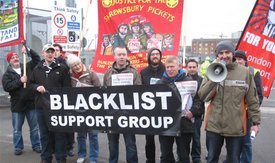
Steve Kelly, an electrician and spokesperson for the Blacklist Support Group said: “I was blacklisted because I was a union member and because I raised issues about safety. In 2007, [Sir Robert] McAlpine sacked me from the Colchester Barracks project after 2 days for refusing to work on a moving platform without proper training (exactly as we had been instructed in the site induction) – the dismissal is recorded on my blacklist file.
“Over the year I suffered severe financial strain, my wages were cut in half which caused immense stress paying bills and putting food on table. I was out of work for a year apart from few weeks here and there in 2001. Being sacked from Colchester Barracks after only two days piled up the stress and caused a nervous breakdown for me eventually.
“The blacklisting firms should be made to pay compensation for years lost and years in future. They should be made to employ blacklisted workers or not be awarded any public government backed contracts. An apology in national press and to individuals whose lives they ruined would be a start.”
For years Anonymous worked hard to protect our world and its peoples.
NOW LISTEN CAREFULLY,
This is an ALERT ABOUT SURVEILLANCE.
Privacy of the people all over the world is suffering more and more outrages. We should not tolerate it. Cameras are everywhere even in our sky, and robots are used to gather and treat information collected through Internet spying.
If Governments and corporations reach their goal to use network surveillance technologies to take control of our world, they will clear Freedom from both the real life and the Internet. That means Anonymous won’t be able to continue helping humanity.
They plan to destroy each form of protest including Anonymous. That means that Anonymous members will be tracked and neutralized if we do not unite against surveillance.
The population is not ready to understand and help us, we need to join the biggest fight ever seen on Anonymous era and use every means necessary to expose truth.
Let the HIVE begins the strongest online and offline worldwide protest ever seen in the history of humanity. They showed they had no limits, we will show our power goes well beyond.
Worldwide governments, evil corporations time of summations is over.
We are Anonymous, we are not numbers, united as one, divided by zero.
Wordwide union will shutdown BigBrother.
That fight will lead us to triumph or to perish.
This is a time trial. WE ACT OR WE FALL.
We are Anonymous,
We are Legion
We do not forgive
We do not forget
Expect us !
=======================================================
Join us on irc.anonops.pro/6697 SSL chan #OpBigBrother
UPDATE [3:30pm PST] – “Assange asylum rumor is false,” Correa confirmed on his Twitter feed. He added that he is waiting for a Foreign Ministry report on the issue, without which a decision will not be made.
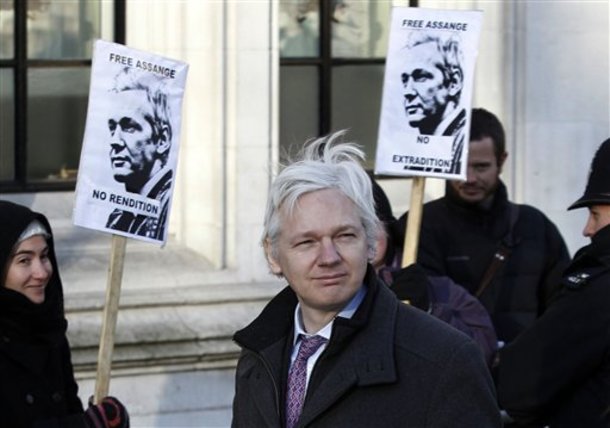
Ecuador has reportedly granted asylum to WikiLeaks founder Julian Assange, who requested it after the British Supreme Court refused to reopen his appeal against extradition to Sweden where he is wanted for questioning over alleged sex crimes.
WikiLeaks founder has been holed up in the country’s London embassy since June 19.
The asylum guarantees him safe passage from the UK to Ecuador, says Professor Donald Rothwell from the Australian National University College of Law.
In Sweden the whistleblower is wanted for questioning over accusations of sex crimes, but Assange and most of his supporters fear that once he arrived in Sweden, he would be handed over to US authorities.
Assange and his lawyers believe that the US has already lodged a sealed indictment against Assange, and that his case might outdo the one of Bradley Manning.
The whistleblower website founded by Julian Assange has leaked hundreds of thousands of classified diplomatic cables, including top secret documents from the US Department of Defense, and secret cables from the State Department.
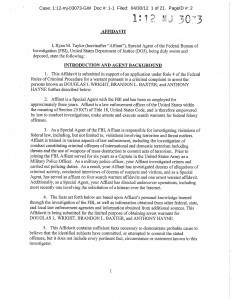
As the Occupy movement carries out massive May Day protests around the country, the FBI Joint Terrorism Task force is trumpeting the arrest of “self-proclaimed anarchists” and “terrorists” who allegedly conspired to destroy a bridge in Ohio. Integral to the development and advancement of this plot, however, were FBI agents themselves and an informant with a drug and robbery record.
Douglas L. Wright, 26; Brandon L. Baxter, 20; and Anthony Hayne, 35, Connor C. Stevens, 20, and Joshua S. Stafford, 23, were arrested by the FBI on April 30, just in time to make the announcement as the nation turns its attention to May Day protests.
The affidavit reveals a plot by the FBI that continues a pattern of behavior in “terrorism” investigations against political activists. Most importantly, undercover FBI agents helped shape the “plot,” offered advice on how and where to use explosives, and allegedly sold explosives to the activists.
Pervasive Use of Informants and Undercover FBI
The informant in the case has been working with the FBI since July 20, 2011, and has a criminal record including possession of cocaine, conviction for robbery, and four convictions for passing bad checks. (The FBI’s proclivity for using down-and-out criminals was a key issue in the “Operation Backfire” Earth Liberation Front cases. The lead arsonist and informant, Jacob Ferguson, had a heroin addiction, and is now back in prison on drug charges).
The informant and the others haphazardly talked about various plans, starting with the use of smoke grenades and destroying bank signs off the top of large buildings.
For instance, on April 10, 2012: ““…BAXTER explained that he does not know what to do with the explosives and he has never considered blowing anything up before.”
Conversation shifted to other outrageous plans. According to the affidavit, “WRIGHT joked that he would wear a suicide vest and walk in and blow himself up, but advised he would have to be very drunk.”
“The CHS [the informant] asked the others what it is they wanted to do… BAXTER said that they had never decided on the bridge, they were just throwing out options and they had never decided on anything.”
FBI Guidance
The defendants flitted between hyperbolic conversations -– some about destroying bank signs, some about destroying a boat, some about a bridge — and various spy tactics such as secret email accounts, wiping computer drives, and disrupting surveillance. At every step of the way, the informant (who was paid nearly $6,000, plus expenses) and undercover FBI agents were there to correct course.
At one point Wright asked the undercover FBI agent “if there was any work he could do… to pay for the items he was going to purchase” from the agent. Later, Connor Stevens told Wright that he no longer wanted to be part of the plan, but wanted to know if the informant might hire him to do some work on his house.
At another point, Wright told the informant that he and others thought one of the individuals involved was an undercover cop (which he was). To allay his fears, the informant said he would help provide the explosives.
Clamoring to Thwart “Terrorist Plots”
U.S. Attorney Dettelbach called this a violent terrorist plot, and said: “The defendants stand charged based not upon any words or beliefs they might espouse, but based upon their own plans and actions.”
What’s troubling is that the government has had a heavy hand in creating the very plot it thwarted.
And on top of that, the defendants, by the admission of the FBI, said repeatedly that they had no intention of harming anyone. At one point Baxter and Wright “stated they don’t want people to think they are terrorists.”
This isn’t an isolated instance.
The criminal complaint reads like the spitting image of the case of Eric McDavid, who was coaxed by an undercover FBI operative named “Anna.” In that case, like this one, the FBI supplied bomb making recipes, bomb making materials, and attempts to distill activist boasting and hyperbole into a coherent plan.
McDavid did nothing, and was arrested on conspiracy charges, like these defendants have been. As readers of this site know, conspiracy charges are the fall-back for the government when there is not enough evidence to get anything else to “stick.”
Demonization of Anarchism
In addition to a continuation of undercover informants and FBI-manufactured plots, this case also reflects on on-going focus on demonizing anarchists.
The government’s press release proclaims that the defendants are “self-proclaimed anarchists.” The affidavit notes that they attended anarchist protests and carried anarchist flags.
The affidavit also says that the defendants talked about anarchists “rioting and destroying each city” that holds May Day protests, and that it will be “off the hook.”
Demonizing anarchists has gone one for over a century, of course, but in recent years the rhetoric has dovetailed with “War on Terrorism” hysteria.
For example, in Scott Demuth’s case, the government argued that: “Defendant’s writings, literature, and conduct suggest that he is an anarchist and associated with the ALF movement. Therefore, he is a domestic terrorist.”
It should come as no surprise, then, that the announcement of these arrests was carefully unveiled yesterday, so that the top news story this May Day would not be about how anarchists are preventing home foreclosures, starting community gardens, teaching collective organizing skills, and re-framing class consciousness, but about how they were part of an FBI-guided “terrorist plot.”
On March 15, over 1,500 beekeepers and anti-GMO protesters marched through the streets of Warsaw, depositing thousands of dead bees on the steps of the Ministry of Agriculture in protest of genetically modified foods and their pesticides which are together largely responsible for the killing off of bees, butterflies, moths and other beneficial pollinators in great numbers.
Later that day the Minister of Agriculture, Marek Sawicki, announced plans to ban MON810, which has already produced millions of hectares of pesticide resistant “superweeds” in the US.
The Polish Beekeepers Association organized the protest, joining forces with International Coalition to Protect the Polish Countryside (ICPPC) and the Coalition for a GMO Free Poland. Targeting Monsanto’s MON810 GM corn in particular, they also called for a complete ban on all genetically engineered crops as well as the pesticides found to be most damaging to the environment (and particularly to bees).
In 2008, the Polish Parliament banned GM feed, including both the planting and importing of GM crops. “Despite this progressive step,” reports Food Travels, “the European Commission has refused to accept regional bans on GMOs, keeping Polish farmers, producers, and activists on the offensive.”
Regardless, says the ICPPC, “None of the nine European Union countries that have already prohibited MON 810 did so by asking the permission of the EU.”
There was a great variety of attire as beekeepers dressed in their work bee suits and masks and ran their hive smoke guns as they marched, many wore yellow jackets with the famous Einstein quote, and many more original signs, props, and costumes. Go here for more photos.
The ICPPC is asking Polish residents to write Minister of Agriculture Marek Sawicki, demanding that he implement an immediate moratorium on GM crops, without waiting for EU approval.

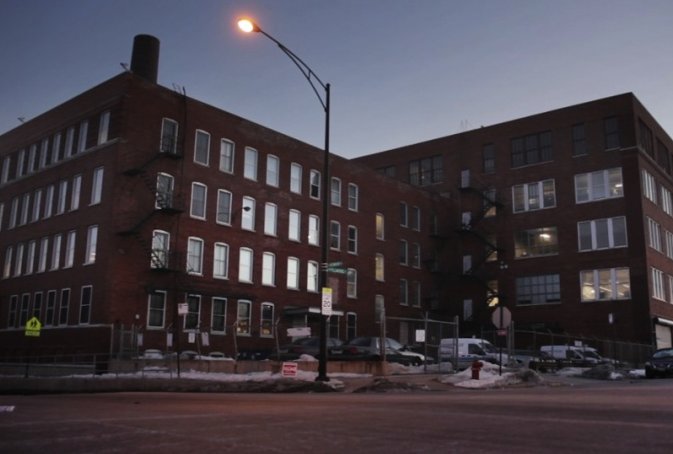
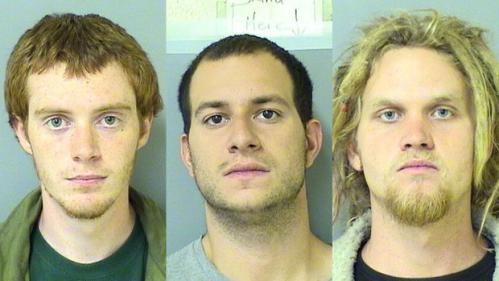
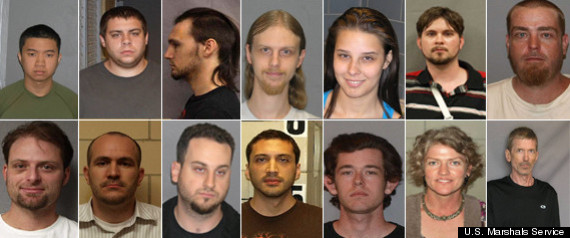

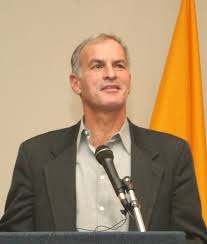



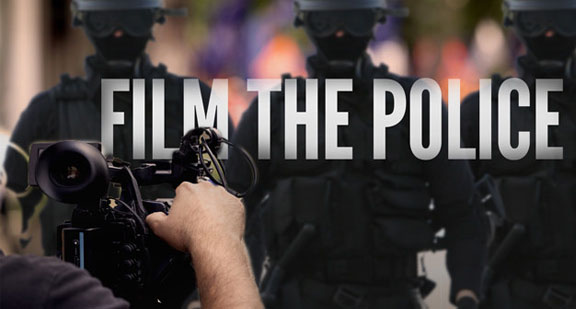


 <
<