As the Occupy movement carries out massive May Day protests around the country, the FBI Joint Terrorism Task force is trumpeting the arrest of “self-proclaimed anarchists” and “terrorists” who allegedly conspired to destroy a bridge in Ohio. Integral to the development and advancement of this plot, however, were FBI agents themselves and an informant with a drug and robbery record.
Douglas L. Wright, 26; Brandon L. Baxter, 20; and Anthony Hayne, 35, Connor C. Stevens, 20, and Joshua S. Stafford, 23, were arrested by the FBI on April 30, just in time to make the announcement as the nation turns its attention to May Day protests.
The affidavit reveals a plot by the FBI that continues a pattern of behavior in “terrorism” investigations against political activists. Most importantly, undercover FBI agents helped shape the “plot,” offered advice on how and where to use explosives, and allegedly sold explosives to the activists.
Pervasive Use of Informants and Undercover FBI
The informant in the case has been working with the FBI since July 20, 2011, and has a criminal record including possession of cocaine, conviction for robbery, and four convictions for passing bad checks. (The FBI’s proclivity for using down-and-out criminals was a key issue in the “Operation Backfire” Earth Liberation Front cases. The lead arsonist and informant, Jacob Ferguson, had a heroin addiction, and is now back in prison on drug charges).
The informant and the others haphazardly talked about various plans, starting with the use of smoke grenades and destroying bank signs off the top of large buildings.
For instance, on April 10, 2012: ““…BAXTER explained that he does not know what to do with the explosives and he has never considered blowing anything up before.”
Conversation shifted to other outrageous plans. According to the affidavit, “WRIGHT joked that he would wear a suicide vest and walk in and blow himself up, but advised he would have to be very drunk.”
“The CHS [the informant] asked the others what it is they wanted to do… BAXTER said that they had never decided on the bridge, they were just throwing out options and they had never decided on anything.”
FBI Guidance
The defendants flitted between hyperbolic conversations -– some about destroying bank signs, some about destroying a boat, some about a bridge — and various spy tactics such as secret email accounts, wiping computer drives, and disrupting surveillance. At every step of the way, the informant (who was paid nearly $6,000, plus expenses) and undercover FBI agents were there to correct course.
At one point Wright asked the undercover FBI agent “if there was any work he could do… to pay for the items he was going to purchase” from the agent. Later, Connor Stevens told Wright that he no longer wanted to be part of the plan, but wanted to know if the informant might hire him to do some work on his house.
At another point, Wright told the informant that he and others thought one of the individuals involved was an undercover cop (which he was). To allay his fears, the informant said he would help provide the explosives.
Clamoring to Thwart “Terrorist Plots”
U.S. Attorney Dettelbach called this a violent terrorist plot, and said: “The defendants stand charged based not upon any words or beliefs they might espouse, but based upon their own plans and actions.”
What’s troubling is that the government has had a heavy hand in creating the very plot it thwarted.
And on top of that, the defendants, by the admission of the FBI, said repeatedly that they had no intention of harming anyone. At one point Baxter and Wright “stated they don’t want people to think they are terrorists.”
This isn’t an isolated instance.
The criminal complaint reads like the spitting image of the case of Eric McDavid, who was coaxed by an undercover FBI operative named “Anna.” In that case, like this one, the FBI supplied bomb making recipes, bomb making materials, and attempts to distill activist boasting and hyperbole into a coherent plan.
McDavid did nothing, and was arrested on conspiracy charges, like these defendants have been. As readers of this site know, conspiracy charges are the fall-back for the government when there is not enough evidence to get anything else to “stick.”
Demonization of Anarchism
In addition to a continuation of undercover informants and FBI-manufactured plots, this case also reflects on on-going focus on demonizing anarchists.
The government’s press release proclaims that the defendants are “self-proclaimed anarchists.” The affidavit notes that they attended anarchist protests and carried anarchist flags.
The affidavit also says that the defendants talked about anarchists “rioting and destroying each city” that holds May Day protests, and that it will be “off the hook.”
Demonizing anarchists has gone one for over a century, of course, but in recent years the rhetoric has dovetailed with “War on Terrorism” hysteria.
For example, in Scott Demuth’s case, the government argued that: “Defendant’s writings, literature, and conduct suggest that he is an anarchist and associated with the ALF movement. Therefore, he is a domestic terrorist.”
It should come as no surprise, then, that the announcement of these arrests was carefully unveiled yesterday, so that the top news story this May Day would not be about how anarchists are preventing home foreclosures, starting community gardens, teaching collective organizing skills, and re-framing class consciousness, but about how they were part of an FBI-guided “terrorist plot.”
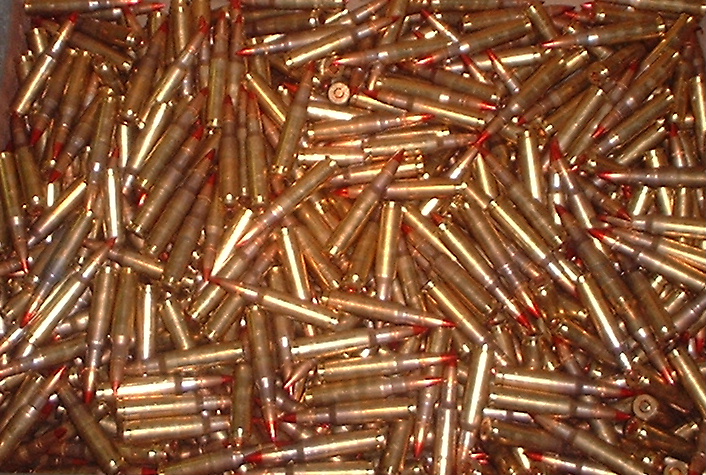
Subject: Government buying out all the 5.56 Military surplus ammo and is telling ammo dealers to stop selling to their vendors and civilians.
I have been calling allot of ammo distributors and ALL of them are telling me that our government is all the 5.56-.223 cal military surplus ammo. And their also telling the ammo distributors stop selling the ammo to civilians and their vendors because the government is buying it all up from everyone they can. I have also spoken with theses ammo dealers and they told me that the 5.56 and .223 ammo is going way up in price.
For instance…I paid $149.00 for federal surplus 440 rounds of steal core and now at the gun show today it was selling for $440.00 for 420 rounds. I have checked and ALLOT of places online are out of the Military surplus ammo by federal. M193 and M855 SS109 ammo. I did find one place still carrying both these ammo’s and good prices still, but their the only place I could find. If interested let me know and Ill forward the info.
I was also told by the same ammo dealers that the government is going to buy all the 9mm and .45 ammo up, so hurry and buy while you can at the lower prices while still available. Guess if they won’t take our guns because they figure that there are some many out there, they will just buy all most popular military calibers. Can’t shoot a gun with no ammo…stock up now while you still can.
They also said the government will continue to purchase all the ammo through the presidential election and they will continue to until the president tells them to stop. And if obama gets reelected instead of rejected, you know he wont stop the purchasing of all the ammo mentioned above.
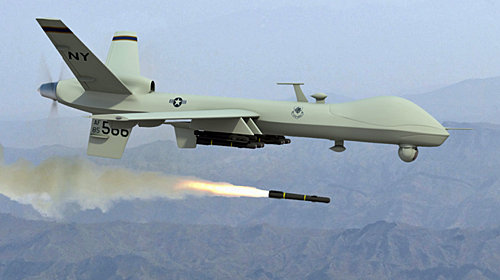
Today Andrew Rosenthal of The New York Timespublished a thoughtful columndiscussing the untenable position taken by the government in response to the ACLU’s two Freedom of Information Act lawsuits seeking information about the CIA’s targeted killing drone strike program, including its targeting of U.S. citizens. As Rosenthal explains, “the government is blocking any consideration of these petitions with one of the oldest, and most pathetic, dodges in the secrecy game. It says it cannot confirm or deny the existence of any drone strike policy or program.”
Rosenthal goes on to highlight the reasons why the government’s position is untenable:
That would be unacceptable under any condition, but it’s completely ridiculous when you take into account the fact that a) there have been voluminous news accounts of drone strikes, including the one on Mr. Awlaki, and b) pretty much every top government official involved in this issue has talked about the drone strikes in public.
He also highlights the arguments made in the ACLU’s latest legal brief in the cases, excerpting from our “13 pages of examples of how ‘the government has already specifically and officially acknowledged the program that the CIA now says is secret.'”
Perhaps most telling is Rosenthal’s comment about how little progress we have made since the worst secrecy abuses of the Bush era:
Governments have good reasons for keeping secrets – to protect soldiers in battle, or nuclear launch codes, or the identities of intelligence sources, undercover agents and witnesses against the mob. (Naturally that’s not an exhaustive list.) Governments also have bad reasons for keeping secrets – to avoid embarrassment, evade oversight or escape legal accountability.
The Bush administration kept secrets largely for bad reasons: It covered up its torture memos, the kidnapping of innocent foreign citizens, illegal wiretapping and other misdeeds. Barack Obama promised to bring more transparency to Washington in the 2008 campaign, but he has failed to do that. In some ways, his administration is even worse than the Bush team when it comes to abusing the privilege of secrecy.
He concludes:
So this is not a secret program, but the government continues to hide behind the secrecy shield to avoid turning over the legal document justifying (or at least rationalizing) it. It’s even using the “can’t confirm or deny” fabrication about the existence of the document itself.
My guess is that the Obama administration just wants to avoid public disclosure, scrutiny and accountability. I’d ask someone at the Justice Department, but they wouldn’t be able to tell me, because it’s a secret.
Rosenthal’s column joins the chorus of voices calling for greater transparencyaround targeted killing and for a sensible government response to the ACLU’s FOIA requests. The government must provide the public with the information it needs to assess the legality and wisdom of the CIA’s global targeted killing campaign.
The Occupy Wall Street protests have been going on for a month. And it seems the FBI and NYPD have had help tracking protesters’ moves thanks to a conservative computer security expert who gained access to one of the group’s internal mailing lists,and then handed over information on the group’s plans to authorities and corporations targeted by protesters.
Since the Occupy Wall Street protest began on September 17, New York security consultant Thomas Ryan has been waging a campaign to infiltrate and discredit the movement. Ryan says he’s done contract work for the U.S. Army and he brags on his blog that he leads “a team called Black Cell, a team of the most-highly trained and capable physical, threat and cyber security professionals in the world.” But over the past few weeks, he and his computer security buddies have been spending time covertly attending Occupy Wall Street meetings, monitoring organizers’ social media accounts, and hanging out with protesters in Lower Manhattan.
As part of their intelligence-gathering operation, the group gained access to a listserv used by Occupy Wall Street organizers called September17discuss. On September17discuss, organizers hash out tactics and plan events, conduct post-mortems of media appearances, and trade the latest protest gossip. On Friday, Ryan leaked thousands of September17discuss emails to conservative blogger Andrew Breitbart, who is now using them to try to smear Occupy Wall Street as an anarchist conspiracy to disrupt global markets.
What may much more alarming to Occupy Wall Street organizers is that while Ryan was monitoring September17discuss, he was forwarding interesting email threads to contacts at the NYPD and FBI, including special agent Jordan T. Loyd, a member of the FBI’s New York-based cyber security team.
On September 18th, the day after the protest’s start, Ryan forwarded an email exchange between Occupy Wall Street organizers to Loyd. The email exchange is harmless: Organizers discuss how they need to increase union participation in the protest. “We need more outreach to workers. The best way to do that is by showing solidarity with them,” writes organizer Jackie DiSalvo in the thread. She then lists a group of potential unions to work with.
Another organizer named Conor responds: “+1,000,000 to Jackie’s proposal on working people/union struggles outreach and solidarity. Also, why not invite people to protest Troy Davis’s execution date at Liberty Plaza this Monday?”
Five minutes after Conor sent his email, Ryan forwarded the thread—with no additional comment—to Loyd’s FBI email address. “Thanks!” Loyd responded. He cc’d his colleague named Ilhwan Yum, a fellow cybersecurity expert at the agency, on the reply.
On September 26th, Ryan forwarded another email thread to Agent Loyd. But this time he clued in the NYPD as well, sending the email to Dennis Dragos, a detective with the NYPD Computer Crimes Squad.
The NYPD might have been very grateful he did so, since it involved a proposed demonstration outside NYPD headquarters at 1 Police Plaza. In the thread, organizers debated whether to crash an upcoming press conference planned by marijuana advocates to celebrate NYPD commissioner Ray Kelly ordering officers to halt arrests over possession of small amounts of marijuana.
“Should we bring some folks from Liberty Plaza to chant “SHAME” for the NYPD’s recent brutalities on Thursday night for the Troy Davis and Saturday for the Occupy Wall Street march?” asked one person in the email thread. (That past Saturday, the video of NYPD officer Anthony Bologna pepper-spraying a protester had gone viral.) Ryan promptly forwarded the email thread to Loyd at the FBI and Dragos at the NYPD.
Interestingly, it was Ryan who revealed himself as a snitch. We learned of these emails from the archive Ryan leaked yesterday in the hopes of undermining the Occupy Wall Street movement. In assembling the archive of September17discuss emails, it appears he accidentally included some of his own forwarded emails indicating he was ratting out organizers.
“I don’t know, I just put everything I had into one big package,” Ryan said when asked how the emails ended up in the file posted to Andrew Breitbart’s blog. Some security expert.
But Ryan didn’t just tip off the authorities. He was also giving information to companies as well. When protesters discussed demonstrating in front of morning shows like Today and Good Morning America, Ryan quickly forwarded the thread to Mark Farrell, the chief security officer at Comcast, the parent company of NBC Universal.
Ryan wrote:
Since you are the CSO, I am not sure of your role in NBC since COMCAST owns them.
There is a huge protest in New York call “Occupy Wall Street”. Here is an email of stunts that they will try to pull on the TODAY show.
We have been heavily monitoring Occupy Wall Street, and Anonymous.
“Thanks Tom,” Farrell responded. “I’ll pass this to my counterpart at NBCU.”
Did the FBI and/or NYPD ask him to monitor Occupy Wall Street? Was he just forwarding the emails on out of the goodness of his heart? In a phone interview with us, Ryan denied being an informant. “I do not work with the FBI,” he said.
Ryan said he knows Loyd through their mutual involvement in the Open Web Application Security Project, a non-profit computer security group of which Ryan is a board member. Ryan said he sent the emails to Loyd unsolicited simply because “everyone’s curious” about Occupy Wall Street, and he had a ground-eye view. “Jordan never asked me for anything.”
Was he sending every email he got to the authorities? Ryan said he couldn’t remember how many he’d passed on to the FBI or NYPD, or other third parties. Later he said that he only forwarded the two emails we noticed, detailed above.
But even if he’d been sending them on regularly, they were probably of limited use to the authorities. Most of the real organizing at Occupy Wall Street happens face-to-face, according to David Graeber, who was one of the earliest organizers. “We did some practical work on [the email list] at first—I think that’s where I first proposed the “we are the 99%” motto—but mainly it’s just an expressive forum,” he wrote in an email. “No one would seriously discuss a plan to do something covert or dangerous on such a list.”
But regardless of how many emails Ryan sent—or whether Loyd ever asked Ryan to spy on Occupy Wall Street—Loyd was almost certainly interested in the emails he received. Loyd has helped hunt down members of the hacktivist collective Anonymous, and he and his colleagues in the FBI’s cyber security squad have been monitoring their involvement in Occupy Wall Street.
At a New York cyber security conference one day before the protest began, Loyd cited Occupy Wall Street as an example of a “newly emerging threat to U.S. information systems.” (In the lead-up to Occupy Wall Street, Anonymous had issued threats against the New York Stock Exchange.) He told the assembled crowd the FBI has been “monitoring the event on cyberspace and are preparing to meet it with physical security,” according to a New York Institute of Technology press release.
We contacted Loyd to ask about his relationship with Ryan and if any of the information Ryan passed along was of any use to the agency. He declined to answer questions and referred us to the FBI’s press office. We’ll post an update if we hear back from them.
We asked Ryan again this morning about how closely he was working with the authorities. Again, he claimed it was only these two emails, which is unlikely given he forwarded them to the FBI and NYPD without providing any context or explaining where he’d gotten them.
And he detailed his rationale for assisting the NYPD:
My respect for FDNY & NYPD stems from them risking their lives to save mine when my house was on fire in sunset park when I was 8 yrs old. Also, for them risking their lives and saving many family and friends during 9/11.
Don’t you find it Ironic that out of all the NYPD involved with the protest, [protesters] have only targeted the ones with Black Ribbons, given to them for their bravery during 9/11?
I am sorry if we see things differently, I try to look at everything as a whole and in patterns. Everything we do in life and happens in life, there is a pattern behind it.
Strong, credible allegations of high-level criminal activity can bring down a government. When the government lacks an effective, fact-based defense, other techniques must be employed. The success of these techniques depends heavily upon a cooperative, compliant press and a mere token opposition party.
1. Dummy up. If it’s not reported, if it’s not news, it didn’t happen.
2. Wax indignant. This is also known as the “How dare you?” gambit.
3. Characterize the charges as “rumors” or, better yet, “wild rumors.” If, in spite of the news blackout, the public is still able to learn about the suspicious facts, it can only be through “rumors.” (If they tend to believe the “rumors” it must be because they are simply “paranoid” or “hysterical.”)
4. Knock down straw men. Deal only with the weakest aspects of the weakest charges. Even better, create your own straw men. Make up wild rumors (or plant false stories) and give them lead play when you appear to debunk all the charges, real and fanciful alike.
5. Call the skeptics names like “conspiracy theorist,” “nutcase,” “ranter,” “kook,” “crackpot,” and, of course, “rumor monger.” Be sure, too, to use heavily loaded verbs and adjectives when characterizing their charges and defending the “more reasonable” government and its defenders. You must then carefully avoid fair and open debate with any of the people you have thus maligned. For insurance, set up your own “skeptics” to shoot down.
6. Impugn motives. Attempt to marginalize the critics by suggesting strongly that they are not really interested in the truth but are simply pursuing a partisan political agenda or are out to make money (compared to over-compensated adherents to the government line who, presumably, are not).
7. Invoke authority. Here the controlled press and the sham opposition can be very useful.
8. Dismiss the charges as “old news.”
9. Come half-clean. This is also known as “confession and avoidance” or “taking the limited hangout route.” This way, you create the impression of candor and honesty while you admit only to relatively harmless, less-than-criminal “mistakes.” This stratagem often requires the embrace of a fall-back position quite different from the one originally taken. With effective damage control, the fall-back position need only be peddled by stooge skeptics to carefully limited markets.
10. Characterize the crimes as impossibly complex and the truth as ultimately unknowable.
11. Reason backward, using the deductive method with a vengeance. With thoroughly rigorous deduction, troublesome evidence is irrelevant. E.g. We have a completely free press. If evidence exists that the Vince Foster “suicide” note was forged, they would have reported it. They haven’t reported it so there is no such evidence. Another variation on this theme involves the likelihood of a conspiracy leaker and a press who would report the leak.
12. Require the skeptics to solve the crime completely. E.g. If Foster was murdered, who did it and why?
13. Change the subject. This technique includes creating and/or publicizing distractions.
14. Lightly report incriminating facts, and then make nothing of them. This is sometimes referred to as “bump and run” reporting.
15. Boldly and brazenly lie. A favorite way of doing this is to attribute the “facts” furnished the public to a plausible-sounding, but anonymous, source.
16. Expanding further on numbers 4 and 5, have your own stooges “expose” scandals and champion popular causes. Their job is to pre-empt real opponents and to play 99-yard football. A variation is to pay rich people for the job who will pretend to spend their own money.
17. Flood the Internet with agents. This is the answer to the question, “What could possibly motivate a person to spend hour upon hour on Internet news groups defending the government and/or the press and harassing genuine critics?” Don t the authorities have defenders enough in all the newspapers, magazines, radio, and television? One would think refusing to print critical letters and screening out serious callers or dumping them from radio talk shows would be control enough, but, obviously, it is not.
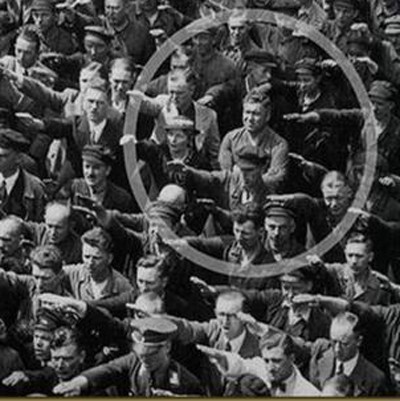
The photo was taken in Hamburg in 1936, during the celebrations for the launch of a ship, the‘Horst Wessel’. In the crowd, one person refuses to raise his arm to give the Nazi salute.
That man was August Landmesser. He had already been in trouble with the authorities, having been sentenced to two years hard labor for marrying a Jewish woman. We know little else about August Landmesser (born May 24, 1910, presumably killed February 1944), except that he had two children. By pure chance, one of his children recognized her father in this photo when it was published in a German newspaper in 1991.
It has emerged that Michigan State Police have been using a high-tech mobile forensics device that can extract information from over 3,000 models of mobile phone, potentially grabbing all media content from your iPhone in under two minutes.
The CelleBrite UFED is a handheld device that Michigan officers have been using since August 2008 to copy information from mobile phones belonging to motorists stopped for minor traffic violations. The device can circumvent password restrictions and extract existing, hidden, and deleted phone data, including call history, text messages, contacts, images, and geotags.
In short, it can copy everything on your smartphone in a matter of minutes.
Learning that the police had been using mobile forensic devices, the American Civil Liberties Union (ACLU) has issued freedom of information requests which demand that state officials open up the data collected, to better assess if penalised motorists warrant having their data copied.
Michigan State Police were more than happy to provide the information – as long as the ACLU paid $544,680. Obviously not pocket change.
“Law enforcement officers are known, on occasion, to encourage citizens to cooperate if they have nothing to hide,” ACLU staff attorney Mark P. Fancher wrote. “No less should be expected of law enforcement, and the Michigan State Police should be willing to assuage concerns that these powerful extraction devices are being used illegally by honoring our requests for cooperation and disclosure.”
Once the data is obtained, the device’s “Physical Analyzer” can map both existing and deleted locations on Google Earth, porting location data and image geotags on Google Maps.
The ACLU’s main worry is that the handheld is quietly being used to bypass Fourth Amendment protections against unreasonable searches:
“With certain exceptions that do not apply here, a search cannot occur without a warrant in which a judicial officer determines that there is probable cause to believe that the search will yield evidence of criminal activity.
A device that allows immediate, surreptitious intrusion into private data creates enormous risks that troopers will ignore these requirements to the detriment of the constitutional rights of persons whose cell phones are searched.”
The next time you are Michigan, be sure drive carefully!
Here is the latest body count that we have. All of these people have been connected with the Clintons in some form or another. We have not included any deaths that could not be verified or connected to the Clinton scandals. All deaths are listed chronologically by date. Accurate to circa 2001
Susan Coleman: Rumors were circulating in Arkansas of an affair with Bill Clinton. She was found dead with a gunshot wound to the head at 7 1/2 months pregnant. Death was an apparent suicide.
Larry Guerrin: Was killed in February 1987 while investigating the INSLAW case.
Kevin Ives & Don Henry: Initial cause of death was reported to be the result of falling asleep on a railroad track in Arkansas on August 23, 1987. This ruling was reported by the State medical examiner Fahmy Malak. Later it was determined that Kevin died from a crushed skull prior to being placed on the tracks. Don had been stabbed in the back. Rumors indicate that they might have stumbled upon a Mena drug operation.
Keith Coney: Keith had information on the Ives/Henry deaths. Died in a motorcycle accident in July 1988 with unconfirmed reports of a high speed car chase.
Keith McKaskle: McKaskle has information on the Ives/Henry deaths. He was stabbed to death in November 1988.
Gregory Collins: Greg had information on the Ives/Henry deaths. He died from a gunshot wound to the face in January 1989.
Jeff Rhodes: He had information on the deaths of Ives, Henry & McKaskle. His burned body was found in a trash dump in April 1989. He died of a gunshot wound to the head and there was some body mutilation, leading to the probably speculation that he was tortured prior to being killed.
James Milam: Milam had information on the Ives & Henry deaths. He was decapitated. The state Medical examiner, Fahmy Malak, initially ruled death due to natural causes.
Richard Winters: Winters was a suspect in the deaths of Ives & Henry. He was killed in a “robbery” in July 1989 which was subsequently proven to be a setup.
Jordan Kettleson: Kettleson had information on the Ives & Henry deaths. He was found shot to death in the front seat of his pickup in June 1990.
Alan Standorf: An employee of the National Security Agency in electronic intelligence. Standorf was a source of information for Danny Casalaro who was investigating INSLAW, BCCI, etc. Standorf’s body was found in the backseat of a car at Washington National Airport on Jan 31, 1991.
Dennis Eisman: An attorney with information on INSLAW. Eisman was found shot to death on April 5, 1991.
Danny Casalaro: Danny was a free-lance reporter and writer who was investigating the “October Surprise”, INSLAW and BCCI. Danny was found dead in a bathtub in a Sheraton Hotel room in Martinsburg, West Virginia. Danny was staying at the hotel while keeping appointments in the DC area pertinent to his investigation. He was found with his wrists slashed. At least one, and possibly both of his wrists were cut 10 times. All of his research materials were missing and have never been recovered.
Victor Raiser: The National Finance Co-Chair for “Clinton for President.” He died in a airplane crash on July 30, 1992.
R. Montgomery Raiser: Also involved in the Clinton presidential campaign. He died in the same plane crash as Victor.
Paul Tully: Tulley was on the Democratic National Committee. He was found dead of unknown causes in his hotel room on September 24, 1992. No autopsy was ever allowed.
Ian Spiro: Spiro had supporting documentation for grand jury proceedings on the INSLAW case. His wife and 3 children were found murdered on November 1, 1992 in their home. They all died of gunshot wounds to the head. Ian’s body was found several days later in a parked car in the Borego Desert. Cause of death? The ingestion of cyanide. FBI report indicated that Ian had murdered his family and then committed suicide.
Paula Gober: A Clinton speech writer. She died in a car accident on December 9, 1992 with no known witnesses.
Jim Wilhite: Wilhite was an associate of Mack McClarty’s former firm. Wilhite died in a skiing accident on December 21, 1992. He also had extensive ties to Clinton with whom he visited by telephone just hours before his death.
Steve Willis, Robert Williams, Todd McKeahan & Conway LeBleu: Died Feburary 28, 1993 by gunfire at Waco. All four were examined by a pathologist and died from identical wounds to the left temple. All four had been body guards for Bill Clinton, three while campaigning for President and when he was Governor of Arkansas.They also were the ONLY 4 BATF agents killed at Waco.
Sgt. Brian Haney, Sgt. Tim Sabel, Maj. William Barkley, Capt. Scott Reynolds: Died: May 19, 1993 – All four men died when their helicopter crashed in the woods near Quantico, Va. – Reporters were barred from the site, and the head of the fire department responding to the crash described it by saying, “Security was tight,” with “lots of Marines with guns.” A videotape made by a firefighter was seized by the Marines. All four men had escorted Clinton on his flight to the carrier Roosevelt shortly before their deaths.
John Crawford: An attorney with information on INSLAW. He died from a heart attack in Tacoma in April of 1993.
John Wilson: Found dead from an apparent hanging suicide on May 18, 1993. He was a former Washington DC council member and claimed to have info on Whitewater.
Paul Wilcher: A lawyer who was investigating drug running out of Mena, Arkansas and who also sought to expose the “October Surprise”, BCCI and INSLAW. He was found in his Washington DC apartment dead of unknown causes on June 22, 1993.
Vincent Foster: A White House deputy counsel and long-time personal friend of Bill and Hillary’s. Found on July 20, 1993, dead of a gunshot wound to the mouth — a death ruled suicide. Was found in a park, yet was covered head to toe in carpet fibers. Dried blood on the face had miraculously dripped upwards, against gravity. Despite having his car near the park, there were no keys to be found on, nor near his person. The missing keys showed up in the victim’s pocket, once the body had made it back to the morgue; leading investigators to believe they simply missed it.
Jon Parnell Walker: An investigator for the RTC who was looking into the linkage between the Whitewater and Madison S&L bankruptcy. Walker “fell” from the top of the Lincoln Towers Building.
Stanley Heard & Steven Dickson: They were members of the Clinton health care advisory committee. They died in a plane crash on September 10, 1993.
Jerry Luther Parks: Parks was the Chief of Security for Clinton’s national campaign headquarters in Little Rock. Gunned down in his car on September 26, 1993 near the intersection of Chenal Parkway and Highway 10 west of Little Rock. Parks was shot through the rear window of his car. The assailant then pulled around to the driver’s side of Park’s car and shot him three more times with a 9mm pistol. His family reported that shortly before his death, they were being followed by unknown persons, and their home had been broken into (despite a top quality alarm system). Parks had been compiling a dossier on Clinton’s illicit activities. The dossier was stolen.
Ed Willey: A Clinton fundraiser. He died of a self-inflicted gunshot wound on November 30, 1993. His death came the same day his wife, Kathleen, was sexually assaulted in the White House by Bill Clinton.
Gandy Baugh: Baugh was Lasater’s attorney and committed suicide on January 8, 1994. Baugh’s partner committed suicide exactly one month later on February 8, 1994.
Herschell Friday: A member of the presidential campaign finance committee. He died in an airplane explosion on March 1, 1994.
Ronald Rogers: Rogers died on March 3, 1994 just prior to releasing sensitive information to a London newspaper. Cause of death? Undetermined.
Kathy Furguson: A 38 year old hospital worker whose ex-husband is a co- defendant in the Paula Jones sexual harassment law suit. She had information supporting Paula Jone’s allegations. She died of an apparent suicide on May 11, 1994 from a gunshot wound to the head.
Bill Shelton: Shelton was an Arkansas police officer and was found dead as an apparent suicide on kathy Ferguson’s grave (Kathy was his girl friend), on June 12, 1994. This “suicide” was the result of a gunshot wound to the back of the head.
Stanley Huggins: Huggins, 46, was a principal in a Memphis law firm which headed a 1987 investigation into the loan practices of Madison Guaranty S&L. Stanley died in Delaware in July 1994 — reported cause of death was viral pneumonia.
Paul Olson: A Federal witness in investigations to drug money corruption in Chicago politics, Paul had just finished 2 days of FBI interviews when his plane ride home crashed, killing Paul and 130 others on Sept 8 1994. The Sept. 15, 1994 Tempe Tribune newspaper reported that the FBI suspected that a bomb had brought down the airplane.
Calvin Walraven: 24 year on Walraven was a key witness against Jocelyn Elder’s son’s drug case. Walraven was found dead in his apartment with a gunshot wound to the head. Tim Hover, a Little Rock police spokesman says no foul play is suspected.
Alan G. Whicher: Oversaw Clinton’s Secret Service detail. In October 1994 Whicher was transferred to the Secret Service field office in the Murrah Building in Oklahoma City. Whatever warning was given to the BATF agents in that building did not reach Alan Whicher, who died in the bomb blast of April 19th 1995.
Duane Garrett: Died July 26, 1995-A lawyer and a talk show host for KGO-AM in San Fransisco, Duane was the campaign finance chairman for Diane Fienstien’s run for the senate, and was a friend and fundraiser for Al Gore. Garrett was under investigation for defrauding investors in Garrett’s failed sports memorabilia venture. There was talk of a deal to evade prosecution. On July 26th, Garrett canceled an afternoon meeting with his lawyer because he had to meet some people at the San Fransisco airport. Three hours later he was found floating in the bay under the Golden Gate Bridge.
Ron Brown: The Commerce Secretary died on April 3, 1996, in an Air Force jet carrying Brown and 34 others, including 14 business executives on a trade mission to Croatia, crashed into a mountainside. The Air Force, in a 22-volume report issued in June of 1996, confirmed its initial judgment that the crash resulted from pilot errors and faulty navigation equipment At the time of Brown’s death, Independent Counsel Daniel Pearson was seeking to determine whether Brown had engaged in several sham financial transactions with longtime business partner Nolanda Hill shortly before he became secretary of commerce.
Charles Meissner: died: UNK – Following Ron Brown’s death, John Huang was placed on a Commerce Department contract that allowed him to retain his security clearance
by Charles Meissner. Shortly thereafter, Meissner died in the crash of a small plane. He was an Assistant Secretary of Commerce for International Economic Policy.
William Colby: Retired CIA director was found dead on May 6,1996 after his wife reported him missing on April 27,1996. Apparently, Colby decided to go on a impromptu canoeing excursion and never returned. Colby who had just started writing for Strategic Investment newsletter, worried many in the intelligent community. Colby’s past history of divulging CIA secrets in the past were well known. Strategic Investor had covered the Vince Foster suicide and had hired handwriting experts to review Foster’s suicide note.
Admiral Jeremy Boorda: Died on May 16,1996 after he went home for lunch and decided to shoot himself in the chest (by one report, twice) rather than be interviewed by Newsweek magazine that afternoon. Explanations for Boorda’s suicide focused on a claim that he was embarrassed over two “Valor” pins he was not authorized to wear.
Lance Herndon: Herndon a 41 year old computer specialist and a prominent entrepreneur who received a presidential appointment in 1995 died August 10, 1996 under suspicious circumstances. He appeared to have died from a blow to the head. Police said no weapons were found at his mansion, adding that Mr. Herndon had not been shot or stabbed and there was no evidence of forced entry or theft.
Neil Moody: Died -August 25, 1996 Following Vincent Foster’s murder, Lisa Foster married James Moody, a judge in Arkansas, on Jan 1, 1996. Near the time Susan McDougal first went to jail for contempt, Judge Moor’s son, Neil died in a car crash. There were other reports that Neil Moody had discovered something very unsettling among his stepmother’s private papers and was threatening to go public with it just prior to the beginning of the Democratic National Convention. He was alleged to have been talking to Bob Woodward of the Washington Post about a blockbuster story. Witnesses said they saw Neil Moody sitting in his car arguing with another person just prior to His car suddenly speeding off out of control and hitting a brick wall.
Barbara Wise: Wise a 14-year Commerce Department employee found dead and partially naked in her office following a long weekend. She worked in the same section as John Huang. Officially, she is said to have died of natural causes.
Doug Adams: Died January 7, 1997- A lawyer in Arkansas who got involved trying to help the people who were being swindled out of their life savings. Adams was found in his vehicle with a gunshot wound to his head in a Springfield Mo. hospital parking lot.
Mary C. Mahoney: 25, murdered at the Georgetown Starbuck’s coffee bar over the 4th of July ’97 weekend. She was a former White House intern who worked with John Huang. Apparently she knew Monica Lewinsky and her sexual encounters with Bill Clinton. Although not verified, it has been said that Lewinsky told Linda Tripp that she did not want to end up like Mahoney.
Ronald Miller: Suddenly took ill on October 3rd,1997 and steadily worsened until his death 9 days later. (This pattern fits Ricin poisoning.) Owing to the strangeness of the illness, doctors at the Integris Baptist Medical Center referred the matter to the Oklahoma State Medical Examiner’s Office. The Oklahoma State Medical Examiner’s Office promptly ran tests on samples of Ron Miller’s blood, but has refused to release the results or even to confirm that the tests were ever completed.
Had been investigated by authorities over the sale of his company, Gage Corp. to Dynamic Energy Resources, Inc. was the man who tape recorded Gene and Nora Lum and turned those tapes (and other records) over to congressional oversight investigators. The Lums were sentenced to prison for campaign finance violations, using “straw donors” to conceal the size of their contributions to various candidates. Indeed, Dynamic Energy Resources, Inc. had hired Ron Brown’s son Michael solely for the purpose of funneling $60,000 through him to the Commerce Secretary, according to Nolanda Hill’s testimony.
Sandy Hume: On Sunday, February 22nd, 1998, Sandy Hume, the 28 year old son of journalist Britt Hume, was reportedly found dead in his Arlington, Virginia home. Aside from the statement that this was an “apparent” suicide, there remains in place a total media blackout on this story, possibly out of concern that the actual facts will not withstand public scrutiny. Worked for Hill magazine, about Congress for Congress.
Jim McDougal: Bill and Hillary Clinton friend, banker, and political ally, sent to prison for eighteen felony convictions. A key whitewater witness, dies of a heart attack on March, 8 1998. As of this writing allegations that he was given an injection of the diuretic lasix has not been denied or confirmed.
Died on March 8, 1998
Johnny Lawhon: 29, died March 29, 1998- The Arkansas transmission specialist who discovered a pile of Whitewater documents in the trunk of an abandoned car on his property and turned them over to Starr, was killed in a car wreck two weeks after the McDougal death.. Details of the “accident” have been sketchy — even from the local Little Rock newspaper.
Charles Wilbourne Miller: 63, was found dead of a gunshot wound to the head on November 17, 1998 in a shallow pit about 300 yards from his ranch house near Little Rock. Police found a .410 gauge shotgun near Miller’s body and a Ruger .357-caliber revolver submerged in water. Investigators concluded the Ruger was the weapon used by Miller to kill himself. Yet, two rounds in the handgun’s cylinder had been spent.
He had long served as executive vice president and member of the board of directors for a company called Alltel and was deeply involved in his own software engineering company until the day he died. Alltel is the successor to Jackson Stephens’ Systematics, the company that provided the software for the White House’s “Big Brother” data base system and that was behind the administration’s plan to develop the secret computer “Clipper” chip to bug every phone, fax and email transmission in America.
Carlos Ghigliotti: 42, was found dead in his home just outside of Washington D.C. on April 28, 2000. There was no sign of a break-in or struggle at the firm of Infrared Technology where the badly decomposed body of Ghigliotti was found. Ghigliotti had not been seen for several weeks.
Ghigliotti, a thermal imaging analyst hired by the House Government Reform Committee to review tape of the siege, said he determined the FBI fired shots on April 19, 1993. The FBI has explained the light bursts on infrared footage as reflections of sun rays on shards of glass or other debris that littered the scene.
“I conclude this based on the groundview videotapes taken from several different angles simultaneously and based on the overhead thermal tape,” Ghigliotti told The Washington Post last October. “The gunfire from the ground is there, without a doubt.”
Ghigliotti said the tapes also confirm the Davidians fired repeatedly at FBI agents during the assault, which ended when flames raced through the compound. About 80 Branch Davidians perished that day, some from the fire, others from gunshot wounds.
Mark Corallo, a spokesman for the congressional committee chaired by Rep. Dan Burton, R-Ind., said that police found the business cards of a committee investigator in Ghigliotti’s office. Corallo said Ghigliotti’s work for the committee ended some time ago.
Tony Moser: 41, was killed as he crossed a street in Pine Bluff, Ark on on June 10, 2000. Killed 10 days after being named a columnist for the Democrat-Gazette newspaper and two days after penning a stinging indictment of political corruption in Little Rock.
Police have concluded that no charges will be filed against the unnamed driver of a 1995 Chevrolet pickup, which hit Moser as he was walking alone in the middle of unlit Rhinehart Road about 10:10 p.m
Police say they have ruled out foul play and will file no charges against the driver because he was not intoxicated and there was no sign of excessive speed.
“Published originally at EtherZone.com : republication allowed with this notice and hyperlink intact.”
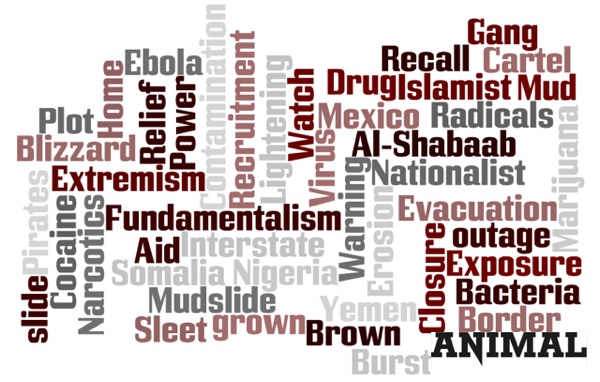
The Department of Homeland Security monitors your updates on social networks, including Facebook and Twitter, to uncover “Items Of Interest” (IOI), according to an internal DHS document released by the EPIC. That document happens to include a list of the baseline terms for which the DHS–or more specifically, a DHS subcontractor hired to monitor social networks–use to generate real-time IOI reports. (Although the released PDF is generally all reader-selectable text, the list of names was curiously embedded as an image of text, preventing simple indexing. We’ve fixed that below.)
To be fair, the DHS does have an internal privacy policy that attempts to strip your “PII”–Personally Identifiable Information–from the aggregated tweets and status updates, with some broad exceptions:
1) U.S. and foreign individuals in extremis situations involving potential life or death circumstances; (this is no change)
2) Senior U.S. and foreign government officials who make public statements or provide public updates;
3) U.S. and foreign government spokespersons who make public statements or provide public updates;
4) U.S. and foreign private sector officials and spokespersons who make public statements or provide public updates;
5) Names of anchors, newscasters, or on-scene reporters who are known or identified as reporters in their post or article or who use traditional and/or social media in real time to keep their audience situationally aware and informed;
6) Current and former public officials who are victims of incidents or activities related to Homeland Security; and
7) Terrorists, drug cartel leaders or other persons known to have been involved in major crimes of Homeland Security interest, (e.g., mass shooters such as those at Virginia Tech or Ft. Hood) who are killed or found dead.
In addition, the Media Monitoring Capability team can transmit personal information to the DHS National Operations Center over the phone as deemed necessary.
The MMC watch may provide the name, position, or other information considered to be PII to the NOC over the telephone when approved by the appropriate DHS OPS authority. But that information must not be stored in a database that could be searched by an individual’s PII.
In addition to the following list of terms, the DHS can also add additional search terms circumstantially as deemed necessary.
DHS Media Monitoring Terms

2.13 Key Words & Search Terms
This is a current list of terms that will be used by the NOC when monitoring social media sites to provide situational awareness and establish a common operating picture. As natural or manmade disasters occur, new search terms may be added.
The new search terms will not use PII in searching for relevant
mission-related information.
In a five-four ruling this week, the supreme court decided that anyone can be strip-searched upon arrest for any offense, however minor, at any time. This horror show ruling joins two recent horror show laws: the NDAA, which lets anyone be arrested forever at any time, and HR 347, the “trespass bill”, which gives you a 10-year sentence for protesting anywhere near someone with secret service protection. These criminalizations of being human follow, of course, the mini-uprising of the Occupy movement.Bagram airbase was used by the US to detain its ‘high-value’ targets during the ‘war on terror’ and is still Afghanistan’s main military prison. Photograph: Dar Yasin/AP
Is American strip-searching benign? The man who had brought the initial suit, Albert Florence, described having been told to “turn around. Squat and cough. Spread your cheeks.” He said he felt humiliated: “It made me feel like less of a man.”
In surreal reasoning, justice Anthony Kennedy explained that this ruling is necessary because the 9/11 bomber could have been stopped for speeding. How would strip searching him have prevented the attack? Did justice Kennedy imagine that plans to blow up the twin towers had been concealed in a body cavity? In still more bizarre non-logic, his and the other justices’ decision rests on concerns about weapons and contraband in prison systems. But people under arrest – that is, who are not yet convicted – haven’t been introduced into a prison population.
Our surveillance state shown considerable determination to intrude on citizens sexually. There’s the sexual abuse of prisoners at Bagram – der Spiegel reports that “former inmates report incidents of … various forms of sexual humiliation. In some cases, an interrogator would place his penis along the face of the detainee while he was being questioned. Other inmates were raped with sticks or threatened with anal sex”. There was the stripping of Bradley Manning is solitary confinement. And there’s the policy set up after the story of the “underwear bomber” to grope US travelers genitally or else force them to go through a machine – made by a company, Rapiscan, owned by terror profiteer and former DHA czar Michael Chertoff – with images so vivid that it has been called the “pornoscanner”.
Believe me: you don’t want the state having the power to strip your clothes off. History shows that the use of forced nudity by a state that is descending into fascism is powerfully effective in controlling and subduing populations.
The political use of forced nudity by anti-democratic regimes is long established. Forcing people to undress is the first step in breaking down their sense of individuality and dignity and reinforcing their powerlessness. Enslaved women were sold naked on the blocks in the American south, and adolescent male slaves served young white ladies at table in the south, while they themselves were naked: their invisible humiliation was a trope for their emasculation. Jewish prisoners herded into concentration camps were stripped of clothing and photographed naked, as iconic images of that Holocaust reiterated.
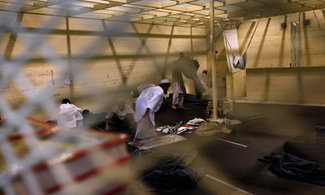
One of the most terrifying moments for me when I visited Guantanamo prison in 2009 was seeing the way the architecture of the building positioned glass-fronted shower cubicles facing intentionally right into the central atrium – where young female guards stood watch over the forced nakedness of Muslim prisoners, who had no way to conceal themselves. Laws and rulings such as this are clearly designed to bring the conditions of Guantanamo, and abusive detention, home.
I have watched male police and TSA members standing by side by side salaciously observing women as they have been “patted down” in airports. I have experienced the weirdly phrased, sexually perverse intrusiveness of the state during an airport “pat-down”, which is always phrased in the words of a steamy paperback (“do you have any sensitive areas? … I will use the back of my hands under your breasts …”). One of my Facebook commentators suggested, I think plausibly, that more women are about to be found liable for arrest for petty reasons (scarily enough, the TSA is advertising for more female officers).
I interviewed the equivalent of TSA workers in Britain and found that the genital groping that is obligatory in the US is illegal in Britain. I believe that the genital groping policy in America, too, is designed to psychologically habituate US citizens to a condition in which they are demeaned and sexually intruded upon by the state – at any moment.
The most terrifying phrase of all in the decision is justice Kennedy’s striking use of the term “detainees” for “United States citizens under arrest”. Some members of Occupy who were arrested in Los Angeles also reported having been referred to by police as such. Justice Kennedy’s new use of what looks like a deliberate activation of that phrase is illuminating.
Ten years of association have given “detainee” the synonymous meaning in America as those to whom no rights apply – especially in prison. It has been long in use in America, habituating us to link it with a condition in which random Muslims far away may be stripped by the American state of any rights. Now the term – with its associations of “those to whom anything may be done” – is being deployed systematically in the direction of … any old American citizen.
Where are we headed? Why? These recent laws criminalizing protest, and giving local police – who, recall, are now infused with DHS money, military hardware and personnel – powers to terrify and traumatise people who have not gone through due process or trial, are being set up to work in concert with a see-all-all-the-time surveillance state. A facility is being set up in Utah by the NSA to monitor everything all the time: James Bamford wrote in Wired magazine that the new facility in Bluffdale, Utah, is being built, where the NSA will look at billions of emails, texts and phone calls. Similar legislation is being pushed forward in the UK.
With that Big Brother eye in place, working alongside these strip-search laws, – between the all-seeing data-mining technology and the terrifying police powers to sexually abuse and humiliate you at will – no one will need a formal coup to have a cowed and compliant citizenry. If you say anything controversial online or on the phone, will you face arrest and sexual humiliation?
Remember, you don’t need to have done anything wrong to be arrested in America any longer. You can be arrested for walking your dog without a leash. The man who was forced to spread his buttocks was stopped for a driving infraction. I was told by an NYPD sergeant that “safety” issues allow the NYPD to make arrests at will. So nothing prevents thousands of Occupy protesters – if there will be any left after these laws start to bite – from being rounded up and stripped naked under intimidating conditions.
Why is this happening? I used to think the push was just led by those who profited from endless war and surveillance – but now I see the struggle as larger. As one internet advocate said to me: “There is a race against time: they realise the internet is a tool of empowerment that will work against their interests, and they need to race to turn it into a tool of control.”
As Chris Hedges wrote in his riveting account of the NDAA: “There are now 1,271 government agencies and 1,931 private companies that work on programs related to counterterrorism, homeland security and intelligence in about 10,000 locations across the United States, the Washington Post reported in a 2010 series by Dana Priest and William M Arken. There are 854,000 people with top-secret security clearances, the reporters wrote, and in Washington, DC, and the surrounding area 33 building complexes for top-secret intelligence work are under construction or have been built since September 2011.”
This enormous new sector of the economy has a multi-billion-dollar vested interest in setting up a system to surveil, physically intimidate and prey upon the rest of American society.
Now they can do so by threatening to demean you sexually – a potent tool in the hands of any bully.
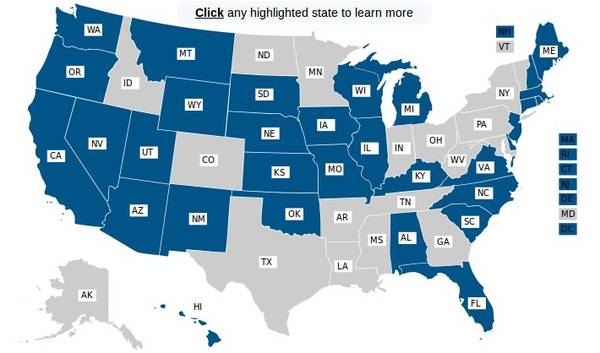
ACLU affiliates across America requested information on local law enforcement’s use of cell-phone tracking, and received a wealth of disturbing information about the extent of wireless tracking. They produced a map showing which police departments were discovered to be tracking people’s phones without a warrant, either by getting gutless phone companies to fink out their own customers for warrantless fishing expeditions, or by buying some kind of “cell phone tracking equipment.”
Many law enforcement agencies track cell phones quite frequently. For example, based on invoices from cell phone companies, it appears that Raleigh, N.C. tracks hundreds of cell phones a year. The practice is so common that cell phone companies have manuals for police explaining what data the companies store, how much they charge police to access that data, and what officers need to do to get it.
Most law enforcement agencies do not obtain a warrant to track cell phones, but some do, and the legal standards used vary widely. Some police departments protect privacy by obtaining a warrant based upon probable cause when tracking cell phones. For example, police in the County of Hawaii, Wichita, and Lexington, Ky. demonstrate probable cause and obtain a warrant when tracking cell phones. If these police departments can protect both public safety and privacy by meeting the warrant and probable cause requirements, then surely other agencies can as well.
Unfortunately, other departments do not always demonstrate probable cause and obtain a warrant when tracking cell phones. For example, police in Lincoln, Neb. obtain even GPS location data, which is more precise than cell tower location information, on telephones without demonstrating probable cause. Police in Wilson County, N.C. obtain historical cell tracking data where it is “relevant and material” to an ongoing investigation, a standard lower than probable cause.
Police use various methods to track cell phones. Most commonly, law enforcement agencies obtain cell phone records about one person from a cell phone carrier. However, some police departments, like in Gilbert, Ariz., have purchased their own cell tracking technology.
US government officials requested that an American private security firm contact Syrian opposition figures in Turkey to see “how they can help in regime change,” the CEO of one of these firms told Stratfor in a company email obtained by WikiLeaks and Al-Akhbar.
James F. Smith, former director of Blackwater, is currently the Chief Executive of SCG International, a private security firm with experience in Afghanistan, Iraq, and Libya. In what appears to be his first email to Stratfor, Smith stated that his “background is CIA” and his company is comprised of “former DOD [Department of Defense], CIA and former law enforcement personnel.”
“We provide services for those same groups in the form of training, security and information collection,” he explained to Stratfor. (doc-id5441475)
In a 13 December 2011 email to Stratfor’s VP for counter-terrorism Fred Burton, which Burton shared with Stratfor’s briefers, Smith claimed that “[he] and Walid Phares were getting air cover from Congresswoman [Sue] Myrick to engage Syrian opposition in Turkey (non-MB and non-Qatari) on a fact finding mission for Congress.”
Walid Phares, named by the source as part of the “fact finding team,” is a Lebanese-American citizen and currently co-chairs Republican presidential candidate Mitt Romney’s Middle East advisory group.
In a profile of Walid Phares published in Salon, As’ad AbuKhalil details Phares’ history with right-wing militias during the Lebanese civil war.
Sue Myrick, who allegedly was providing “air cover” for the “fact finding team”, is a Republican Congresswoman from North Carolina who has a track record of extremist pro-zionist and anti-Islamic views.
These include leading the charge against Dubai Ports World’s attempt to buy major American ports in 2006 – labeling the Islamic Society of North America as a group of “radical jihadists” – and demanding that former President Jimmy Carter’s citizenship be revoked for daring to meet with Hamas leaders in 2008.
Currently, Myrick is a member of the United States House Permanent Select Committee on Intelligence, a congressional committee charged with overseeing the American intelligence community, and is also involved with the Department of Defense and the US military.
In his email, the “true mission” for the “fact finding” team, Smith told Burton, was how “they can help in regime change.”
Furthermore, the email added that Smith intended to offer “his services to help protect the opposition members, like he had underway in Libya.” He also said that Booz Allen Hamilton, an American consulting firm regularly contracted by the US government for civil and defense projects, “is also working [with] the Agency on a similar request.” (doc-id 5331882)
Smith had originally contacted Stratfor through an email to its founder George Friedman on 15 February 2011 in order to thank the private intelligence firm for its “excellent service of intelligence reporting and analysis.”
“Outstanding just doesn’t cut it – professionally competent, salient, germane, concise are all descriptors that describe your organization’s work product,” he added quite lovingly. (doc-id 257534)
This email was forwarded by Friedman to Burton, who gradually built a friendly relationship with Smith.
By September, Smith had become a major source for Stratfor. Codenamed LY700, he provided intelligence to Burton on developments in Libya – where Smith and his company were contracted to protect Libyan National Transitional Council (NTC) members and train Libyan rebel fighters after the implementation of the no-fly zone in March 2011. (doc-id 121087)
Smith’s intelligence impressed Burton, who in praising him to his peers reeled off another one of his signature racist slurs, “Good skinny. This is what is defined as a credible source. Not some windbag Paki academic belching and passing gas.” (doc-id 5280688)
One of Smith’s contacts was Mehdi al-Harati, an Irish-Libyan who was the commander of the Tripoli Revolutionary Brigade and deputy commander of the Tripoli Military Council prior to his resignation on 11 October 2011. (doc-id 966063)
During his involvement with Stratfor, Smith provided intelligence on missing surface-to-air missiles (SAMs) (doc-id 5321612) and allegedly “took part” in the killing of former Libyan dictator Muammar Gaddafi. (doc-id 3980511)
On the same day Burton was informed of Smith’s new assignment to Syria, he requested an overview of the Syrian opposition from the Startfor briefers, Zucha and Aflano.
Zucha in turn contacted Ashley Harrison, a tactical analyst, for more in-depth info about the Syrian opposition. Harrison responded with an attached 14-page document detailing key groups and their leaders. (doc-id 5355211)
The trail of emails ends December 13, days before the Stratfor mail servers were reportedly hacked, with Burton saying that his source “is meeting w/specific people described as key leaders.” (doc-id 5293788)
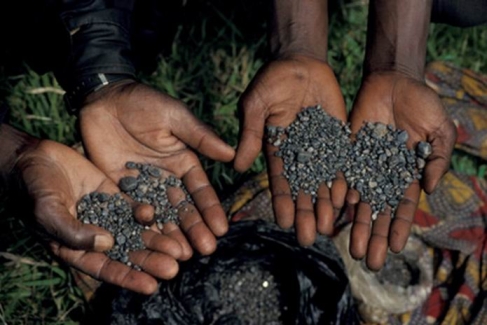
What is Coltan? Coltan is short for Columbite-tantalite – a black tar-like mineral found in major quantities in the Congo.. The Congo possesses 80 percent of the world’s coltan. When coltan is refined it becomes a heat resistant powder that can hold a high electric charge. The properties of refined coltan is a vital element in creating devices that store energy or capacitors, which are used in a vast array of small electronic devices, especially in mobile phones, laptop computers, pagers, and other electronic devices.
Who are the primary exploiters of Coltan in the Congo?
Rwanda, Uganda, Burundi and their proxy militias are the primary exploiters of coltan in the Congo. In an 18 month period Rwanda made $250 million as a result of exploitation of coltan in the Congo. Although Rwanda and Uganda possess little or no coltan, during the period of the war in the Congo, their exports escalated exponentially. For example, Rwanda’s coltan export went from less than 50 tons in 1995 to almost 250 tons in 1998. Zero cassiterite was transported from the Congo to Uganda in 1998, however by 2000 151 drums were transported.
The United Nations notes in its 2001 report on the Illegal Exploitation of Natural Resources in the congo that “The consequences of illegal exploitation has been twofold: (a)massive availability of financial resources for the Rwandan Patriotic Army, and the individual enrichment of top Ugandan military commanders and civilians; (b) the emergence of of illegal networks headed by either top military officers or businessmen.”
Foreign Corporate exploitation Although the countries mentioned above directly exploit coltan, foreign multi-national corporations have been deeply involved in the exploitation of coltan in the Congo. The coltan mined by rebels and foreign forces is sold to foreign corporations. Although, the United Nations in its reports on the Congo do not directly blame the multi-national corporations for the conflict in the Congo, the United Nations does say that these companies serve as “the engine of the conflict in the DRC.”
Major United States players include: Cabot Corporation, Boston, MA OM Group, Cleveland, Ohio AVX, Myrtle Beach, SC Eagle Wings Resources International, Ohio
Trinitech International, Ohio Kemet Electronics Corporation, Greenville, SC Vishay Sprague. Malvern, PA
Corporations from other countries have been a part of the coltan exploitation chain. These companies include but are not limited to Germany’s HC Starc and EPCOS, China’s Nigncxia, and Belgium’s George Forrest International.
Once the coltan is processed and converted to capacitors, it is then sold to companies such as Nokia, Motorola, Compaq, Alcatel, Dell, Hewlett-Packard , IBM, Lucent, Ericsson and Sony for use in a wide assortment of everyday products ranging from cell phones to computer chips and game consoles.
What are some of the uses of coltan in modern society?
• Laptop computers
• Cellular phones
• Jet engines
• Rockets
• Cutting tools
• Camera lenses
• X-ray film
• Ink jet printers
• Hearing aids
• Pacemakers
• Airbag protection systems
• Ignition and motor control modules, GPS, ABS systems in automobiles
• Game consoles such as playstation, xbox and nintendo
• Video cameras
• Digital still cameras
• Sputtering targets
• Chemical process equipment
• Cathodic protection systems for steel structures such as bridges, water tanks
• Prosthetic devices for humans – hips, plates in the skull, also mesh to repair bone removed after damage by cancer
• Suture clips
• Corrosion resistant fasteners, screws, nuts, bolts
• High temperature furnace parts.
• High temperature alloys for air and land based turbines
The components controlling the flow of electricity in mobile phones are composed of the refined mineral known as Coltan. With more and more people using mobile phones the demand for Coltan has increased significantly.
Mobile phones fuel Congo conflict
The largest reserves of Coltan are to be found in the Democratic Republic of the Congo, and much of the finance sustaining the civil wars in Africa, especially in the Democratic Republic of the Congo, is directly connected to Coltan profits. Coltan is extracted under terrible working conditions in mines in Eastern Congo.
The United Nations reports child labour in Africa has significantly increased in Coltan mines. In some regions of the Congo, about 30 percent of schoolchildren are now forced to work in the mines.
It can be dangerous to ask questions
“The control over these resources works through maintaining local militia and exploiting cheap labour to excavate the mines”, says Antony Grange, Country Coordinator with experience from the DanChurchAid work in DRC Congo. “Attempting to oppose these practices locally is very risky business, as DanChurchaid’s former partner “Héritiers de la Justice” knows all too well since they have experienced several assassination of their staff members in the recent years. Only international pressure may stop this development,” says Antony Grange.
International pressure is important
When Denmark become a member of the UN Security Council, the Danish Government put the actions to promote peace and stability in Africa on top of the agenda, and they promised to put a focus on the role natural recourses play as a cause to many conflicts. Income from oil, diamonds and export of woods, continues to fuel armed conflicts.
A call to action
However, Denmark has not managed to convince the Security Council to strengthen the present activities. Therefore the Danish development NGOs now call on the Minister for Foreign Affairs to bring the issue to the table and to work for more efficient tools for the UN to punish those who make profit out of the conflict resources. The organisation also calls for a permanent position within the UN, with a mandate to work for prevention of conflicts financed by natural resources such as oil, woods, and minerals.
A few months back, I reposted here an article that I wrote 10 years ago, before the invasion of Iraq: a fictional scenario of how the Terror War would play out on the ground of the target nations — and in the minds of those sent to wage these campaigns. I was reminded of that piece by a story in the latest Rolling Stone.
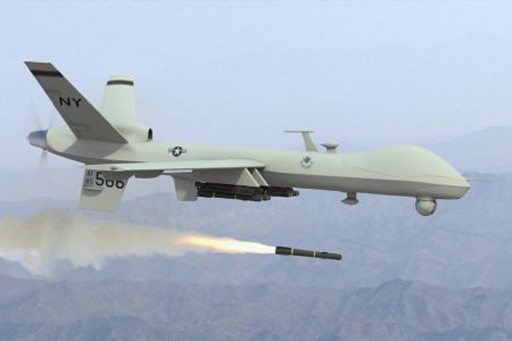
The RS story, by Michael Hastings, depicts the drone mentality now consuming the US military-security apparatus, a process which makes the endless slaughter of the endless Terror War cheaper, easier, quieter. I didn’t anticipate the development in my proleptic piece; the first reported “kill” by American drones, in Yemen, had taken place just a few weeks before my article appeared in the Moscow Times.
(One of the victims of this historic first drawing of blood was an American citizen, by the way. Thus from the very beginning, the drone war — presented as noble shield to defend American citizens from harm — has been killing American citizens, along with the hundreds and hundreds and hundreds and hundreds of innocent men and women around the world being murdered without warning — and without any chance to defend themselves or take shelter — by cowards sitting in padded seats behind computer consoles thousands of miles away, following orders from the even greater cowards who strut around the Pentagon, CIA headquarters and the White House.)
But what brought my earlier piece to mind was a brief mention of the “military slang” now being used to designate the victims of the drones. Below are a few snippets from my 2002 post, a fictional email by an occupation soldier to a friend:
Yo, Ed! I’m looking out the window of Watchtower 19 in Force Zone Seven. They’re loading up the dead wagon. Three friendlies, two uncardeds, the usual collateral – and one bug. We zapped the market before the bug got his hard-on – another one of those Czech AK-47 knock-offs that our friendly neighborhood warlord keeps bringing in. He says he doesn’t know how the bugs get hold of them – they drop down from heaven, I guess …
… I’d just come off night patrol in Deep-City Zone, hardcore bugland, backing up some Special Ops doing a Guantanamo run on terrorperp suspects. Banging down doors, barrel in the face of some shrieking bug-woman in her black bag, children scuttling in the dark like rats, the perp calling down an airstrike from Allah on our heads. You know the drill. You know the jangle. Not even the new meds can keep you blanked out completely. So there’s always the overstep somewhere. Woman’s cheekbone cracking from a backhand, some kid stomped or booted out of the way. Some perp putting his hand in one of those damned dresses they wear, going for who knows what – Koran? Mosquito bite? Scimitar? Czech special? – and you open up. More shrieking, more screaming – and then the splatter on the wall.
In the new Rolling Stone story, Hastings tells us how America’s brave drone warriors view their victims:
For a new generation of young guns, the experience of piloting a drone is not unlike the video games they grew up on. Unlike traditional pilots, who physically fly their payloads to a target, drone operators kill at the touch of a button, without ever leaving their base – a remove that only serves to further desensitize the taking of human life. (The military slang for a man killed by a drone strike is “bug splat,” since viewing the body through a grainy-green video image gives the sense of an insect being crushed.)
“Bugs” being “splattered.” This is what Barack Obama — who has expanded the drone death squads beyond the imaginings of George W. Bush — and all of his brave button pushers and joystick riders think of the defenseless human beings they are killing (including 174 children by last count).
This has been the attitude underlying the Terror War since its beginnings. When I wrote my piece with its “bug” imagery, I was only reflecting what was already obvious and pervasive, both in the military-security war machine and in much of the general public. Anyone designated by those in power as an “enemy” — for any reason, known or unknown, or for no reason at all — is considered a subhuman, an insect, whose destruction is meaningless, without moral content, like swatting a fly on the wall. (As, for example, in this 2008 piece about a figure much lauded by progressives at the time: “Crushing the Ants.”)
There is not only a tolerance for this official program of state murder; there is an absolute enthusiasm for it. Our rulers heartily enjoy ordering people to be killed. (And to be tortured, as we noted here last week.) It makes them feel good. It makes them feel “hard,” in every sense of the word. As Hastings notes:
From the moment Obama took office, according to Washington insiders, the new commander in chief evinced a “love” of drones. “The drone program is something the executive branch is paying a lot of attention to,” says Ken Gude, vice president of the Center for American Progress. “These weapons systems have become central to Obama.” In the early days of the administration, then-chief of staff Rahm Emanuel would routinely arrive at the White House and demand, “Who did we get today?”
Here are some examples of what Rahm and his then-boss, the Nobel Peace Prize Laureate, were “getting” with their flying deaths squads:
But for every “high-value” target killed by drones, there’s a civilian or other innocent victim who has paid the price. The first major success of drones – the 2002 strike that took out the leader of Al Qaeda in Yemen – also resulted in the death of a U.S. citizen. More recently, a drone strike by U.S. forces in Afghanistan in 2010 targeted the wrong individual – killing a well-known human rights advocate named Zabet Amanullah who actually supported the U.S.-backed government. The U.S. military, it turned out, had tracked the wrong cellphone for months, mistaking Amanullah for a senior Taliban leader. A year earlier, a drone strike killed Baitullah Mehsud, the head of the Pakistani Taliban, while he was visiting his father-in-law; his wife was vaporized along with him. But the U.S. had already tried four times to assassinate Mehsud with drones, killing dozens of civilians in the failed attempts. One of the missed strikes, according to a human rights group, killed 35 people, including nine civilians, with reports that flying shrapnel killed an eight-year-old boy while he was sleeping. Another blown strike, in June 2009, took out 45 civilians, according to credible press reports.
And of course there is this, the follow-up to the “extrajudicial killing” of U.S. citizen Anwar al-Awlaki. After killing al-Awlaki — without ever charging him with a single crime — the Obama administration then murdered his 16-year-old son (as we noted here last year). Hastings writes:
In the days following the killing, Nasser and his wife received a call from Anwar’s 16-year-old son, Abdulrahman al-Awlaki, who had run away from home a few weeks earlier to try to find his now-deceased father in Yemen. “He called us and gave us his condolences,” Nasser recalls. “We told him to come back, and he promised he would. We really pressed him, me and his grandmother.”
The teenage boy never made it home. Two weeks after that final conversation, his grandparents got another phone call from a relative. Abdulrahman had been killed in a drone strike in the southern part of Yemen, his family’s tribal homeland. The boy, who had no known role in Al Qaeda or any other terrorist operation, appears to have been another victim of Obama’s drone war: Abdulrahman had been accompanying a cousin when a drone obliterated him and seven others. The suspected target of the killing – a member of Al Qaeda in the Arabian Peninsula – is reportedly still alive; it’s unclear whether he was even there when the strike took place.
The news devastated the family. “My wife weeps every day and every morning for her grandson,” says Nasser, a former high-ranking member of the Yemenite government. “He was a nice, gentle boy who liked to swim a lot. This is a boy who did nothing against America or against anything else. A boy. He is a citizen of the United States, and there are no reasons to kill him except that he is Anwar’s son.”
The boy was probably killed in a “signature strike,” where bold and brave CIA analysts sit back in their chairs and observe people going about their business in a foreign country far away. If their activities look “suspicious” according to some arbitrary, secret criteria, then they can be slaughtered instantly by a drone missile — even if the attackers have no idea whatsoever who the targets are or what they are actually doing. Plotting terrorism, or praying? Organizing jihad, or holding a wedding? Building bombs, or having lunch? The attackers don’t know — and can’t know. They simply put down their Cheetohs and fire the missile. Who cares? It’s just “bug splatter.”
And the fact is, no one does care. As Hastings notes, this hideous program of murder and terror has been fully embraced by the political elite and by society at large. And our rulers are now bringing it back home with a vengeance, putting more and more Americans under the unsleeping eye of government drones watching their every move, looking for the “signature” of “suspicious” behaviour. Hastings notes:
In the end, it appears, the administration has little reason to worry about any backlash from its decision to kill an American citizen – one who had not even been charged with a crime. A recent poll shows that most Democrats overwhelmingly support the drone program, and Congress passed a law in February that calls for the Federal Aviation Administration to “accelerate the integration of unmanned aerial systems” in the skies over America. Drones, which are already used to fight wildfires out West and keep an eye on the Mexican border, may soon be used to spy on U.S. citizens at home: Police in Miami and Houston have reportedly tested them for domestic use, and their counterparts in New York are also eager to deploy them.
History affords few if any examples of a free people — in such a powerful country, under no existential threat, undergoing no invasion, no armed insurrection, no natural disaster or epidemic or societal collapse — giving up their own freedoms so meekly, so mutely. Most Americans like to boast of their love of freedom, their rock-ribbed independence and their fiercely-held moral principles: yet they are happy to see the government claim — and use — the power to murder innocent people whenever it pleases while imposing an ever-spreading police state regimen on their lives and liberties. Sheep doped with Rohypnol would put up a stronger fight than these doughty patriots.
Hasting’s story should be read in full. In its straightforward marshalling of facts and refusal to simply parrot the spin of the powerful (something we used to call “journalism,” kids; ask your grandparents about it, they might remember), it lays out the hideous reality of our times. I am tempted to call it an important story — but I know that it will sink with scarcely a ripple into the abyss of our toxic self-regard. A few will read it and be horrified; the rest will stay riveted on the oh-so-exciting and oh-so-important race to see who will get to perpetuate this vile and murderous system for the next four years.
WRITTEN BY CHRIS FLOYD
WEDNESDAY, 18 APRIL 2012 08:37
In his first television interview since he resigned from the National Security Agency over its domestic surveillance program, William Binney discusses the NSA’s massive power to spy on Americans and why the FBI raided his home after he became a whistleblower. Binney was a key source for investigative journalist James Bamford’s recent exposé in Wired Magazine about how the NSA is quietly building the largest spy center in the country in Bluffdale, Utah. The Utah spy center will contain near-bottomless databases to store all forms of communication collected by the agency, including private emails, cell phone calls, Google searches and other personal data.
Binney served in the NSA for over 30 years, including a time as technical director of the NSA’s World Geopolitical and Military Analysis Reporting Group. Since retiring from the NSA in 2001, he has warned that the NSA’s data-mining program has become so vast that it could “create an Orwellian state.” Today marks the first time Binney has spoken on national television about NSA surveillance. This interview is part of a 5-part special on state surveillance. Click here to see segment 2, 3, 4 and 5. [includes rush transcript]
The tiny town of Lakota, N.D., is quickly becoming a key testing ground for the legality of the use of unmanned drones by law enforcement after one of its residents became the first American citizen to be arrested with the help of a Predator surveillance drone.
The bizarre case started when six cows wandered onto Rodney Brossart’s 3,000 acre farm. Brossart, an alleged anti-government “sovereignist,” believed he should have been able to keep the cows, so he and two family members chased police off his land with high powered rifles.
After a 16-hour standoff, the Grand Forks police department SWAT team, armed with a search warrant, used an agreement they’ve had with Homeland Security for about three years, and called in an unmanned aerial vehicle to pinpoint Brossart’s location on the ranch. The SWAT team stormed in and arrested Brossart on charges of terrorizing a sheriff, theft, criminal mischief, and other charges, according to documents.
Brossart says he “had no clue” they used a drone during the standoff until months after his arrest.
“We’re not laying over here playing dead on it,” says Brossart, who is scheduled to appear in court on April 30. He believes what the SWAT team did was “definitely” illegal.
“We’re dealing with it, we’ve got a couple different motions happening in court fighting [the drone use].”
Repeated calls to Brossart’s attorney were not returned. Douglas Manbeck, who is representing the state of North Dakota in the case, says the drone was used after warrants were already issued.
“The alleged crimes were already committed long before a drone was even thought of being used,” he says. “It was only used to help assure there weren’t weapons and to make [the arrest] safer for both the Brossarts and law enforcement.”
“I know it’s a touchy subject for anyone to feel that drones are in the air watching them, but I don’t think there was any misuse in this case,” he added.
While there’s no precedent for the use of unmanned drones by law enforcement, John Villasenor, an expert on information gathering and drone use with the Washington, D.C.-based Brookings Institution, says he’d be “floored” if the court throws the case out. Using a drone is no different than using a helicopter, he says.
“It may have been the first time a drone was used to make an arrest, but it’s certainly not going to be the last,” Villasenor says. “I would be very surprised if someone were able to successfully launch a legal challenge [in Brossart’s case].”
Villasenor points to two Supreme Court cases—California v. Ciraolo in 1986 and Florida v. Riley in 1989— that allow law enforcement to use “public navigable airspace, in a physically nonintrusive manner” to gather evidence to make an arrest.
By summertime, there may be many more cases like Brossart’s—on May 14, the government must begin issuing permits for drone use by law enforcement.
Currently, about 300 law enforcement agencies and research institutions—including the Grand Forks SWAT team—have “temporary licenses” from the FAA to use drones. Currently, drones are most commonly used by Homeland Security along America’s borders.
Bill Macki, head of the Grand Forks SWAT team, says Brossart’s case was the first and only time they’ve used a drone to help make an arrest—they tried one other time (to search for an armed, suicidal individual), but gusty weather conditions made navigation impossible.
With a population of less than 70,000, it doesn’t make sense for the Grand Forks police department to own a helicopter, but the ability to call in a drone when necessary can provide a similar purpose.
PUBLISHED: 16:58 EST, 21 April 2012 | UPDATED: 17:45 EST, 21 April 2012
A weapons expert who worked with Dr David Kelly at the Government’s secret chemical warfare laboratory has been found dead in an apparent suicide.
In circumstances strongly reminiscent of Dr Kelly’s own mysterious death nine years ago, the body of Dr Richard Holmes was discovered in a field four miles from the Porton Down defence establishment in Wiltshire. It is not yet known how he died.
Mr Holmes, 48, had gone missing two days earlier after telling his wife he was going out for a walk – just as Dr Kelly did before he was found dead at an Oxfordshire beauty spot in July 2003.
Police said there were no suspicious circumstances in the latest case but revealed that Dr Holmes had ‘recently been under a great deal of stress’.
He resigned from Porton Down last month, although the centre yesterday refused to explain why.
Inevitably, the parallels between the two cases will arouse the suspicions of conspiracy theorists.
Despite Lord Hutton’s ruling eight years ago that Dr Kelly committed suicide, many people – among them a group of doctors – believe his inquiry was insufficient and have demanded a full inquest.
Some believe Dr Kelly, who kept an office at Porton Down right up until his death, was murdered. He was outed as being the source of a BBC report that Downing Street ‘sexed up’ evidence of Iraq’s weapons of mass destruction to justify going to war.
Although it is not clear if the two scientists were close, one source told The Mail on Sunday that they were friendly when they worked at Porton Down in the Nineties.
At the time, Dr Holmes ran a project organising the installation of chemical protection equipment in RAF Sentinel spy planes, while Dr Kelly was head of microbiology and frequently toured the former Soviet Union as a weapons inspector.
After the first Gulf War, Dr Holmes is also thought to have worked on the production of chemical protection suits for troops. In 1991 he was the joint author of a scientific paper about an RAF chemical and biological protection system.
Yesterday, a Porton Down spokesman confirmed Dr Holmes had quit his job but declined to comment further. ‘It is not our policy to speak openly about any individual who works for us,’ she said.
Before finding his body, Wiltshire Police made a public appeal for information but warned people not to approach Dr Holmes for their own safety because they believed he had been ‘looking at information on the internet regarding self-harm and the use of toxic substances’.
Friends of Dr Holmes say this disclosure irritated his family, who questioned why a scientist engaged in chemical warfare research would ‘need to Google toxic substances’.
Dr Holmes’s widow, Susan, is a chemist who also works at Porton Down as head of business administration.
One of the Government’s most sensitive and secretive military facilities, the site has long been the focus of controversy.
Three years ago hundreds of ex-servicemen who were used as chemical warfare guinea pigs there between 1939 and 1989 were given compensation and an apology from the Ministry of Defence.
They were tested with the nerve agent sarin, but some of those involved claimed they had been told they were taking part in cold-remedy trials.
Many suffered serious illnesses after exposure to the gas, which was developed by the Nazis during the Second World War.
An inquest into Dr Holmes’s death was opened and adjourned by Wiltshire Coroner David Ridley last week. Coroner’s officer Paul Tranter said Dr Holmes’s family had grown concerned for his wellbeing after he failed to return from a walk on April 11.
A search party involving police and members of the other emergency services began combing waste ground close to his home in the Bishopsdown area of Salisbury.
Police discovered his body half a mile away in a field used regularly by dog-walkers and joggers in the village of Laverstock.
Mr Tranter said the results of tests carried out to establish the cause of death would not be known for several weeks.
He added: ‘Police do not consider this death to be suspicious in any way, nor do they believe there was any third-party involvement.’
Privacy is eroding fast as technology offers government increasing ways to track and spy on citizens. The Washington Post reported there are 3,984 federal, state and local organizations working on domestic counterterrorism. Most collect information on people in the US. (Source)
Here are thirteen examples of how some of the biggest government agencies and programs track people.
One. The National Security Agency (NSA) collects hundreds of millions of emails, texts and phone calls every day and has the ability to collect and sift through billions more. WIRED just reported NSA is building an immense new data center which will intercept, analyze and store even more electronic communications from satellites and cables across the nation and the world. Though NSA is not supposed to focus on US citizens, it does. (Source)
Two. The Federal Bureau of Investigation (FBI) National Security Branch Analysis Center (NSAC) has more than 1.5 billion government and private sector records about US citizens collected from commercial databases, government information, and criminal probes. (Source)
Three. The American Civil Liberties Union and the New York Times recently reported that cellphones of private individuals in the US are being tracked without warrants by state and local law enforcement all across the country. With more than 300 million cellphones in the US connected to more than 200,000 cell phone towers, cellphone tracking software can pinpoint the location of a phone and document the places the cellphone user visits over the course of a day, week, month or longer. (Source)
Four. More than 62 million people in the US have their fingerprints on file with the FBI, state and local governments. This system, called the Integrated Automated Fingerprint Identification System (IAFIS), shares information with 43 states and 5 federal agencies. This system conducts more than 168,000 checks each day. (Source)
Five. Over 126 million people have their fingerprints, photographs and biographical information accessible on the US Department of Homeland Security Automated Biometric Identification System (IDENT). This system conducts about 250,000 biometric transactions each day. The goal of this system is to provide information for national security, law enforcement, immigration, intelligence and other Homeland Security Functions. (Source)
Six. More than 110 million people have their visas and more than 90 million have their photographs entered into the US Department of State Consular Consolidated Database (CCD). This system grows by adding about 35,000 people a day. This system serves as a gateway to the Department of State Facial Recognition system, IDENT and IAFSIS. (Source)
Seven. DNA profiles on more than 10 million people are available in the FBI coordinated Combined DNA index System (CODIS) National DNA Index. (Source)
Eight. Information on more than 2 million people is kept in the Intelligence Community Security Clearance Repository, commonly known as Scattered Castles. Most of the people in this database are employees of the Department of Defense (DOD) and other intelligence agencies. (Source)
Nine. The DOD also has an automated biometric identification system (ABIS) to support military operations overseas. This database incorporates fingerprint, palm print, face and iris matching on 6 million people and is adding 20,000 more people each day. (Source)
Ten. Information on over 740,000 people is included in the Terrorist Identities Datamart Environment (TIDE) of the National Counterterrorism Center. TIDE is the US government central repository of information on international terrorist identities. The government says that less than 2 percent of the people on file are US citizens or legal permanent residents. They were just given permission to keep their non-terrorism information on US citizens for a period of five years, up from 180 days. (Source)
Eleven. Tens of thousands of people are subjects of facial recognition software. The FBI has been working with North Carolina Department of Motor Vehicles and other state and local law enforcement on facial recognition software in a project called “Face Mask.” For example, the FBI has provided thousands of photos and names to the North Carolina DMV which runs those against their photos of North Carolina drivers. The Maricopa Arizona County Sheriff’s Office alone records 9,000 biometric mug shots a month. (Source)
Twelve. The FBI operates the Nationwide Suspicious Activity Reporting Initiative (SAR) that collects and analyzes observations or reports of suspicious activities by local law enforcement. With over 160,000 suspicious activity files, SAR stores the profiles of tens of thousands of Americans and legal residents who are not accused of any crime but who are alleged to have acted suspiciously. (Source)
Thirteen. The FBI admits it has about 3,000 GPS tracking devices on cars of unsuspecting people in the US right now, even after the US Supreme Court decision authorizing these only after a warrant for probable cause has been issued. (Source)
The Future
The technology for tracking and identifying people is exploding as is the government appetite for it.
Soon, police everywhere will be equipped with handheld devices to collect fingerprint, face, iris and even DNA information on the spot and have it instantly sent to national databases for comparison and storage.
Bloomberg News reports the newest surveillance products “can also secretly activate laptop webcams or microphones on mobile devices,” change the contents of written emails mid-transmission, and use voice recognition to scan phone networks. (Source)
The advanced technology of the war on terrorism, combined with deferential courts and legislators, have endangered both the right to privacy and the right of people to be free from government snooping and tracking. Only the people can stop this.
If police officers were to file a subpoena for your Facebook information, they would receive a printout of the data from the social network. This printout would be so detailed, complete and creepy that you should strive to be a good law-abiding citizen, just to prevent it from ever existing.
We have just learned about the true nature of Facebook’s responses to subpoenas thanks to documents uncovered by the Boston Phoenix, an alternative weekly.
The data — which really did come in the form of an old-fashioned paper printout rather than as a digital file of some sort — included all of the suspect’s wall posts, photos he’d uploaded, photos he’d been tagged in, a list of his Facebook friends, and “a long table of login and IP data.” Based on a look at the actual documents, it appears the login and IP data actually lists which parts of Facebook the individual accessed — down to the photos, groups and profiles he viewed.
We work with law enforcement where appropriate and to the extent required by law to ensure the safety of the people who use Facebook. We may disclose information pursuant to subpoenas, court orders, or other requests (including criminal and civil matters) if we have a good faith belief that the response is required by law. This may include respecting requests from jurisdictions outside of the United States where we have a good faith belief that the response is required by law under the local laws in that jurisdiction, apply to users from that jurisdiction, and are consistent with generally accepted international standards.
We may also share information when we have a good faith belief it is necessary to prevent fraud or other illegal activity, to prevent imminent bodily harm, or to protect ourselves and you from people violating our Statement of Rights and Responsibilities. This may include sharing information with other companies, lawyers, courts or other government entities.
If you’d like to see how the information looks, the printout of the “Craigslist Killer” suspect, who committed suicide before the trial could reach a resolution, has been posted online by the Boston Phoenix. Both the Boston Police as well as the Boston Phoenix have redacted parts of the documents. From what we can tell, Facebook doesn’t censor any data before responding to a subpoena, but we have asked the social network for confirmation.
Want more tech news, silly puns, or amusing links? You’ll get plenty of all three if you keep up with Rosa Golijan, the writer of this post, by following her on Twitter, subscribing to her Facebook posts, or circling her on Google+.
TRANSCRIPT: On the morning of September 11, 2001, 19 men armed with boxcutters directed by a man on dialysis in a cave fortress halfway around the world using a satellite phone and a laptop directed the most sophisticated penetration of the most heavily-defended airspace in the world, overpowering the passengers and the military combat-trained pilots on 4 commercial aircraft before flying those planes wildly off course for over an hour without being molested by a single fighter interceptor.
These 19 hijackers, devout religious fundamentalists who liked to drink alcohol, snort cocaine, and live with pink-haired strippers, managed to knock down 3 buildings with 2 planes in New York, while in Washington a pilot who couldn’t handle a single engine Cessna was able to fly a 757 in an 8,000 foot descending 270 degree corskscrew turn to come exactly level with the ground, hitting the Pentagon in the budget analyst office where DoD staffers were working on the mystery of the 2.3 trillion dollars that Defense Secretary Donald Rumsfeld had announced “missing” from the Pentagon’s coffers in a press conference the day before, on September 10, 2001.
The DIA destroyed 2.5 TB of data on Able Danger, but that’s OK because it probably wasn’t important.
The SEC destroyed their records on the investigation into the insider trading before the attacks, but that’s OK because destroying the records of the largest investigation in SEC history is just part of routine record keeping.
NIST has classified the data that they used for their model of WTC7′s collapse, but that’s OK because knowing how they made their model of that collapse would “jeopardize public safety“.
The FBI has argued that all material related to their investigation of 9/11 should be kept secret from the public, but that’s OK because the FBI probably has nothing to hide.
This man never existed, nor is anything he had to say worthy of your attention, and if you say otherwise you are a paranoid conspiracy theorist and deserve to be shunned by all of humanity. Likewise him, him, him, and her. (and her and her and him).
Osama Bin Laden lived in a cave fortress in the hills of Afghanistan, but somehow got away. Then he was hiding out in Tora Bora but somehow got away. Then he lived in Abottabad for years, taunting the most comprehensive intelligence dragnet employing the most sophisticated technology in the history of the world for 10 years, releasing video after video with complete impunity (and getting younger and younger as he did so), before finally being found in a daring SEAL team raid which wasn’t recorded on video, in which he didn’t resist or use his wife as a human shield, and in which these crack special forces operatives panicked and killed this unarmed man, supposedly the best source of intelligence about those dastardly terrorists on the planet. Then they dumped his body in the ocean before telling anyone about it. Then a couple dozen of that team’s members died in a helicopter crash in Afghanistan.
If you have any questions about this story…you are a batshit, paranoid, tinfoil, dog-abusing baby-hater and will be reviled by everyone. If you love your country and/or freedom, happiness, rainbows, rock and roll, puppy dogs, apple pie and your grandma, you will never ever express doubts about any part of this story to anyone. Ever.
In the future, if you tweet out a photo of a hilarious, meme-tastic kitten, it might be best not to include terms like “white powder,” “dirty bomb,” or “Death to America.”
Since late January, the Federal Bureau of Investigation has been asking the IT industry to help it develop an open-source social-media application that would provide a panoramic real-time picture of any “breaking event, crisis, activity, or natural disaster…in progress in the U.S. or globally,” according tostatements released by the agency. Essentially, the bureau wants to crowd-source software that would data-mine Twitter and other websites to scan for—and perhaps predict—mass uprisings, criminal activity, and terror plots.
To make something like what the FBI is looking for, a programmer would have to write a scriptto yank content from, say, open Facebook profiles and Twitter feeds. Once the data is obtained, it can be quickly searched for key terms. The next step is “geotagging“—tying individual posts to specific geographical locations. But the app would have to deal with more than just keywords. Ideally, the FBI wants a “threat index” that combines multiple metrics such as locations, links, and networks into one waterfall search engine. Think Klout, but souped-up for the NatSec establishment.
At first glance, the concept seems sensible enough. It’s no surprise the US government would want to use every resource possible to stay ahead of the news and intelligence curve in case a new crisis hits at home or abroad. And because the program would be aimed at monitoring open sources, it might not sound like a major civil-liberties tripwire, since tweets and online forums are usually available for anybody to view.
Still, the idea of Big Brother checking up on whom you’ve friended on Facebook or watching the embarrassing videos you’ve posted on YouTube might be off-putting, even if you’re not a die-hard civil libertarian. Such initiatives are probably legal, says Rebecca Jeschke, a digital-rights analyst at the Electronic Frontier Foundation, but they’re also “creepy.”
The FBI isn’t completely oblivious to such concerns. In statement sent to Mother Jones, a bureau spokeswoman insisted that the FBI is not looking for a program that would access private data or “focus on specific persons or protected groups.” Instead, she claims, the program would hone in on “activities constituting violations of federal criminal law or threats to national security.” The FBI also provided examples of words the application would be built to single out, including “bomb,” “suspicious package,” “white powder,” “active shoot,” and “lockdown.” “Although the FBI has always adapted to meet changes in technology,” the statement reads, “the rule of law civil liberties, and civil rights, will remain our guiding principles.” (They don’talways live up to those.)
Privacy concerns aside, the efficacy of open-source data-mining applications is, at best, questionable. “It reads almost like science fiction,” Mike German, a senior policy counsel for the ACLU’s Washington Legislative Office and former FBI agent, says. “The FBI has this unquenchable thirst for more data…Here they are in this day and age, thinking there is some easy solution to identifying threats against the country. But it’s often foolish for agents to take what they see online and treat it as intelligence. For instance, if you run a search for some of their key terms like ‘lockdown,’ ‘white powder,’ and ‘active shoot,’ you get over 345 million hits. That’s 345 million potential false tips.”
The government has tried this sort of thing before, without much success. The Department of Homeland Security already has several controversial data-mining programs. In 2007, a DHS program known as ADVISE was suspended following an internal audit by the department’s inspector general for dodging a required privacy review. And last September, the Government Accountability Office issued a report (PDF) that urged stronger executive oversight of DHS data-mining to ensure necessary privacy protections. The Defense Intelligence Agency, National Security Agency, and Central Intelligence Agency also have well-documented histories of flirting with large-scale data-mining, with mixed, secret, and often controversial results.
In 2008, a privacy and terrorism commission backed by DHS published a 376-page report titled “Protecting Individual Privacy in the Struggle Against Terrorists” that panned the logic behind post-9/11 data-mining. “Automated identification of terrorists through data mining (or any other known methodology) is neither feasible as an objective nor desirable as a goal of technology development effort,” the commissioners wrote. “Even in well-managed programs, such tools are likely to return significant rates of false positives, especially if the tools are highly automated.”
The FBI, however, is undaunted. As of Wednesday, it’s still looking for programmers.
Two major investigations have provided fresh evidence that civilians are continuing to be killed in Pakistan’s tribal areas by CIA drones – despite aggressive Agency denials.
In a study of ten major drone strikes in Pakistan since 2010, global news agency Associated Press deployed a field reporter to Waziristan and questioned more than 80 local people about ten CIA attacks. The results generally confirm the accuracy of original credible media reports – and in two cases identify previously unrecorded civilian deaths.
In a further case, in which an anonymous US official had previously attacked the Bureau’s findings of six civilian deaths in a 2011 strike, AP’s report has confirmed the Bureau’s work.
Anglo-American legal charity Reprieve has also filed a case with the United Nations Human Rights Council, based on sworn affidavits by 18 family members of civilians killed in CIA attacks – many of them children. Reprieve is calling on the UNHRC ‘to condemn the attacks as illegal human rights violations.’
New casualties
The Associated Press investigation, authored by the agency’s Islamabad chief Sebastian Abbot, represents one of the largest field studies yet into casualties of CIA drone strikes.
AP’s field reporter interviewed more than 80 local civilians in Waziristan in connection with 10 major CIA strikes since 2010. It found that of 194 people killed in the strikes, 138 were confirmed as militants:
The remaining 56 were either civilians or tribal police, and 38 of them were killed in a single attack on March 17, 2011. Excluding that strike, which inflicted one of the worst civilian death tolls since the drone program started in Pakistan, nearly 90 percent of the people killed were militants, villagers said.
In two of the ten cases AP has turned up previously-unreported civilian casualties.
On August 14 2010 AP found that seven civilians died – including a ten year old child – alongside seven Pakistan Taliban. The deaths occurred during Ramadan prayers. Until now it had not been known that civilians had died in the attack. US officials told AP that its own assessments indicated all those killed were militants.
On April 22 2011, AP confirms that three children and two women were among 25 dead in an attack on a guest house where militants were staying. Three named eyewitnesses in the village of Spinwan confirmed that the civilians had died – two had attended their funerals.
Bureau findings confirmed
The AP investigation has also independently confirmed that six civilians died alongside ten Taliban in an attack on a roadside restaurant on May 6 2011.
Last year the Bureau’s field researchers in Waziristan identified by name six civilians killed in the attack by the CIA. An anonymous US official used the New York Times to mock the Bureau at the time: ‘The claim that a restaurant was struck is ludicrous.’
Now AP’s investigation endorses the Bureau’s findings, stating: ‘Missiles hit a vehicle parked near a restaurant in Dotoi village, killing 16 people, including 10 Taliban militants and six tribesmen.’
United Nations
In the second new report confirming civilian casualties in US drone strikes, Reprieve has filed a major case with the United Nations Human Rights Council.
The study details a dozen drone strikes in Pakistan during President Obama’s time in office. Each is supported by witness affidavits, mostly from family members of civilians killed.
For example on Valentine’s Day 2009, just weeks after Obama came to office, a CIA drone attack struck a village in North Waziristan. Between 26 and 35 people died in the attack, nine of them civilians. One of those killed was an eight year old boy, Noor Syed. The complaint to the UNHRC draws on evidence from Noor’s father:
Maezol Khan is a resident of Makeen in South Waziristan, Pakistan. In the early morning of February 14, 2009, he and his son were sleeping in the courtyard of their home when a missile from a drone struck a nearby car. As a result of the explosion, a missile part flew into the courtyard, killing Maezol’s eight-year-old son. In addition, there were approximately 30 people killed or injured in the attack.
Noor Syed Aged 8 (Photo: Noor Behram)
Another complaint reports that four civilians died on June 15 2011 when a CIA missile hit their car in Miranshah, North Waziristan.
Far from being Taliban, the men were a pharmacist and his assistant; a student; and an employee of the local water authority.
That attack so enraged local opinion that at the mens’ funeral their coffins were used to block the main highway in a spontaneous protest at CIA attacks.
Clive Stafford Smith, Reprieve’s director, said that the CIA was ‘creating desolation and calling it peace.’
The UN must put a stop to it before any more children are killed. Not only is it causing untold suffering to the people of North West Pakistan – it is also the most effective recruiting sergeant yet for the very ‘militants’ the US claims to be targeting.
Pakistan barrister Mirza Shahzad Akbar runs the Foundation for Fundamental Rights, and prepared the UNHCR submission. He told the Bureau:
‘The US needs to address the question of a large number civilian victims, and also has to respect the well established international laws and norm. The UN is the best forum to discuss drones-related humanitarian issue as well as its far reaching impact on world politics.’
“The Lord’s Resistance Army (LRA) rampaging around Uganda is nothing more than a US and Mossad-backed guerilla force.
Its task is to destabilize wide areas of Africa rich in minerals like Uganda, ex-French and Belgian Congo, and Sudan.
Joseph Kony, the self-appointed leader of the LRA, ex-choir boy, brilliantly flexible break dancer, the new US terrorist poster boy, has been on the CIA’s books for years.”
Based on this analysis, the CIA is probably also involved in the million-dollar propaganda campaign to draw the American people’s attention towards Uganda, and Joseph Kony in particular, in order to secure public opinion in support of a U.S. and UN intervention in the country.
Another excerpt from Richard Cottrell’s article:
“What is going on in Central Africa is a fine old game of ping pong, the new scramble for Africa, in which western intelligence (American CIA, British MI6, Belgian intelligence, Israeli Mossad) are playing both sides of the table.
The aim is to destabilize the entire region so effectively that most of it can be effectively controlled under the disguise of the usual humanitarian mission. The vast mineral reserves (copper, diamonds, gold, uranium, and oil, for starters) can then he handed on a plate to western exploiters.
This is a direct continuation of the CIA/MI6/Belgian/Mossad promotion of the Katanga breakaway state back in the 1960′s. The western powers encouraged their local stooge Moise Tschombe to pull out of the freshly independent ex-Belgian Congo.
The prime minister of the Congolese Republic, Patrice Lumumba, was murdered in 1961 with the complicity of US and Belgian Special Forces.”
One of the CIA agents who was involved in the illegal assassination of the Congolese leader Patrice Lumumba was Frank Carlucci, who was the Secretary of Defense in the Reagan administration in the late 1980s. After leaving office, he became the chairman of the infamous Carlyle Group from 1992 to 2003, a company that is linked to the Bush and Bin Laden families, as well as other nasty people.These people are not only raping and murdering Africa, but they’re raping and murdering America and pretty much the whole planet. They don’t have human empathy, they are motivated by greed and want to take total control over the populations and resources of Earth.The satanic international banksters who control the CIA, MI6, Mossad, and other Western intelligence agencies are raping, killing, and looting in Afghanistan, Uganda, Iraq, Libya, America, etc. etc. etc.
The Kony 2012 campaign is a well-funded propaganda facade to lure good-hearted Americans into backing another illegal U.S./UN intervention in a part of the world that has been raped by cynical conquerors since the dawn of time.
This campaign is not about saving the children of Uganda from a heartless and brutal monster, but about stripping the resources of Uganda and giving them to the biggest heartless and brutal monsters on the planet, who own the CIA, MI6, Mossad, and the entire Western intelligence-security machine.
“Kony’s job is to provide the USA with the perfect excuse to invade Uganda on the pretext of inciting another humanitarian mission.
Yoweri Museveni, the dictator of Uganda, is also a CIA asset.
The CIA and its friends are supporting both sides.”
If you care about humanity, and the people and children of Uganda, then you must denounce the cynical Kony 2012 campaign, and inform your friends and family members that the real killers who are massacring children across the planet control the CIA, U.S. Military, Mossad, MI6, NATO, and UN.
The Cyber Intelligence Sharing and Protection Act (H.R. 3523) is a bill introduced in the United States House of Representatives by Reps. Mike Rogers (D-MI) and C.A. “Dutch” Ruppersberger (D-MD) in late 2011. It amends the National Security Act of 1947 to allow private companies and US government intelligence agencies to share information regarding perceived cyber threats.
WHAT IS WRONG WITH CISPA?
1. CISPA’s language, particularly in reference to how it defines “cyber threat,” is far too broad.
The bill’s definition of a “cyber threat” is so vague that it may potentially allow CISPA to encompass a far broader range of targets and data than initially contemplated by its authors. “Cyber threat” is a critical term in the bill, and is defined therein as:
…information directly pertaining to a vulnerability of, or threat to a system of network of a government or private entity, including information pertaining to the protection of a system or network from —
(A) efforts to degrade, disrupt, or destroy such system or network; or
(B) theft or misappropriation of private or government information, intellectual property, or personally identifiable information.
Under this overly broad, vague definition, whistleblowers and leakers such as Wikileaks, tech blogs carrying the latest rumours and gossip from companies, news and media sites publishing investigations, security researchers and whitehat pen testers, torrent sites (including our beloved Pirate Bay), and of course, yours truly, Anonymous, would all be ripe targets.
Additionally, as the Electronic Frontier Foundation (EFF) notes, CISPA’s broad definition of “cybersecurity” is so vague that it leaves open the door “to censor any speech that a company believes would ‘degrade the network.’” Going one step further, the bill’s inclusion of “intellectual property” provides for the strong possibility that both private companies and the federal government will likely be granted “new powers to monitor and censor communications for copyright infringement.” (Full EFF letter here)
2. CISPA demonstrates a complete disregard for reasonable expectations of privacy protection and essential liberties by providing for unaccountable sharing of user data.
As laid out, CISPA allows a large, nearly unchecked quantity of any and all information on a target to be obtained and shared between private companies and government agencies. The bill’s text states, “Notwithstanding any other provision of law, a self-protected entity may, for cybersecurity purposes…share such cyber threat information with any other entity, including the Federal Government.”
Why is this problematic? As it stands, CISPA’s text allows for a slippery slope of information and data that could be shared amongst private companies and the federal government without any regard for a target’s personal privacy protections. Such information could very well include account names and passwords, histories, message content, and other information not currently available to agencies under federal wiretap laws.
In a position letter addressed to Congress on 17 April 2012, CISPA critics point out:
CISPA creates an exception to all privacy laws to permit companies to share our information with each other and with the government in the name of cybersecurity. Although a carefully-‐crafted information sharing program that strictly limits the information to be shared and includes robust privacy safeguards could be an effective approach to cybersecurity, CISPA lacks such protections for individual rights. CISPA’s ‘information sharing’ regime allows the transfer of vast amounts of data, including sensitive information like internet use history or the content of emails, to any agency in the government including military and intelligence agencies like the National Security Agency or the Department of Defense Cyber Command.
3. The broad language in CISPA provides for the uncertain future expansion of federal government powers and a slippery slope of cybersecurity warrantless wiretapping.
Of particular concern is the word “notwithstanding,” which is a dangerously broad word when included in legislation. The use of “notwithstanding” will allow CISPA to apply far beyond the stated intentions of its authors. It is clear that the word was purposefully included (and kept throughout rewrites) by the bill’s authors to allow CISPA to supersede and trump all existing federal and state civil and criminal laws, including laws that safeguard privacy and personal rights.
The fact that the sponsors and authors of CISPA claim that they have no intentions to use the overly broad language of the bill to obtain unprecedented amounts of information on citizens should be of little comfort to a concerned onlooker. As it stands, if CISPA passes in Congress and is signed into law by the President, its broad language WILL be law of the land and WILL be available for use by agencies and companies as desired. Why should our only protection against rampant cyber-spying be us trusting the government or companies NOT to take CISPA over the line of acceptable (if any) data collection?
WOW, CISPA SUCKS! HOW CAN I HELP STOP IT?
Below are some various ways that YOU can get involved in the online and real world struggles against CISPA. It will take all of us to stop this bill, but we did it before with SOPA, PIPA, and [hopefully] ACTA, and we’re confident that it can be done once more with CISPA. The voice of the People WILL be heard loud and clear, and you can help because your voice matters. It’s time to stand up for your rights because, in the end, who else will? Internet, unite!
Educate a Congressman about the Internet and pitfalls of CISPA – here
Email a Congressman directly about the bill – here
Sign and pass around online petitions – here || here || here
Spread awareness. Tweet, blog and post about CISPA. Use the hashtags #StopCISPA and #CISPA so everyone can follow. Change your profile picture to an anti-CISPA image or add a STOP CISPA banner.
Tweet to CISPA’s proponents, @HouseIntelComm and @RepMikeRogers and let them know about the pitfalls of CISPA.
Let CISPA’s sponsor, Rep. MikeRogers, know how much his bill fails – here
Check out Fight For The Future’s #CongressTMI movement in regard to CISPA – here
Join the Twitter Campaign and Contact a Representative about CISPA – here
Protest. Organise in front of Congress and let them know what happens when they try to govern the Internet and strip our liberties in the name of national security. If you organise an IRL protest, please contact us@YourAnonNews so we can facilitate spreading the word on it and helping boost attendance.
I WANT TO LEARN EVEN MORE ABOUT CISPA! TELL ME MORE!
Ok…clearly you like reading and knowing the issues thoroughly. We’re proud of your dedication and passion to better educating yourself and others about this concerning bill. Below are additional helpful resources that you can check out to get an even better understanding of CISPA and how it will affect the world of tomorrow should it pass and become law.
Full text of CISPA, including recent rewrites and Amendments – here
A brilliant series of TechDirt articles on CISPA shed some light on the bill and point out exactly where its flaws are found — CISPA is a Really Bad Bill, and Here’s Why – read
– Did Congress Really Not Pay Attention to What Happened with SOPA? CISPA Ignorance is Astounding –read
– Forget SOPA, You Should Be Worried About This Cybersecurity Bill – read
NOTE: Even Obama seems to dislike CISPA — On 17 April 2012, the White House issued a statement criticising CISPA for lacking strong privacy protections and failing to set forth basic security standards.
(Left) Tom Vanden Brook (on C-Span in 2010), a senior reporter for USA Today apparently targeted by a cyber-attack of misinformation and harassment. Photograph: guardiannews.com
In the case that the guilty party is found, and does indeed turn out to be one of the private firms that the Pentagon has hired to provide “information operations” for use in Afghanistan, what are the consequences likely to be?
To judge from the last known incident in which several government contractors were actually caught planning a far more sophisticated campaign of intimidation against yet another journalist, the consequences will not be so bad as to prevent others from doing the same thing. It’s easy enough, especially for those firms that are encouraged by their government clients to produce new and better ways by which to lie and discredit. And there’s money in it.
Early in 2011, four contracting firms with strong government ties – HBGary Federal, Palantir, Berico and Endgame Systems – decided to combine their capabilities and set up a high-end private info warfare unit called Team Themis. Bank of America asked them to write a proposal for a covert campaign against WikiLeaks. Aside from hacking the group’s European servers, the team raised the possibility of going after Salon contributor Glenn Greenwald, a prominent WikiLeaks supporter. “These are established professionals that have a liberal bent, but ultimately most of them if pushed will choose professional preservation over cause, such is the mentality of most business professionals,” wrote HBGary Federal CEO Aaron Barr. He resigned with a severance package a few weeks after the affair was exposed by Anonymous; soon afterwards, he got a new job with another government contractor.
What of the others? Berico simply broke ties with HBGary Federal, as if it were merely a bad influence. Endgame Systems, whose execs explicitly noted in internal emails that their government clients didn’t want its name appearing in a press release, was barely noted by the press at all – until, a few months later, Business Week discovered that their shyness may stem from the fact that they have the capability to take out West European airports via cyber attacks (if you’ve got a couple of million dollars to pay for that).
Palantir, which received seed money from the CIA’s investment arm, In-Q-Tel, and shares founders with PayPal, made a public apology to the effect that the cyber-plotting did not reflect the company’s values, and put one of the employees involved, Matthew Steckman, on leave. A few months later, when the press had lost interest, Palantir brought him back on. Nothing at all seems to have happened to another employee, Eli Bingham, who was also heavily involved. When Palantir throws its annual convention, it still attracts keynote speakers like former DHS Secretary Michael Chertoff – who happens to be on the board of another huge contractor, BAE Systems, which, in turn, happened to have done some business with HBGary Federal, as well.
To be fair, these sorts of companies provide valuable services to the US and its allies. For instance, when US Central Command (CentCom)needed software that would allow 50 of its information warfare people to pretend to be 500 entirely fake people who don’t exist outside the internet, it had the USAF put out a call for bids. A number of contractors were up for the job – including the ethically challenged HBGary Federal – but only one of them could actually win.
Perhaps the others can provide this sort of “persona management” capability to other, private clients with a need to discredit their enemies in a clandestine fashion. I can think of about a dozen journalists they might want to go after. The rest won’t be a problem.