Exploit sellers arm governments and businesses, but are they harming security for everyone else?
Remember the final battle scene in Star Wars: A New Hope? Remember how Luke Skywalker slotted a bomb from his X-Wing down the Death Star’s exhaust port to blow the spherical space-station apart? Well that port is much like a zero-day vulnerability, and the rebel force’s attack was a carefully constructed zero-day exploit.
Despite the Force being so strong in him, Darth Vader managed to commission a ship with a glaring flaw in it. In the same way, developers often create, and proudly deliver, software covered in holes. When they are exploited, and attackers fire malware or some other nasty code through them, owners of that software can be blown apart too.
Intelligence on such weaknesses, and the tools needed to exploit them, now sell for considerable sums. That’s because of what can be achieved with zero-days. As seen with super-virus Stuxnet, which took advantage of four zero-day flaws, weaponised vulnerabilities can have a major real-world impact. In that case, the malware disrupted Iran’s uranium enrichment project by sending centrifuges potty. It was said to have set the process back by two years.
Governments of both east and west, and large private businesses, are thought to be spending vast portions of their budgets on acquiring zero-day exploits. Meanwhile, vendors and users of their wares never learn of them. It’s bad news for Internet security, many argue.
Regardless of their quarrels, a bustling market has emerged, and it is one that has caused ruptures in the security community.
The good old days?
Yet it’s a far cry from what researchers had hoped it would become. Back in 2002, industry experts felt Internet security was in desperate need of a shot in the arm. They thought the best way to get companies and software vendors interested in improving the security of their estates was to make vulnerability hunting a more prosperous activity. They started talking openly about a more formal approach to introducing market incentives for security flaws.
Just after the turn of the Millenium, Jean Camp from Harvard University and Catherine Wolfrom from Berkeley wrote a paper entitled ‘Pricing Security’. In it, they argued that the Internet and “the larger information infrastructure” was awash with easily exploitable flaws. “The only ubiquitous testing of Internet security is done by egocentric hackers,” they said.
Camp and Wolfrom argued that security should be viewed as an “externality”, where if one party is hit, another can be affected either positively or negatively, but without compensation. To counter this, they suggested looking at vulnerabilities as goods, items to be bought and sold. Those who discovered vulnerabilities would effectively own them.
The researchers had a vision of a credit system, where each Internet-connected machine would be given vulnerability credits by a government body. When a machine was compromised by known flaws, the owner of the machine would relinquish their credits, or pay out in cash if they had no credits left. Those who discovered vulnerabilities, whether exploited or not, could “demand some form of payment or validation of credit ownership”. Perhaps because of the somewhat inchoate ideas put forward by Camp and Wolfrom, their vision never became a reality.
At what cost?
But start-ups did emerge in the early 2000s who did treat vulnerabilities as commodities. The most notable one was TippingPoint, which founded the Zero-Day Initiative (ZDI), a program that rewarded researchers for responsibly disclosing vulnerabilities, which were reported to vendors as soon as the flaw was validated. TippingPoint was subsequently bought by HP, but ZDI still operates today, as do many other bug bounty programmes, run by the likes of Google and Facebook.
They offer decent money – usually between $1,000 and $10,000 for each flaw found. Researchers get both monetary and reputational rewards, meaning they fill their pockets and bolster their CV for future consulting gigs.
Yet some believe they can and should make much more money from selling zero-days. Even back in 2002, this publication understands an iTunes vulnerability was sold for $13,000. But now much more is up for grabs.
On the one side, private firms are willing to pay significant fees because they want to gain an advantage over rivals, either by being better protected or by launching attacks themselves. On the other, governments want to buy in preparation for cyber warfare. Now they have seen the damage cyber tools can do, from Stuxnet to the super-sophisticated spy tool Flame, governments know what is at stake.
One industry insider, who preferred to remain anonymous, told TechWeekEurope a single zero-day can sell for anything between $5,000 and $500,000. Often, the higher-cost vulnerabilities can be bought as a package with the tools and services needed to exploit them, the insider added.
“It depends on the quality. They sell for what they are worth,” the source said. “The growing need, coupled with the shrinking availability and the time it takes to find and write, sets the price for exploits. Its just basic supply and demand.”
‘Security for the one percent’
Zero-day merchants take a variety of forms. Major government contractors such as Lockheed Martin, Harris Corporation, Northrop Grumman and Raytheon are thought to be involved, but a host of specialised firms have emerged over the last decade, including Netragard, Errata Security and Vupen. It is the latter group who have been involved in a vituperative war of words with Internet activists and the more vocal members of the security industry.
The main criticism of zero-day sellers is an obvious one. By not sharing their information with the wider community, a flaw is known to a select few, often government bodies and big businesses, whilst the majority go unprotected.
This lack of what is widely-known as “responsible disclosure” is what perturbs many. “It’s security for the one percent and it makes the rest of us less safe,” the Electronic Frontier Foundation said in an essay earlier this year. “These companies are basically selling burglary tools,” claims Professor Ross Anderson, of the University of Cambridge.
When Vupen decided not to tell Google about a zero-day in the Chrome browser, even though it claimed $60,000 in CanSecWest prize money for finding it, it became the bete noire of an industry that had already attracted a lot of bad publicity. Chrome users would be placed at risk, all because one company wanted to keep its handful of customers happy, onlookers moaned.
Even though he said he would only sell to NATO governments and partners, Chaouki Bekrar, CEO of Vupen, told Forbes magazine that he wouldn’t share the information with Google, even for $1 million. “We don’t want to give them any knowledge that can help them in fixing this zero-day exploit or other similar exploits. We want to keep this for our customers.”
Open source troubles?
But there may be an even more pernicious side-effect of the market’s growth. Anderson believes open source projects are now threatened by people wanting to profit from weaknesses.
Researchers are purposefully placing bugs in open source software during the development stages, so that when code appears in completed products, those same researchers can highlight the flaws and profit from them where companies are willing to pay, Anderson has told TechWeekEurope. He claimed to know of several projects where this has happened, but declined to name names.
“That’s now happening. I’ve seen it in the last four months,” Anderson said. Imagine if Linux had flaws purposefully written into it, he ponders. “Intelligence agencies would be willing to pay an extraordinary amount for zero-days for Linux.”
Those against “irresponsible” vulnerability sellers want tighter regulation. Globally, there is little restriction on the practice. Germany, which is known for having strict rules when it comes to data, is one of the only nations to have made it illegal to sell exploits. It’s even illegal there to research zero-day exploits at all.
In the UK, Anderson says he wants more controls over who UK-based zero-day merchants can sell to overseas. He doesn’t want repressive regimes using British technology to carry out mass surveillance on citizens, as has allegedly occurred in the case of Andover-based Gamma International, whose FinSpy tool has appeared tracking dissidents in Syria and Bahrain. Privacy International has threatened the UK government with legal action, if it fails to introduce tighter checks.
Fight night
Now, having been criticised ad infinitum, zero-day hunters are biting back at critics. And at journalists. Is your article going to be another piece of “troll journalism”, Vupen’s CEO asked your reporter, while this article was in progress. He declined to answer any of TechWeekEurope’s questions. Indeed, he has been wary of journalists since that infamous Forbes article.
But others are happy to speak out. When asked about the open source issue, zero-day sellers say they have heard rumours of such subterfuge, but never have they seen it.
When it comes to regulation, they believe they are, at heart, no different from coders. And there shouldn’t be laws stymying the work of coders, they argue. Those calling for legislation, they say, are just jealous, because they don’t have the skills to find the zero-days and subsequently profit from them.
“The recent industry obsession with doting on vulnerability markets is an unproductive campaign with improperly informed champions striving for idealistic, and ultimately useless, regulations,” says Aaron Portnoy, vice president of research and co-founder of Exodus Intelligence. Portnoy was one of the big-shots of the HP TippingPoint ZDI, running it for two years out of the six he was there. The rest of his five-man team is from ZDI too.
His company has a slightly different model to others, selling a feed of data on zero-days and related exploits, and promising to eventually disclose vulnerabilities to vendors for free. It finds vulnerabilities, but also pays external researchers when they hand Exodus their findings. Portnoy might run things differently to the more controversial players in the industry, but he has similarly strong views on those calling for governments to tighten their grip on the market. Security for the one percent? Nonsense, Portnoy says.
“If the ability to sell an exploit suddenly disappeared the Internet would not be a safer place, and individuals would not cease their research into discovering innovative ways to break code,” he told TechWeekEurope. “Those who believe regulation or transparency into this market seem to think otherwise, and that is likely because they themselves aren’t the ones finding the bugs.
“By fixing a single vulnerability, you protect one piece of software from one flaw… by providing enterprises and vendors insight into what attackers are capable of, you enable them to better design their defenses and hopefully develop solutions that are wider in scope.
“If people are concerned about the safety of their Internet, they should stop focusing on trying to stop curious people from being curious.”
Many exploit experts would rather see the software development industry better regulated. They believe vendors should be held more accountable when holes in their software cause harm to Internet users. That’s what Charlie Miller, one of the most noted flaw finders in the world, backs. “Exploits aren’t the problem, vulnerable programs are. Let’s make our devices unbreakable and end the discussion,” he recently tweeted.
Inner turmoil
But whilst zero-day dealers have been lashing out at critics, the market is prone to infighting too. Unlike the traditional security market, where anti-virus vendors at least ostensibly work closely with one another and willingly share threat information, exploit dealers are considerably more antagonistic.
Earlier this month, Bekrar sent a message to Netragard CEO Adriel Desautels, accusing the latter of “trolling” Vupen. “Stop promoting yourself and your s**t by trolling about us, you don’t know a s**t about us nor our customers, teenager,” read one message. “We’re a 100% research compny while u’re just another broker compny without balls to do your own 0Ds,” read another.
Desautels says the argument was over ethics. Netragard offers penetration testing services and claims to do plenty of its own research on the exploit side. It also acts as a broker of exploits, selling other researchers’ work on to the highest bidder.
The company chief tells TechWeekEurope he is far from fond of the Vupen model, in particular its unwillingness to inform vendors. “I couldn’t believe he was talking like that in public,” Desautels says. “Vupen says it won’t sell to a vendor. In my opinion that is both irresponsible and unethical. It’s unethical because if a vendor approaches you willing to pay an exclusive price for a zero-day, it’s the same thing as anyone else willing to pay for a zero-day.
“It’s irresponsible because look at who is in NATO. There are a lot of countries in NATO that don’t like each other.”
Desautels, whilst against regulation of coding, is in favour of tighter rules on brokering, even for a more dirigiste approach. Much like Anderson, he wants to see governments put stronger controls on who brokers sell to. At the same time, however, he does not believe researchers should be limited in who they can sell to.
“Legislation needs to keep its hands out of the research world because if they don’t they are going to drive it towards the black hat world and the underground. It’ll benefit the bad guys,” he adds.
“But there has to be some sort of a body that can keep brokers in check ethically… There has to be some way to control it. It will tick off a lot of the businesses that are doing it, and I understand why, because it means they won’t get easy money anymore.”
Just the beginning
In our Star Wars analogy, few people would argue that Princess Leia and the Rebel Alliance should have practised responsible disclosure and warned the Galactic Empire of the flaw in the Death Star, instead of smuggling the plans out in secret and using them for a destructive attack.
In that case moral issues came into the picture, and the issue of marketing the flaw did not arise. Perhaps that’s because there was no market at all.
Yet in the real world. the growth of the zero-day vulnerability market seems inexorable, despite the mounting criticisms of the market, and the bad etiquette of certain players in it. If researchers can make more by selling to governments and private firms, they will increasingly look at that route before going to vendors.
It doesn’t look like the cost of zero-days has hit a peak either. David Maynor, CTO of Errata Security, certainly doesn’t think so. “Do you think the cost of conventional weapons has hit a peak? We have seen the most someone is willing to pay for a jet fighter?”
And it’s unlikely governments will wrap more red tape around the market. After all, why would they want to mitigate the rise of an industry of which they are the chief beneficiaries?
A federal appeals court has extended a temporary stay of a district court judge’s order barring the government from using an indefinite detention provision in a defense bill passed by Congress and signed by President Barack Obama late last year.
A three-judge motions panel of the U.S. Court of Appeals for the 2nd Circuit issued the order Tuesday afternoon, indicating they saw flaws with the scope and rationale for U.S. District Court Judge Katherine Forrest’s original order blocking the disputed provision of the National Defense Authorization Act of 2011.
“We conclude that the public interest weighs in favor of granting the government’s motion for a stay,” Appeals Court Judges Denny Chin, Raymond Lohier and Christopher Droney wrote in a three-page order that also expedited the appeal.
The judges continue:
First, in its memorandum of law in support of its motion, the government clarifies unequivocally that, ‘based on their stated activities,’ plaintiffs, ‘journalists and activists[,] . . . are in no danger whatsoever of ever being captured and detained by the U.S. military.’
Second, on its face, the statute does not affect the existing rights of United States citizens or other individuals arrested in the United States. See NDAA § 1021(e) (‘Nothing in this section shall be construed to affect existing law or authorities relating to the detention of United States citizens, lawful resident aliens of the United States, or any other persons who are captured or arrested in the United States.’).
Third, the language of the district court’s injunction appears to go beyond NDAA § 1021 itself and to limit the government’s authority under the Authorization for Use of Military Force…
The case will go forward now before what will likely be a different trio of judges, but the stay will likely remain in place pending resolution of the government’s appeal.
The import of the law is disputed. Proponents say it simply reinforced authority a federal appeals court in Washington had already accorded to the U.S. government, at least as far as foreigner are concerned. Critics say the measure exposes journalists and human rights activists who meet with alleged terrorists to the prospect of open-ended detention.
All three judges on the motions panel were appointed to the appeals court by President Barack Obama.
Japanese artist Isao Hashimoto has created a beautiful, undeniably scary time-lapse map of the 2053 nuclear explosions which have taken place between 1945 and 1998, beginning with the Manhattan Project’s “Trinity” test near Los Alamos and concluding with Pakistan’s nuclear tests in May of 1998. This leaves out North Korea’s two alleged nuclear tests in this past decade (the legitimacy of both of which is not 100% clear).
Each nation gets a blip and a flashing dot on the map whenever they detonate a nuclear weapon, with a running tally kept on the top and bottom bars of the screen. Hashimoto, who began the project in 2003, says that he created it with the goal of showing”the fear and folly of nuclear weapons.” It starts really slow — if you want to see real action, skip ahead to 1962 or so — but the buildup becomes overwhelming.
Despite having his number plate phoned in the Oslo police failed to follow Anders Breivik on 22/7 from Oslo to Utoya island. But was that a genuine error or part of a wider operation to paralyse national police reaction including spies and agents within the Norwegian security forces?
Oslo Police Department’s Operation Leader Britt Børve, Britt Borve – it appears blocked the anti-terror DELTA force pursuit of pro-Zionist, anti-Muslim ‘crusader’ terrorist Anders Breivik. Her identity has been hidden from press and public, only her initials were revealed, but looks likely according to those in the know that it was indeed her that twice blocked requests for the helicopter.
Oslo policewoman Britt Borve
Operation Leader Britt Børve at the Oslo Police Department operation HQ on 22/7 had the very highest authority and did not have to ask anyone before sounding the national alarm system, alerting the media and activating the helicopters. She denied twice the DELTA anti-terror force’s requests to use the police helicopter, she didn’t mobilise any other helicopters that could come to the AUF Labour Youth’s rescue at Utøya island, and she didn’t forward the tip from a member of the public about the Fiat Duplo van with the green registration plates and the number VH24605 to the region’s police districts, the radio, TV & newspapers. She repeatedly denied neighbouring police districts’ offers to support the Oslo PD operation, and she did not order roadblocks and control posts. All in all I find it very suspicous that the mass media protects her identity, by not naming her in piblic. Who is to say that she was NOT a part of the terror operation, when she acts in such a high degree as a supporter of Anders Breivik?
Norwegian: Operasjonsleder Britt Børve ved Oslopolitiets operasjonssentral 22/7 var altså aller høyeste myndighet og trengte ikke spørre noen om lov til å slå riksalarm, varsle mediene og sende opp helikoptrene. Hun avslo to ganger DELTA-troppens anmodning om bruk av politihelikoptret, hun mobiliserte heller ingen andre helikoptre som kunne komme AUF-erne på Utøya til unnsetning, og hun videresendte ikke publikumstipset om varebilen med de grønne skiltene merket VH24605 til Østlandets politidistrikter, radio, TV & aviser. Hun avslo flere ganger nabodistriktenes tilbud om politistøtte, og hun satte ikke opp veisperringer. Summa summarum syns jeg det er meget suspekt at massemediene beskytter hennes identitet, ved ikke å navngi henne. Hvem sier at hun IKKE var en del av terroroperasjonen, når hun i så sterk grad opptrer som støttespiller for Anders Breivik?
Find Out If You Are Doing Things Which Might Be Considered Suspicious
There have been so many anti-terrorism laws passed since 9/11 that it is hard to keep up on what kinds of things might get one on a “list” of suspected bad guys.
We’ve prepared this quick checklist so you can see if you might be doing something which might get hassled.
The following actions may get an American citizen living on U.S. soil labeled as a “suspected terrorist” today:
Bitcoin Gavin Andresen announced today on the Bitcoin Talk forums that he has launched a non-profit, modeled on the Linux Foundation, that will seek to “help people exchange resources and ideas [about Bitcoin] more freely.”
If you’re unfamiliar with the Linux Foundation, it’s a non-profit aimed at promoting the growth and advancement of Linux, an open-source operating system. David Perry, author of Coding in My Sleep, describes the foundation as:
A non-profit entity explicitly designed to help Linux succeed. It does this by acting as a neutral spokesperson, building networks of Linux users and developers, promoting the use of standards to make developers’ lives easier and so on. They also sponsor a number of key developers financially, turning what would otherwise be a hobby into an actual pays-the-bills job, thus allowing the developers to remain independent and work full time on improving Linux.
Mr. Andresen has similar hopes for the Bitcoin Foundation, which will help to standardize and fund Bitcoin infrastructure, keep the currency secure, and work to correct false interpretations and misinformation about Bitcoin. Bitcoin developers and aficionados can pay for membership status, which ranges from a 2.5BTC annual membership (about $30, according to Preev) all the way up to 10,000BTC/year (about $123,000–which, whoa).
“I think Linux is a great ‘role model’ for Bitcoin,” he wrote in the announcement. “It is a very successful open source project that really embraced the notion of ‘open,’ encouraging the use of the core technology for a wide range of applications. I hope that the Bitcoin Foundation will help do the same for Bitcoin.”
Of course, the Linux Foundation is about promoting an operating system that only accounts for 1.55% of the OS market share, whereas the Bitcoin Foundation will work to promote a cryptocurrency sometimes used for blackmarket activity. Bitcoin has seen its own share of PR nightmares in recent months, from an exchange-paralyzing heist to talk of Bitcoin ponzi schemes. Perhaps the Bitcoin Foundation is just what the currency needs to clean up its image.
The Foundation itself even plainly states the need for an organization that can help break Bitcoin out of its cyberdungeon:
As the Bitcoin economy has evolved, we have all noticed barriers to its widespread adoption—botnets that attempt to undermine the network, hackers that threaten wallets, and an undeserved reputation stirred by ignorance and inaccurate reporting.
To us, it became clear that something had to be done. We see this foundation as critical for bringing legitimacy to the Bitcoin currency. Only then can we increase its adoption and positive impact on the world’s finance.
The Bitcoin Foundation has stacked its board with well-known, high-profile people active in the Bitcoin community so that users feel safe donating. Still, as Mr. Perry points out, “according to the dissenting voices, it’s representative only of the ‘big business’ side of Bitcoin, not the actual users.” Indeed, some users have expressed dissent on the boards, but for the most part they seem supportive of a unified effort to legitimize Bitcoin.
Plus, Mr. Andresen stresses that these decisions aren’t set in stone.
“The structure of the Foundation can be changed by a vote of its members,” he wrote, “and exactly what the Foundation does will largely depend on who is willing to step up do the work to make things happen.”
Isn’t it obvious that there is a significant global awakening happening? Just as the Mayans predicted so many years ago, the apocalypse would become apparent in 2012. But many misinterpret the apocalypse to be the end of the world, when in fact it actually means an “un-covering, a revelation of something hidden.”
As many continue to argue the accuracy of the Mayan calendar, it can no longer be argued that a great many people are finally becoming aware of what has been hidden from them for so long. Of course this awakening is not an overnight process. It takes time to peel away the many layers of lies to get to the core of the ultimate truths.
It would be beyond pretentious for us to claim to know all of the secrets of the universe. We don’t. Everyday we are humbled by what we don’t yet know.
However, it is becoming clearer by the day what isn’t true. And by that measure alone, it is possible to determine if you’re one of the people beginning to wake up.
Here are ten signs you may be fully awake:
1. You know there’s no meaningful difference between major political parties (Democrats and Republicans): It’s so easy to get caught up the left-right debate and believe there’s a difference between the two major political parties. However, debate is one thing, while actions are another. By their deeds you shall know them, and it is indisputable that there is no significant difference between political parties when it comes to action on the most important issues. Even hardened ideologues like John Cusack are beginning to wake up.
2. You understand that the Federal Reserve, or international central banking more broadly, is the engine of our economic problems: Debt slavery is the totalitarian force that threatens all of humanity, not some temporary political puppet or some greedy Wall Street trader. When a small group of people have the ability to create wealth out of nothing and charge interest on it, they have the ability to enslave the planet to their ownership despite what type of government a country claims to have.
3. You know that preemptive war is never necessary: When we realize that self-defense is the only acceptable form of violence, then we become awakened human beings. To suggest war because someone is different from you, or they may pose a threat in the future is simply ludicrous. And when did the idea of bombing civilians become humanitarian? No one wants war except for the immoral creeps that benefit from it.
4. You know that you’re being systematically poisoned, how, by whom, and why: Admittedly, there’s a lot to learn in terms of how we are secretly being poisoned. But the fact remains that we are being systematically poisoned, and it is likely for the deliberate purpose of dumbing us down and, ultimately, culling the population. Who could believe anyone is so evil to do that to innocent people, you may ask. Well, once you begin to seek the answer to that question, you’re one step closer to enlightenment.
5. You understand that government can never legislate morality, nor should they: When you realize the role of government is only to protect your liberty and work for the well being of the citizens, you’re awakened. There should be one simple law regulating morality: Do no harm. Thus, it’s impossible for the government to enforce morality with guns, cages, and taxes because those clearly cause severe harm to your liberty and our well-being.
6. You know that the mainstream media is wholly owned and manipulated by the ruling elite: A dwindling number of people still actually believe what they hear coming from the establishment media as if it’s gospel, even when they already accept that they are bought and paid for by the elite controllers. Yet, recognizing that they are nothing more than a propaganda machine and a form of mind control are the first steps in being able to critically think beyond the scientific messaging they broadcast.
7. You know that your neighbors are not your enemy even if you have fierce ideological disagreements: This is perhaps the most difficult thing to overcome in the awakening process. But it’s vital to understand that your neighbors have been indoctrinated and hypnotized like the rest of the us, until someone helps shine a light on inconsistencies in our thoughts and beliefs. Most of their ideas are not their own. They are suffering just like the rest of us. It’s okay to condemn their actions if they’re harmful, but those who are awake will not give up on spreading information that can enlighten those who might still be in the dark. None of us were born “awake” and all of us can learn even more.
8. You know that the endgame is one-world control of planet Earth: Once you understand that the endgame for the ruling elite is to have complete control of all vital facets of society through a global government, one-world currency, international armed forces, and so on, it is simple to see through the lies and propaganda surrounding even the most confusing world events. You will never go back to sleep when you fully accept this reality.
9. You recognize that there are esoteric powers manipulating our physical world: Whether you’re a religious or spiritual person, scientific or just plain curious, there are many theories about an invisible force at play in all of this. Obviously it’s impossible to prove exactly what it is. You may not want to believe it, but the ruling elite takes their occult rituals deadly serious. And they likely know something we don’t. Just by keeping an open mind about this possibility, you’ll forever keep an open mind about the things we can actually see, hear, taste and touch. Current science has shown that we can only “see” what the visible light spectrum reveals, which amounts to the tiniest fraction of all that can theoretically be seen within the full spectrum of energy. Part of any awakening is realizing that there is much more that is possible than impossible.
10. The power to change the world rests with you and you alone: For too long people have believed themselves to be weak, or relied on others to change the world for them. You’ll know that you’re fully awake when you realize that you have infinite power to change the world by simply living the change you want to see. First, you have to identify the principles that you believe in and then go out and live by them. If just a small minority took steps to do this, it would shake the establishment to its core.
Let me tell you why you’re here. You’re here because you know something. What you know you can’t explain, but you feel it. You’ve felt it your entire life, that there’s something wrong with the world. You don’t know what it is, but it’s there, like a splinter in your mind, driving you mad. It is this feeling that has brought you to me. Do you know what I’m talking about?
Neo: The Matrix.
Morpheus: Do you want to know what it is?
Neo:Yes.
Morpheus: The Matrix is everywhere. It is all around us. Even now, in this very room. You can see it when you look out your window or when you turn on your television. You can feel it when you go to work… when you go to church… when you pay your taxes. It is the world that has been pulled over your eyes to blind you from the truth.
Neo: What truth?
Morpheus: That you are a slave, Neo. Like everyone else you were born into bondage. Into a prison that you cannot taste or see or touch. A prison for your mind.
This is the official video for Lowkey’s single Tears to Laughter which has been supported by Palestine Solidarity Campaign, Stop the War Coalition, Viva Palestine and others. The song has been a huge hit amongst supporters of the Palestinian cause and Lowkey has toured extensively through Europe, Israel and Palestine to promote the song and its message.
You can now buy Lowkey’s album Soundtrack To The Struggle on double disc from www.soundtracktothestruggle.com! All profits made from the single are being donated to the DEC Gaza Appeal.
It’s the height of the Cold War and the United States government is desperate to combat the spread of Communism. The CIA launches a highly classified, top secret research program into the covert use of biological and chemical agents. In simulated attacks on enemy populations, entire cities in America are contaminated with bacteria, exposing millions of Americans to germ warfare. But the real focus of the research is on mastering the art of mind control. Psychiatrists at top academic institutions work under secret contract with the agency. Psychiatric patients, prisoners, even unwitting members of the public are exposed to a startling array of experiments designed to facilitate interrogations, induce amnesia and program in new behavior. Every psychological technique is explored, including hypnosis, electroshock therapy and lethal cocktails of drugs. What was the extent of these brainwashing experiments? How did the CIA become involved in such far-reaching and disturbing research? Join us as National Geographic presents: CIA Secret Experiments.
When things in your lives seem almost too much to handle, when 24 hours in a day are not enough, remember the mayonnaise jar and the 2 cups of coffee.
A professor stood before his philosophy class and had some items in front of him. When the class began, he wordlessly picked up a very large and empty mayonnaise jar and proceeded to fill it with golf balls. He then asked the students if the jar was full. They agreed that it was.
The professor then picked up a box of pebbles and poured them into the jar. He shook the jar lightly. The pebbles rolled into the open areas between the golf balls. He then asked the students again if the jar was full. They agreed it was.
The professor next picked up a box of sand and poured it into the jar. Of course, the sand filled up everything else. He asked once more if the jar was full. The students responded with an unanimous “yes.”
The professor then produced two cups of coffee from under the table and poured the entire contents into the jar effectively filling the empty space between the sand. The students laughed.
“Now,” said the professor as the laughter subsided, “I want you to recognize that this jar represents your life. The golf balls are the important things–your family, your children, your health, your friends and your favorite passions–and if everything else was lost and only they remained, your life would still be full.
The pebbles are the other things that matter like your job, your house and your car.
The sand is everything else–the small stuff. “If you put the sand into the jar first,” he continued, “there is no room for the pebbles or the golf balls. The same goes for life. If you spend all your time and energy on the small stuff you will never have room for the things that are important to you.
“Pay attention to the things that are critical to your happiness. Play with your children. Take time to get medical checkups. Take your spouse out to dinner. Play another 18. There will always be time to clean the house and fix the disposal. Take care of the golf balls first–the things that really matter. Set your priorities. The rest is just sand.”
One of the students raised her hand and inquired what the coffee represented. The professor smiled.
“I’m glad you asked. It just goes to show you that no matter how full your life may seem, there’s always room for a couple of cups of coffee with a friend.”
I don’t know about you, but I would label my personal knowledge of Hungary as wanting, if not painfully incomplete. It’s not an easy country to come to grips with, not least of all of course because Hungarian doesn’t look like any western language we know with the possible exception of Finnish. I did visit just after the Wall came down, and remember huge contrasts, almost paradoxes, between rural poverty and a capital, Budapest, that was much richer than other capitals such as Prague, a leftover of Budapest’s status as meeting place between western and eastern diplomats and businessmen.
The riches were not for all, though, the city center was full of beggars and panhandlers, mostly Roma. To keep up the paradox, Mercedes sold more luxury models in Hungary than just about anywhere else back then, reportedly mostly also to Roma; just not the same.
In the years since, precious little attention has been and is being devoted to the former eastern bloc countries in the Anglo press. We know most of the countries are now members of the European Union, but only a few have been allowed to enter the hallowed grounds of the eurozone.
One thing I did pick up on last year was the news that Hungary’s PM Victor Orbán had thrown chemical, food and seed giant Monsanto out of the country, going as far as to plow under 1000 acres of land. Now, I have little patience for Monsanto, infamous for many products ranging from Agent Orange to Round-Up, nor for its ilk, from DuPont to Sygenta, all former chemical companies that have at some point decided they could sell more chemicals than ever before by applying them on and inside everyone’s daily food. Patenting nature itself seems either unworthy of mankind or its grandest achievement. I don’t care much for either one. So Orbán (who has a two-thirds majority in parliament, by the way) has my tentative support on this one.
This is from July 22, 2011, International Business Times:
In an effort to rid the country of Monsanto’s GMO products, Hungary has stepped up the pace. This looks like its going to be another slap in the face for Monsanto. A new regulation was introduced this March which stipulates that seeds are supposed to be checked for GMO before they are introduced to the market. Unfortunately, some GMO seeds made it to the farmers without them knowing it.
Almost 1000 acres of maize found to have been grown with genetically modified seeds have been destroyed throughout Hungary deputy state secretary of the Ministry of Rural Development Lajos Bognar said. The GMO maize has been ploughed under, said Lajos Bognar, but pollen has not spread from the maize, he added.
Unlike several EU members, GMO seeds are banned in Hungary. The checks will continue despite the fact that seed traders are obliged to make sure that their products are GMO free, Bognar said. During their investigation, controllers have found Pioneer and Monsanto products among the seeds planted.
It’s remarkably hard to find sources on this, ironically. It’s even harder, even more ironically, to find anything that mentions the Wikileaks report on the connections between the US government and the chemical/seed industry. Which is curious, in my opinion; it’s not as if there’s nothing newsworthy in the topic. Just about the only thing I could find was this from Anthony Gucciardi at NaturalSociety.com.
The United States is threatening nations who oppose Monsanto’s genetically modified (GM) crops with military-style trade wars, according to information obtained and released by the organization WikiLeaks. Nations like France, which have moved to ban one of Monsanto’s GM corn varieties, were requested to be ‘penalized’ by the United States for opposing Monsanto and genetically modified foods. The information reveals just how deep Monsanto’s roots have penetrated key positions within the United States government, with the cables reporting that many U.S. diplomats work directly for Monsanto. [..]
Perhaps the most shocking piece of information exposed by the cables is the fact that these U.S. diplomats are actually working directly for biotech corporations like Monsanto. The cables also highlight the relationship between the U.S. and Spain in their conquest to persuade other nations to allow for the expansion of GMO crops. Not only did the Spanish government secretly correspond with the U.S. government on the subject, but the U.S. government actually knew beforehand how Spain would vote before the Spanish biotech commission reported their decision regarding GMO crops.
It doesn’t look like Orbán and Hungary have a lot of support in their fight against Monsanto and GMO in general on the political front. But that still does little to explain the radio silence.
There was more international reporting earlier this year, when Orbán again faced up to two other major forces, in this instance the IMF and the EU. On January 1, the Hungarian parliament and president signed a new constitution into law. And it contains a number of things that the Troika members don’t like. In particular, they are probably at odds with taxes levied on bank transactions, and especially central bank transactions. Not the kind of thing the IMF is likely to ever agree with. It all gets clad in protesting (the EU even threatens with courts) the independence under fire of the central bank, the media and other parts of Hungarian society.
The IMF and EU, like the tandem team of Monsanto and Washington before them, act like schoolyard bullies. It’s become their standard MO, and it usually works. Portraits of Orbán as a fool, a reckless idiot and a dangerous populist, on par with that of Hugo Chavez or newly found international enemy Rafael Correa, are much easier to find than those links to Wikileaks Monsanto cables. It would be good to see Orbán continue to stand up to the IMF bullies, but he may not have that choice. They can simply financially bleed him dry, like they have so many other countries and their leaders. It’s a time tested model.
So maybe we’ll have to do with a good and hearty chuckle, and enjoy his announcement yesterday:
Hungary’s prime minister has long had a testy relationship with the International Monetary Fund — and on Thursday he used Facebook to unfriend the agency and reject its allegedly tough loan conditions.
Prime Minister Viktor Orban said in a video message on his official Facebook page that Hungary could not accept pension cuts, the elimination of a bank tax, fewer public employees and other conditions in exchange for an IMF loan that other officials have said could be about €15 billion ($18.9 billion). The IMF’s list of conditions, Orban said, “ contains everything that is not in Hungary’s interests.”
Orban’s announcement took the markets by surprise, in part because just a day earlier he had said loan negotiations with the IMF and the European Union were going according to schedule and both sides were willing to reach an agreement. [..]
In late 2008, under a Socialist government, Hungary became the first EU country to receive an IMF-led bailout. The Orban government, however, decided not to renew the loan agreement in 2010 so it could implement its economic policies without IMF control. But the increasing weakness of the forint, the Hungarian currency, and investors’ growing loss of trust in the country’s economy made the government abruptly change its mind late last year, when it again sought IMF help.
Basically, what the IMF demands is what it has always demanded through the years from countries it lends money to: cut pensions, cut the public sector, cut benefits yada yada, and then privatize, open markets, and open financial systems, so international operating conglomerates can move in and divvy up the spoils – “create a more ‘business friendly’ environment to boost growth” -. The IMF is the poster child for disaster capitalism, no matter how you twist and turn it. And Orbán can see clearly what is being done to Greece, which is just around the corner from Hungary.
A “list of horrors”. That’s how Hungary’s prime minister Viktor Orbán described on Thursday the conditions given by the IMF / EU for a deal, via a video on his Facebook page. [..]
Orban blamed the “long list” of onerous conditions that had, supposedly, been leaked to Magyar Nemzet, a slavishly pro-government daily, on Wednesday. The list contains a number of Orbán’s most sacred political themes, including cuts in pensions, family allowances and transport perks, an increase in the age of retirement, the introduction of a property tax, the abolition of the bank and financial transaction taxes, and modifications to the flat-rate, personal income tax regime.
Hungary threw hopes for a new loan to prop up its sagging economy into disarray on Thursday as Hungarian Prime Minister Viktor Orban rejected what he called unacceptable IMF conditions, crushing prospects for a fast agreement. Orban, in a video posted on his Facebook page, cited demands from the International Monetary Fund (IMF) for a raft of changes that he said were too high a price for Hungary to pay.
“From cutting pensions to reducing bureaucracy to scrapping the bank tax and the funds to be made available to banks, everything is in there that’s not in Hungary’s interest,” Orban said. “The parliamentary group meeting (of the ruling Fidesz party) took the view, and I personally agree with it, that at this price, this will not work,” he added. [..]
To reverse that momentum, Orban is pushing a 300 billion forint ($1.33 billion) job saving plan, partly funded by a new tax on central bank operations, a key sticking point in the IMF talks, which the European Central Bank has also criticised. [..]
“Junk”-rated Hungary faces a repayment hump in the next five quarters, with the equivalent of €4.6 billion euros falling due from its previous IMF/EU bailout alone.
It’s enough of a David vs Goliath fight, or a Little Red Riding Hood vs the Wolf, to make one question the bullies. Now, I don’t really know Victor Orbán, all I know is western media descriptions of him, not a very reliable source, and he could well be a bully himself. But I still like the Little Red Riding Hood story (and dislike Monsanto and the IMF) enough to give him the benefit of the doubt for now.
And besides, it’s as refreshing as it is high time to talk about something else than Greece or Spain. We’ll have to get back to them soon enough, after Draghi’s unlimited buying bailout boondoggle yesterday
Newly released court documents in the Aurora, CO theater “Batman massacre” case reveals startling inside accusations about who may actually be behind the shootings that left at least 70 people either dead or injured in the early morning hours of July 20th.
Friday’s report by the online version of Denver’s Westword Magazine details shocking claims made by, what appears to be, a new victim in a case that has throttled a community still in mourning over the tragic events. According to the court documents an individual, whose name has been officially redacted from the documents, came forward to file a “Motion to Intervene” for the right to be reasonably heard under the Crime Victims’ Rights Act (a)(4), for the purposes of presenting newly discovered evidence to the court.
Corroborating much of a recent Conspiracy Examiner story maintaining the situation as potentially being another horrific (rogue government faction) conspiracy and possible false-flag event, the newly discovered evidence, thrown out of court by Judge William Sylvester days later, details stunning accusations against billionaire Philip Anschutz, Police Chief Dan Oates, Arapaho County Dist. Atty. Carol Chambers and, according to the alleged victim, the Illuminati as being potential co-conspirators in the crime.
The stunning accusations, dated August 27, reveal a startling story by the claimant as having been visited at home by police chief Dan Oates and Dist. Atty. Carol Chambers where they forced the unnamed individual to testify as a fake victim of the shootings, under the threat of being arrested for prostitution and escort services and charity fraud, for the purposes of garnering an easy conviction against alleged shooter James Holmes. But not before being shot by the police chief in “non-life-threatening areas” of the body, according to the motion, to appear as having been shot by James Holmes himself. The motion also claims that it is likely some of the victims in the theater were merely paid actors working on behalf of the conspirators and wants multiple individuals involved in the situation to take polygraph tests to prove their innocence.
Claiming that their conscience will not let fraudulent testimony contribute to an improper conviction of James Holmes, the new mystery victim asked that the judge submit the case to the FBI and the US Congress for further investigation into the alleged conspiracy. The judge, however, instead of taking a closer look, decided to strike down the motion as fraudulent, claiming the motion as likely forged by an individual or individuals unassociated with the events. The judge also suggested the situation be investigated by the Arapahoe County Sheriff’s office and those responsible for the motion be taken into custody by the Arapahoe County Department of Human Services and “referred to the appropriate mental health agency.”
But it may in fact be the judge that needs the mental attention as all the evidence collected in the case thus far seems to point toward mostly agreeing with the individual who filed the claim, despite the media and the court’s attempts to suppress any evidence that doesn’t support the official story. Multiple and corroborating eyewitness testimony stated what appeared to be multiple individuals involved in the shooting, including supporting official dispatch audio. Individuals interviewed by local media immediately after the event also claimed to have seen teargas canisters being deployed in the theater simultaneously from two different directions, in addition to side-by-side images of James Holmes prior to the shootings and the orange haired individual taken into custody as the alleged lone gunmen after the event looks startlingly like two different individuals. There also seems to have been two different gas masks found at the scene, in addition to other damning evidence that doesn’t jive with the official version of the events.
The individual who filed the motion also added that they wanted their portion of the charity to be donated to James Holmes’ prison commissary, after using the money to find Mr. Holmes “real” attorneys who are actually willing to act in the honest defense of James Holmes, or the individual in custody for the crime.
The motion, as certified by the Arapahoe County Dist. Atty. and public defenders offices, was sent via the United States Postal Service, then was quickly denied and subsequently released days ago to the public for reasons yet to be determined.
Perhaps one of the most telling aspects of the circumstances, however, happens to be the creepy dead silence about the motion by the media, especially considering every little detail about a situation like this is normally scrutinized at every angle after being groomed with a fine tooth comb and examined under a microscope.
It was just weeks ago that certain local media outlets were considering suing for access to court records because, according to those outlets, the community had a right to know so the victims and the community could more easily begin the healing process and find some semblance of closure. Perhaps information that may open new wounds, however, regardless of how accurate or important that information may be, may not be the kind of information they were looking for.
Most of the soldiers have given testimonies anonymously. One, who spoke to the Guardian, said that he had been given no guidance during his training for military service on how to deal with minors. He said children were sometimes arrested and interrogated, not because they were suspected of an offense, but to try to elicit information about older family members or neighbors.
He had given a witness statement to Breaking the Silence because: “I thought that people who don’t see this on an everyday basis should know what’s going on.” He said many Israelis were unwilling to acknowledge the reality of the military occupation in the West Bank. “It’s very easy [for the Israeli public] to be completely detached. It’s a hard thing to handle — stuff like that being done in your name.”
According to Gerard Horton, of Defense for Children International — Palestine (DCI), the testimonies reflect and confirm a pattern of behavior uncovered by his organization’s extensive research into the treatment of Palestinian children by the Israeli security forces.
DCI and other human rights organizations say Palestinian children are routinely arrested at night, handcuffed, blindfolded, mistreated and denied access to their parents or a lawyer.
He had given a witness statement to Breaking the Silence because: “I thought that people who don’t see this on an everyday basis should know what’s going on.” He said many Israelis were unwilling to acknowledge the reality of the military occupation in the West Bank. “It’s very easy [for the Israeli public] to be completely detached. It’s a hard thing to handle — stuff like that being done in your name.”
According to Gerard Horton, of Defence for Children International — Palestine (DCI), the testimonies reflect and confirm a pattern of behaviour uncovered by his organisation’s extensive research into the treatment of Palestinian children by the Israeli security forces.
You are looking at an insect spy drone for urban areas, already in production, funded by the US Government. It can be remotely controlled an is equipped with a Camera and Microphone. It can land on you and may have the potential to take a DNA sample, or leave RFID tracking nano-technology on (or in) your skin. It can fly through an open window, or it can attach to your clothing until you take it in your home.
“Currently — as most of us know — TSA agents briefly examine government ID and boarding passes as each passenger presents their documents at a checkpoint at the end of a security line. Thom Patterson writes at CNN that under a 2008 Apple patent application that was approved in July and filed under the working title “iTravel,” a traveler’s phone would automatically send electronic identification to a TSA agent as soon as the traveler got in line and as each traveler waits in line. TSA agents would examine the electronic ID at an electronic viewing station. Next, at the X-ray stations, a traveler’s phone would confirm to security agents that the traveler’s ID had already been checked. Apple’s patent calls for the placement of special kiosks (PDF) around the airport which will automatically exchange data with your phone via a close range wireless technology called near field communication (NFC). Throughout the process, the phone photo could be displayed on a screen for comparison with the traveler. Facial recognition software could be included in the process. Several experts say a key question that must be answered is: How would you prove that the phone is yours? To get around this problem, future phones or electronic ID may require some form of biometric security function including photo, fingerprint and photo retinal scan comparisons. Of course, there is still a ways to go. If consumers, airlines, airports and the TSA don’t embrace the NFC kiosks, experts say it’s unlikely Apple’s vision would become reality. ‘First you would have to sell industry on Apple’s idea. Then you’d have to sell it to travel consumers,’ says Neil Hughes of Apple Insider. ‘It’s a chicken-and-egg problem.'”
Indefinite detention, targeted killing and warrantless wiretapping are hot issues in the courts this week. Here’s the latest:
INDEFINITE DETENTION // The National Defense Authorization Act (NDAA) of 2012 provision that allows the government to indefinitely detain US citizens without charge or trial is once again in effect, after a Second Circuit Court overturned Judge Katherine Forrest’s permanent injunction against Section 1021 (b)(2). The fight over the widely-despised authority appears to be far from over. Read more.
UPDATE: Chris Hedges, one of the plaintiffs in the NDAA indefinite detention lawsuit, spoke with live stream journalist Tim Pool at Occupy Wall Street on Monday, September 17 about his case and the Obama administration’s appeal. Hedges put forward the thesis that the Obama administration may already be holding US citizens without due process — otherwise they wouldn’t have acted so quickly to overturn Forrest’s permanent injunction. The administration doesn’t want to be held in contempt, Hedges said, and so immediately moved to appeal her verdict. Note: This was filmed before the court overturned Forrest’s injunction, so it’s obsolete in that sense.
Watch:
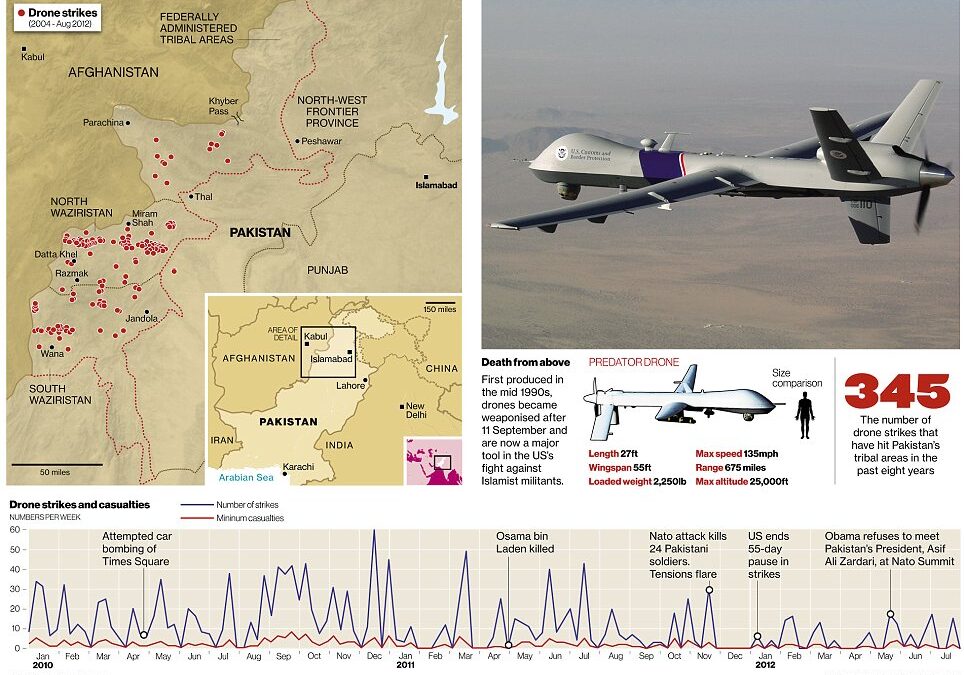
TARGETED KILLING // Can the federal government talk publicly about its targeted killing drone program on television, in interviews with journalists, and before audiences of hundreds, and then turn around and deny the existence of the program in court to ensure that the public remains in the dark about its legal justifications for pursuing it? The ACLU says ‘no’:
The American Civil Liberties Union will be in federal appeals court Thursday to argue that the CIA cannot deny the existence of the government’s targeted killing program and refuse to respond to Freedom of Information Act requests about the program while officials continue to make public statements about it.
The ACLU’s FOIA request, filed in January 2010, seeks to learn when, where and against whom drone strikes can be authorized, and how the U.S. ensures compliance with international laws relating to extrajudicial killings.
“The notion that the CIA’s targeted killing program is a secret is nothing short of absurd,” said ACLU Deputy Legal Director Jameel Jaffer, who will argue the case before a three-judge panel of the D.C. Circuit Appeals Court. “For more than two years, senior officials have been making claims about the program both on the record and off. They’ve claimed that the program is effective, lawful and closely supervised. If they can make these claims, there is no reason why they should not be required to respond to requests under the Freedom of Information Act.”
WARRANTLESS SPYING // A 2005 class action lawsuit brought by AT&T customers who say the NSA illegally spied on their communications is slowly winding itself through the court system. In 2008, Congress immunized AT&T and other telecoms from lawsuits related to companies turning over customer information to the NSA, but the government still faces a number of challenges to the warrantless spying program, among them the AT&T class action suit. A judge first threw the case out in 2010, claiming that the plaintiffs didn’t have standing to bring the lawsuit because they couldn’t prove they were spied on. Another court reversed that decision a year later, instructing the court to look at whether the state secrets privilege bars the court from considering the case at all — regardless of whether there’s evidence of spying or not. As a result, the main plaintiff in the case, Carolyn Jewel, filed for summary judgment in July, providing the court with testimony from NSA whistleblowers and former AT&T employees to prove the existence of vacuum style, dragnet surveillance. The NSA makes some contradictory and utterly confusing arguments about why the plaintiffs shouldn’t have a right to challenge its spying programs. From Courthouse News:
The government has amply demonstrated in the DNI and NSA public and classified declarations that disclosure of the privileged information reasonably could be expected to cause exceptionally grave damage to national security,” a 48-page memorandum states. “The disclosure of information concerning whether plaintiffs have been subject to alleged NSA intelligence activity would necessarily reveal NSA intelligence sources and methods, including whether certain intelligence collection activities existed and the nature of any such activity. The disclosure of whether specific individuals were targets of alleged NSA activities would also reveal who is subject to investigative interest – helping that person to evade surveillance – or who is not – thereby revealing the scope of intelligence activities as well as the existence of secure channels for communication.
But those statements thoroughly contradict something else the government says:
The DNI explains that, as the government has previously indicated, the NSA’s collection of content of communications under the now inoperative TSP was directed at international communications in which a participant is reasonably believed to be associated with al Qaeda or an affiliate terrorist organization, and thus plaintiffs’ allegation that the NSA has indiscriminately collected the content of millions of communications sent or received by people inside the United States after 9/11 under the TSP is false.
The national security establishment first tells the public that it cannot disclose who is and who is not a target of its surveillance programs because doing so would tip off the bad guys, and then goes on to say that the program “was directed at…al Qaeda[.]” In other words, the government will readily admit that al Qaeda and “affiliate terrorist organization[s]” are targets of its surveillance programs, but it can’t acknowledge whether or not non-terrorist US citizens are also targets of that program because disclosure of whether non-terrorist US citizens are being spied on without constitutional protections would “cause exceptionally grave harm to national security.” As BoingBoing observed: the NSA says it can’t tell us if it is spying on us because “REASONS.”
WARRANTLESS SPYING // The ACLU has its own warrantless wiretapping lawsuit in the works to challenge the constitutionality of the FISA Amendments Act of 2008, and the government has thrown up similar roadblocks to prevent the case from being heard on the merits. Here’s the ACLU answer to the government’s claims that our clients — journalists, human rights workers and academics — don’t have a right to bring the lawsuit:
The government’s insistence that plaintiffs cannot establish standing without proving the certainty of surveillance is at bottom not a standing argument but a bid for a kind of immunity. This is because its proposed standard is one that neither plaintiffs nor anyone else will ever be able to meet—not because the surveillance they fear will never take place but because they will be unaware of it when it does…
The government theory of standing would render real injuries nonjusticiable and insulate the government’s surveillance activities from meaningful judicial review.
…
More than forty years ago, when surveillance technology was comparatively primitive, this Court recognized that “few threats to liberty exist which are greater than that posed by the use of eavesdropping devices” … and it cautioned that the threat to core democratic rights was especially pronounced where surveillance authority was exercised in the service of national security…. To accept the government’s theory of standing would be to accept that the courts are powerless to address the threat presented by surveillance authorities exercised in secret, and powerless to protect Americans’ most fundamental rights against the encroachment of increasingly sophisticated and intrusive forms of government power.
Read more about the ACLU’s challenge, which will go before the Supreme Court in late October to decide the standing issue once and for all. Just last week the House passed a reauthorization of the FISA Amendments Act, which would extend the law through December 31, 2017. Read the brief in the ACLU’s challenge, Clapper v. Amnesty, et al., here.
A pair of scientists at California Pacific Medical Center in San Francisco has found that a compound derived from marijuana could stop metastasis in many kinds of aggressive cancer, potentially altering the fatality of the disease forever.
“It took us about 20 years of research to figure this out, but we are very excited,” said Pierre Desprez, one of the scientists behind the discovery, to The Huffington Post. “We want to get started with trials as soon as possible.”
The Daily Beast first reported on the finding, which has already undergone both laboratory and animal testing, and is awaiting permission for clinical trials in humans.
Desprez, a molecular biologist, spent decades studying ID-1, the gene that causes cancer to spread. Meanwhile, fellow researcher Sean McAllister was studying the effects of Cannabidiol, or CBD, a non-toxic, non-psychoactive chemical compound found in the cannabis plant. Finally, the pair collaborated, combining CBD and cells containing high levels of ID-1 in a petri dish.
“What we found was that his Cannabidiol could essentially ‘turn off’ the ID-1,” Desprez told HuffPost. The cells stopped spreading and returned to normal.
“We likely would not have found this on our own,” he added. “That’s why collaboration is so essential to scientific discovery.”
Desprez and McAllister first published a paper about the finding in 2007. Since then, their team has found that CBD works both in the lab and in animals. And now, they’ve found even more good news.
“We started by researching breast cancer,” said Desprez. “But now we’ve found that Cannabidiol works with many kinds of aggressive cancers–brain, prostate–any kind in which these high levels of ID-1 are present.”
Desprez hopes that clinical trials will begin immediately.
“We’ve found no toxicity in the animals we’ve tested, and Cannabidiol is already used in humans for a variety of other ailments,” he said. Indeed, the compound is used to relieve anxiety and nausea, and, since it is non-psychoactive, does not cause the “high” associated with THC.
While marijuana advocates will surely praise the discovery, Desprez explained that it’s not so easy as just lighting up.
“We used injections in the animal testing and are also testing pills,” he said. “But you could never get enough Cannabidiol for it to be effective just from smoking.”
Furthermore, the team has started synthesizing the compound in the lab instead of using the plant in an effort to make it more potent.
“It’s a common practice,” explained Desprez. “But hopefully it will also keep us clear of any obstacles while seeking approval.”
Newly released internal emails from the U.S. private security firm Stratfor state that in 2007 the Bush Administration and CIA ordered the Drug Enforcement Agency to back off a major drug trafficking investigation of Afghan President Hamid Karzai’s half brother.
Ahmed Wali Karzai was an influential power broker in Afghanistan before he was assassinated in July 2011.
The brother of President Karzai of Afghanistan is under investigation by DEA as a major narcotics trafficker. For political reasons, DEA has beentold to backoff [sic] by the White House and CIA.DEA is seeing a direct nexus between terrorism and narcotics in Afghanistan with narcotics sales being used to fund jihadist operations.
After a Stratfor analyst asks “how close is karzai to this brother?” Burton replies:
Was described to me as close. Karzai will end up being another Noreiga.
Off the record — DEA will proceed and take ’em (both?) down anyway, once this White House disappears.
As I’ve said before, every country we have touched, turns to shit.
WikiLeaks has published 2,694 out of what it says is a cache of 5 million internal Stratfor emails (dated between July 2004 and December 2011) obtained by the hacker collective Anonymous around Christmas.
UPDATE: As redditor WhoShotJR notes, current and former American officials told the New York Times in 2009 that Ahmed Karzai received regular payments from the CIA since 2001.
It is hard for me to express how much I appreciate your letter, which is the first I have received here, along with the support I’ve reportedly gotten from others so far. Before I forget, let me request that you also send a tweet of support to Jenna, @ElviraXMontana on Twitter; as my girlfriend, she had to watch as the FBI crushed my ribs (which I believe will be healed in time even if I’ve had trouble acquiring medical attention due to me under Geneva; put in formal request for X-ray last night here at Mansfield, whereas last week at Lew Sterrett I was sent to medic by an officer Tamer before being instead re-directed to what is intended as a temporary holding cell for those about to be released on bond, this change of plan being instigated by an officer Roeun (sic?) whom I have since reported to the proper authorities. Despite my having explained her mistake politely twice over the course of the next seven hours, and despite my condition having been serious enough to have prompted other inmates to suggest I check for internal bleeding, I was screamed at and then later simply ordered to lay down, all of which was witnessed by two other inmates, one of whom promised to inform Tim Rogers of D Magazine that I was potentially dying and needed intervention ASAP as soon as he himself was released a few minutes hence (again, this was the temporary outgoing holding cell, not meant for housing inmates for anything longer than an hour or so as their bond is processed; as such, I was not fed, either, much less given my medication, suboxone. Note that none of the treatment I received at Lou Sterrit had anything to do with who I am or what I am accused of, – it is simply the natural result of the inhumane and degenerate mentality found within the Texas “corrections” system, something I first described in a 2005 article for Towards Freedom. It is something we will have to address more firmly over the coming years, just as we have addressed North Africa and the intelligence contracting industry since late 2010. And I note all of this not merely to complain—although to complain is among the few vices I have been left aside from bragging to my fellow inmates – but to illustrate the fundamental problem that so many of us have sacrificed or risked to combat. This problem, which even Richard Nixon recognized and spoke about on that famed evening at the Lincoln Memorial, is that a republic built with the blood of giants has since become a “wild animal.” – one that now feeds upon us all.
I try to avoid metaphors, which can illuminate but in practice are too often used to obscure. Like many aspects of language, the false metaphor kills and enslaves. And at any rate, there will be time to discuss these broader issues later. For now, I must ask you to publish this on pastebin, Anonpaste, piratepad.de, and all other available venues, and that you also send it to some of the journalists that have been kind enough to follow my work as well as the consequences thereof, particularly my friend Michael Hastings, Barry Eisler, Michael Riley (Bloomberg), Ryan Gallagher (Guardian), and Josh at Daily Caller (forgot his last name) – plus the former editor of The Yemen Times who’s now at Global Times or some such and who, along with a certain Washington Times correspondent known to Gregg Housh, plus one or two others that I know of, who are now looking into Romas/COIN due in part to my release of the NYT e-mails earlier this month. Along with others in both the mainstream and independent media, these are most likely to report accurately on this matter. Having been mischaracterized at least a hundred times by “professional” journalists since I first appeared on Fox News in January 2009 to denounce Obama’s association with the goofy fascist Rick Warren – and was introduced as being spokesman for the non-existent “American Atheist Society” rather than GAMPAC. This would be a good time to note, particularly for the benefit of certain journalists, that I am not and never have been the spokesman for Anonymous, nor its “public face” or, worse, “self-proclaimed” “face” or “spokesperson” or “leader” (as the CIA-funded Radio Free Europe called me last year when I felt compelled to “quit” the non-group that I’d never technically joined in the first place, but rather gradually attached myself to as Wikileaks and Tunisia went down in December of 2010). Anyone who cares to learn what happens to a person who decides to help deal with such issues at the request and with the knowledge of active Anons can search my name in conjunction with those terms, and then see the article “Barrett Brown is Anonymous” from April 2011 in which I explain clearly, as I have countless times since, that no one has the authority to designate me as such. It is known to some of those who worked out of Anonops or were otherwise particularly active in the beginning of 2011 that I wrote or edited a number of the press releases of that time, and that the al-Jazeera article written in the first few days of January and which appeared later that month under the title “Anonymous and the Global Correction” was also my work – something I revealed privately to the brilliant cyberpunk essayist Bruce Sterling after he openly speculated as to the author’s background in Wired, noting the sentiments to be that of a true revolutionary. Among those who now agree with him are the FBI, which has since responded accordingly – and unethically.
Contrary to the countless claims to the effect that I hold some official role in Anonymous, I can think of only one occasion in which any Anon has come close to actually deeming me as such, that being the day on which HBGary was hacked in retaliation for HBGary Federal CEO Aaron Baar’s claim – shown to be entirely false – that he had identified Anon’s “lieutenants” and “co-founder” and that he had been contacted by the FBI about this. In fact, he had conflated three different people including a professional gardener and, as shown in the notes Anon released along with the e-mails taken from HBGary Federal, had made a huge number of additional mistakes – something since confirmed by everyone concerned including Barr himself. (That the Financial Times writer who had bought Barr’s self-promotion would again essay to write about Anonymous months later, this time taking the claims of a Dutch kid at face value in the course of “reporting” various negative things about how the movement operates, is only one of numerous bizarre and depressing twists to this story; I myself would later encounter him on Canada television as a panelist during a discussion in which he accused Anon of being particularly anti-“American interest”, to which I responded that it is difficult to avoid stepping on the empire’s toes when one assists North Africans in fighting off dictatorships that the US has supported for years.) (Oh snap!) On that day, as recorded on pastebin from the discussion on the #OPHBGary channel at Anonops, I was referred to in passing as “our public face” to a journalist. I was on the phone to HBGary President Penny Hoglund at the time, apologizing that HBGary’s e-mails had been seized by Sabu in addition to HBGary Federal’s, instructing her on how to get on IRC in order to make her case directly to the hackers, and promising to remove the link I had put up to the 70,000 e-mails acquired in the operation, a link I had placed upon a Daily Kos post put up to explain the situation to the great many who would miss the “makeover” done to HBGary.com. Had I known that Penny was lying to me about what she and husband Greg Hoglund had known about Barr’s irresponsible attempt to save his own career at the expense of the innocent and heroic alike, I would have simply hung up. Instead, I was polite – but I recorded the call, just as I recorded the next call with Barr, the next call with HBGary exec Jim Butterworth, and finally the drunken call I received months later from Greg Hoglund himself. “Trust but verify,” as Reagan said in the context of a different set of villains.
With the exception of the ten minute convo I released between myself and Aaron Barr, all of the other recordings – and plenty of others – are in the possession of the FBI, which raided my apartment as well as my mother’s home on March 6th. For more on those events, as well as the criminal conspiracy to which I have been subjected by elements of the FBI, HBGary, and paid informant/contractor Jennifer Emick (among other parties both known and undiscovered), please see the last 3 videos I uploaded to my YouTube account, as well as documents I linked to on my Twitter account @BarrettBrownLOL in the final days before my most recent (and dramatic!) arrest. Not everything is released; I was interrupted by armed, mediocre federal agents and DPD officers (“No complicity in assassination of a chief executive since 1963!”) before I could finish making my case, which was to be done over several days before the entirety would be sent to the FBI and the judge who signed my March search warrant. This was to be followed by the instigation of a civil suit against HBGary and other parties to be named in the next 2 months. My plan has been disrupted – plans often are, as history tells us – but it has not been rendered obsolete. It will evolve, just as ProjectPM itself has evolved steadily since 2009, when this war became evident to me, when I first realized that my future as a political satirist would have to be abandoned in favor of this dirty, grueling struggle.
But why was I arrested this time? I would love to tell you. But the prosecution wouldn’t like that. I, and everyone else in the court room, were ordered to refrain from discussing the complaint, affidavits, and warrant, all of which are sealed at the request of the author, one FBI special agent whom I shall not name lest I give him cause for fright (or pretend fright – I am allegedly a danger to one especially skittish special agent whom I shall be careful not to name again until such time as I am prepared to list him in the civil suit I’ve been preparing for weeks now). Frankly, I do not blame this other special agent for requesting that the document be sealed – if I had written something of such low quality and demonstrable untruth, I would burn it and ask forgiveness of every deity invented by man and the higher apes/dolphins/whales. Likewise, if I were the US attorney who signed the Motion for Detention dated September 13 2012 – the document that, after having been approved by Judge Paul D. Stickney, ensured I would not only be prevented from discussing what I’m being accused of but also made a prisoner of the state until such time as a trial or some such can be concocted out of the jurisprudential magick I struggle to follow, in my innocence. Apparently I am not just a danger to the fragile FBI agents who have taken to threatening my mother and fracturing my ribs in the course of heavily-armed raids on my uptown Dallas apartment, but must be prevented from explaining to my associates, followers, and even enemies why I have again been subjected to violence and indignity.
I explained the first raid against me (March 6th, 6:30 a.m. CST) and the second against my mother (about six hours later) in several pastebin messages at that time. It was not until 2 months ago that I learned how a judge had been tricked into permitting this raid on me – how the disgraced contracting firm HBGary hired the paid FBI informant Jennifer Emick to, in their words, “find something to get [me] picked up on,” even as this bizarre former Anon made public accusations against me under both her real name and her adopted contractor persona: “FakeGreggHoush” on Twitter (now “AsherahResearch”) and Asherah on IRC – particularly the 2600 server where she frequented the #jester channel alongside various ex-military men and current “security’ contractors who all found themselves inclined to associate with the admitted criminal hacker th3J35T3R, one of several parties who have taken credit for DoS attacks on Wikileaks. I should not have to remind anyone that 40 U.S. homes were raided in January 2011 due to a similar but less effective series of DDoS attacks on Visa, MasterCard, PayPal, and Amazon which were clearly an act of protest against an unprecedented economic blockade ordered by the U.S. regime. 14 of the “criminals” in question are being charged such that they face up to 15 years in prison. Thanks largely to Jay Leiderman the California attorney and John Penley the NYC activist and veteran, many of them are being represented for free. Likewise, I will seek and accept only pro bono assistance from this point on, though with the stipulation that I will pay any such lawyers what I can from the defense funds that have been set up for me thus far by well-wishers. As of this writing I dismiss Tom Mills, whom I retained for $3,500 after receiving bad advice from a well-meaning person. I will also expect that money returned within 60 days of the publication of this missive online (ProjectPM participants, please ensure that he receives this message, which I have also delivered through my mother – whom he falsely claimed to be representing on the matter of the FBI threats against her despite having been paid by me, not her). And as I had noted both publicly and privately earlier this month, I am still seeking additional attorneys with skill in civil litigation to pursue at least two suits I’ll be filing by the end of the year. Those interested may write to me at my new home, Some Jail in Texas. I am able to arrange for phone conversations with any applicants (or anyone else who is either especially interesting or who is able to accept a collect call or contribute $5 to my commissary/phone fund, that being the cost of a 15-minute call instigated by me). Anyone who writes me without us having been formerly introduced, I will guarantee a response if you send self-addressed stamped envelope. Also I believe that only mail with a return address will be delivered to me, though I’m not sure.
I hate that I have spent so much time in conflict over the past two years, and that so much of this has involved my fellow American citizens rather than the Middle Eastern dictators that I got involved in this to combat. I feel sorrow at the lost opportunities, and as for the way it has changed me as a person… I like to think that I am wiser and less naïve than I was, but I know too well how foolish and unsophisticated I was to begin with. I cannot excuse the mistakes I myself have made on both the strategic and tactical levels in my short career. I shudder when I look back on some of the things I wrote or said when I got my first real taste of power at the dawn of 2011, and I continue to bring shame upon myself and upon my family and work by some of the things I say even lately. In particular I have made comments about the U.S. military that I do not mean and which are obviously not entirely accurate. Along with other nonsense I have said, felt, written throughout my life, many of these things originate from my own fears and weaknesses. I am humiliated at not being able to protect my own mother from the FBI, or to shield my own girlfriend from watching heavily-armed men step on my spine as I scream in pain. I cannot forget how my mom cried on March 6th after the FBI had left with my equipment and hers, and how she whispered through tears that she wanted to be able to protect me from prison but couldn’t; I will never forget the look on Jenna’s face as the federal thugs swept through my efficiency apartment with guns drawn and safeties off, in search of hidden assailants and non-existent weapons. That these things are unjust and increasingly insane does not change the fact that they are the result of my own behavior, my own miscalculations, my own choices.
Having said that, I regret nothing. For the last week I was denied opiates and thus forced to feel not just rage, hatred, all the primal things, but forced to endure them while sicker than most humans can imagine and in a jail that is overcrowded and filled with common criminals. I have gained something extraordinary in that process, which ended this morning when I was given the first of 30 days of suboxone. I will personally thank everyone on the outside who has helped me and this movement particularly at this critical time, when I have regained the freedom that I did nothing to lose. For now, and until that time, it is war, on paper as always, but war.
Barrett Brown Founder ProjectPM Prisoner #35047177 Mansfield Law Enforcement Center 1601 Heritage Parkway Mansfield, TX 76063
Postscript-
[redacted], if you are able to relay this message to the Anons, my ProjectPM people, journalists, etc, you will have done me a finer deed than most men ever have occasion to do for another. I am transmitting a copy of this to another individual to ensure that the FBI does not manage to silence me on this (incidentally, the local jail here in Mansfield has proven to be run by honorable, trustworthy, even friendly people, but it is nonetheless subject to the Yankee boot (no offense)). Tell journalists, etc that they may contact [redacted]. My future and that of ProjectPM depends on you and a handful of others. Thank you for your loyalty at this time. Finally, please include this PS when forwarding and ask people to see my original search warrant as published on Buzzfeed a few months back. Echelon2.org is part of the key to this affair, but not all. More to be revealed when all is prepared. Good luck to you.
Obama lawyers file a breathless, angry appeal against the court ruling that invalidated the NDAA’s chilling 2011 detention law
Bagram airbase was used by the US to detain its ‘high-value’ targets during the ‘war on terror’ and is still Afghanistan’s main military prison. Photograph: Dar Yasin/AP
In May, something extremely rare happened: a federal court applied the US constitution to impose some limits on the powers of the president. That happened when federal district court judge Katherine Forrest of the southern district of New York, an Obama appointee, preliminarily barred enforcement of the National Defense Authorization Act (NDAA), the statute enacted by Congress in December 2011 with broad bipartisan support and signed into law by President Obama (after he had threatened to veto it).
That 2011 law expressly grants the president the power to indefinitely detain in military custody not only accused terrorists, but also their supporters, all without charges or trial. It does so by empowering the president to indefinitely detain not only al-Qaida members, but also members of so-called “associated forces”, as well as anyone found to “substantially support” such forces – whatever those terms might mean. I wrote about that decision and the background to this case when it was issued.
What made Judge Forrest’s ruling particularly remarkable is that the lawsuit was brought by eight journalists and activists, such as former New York Times reporter Chris Hedges, Daniel Ellsberg, Noam Chomsky, and Birgitta Jónsdóttir, who argued that their work, which involves interactions with accused terrorists, could subject them to indefinite detention under the law’s broad and vague authority, even for US citizens on US soil. The court agreed, noting that the plaintiffs presented “evidence of concrete – non-hypothetical – ways in which the presence of the legislation has already impacted those expressive and associational activities”. The court was particularly disturbed by the Obama DOJ’s adamant refusal to say, in response to being asked multiple times, that the law could not be used to indefinitely detain the plaintiffs due to their journalistic and political activities.
Last week, Judge Forrest made her preliminary ruling permanent, issuing a 112-page decision explaining it. Noting that the plaintiffs “testified credibly to having an actual and reasonable fear that their activities will subject them to indefinite military detention”, she emphasized how dangerous this new law is given the extremely broad discretion it vests in the president to order people detained in military custody with no charges:
The court also brushed aside the Obama DOJ’s prime argument, echoing the theories of John Yoo: namely, that courts have no business “interfering” in the president’s conduct of war. After acknowledging that the president is entitled to deference in the national security realm, Judge Forrest dispensed with the Obama DOJ’s claim with this vital observation: one that should be unnecessary but, in the 9/11 era, is all too commonly ignored:
In other words: while the president is entitled to deference in his conduct of war, he’s not entitled to wield the power to order people, including American citizens, indefinitely imprisoned in military detention. Regardless of how he claims he intends to exercise this power, the mere act of vesting it in him so chills the exercise of first amendment and other protected rights that the constitution can have no meaning if courts permit it to stand.
In response to this ruling, the Obama administration not only filed an immediate appeal, but they filed an emergency motion asking the appeals court to lift the injunction pending the appeal. Obama lawyers wrote a breathless attack on the court’s ruling, denouncing it as “vastly troubling” and claiming that it “threatens tangible and dangerous consequences in the conduct of an active military conflict” and “threatens irreparable harm to national security”.
The Obama DOJ also objected that the decision “was entered against the president as commander-in-chief in his conduct of ongoing military operations, is unprecedented and exceeded the court’s authority”: how irreverent. And they argued that the broad detention power claimed by President Obama “has been endorsed by two presidents [meaning him and George W Bush], by the [rightwing] DC circuit in habeas litigation brought by Guantánamo detainees, and by the Congress in Section 1021(b)(2).”
I’ve written at length before about why indefinite detention is so dangerous, and why a statute such as the NDAA – which purposely (as the court here found) leaves open the question of whether it applies to US citizens – is one of the most pernicious laws enacted in some time. I won’t rehash that here, but I do want to make two points about the Obama administration’s new fight in defense of this law.
First, the Obama administration’s unhinged claim that Judge Forrest’s ruling imperils national security gives the lie to the central excuse for the NDAA: namely, that it does not expand the president’s detention powers beyond what is already vested by the 2001 Authorization to Use Military Force (AUMF). Judge Forrest’s ruling leaves the 2001 AUMF in place and did not purport to nullify any prior decisions applying it. Therefore, if the NDAA does nothing that the 2001 AUMF did not already do – as Obama defenders relentlessly claimed to justify his signing of this odious bill – then it cannot possibly be the case that Judge Forrest’s ruling harms national security, since Obama already has all the detention power he claims he needs under the 2001 AUMF.
The reality is that the NDAA did indeed wildly expand the president’s detention powers beyond what the 2001 AUMF provided. In contrast to the 2001 AUMF – which empowered the president to act against a relatively narrow category: those “he determines planned, authorized, committed, or aided the terrorist attacks that occurred on 11 September 2001, or harbored such organizations or persons” – the NDAA empowers him to act against a much broader range of people: not only those who perpetrated 9/11, but also “associated forces”, and not only those who are members of such groups, but those who “substantially support” them.
While the Bush and Obama DOJs have long absurdly interpreted the 2001 AUMF to apply to this broader range, and while some courts have accepted that interpretation, the law itself vested no such power. The NDAA did. That is why civil liberties groups such as the ACLU denounced Obama’s signing of it so vociferously, and it is why the Obama DOJ is so horrified, obviously, by the prospect that it will be invalidated: precisely because it so drastically expands their detention power. Both the court’s ruling and the Obama DOJ’s reaction to that ruling prove that the NDAA does indeed provide the president with significantly enhanced authority of indefinite detention.
Second, to see the sorry and wretched state of liberties in the US under President Obama, let us look to Afghanistan. The US is currently attempting to turn over to the Afghan government control of the lawless prison system the US has long maintained in Bagram and other parts of that country. But that effort is running into a serious problem: namely, the US wants the prisoners to remain there in cages without charges, but the Afghans are insisting that indefinite detention violates their belief in due process. From an Associated Press article Monday headlined “Afghans reject US-favored administrative detention”:
“An Afghan judicial panel ruled Monday that administrative detention violates Afghan law, potentially thwarting a US plan to hand over Afghan detainees that American officials believe should continue to be held without a trial.
“President Hamid Karzai’s office announced in a statement that a top-level judicial panel met earlier in the day and decided that the detention of Afghan citizens without a court trial ‘has not been foreseen in Afghan laws’ and therefore could not be used.
“The US government has long held Afghans captured in operations inside the country without trial, arguing that they are enemy combatants and therefore can be detained for as long as their release might pose a danger to the international coalition …
“A US official confirmed that the transfer of detainees had paused because of the dispute.”
Is that not amazing? On the very same day that the Obama DOJ fights vigorously in US courts for the right to imprison people without charges, the Afghan government fights just as vigorously for basic due process.
Remember: the US, we’re frequently told, is in Afghanistan to bring democracy to the Afghan people and to teach them about freedom. But the Afghan government is refusing the US demand to imprison people without charges on the ground that such lawless detention violates their conceptions of basic freedom. Maybe Afghanistan should invade the US in order to teach Americans about freedom.
This is not the first time this has happened. In 2009, the Obama administration decided that it wanted to target certain Afghan citizens for due process-free assassinations on the ground that the targets to be executed were drug “kingpins”. They were to be killed based solely on US accusations, with no trial, just as the Obama administration does with its own citizens. But again, that plan ran into a roadblock: Afghan leaders were horrified by the notion that their citizens would be extrajudicially executed based on unproven suspicions [my emphasis]:
“A US military hit list of about 50 suspected drug kingpins is drawing fierce opposition from Afghan officials, who say it could undermine their fragile justice system and trigger a backlash against foreign troops.
“The US military and Nato officials have authorized their forces to kill or capture individuals on the list, which was drafted within the past year as part of Nato’s new strategy to combat drug operations that finance the Taliban …
“General Mohammad Daud Daud, Afghanistan’s deputy interior minister for counternarcotics efforts, praised US and British special forces for their help recently in destroying drug labs and stashes of opium. But he said he worried that foreign troops would now act on their own to kill suspected drug lords, based on secret evidence, instead of handing them over for trial.
“‘They should respect our law, our constitution and our legal codes,’ Daud said. ‘We have a commitment to arrest these people on our own’ …
“There is a constitutional problem here. A person is innocent unless proven guilty,” [former Afghan interior minister Ali Ahmad Jalali] said. “If you go off to kill or capture them, how do you prove that they are really guilty in terms of legal process?”
In other words, the Obama administration has received far more resistance to its due process-free imprisonments and assassinations from Afghans than it has from its own citizens in the US. If only more Americans, including progressives, were willing to point out the most basic truths in response to these Obama power seizures, such as: “If you go off to kill or capture them, how do you prove that they are really guilty in terms of legal process?”
Instead, many Americans, particularly in the age of Obama, are content to assume that anyone whom the US government accuses of being a terrorist should, for that reason alone, be assumed to be guilty, and as a result, any punishment the president decides to dole out – indefinite imprisonment, summary execution – is warranted and just; no bothersome, obsolete procedures such as “trials” or “indictments” are necessary.
It is that mindset that will ensure that Obama’s vigorous fight to preserve the power of indefinite detention will provoke so little objection: among Americans, that is – though obviously not among Afghans, who seem to have an actual understanding of, and appreciation for, the value of due process.
One year before Mitt Romney began working on the Bain & Company project to rebuild “Monsanto” and cast their new image and focus on agriculture biotechnology, Congress passed a bill banning PCB (polychlorinated biphenyl), an odorless, tasteless, clear liquid known to cause cancer that was the “bread and butter” of Monsanto’s profits. Monsanto was already branded and plagued with the label of having created the “Agent Orange” contaminated dioxins used in Vietnam. Now Monsanto would need a big save, financially and reputation-wise, so they could fool the public with their new image and a new “frontier,” while secretly polluting and genetically modifying American agriculture with the new faceless poison known as Roundup.
Romney knew his first job at Bain was to propel an evil company that was on the brink of failure. He knew Monsanto’s previous reputation and about all the litigation. Romney also knew he would be rewarded financially in the biggest way if he could pull the whole thing off, and he did. Romney changed Monsanto’s image over the years, from a scandal ridden chemical giant to a seemingly “prestigious” Agri-business firm. (http://dprogram.net)
Fresh out of Harvard in 1977, Romney basically lead Monsanto down an unethical but highly lucrative path, helping sweep the PCB and dioxin scandals under the rug, since that negative public perception was crippling the company. Romney and Bain recommended to Monsanto that they focus the business on genetically engineered crops and RoundUp, the massively profitable weed killer. Monsanto finished developing and patenting the glyphosate molecule and has marketed Roundup ever since. (http://naturalsociety.com)
But it wasn’t a “pretty” road to this infamous success for Romney. Monsanto was still bombarded with an onslaught of litigation throughout Romney’s years at Bain, including a $180 million settlement covering the claims of over 50,000 troops that got cancer from hiking over and through Agent Orange in the burned up jungles of Vietnam. Agent Orange is on record to have contaminated a total of 10 million Vietnamese and American people, including children and babies. This was by far the largest chemical warfare operation in human history up until now, when Monsanto’s RoundUp laced GMO vegetables like corn and soy have begun a cancer inducing genocide which could easily surpass the damage done in the Vietnam jungles just 50 years ago. (http://naturalsociety.com)
Romney would later use his Monsanto “payback money” and power to become the “private equity king,” mowing down companies and robbing workers of their retirement savings. (http://dprogram.net) This is how Romney created jobs back then, and GMO is how he will create jobs and promote disease if he wins the presidency of the United States. Big Pharma, of course, is behind it all, because when people eat GM vegetables and get cancer, Big Pharma and the chemo scam make billions, if not trillions.
Romney has already chosen his biotech partners in crime
One of Mitt’s advisory co-chairs was a key speaker at the ‘Biotechnology Industry Organization‘ and said, “It is vital for the United States and other countries to support science-based standards and systems that will bring agricultural biotechnology products to the market to meet this demand.” It’s not hard to guess who will make up Romney’s cabinet if he wins. But the most disappointing part of the upcoming election isn’t the fact that Mitt Romney, the “Savior of Monsanto” is running for president, it’s the fact that Obama already supports GMO and has the former vice president of Monsanto running the FDA right now. America has everyone believing they have a choice, voting between good and bad, or good and not so good, but really, the choice is that you can vote yes for Obama GMO or yes for Romney GMO. President Obama and Mitt Romney both support human beings eating RoundUp pesticide regularly and without any labeling on the foods. Just to let you know. There’s definitely a “War on Cancer” in effect, but it’s a war to promote cancer, to make sure more people eat CANCER-CAUSING AGENTS, ones that are made by the same company that created the AGENT ORANGE nightmare. (http://www.naturalnews.com)
No matter what the TWO PARTY SYSTEM says, they support GMO
Back in 2008, Obama promised his supporters he would be on their side when it comes to knowing what they are eating, and in a campaign speech he stated, “We’ll let folks know whether their food has been genetically modified because Americans should know what they’re buying.”(http://spreadlibertynews.com)
Today, Monsanto (the seed police) and similar unethical chemical giants loom over ALL FARMERS AND ALL FOOD, and a global cancer epidemic is imminent. Monsanto survived its near collapse thanks to Mitt Romney, and Monsanto thrives today thanks to George W. Bush and Barack Obama. Soon, if enough Supreme Court Justices side with the biotech industry, the U.S. government will have complete reign over the food industry. (http://www.naturalnews.com/034847_Michael_Taylor_Monsanto_FDA.html)
Question: Why doesn’t either candidate for president mention nutrition at all? Shouldn’t we be praising Nutritional Science like we do NASA? Is the GMO shame too heavy? When the next bailout comes, will Monsanto get a big cut? After all, their lobbyists are like a “Super PAC” of ONE PERCENTERS. If only we could see how much their offshore accounts inflate after elections. Make no mistake, the current handful of “running” politicians want GMO to rule over all farms in the United States.
Don’t give in; you can set the precedent in November!
You have real choices. You can eat only organic food. You can write your “anti-GMO” congressmen like Dennis Kucinich and Ron Paul, who support efforts to not only label GM food, but ban it altogether. You can help end this hostile takeover of the food supply. (http://www.youtube.com/watch?v=4J_YvtbSSqg) We, the organic people, can win this “election,” and the precedent can be set in California in November, and then eventually all over the United States. (http://www.naturalnews.com)
Vietnam may have been the largest chemical warfare operation in human history, but at least this time the people have a choice, because instead of being drafted and hiking through the toxic “cancer machine” in a war, humans can simply educate themselves about contaminated dioxins in genetically modified foods and not eat them. (http://www.youtube.com/watch?v=SfFSS1vLcXA&feature=related)